Best South Florida Tennis Academies 2025–2026: Miami to Palm Beach
A commuter-first buyer’s guide to South Florida tennis academies for juniors and adults. Compare Miami convenience with Boca and Delray performance hubs by coaching, college placement, match play access, pricing, and school-friendly schedules.
 Tommy
Tommy
How to use this commuter-first guide
South Florida is a dream for year-round tennis, but it is also a sprawl. Families often choose between the convenience of Miami programs and the performance density of Boca Raton, Delray Beach, and Palm Beach County. This guide ranks the region’s leading academies with a commuter-first lens so you can pick a program that fits your daily drive, school schedule, and goals without paying a boarding premium. If you are comparing options statewide, see our Orlando and Lake Nona academies guide and the Top Tampa-Sarasota-Naples academies guide.
What this guide emphasizes:
- Coaching quality you can feel in week one
- College placement support that goes beyond a brochure
- Real access to matches through UTR and USTA events
- Transparent pricing tiers and where your dollars actually go
- School-friendly schedules for traditional, hybrid, and homeschool paths
We define juniors as ages 10 to 18 and adults as 18+. Letter grades below are editorial and reflect on-court observation, public information, and athlete and parent feedback across the 2024 to 2025 training year.
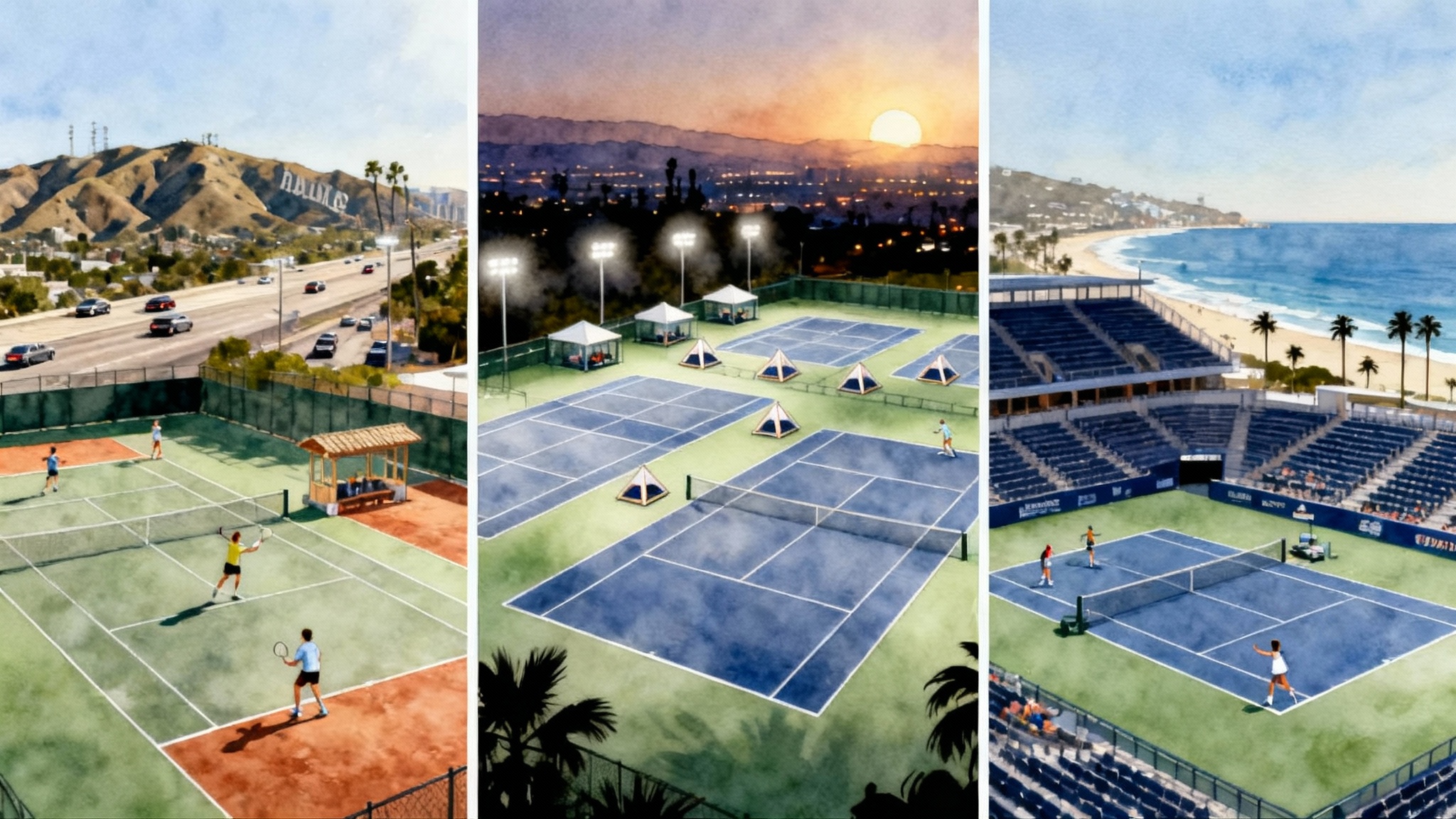
The commuter map: Miami vs Boca and Delray vs Palm Beach
- If you live in Brickell, Coral Gables, or Doral: Miami programs win on weekday sanity. Expect 15 to 45 minutes to practice if you stay inside Miami-Dade, and 60 to 90 minutes if you chase Boca or Delray during rush hour.
- If you live in Aventura, Hallandale, or Hollywood: you can look south to Miami or north to Boca and Delray. Broward County programs in Plantation and Fort Lauderdale often split the difference on drive time.
- If you live in Boca, Delray, or Boynton: you sit inside the highest density of performance programs with strong clay access. Commutes range from 10 to 30 minutes to most top courts.
- If you live in Palm Beach Gardens, Wellington, or Jupiter: north county centers offer quality training without the Delray parking hunt and can save an hour each day.
Clay versus hard courts: Boca and Delray lean Har-Tru clay, great for footwork and point construction. Miami centers skew hard court, great for live-ball pace and quicker points. Strong players blend both to become surface bilingual.
Ranking criteria explained
- Coaching quality: We weight staff continuity, player-to-coach ratios, and the clarity of daily progressions. A great session has a theme, measurable reps, and quick feedback loops.
- College placement results: We value the process more than name-dropping. Strong programs guide video, outreach, tournament calendars, and realistic list building for Division I, Division II, Division III, and NAIA.
- UTR and USTA match play access: South Florida has robust calendars. The test is whether your academy helps you find and schedule the right level of play. For UTR, start with the official UTR event search for South Florida. For USTA events, see the USTA Florida tournament calendar.
- Pricing tiers: We classify monthly non-boarding training as $ under 800 dollars, $$ 800 to 1,500 dollars, $$$ 1,500 to 2,500 dollars, with private lessons ranging from 120 to 250 dollars per hour depending on coach seniority.
- School-friendly schedules: We rate programs on morning blocks for homeschool and afternoon blocks that fit dismissal times, plus on-site study support.
The 2025 to 2026 commuter-first rankings
Below are editorial grades for the most relevant commuter academies in Miami-Dade, Broward, Boca and Delray, and Palm Beach County. Each summary lists strengths, potential tradeoffs, and who should pick it first.
ProWorld Tennis Academy, Delray Beach
- Coaching quality: A
- College placement: A minus
- UTR and USTA access: A
- Pricing tier: $$$
- School-friendly schedules: A
Why it ranks: Deep high-performance culture with a clear daily structure. Courts are busy with competition-level drilling and match play. Strong track record helping aspiring college players package film, schedules, and outreach. Delray’s tournament density keeps weekend travel sensible.
Best for: Juniors targeting college tennis who want clay and hard court reps in the same week and already live north of Broward or can manage the Delray drive several days per week.
Potential tradeoffs: Peak hours are crowded. You will need to be proactive to book preferred private slots.
Evert Tennis Academy, Boca Raton
- Coaching quality: A
- College placement: A
- UTR and USTA access: A minus
- Pricing tier: $$$
- School-friendly schedules: A
Why it ranks: Longstanding structure, deep staff bench, and consistent college guidance processes. Commuter tracks offer access to the same methodology without boarding costs. Clay is abundant. The campus environment helps younger players learn routines quickly.
Best for: Families in Boca and central Palm Beach County who want a full-service pathway from development to college placement.
Potential tradeoffs: Premium pricing. Afternoon traffic on I-95 can stretch the return trip if you live far south.
Rick Macci Tennis Academy, Boca Raton
- Coaching quality: A
- College placement: B plus
- UTR and USTA access: A minus
- Pricing tier: $$ to $$$
- School-friendly schedules: B plus
Why it ranks: High-energy technical feedback and live-ball intensity. Juniors benefit from detailed stroke check-ins and a culture of competing hard in practice sets. Adults get real teaching rather than just feeding balls.
Best for: Players who respond to animated, hands-on coaching and want a blend of technique and match play in the same session.
Potential tradeoffs: Scheduling can be tight around marquee coaches. Expect to plan privates well ahead of school tests and tournament weekends.
Saviano High Performance, Plantation
- Coaching quality: A
- College placement: A minus
- UTR and USTA access: A
- Pricing tier: $$ to $$$
- School-friendly schedules: A minus
Why it ranks: Emphasis on point construction and decision-making. Plantation is a commute saver for Miami north and Broward south. Access to both clay and hard is a plus.
Best for: Juniors in Aventura, Hollywood, or Weston who want a true performance program without driving to Boca or Delray daily.
Potential tradeoffs: Slightly smaller training windows than mega campuses. Plan tournament calendars with coaches early.
Delray Beach Tennis Center High Performance, Delray Beach
- Coaching quality: B plus
- College placement: B
- UTR and USTA access: A
- Pricing tier: $ to $$
- School-friendly schedules: B plus
Why it ranks: City-center facility with abundant match opportunities locally. Value pricing for group training. Adults find frequent live-ball and doubles.
Best for: Budget-conscious families who still want the Delray ecosystem of events and hitters.
Potential tradeoffs: Staff depth varies by season. You will need to pair it with targeted privates during key development months.
Palm Beach Gardens Tennis Center High Performance, Palm Beach Gardens
- Coaching quality: B plus
- College placement: B
- UTR and USTA access: A minus
- Pricing tier: $ to $$
- School-friendly schedules: A
Why it ranks: North county convenience, reliable after-school blocks, and easy weekend logistics. Adults have strong drill options with court availability.
Best for: Families in Jupiter, Palm Beach Gardens, and Wellington who prefer a shorter daily drive and steady volume.
Potential tradeoffs: Fewer elite sparring partners than Boca and Delray. Supplement with targeted UTR events monthly.
Wellington Tennis Center Performance, Wellington
- Coaching quality: B
- College placement: B minus
- UTR and USTA access: B plus
- Pricing tier: $ to $$
- School-friendly schedules: A
Why it ranks: Friendly environment, good coaching continuity, and school-aligned schedules. Strong for multi-sport or late-specializing juniors.
Best for: Younger players and adults seeking a consistent weekly rhythm without academy intensity.
Potential tradeoffs: Limited high-end sparring on some days. Plan to travel for bigger UTR and USTA draws.
JM Delgado Tennis Academy, Doral
- Coaching quality: A minus
- College placement: B plus
- UTR and USTA access: A minus
- Pricing tier: $$
- School-friendly schedules: A
Why it ranks: Miami convenience with a competitive training rhythm. Private lessons are purposeful and group sessions move quickly. Hard courts keep ball speed honest.
Best for: Miami families who want serious training without committing to the Boca and Delray commute.
Potential tradeoffs: Harder to find day-to-day clay access. Plan monthly clay blocks if you expect clay-heavy tournament schedules.
Clay or hard this month: a practical mix
If your player is still refining movement and patterns, prioritize clay twice per week for six weeks. If your player is peaking for a hard-court swing, move to three hard sessions per week with one clay day to keep point construction sharp. Adults benefit from alternating days to limit overuse and to balance feel and timing.
Pricing tiers and what they actually buy
- $ under 800 dollars per month: group training two to three times weekly, limited video, and fewer directed practice sets. Great for 10 to 14 year olds still sampling sports or adults new to structured training.
- $$ 800 to 1,500 dollars: four to five weekly group sessions, two privates per month, occasional video or footwork blocks. The most common commuter track for serious juniors.
- $$$ 1,500 to 2,500 dollars: daily groups, weekly privates, individual planning, college guidance, and coordination of UTR and USTA schedules. This is the commuter alternative to full-time boarding programs.
Ask for a sample week on paper before you pay. You want to see the theme of each day, when match play occurs, and where privates live so fatigue does not erase quality.
School-friendly schedules that work
- Traditional school: Aim for two weekdays after school and one long weekend session. Protect one weeknight for academics.
- Hybrid or homeschool: Use morning blocks for footwork and technical reps when courts are quiet. Add two afternoon live-ball sessions to simulate match tempo.
- Testing weeks: Shift to shorter, higher-intensity drills and cut match play to protect focus and sleep.
Strong academies will help you build that calendar and adjust it after tournaments.
Adults: how to choose like a pro
- If you crave instruction: Pick programs with clear themes such as second-serve patterns or first-ball depth. Avoid random feeding clinics.
- If you crave sweat: Choose live-ball and doubles-specific clinics that keep rally length honest. Look for posted player ratings to balance courts.
- If you crave competition: Join in-house ladders and target two UTR events per month in your rating band. Use the UTR search to sort by location and day so you protect work and family time.
Match play access: build a calendar that compounds
Use a simple rhythm that keeps confidence and rating moving in the same direction:
- Weeks 1 and 2: in-house sets on practice day three and a single UTR match on the weekend
- Week 3: two UTR matches, skip one practice to keep legs fresh
- Week 4: a USTA Level 6 or 7 for juniors or a USTA NTRP event for adults, then one lighter technical session on Monday
Re-evaluate monthly. The right event level is the one where you split your results about fifty to sixty percent while playing deuce points that feel winnable.
Miami convenience vs Boca and Delray performance hubs
Choose Miami-area training if you value:
- Daily consistency over occasional mega-sessions
- Hard-court pace and late-afternoon start times that match school dismissal
- A shorter weekday commute that preserves homework and sleep
Choose Boca, Delray, or Palm Beach County if you value:
- Denser scrimmage fields and event calendars within a 20 minute weekend radius
- Har-Tru clay access that sharpens movement and patience
- Larger staffs and more specialized technical coaching
The wrong choice is the one that looks elite on a flyer but leaves you sitting in traffic four days a week. Commuter fatigue erodes effort, and effort fuels improvement.
What to ask every academy on your tour
- Staff ratios: How many players per coach on average, and who runs the court your player will be on
- Progression: What is the theme of Monday to Friday this month, and how is it scored or measured
- Video: When and how is video used, and who reviews it with us
- Match play: Who sets UTR or USTA schedules and confirms entries
- Education: What study support exists for early dismissals and travel weeks
- Pricing clarity: What is included, what is optional, and what is the monthly total with the privates we need
Write the answers down. If promises are vague, expect delivery to be the same.
Surface checklist for the year
- Pre-season block: two days clay, one day hard for six weeks
- Hard-court run-up: three days hard, one day clay for four weeks
- Post-event reset: two days light technique, one day point play, no more than one private
- Off weeks: cross-train with soccer, swimming, or yoga to reset feet and core
Two sample commuter plans
Boca and Delray junior on a traditional school schedule:
- Monday: school to 6:00 p.m. clay drilling and serve work
- Wednesday: school to 6:30 p.m. live-ball on hard court
- Friday: lighter technique plus 30 minutes of video clip review
- Weekend: UTR singles on Saturday morning, doubles practice Sunday
Miami junior on a hybrid schedule:
- Monday morning: 8:00 to 10:30 a.m. technical work and footwork
- Tuesday afternoon: 4:30 to 6:30 p.m. live-ball plus sets
- Thursday morning: serve and return progressions, film five key points
- Weekend: rotate UTR one week and a short USTA event the next
Adults can copy these skeletons with lower volume and a greater focus on recovery days.
Final picks by scenario
- South Miami family with a ninth grader and limited weeknights: JM Delgado in Doral for weekday sanity, plus monthly Delray trips for sparring.
- Aventura family with an eleventh grader pursuing college tennis: split weeks between Saviano in Plantation and a Delray weekend session to maximize match volume.
- Boca family with a seventh grader and a parent who plays: Evert or ProWorld for the junior, Delray Beach Tennis Center clinics for the parent.
- Palm Beach Gardens family optimizing homework time: Palm Beach Gardens or Wellington for weekday training, then targeted UTR events in Delray twice per month.
- Naples weeklong booster from South Florida: Consider Gomez Tennis Academy in Naples for a concentrated training block that complements commuter schedules.
The bottom line
For 2025 to 2026, the commuter-first play in South Florida is simple. If you live in Miami-Dade and value weekday predictability, pick a Miami program and layer in monthly northbound match days. If you live in Boca, Delray, or Palm Beach County and value dense competition, stay local and stack consistent sets. The best academy is the one that keeps you practicing at full attention three times per week and competing on a rhythm you can repeat for twelve months. Pick for the drive you can live with, the coach you can learn from, and the calendar you can sustain. Improvement compounds when the commute does not get in the way.