From LTP Daniel Island to a Grand Slam Semifinal: Emma Navarro
 Tommy
Tommy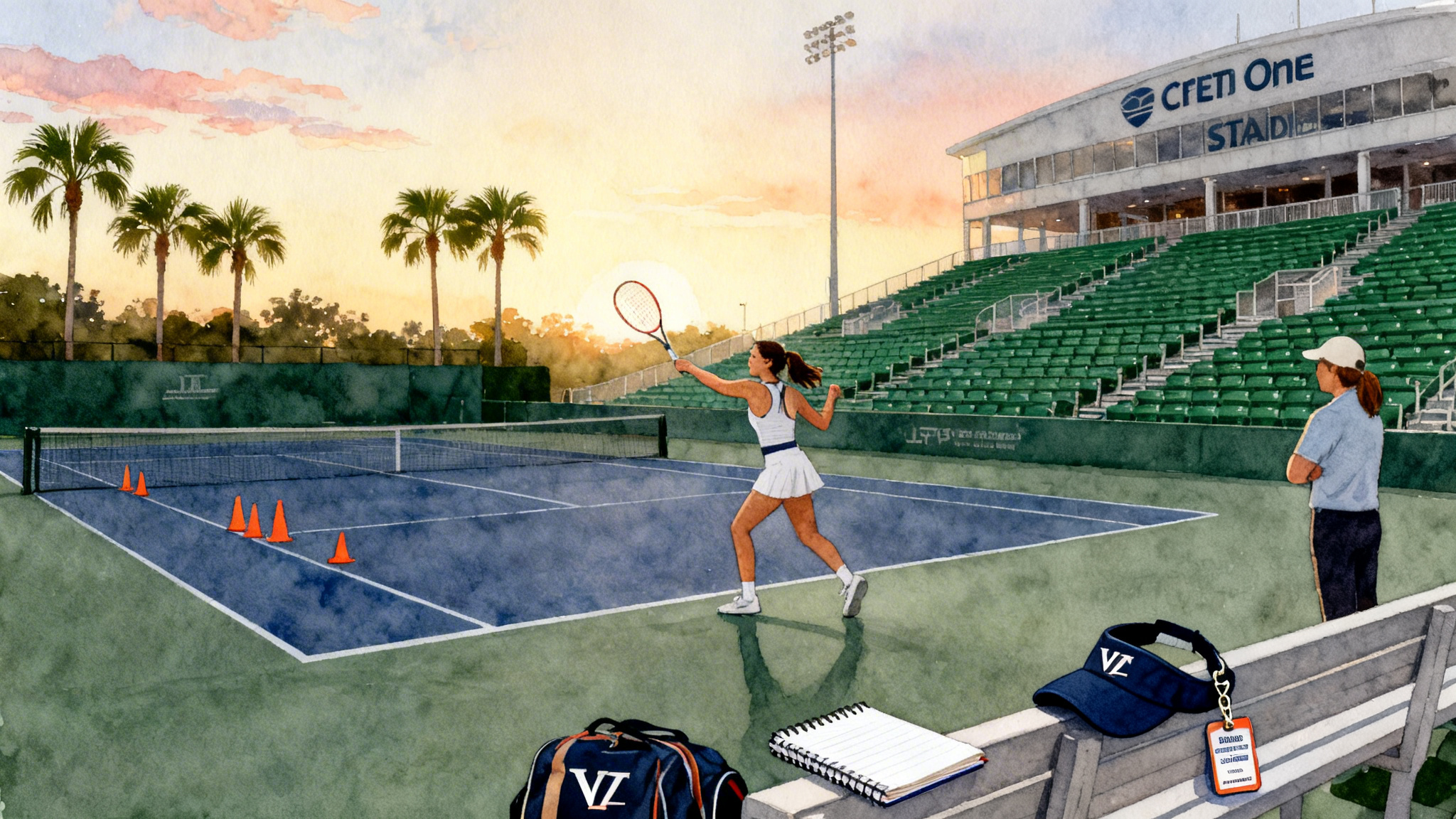
The quiet power of staying home
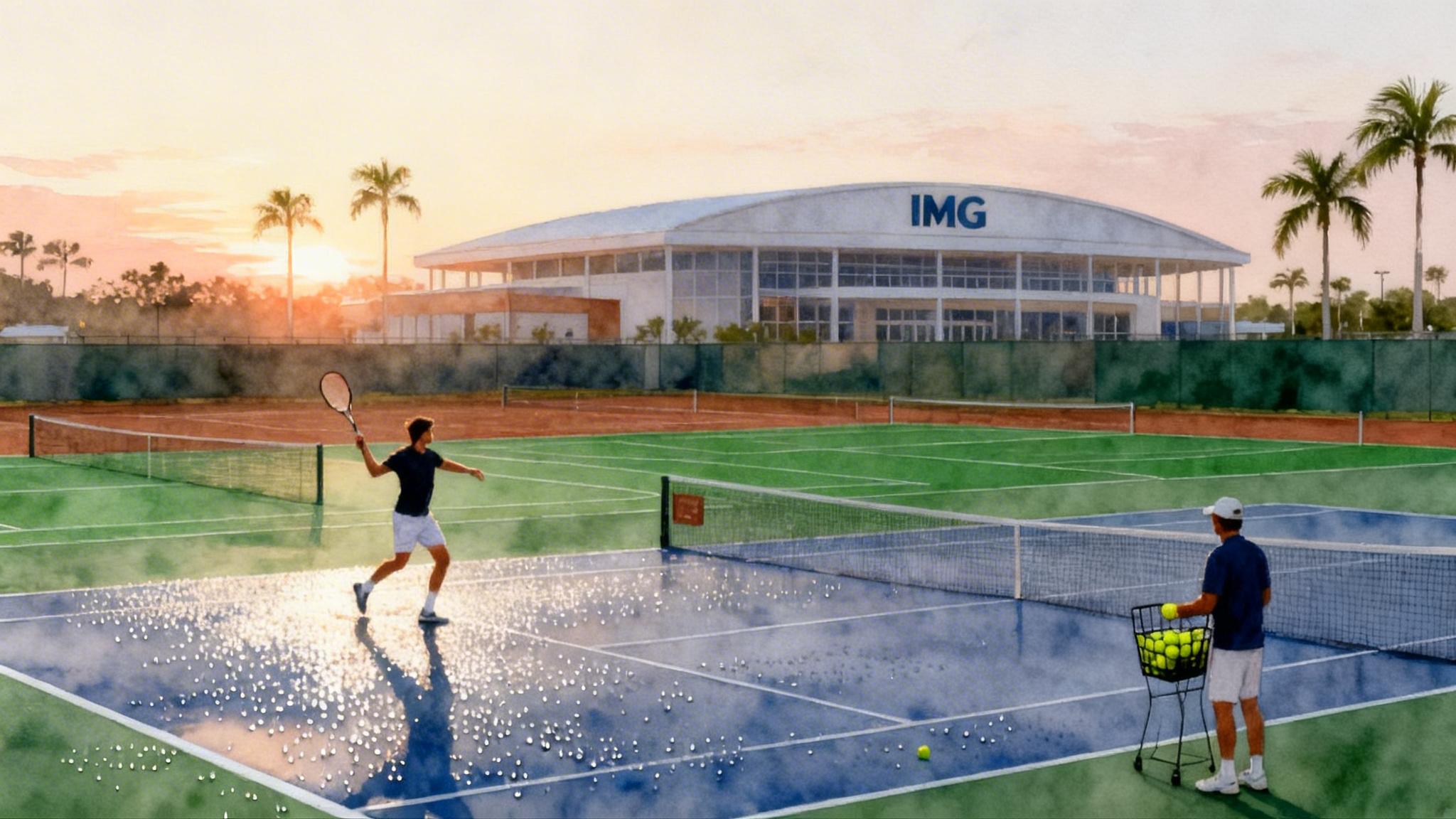
If you want a case study in how to turn promise into performance without chasing every shiny opportunity, start in Charleston. Emma Navarro grew up training at LTP Daniel Island, a facility adjacent to the venue that hosts the Credit One Charleston Open. Years later she walked into Arthur Ashe Stadium as a US Open semifinalist, proof that a local ecosystem can scale to the biggest stages when the pieces are aligned. That 2024 run was not a lightning strike. It was the visible result of years of predictable work in one place, under one voice, with a smart detour through college tennis to sharpen competitive edges. For readers who want a primary receipt that this pathway travels, see the tournament’s own account of Navarro’s breakthrough into the last four at the US Open in September 2024, captured in this US Open semifinal breakthrough.
This is not a story about perfect circumstances. It is a blueprint about choices. The main ingredients were a hometown, family-backed base at LTP Daniel Island, long-term coaching from Peter Ayers, and a deliberate stop at the University of Virginia, where Navarro won the 2021 NCAA singles title. The sequence mattered as much as the ingredients. Each step met the demands of the next rung, so no leap felt like free fall. We have seen similar community-rooted development as JTCC shaped Tiafoe, another reminder that you can build a national game on local miles.
Inside the academy: daily reps that travel
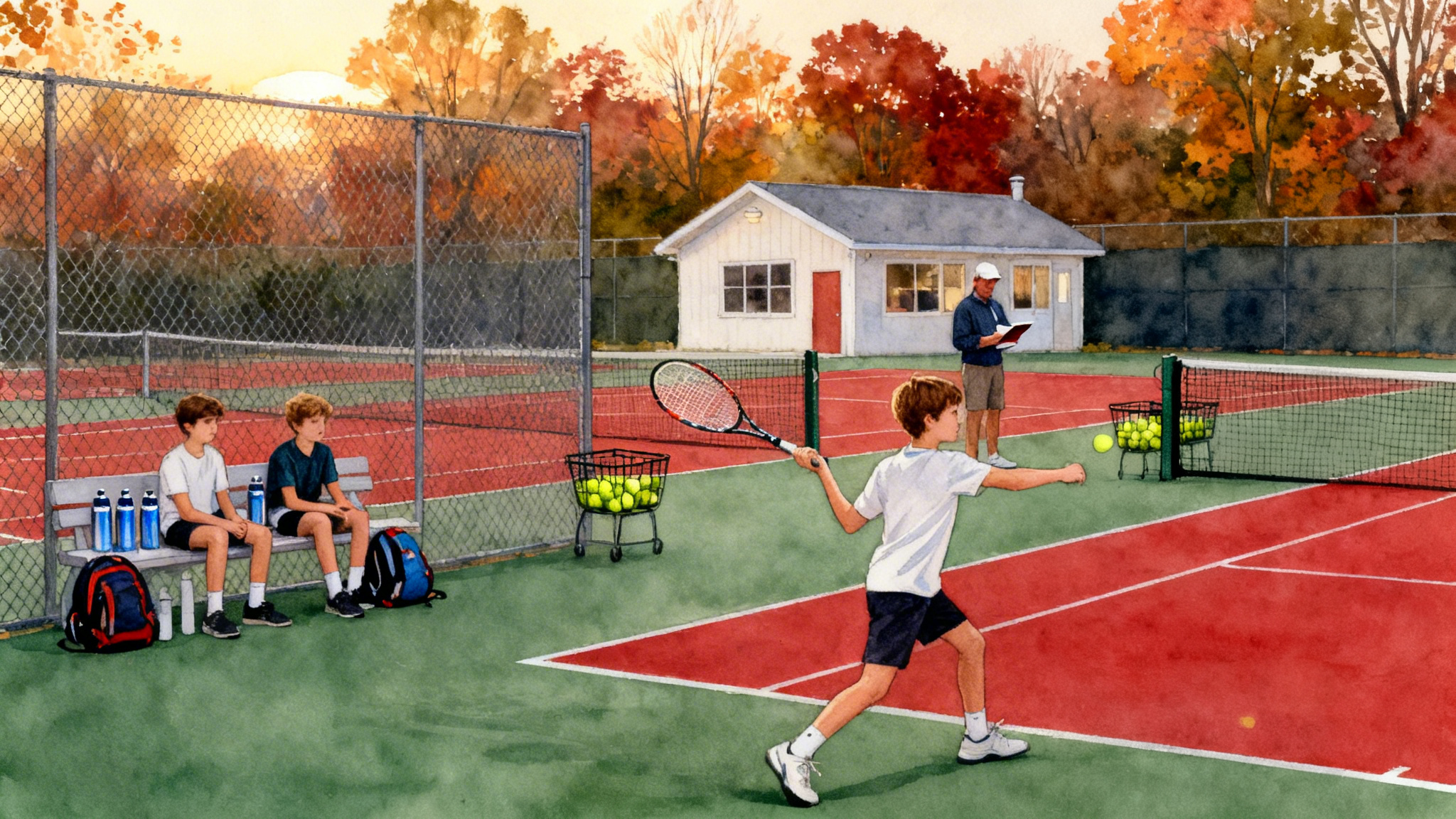
Picture a laboratory where most experiments are simple: repeat high-percentage patterns until they hold up when the heart rate is red-lined. That is what the academy environment gave Navarro. At LTP Daniel Island she could string together morning fitness, late-morning drilling, and afternoon situational points without a commute or a learning curve every time a new coach stepped in. The courts were familiar, the feeds were consistent, and the feedback loop was short. That is how a forehand becomes a shot you can live on in a third-set tiebreak.
Just as important was the proximity to live professional tennis. The Charleston Open plays on the same island. That lets a teenager hear the ball of the tour level up close, measure court speed and bounce on similar surfaces, and watch professionals manage poor starts and tight finishes. You do not have to guess what top five intensity looks like when you can see it a few minutes from your practice court. That normalizes the noise of large crowds and television cameras long before you meet them yourself.
Parents often ask whether their player needs a bigger brand or a fancier zip code to improve. The Navarro example suggests something more specific: give a player one place where they can stack durable repetitions, then provide regular, structured looks at the level they want to reach. You can build a national game on local miles if the environment is built for it. The same principle shows up globally, like the way Ferrero Academy built Alcaraz.
One coach, one language
Navarro’s longtime coach, Peter Ayers, has been the steady voice through her teenage years, college chapter, and first wave of Women’s Tennis Association events. Continuity here is not romance; it is a mechanism. One coach who knows the player across years can connect dots that would be invisible to a rotating staff. That looks like a shared vocabulary for ball height and shape, a predictable decision tree on big points, and an honest sense for when to add or subtract from the training load.
There is a common trap in youth development where a family chases problem-of-the-week solutions, switching coaches when a result dips or a backhand breaks down. Navarro’s camp took the opposite path. They built a long arc with checkpoints. They still drew on specialists for strength, movement, and scouting, but they kept one primary decision maker to filter input and protect the player’s identity. That is how incremental changes become a coherent game, not a collage.
The strategic stop in college tennis
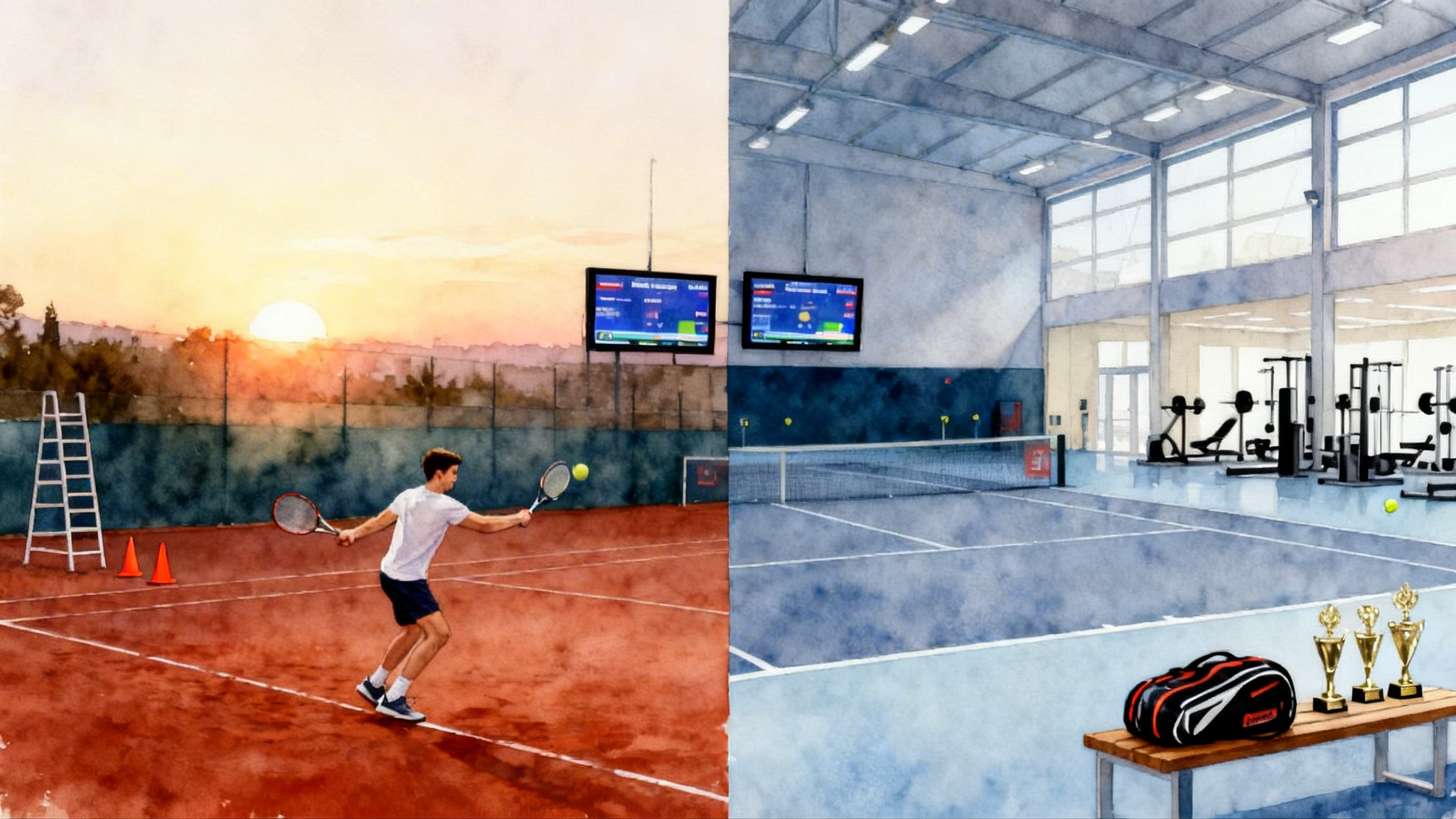
From the outside, going to college can look like a delay. For Navarro it looked like acceleration. She chose the University of Virginia, where she won the 2021 NCAA singles championship, a result recorded on the Virginia Cavaliers bio. The collegiate calendar delivered exactly what a rising pro needs but cannot always buy on the junior circuit: a high volume of meaningful matches, constant pressure from dual-match formats, and the team accountability that forces players to manage nerves rather than hide from them.
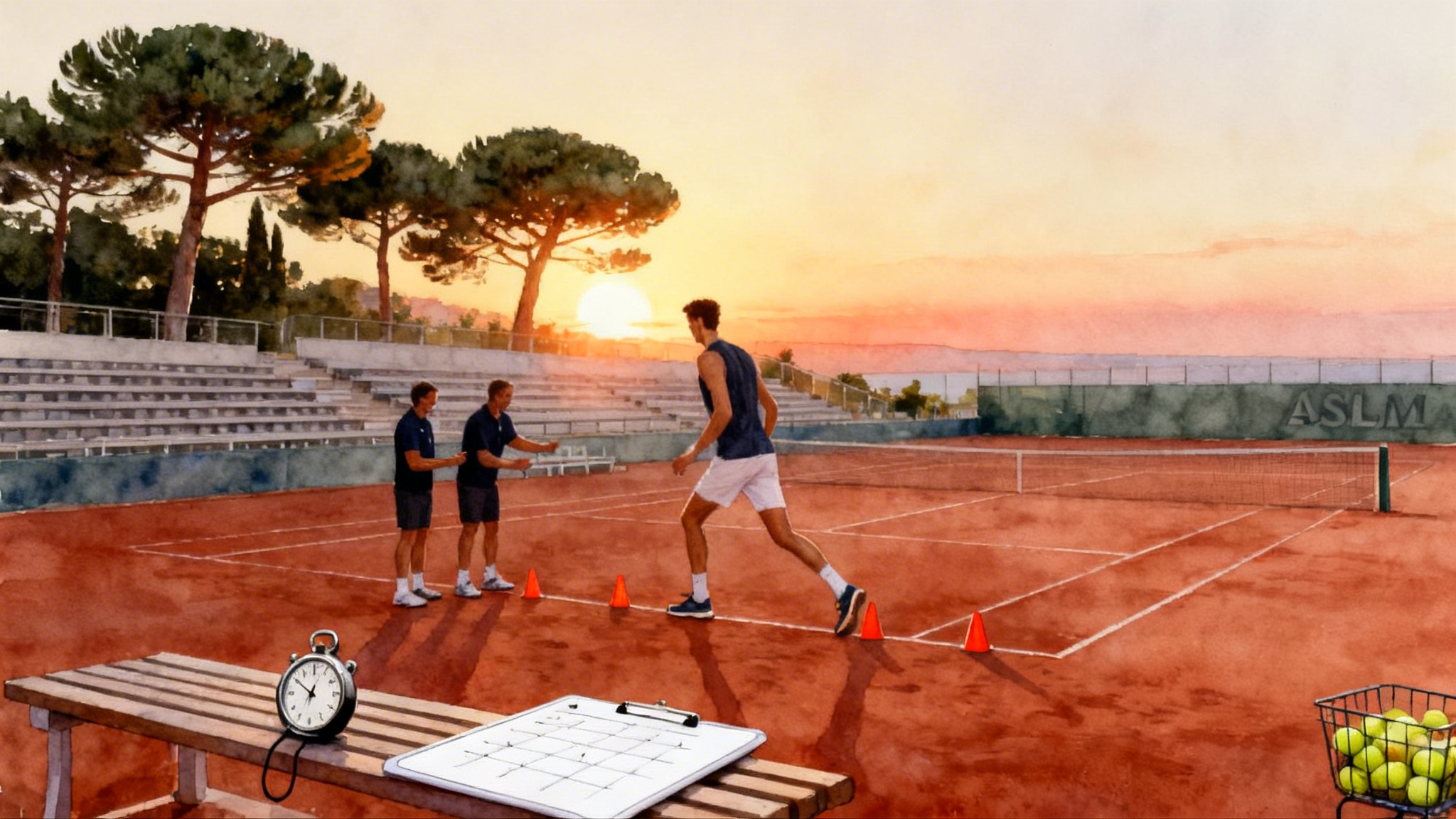
In college tennis you play on short rest, sometimes indoors in the afternoon after a windy morning practice outside. You get one crack at a deciding point with teammates watching. Those habits transfer to tour life. The NCAA also serves up variation. One week your opponent is a first-strike server; the next it is a grinder who can run all day. Solving both styles in back-to-back matches is a rehearsal for tour draws where styles flip quickly between rounds.
The other value of the college chapter was psychological. A lot of players leave junior tennis carrying the idea that every loss is a referendum on their future. Dual matches and team environments dilute that anxiety by spreading responsibility across the lineup. You still feel sick after a poor performance, but you learn to show up for teammates two days later. That resilience is the upstream of a composed third set in a professional quarterfinal.
The competition ladder: how the rungs fit
Think of competitive tennis like a set of nested arenas, each with its own speed of play and density of pressure.
- International Tennis Federation juniors: This is where you learn to win while your body and game are still forming. The travel is lighter and the scouting is thinner, which gives room for patterns to set. The goal here is not branding. It is to prove you can back up a good day with another one, then do it again after a six a.m. warmup on unfamiliar courts.
- NCAA: You trade some travel for volume. The match count spikes and you get exposure to different styles under a clock and a team score. Your goal is to harden your identity. If you are a pattern player, can you run those patterns inside a crowd and a scoreboard that do not care how you feel today.
- Women’s Tennis Association: The arenas are louder. The margins shrink. The task is not to invent a new player; it is to scale the one you already built. You add layers gradually, like improved second-serve shape, sharper return depth, and patterns that travel from hard courts to grass and clay. You are not chasing points; you are stacking reliable edges.
Navarro’s progression moved along that exact path. Each tier taught a different version of problem solving, so when she reached deep rounds at tour level, the situations felt familiar even if the stadiums were not.
The Charleston effect: practice near pressure
Training next to a tour-level event is not a magic trick. It is repetition under nearby pressure. LTP Daniel Island sits close to the stadium that stages the Charleston Open, a top-tier Women’s Tennis Association event. That means a developing player can spend part of a training week observing the speed and discipline of the very players they hope to face. On a practical level, that proximity makes it easier to integrate match watching into the training plan. A junior can watch twenty minutes of a top player defending the ad court, then go test that exact movement pattern in the next drill block.
The benefit is not only technical. Big stadiums have their own acoustics and rhythms. Banners move in crosswinds. Television towers hum. When you grow up with that sensory backdrop a short drive away, large venues feel less like spaces you enter and more like rooms you already know. That does not win you a match, but it keeps your baseline level from dipping when the lights turn on.
Decision points that shaped the climb
- Staying local rather than relocating: The default move in tennis is to move to a famous academy in another state or country. Navarro’s camp chose to build their own high-standard program at home. That stabilized her sleep, her school rhythm, and her relationships. It also cut the learning friction that comes with changing coaches and courts every few months.
- Choosing college before turning fully pro: Two seasons at Virginia compressed years of competitive education into a short window. It raised her baseline, then gave her a clear exit ramp to the tour once she met specific benchmarks like match hold percentage and first-serve points won under pressure.
- Keeping one primary coach: With Peter Ayers in the lead, the team could run multi-year projects, from refining forehand height to adding variety on the backhand slice. Assistants and consultants came in for defined roles, but the long arc stayed intact.
Each decision was conservative on the surface and aggressive in effect. By reducing noise and novelty, they freed up more bandwidth to get better at tennis rather than get better at adapting to a new setup.
What parents can copy, step by step
You do not need a billionaire backer to apply the key patterns. You do need intention and patience.
- Build a local ecosystem
- Choose one primary training site where your player can see the same court most days of the week.
- Identify two or three regular hitting partners across age bands, so your player learns to solve both pace and persistence.
- Add a nearby college program to your orbit. Ask to observe practice once a month. Offer to bring in a sparring partner when they need one. Seeing how good college players manage volume is a gift. For a family-run model that gets the details right, see the Gomez Tennis Academy profile.
- Prioritize continuity over brand-name moves
- Appoint one lead coach who signs off on every major change. Specialists are welcome, but they should report into that lead.
- Set six-month projects. For example, sharpen the first four balls of service games by scripting serve targets one and two, plus the two most common third-ball plays. Review progress monthly.
- Track simple numbers: hold percentage, break-point conversion, and unforced errors from neutral positions. Improvement here is more predictive than highlights from a single weekend.
- Use nearby professional events to normalize pressure
- If you live within a couple of hours of a tour event, plan two structured visits per year. Do not just watch; watch with a theme. For example, count crosscourt forehands that land past the service line in one set. Then try to replicate that depth standard in your next practice block.
- Volunteer for ball crew days if offered. Being on court during real matches compresses years of learning about rhythm, silence, and noise.
- If there is a qualifying draw open to local wild cards, speak early with tournament staff about the calendar and criteria. Even one qualifying match can teach you more about stage management than a month of practice matches.
A sample 12-month plan inspired by the path
This outline assumes a late junior who expects to play college tennis before turning fully professional. Adjust volumes based on age and health.
Quarter 1: Pattern building and match fitness
- Technical: Lock in serve pattern A and B on both sides. Rehearse return plus one to both corners against second serves.
- Physical: Acceleration and deceleration blocks twice weekly; test change of direction metrics monthly.
- Competitive: Two ITF junior events or national level events with the goal of playing at least eight full matches. Record first-serve points won and break-point save rates.
Quarter 2: Variability and pressure
- Technical: Add forehand height control drills and short-angle backhand patterns.
- Physical: Introduce heat and humidity training if your summer includes outdoor events.
- Competitive: Dual-match simulations with a local college or academy squad. Play deciding points from deuce to replicate college rules where applicable.
Quarter 3: Surface translation and scouting
- Technical: One week on a second surface. Script how your patterns change when bounce and speed shift.
- Physical: Maintain strength; prioritize sleep during travel weeks.
- Competitive: A stretch of back-to-back events to learn recovery between tournament days. Build a simple scouting template: two strengths to avoid, two patterns to attack, one changeup for momentum stalls.
Quarter 4: Consolidation and audit
- Technical: Rehearse second-serve protection games. Add slice and short-angle forehands to create different ball heights.
- Physical: Off-season build with a clear floor on weekly sprint volume and strength maintenance.
- Competitive: Two events with a focus on making the first set profitable. Track opening two service games each match for first-ball execution.
Common objections, practical answers
- What if our local scene is not strong enough? Strength of scene matters less than structure. You can import difficulty with a monthly sparring day, an online scouting review with a college volunteer assistant, or a quarterly drive to the nearest tour-level event.
- Are we missing out by not relocating to a famous academy? Relocation can help if your home setup is chaotic. But it often introduces churn. Start by copying the operating system that made Navarro’s rise possible: single base, single voice, consistent reps, smart exposure to higher levels.
- Will college slow us down? For some players yes. For many, it does the opposite by compressing match reps and hardening habits under pressure. The key is entering college with a plan and exit criteria, not drifting until a ranking drops.
The through line: stability as a performance multiplier
Strip this story to its skeleton and you get one idea. Stability multiplies talent. A familiar court at LTP Daniel Island made practice count more. One coach in Peter Ayers turned years of small changes into a single language on court. A measured stop at the University of Virginia gave Navarro the match volume and problem-solving habits that touring life requires. The outcome was not an overnight sensation; it was a controlled climb that reached the last four of a major in 2024 and continues to produce deep runs at top-level events.
Parents and coaches can build similar engines. Start with a local base that makes daily work easy to repeat. Choose continuity over novelty. Put your player near real pressure often enough that it feels ordinary. If you do that with discipline, the leap from your home courts to the sport’s biggest stages will feel less like a leap and more like the next step in a path you already walk.