Best Northeast Tennis Academies 2025–26: Commute Smart Guide
A parent-first, data-backed comparison for families in New York City, New Jersey, Connecticut, and Greater Boston. Learn about winter indoor access, surface mix, match-play, hours, tutoring, pricing, parking, and real recruiting paths.
 Tommy
Tommy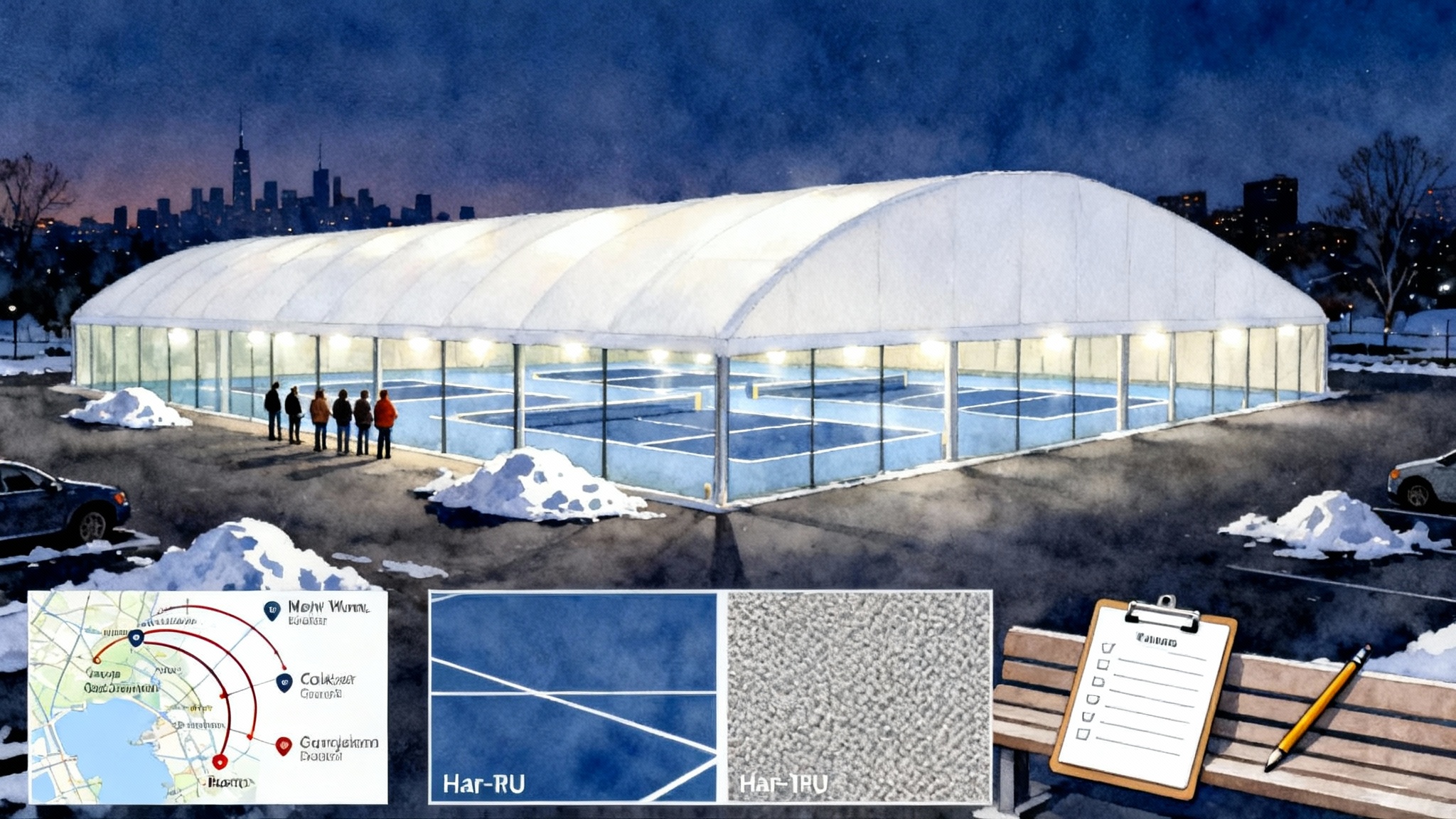
Who this guide is for
If you are a parent in the Northeast trying to balance school, traffic, and tennis, this guide is written for you. We compare the factors that matter in real life: winter indoor access, surface mix, UTR and United States Tennis Association match-play integration, weekly training hours, academics and tutoring, pricing tiers, commute time, and parking. The details below reflect typical offerings and price bands we see across leading programs in New York City and Long Island, New Jersey, Connecticut, and Greater Boston.
How to read this guide
We organize the decision into seven questions. Each has a practical benchmark so you can grade any academy on your shortlist in a single visit.
-
Can my child train indoors five to six months a year without cancellations? Look for at least four dedicated indoor courts for high performance, reliable back-up slots on weekends, and clear weather policies.
-
Will the surface mix fit both development and durability? Hard courts accelerate decision speed. Har-Tru clay reduces joint load and builds point construction. A good program uses both for players aged 11 and up.
-
Is match-play fully integrated? You want weekly live-ball sets, a published in-house ladder, and verified results that roll into Universal Tennis Rating. Early in your search, confirm the academy uses UTR match play and events.
-
How many hours per week are realistic for our family? For most middle school and early high school players, a consistent plan beats a heroic one. See the model schedules below.
-
Can academics travel with tennis? Ask about on-site study blocks, tutoring partners, quiet space, and Wi-Fi quality. Juniors should leave with both a completed assignment and enough mental fuel to sleep.
-
Do the prices make sense per hour and per outcome? The indoor Northeast market is expensive. Compare on a per-hour basis and by what is included: fitness, video, match-play, and tournament coaching.
-
What are our true recruiting lanes? Map your player’s UTR and recent results to realistic conference tiers. A clear lane reduces stress and wasted travel.
If you are also weighing destination programs, skim our roundup of best new tennis academies 2025–2026 for options worth a flight.
Regional snapshots, commute notes, and parking
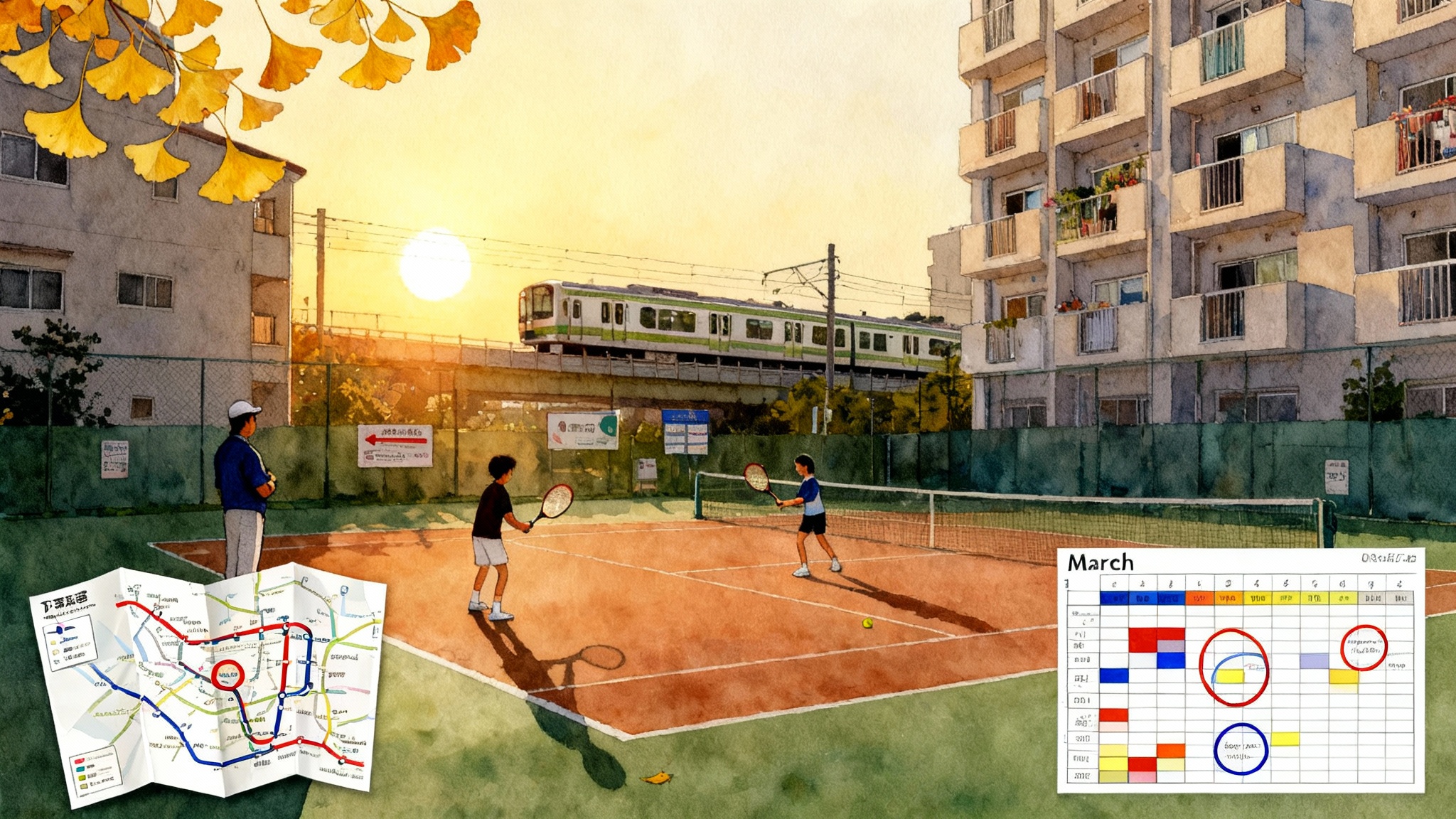
Below are commute windows most families report in fall and winter. Times vary by weather and construction, but the ranges will help you plan weekly rhythms. When in doubt, leave 15 extra minutes for winter evenings. Planning a warm-weather week during school breaks? See our South Florida academies guide for realistic camp options.
New York City and Long Island
Who it suits: apartment families who need reliable indoor courts within 15 to 60 minutes of school. You will find a mix of city facilities and suburban Long Island programs with larger court banks.
- Winter indoor access: City facilities often run at capacity on weekday evenings. Premium programs typically hold 4 to 8 performance courts from 4 to 9 p.m. Long Island clubs may offer deeper inventory on Fridays and Sundays.
- Surface mix: Mostly hard courts in the city. Long Island adds Har-Tru from April to October. High performance groups often cross-train on clay in shoulder seasons.
- Match-play integration: Look for weeknight ladders and Sunday UTR verified matches. Many programs now publish a monthly match calendar and push verified results to UTR within 48 hours.
- Weekly hours: Common packages are 6 hours (two clinic blocks plus one match-play block), 9 hours (add fitness or a third clinic), and 12 hours (four clinics plus match-play). Some players add 1 private hour.
- Pricing tiers: Typical indoor clinic rates run 70 to 120 dollars per hour, with discounts for multi-day commitments. Seasonal high performance packages often land between 6,000 and 12,000 dollars for late October through March. Private lessons range from 120 to 220 dollars per hour for senior staff.
- Commute windows: Upper East Side to Randall’s Island 15 to 35 minutes off-peak, 35 to 60 at peak. Upper West Side to Queens 25 to 50 minutes. Brooklyn to Queens 20 to 45 minutes. Midtown to Long Island’s North Shore 40 to 75 minutes depending on the Cross Island and the Long Island Expressway.
- Parking: Urban sites rely on paid garages or limited surface lots. Suburban Long Island clubs usually have free lots and easier drop-off lanes.
New Jersey
Who it suits: families based in Hoboken, Jersey City, Montclair, Short Hills, Chatham, and along the Route 24 and Route 10 corridors.
- Winter indoor access: Strong. Many facilities run 6 to 12 indoor courts with programmable blocks for high performance. Friday evenings and Sunday afternoons are best for make-ups.
- Surface mix: Mostly hard courts indoors. Clay returns outdoors from April. Some clubs maintain winter clay bubbles, which are gentler on volume weeks.
- Match-play integration: Expect weekly in-house ladders and monthly UTR events. A few programs coordinate travel blocks to nearby historically strong tournaments.
- Weekly hours: Similar 6, 9, and 12 hour packages. Fitness is often bundled. Player-to-coach ratios of 4:1 are common in high performance slots.
- Pricing tiers: 65 to 110 dollars per clinic hour is typical in northern New Jersey, with seasonal packages around 5,500 to 10,000 dollars. Private hours range from 110 to 200 dollars.
- Commute windows: Hoboken and Jersey City to Weehawken or Edgewater 10 to 25 minutes. To Livingston, Chatham, or Florham Park 25 to 60 minutes depending on the I-78 and Route 24. Montclair to central Morris County 20 to 40 minutes.
- Parking: Generally free surface lots. Many clubs sit in light commercial parks with predictable curbside pickup.
Connecticut
Who it suits: Westchester and Fairfield County families, plus New York City parents comfortable with the train for weekend matches.
- Winter indoor access: Robust along the Greenwich, Stamford, and Norwalk corridor. Weekday evenings fill up quickly. Saturday late afternoons are a good match-play window.
- Surface mix: Healthy hard plus Har-Tru split. Many Fairfield clubs run clay from April to October and keep hard courts year-round indoors.
- Match-play integration: Integration is mature. Expect ladders, verified UTR match sets, and staff who actively seed players into local and regional events.
- Weekly hours: 6, 9, and 12 hour plans with small-group fitness and mobility. Some programs add a study hall block between clinic and match-play to ease late rides home.
- Pricing tiers: 70 to 120 dollars per clinic hour. Seasonal packages run 6,000 to 12,500 dollars. Senior private hours 140 to 230 dollars.
- Commute windows: Mamaroneck, Scarsdale, or White Plains to Greenwich or Stamford 20 to 45 minutes. Upper Manhattan to Greenwich 40 to 70 minutes. Metro-North riders using the New Haven Line can hit weekend matches with a short rideshare for the last mile.
- Parking: Free lots dominate. Country-club based programs may have gatehouses, so budget an extra five minutes for check-in.
Greater Boston
Who it suits: families in Brookline, Newton, Weston, Waltham, Lexington, Andover, and the South Shore.
- Winter indoor access: High demand in weekday prime time. Programs with 6 or more indoor courts typically guarantee 3 to 4 high performance blocks per week and stack match-play on Sundays.
- Surface mix: Mostly hard indoors. Some suburban sites maintain winter clay. Outdoor Har-Tru reappears in spring and summer.
- Match-play integration: Boston programs often pair in-house ladders with trips to New England and Mid-Atlantic UTR events. Expect published calendars and active college-prep seminars.
- Weekly hours: 6 and 9 hour tracks are common for younger high performance players. Twelve hour tracks are feasible if school and commute allow. Strength and mobility often runs in a separate room before on-court blocks.
- Pricing tiers: 70 to 125 dollars per clinic hour. Seasonal packages roughly 6,500 to 12,500 dollars. Senior private lessons 140 to 240 dollars.
- Commute windows: Back Bay or Brookline to Newton or Weston 20 to 40 minutes. Cambridge to Lexington 25 to 45 minutes. South End to South Shore facilities 30 to 60 minutes depending on the Southeast Expressway.
- Parking: Suburban clubs have free lots. City or campus-adjacent sites may require paid garages or short walks from surface lots; late-evening pickup lines move faster after 8 p.m.
Surface mix: why hard and Har-Tru both matter
Hard courts sharpen first-step speed and reward early contact. Clay, especially Har-Tru, slows the bounce, extends rallies, and teaches height, shape, and patience. For growing joints and backs, clay also spreads impact across time. Parents of tournament-active juniors should favor a 60 to 70 percent hard ratio from November to March, then bias 50 to 50 or even 40 to 60 toward clay from April to October if your local schedule allows. In programs that run both surfaces, ask how often they move a group from hard to clay within a training month and how the curriculum shifts on the slower courts.
Match-play that counts: UTR and USTA
Training is input. Verified matches are output. The simplest quality check is the academy’s match calendar. Strong programs publish weekly ladders, require players to record scores, and run regular events that feed Universal Tennis Rating. If you are new to rating-based scheduling, read the basics on UTR events and ratings, and confirm your academy runs UTR match play and events. For players targeting sectional points and national pathways, ask how the academy schedules United States Tennis Association events and whether a coach attends key tournaments. The United States Tennis Association explains formats and levels at its page for junior tournament structure. For a Rochester example of integrated ladders and verified results, review Empire Tennis Academy.
Model weekly plans that fit school
Here are common templates that work for most middle and high school families during winter. Adapt the commute buffer to your route.
- Six hours per week: two 2-hour high performance clinics on Tuesday and Thursday, one 2-hour Sunday match-play block. Add a 30-minute post-clinic mobility routine at home. Good for 11 to 13 year olds building volume.
- Nine hours per week: three 2-hour clinics on Monday, Wednesday, and Friday, plus one 3-hour Sunday block that includes verified match-play. Layer a 30-minute study hall between clinic and match-play to avoid late homework starts.
- Twelve hours per week: four 2-hour clinics Monday through Thursday, a 2-hour Saturday or Sunday match block, and one 2-hour guided fitness and video block. Suitable for older juniors managing college-prep loads and needing more live-ball reps.
Tip: if school ends at 3 p.m. and clinic starts at 5 p.m., place a light snack and a 25-minute study sprint in the hour between. Many academies will let players sit in a quiet corner with Wi-Fi if you ask.
Tutoring and academics that actually work
A tutoring line item is only useful if the schedule respects brain energy. Ask for one of two models:
- Front-load model: 45 to 60 minutes of tutoring immediately after school, then a quick snack, then the clinic. This suits players who fatigue early in the evening.
- Backfill model: clinic first, then 45 minutes of tutoring while the body cools down, then a short drive home. This suits players who get sharper after exercise.
In both models, confirm a quiet space, available outlets, and a written plan for missed sessions on tournament weekends. If tutoring is bundled, ask how many sessions roll over to spring.
Pricing tiers and what parents actually receive
Across the Northeast, indoor high performance clinics typically price between 70 and 125 dollars per hour. What drives the spread:
- Court density: more simultaneous courts for high performance reduce cost per player.
- Staff mix: programs that use senior directors for on-court blocks charge toward the high end; those using assistant pros under director plans may be 10 to 20 dollars cheaper per hour.
- Inclusions: fitness, video review, and match-play blocks included in the package reduce add-on costs elsewhere.
- Seasonal commitment: prepaying for a 20 to 24 week block often lowers the hourly rate 10 to 15 percent.
To compare programs fairly, calculate a total cost per winter week including all clinic hours, match-play, fitness, tournament coaching fees, and expected travel. Divide by your planned number of matches per month to see cost per verified result. The most expensive program on paper may be cheaper per match if it runs in-house verified play every Sunday.
College recruiting lanes that are real
Families often ask whether a given academy can deliver a scholarship. The honest answer is that scholarships follow the player’s body of work, not a logo on the T-shirt. Use this map to set expectations.
- Power conference Division 1 targets: typically boys UTR 12 and up, girls UTR 10.5 and up by junior spring. These players win main-draw matches at strong UTR events and manage national travel.
- Mid-major Division 1 and strong Division 2: boys UTR 10.5 to 12, girls UTR 9 to 10.5, with consistent results against regional peers and strong fitness standards.
- Academic-focused Division 3: boys UTR 8.5 to 10.5, girls UTR 7.5 to 9.5, with grades and test profiles that fit school priorities and a coach who values doubles.
Action steps for parents:
- Build a target list of fifteen schools by October of junior year split evenly across reach, match, and safety tiers.
- Email short match clips and a one-page academic-athletic resume monthly from March to August of junior year.
- Play school-adjacent UTR events when possible so staff can watch without travel.
- Ask your academy how many players they placed in your target tier last year and what the players’ UTR ranges were on July 1.
A commute-first short list for each metro
Use these patterns to build a list that respects your weeknight reality.
- If you live in Manhattan or northwest Brooklyn: prioritize programs with city access plus a Long Island option on Sundays when traffic is lighter. Favor garages with validation or surface lots on Randall’s Island.
- If you live in Hoboken or Jersey City: favor clubs within 25 minutes on weeknights, then add a Morris County site for Sunday blocks and UTR events.
- If you live in southern Westchester or lower Fairfield: angle for Greenwich and Stamford on weeknights. Add Norwalk or Westport on Sundays.
- If you live in Brookline, Newton, or Cambridge: use Newton or Weston on weeknights, then rotate to Lexington or Andover for weekend ladders.
Trial-session checklist for families
Bring this checklist and score each item from 1 to 5. Anything averaging below 3 deserves a follow-up conversation.
- Safety and supervision: Is every court clearly assigned with a visible coach? Are transitions managed or chaotic?
- Rally quality: How long are live-ball rallies during drilling and point play? Under ten seconds means too much picking up and not enough learning.
- Feedback density: Does each player get a specific technical or tactical cue at least once every five minutes?
- Match-play integrity: Are sets recorded and posted? Are line calls and scoring supervised by coaches?
- Surface planning: Do players rotate between hard and clay across a month with a purpose explained by coaches?
- Fitness and mobility: Is there a written block with warm-up, injury-prevention work, and movement patterns that match the day’s theme?
- Study space: Is there a quiet corner for homework with outlets and Wi-Fi, and is it actually used by players between blocks?
- Parent communication: Do you receive a monthly plan and a short update after trial? Are coaches open to short, scheduled check-ins?
- Commute reality: How long from door to court, court back to dinner table? Was parking predictable? Note the real time on a weekday.
Sample season plans by age and goal
- Ages 10 to 12, development focus: nine hours weekly from November to March, with two UTR events per month. Target 50 percent of spring practices on clay to build point construction.
- Ages 13 to 15, competitive focus: twelve hours weekly, three UTR events per month, and one strength session. Keep a simple spreadsheet of verified matches and set a goal of two quality wins per month.
- Ages 16 to 17, recruiting focus: nine to twelve hours weekly, one video session monthly, and a clear school list. Balance travel so grades and sleep do not suffer. Add two targeted campus visits tied to local UTR events.
Final tips on parking and pickup
- Urban sites: confirm garage rates and validation. Plan a five minute walk buffer for campus-adjacent Boston facilities and Manhattan garages.
- Suburban sites: free surface lots are common, but winter snow piles can shrink lanes. Ask the front desk about peak pickup times and use a text-based handoff point for safety.
The decision in one page
If you keep only one page from this guide, keep this scoring sheet. Rate each academy 1 to 5 on the seven pillars: winter access, surface mix, match-play integration, weekly hours fit, academics support, value for price, and commute and parking. A total above 28 is a green light. A total below 22 needs a second look or a different program. Simple beats complicated when weeks get cold and homework piles up.
Conclusion: choose the commute you can repeat
In the Northeast, winter is a test of systems. The best academy for your child is not the one with the loudest reputation. It is the one you can reach in thirty to forty five minutes on a school night, where match-play is recorded, and where a coach can explain how today’s drill becomes tomorrow’s point. Pick the commute you can repeat, the plan you can afford for six months, and the lane that fits your child’s current results. If you do that, progress will be steady and the spring thaw will arrive with a player who is fitter, smarter, and ready for real matches.