NCAA to ATP/WTA 2026: A 12-Month Transition Playbook
A step by step, 12 month plan for graduating college players and parents. Build a first pro schedule, design weekly training that links skill and strength, budget smartly, track KPIs, and pick a base academy to accelerate ranking.
 Tommy
Tommy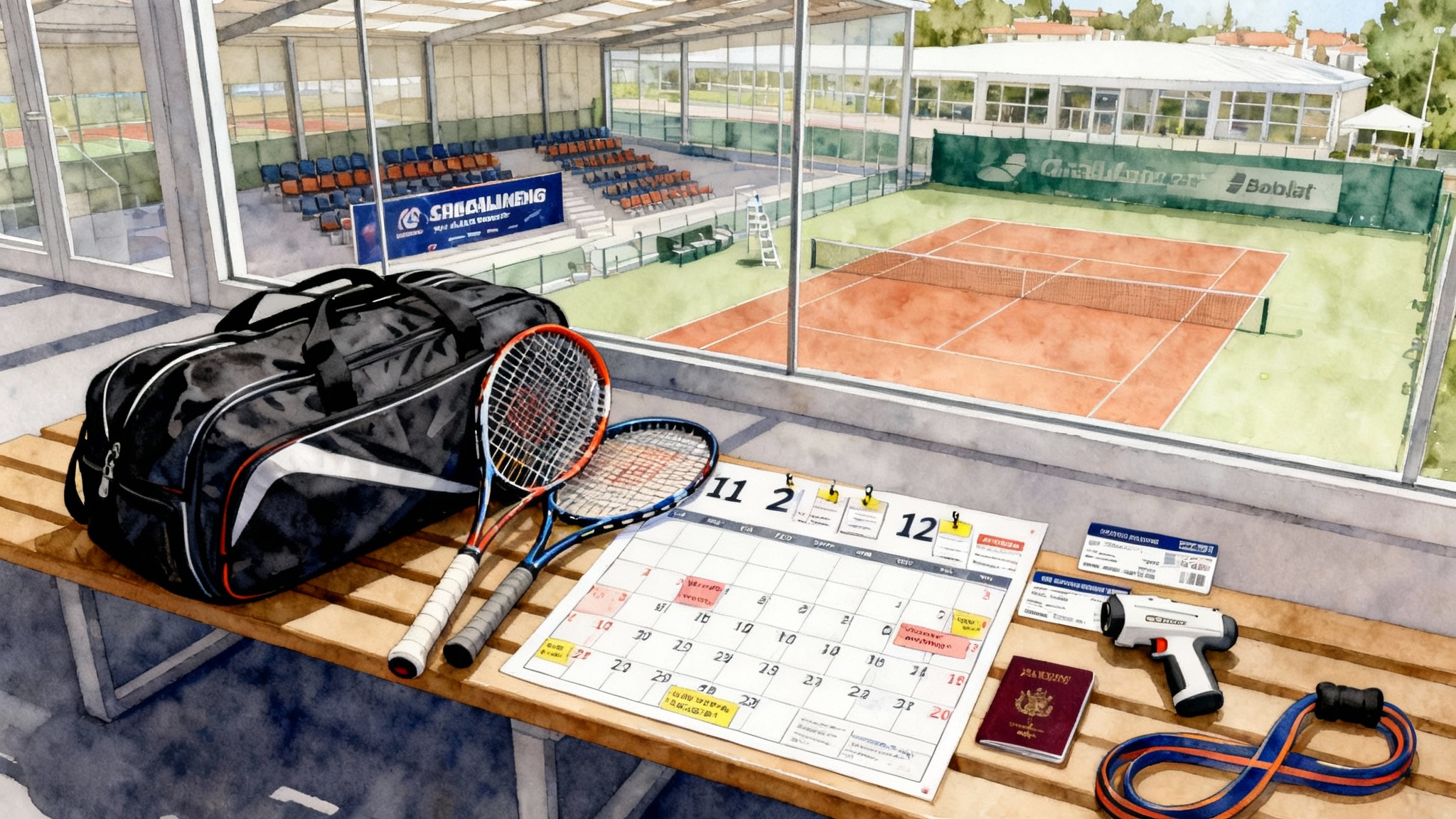
Who this playbook is for
You just finished or are finishing college tennis, your family is supportive, and you want a real shot at the professional tour. You do not need slogans. You need a calendar, a budget, and a training plan that ties technique to power, plus a schedule that compounds ranking points. This guide gives you a practical 12 month plan you can run starting today.
Two quick definitions before we start. ITF stands for International Tennis Federation, which runs the World Tennis Tour at entry levels. ATP and WTA run the main professional tours for men and women and the Challenger and 125 series that bridge to the top. UTR means Universal Tennis Rating, a continuous scale that estimates playing level. WTN means World Tennis Number, another rating used worldwide.
The north star for Year 1
Your target is simple. Earn a first professional ranking and graduate from ITF 15K and 25K events into consistent Challenger qualifying by Month 9 to 12. This means three things must move together every month: match wins against players already holding points, reliable travel and funding, and a body that can repeat your best patterns under pressure.
Month 1 to 2: Set the foundation and build your first schedule
- Register or reactivate your ITF account and set up entry profiles. The entry pathway starts on the ITF World Tennis Tour overview. Read how acceptance lists and alternates work, then mark weekly entry deadlines on a master calendar.
- Plan two tournament clusters of three to four consecutive weeks in the same region to reduce costs and to learn conditions. Examples include indoor hard in Central Europe in late winter, clay in the Mediterranean in spring, or hard in the United States late summer. Pick surfaces that match your college strengths early, then add a second surface in the second cluster.
- Start your budget model. List per week estimates for airfare or rail, local transport, lodging, food, stringing, coaching, and entry fees. Include an emergency buffer of 10 to 15 percent.
- Choose a base academy with tour support. This is where you will live and train between swings. Shortlist two to three options with indoor and outdoor courts, a performance gym, recovery staff, and access to frequent events.
Deliverables by the end of Month 2:
- A six to eight week tournament map with entries submitted on time.
- A basic budget that you and your parents approve.
- An academy trial week booked for Month 3.
Month 3: Weekly microcycle that links skill and power
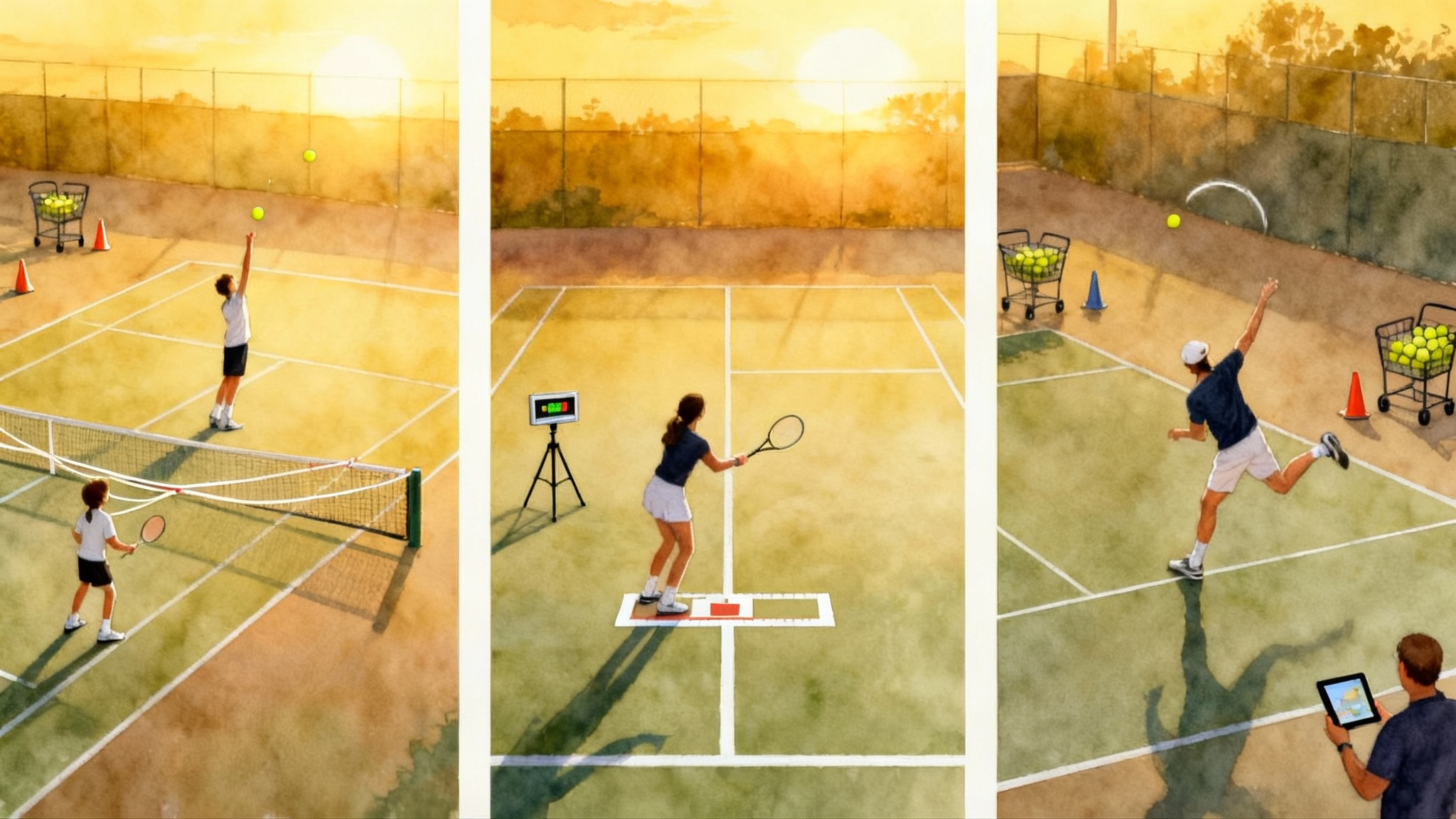
Build a seven day template you will use all year, then scale volume up or down for tournament weeks. The point is to tie your technical goals to the force and speed qualities that make those skills hold under stress.
Example training microcycle for a non tournament week:
-
Monday, force focus and serve patterns
- AM on court 90 minutes: Serve plus one from both sides, deuce and ad corner patterns, first ball height and distance targets. Film 20 serves per side. For deeper context, review the Serve Development 2026 guide.
- PM gym 60 minutes: Heavy lower body strength with long rest, trap bar deadlift or back squat at moderate to heavy load, single leg strength, isometric holds for ankle and hip. Finish with 3 sets of 10 seconds medicine ball slams.
-
Tuesday, velocity focus and returns
- AM on court 90 minutes: Return blocks on first and second serves, step in patterns, depth to middle third then angled second ball. Add 15 minutes of short court reaction games. Sharpen reads with the Return of Serve 2026 blueprint.
- PM gym 50 minutes: Olympic lift variation or loaded jump, band assisted jumps, upper body push pull contrast. Add shoulder external rotation and forearm prehab.
- Optional 10 minute microdose after dinner: 6 to 8 high quality sprints of 10 meters with full recovery.
-
Wednesday, tactical repetition and special endurance
- AM on court 100 minutes: Crosscourt to down the line change of direction series, two on one defense to offense, 15 minute tiebreak ladder.
- PM gym 40 minutes: Aerobic power work, such as 6 by 3 minutes on a curved treadmill or bike at strong but controlled output, 2 minutes easy between. Core stiffness circuits.
-
Thursday, speed and weapons
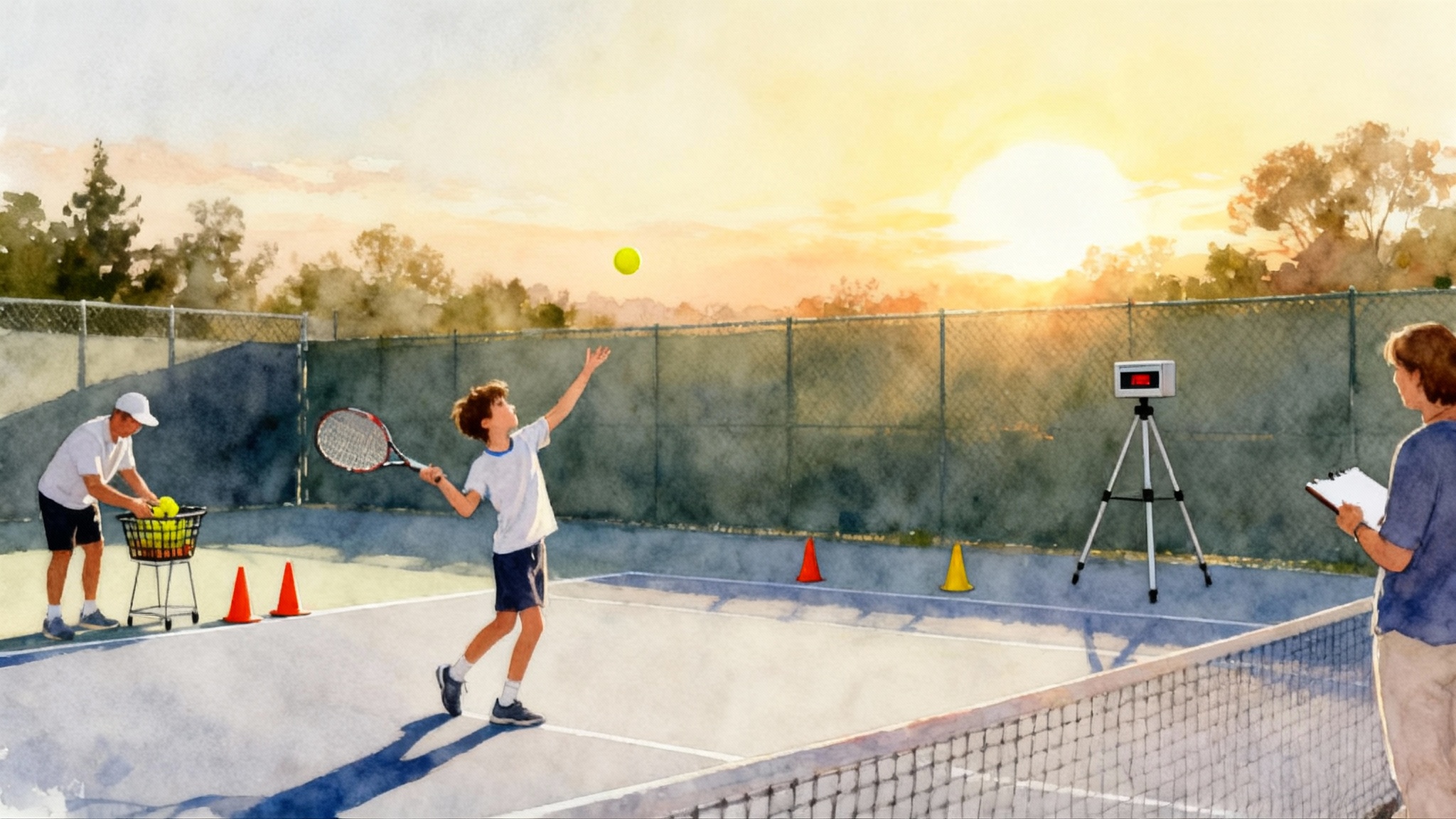
- AM on court 90 minutes: Serve targets with radar, second serve confidence games to corners, forehand plus drive volley. Finish with 12 point serves only set.
- PM gym 45 minutes: Acceleration and change of direction, 5 yard and 10 yard starts, curvilinear runs, light medicine ball heaves.
-
Friday, match play and scouting
- AM on court: Two tiebreak sets starting 30 all on every game, then situational games based on last week’s stats. Record serve locations and return court positions.
- PM recovery: Mobility, soft tissue, 10 minutes cold and hot contrast.
-
Saturday, long rally quality and technical cleanup
- AM on court 75 minutes: Deep crosscourt consistency sets with targets, slice backhand neutral balls, drop shot disguise practice.
- PM optional: Yoga or light aerobic 30 minutes.
-
Sunday, off or travel
Tournament week adjustments:
- Cut gym to two 30 minute speed microdoses, remove heavy strength, and shift court time to the day before your first match with serves and returns only.
- If you play back to back days, do 8 to 12 minutes of mobility and tissue work only.
Month 4: First tour swing, travel habits, and cost control
Your first four week swing is a live test. The goal is to control variables you can manage.
Travel and budget tactics:
- Travel in small pods with one to two teammates to split lodging and rental cars. Book apartments with kitchens when possible to save on meals.
- Pack two frames per day of play, pre string in the evening, and carry an emergency string set in your backpack.
- Cost ranges to expect per week without a full time coach: 900 to 1,800 United States dollars in Europe, 1,200 to 2,200 United States dollars in North America, depending on flights. Coaching on site for a few matches may add 300 to 600 United States dollars per week.
On court aims for the first swing:
- Win a main draw match at 15K level or qualify twice. A single quarterfinal can change your acceptance status for the next month.
- Build a dossier on venues and conditions you like, such as altitude, ball type, wind patterns.
Month 5: KPI tracking starts paying off
Start simple and track the same items every match. Use one page per event, then a rolling dashboard.
Match performance KPIs to track:
- First serve percentage and first serve points won.
- Second serve points won and double faults.
- Return points won on first and second serves.
- Break points won and saved.
- Serve plus one forehand win rate when the first ball is inside the baseline.
- Rally length distribution of points you win versus points you lose.
Physical and readiness KPIs:
- Body mass and hydration status each morning of match days.
- Countermovement jump height on a contact mat or phone app twice per week.
- Ten meter sprint time once per week, recorded after warm up.
- Daily rating of perceived exertion after practice and sleep quality each morning.
Benchmarks to aim for by Month 6 at 15K to 25K level:
- First serve points won above 70 percent, second serve points won above 50 percent.
- Return points won above 40 percent on second serves.
- Serve plus one forehand win rate of 60 percent or better on short first balls.
- Countermovement jump stable within plus or minus 5 percent week to week.
Month 6: Upgrade your base and spotlight on Tenis Kozerki
Choosing a base academy is not just about courts. It is about live access to events, strong practice groups, and travel repairs between swings.
What to evaluate:
- Courts and surfaces that match your tournament plan, indoor and outdoor.
- A performance gym with force plates or at least a jump mat, plus technicians who can test speed and power.
- Sparring partners around your level and stronger.
- A physio who knows tour demands and can handle shoulder, hip, and back issues.
- A team that knows how to set entries, request practice courts at tournaments, and handle last minute withdrawals.
Spotlight example, Tenis Kozerki in Poland:
- The campus combines indoor and outdoor courts, lodging on site, and a performance center. It hosts an annual ATP Challenger event on the same grounds. Living in a place that stages a Challenger can create early exposure to draw sign in rhythms, practice with visiting pros when possible, and realistic surfaces under tournament tempo. Read the Tenis Kozerki academy profile for a deeper look.
- Add a two week trial during a quieter month. Train on site, ask to hit with touring players if available, and watch how the staff manages travel logistics. If you like the fit, book 10 to 14 weeks across the year in two to three blocks.
What not to expect:
- Do not plan on wildcards. Treat any wildcard as a bonus, not a pillar of the plan.
- Do not expect your game to change in two weeks. You are building habits that hold under travel and match stress.
Month 7 to 8: Second swing and first Challenger touches
If your acceptance status improves or you have alternates near the cut, add a Challenger qualifying week to the end of a 25K run. Study the ATP Challenger Tour overview so you understand draw sizes, qualifying, and points.
A practical path:
- Play two weeks of 25K, then target a Challenger qualifying nearby. If you are borderline, travel anyway and practice on site, since late withdrawals happen. Keep a fallback 25K in driving distance.
- Between weeks, hold the speed microdose pattern, such as 2 by 5 ten meter sprints and 2 by 3 medicine ball throws on the day before matches.
Scouting and pattern sharpening:
- Build opponent notes. Where do they serve 30 40 from the deuce side, how often do they chip on second serve returns, what is their favorite rally pattern.
- Rehearse your best two holds and one break pattern under tiebreak pressure the day before matches.
Month 9: Review the model and fix bottlenecks
By now you have 20 to 35 pro matches. Sit with your coach and parents and identify which constraint blocks progress.
- If acceptance lists keep you out, add a three week block at 15K to build wins and points, then re attack 25K and Challengers.
- If you reach sets but cannot close, target second serve resilience and return depth. Write a mini block with 200 second serves per week and 20 minutes of return depth to middle third in every practice.
- If you are healthy but flat, add a four week general strength rebuild. Drop loads to moderate, shorten sessions, and sleep 30 minutes more per night.
Month 10: Budget and fundraising tune up
Your family and support team need clean numbers. Publish a one page budget and share it with supporters.
Lean weekly budget example without a full time coach:
- Lodging 350 to 500 United States dollars by sharing apartments.
- Local transport 120 to 200 United States dollars by using rail or compact rentals.
- Meals and groceries 200 to 300 United States dollars with kitchen cooking.
- Stringing and equipment 60 to 120 United States dollars.
- Entry fees and incidentals 100 to 150 United States dollars.
- Airfare amortized 150 to 300 United States dollars per week across a long swing.
Augmented budget with a traveling coach can add 700 to 1,500 United States dollars per week depending on day rate and travel shares.
Funding ideas with clear value exchange:
- Local business sponsorships in exchange for logo patches and quarterly updates.
- A limited coaching clinic at your college venue during the off season.
- A monthly supporters newsletter with match clips and KPI dashboards.
Month 11: Professionalize routines and recovery
You cannot add endless volume. You can make recovery automatic.
- Post match routine: 10 minute bike, 10 minute mobility, protein and carbohydrate within 30 minutes, 10 minutes of easy serves or shadow swings to reset shoulder rhythm.
- Daily rhythm: consistent wake time, two hydration checks, 15 minutes of daylight exposure early, and a 20 to 30 minute nap only on heavy days.
- Travel checklist: passport, two rackets in carry on, grips, strings, meds, recovery tools, snacks, and an emergency cash stash of 100 to 200 United States dollars.
Month 12: Consolidate and plan Year 2
End the year with a three part review.
- Results: total wins against ranked players, rounds reached at 25K, and any Challenger qualifying wins.
- Processes: which microcycle days correlated with the best weeks, which recovery habits you kept even under stress, which academies and venues supported your best play.
- Finances: total spend, cost per match, cost per ranking point. Identify one to two ways to save 10 percent without touching performance.
If you reach Challenger qualifying consistently, plan three Challenger focused blocks next year with short 25K resets between. If you are still mostly at 15K level, double down on pattern reliability and physical robustness, then re test at 25K after a four to six week rebuild.
Parent corner: how to help without overstepping
- Own the logistics and budget model so the player can focus on performance. Keep receipts and share a monthly dashboard.
- Watch with a notepad rather than offering live advice. Collect questions, then recap the day in 10 minutes after dinner.
Putting it all together at a base academy
Here is how a typical three week Kozerki block can look in practice. Use this as a template for any quality base with similar resources.
- Week 1, rebuild after a swing: two court sessions per day at reduced volume with cue based drills, two strength sessions that restore force, daily mobility, and light match play with academy pros.
- Week 2, sharpen: velocity based lifting, serve targets on radar, return depth under pressure, plus two full practice matches. Get soft tissue work twice.
- Week 3, travel prime: reduce gym to short speed work, cut court time to serves and returns, and play one or two pressure tiebreak sets. Pack three days early and ship strings if needed.
Benefits of an on site Challenger environment:
- You see daily what the level requires. You can watch players close out sets, warm up, and handle delays. The tempo becomes normal.
- You can practice with touring players when available and learn warm up and cool down timing that travels.
- The staff understands tournament weeks, so they shape sessions to match your schedule rather than a generic class plan.
Tools and templates you can copy today
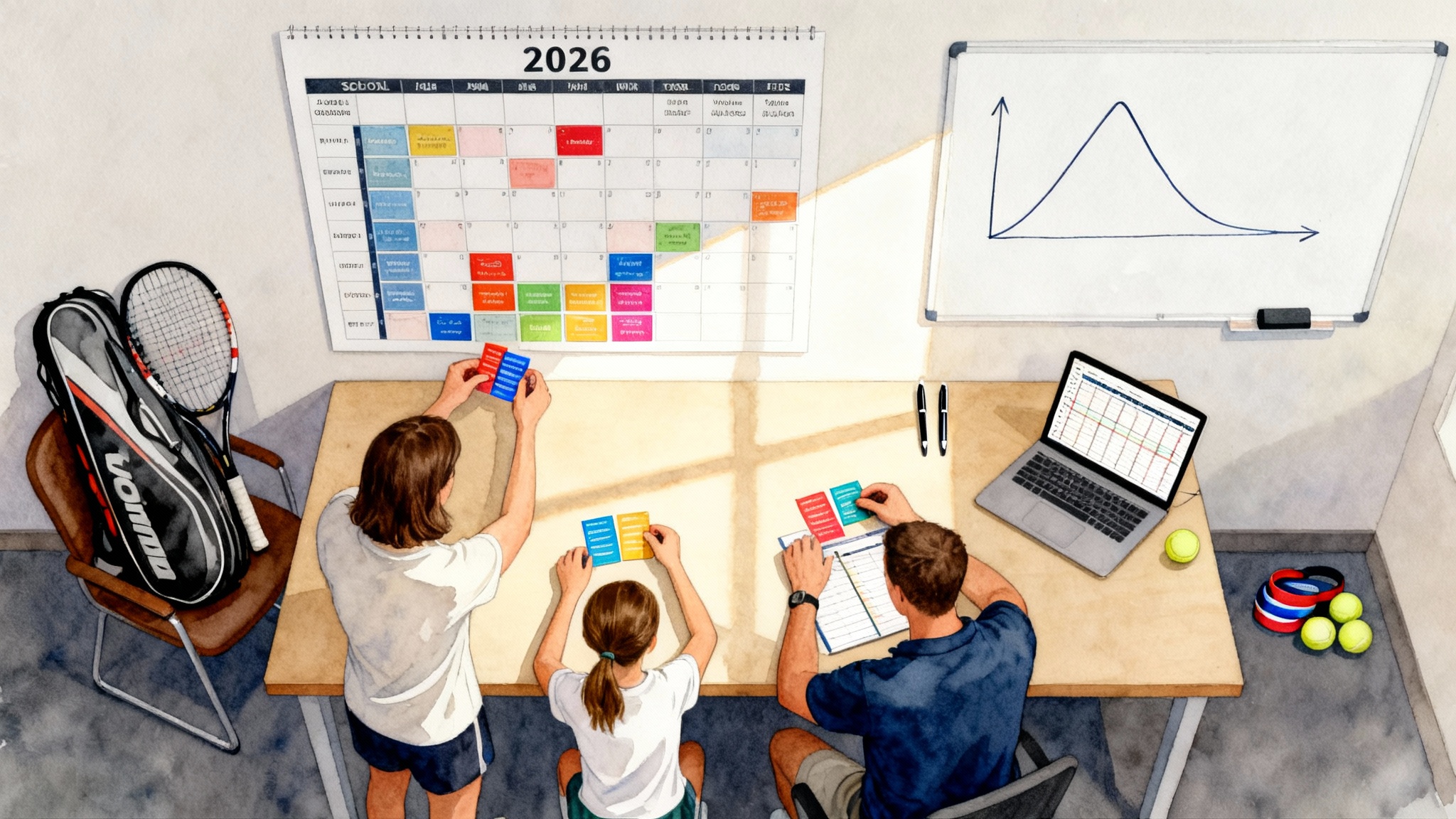
- Tournament board: a four month whiteboard with entry deadlines and alternates. Color code by surface and region.
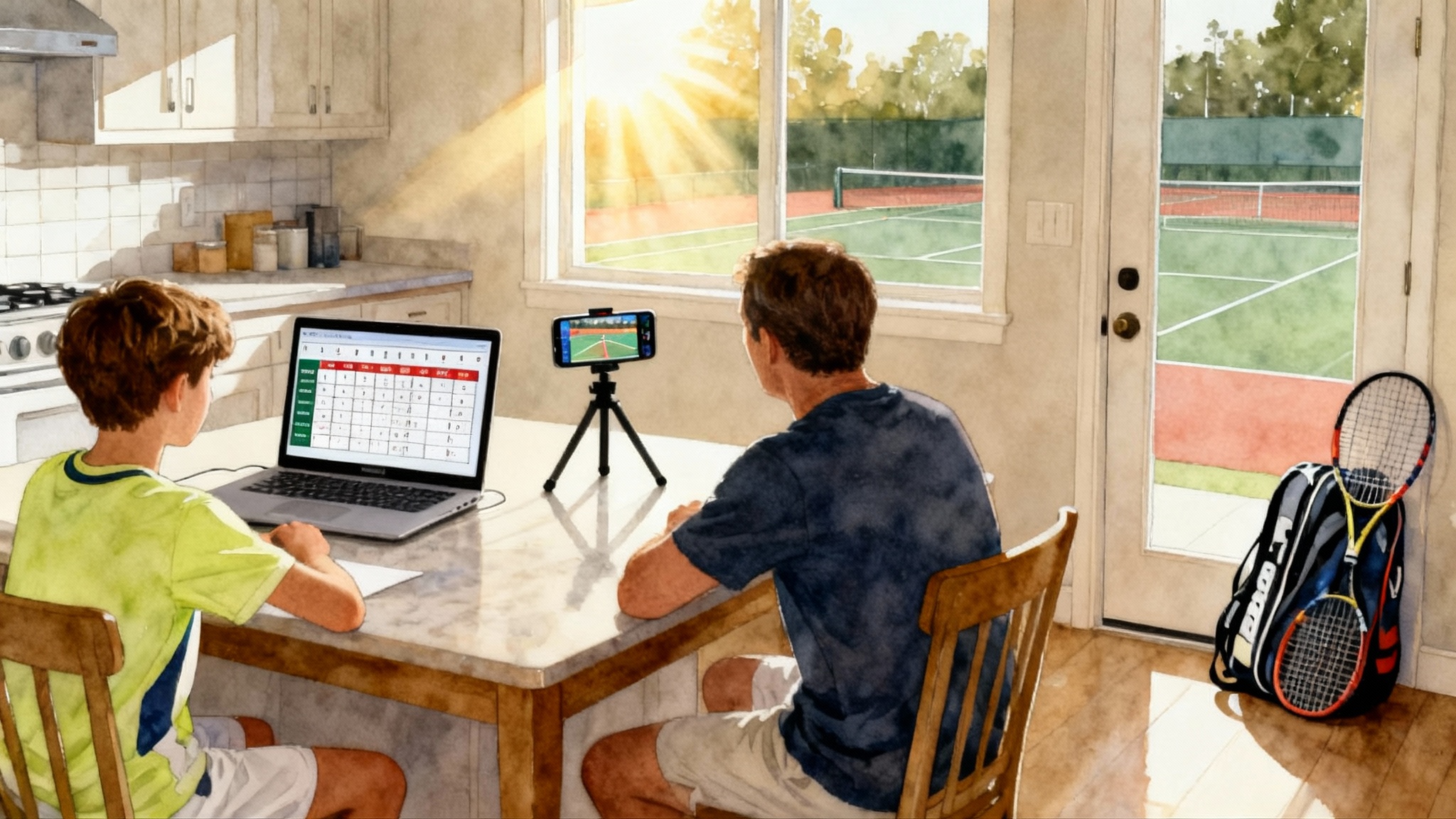
- KPI sheet: columns for first serve percentage, first serve points won, second serve points won, return points won on second serves, break points for and against, serve plus one forehand success, total points over 8 shots, and a notes column for wind, altitude, and balls.
- Physical dashboard: weekly ten meter sprint, countermovement jump, body mass, sleep hours, and rating of perceived exertion. Flag any week where jump height drops more than 5 percent.
- Microcycle card: print your seven day plan and pack it in your bag. On tournament days, circle the two drills that best match your opponent’s patterns.
Common mistakes to avoid
- Chasing too many surfaces in the same month. Pick a surface block, then switch.
- Overloading the gym in tournament weeks. Keep it to speed and tissue quality.
- Ignoring acceptance lists until the last minute. Mark deadlines four weeks out and set alerts.
- Treating the academy as a vacation. The base is a launchpad, not a break.
Final word
Your first year as a professional is a logistics and habits test as much as a tennis test. If you keep the microcycle tight, cluster tournaments to reduce chaos, measure what matters every week, and base yourself where the tour flows through, your progress compounds. Put the 12 month plan on a wall, circle Month 1, and start. The ranking follows players who show up prepared, week after week, in the right places, with the right work.