College-Ready Doubles Blueprint: Formations, Signals, Poaching
 Tommy
Tommy
Why doubles decides weekends and seasons
If you want scholarship-level impact or to help your USTA team clinch a playoff berth, start with doubles. In college dual matches, doubles is played first and counts as a single team point. Win two of the three doubles courts and you leave for singles with the lead. That early margin changes how lineups are set and how aggressively teams start singles. The Intercollegiate Tennis Association explains the current sequence and scoring for dual matches, including the doubles point as a single point before six singles courts are played. See the ITA’s summary of format and order of play for details: how the doubles point works.
In adult league play, doubles is often the majority of the lineup. At many levels, teams compete in three doubles lines and fewer singles lines, which means your club’s result can swing on doubles depth. The United States Tennis Association outlines typical team formats where two singles and three doubles, or even four doubles, decide the match in various age divisions. Review the league breakdown here: team match formats by division.
Bottom line. Doubles points stack up fast. Training doubles as a first-class skill is not optional for juniors, parents, and adult competitors who want to win when it counts. To round out this plan, sharpen key foundations with our return of serve mastery guide and pair serve work with the age smart serve blueprint.
The 6-week, age-smart doubles plan
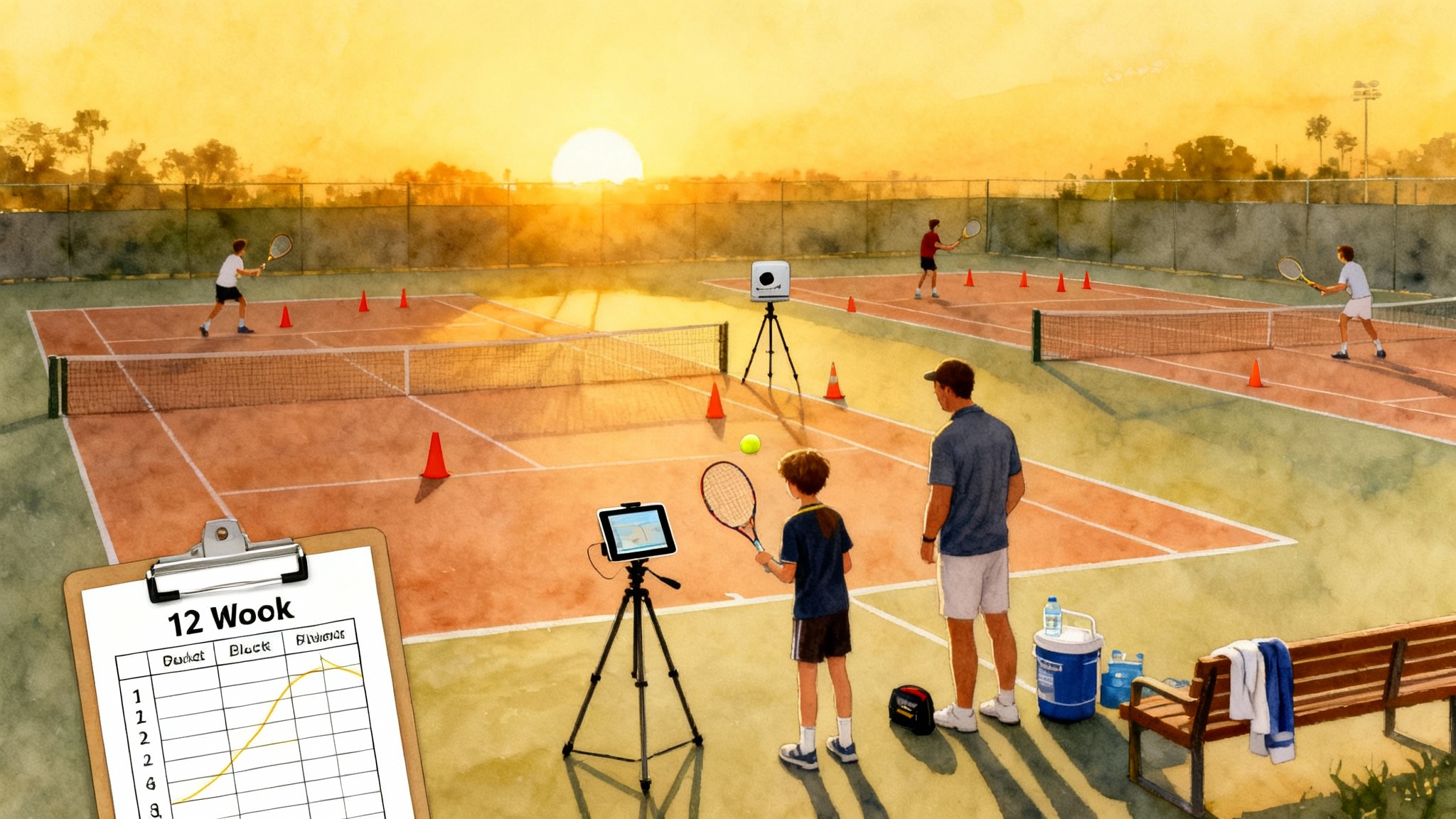
This is a six-week program designed for juniors, parents, and adult league players. Each week includes on-court objectives, partner communication scripts, poach-and-cover triggers, smart net positioning, and at-home mini-drills. Use it in order. Keep a simple notebook of reps, wins, and ideas.
The language of modern doubles
- I-formation: Server starts near the middle hash. Net partner crouches on the centerline, then breaks left or right after the return crosses the net. This narrows the returner’s window and promotes planned poaches.
- Australian formation: Server stands near the singles sideline on the serving side. Net partner takes the same side. The returner must decide whether to thread the line, lob, or change the usual cross-court target.
- Middle control: The safest winning ball in doubles is often through the middle. Middle height, middle depth, middle decisions. Force confusion and shrink angles.
- Poach-and-cover: One moves, the other covers. You poach to cut off. Your partner rotates to fill the vacated space.
- Smart net positioning: Do not live on the service line. Start a step inside it, react forward on weak contact, and shade toward your partner’s planned target.
- Clear roles: The server sets the stage. The net player finishes. The returner stabilizes the rally. The returner’s partner hunts the sitter.
Week 1: Positioning basics and middle control
Purpose: Build shape and spacing that protect the middle and create high percentage volleys.
On-court session
- Shadow positions
- Start every point with four checkpoints: server behind the baseline, server’s partner one step inside the service line, returner just behind the baseline, returner’s partner two steps behind the service line.
- Freeze after serve contact and after return contact to check spacing. No one should be glued to the service line.
- Middle first drill
- Cooperative point play, first three balls must travel through the center third. Play out the point cross-court only after the third ball.
- Scoring: 10 clean middle-first points before switching roles.
- Net first step
- Feed from a coach or parent. Net players start split-stepped. On any ball below net height, step forward through the volley. On balls above shoulder height, angle down into the open middle.
Communication script
- Server to net partner: “Body serve. If the return floats, take middle. If they drive low, I will cover line.”
- Returner to partner: “Deep middle return. You split on their contact and look to close if it sits.”
Poach-and-cover trigger
- Any return that clears the service line at waist height or higher is a green light for the server’s partner to poach.
Smart net positioning cue
- One step inside the service line at contact. Adjust two steps forward on weak balls, two steps back on lobs.
At-home mini-drill
- Tape a “middle lane” on the driveway with masking tape. Toss and volley a foam ball down the middle to a partner. Count consecutive clean catches.
Checklist to print
Week 1 Targets
[ ] Win 65 percent of first volleys
[ ] Call server target before every point
[ ] Net partner starts one step inside service line
[ ] 10 consecutive middle-first points in practice
Week 2: I-formation and planned poaches
Purpose: Make the returner guess and force predictable replies.
On-court session
- I-formation walk-through
- Server stands on the hash mark. Net partner crouches at center. Agree on a single finger signal system behind the back: one finger means net partner breaks left, two fingers means break right, closed fist means hold position.
- Serve targets: body or T for deuce court, body or T for ad court. Avoid wide until comfortable.
- Poach on a rope
- Coach or parent feeds a soft return cross-court. Net partner breaks at ball crossing the net, reaches across with a strong first step, and volleys into the opposite alley. Server rotates behind to cover.
- Scoring: 10 successful poach-and-covers each side.
- Live I-formation points
- Play short sets to four games using only I-formation on serve. Track two numbers: planned poaches attempted and poaches won.
Communication script
- Server: “T serve. Two. You break right.”
- Net partner: “On contact, I go. If they lob, you switch and I retreat.”
Poach-and-cover trigger
- Returner lines up far behind baseline or cheats cross-court. Commit to poach and take away the big cross.
Smart net positioning cue
- Knees bent, racket up, nose over toes. Your break begins when the ball crosses the net, not before.
At-home mini-drill
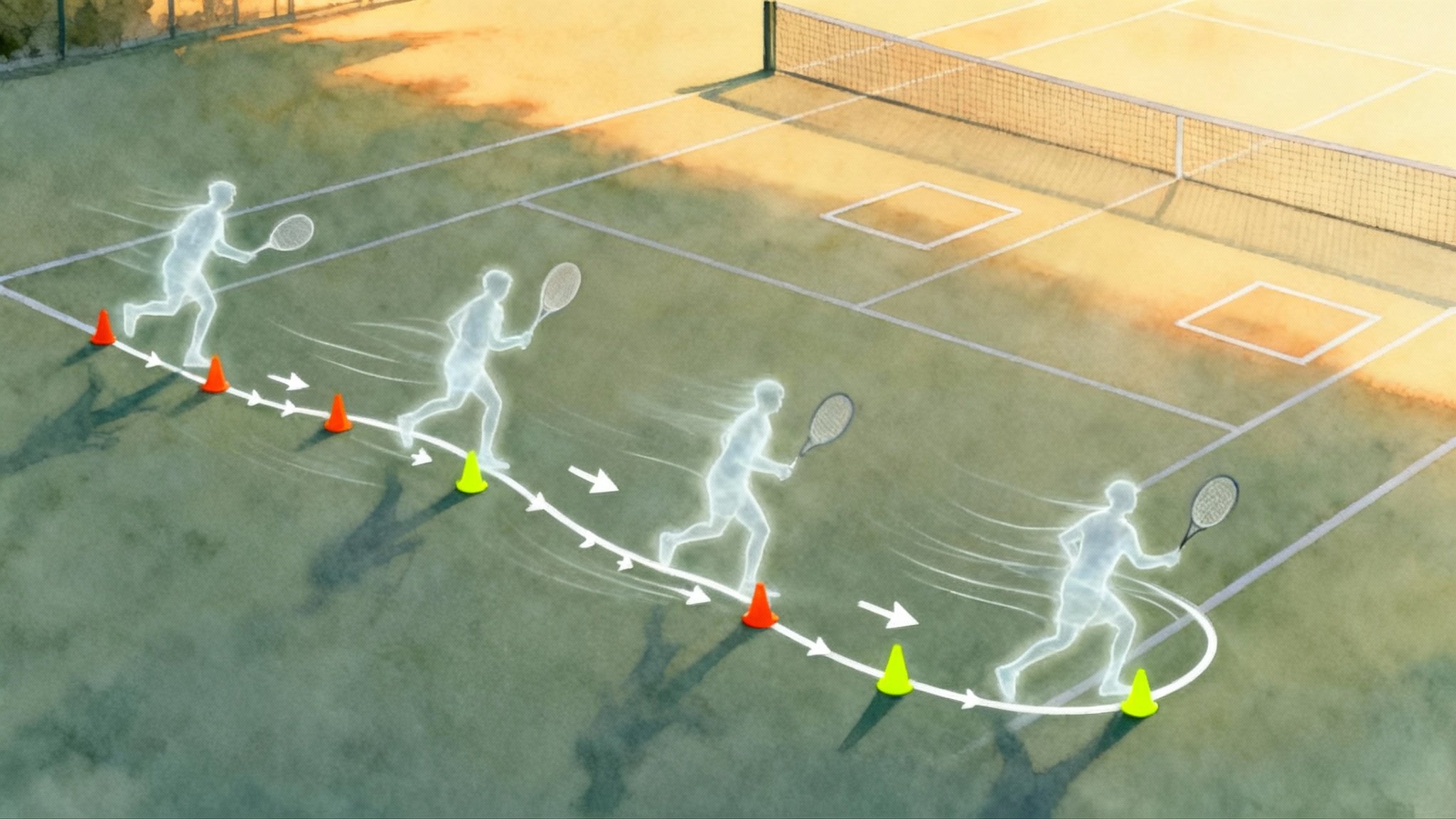
- Ladder or chalk boxes for footwork. Practice the first explosive crossover step used in a poach. Ten reps each direction, three sets.
Printable template
I-Formation Card
Signal: 1 = break left, 2 = break right, 0 = hold
Serve Target: Body or T
Poach Plan: Break on ball crossing net
Cover Rule: Server replaces net partner
Week 3: Australian formation and return patterns
Purpose: Disrupt the returner’s cross-court habit and produce sitters in the middle.
On-court session
- Australian walk-through
- Server and net partner start on the same side near the alley. Goal is to bait a down-the-line return. The server serves wide on that side or goes body to jam.
- Return decision game
- Returner must choose between three options: low down-the-line drive, high lob over the net player, or deep middle change-up. Track success rates and error types.
- Serve plus first volley
- In Australian, serve to the body to jam the change of direction. Server sprints to cut off the next ball to the middle and aims first volley at the feet of the opposing net player.
Communication script
- Server: “Australian left. Body serve. First volley to their net player.”
- Net partner: “If they go line low, I hold. If they lob, I sprint back, you switch.”
Poach-and-cover trigger
- Any floating down-the-line reply. Net partner takes two hard steps forward to intercept and punches middle.
Smart net positioning cue
- In Australian, start a half step deeper. Expect the lob and be ready to recover.
At-home mini-drill
- Wall work. Mark a small square on the wall at knee height. Practice low, compact backhands down the line. Focus on spin and height control, not power.
Printable template
Australian Formation Card
Start: Server and net partner on same side
Serve: Body or wide to same side
Net Partner: Hold or step forward on sitters
Switch Rule: Lob triggers both players to recover
Week 4: Signals, scouting, and pre-point scripts
Purpose: Communicate clearly and scout patterns so both players act as one.
On-court session
- Signal library
- Behind-the-back hand signals for net player when your partner is serving. Basic set: 1 left, 2 right, 0 hold, wiggle fake. Add a tap on the lower back for serve target: left hip means T, right hip means wide, center means body.
- Return team talks
- Returner and partner call a lane: middle, cross, or lob. Returner’s partner promises the first move. Example: “I split and close middle if it floats.”
- Scouting laps
- Watch two games of an opponent’s serve. Note toss height, favorite target, and where the first volley tends to go. Share one line before the next game: “High toss to T under pressure. First volley short angle. Let us take middle.”
Communication script
- Before serve: “Two and body. Poach right. I cover.”
- Before return: “Middle lane. I step in on their second serve and look middle.”
Poach-and-cover trigger
- Second serve sits up. Pre-call a poach to cut it off and attack early.
Smart net positioning cue
- On your partner’s second serve, start closer to the net. Expect a weak return and finish the point.
At-home mini-drill
- Mirror practice. Stand side by side facing a mirror. Call signals out loud and move together. Repeat for two minutes without miscommunication.
Printable communication card
Pre-Point Script
1) Call serve target
2) Call net action
3) Confirm cover rule
4) Call first ball plan
5) Eye contact and nod
Week 5: Poaching mastery, lobs, and resets
Purpose: Own the middle without getting burned by the lob.
On-court session
- Poach timing ladder
- Set cones at net: starting spot, crossing spot, finish spot. Feed returns at three speeds. Net player breaks as the ball crosses the net. Finish the volley through the middle.
- Anti-lob insurance
- Server takes three quick recovery steps after the serve to get ready to sprint back. Practice the switch call loudly. If the lob goes over the net player, the server turns and runs diagonal to cover. Net player retreats to cover the middle.
- Reset drill
- On tough low volleys, aim middle and deep to buy time. The partner who did not hit the volley resets by retreating one step and re-splitting.
Communication script
- Server: “If they lob, I am the first runner. You call switch.”
- Net partner: “Poach middle, first volley deep. If I miss the poach, you hold the line.”
Poach-and-cover trigger
- Opponent opens stance early and takes the racquet back for a big cross-court swing. Time to cut it off.
Smart net positioning cue
- After any successful poach, both players recover to a stagger with one up, one slightly behind, covering the open court.
At-home mini-drill
- Over-the-shoulder catch. Partner tosses a soft ball over your shoulder as you turn. Sprint and catch with two hands to simulate the first steps on a lob chase.
Printable template
Poach and Lob Coverage
Trigger: Waist-high return or open stance
First Step: Cross, then plant
Finish: Volley middle
Lob Rule: Server runs first, net partner calls switch
Week 6: Match simulation and pressure habits
Purpose: Turn all the pieces into points under real pressure.
On-court session
- Doubles scenarios set
- Play to four games per set. Each game must start with a called formation and signal. Alternate between I-formation and Australian on your serve games.
- Pressure tiebreakers
- Play a 7-point tiebreak where every serve must include a signal and a planned poach. Track conversion rates.
- Role reversals
- Flip roles so the usual returner plays at net and the server becomes the hunter for a set. This improves empathy and team timing.
Communication script
- Before big points: “Safe serve to the body. You close middle on contact. If I miss, you hold and switch only on lob.”
Poach-and-cover trigger
- Any chipped or blocked return that rises above net height in front of the net player. Green light.
Smart net positioning cue
- In tiebreaks, shorten the court. Start a half step closer. Choose middle until opponents prove they can pass down the line.
At-home mini-drill
- Breathing and cue words. Inhale for four, exhale for six. Say one action word during the exhale, such as “middle,” “first step,” or “eyes.” Repeat for one minute between points in practice matches.
Printable match card
Match Checklist
[ ] Pre-point call: serve + net action + cover
[ ] First volley target is middle
[ ] Two planned poaches per service game
[ ] One Australian game per set
[ ] Tiebreak routine: breath + cue word
Clear partner roles that hold under stress
- Server: Choose targets that feed your plan. If you call a poach, serve body or T to reduce angles. After contact, recover balanced and expect to cover the open court if your partner moves.
- Server’s net partner: Own the middle. Read height and body language. Break when the ball crosses the net. Volley decisively.
- Returner: Keep the return deep and middle unless the short line is wide open. On second serves, step in and own the middle first.
- Returner’s partner: Live on the split-step. If the return sits up, close and intercept. If the return is low, hold and stay disciplined.
How to teach this to juniors and adults at the same time
Think like a family coach on a single court. Juniors love games and simple numbers. Adults respond to checklists and roles.
- For juniors: make it a treasure hunt. Two planned poaches earns a star. Three middle-first points in a row earns a bonus serve.
- For parents and adult partners: use the communication card. Keep eye contact. Say the plan out loud. Reward decisions, not just outcomes.
Life Time Tennis Academy’s family-friendly decision-tree session
Many Life Time Tennis Academy locations host weekend doubles sessions that teach decisions first, strokes second. The structure is simple and you can copy it at your club or school.
Session outline
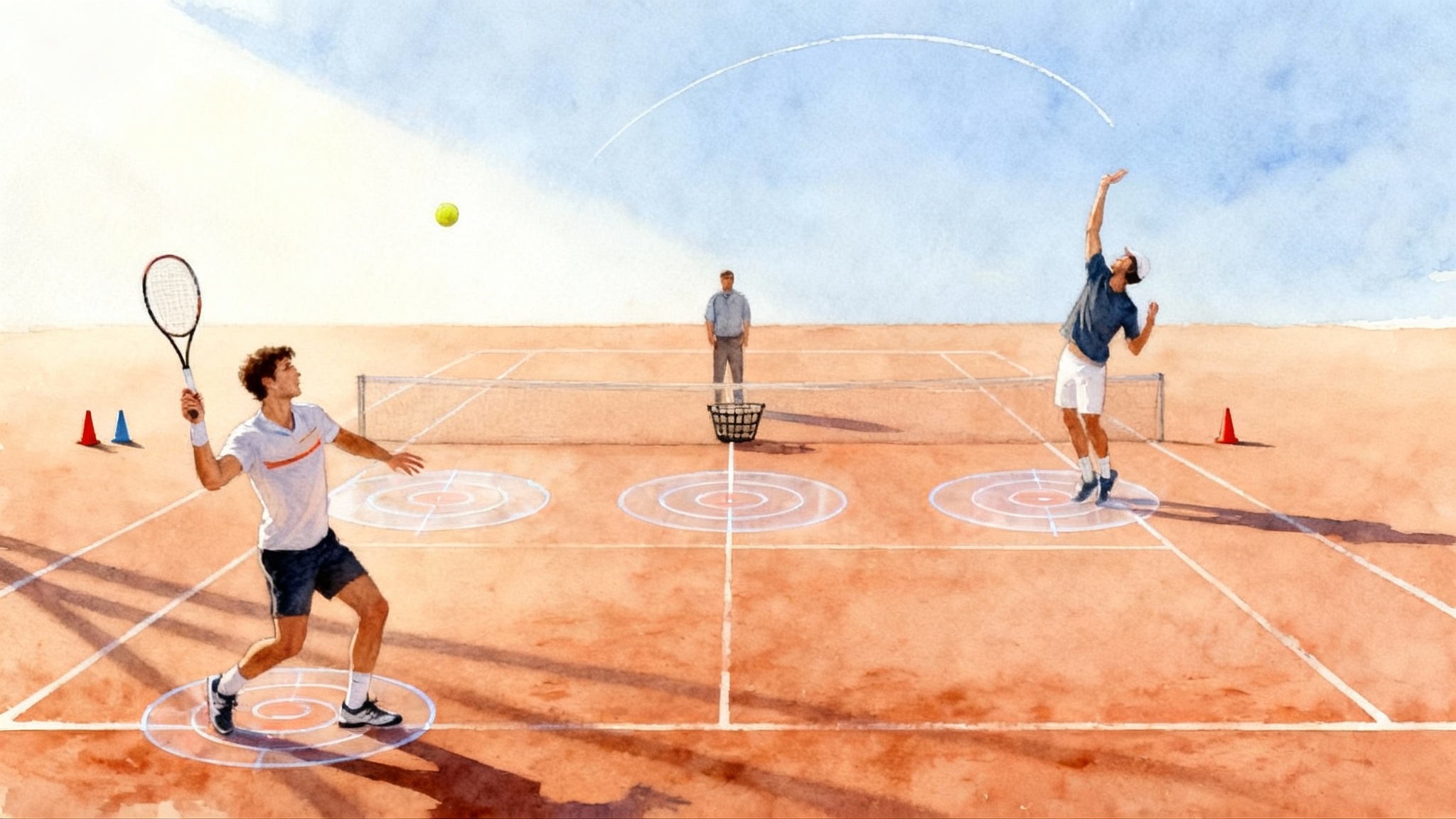
- Station 1: Return decision tree. Coach feeds second serves. Players choose middle, lob, or line and call it before the swing. Score for correct choice and execution.
- Station 2: I-formation signals. Pairs practice one, two, and hold with server targets. Coach watches timing on the net player’s break.
- Station 3: Australian formation. Practice body serves and first volleys into the middle. Net player learns when to hold versus jump.
- Station 4: Poach-and-cover races. Live points where a referee awards two points for a successful poach-and-cover with a clean handoff.
Try it on a weekend with your playing group. Set a 90-minute block and rotate every 18 minutes. End with a short tiebreaker set where every serve requires a called plan and a signal.
Four numbers that predict doubles wins
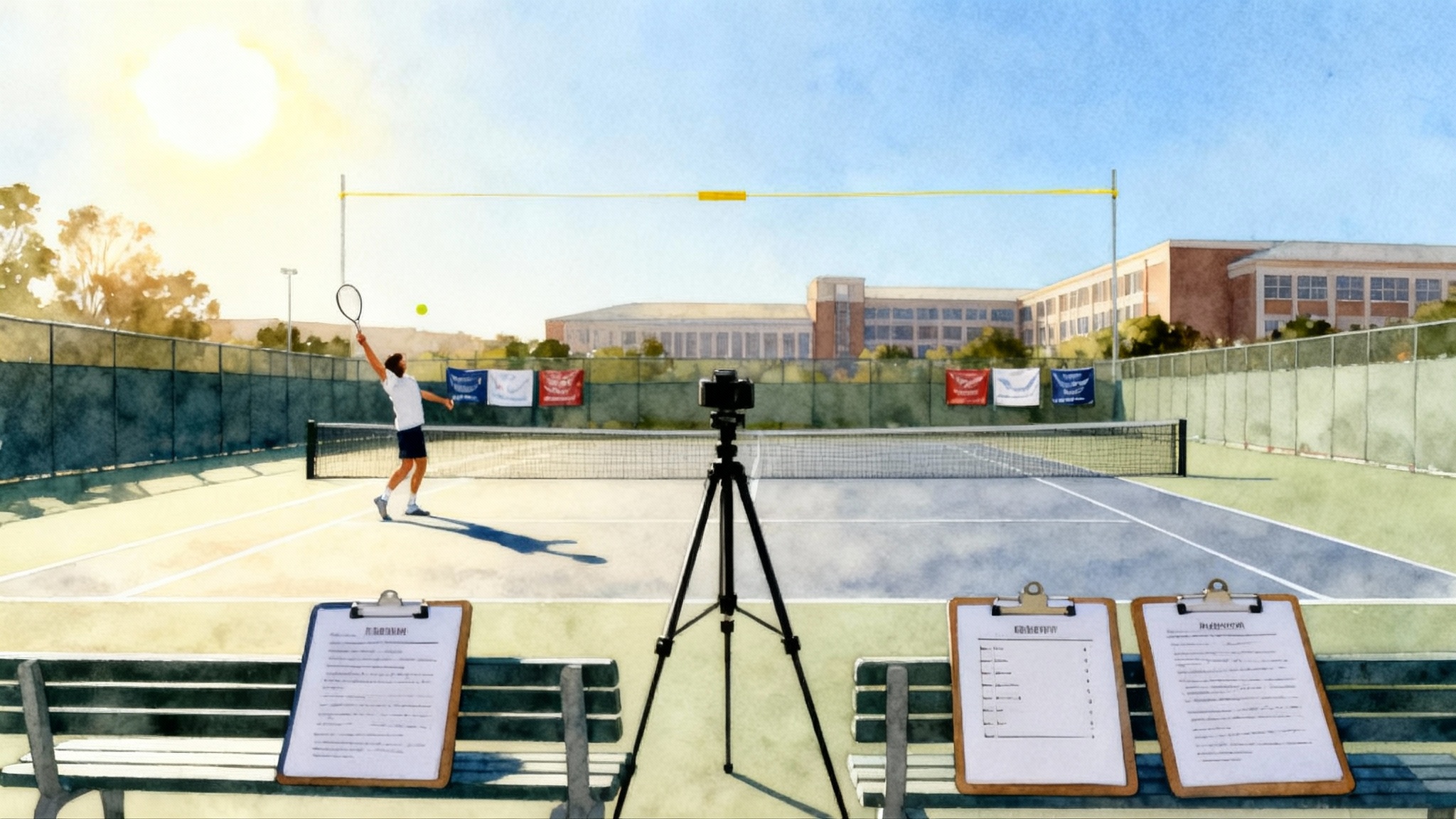
Track these numbers on a simple worksheet during Weeks 4 to 6.
- Planned poaches per service game: goal 2 or more.
- First volley in play percentage: goal 70 percent or higher.
- Middle-first success rate: goal 60 percent of first five balls to middle.
- Communication completeness: goal 100 percent of points start with a call.
Printable tracking sheet
Doubles Tracking Sheet
Player 1: __________  Player 2: __________  Date: ______
Service Games: ____   Planned Poaches Attempted: ____   Won: ____
First Volleys Put In Play: ____ / ____  = ____ %
Middle-First Points: ____ / ____  = ____ %
Pre-Point Calls Made: ____ / ____  = ____ %
Notes: ________________________________________________
Troubleshooting guide
- We get lobbed after every poach. Start the net player a half step deeper before the serve. Server commits to three recovery steps and the first sprint on any lob. Use more body serves.
- Returns keep going down the line past our net player. Stop guessing early. In I-formation, break when the ball crosses the net. Aim poaches into the middle to remove the line reply on the next ball.
- Our first volleys float. Contact in front, breathe out, and aim middle at knee height. Practice with low target squares and count clean hits.
- We talk but forget the plan mid-point. Use a single cue word after the split-step. Say “middle” or “cover” at contact to stay aligned.
Bringing it all together
Winning doubles is not a mystery or a bag of tricks. It is a chain of simple, repeatable decisions made before the ball is struck. Call a target, plan a move, protect the middle, and cover your partner. Use I-formation to squeeze the return, Australian to flip patterns, and clear scripts so both of you act as one. If you stack those habits for six weeks, you will arrive on the weekend with a doubles plan that holds under pressure. That is how juniors step into college-ready roles and how adults turn league nights into winning nights.
Print the cards. Run the mini-drills. Keep score on the behaviors that matter. When the match tightens, your preparation will decide the point.