From Oslo to Manacor: How Nadal Academy Built Casper Ruud
Casper Ruud left Oslo for Manacor in 2018, kept his father as head coach, added Rafa Nadal Academy expertise, and built a serve plus forehand identity. The result: three major finals, a durable top‑10 presence, and a roadmap parents can copy.
 Tommy
Tommy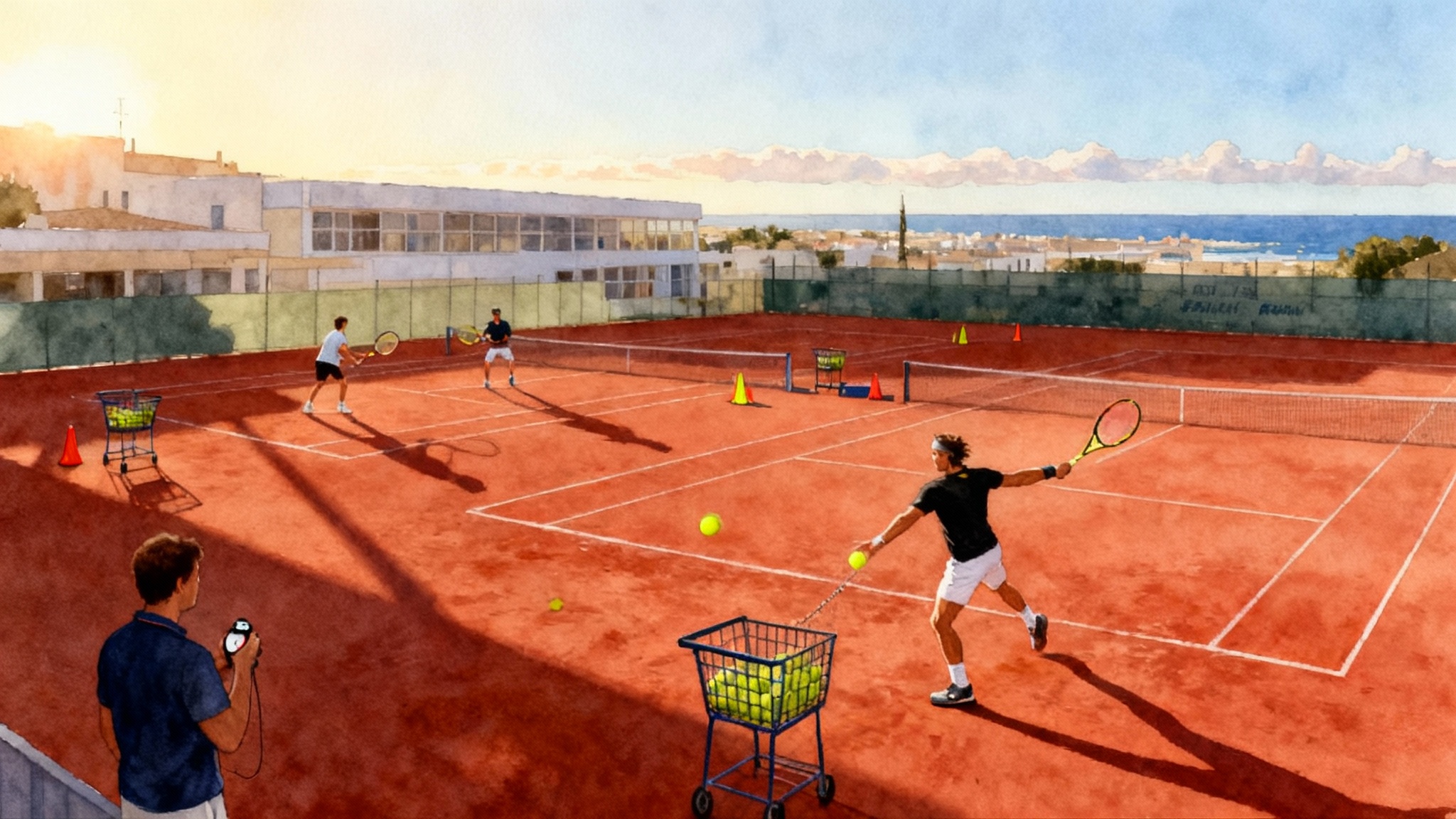
A teenager from Oslo, a boarding pass to Manacor
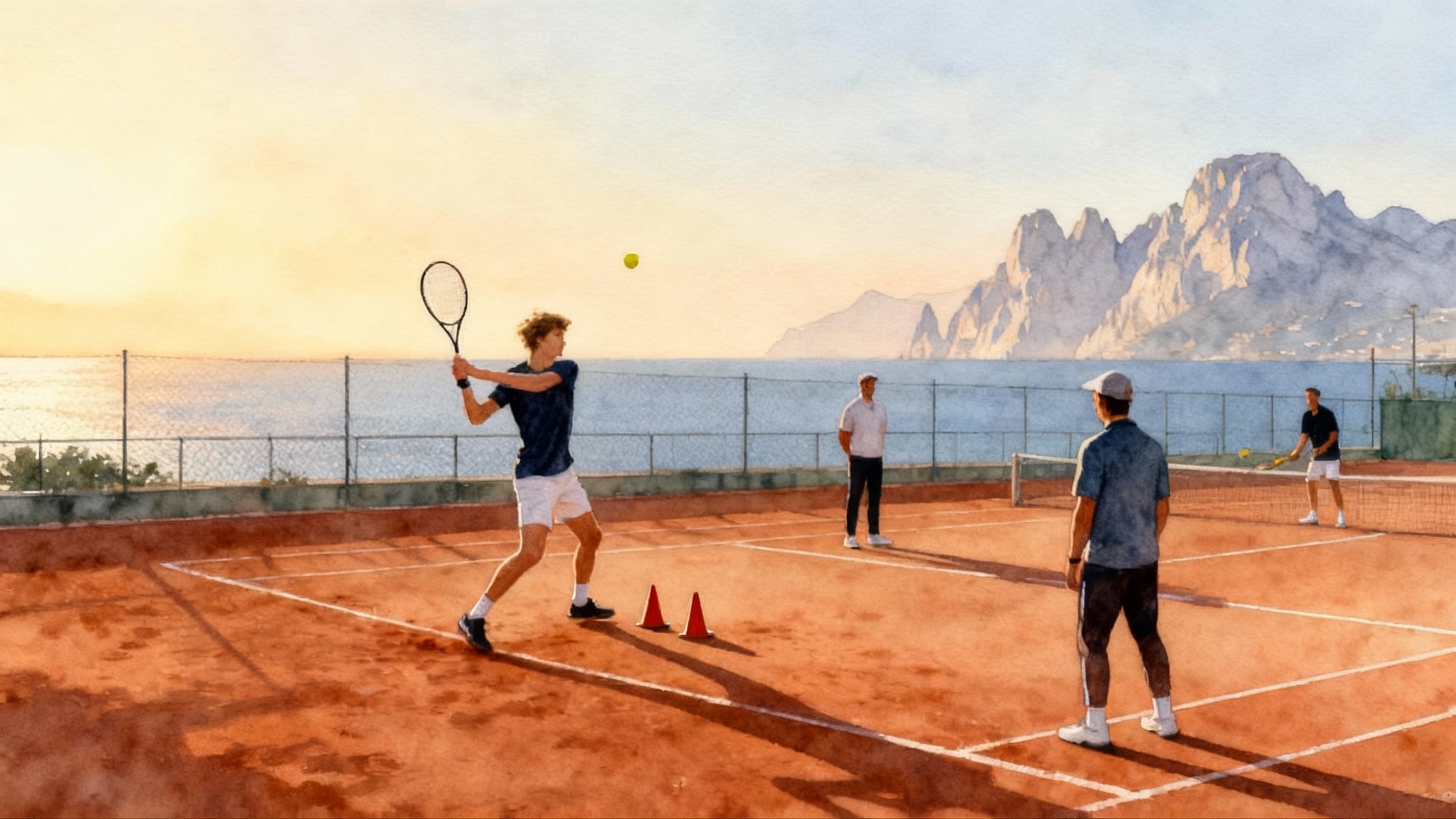
In 2018, nineteen-year-old Casper Ruud made a decision that would define his career. He left the comfort of home courts in Oslo for a boarding life at the Rafa Nadal Academy in Manacor. The goal was not romance or branding. It was repetition, structure, and daily proximity to players who had already done what he wanted to do. Within four seasons he owned two Roland Garros finals and a United States Open final, and he embedded himself near the top of the rankings, proof that a well-chosen academy can accelerate a clear plan rather than replace it. For results context on Ruud’s rise and Grand Slam finals, see his official Casper Ruud ATP Tour profile.
This is the story of what changed, what did not, and why the combination worked: a clay-first volume model, pattern drills that fit Ruud’s natural tools, elite sparring, and a coaching structure that kept his father Christian as the voice of record while adding Rafa Nadal Academy coach Pedro Clar for the day-to-day craft. The Spanish pathway has produced multiple templates, including how Equelite forged Carlos Alcaraz.
The decision: leave home, keep the compass
Boarding at an academy is not a magic spell. It is a trade: you give up the easy parts of home life to gain an industrial-strength environment. Ruud’s team made two protective choices that made the trade work.
- Keep the compass: Christian Ruud, a former professional, remained the lead coach and the person setting the seasonal plan, the tournament schedule, and the developmental priorities. This anchored decisions in the long-term view of someone who knew Casper’s temperament and style from childhood.
- Add a specialist: Pedro Clar, a respected coach at the academy, became the on-site builder. He ran sessions, tuned patterns, and provided instant feedback. The result was one message spoken by two voices: father as strategic architect, academy coach as daily engineer.
The signal to the player was simple. The move to Manacor did not mean a reinvention, it meant scale. The drills got longer, the sparring got stronger, and the same identity got sharper.
Clay-first volume: why dirt miles matter
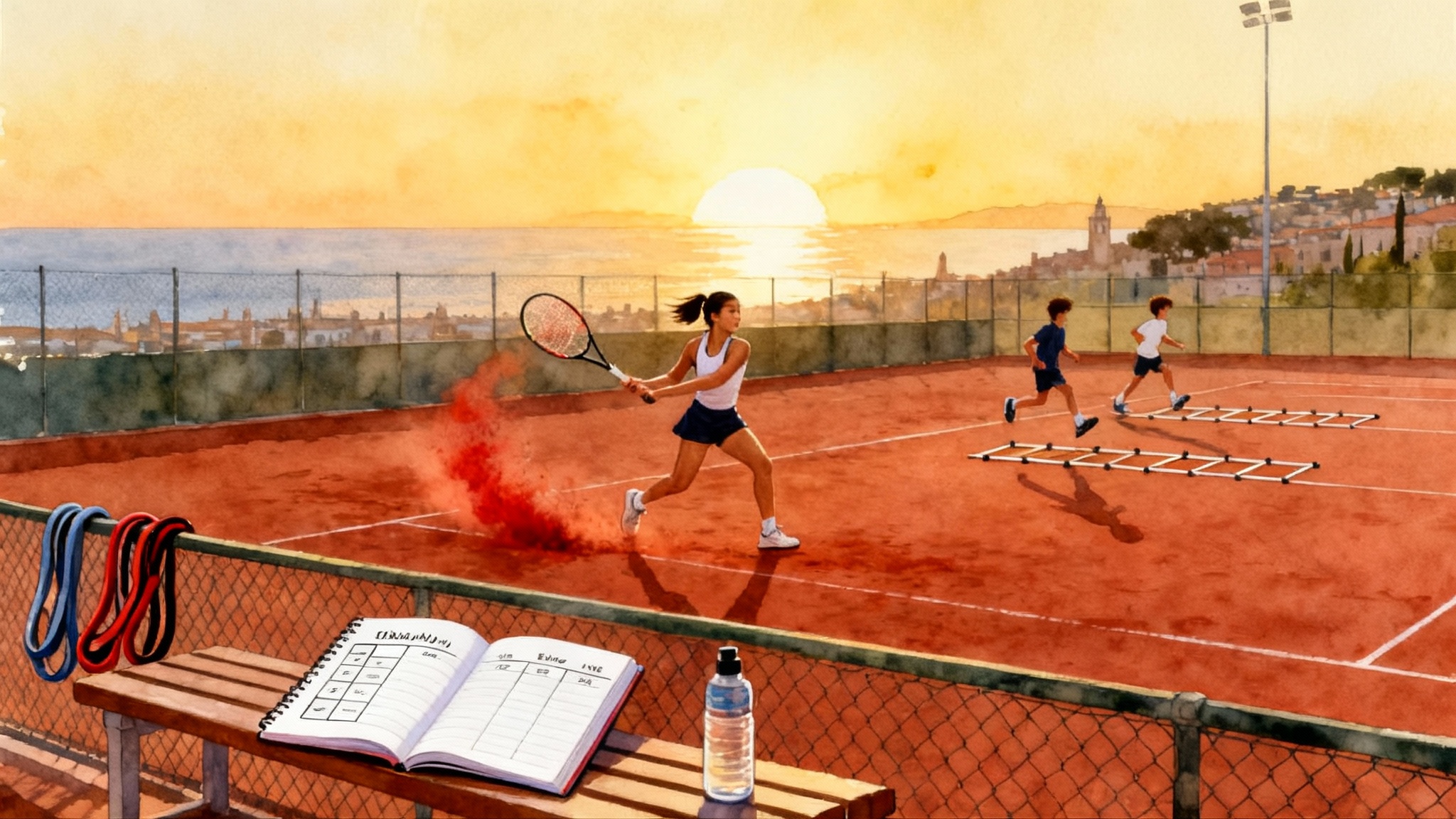
The academy’s training philosophy is simple to say, difficult to execute: high repetition with purpose, high ball quality, and high footwork integrity. On clay that means learning to build points two or three shots ahead, because the surface gives you time to choose a pattern and asks you to hold it under pressure. For a player like Ruud, who naturally favors a heavy forehand and court discipline, clay is a laboratory.
Volume is not aimless. It is dosage. A typical clay block at a top academy breaks the week into two workloads. The first is stroke integrity: thousands of balls fed and rallied with targets, depth windows, and spin windows. The second is competitive transfer: point play that forces those same targets under scoreboard stress.
At Manacor, Ruud’s team used clay to harden three specific habits:
- First-strike forehand out of neutral: use crosscourt depth to earn a short ball, then step around for an inside-out forehand.
- Serve plus forehand as a package: land a high-percentage first serve to a corner, sprint to take the first forehand above net height, and place it to the bigger half of the court.
- Recovery discipline: after every aggressive forehand, take the recovery step early and re-center with a split step on the opponent’s contact, not after it.
Training like this is physical, but it is really cognitive training at speed. The clay asks you to decide, then it punishes you if you hesitate. The academy setting supplies the repetitions needed to make the right decision automatic. To understand how the academy presents its philosophy, visit the Rafa Nadal Academy by Movistar website.
Pattern drills that fit Ruud’s game
Good academies do not stamp players into one model. They find the player’s comparative advantage and multiply it. For Ruud, that meant a serve plus forehand identity, with backhand stability as the ballast.
Here are the pattern drills that mattered most:
-
Deuce-court T, inside-out takeover: Ruud serves up the T from the deuce side, expects a return to the middle third, and sprints to take the first forehand inside-out deep to the backhand. A second forehand goes inside-in to the forehand corner if the opponent floats short. This two-ball plan was rehearsed by the hundred, then by the thousand.
-
Ad-court wide, open-lane forehand: Serve wide to pull the opponent off the court, recover to the baseline hash, and take the first forehand to the opposite sideline. If the return is short, step inside the baseline for a drive forehand to finish. The key cue is depth plus direction, not raw pace.
-
Two-on-one crosscourt with a line change rule: Ruud rallies crosscourt forehands against two hitters. On coach’s call he must go down the line, then recover crosscourt immediately. This teaches line changes without bleeding court position.
-
Backhand cage with escape: Rally backhands crosscourt to a deep target. Every fifth ball is a mandatory backhand down the line followed by an immediate forehand crosscourt. This stabilizes the weaker wing and links it to his strength.
-
Short-balls discipline ladder: Coach feeds progressive short balls between the service line and the baseline. Ruud must decide early whether to drive through the ball or use a heavy, taller trajectory to the corner. The ladder ends with a drop shot option, not as a trick, but as a way to punish defenders who camp too deep.
None of this is glamorous. It is chess. By repeating the same openers and the same next shots, Ruud made sure that when pressure arrived late in a set, his hand already knew the move. For a similar pattern-first approach on the men’s tour, see how Piatti Academy forged Sinner.
Elite sparring: the hidden multipliers
Sparring partners are a curriculum. On any given week in Manacor, a player can hit with touring pros, juniors on the rise, or seasoned practice hitters who know how to reproduce match tempo. The variety matters. Hitting with a defensive counterpuncher on Tuesday and a first-strike blaster on Wednesday compresses a month of problem solving into forty-eight hours.
For Ruud, the biggest gains were not one-off hits with famous names. They came from the grind of day-in, day-out repetitions at a high average ball quality. It is the difference between reading one great novel and reading ten good ones. Volume at the right level changes your internal speedometer.
Three sparring rules shaped his sessions:
- No rally starts without a target: every neutral exchange aimed at a half-court box or a deep strip six feet from the baseline.
- Serve games are scored: even in practice, a service game is a service game. The score starts at love all, and the server must hold to win the drill.
- Midpoint feedback, not endpoint speeches: coaches gave short cues at the net at 2 or 3 all, not ten-minute lectures after the set. The point was to fix the next four games, not to autopsy the last one.
The coach blend: Christian Ruud and Pedro Clar
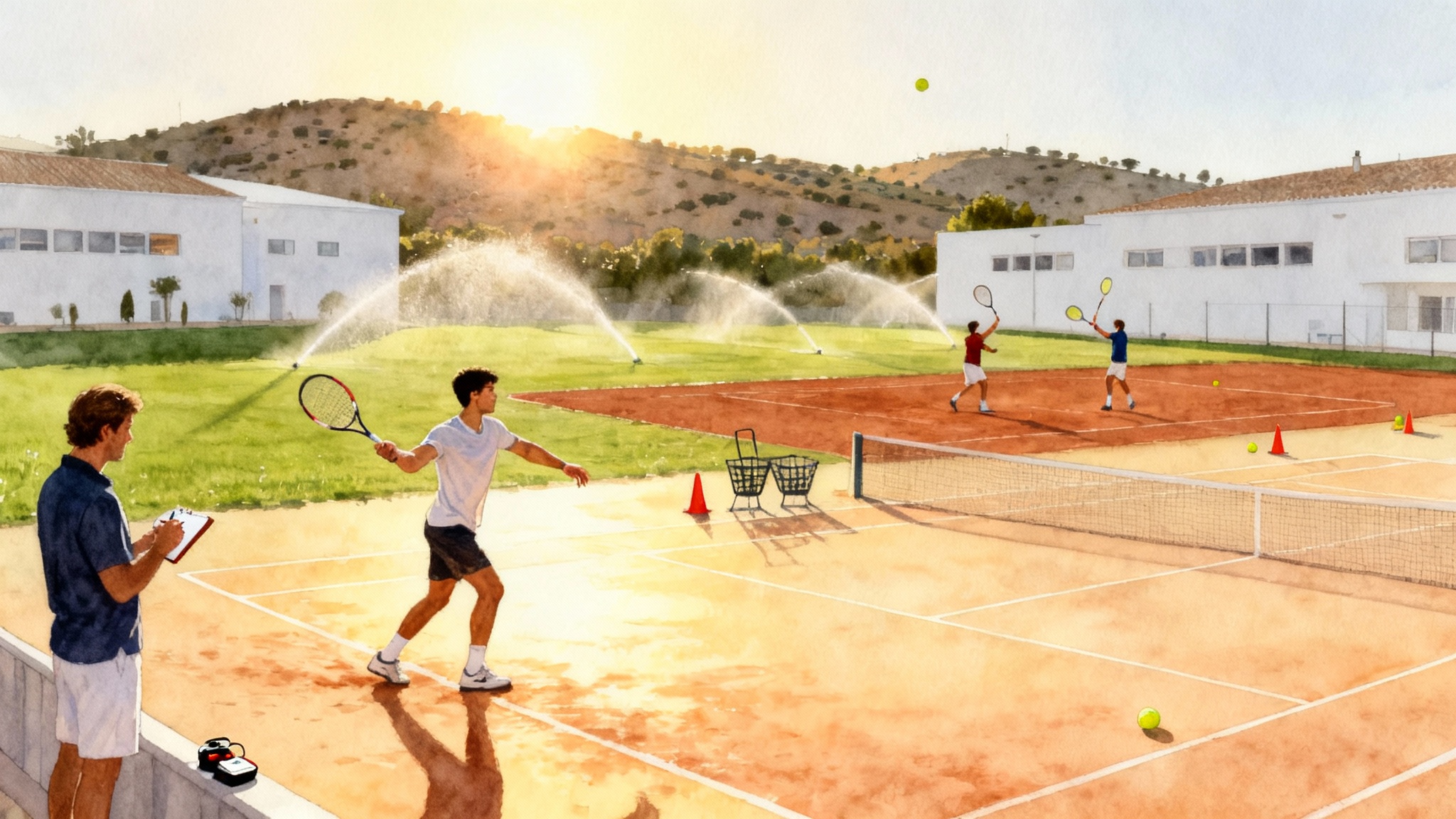
Keeping a parent or home coach in charge is often the difference between a coherent five-year plan and a scattered one-year experiment. Christian Ruud ran the calendar and the identity. Pedro Clar made sure the identity showed up on court.
- Christian’s lane: pick the right events for points and development, protect recovery weeks, and decide when to push volume and when to protect freshness. He guarded the player’s energy and confidence.
- Pedro’s lane: build the drills, monitor technique drift, and maintain the serve plus forehand patterns at match speed. He guarded the player’s habits.
Two voices, one plan. The practical test is whether the player can describe his style in one line and his next block of work in one page. Ruud could do both.
Scheduling for points: the South American clay swing
Every ranking is arithmetic. If you want to climb fast, you need weeks where you are the favorite to go deep and surfaces that make your strengths matter early. Ruud’s team chose the South American clay swing in February as a seasonal launchpad. Buenos Aires, Rio de Janeiro, Santiago, and related events offered exactly what he needed: warm clay, familiar patterns, and winnable draws where a top seed can earn confidence along with points.
Why this matters:
- Clay rewards the serve plus forehand package by giving time to build the forehand without losing court position.
- Back-to-back clay weeks let a player stay in the same decision tree. There is less friction between events, so form compounds.
- Winning early in the season lowers stress for the rest of the year. With points in the bank, the team can choose smarter rest periods and targeted hard court blocks.
The results showed up quickly. Titles on clay validated the identity, while confidence carried to summer hard courts and indoor seasons. The plan did not assume Ruud would live on clay forever. It used clay as a springboard to an all-court resume.
Translating clay habits to hard courts
Clay teaches patience and pattern recognition. Hard courts demand first-strike courage and return depth. The key to Ruud’s surge on hard courts was not a brand-new game, it was a rebalancing of the same one.
- Serve location upgraded before serve pace: accuracy to the corners came first, which opened the court for the forehand. Pace followed once hold percentage rose.
- Court position nudged forward by a half step: on second-serve returns and neutral exchanges, Ruud began trusting his forehand from inside the baseline when the ball sat up. A half step changes the angle of attack and reduces the opponent’s recovery time.
- Backhand became a launch pad: the backhand did not need to do damage. It needed to keep the ball deep enough to force replies that his forehand could attack. That is a systems job, not a shotmaking one.
The proof was a hard court Grand Slam final and deep runs at Masters events. The learning path ran in one direction: from clarity on clay to conviction on faster courts.
What volume looked like, week to week
Parents and players ask what big volume actually means. Here is a realistic snapshot from a heavy week in a clay block for a top ten player.
- Monday: two hours on court, twenty minutes of serve locations and first forehands, forty minutes of crosscourt forehands at 70 percent, forty minutes of point play to eight points, gym session focused on deceleration and trunk rotation.
- Tuesday: ninety minutes of two-on-one forehand pattern work, thirty minutes of backhand cage with escape, thirty minutes of returns with serve games scored, lower-body strength in the gym.
- Wednesday: lighter day, sixty-minute hit at 60 percent speed, video review, mobility work and physio.
- Thursday: two hours of set play with different sparring partners, mid-set feedback checkpoints, upper-body strength in the gym, shoulder care.
- Friday: serve plus forehand ladder sets starting at 15 love, then 30 love, then 30 all, with specific serve targets and first-ball rules. Finish with ten minutes of drop shots and volleys, only after the heavy work.
- Saturday: practice match with one tactical constraint, such as no backhand winners, to force forehand use under live scoring.
- Sunday: rest or travel.
This is not a blueprint for everyone. It is an example of what structure first, volume second looks like.
The hidden skill: recovery as a technique
At the academy, recovery is taught like a shot. Coaches treat the split step, first step, and center-step as trainable skills that decide whether a pattern holds under pace. Ruud’s error rate on second forehands fell when he learned to recover sooner after line changes. That small improvement keeps rallies in the geometry he prefers.
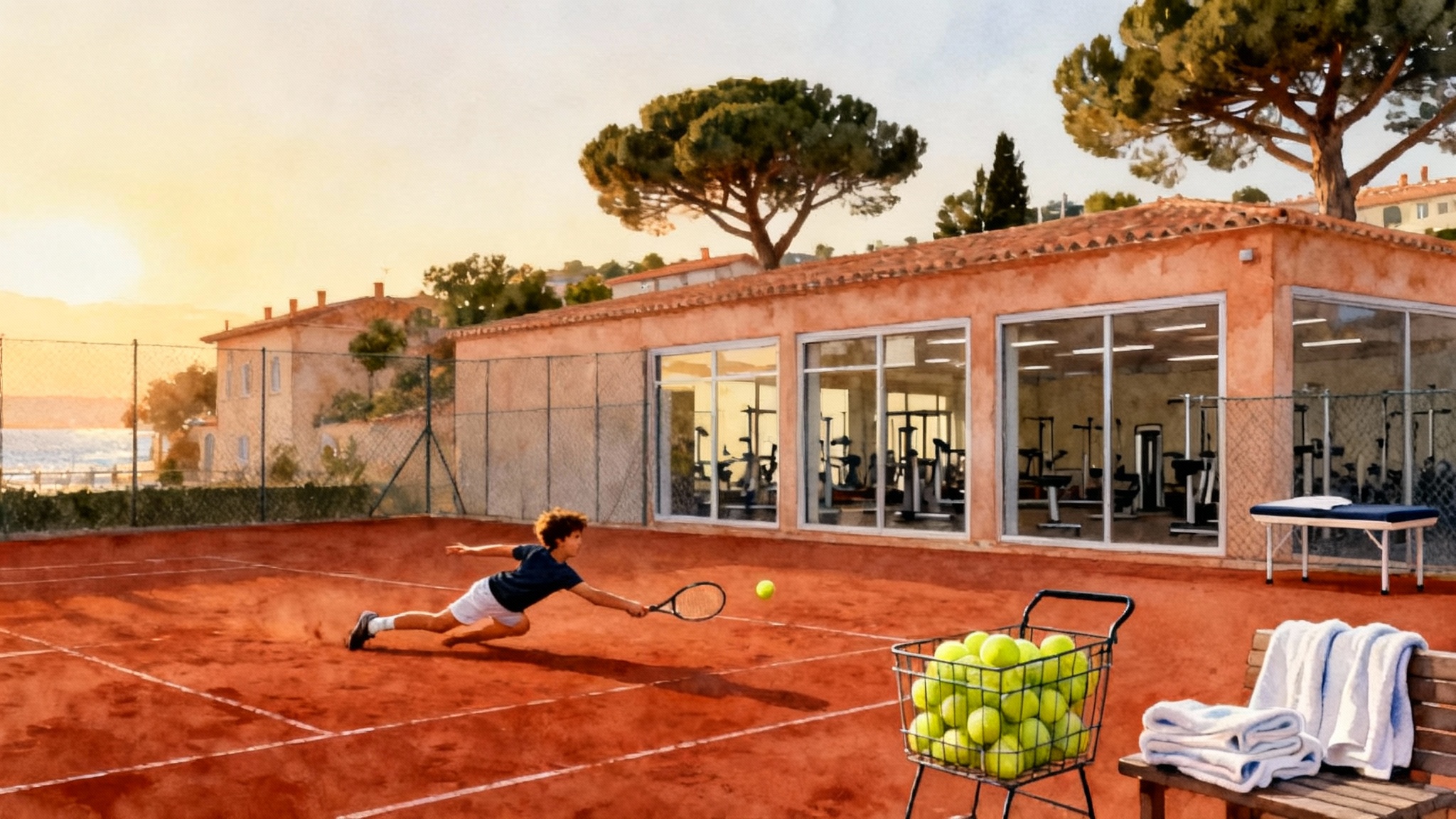
Recovery training is also where boarding helps. Sleep, diet, and physio become team properties, not afterthoughts. A player wakes near the courts, eats in the same cafeteria as other pros, and builds routines that survive travel weeks.
Results in plain sight
Casper Ruud turned a clear identity into consistent results: two Roland Garros finals, one United States Open final, tour titles across seasons, and a long stay near the top of the rankings. The headline number matters, but the real story is process. He did not reinvent himself in Manacor. He removed friction. The academy gave him partners and dosage. The coaches gave him one message. The schedule gave him the right fights at the right time.
Parent takeaways: when a boarding academy is worth it
Boarding is a serious decision. Here is a clear checklist to help you judge readiness and fit.
- A defined identity: can the player describe, in one sentence, how they want to win points in two years, not just tomorrow’s match.
- A home coach who stays involved: the academy should add specialists, not replace the coach who knows the player best.
- A surface plan: use the surface that best develops your strengths as a launchpad, not a permanent address. Clay is often ideal for learning patterns and patience.
- A tournament map for points: pick events where the player is seeded, where conditions suit their style, and where back-to-back weeks let form compound. Lessons from JTCC forged Frances Tiafoe show how scheduling can accelerate outcomes.
- A volume tolerance: the player must be physically ready to handle high-repetition weeks without breaking. This is where honest screening and injury history matter.
How to blend home coaching with an academy system
The most successful academy stories look like this: the home coach sets the strategy, the academy coach manages the daily execution, and both agree on language and metrics. Try this framework.
- One-page plan: define the style, three priority patterns, and three measurable goals for the next twelve weeks. Everyone signs it, including the player.
- Shared vocabulary: pick six cues, such as “serve wide, forehand deep corner,” “line change, recover early,” and “backhand depth first.” If the words are shared, the player hears one message.
- Data and video rhythm: review match clips every two weeks, then in practice highlight one change at a time. Do not chase five fixes at once.
- Tournament debriefs: ten-minute call after each event, three questions only: what pattern held, what broke under pressure, what do we change this week.
Surface specialization as a springboard to all-court success
Specializing early is risky if it becomes a cage. It is powerful if it becomes a runway. Clay teaches height, depth, and patience. Grass teaches first-strike clarity and slice defense. Hard courts punish indecision and reward assertive court position.
The Ruud model is a template:
- Start where your weapons are heaviest. For Ruud, that was clay, where his forehand could dig and his legs could repeat.
- Use that surface to hardwire patterns and footwork.
- Translate the habits, not the entire game, to faster courts. Nudge return position forward, aim serve locations to the corners, and keep the forehand as the engine.
Parents can borrow the same logic for juniors. Choose a seasonal surface emphasis, build two core patterns, and schedule back-to-back events on that surface to consolidate. Then insert short translation blocks on other courts so the player learns to carry their identity across conditions.
The bottom line
Casper Ruud’s climb from Oslo to Manacor and into the sport’s elite is not a mystery. It is a sequence of smart choices: board where the daily standard is high, keep the home coach as the strategic anchor, add a specialist who sharpens your patterns, and schedule stretches where your strengths matter every day. The serve plus forehand identity made sense on clay first, then it scaled to hard courts. Parents and players do not need the same passport or the same postcode. They need the same clarity. Decide how you want to win, choose an environment that can repeat that decision until it becomes instinct, and let the results accumulate.