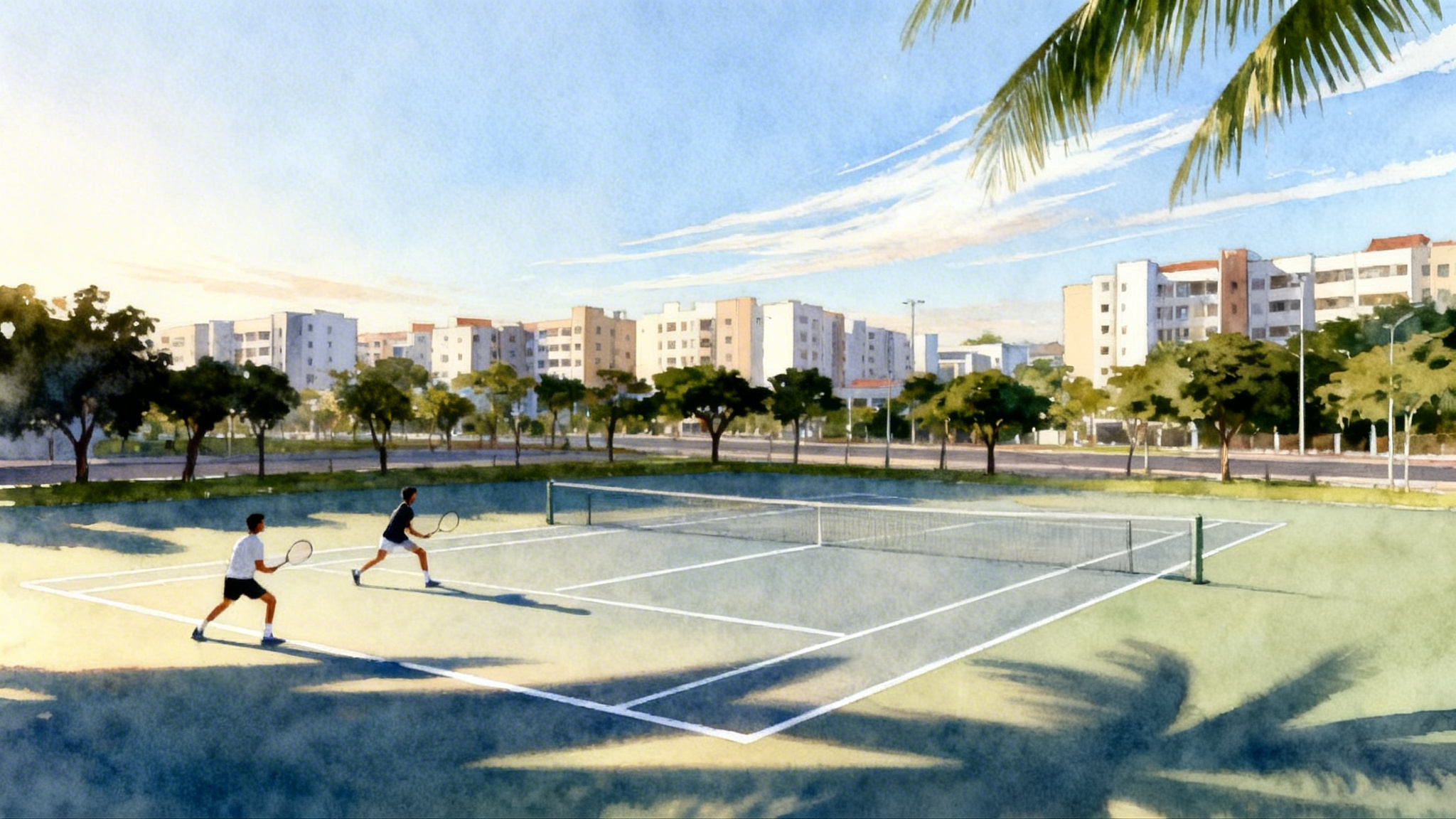
Year-Round Tennis in Portugal: Cascais, Algarve, Madeira
Plan a climate-first tennis base in Portugal. Learn when to schedule spring and fall training blocks, which surfaces and camps fit each region, how to handle wind and rain, typical costs, U.S. flight access, and smart sample itineraries.
 Tommy
Tommy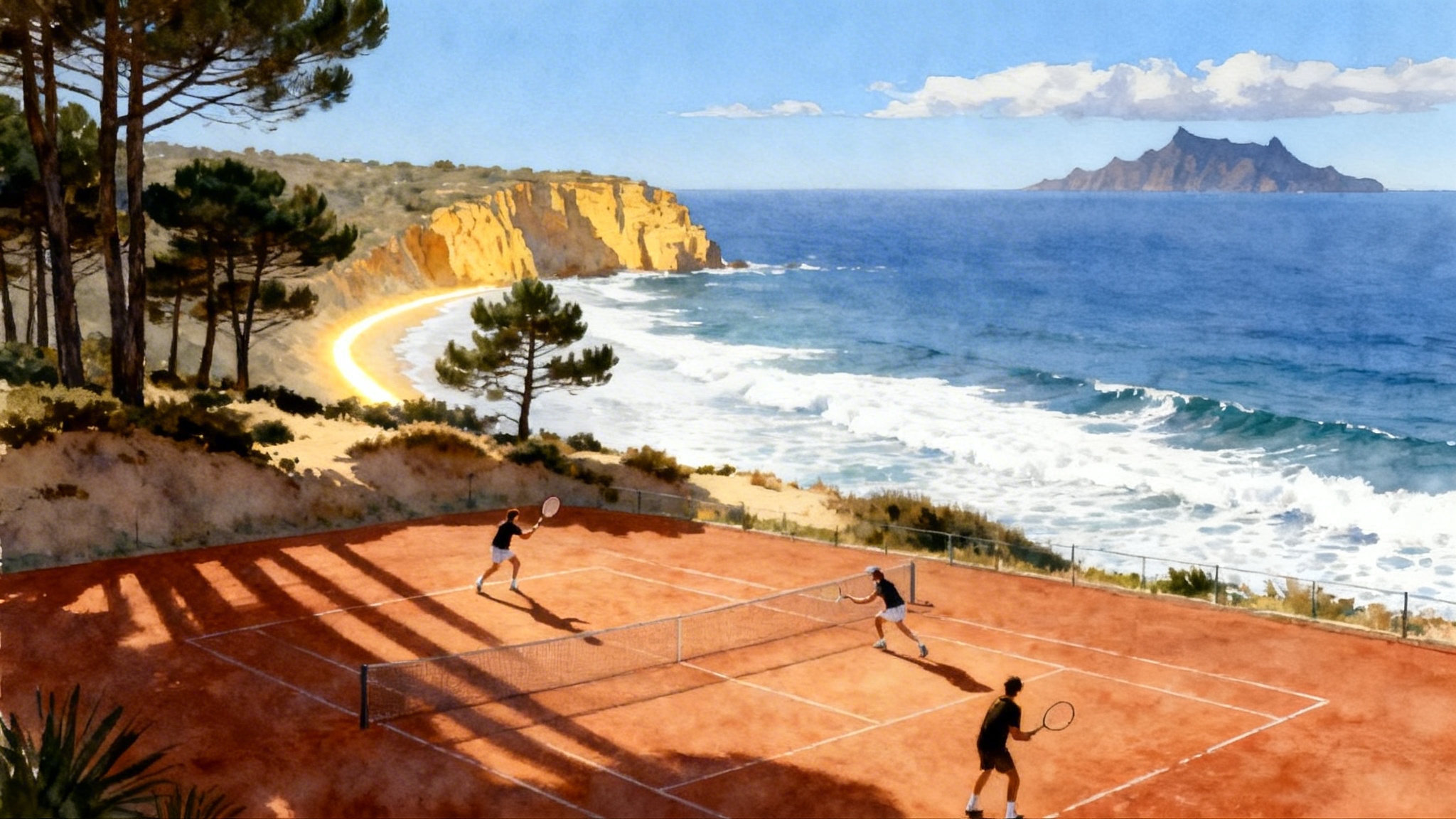
Why Portugal’s Atlantic corridor works year round
Portugal’s west and south coasts create a reliable training lane for tennis. The Atlantic keeps Cascais temperate, the Algarve trends warmer and drier as you move east, and Madeira adds a subtropical option when mainland weather turns unsettled. The pattern is consistent enough to map twelve months of court time if you sequence regions and surfaces with intent. For hard numbers, review the Portugal climate normals database before you lock dates.
The microclimate logic in plain language
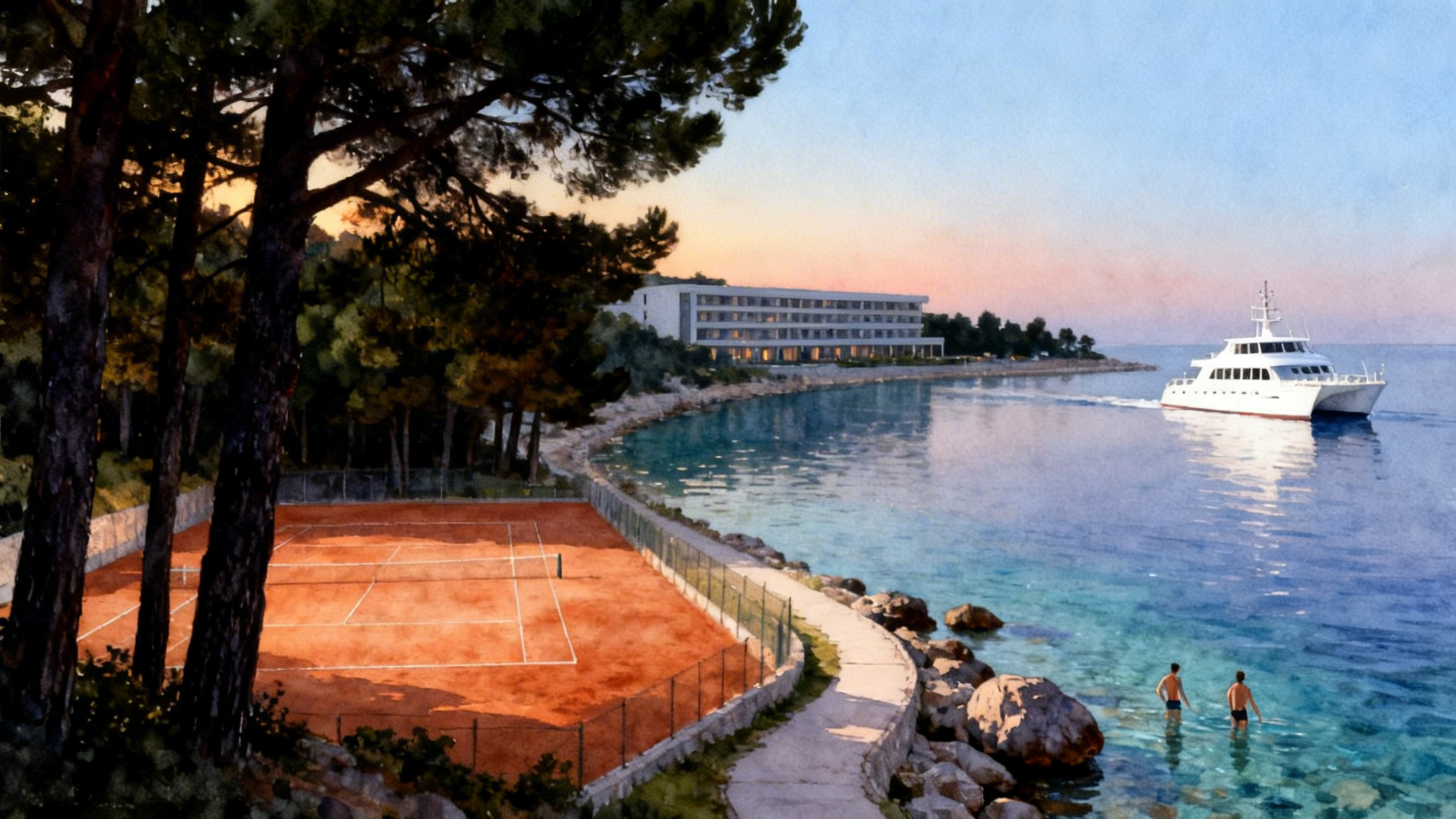
- Cascais and the Estoril coast: mild and breezy, with calmer mornings and a regular northerly in many afternoons. Sheltered courts play slower and kinder.
- Algarve: Portugal’s sun belt. Western Algarve near Sagres is windier and cooler; the central belt around Albufeira and Quarteira is calmer; the east near Tavira is warm with many still mornings.
- Madeira and Porto Santo: ocean moderated with quick mountain-made showers. Funchal is mild year round. Morning court windows are usually best.
The upshot: follow the sun and shelter. Use shoulder seasons on the mainland for volume, then lean on the Algarve and Madeira when Atlantic fronts visit Lisbon.
When to schedule training blocks
If you remember one line, remember this: target March to June and September to November. You get long daylight, manageable temperatures, and fewer wind spikes than midsummer.
- Spring block: March to early June. Clay is fresh after winter work. Book your heaviest drilling before lunch as coastal breezes build by midafternoon.
- Fall block: September to November. Warm sea temps help recovery. The Algarve often stays dry into November. Cascais is excellent through October. Madeira is steady throughout this window.
December to February can still work, especially in the Algarve and Madeira, but accept a higher chance of showers and line up sheltered or covered options. July and August bring heat and crowds, so use them for lighter maintenance blocks rather than max-volume training. For non-Europe winter backups, see our Desert Winter Tennis Guide.
Region profiles and what to book
Cascais and the Estoril coast
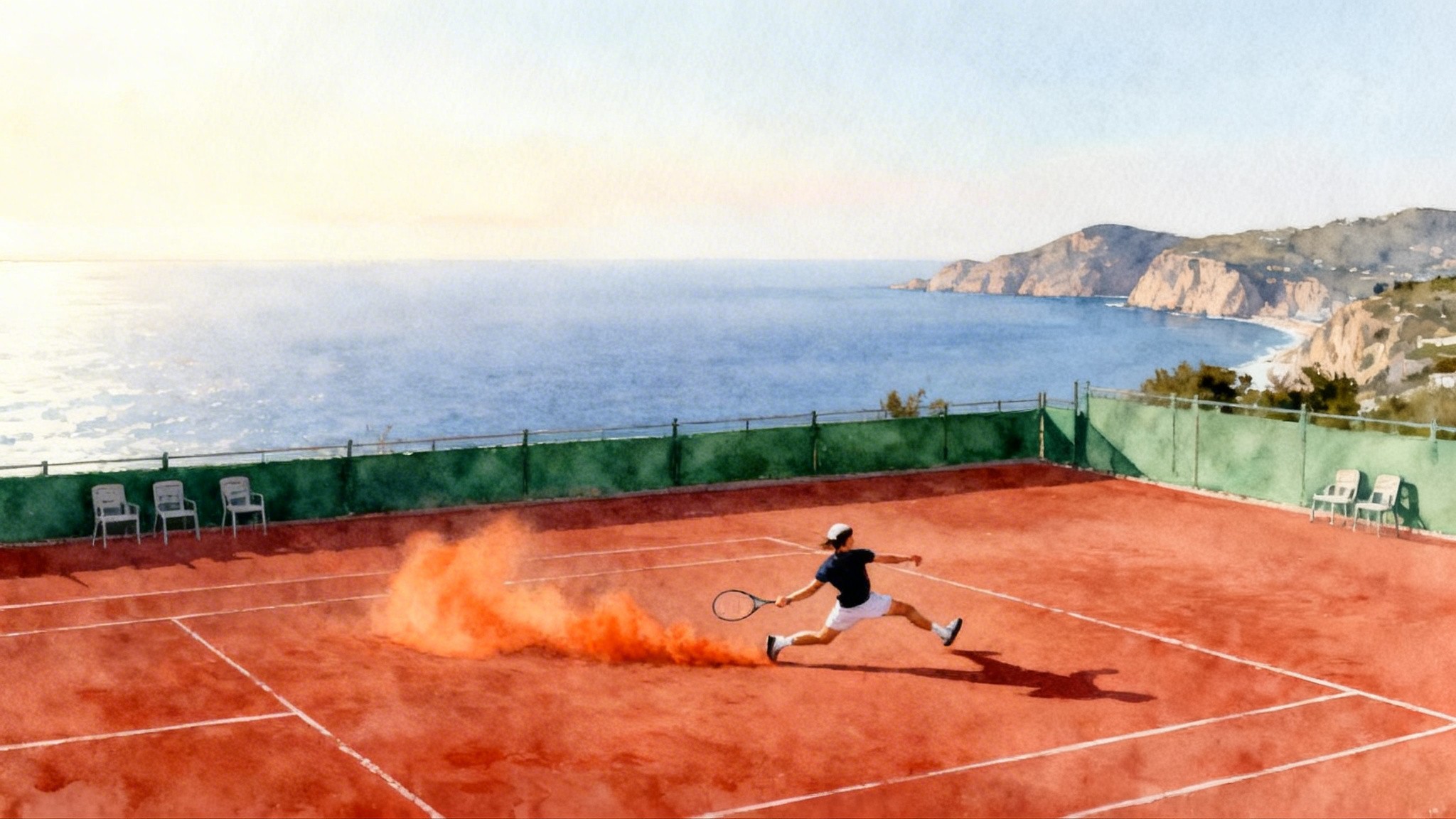
- Microclimate: maritime mildness with a regular afternoon breeze, strongest near Guincho. Target mornings for high intensity.
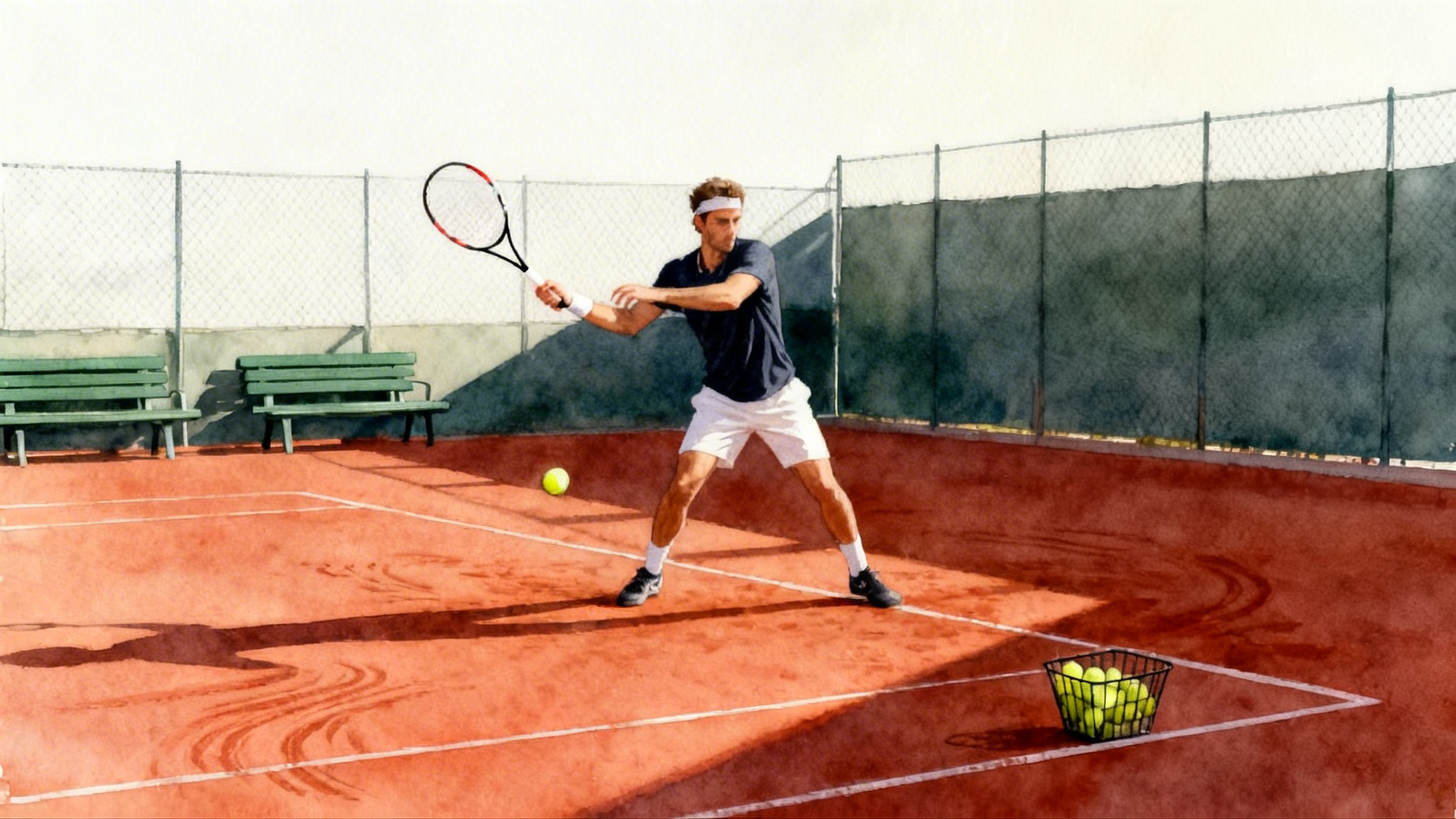
- Surfaces to target: performance clay and quality acrylic hard courts. Two hours on clay here can teach spacing and sliding with minimal pounding.
- Camps and formats: look for split days. Mornings on clay for technique and tolerance, late-day situational games on hard courts when the breeze slows the ball.
- Add-ons: surf at Guincho for proprioception and ankle strength; day trips to Sintra or Lisbon for low-impact rest.
- Getting around: base in Cascais without a car if you stick to the train line; rent a compact car if you plan inland clubs.
Algarve’s sun belt
- Microclimate: more sun, less rain, and warmer winter days than Lisbon’s coast. Wind varies by subregion.
- Surfaces to target: a mix of clay and acrylic hard courts. Clay is usually playable most winter days; hard courts help with serve and return blocks.
- Camps and formats: resort-based academies excel at adult and family weeks. For juniors, ask for clear daily plans, video review, and no more than two players per coach in key stroke modules.
- Add-ons: downwind paddles near Sagres, flat bike paths and birding in Ria Formosa, quiet beach walks around Lagos for recovery.
- Getting around: a rental car is practical given distances between clubs. Faro anchors air access.
Madeira and Porto Santo
- Microclimate: evergreen spring with quick mountain-made showers. Book primary sessions in the morning.
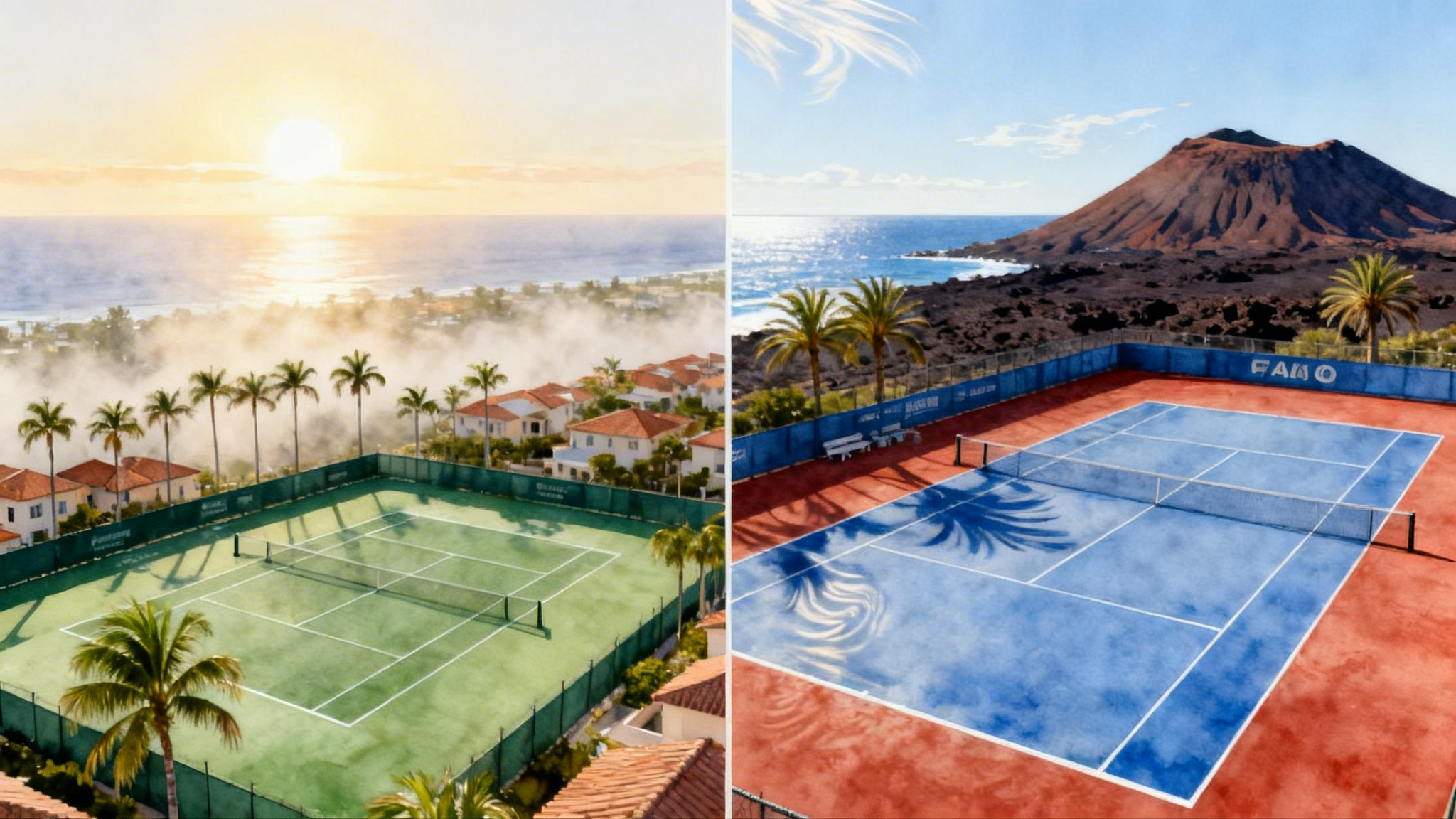
- Surfaces to target: mostly acrylic hard and some artificial grass. Limited clay, so consider Madeira for winter hard-court weeks and mainland clay in spring.
- Camps and formats: small-group coaching with heavy basket work and controlled points. Confirm ball supply, stringing, and video when booking.
- Add-ons: levada hikes, Pico do Arieiro viewpoints, and cold-water ocean recovery. Porto Santo’s long beach is perfect for low-impact running.
- Getting around: stay in Funchal for short transfers; ride-shares help on steep hills. If you are weighing a Canary Islands setup, skim our Florida vs Tenerife academy guide.
Wind and rain planning that actually works
- Book morning primary sessions. Block technical drills and live points before 11:30 a.m.
- Ask for sheltered courts after lunch. Walls, pines, or buildings that cut wind even 20 percent change contact quality.
- Pack wind-smart gear. Light shell, hat with a clip, eye drops, and fresh overgrips at the 45-minute mark.
- Choose the right balls. Slightly heavier felt stabilizes contact in wind. In damp air, change balls more often.
- Drill the wind. Use higher net clearance, more spin, and inside targets. Practice slice into the wind, heavy spin with it, and overheads after crosswind lobs.
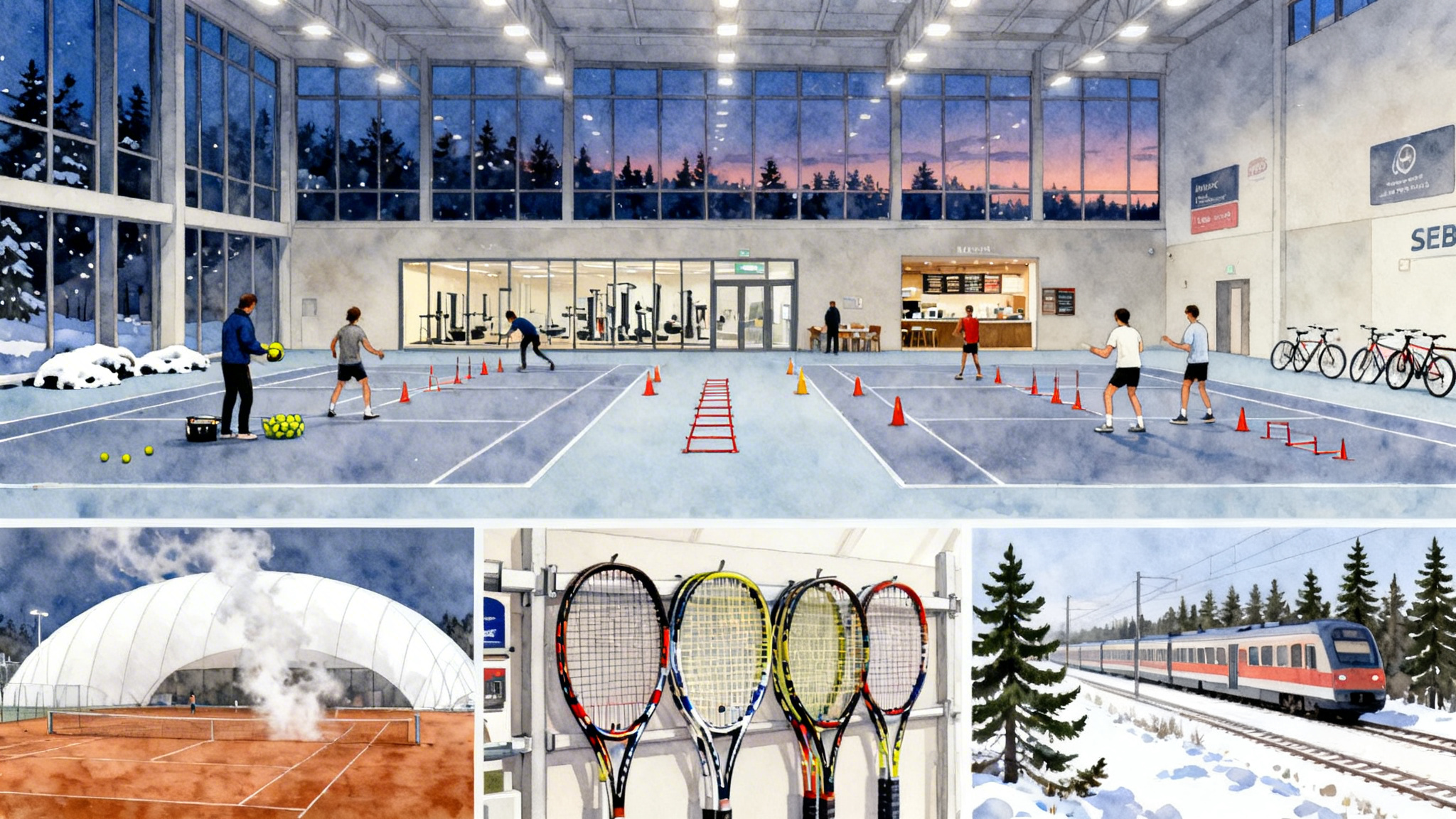
- Create a rain backup. Covered courts are limited, so plan indoor strength, mobility, and video work for wet windows.
Costs and access for U.S. players
Portugal is straightforward from the United States. Lisbon is the main gateway with multiple nonstop options from the East Coast and seasonal choices from several cities. Faro and Funchal typically require a connection via Lisbon or another European hub. To sketch routes, check the TAP Air Portugal route map before comparing fares.
Typical travel times
- East Coast to Lisbon: about 6 to 7 hours nonstop overnight. West Coast to Lisbon: 10 to 12 hours with one connection.
- Lisbon to Faro: 45 minutes by air or about 3 hours by train.
- Lisbon to Funchal: roughly 1 hour 45 minutes by air.
Budgeting snapshots per person, shoulder season
- Airfare: often 600 to 1,000 United States dollars round trip to Lisbon from major East Coast cities, higher in peak summer. Add 50 to 150 United States dollars each way for hops to Faro or Funchal.
- Courts and coaching: 12 to 30 euros per hour for municipal court hire, 25 to 45 euros at resorts. Group clinics 25 to 50 euros. Private lessons 60 to 100 euros per hour depending on coach and location.
- Accommodation: 70 to 150 euros per room per night for midrange hotels or serviced apartments in shoulder season. Resorts trend higher in July and August.
- Ground transport: compact rental cars often 20 to 40 euros per day in spring and fall. Trains to Cascais are inexpensive; intercity rail to Faro offers strong value if you travel light.
Pro tip: use a split stay with two bases rather than three if you are watching costs. Lisbon area plus the Algarve covers most needs. Add Madeira in winter or if you want a hiking-forward recovery environment.
Two sample itineraries to copy and adapt
Junior performance block: 12 days, Cascais plus Algarve
- Day 1: Arrive Lisbon, transfer to Cascais. Light mobility, 60 minutes of short-court rhythm work, early dinner.
- Day 2: Morning clay session on spacing and first-step speed. Afternoon hard-court serve plus first ball. Evening match charting class.
- Day 3: Clay progression on depth control and crosscourt defense. Afternoon gym: posterior chain and ankle stability. Recovery swim.
- Day 4: Match play morning. Video review after lunch. Late-day hike in Sintra for aerobic flush.
- Day 5: Surf at Guincho as cross-training. Afternoon doubles drills in a sheltered court. Tactics review.
- Day 6: Transfer south to the Algarve. Sunset beach walk. Early night.
- Day 7: Hard-court morning focused on return games and second-serve pressure. Afternoon ladder matches.
- Day 8: Clay day for pattern building: inside-out forehand, backhand line, plus transition. Evening stretch.
- Day 9: Conditioning blocks: on-court intervals and agility ladders. Optional paddle session if wind is high.
- Day 10: Mixed-surface tie-break day. Work on clutch routines and changeovers.
- Day 11: Light hit, coach one-to-one goals meeting. Beach recovery and journaling.
- Day 12: Morning match play, transfer to Lisbon or Faro for flight.
Why it works: you leverage calmer Cascais mornings first, then bank volume in the drier Algarve. The clay and hard mix teaches adaptability and shot tolerance.
Adult skills-and-play week: 8 days, Madeira base
- Day 1: Fly into Funchal. Evening shake-out hit and welcome dinner.
- Day 2: Morning small-group clinic on compact backswings and contact point. Afternoon doubles formations.
- Day 3: Footwork and transition lesson. Late-day levada walk for active recovery.
- Day 4: Serve mechanics in the morning, return targets after lunch. Sunset swim.
- Day 5: Island tour or Pico do Arieiro hike. Evening mixed doubles social.
- Day 6: Point construction, then free play with coaching on changeovers. Optional massage.
- Day 7: Match play morning. Afternoon video debrief and equipment tune for humid conditions.
- Day 8: Short morning hit, depart.
Why it works: mornings are calm, courts sit close to lodging, and the island’s terrain invites steady, low-impact recovery.
Picking surfaces and camps like a pro
- Need point tolerance: book clay in Cascais or the Algarve and ask for hour-long crosscourt rallies with depth gates and plus-one patterns.
- Need confidence on serve and return: choose acrylic hard courts in the Algarve or Madeira, and demand structured return games and first-ball scripts.
- Want variety: split days. Clay in the morning to engrain footwork, hard in the afternoon for finishing patterns. Confirm the club can assign both surfaces. For stroke mechanics, skim our modern forehand biomechanics.
Packing and setup checklist
- Two frames with fresh strings at slightly different tensions.
- Overgrips and a dry towel for each session.
- Lightweight shell, cap with clip, and sunglasses you can keep on during rallies.
- Court shoes with fresh clay tread if you plan clay days.
- Resistance bands and a mini-roller for hotel-room activation and cooldown.
- A written routine: warmup, changeover cues, and a between-point script.
Transportation playbook
- Cascais: stay near the train line for easy Lisbon rest days. Rent a compact car for inland facilities.
- Algarve: plan on a rental car and cluster sessions within a daily radius to cut drive time.
- Madeira: base in Funchal. Use ride-shares for steep hills and early sessions.
Putting it all together
Decide the skills you want to leave with, then match surfaces and sessions to those goals. Sequence regions to chase calm mornings and dry afternoons. Use March to June and September to November for volume, then backfill winter with Algarve or Madeira weeks. Keep wind and showers in the plan, not as surprises. Do this and you get something rare in amateur sport: a year-round base where calendar, environment, and training all point in the same direction.