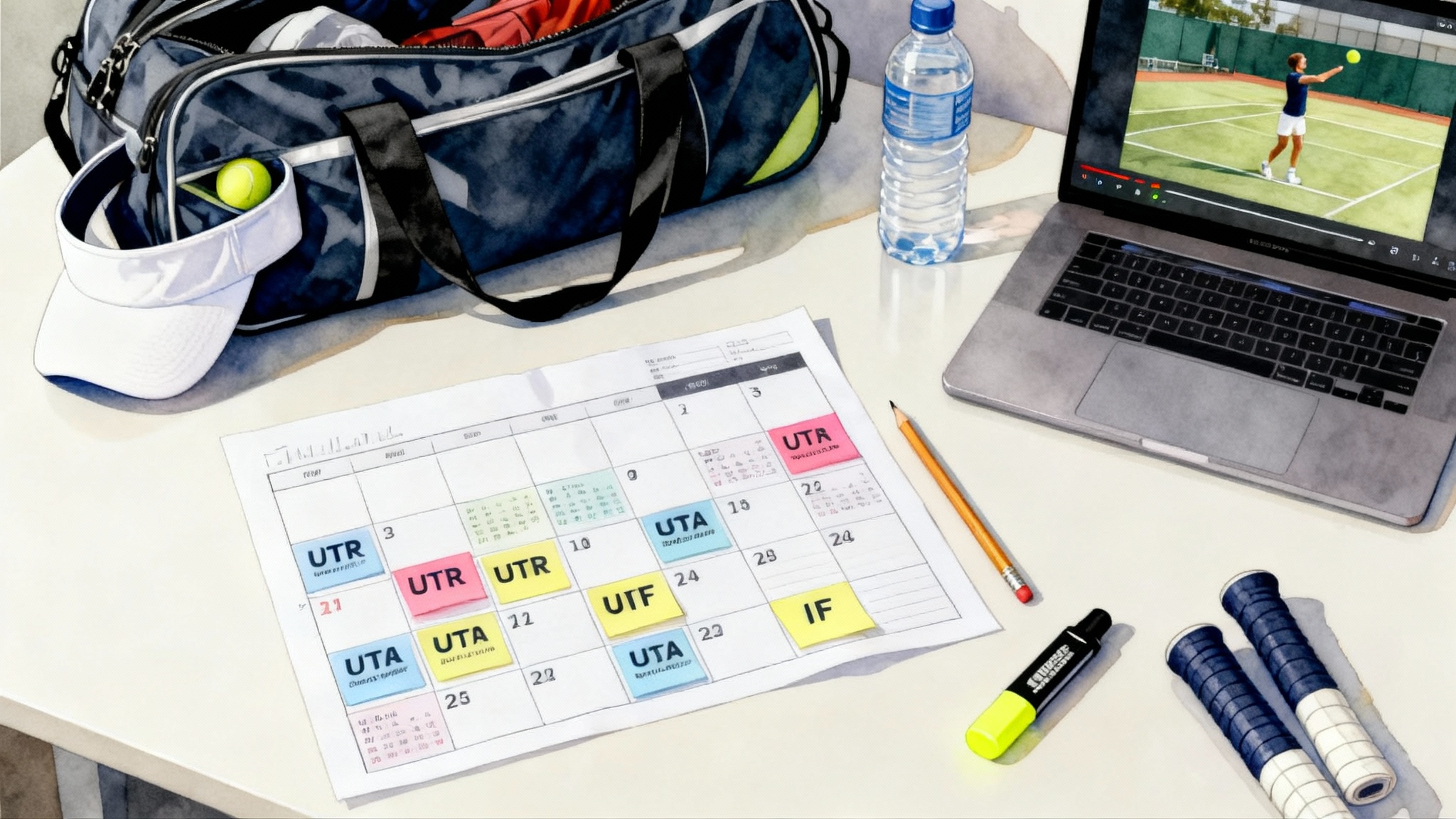
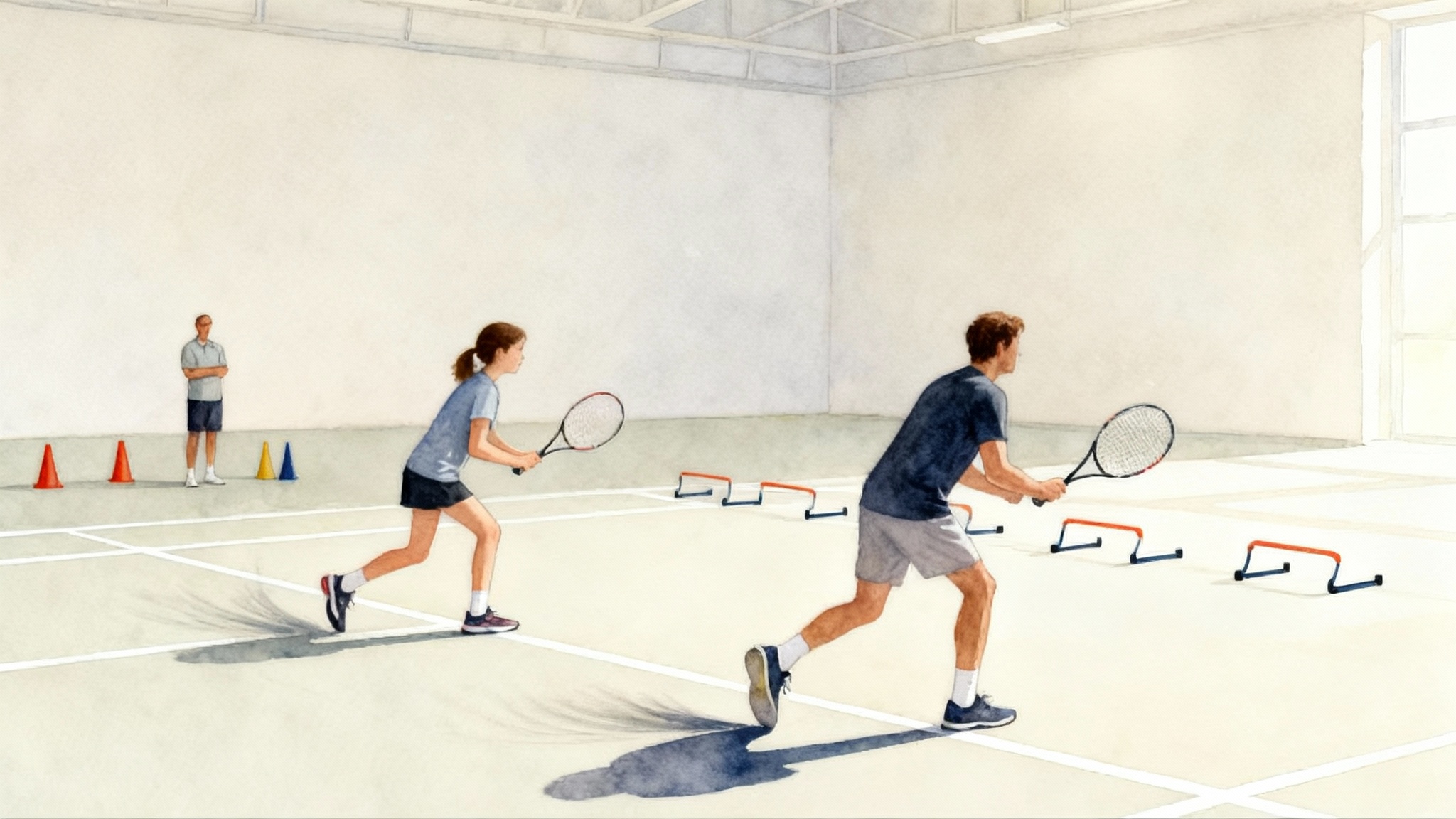
Smart Tennis Workload 2025: Wearables and RPE Made Simple
A practical guide for juniors, parents, and adult players to track training with session RPE, minutes, and simple wearables. Build 2 to 1 load waves, set age appropriate weekly caps, taper before key events, and show coaches a clean log.
 Tommy
Tommy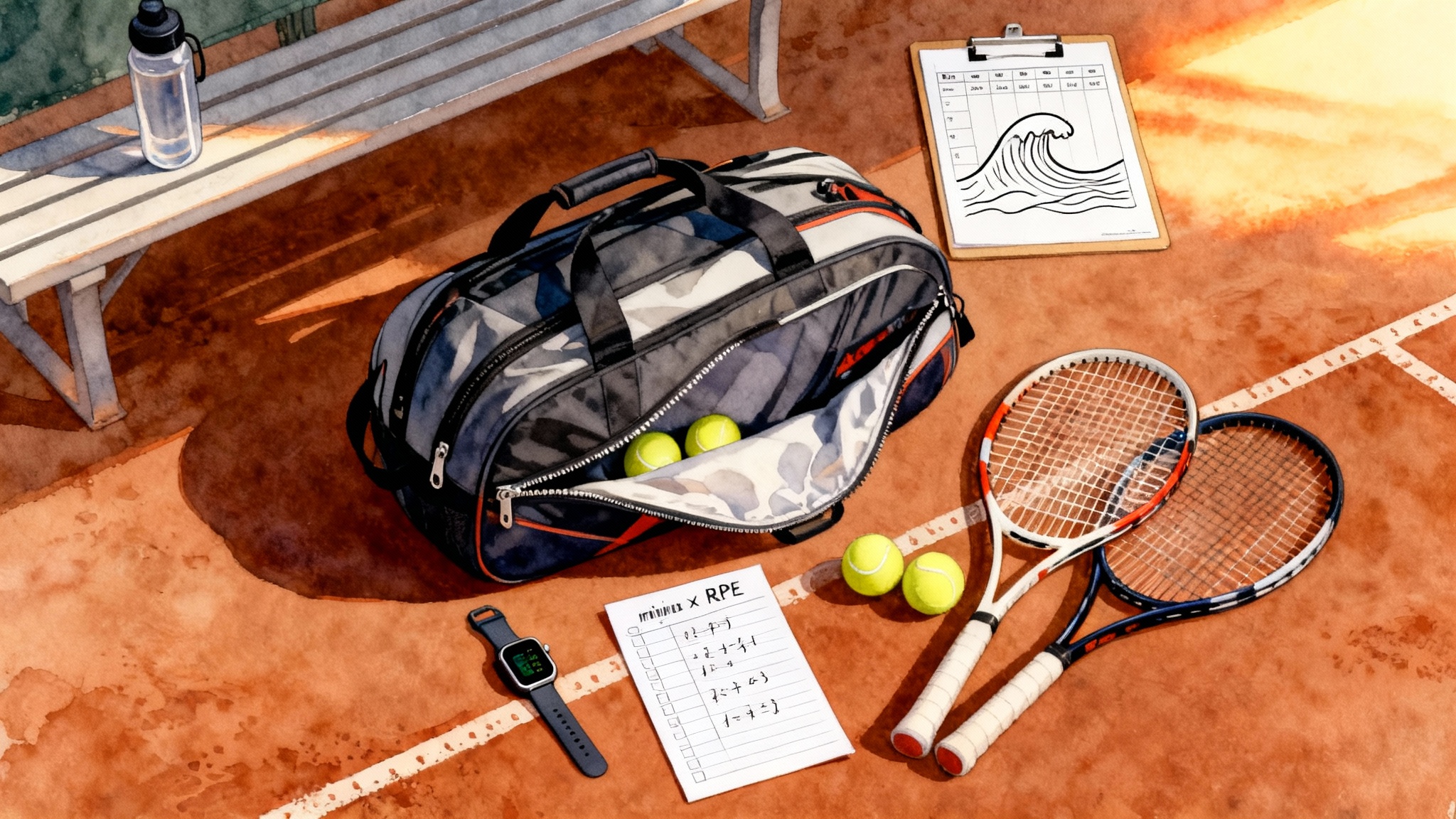
Why workload is the lever you can actually pull
Tennis rewards the patient builder. The player who stacks smart weeks gains durable fitness, repeatable strokes, and confidence under match stress. Workload is the lever you can actually pull. Done well, it cuts injury risk and makes progress predictable. Done poorly, it turns momentum into missed time.
This guide shows juniors, parents, and adult league players how to track training with three simple inputs you can collect in less than two minutes per day:
- Minutes of purposeful tennis or fitness
- Session RPE, which means rating of perceived exertion on a 0 to 10 scale
- Sleep and recovery signals from a simple wearable, mainly resting heart rate and heart rate variability
We will turn those inputs into weekly load waves, age appropriate caps, and taper plans you can apply before showcases, USTA or UTR events, and league playoffs. You will also get printable templates, a red flag checklist for overuse, examples from the Legend Tennis Academy program, plus how to present your log to college coaches and later to ATP or WTA support teams.
The simple model: minutes × session RPE
Session RPE is a validated way to estimate training load without lab equipment. After each session, answer one question 15 to 30 minutes post training: How hard did that feel on a 0 to 10 scale? Multiply that number by session minutes to get a training load score. This method was described in sports science research on internal load monitoring and remains a practical field tool for racket sports. See the original session RPE method for background on how and why it works.
Suggested anchors for the 0 to 10 scale:
- 0: Rest
- 1 to 2: Very easy, activation only
- 3: Easy aerobic hitting or mobility
- 5: Moderate, steady drilling or fitness
- 7: Hard, live points or conditioning sets
- 9 to 10: Maximal effort, test or very intense match
Example: 90 minutes of drilling at RPE 6 gives 540 load points. A two hour league match that felt like an 8 gives 960 points. Over a week, sum all sessions for a weekly load total.
Wearables that matter, not dashboards that distract
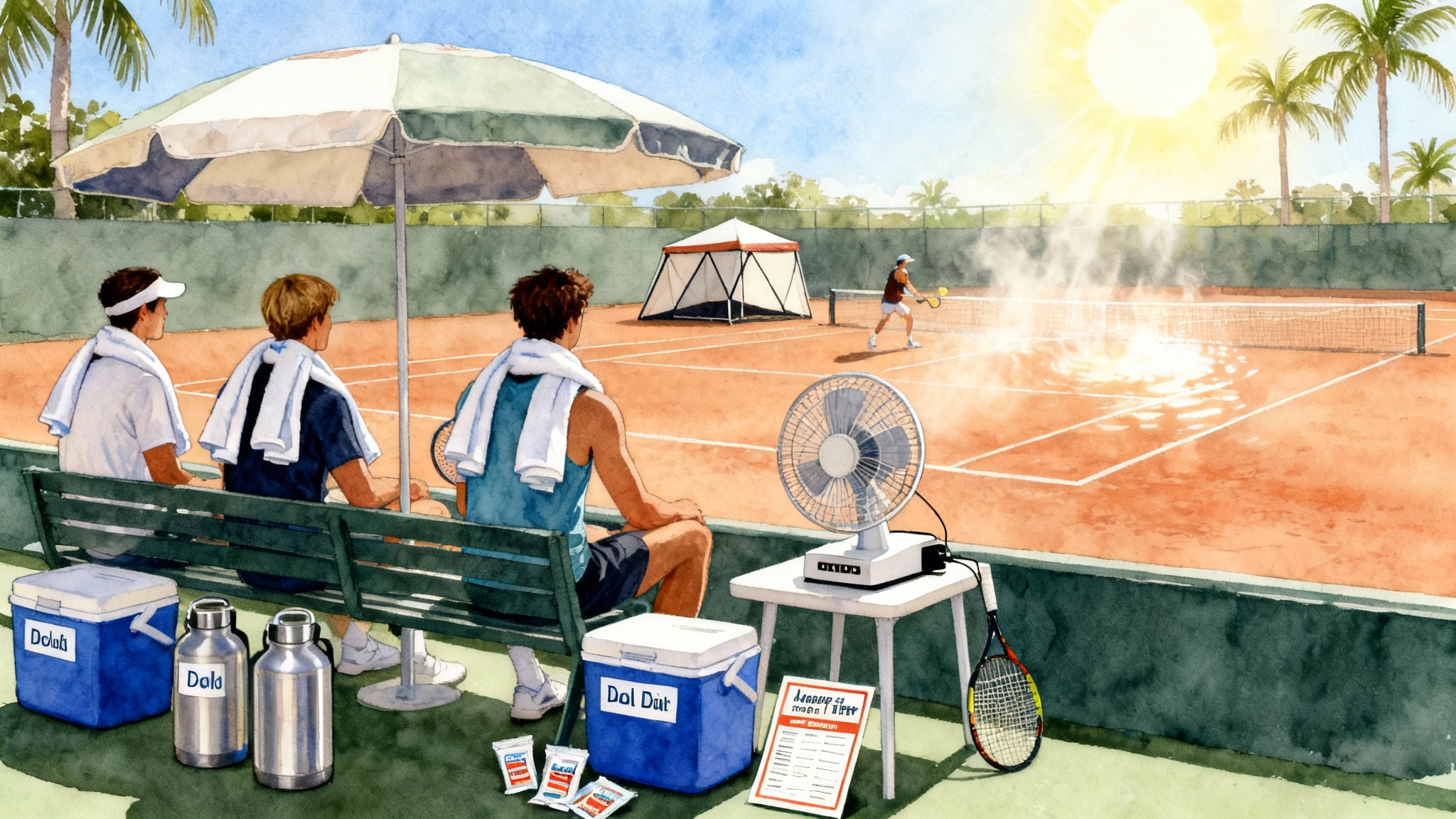
You do not need a lab. A basic smartwatch or ring from Apple, Garmin, Coros, Polar, Whoop, or Oura is enough. Focus on two recovery signals you can check each morning in under 30 seconds:
- Resting heart rate on wake
- Heart rate variability during sleep or first thing in the morning
What to look for:
- If resting heart rate trends up 5 to 10 beats per minute above your baseline for two days, scale back that day
- If heart rate variability drops well below your personal baseline for two days, lower intensity or switch to technical work and mobility
Ignore novelty metrics you will not act on. Sleep duration, resting heart rate, and heart rate variability give you 90 percent of the value.
Build 2 to 1 load waves
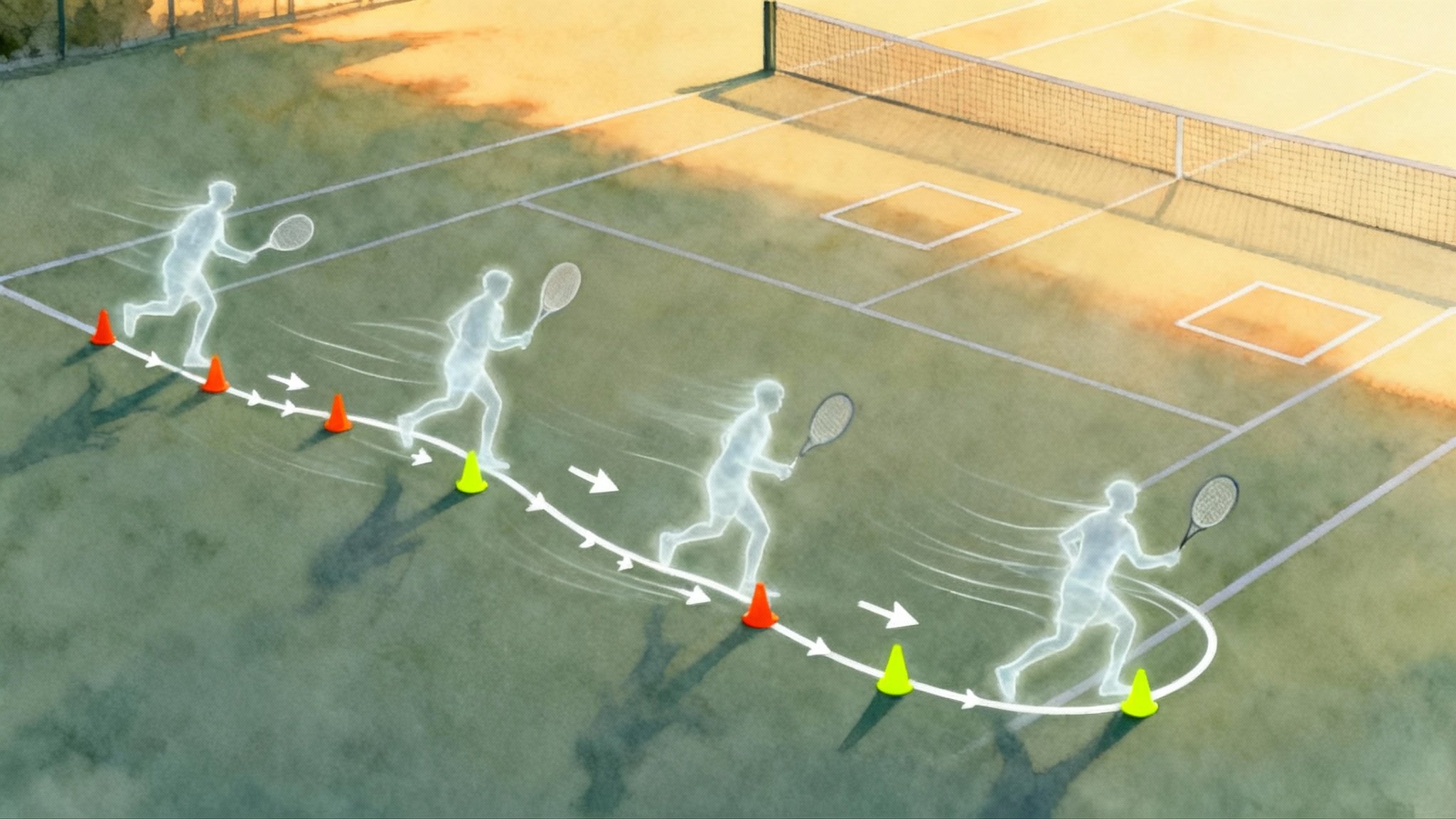
Elite players rarely linearly increase training. They progress in waves. A simple and effective pattern is two build weeks followed by one deload week. Build weeks raise weekly load by about 10 to 15 percent. The deload trims total load by 20 to 30 percent while keeping frequency and quality of skills.
A sample wave for a junior whose baseline week is 1400 points:
- Week 1 build: 1550 to 1650 points
- Week 2 build: 1750 to 1850 points
- Week 3 deload: 1200 to 1350 points
Repeat, adjusting for school exams, travel, and tournament schedules. This keeps the slope of training steady, reduces spikes, and supports better adaptation.
Age appropriate weekly caps we use at Legend Tennis Academy
Caps are not ceilings you must touch. They are guardrails that keep the weekly load within a safe band for most players. Adjust for history, growth, and injury status. At Legend Tennis Academy, we use these typical caps as starting points:
- Under 12: 900 to 1400 weekly load points, 6 to 8 total hours on court, 1 to 2 short strength sessions focused on fundamentals
- Ages 13 to 14: 1200 to 1800 weekly load points, 8 to 10 hours on court, 2 to 3 brief strength sessions for movement quality and coordination
- Ages 15 to 16: 1500 to 2200 weekly load points, 10 to 12 hours on court, 2 to 3 structured strength sessions for power and resilience
- Ages 17 to 18: 1700 to 2500 weekly load points, 11 to 14 hours on court, 3 strength sessions, with careful planning around showcases and exams
- Adults competing in leagues: 1200 to 2000 weekly load points depending on job and family load, two strength sessions focused on durability
These ranges assume a mix of drilling, live points, matches, and fitness. A player with a recent growth spurt, a history of overuse, or high academic stress should use the lower end of the range. For juniors in a rapid height change phase, review our growth spurt training playbook.
Taper plans before showcases, USTA or UTR events, and playoffs
The goal of a taper is to keep sharpness while dropping fatigue. Plan backward from day zero, which is the first competitive match.
- Ten to seven days out: Maintain intensity in short bursts but cut total volume by about 10 to 15 percent. Prioritize quality hitting windows and short fitness primers. Keep strength sessions but reduce sets and leave two reps in reserve.
- Six to four days out: Another 10 to 20 percent volume reduction. Two quality hitting sessions with point play, one match simulation, and one mobility or recovery block. Keep intensity high in specific points based drills.
- Three to two days out: Sessions become shorter. Two 45 to 60 minute tune ups with serves, returns, first four balls, patterns, and tiebreaker rehearsal. Activation lifts only. Emphasize sleep and hydration.
- Day zero: Warm up, not a workout. Trust the work.
For juniors juggling school, place the longest session on the weekend at T minus 8 or T minus 6 and protect sleep in the final 72 hours.
Red flag checklist for overuse and when to seek help
Overuse sneaks up through small signals. Treat these as yellow or red flags:
- Pain that warms up but returns after, or morning stiffness lasting more than 48 hours
- A sudden drop in stroke quality or footwork despite high effort
- Resting heart rate up 5 to 10 beats per minute above baseline for two days
- Heart rate variability depressed for two days compared to your normal range
- Mood changes, irritability, or persistent fatigue that does not improve with a rest day
- Three or more nights of less than seven hours of sleep for juniors or less than six for busy adults
The American Academy of Pediatrics has policy guidance on overuse and burnout in youth sports that is helpful context for families and coaches. For a concise overview, see the AAP overuse policy statement. Use it as a conversation starter with your pediatrician or sports physician.
Printable templates you can use today
You can print these or use the linked PDFs from our resource library.
- Daily RPE Log: Printable RPE log
- Weekly Wave Planner: Weekly wave planner
- Taper Checklist: Tournament taper checklist
Daily RPE Log fields:
- Date
- Session type: drilling, match play, fitness, strength, mobility
- Minutes
- Session RPE 0 to 10
- Load score = minutes × RPE
- Notes: what you focused on and how it felt
Weekly Wave Planner fields:
- Week dates
- Target weekly load and cap
- Summed load from daily logs
- Sleep average, resting heart rate trend, heart rate variability trend
- Wins: what worked
- Next week changes: what you will adjust
Taper Checklist items:
- Confirm match day schedule and travel
- Choose taper pattern and plug into calendar
- Cut volume, keep intensity, protect sleep
- Pre match nutrition, hydration, and warm up plan
- Racquet, strings, shoes, and tape list
Legend Tennis Academy examples you can mirror
These are real patterns we use at Legend Tennis Academy. Adjust numbers to your baseline.
Junior 13U preparing for a district qualifier in three weeks:
- Baseline week: about 1300 points across four court sessions and one fitness block
- Wave plan: Week 1 at 1450 points with two drilling sessions at RPE 6 and one live points session at RPE 7, Week 2 at 1650 points with a match simulation, Week 3 deload to 1200 points with short, sharp hitting and a taper starting five days out
- Wearables: Bedtime anchor at 9:30 pm, watch morning resting heart rate averaging 62 beats per minute; any two day rise above 68 triggers a switch to mobility and technical work
Junior 16U building toward a showcase and back to back UTR events:
- Baseline week: about 1800 points with five court sessions and two short lifts
- Wave plan: Week 1 at 2000 points with focused serve plus first ball drills, Week 2 at 2300 points anchored by two match simulations, Week 3 taper to 1500 points with high quality but short sessions
- Strength: Two full body sessions early in Weeks 1 and 2, replaced by activation circuits in Week 3
- Recovery: One mobility block on the day after the heaviest tennis day; priority on sleep duration rather than nap chasing
Adult 4.0 league player with a busy job and two matches per week:
- Baseline week: about 1500 points, typically two 90 minute matches and one 60 minute practice
- Wave plan: Weeks with two matches are effectively build weeks. Insert a deload week every third week by trimming the practice and replacing with a 30 minute mobility plus serves session
- Wearables: Morning check of resting heart rate and overnight sleep. If travel causes short sleep, drop intensity in the next practice to technical work at RPE 4 or 5
How to present your training logs to college coaches
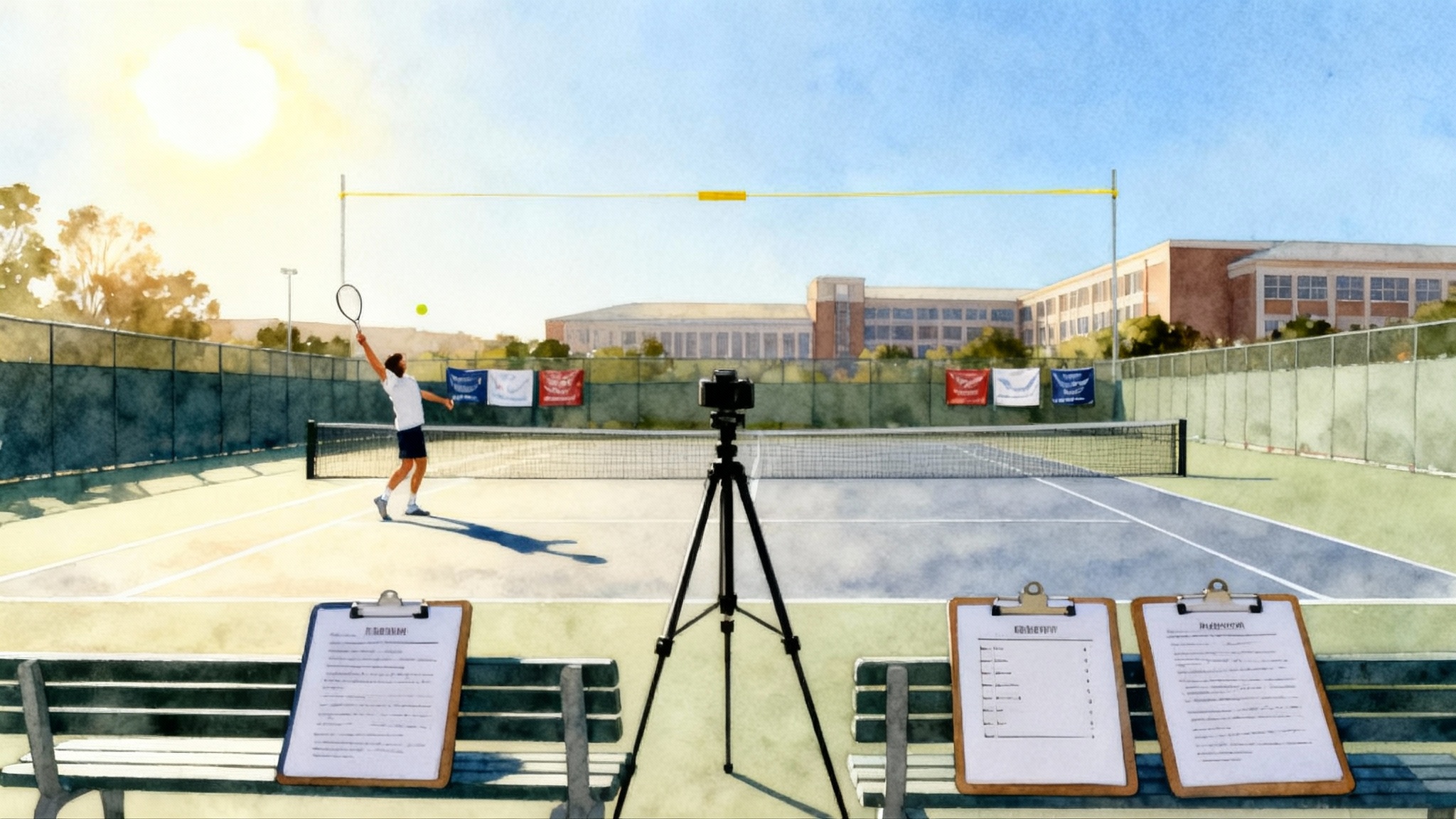
Coaches appreciate clarity. They do not need dashboards. They need to know that you train consistently, that your body handles the load, and that you improve the things that win points. For outreach specifics, use our college tennis recruiting checklist.
- One page summary: A twelve week view with weekly load totals, a three week wave pattern, and two or three key notes per week. Highlight match play volume and serve plus first ball repetitions.
- Quality over noise: Include minutes, session RPE, load, and a brief focus note. Omit heart rate graphs unless a coach asks.
- Show resilience: Note back to back match days, travel weeks, and how you tapered into key events. Link to your tournament schedule and best recent wins.
- Delivery: Export as a single PDF named Lastname_Firstname_TrainingLog_YYYYMM.pdf. Attach to your intro email or recruiting questionnaire. Bring a printed copy to visits.
How to hand off your log to ATP or WTA support teams
If you progress to the professional pathway, your log becomes part of a larger system. Make the handoff easy.
- Data dictionary: At the top of your sheet, define each field and scale. Include how you record minutes, when you rate RPE, and how you calculate weekly totals.
- Versioned files: Keep a monthly archive in a shared folder with consistent naming. Back up to a cloud drive the team can access.
- Flags and notes: Use a simple color or tag to mark weeks with illness, growth spurts for juniors, travel disruptions, or equipment changes. Add string and tension notes when they change.
- Interoperability: If the team uses a platform, ask for their template and copy your historical data into their format. Your clean historical record will speed up their understanding of your training age and tolerance.
Implementation in 20 minutes per week
Consistency beats complexity. This is the weekly rhythm we teach at Legend Tennis Academy.
- Daily: Log minutes and RPE after each session. Add one sentence on what you trained and how it felt. Check resting heart rate and heart rate variability in the morning and note any trend.
- Friday or Sunday review, 15 minutes: Sum weekly load, compare to your target, and decide next week’s target. Record sleep average and any flags. Schedule sessions that hit your target without big spikes.
- Monthly, 5 minutes: Scan your three week waves, confirm that deloads are present, and mark upcoming events that need a taper.
Common mistakes and how to fix them
- Chasing calories or rings: Step counts and calorie numbers vary by device and rarely change decisions. Focus on minutes, RPE, and two recovery signals.
- Rating RPE immediately after the last ball: Wait at least 15 minutes so the rating reflects the whole session rather than the last drill.
- Building volume while also adding intensity: When you raise volume, keep intensity moderate. When you raise intensity, keep total minutes steady.
- Skipping deloads during winning streaks: Deloads are not rests from quality. They are strategic trims in volume that preserve skill sharpness while lowering fatigue.
- Tapering by cutting intensity: Keep short bursts of high speed footwork, first serve pace, and return reactions. Cut the minutes, not the speed.
A note on mixing school and sport for juniors
School calendars are load drivers. Exams compress sleep and attention. Plan your waves around them. Use the deload week during midterms or finals. Protect sleep the three nights before a test, even if it means trimming a session and shifting quality work to the weekend.
Your first four weeks, step by step
Week 1
- Collect baseline: Log every session with minutes and RPE. Note waking resting heart rate and heart rate variability.
- Do not change training yet. This is a measurement week.
Week 2
- Set a target weekly load that is 10 to 15 percent above Week 1 if you handled it well. If you had red flags, set a target at or slightly below Week 1.
- Keep one high quality session focused on serve and first ball. Keep one lighter technical session.
Week 3
- Raise weekly load by another 10 percent if recovery signals are steady and you feel good. Otherwise hold steady.
- End the week with a match simulation for juniors or a league match for adults.
Week 4
- Deload week. Trim total minutes by 20 to 30 percent while keeping quality. Make this week the template you reuse every third week.
At the end of four weeks, you will have a working baseline, a repeatable two build plus one deload pattern, and data you can show a coach.
Bringing it all together
Smart tennis workload is not expensive or complicated. It is a daily habit that takes two minutes and a weekly check that takes fifteen. Minutes and session RPE give you an internal view of stress. Resting heart rate and heart rate variability tell you how your body is responding. Two build weeks and one deload week keep progress steady. Age aware caps and thoughtful tapers reduce risk and sharpen performance when it counts.
Print the templates. Track your sessions. Plan your waves. Then watch what happens over a season of stacked, smart weeks. The wins will feel earned rather than surprising, and the work will feel sustainable rather than fragile.