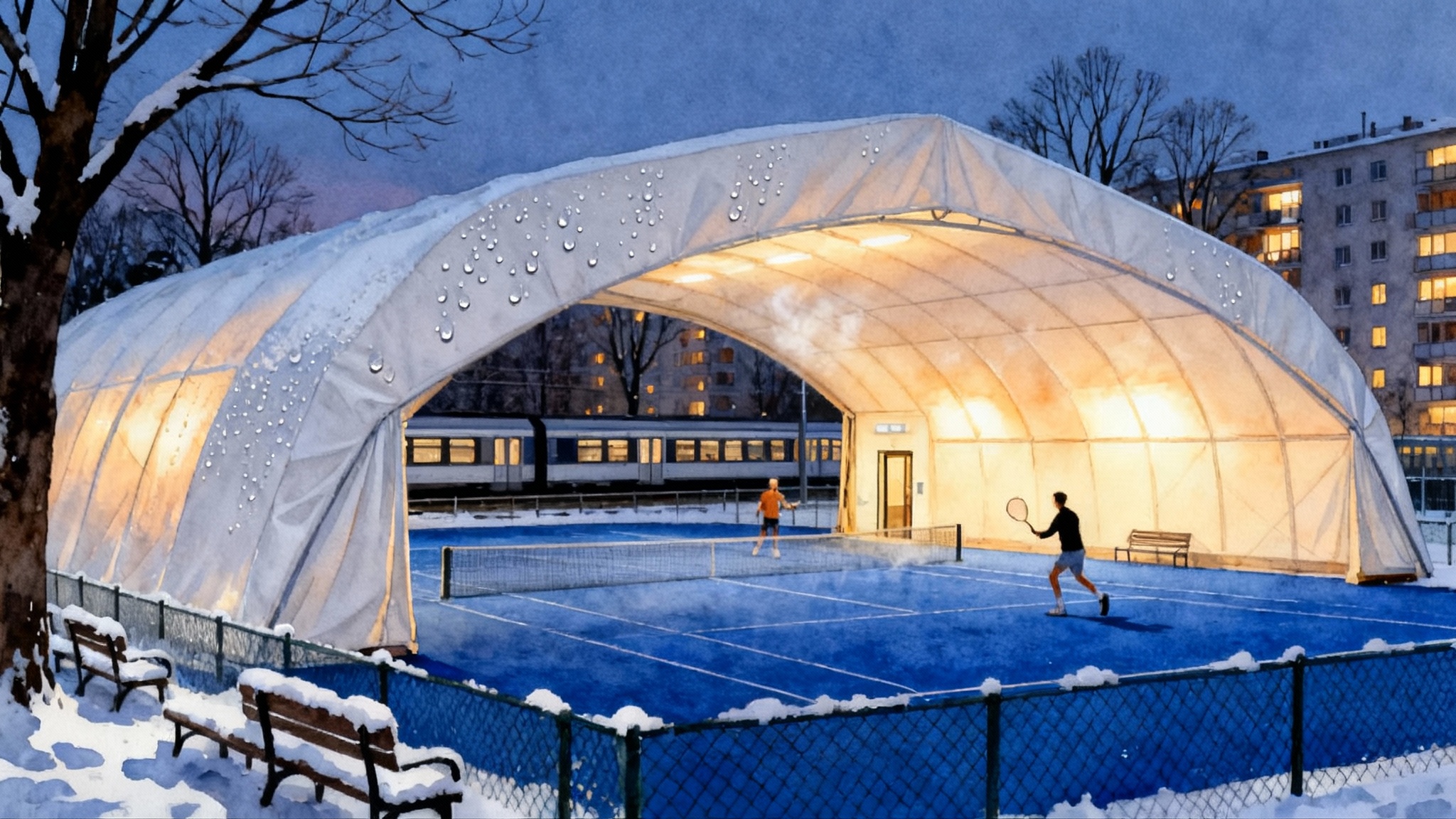
Tenerife 2025-26: Europe’s easiest winter-sun tennis base
Train all winter on reliable courts and warm microclimates in south Tenerife. This climate-smart guide compares zones, blends hard court and clay sessions, maps flight access, outlines booking and camp options, gives budgets, and adds family-friendly recovery.
 Tommy
Tommy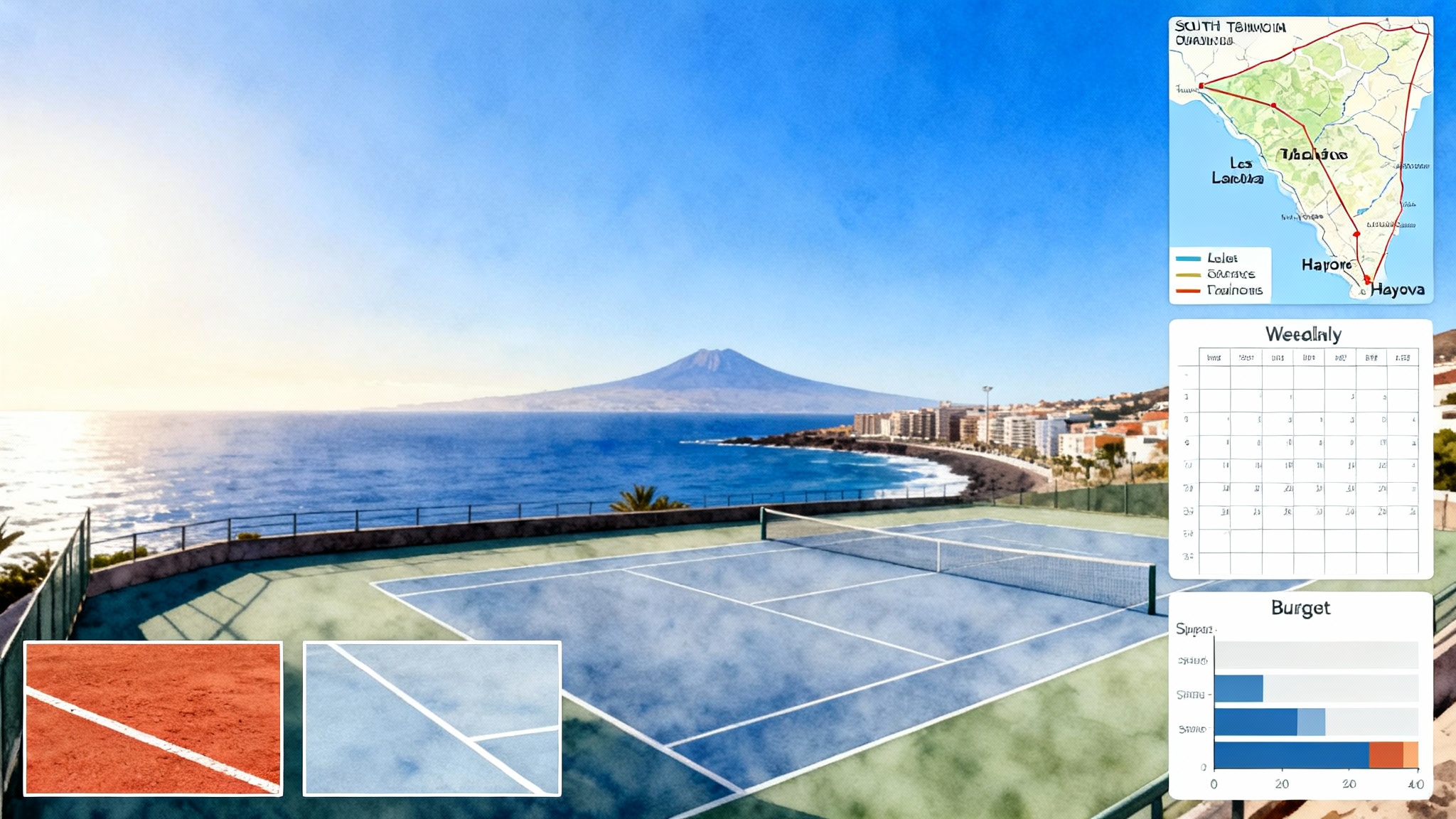
Why south Tenerife works from December to April
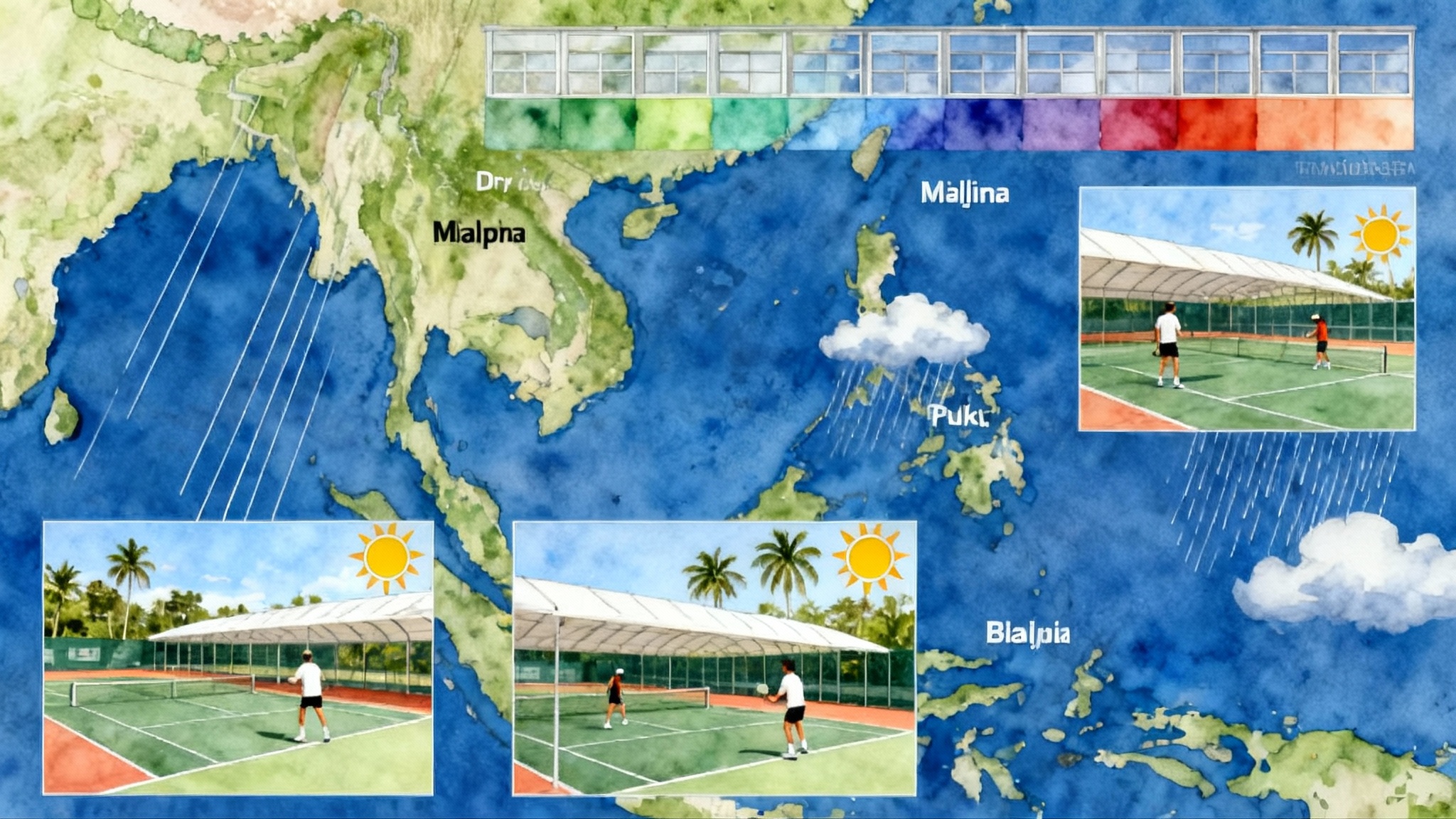
If your tennis calendar stalls each winter, Tenerife lets you keep your game moving forward. From early December through late April, the island’s south coast sits in a warm, dry lee of Mount Teide. Days are bright and playable, with comfortable temperatures and long training windows. The north can be lush and dramatic, but it is also cloudier and wetter in winter. The south is the reliable choice when you want to hit balls every day, not just some days.
A quick look at official climate data confirms the pattern. The Spanish meteorological agency shows mild winter highs, cooler nights that are great for sleep, and far fewer rain days in the south than in the north. That spread is why teams and academies base themselves near Costa Adeje and Los Cristianos for winter blocks. See the AEMET climate normals for Tenerife for context before you book.
Prefer to stay stateside for similar months? Our Orlando 2025–26 tennis base compares conditions, travel ease, and year‑round access.
Microclimates in practice: Costa Adeje and Los Cristianos vs the north
- Costa Adeje and La Caleta: Sunny most days, breezy at midday, low rainfall. Courts warm up quickly after a shower and dry fast. Morning and late afternoon windows are gold for quality reps.
- Los Cristianos and Playa de las Américas: Slightly busier, great access to accommodation, promenades, and family activities. Conditions are as reliable as Adeje, with a touch more shelter from hills behind town.
- North Tenerife, including Puerto de la Cruz and La Orotava: Spectacular scenery and a greener look, but winter brings more cloud layers and passing showers. When it is on, it is magic. When a front sits over the north, your training plan can get chopped.
The practical takeaway is simple. If your goal is volume plus consistency between December and April, base in the south and visit the north on rest days.
Where to train: stack hard court at T3 and red clay in Chayofa
- T3 in La Caleta, Costa Adeje: Acrylic hard courts built for serious training. Ball speed, grip, and bounce are in the same family as modern Australian Open conditions, which makes T3 ideal for serve and first‑strike patterns. The layout is clean and windy‑day friendly, with partial shielding and good runoff.
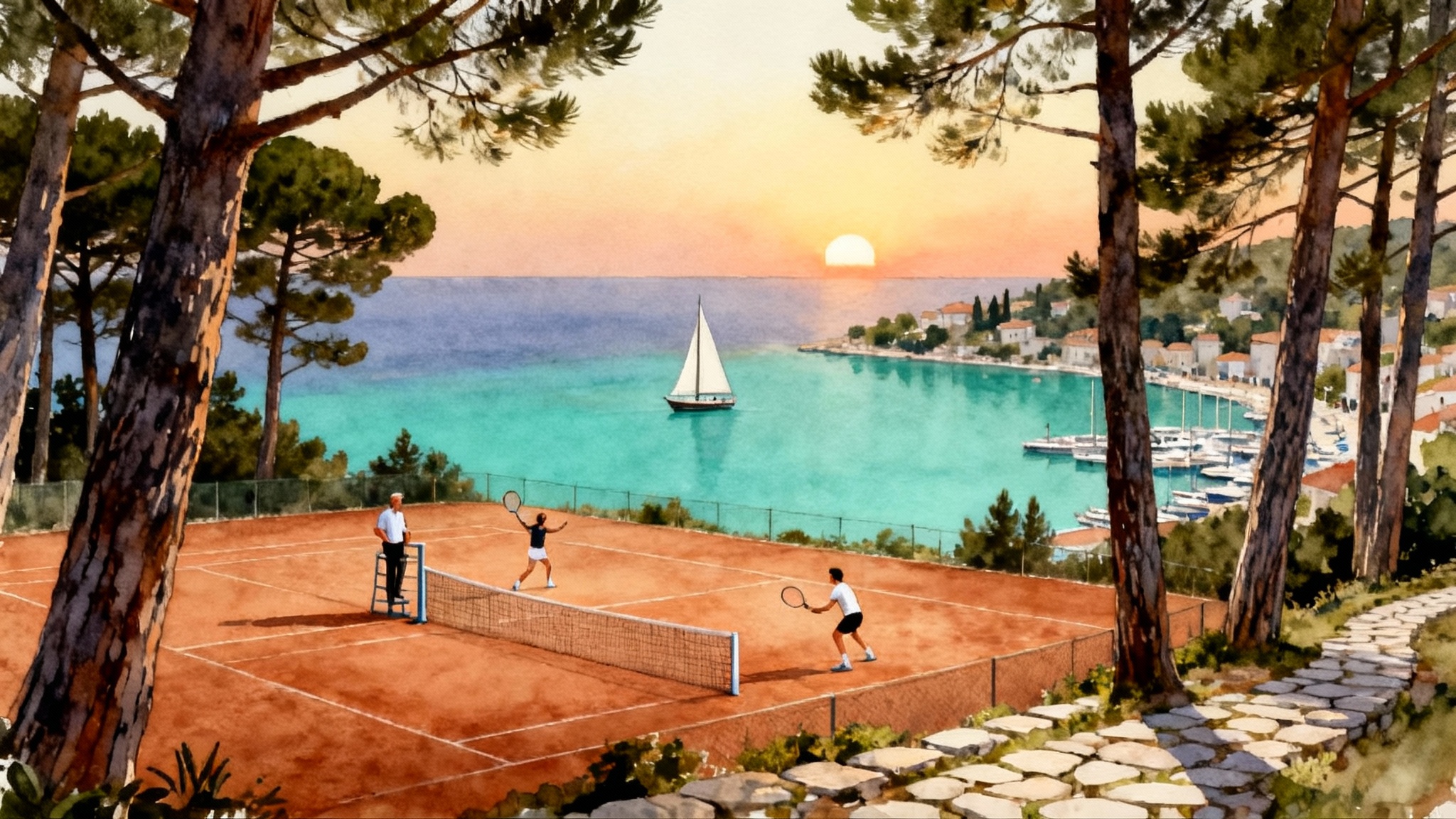
- Tenerife Tennis Academy in Chayofa: Multiple red clay courts with true bounce and dependable maintenance. Clay is your engine room for shape, patience, and rally weight. Chayofa sits slightly inland and higher than the coast, which often softens wind and adds a degree of temperature moderation.
The winning formula is to stack morning or dusk sessions at T3 for pace and timing, then load afternoon blocks on clay in Chayofa to groove patterns and legs. Alternating surfaces inside the same week sharpens perception, footwork, and decision making. For a city‑plus‑clay alternative on the mainland, see our Lisbon–Estoril clay‑city base.
Wind and rain buffers you can plan for
- Wind banding by hour: The trades typically pulse from late morning into mid afternoon. Schedule precision drills and serve targets before 10:30 or after 16:30. Use the windier middle block for fitness‑tactical games, heavy crosscourt work, and high‑margin patterns.
- Court choice by exposure: T3’s orientation helps on gusty days. On especially breezy afternoons, Chayofa’s slightly elevated basin often plays calmer. Ask for the most sheltered courts during booking on days with a wind forecast.
- Rain management: Southern showers are usually brief. Keep a warm‑up you can run in a parking area or covered walkway. Carry a squeegee and extra towels in your kit. If a band is moving through, use it as a tactical whiteboard session, then hit the moment the surface is dry.
Build your 7‑day block
Adult performance week
Day 1, Sunday arrival
- Easy mobility on the promenade. Light 60 minute hit to set timing. Early dinner and hydration.
Day 2, Monday
- AM T3 hard court: Serve plus one, 2 on 1 depth control, 90 minutes.
- PM Chayofa clay: Crosscourt forehand and backhand ladders, 90 minutes. Finish with 20 minutes of point starts.
Day 3, Tuesday
- AM T3: Return plus first neutral ball, 60 minutes. Transition volleys and overheads, 30 minutes.
- PM gym or bodyweight circuit and 45 minutes of floats or easy laps at a hotel pool.
Day 4, Wednesday
- AM Chayofa: Heavy leg day on clay. 2 on 1 patterns, 60 minutes, then situational games to 11.
- PM T3: Tie‑break set play. Two breakers to 10 with specific serve targets.
Day 5, Thursday
- Recovery morning: Walk and mobility. Video review lunch.
- PM Chayofa: Constructed points starting with a second serve. Play two short sets.
Day 6, Friday
- AM T3: Live set play with performance scoring. Track first serve percentage and points won on serve.
- PM optional: 45 minutes serves or return reps. Early night.
Day 7, Saturday
- Test set or mixed doubles. Afternoon island time.
Junior development week
Day 1, Sunday arrival
- Group orientation, fun games, and movement screens.
Day 2, Monday
- AM T3: Contact height and spacing ladders. Serve rhythm basics.
- PM Chayofa: Rally tolerance circles, four ball patterns. Coach‑fed plus live.
Day 3, Tuesday
- AM T3: Return station and first ball targets. Transition approach with recovery steps.
- PM conditioning on grass or track, then 30 minutes of shoulder care.
Day 4, Wednesday
- AM Chayofa: Depth and shape day. Forehand inside‑out sequences.
- PM T3: Team tie‑breaks with simple performance stats on a clipboard.
Day 5, Thursday
- Recovery walk at the coast, optional homework on match charting.
- PM Chayofa: Serve plus two patterns and clutch game play.
Day 6, Friday
- AM T3: Test set with coaching timeouts.
- PM fun mixed doubles, hand‑feed reflex games.
Day 7, Saturday
- Morning skills challenge, medals and feedback sheets. Afternoon volcano or beach with family.
Build your 14‑day block
A two week stay lets you wave load. Use week one for volume and fundamentals, week two for quality reps and competitive stress.
- Week one: 7 to 9 on‑court sessions, 2 video reviews, 2 strength sessions, 1 full rest day with only walking and mobility.
- Week two: 6 to 8 on‑court sessions with higher live‑ball density, 1 match charting assignment, 1 targeted speed session, 1 full rest day.
Example rhythm
- Mon and Tue: Double days, hard in the morning at T3, clay in the afternoon.
- Wed: Single day on clay plus gym.
- Thu: Single day hard court plus serves and returns.
- Fri: Live set day with specific goals and performance tracking.
- Sat: Active recovery or optional doubles.
- Sun: Full rest or family excursion.
Booking courts and small‑group camps
- Courts: Secure T3 hard courts early for morning or late afternoon primes, then fill your open slots on clay at Chayofa. If you are flexible on times, you can often add a second hour the day before. If rain appears, call early and slide the session rather than cancel.
- Coaches and privates: Blend one private lesson for every two group sessions. Use privates for serve work, return fundamentals, or a specific pattern you want to break through.
- Small‑group camps: We run focused four to six player camps that mix T3 and Chayofa surfaces, with a coach tracking your stats and video across the week. Check our small‑group camps calendar and look for December to April dates.
- A la carte bookings: If you prefer to self‑build, use our Tenerife court booking page to reserve times, then message us for a coach add‑on.
Flights and access from the United States and Europe
Airports: Tenerife South Airport, often listed as TFS or Reina Sofia, is the hub for the south coast. Tenerife North Airport, TFN, handles more inter‑island and some mainland flights. For a south‑coast base, aim for TFS to shorten transfers.
From the United States
- Routing: One‑stop via Madrid, Barcelona, Lisbon, London, Paris, Amsterdam, or Frankfurt is typical. Your second leg usually lands at TFS.
- Carriers: Spanish national and partner airlines cover the transatlantic leg, then you connect to carriers serving TFS. Low‑cost airlines dominate many European to TFS segments, so check baggage rules in detail.
- Time on task: Door to door from East Coast hubs is often 12 to 16 hours including the connection. West Coast adds 3 to 5 hours.
From Europe
- Routing: Dozens of direct flights into TFS in winter from the United Kingdom, Germany, the Netherlands, France, Italy, the Nordics, and Central Europe. Consider flying into Madrid or Barcelona if you want a city stopover.
- Transfer times: TFS to La Caleta is about 25 minutes. TFS to Los Cristianos is about 20 minutes. Chayofa is about 15 minutes inland from Los Cristianos.
Pro tips
- Build a 90 minute buffer on your inbound day. If your flight is delayed, you can still make an evening shakeout hit.
- If you land at TFN by accident, do not panic. The island motorway is simple. The cross‑island drive to the south takes around an hour outside rush periods.
Sample budgets for a 7‑night stay
Prices move with dates and how early you book. Treat these as planning ranges, then confirm.
Solo player on a performance week
- Flights: Europe 150 to 450 euros round trip. United States 700 to 1,200 dollars round trip.
- Accommodation: Self‑catering apartment near Adeje or Los Cristianos 85 to 150 euros per night. Hotels with on‑site pools from 140 to 220 euros per night.
- Courts and coaching: Court time 18 to 35 euros per hour. Group sessions 25 to 45 euros per person per session. Private lessons 70 to 100 euros per hour.
- Car hire: 25 to 45 euros per day including basic insurance. Street parking near Chayofa is straightforward.
- Food: 30 to 50 euros per day if you cook breakfasts and one dinner. Add 15 to 25 euros for a restaurant meal on training days.
- Extras: Recovery pool access or spa day pass 15 to 40 euros. Teide excursion tickets depend on choice.
Family of four with one player and one junior in a camp
- Flights: Europe 500 to 1,200 euros total in shoulder weeks. United States 2,400 to 3,800 dollars depending on city and dates.
- Accommodation: Two‑bedroom apartment with pool 110 to 180 euros per night near Los Cristianos or Costa Adeje.
- Courts and coaching: Two camp spots for 5 days 400 to 700 euros total depending on format. Optional private tune‑up 80 euros.
- Car hire: Compact 28 to 48 euros per day. Fuel costs are modest relative to mainland prices.
- Activities: Whale watching 25 to 55 euros per person. Waterpark tickets vary by age.
Money‑saving ideas
- Book courts in pairs of 90 minutes at off‑peak times. The value per minute improves and you avoid the midday wind band.
- Share privates. A 2 on 1 with a friend gives nearly the same quality as a solo while cutting cost.
- Choose one sit‑down meal per day and prep the rest. South Tenerife supermarkets are well stocked with fresh produce and ready‑to‑cook proteins.
Recovery and family add‑ons around Teide and the coast
You will train better if you rest better. Plan recovery like you plan practice.
- Easy coastal loops: Los Cristianos and Costa Adeje promenades offer flat walks and sunset views. Aim for 30 to 45 minutes on light days.
- Volcano day: Teide National Park is a world‑class reset. The altitude, lunar landscapes, and clean air create a mental and physical break. Check official guidance on routes, permits, and services before you go. Start with the Teide National Park planning advice.
- Water time: A quiet pool session of easy kicks and long exhales reduces leg heaviness after clay days.
- Family half‑days: Siam Park for slides, whale watching from Los Gigantes, or a beach picnic at Playa del Duque. Keep heavy sun exposure for rest days and pack hats and light layers for higher elevations.
Practical weekly templates you can copy
Adult intensity template
- Mon: AM hard court serve plus one. PM clay depth and legs.
- Tue: AM return work. PM strength session and short mobility pool.
- Wed: AM clay rally tolerance. PM hard court breakers.
- Thu: Off feet morning. PM clay point construction.
- Fri: AM hard court set play with stats. PM optional serves.
- Sat: Doubles and fun. Sunset walk.
- Sun: Full rest or light family excursion.
Junior development template
- Mon: Contact height and spacing. Afternoon balance and coordination.
- Tue: Return first step and short backswing drills. PM clay shape day.
- Wed: Transition footwork and volley stations. PM team breakers.
- Thu: Recovery walk and homework on charting. PM second serve starts.
- Fri: Test set with coaching timeouts. PM reflex games.
- Sat: Mixed doubles and skills challenge.
- Sun: Volcano or beach with family.
What to pack for winter‑sun tennis
- Light layers: Mornings can start cool, afternoons are warm. A zip top and a light cap are perfect. Pack a thin wind shell for clay sessions on breezier days.
- Two pairs of shoes: One clay‑specific pair, one hard court pair to protect your joints and keep traction consistent.
- Sunglasses and sunscreen: Winter ultraviolet is lower than summer but still strong at sea level. At altitude it rises quickly.
- A simple squeegee towel: Courts dry fast, but a towel speeds you back onto court after a shower.
- Tripod phone clamp: For quick video on serve and return sessions.
The big picture
South Tenerife gives you a rare mix in winter: reliable hitting weather, top‑tier hard and clay options within 20 minutes of each other, simple transfers, and enough family activities to keep non‑players happy. Build your week around morning and dusk windows, use wind as a training tool, and alternate surfaces to raise your ceiling. Book early for the best court slots, then protect one or two real rest periods so your sessions pop rather than fade.
If your goals for 2025 and early 2026 include a stronger serve and a more trustworthy rally ball, a December to April block in Tenerife will give you the repetitions and feedback you need. Set your base in Costa Adeje or Los Cristianos, blend T3 and Chayofa, track a few key numbers, and let the island’s microclimate do the quiet work in the background while you do the visible work on court.