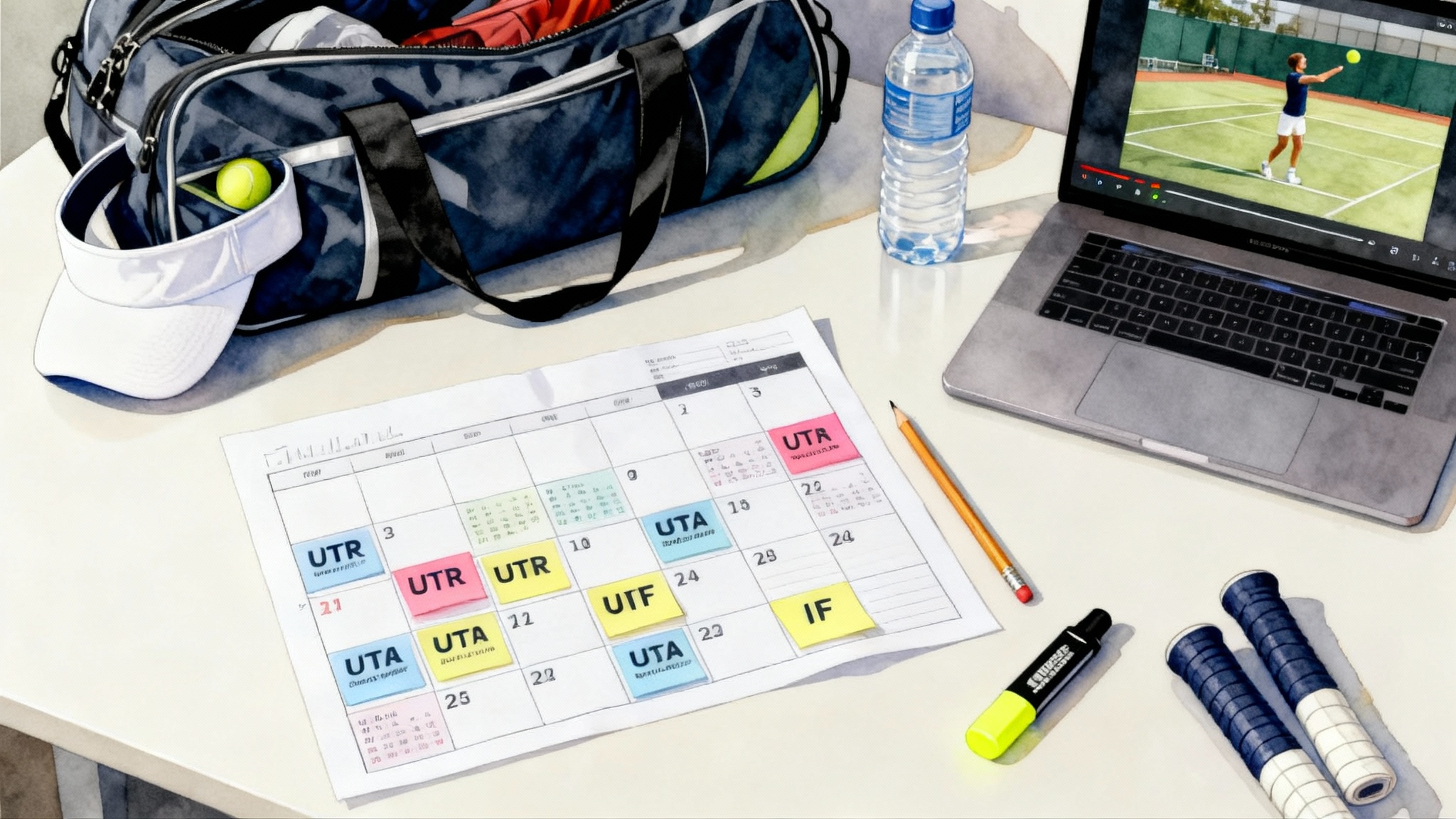
Growth Spurt Smart Tennis: Train Through PHV Safely in 2025
 Tommy
Tommy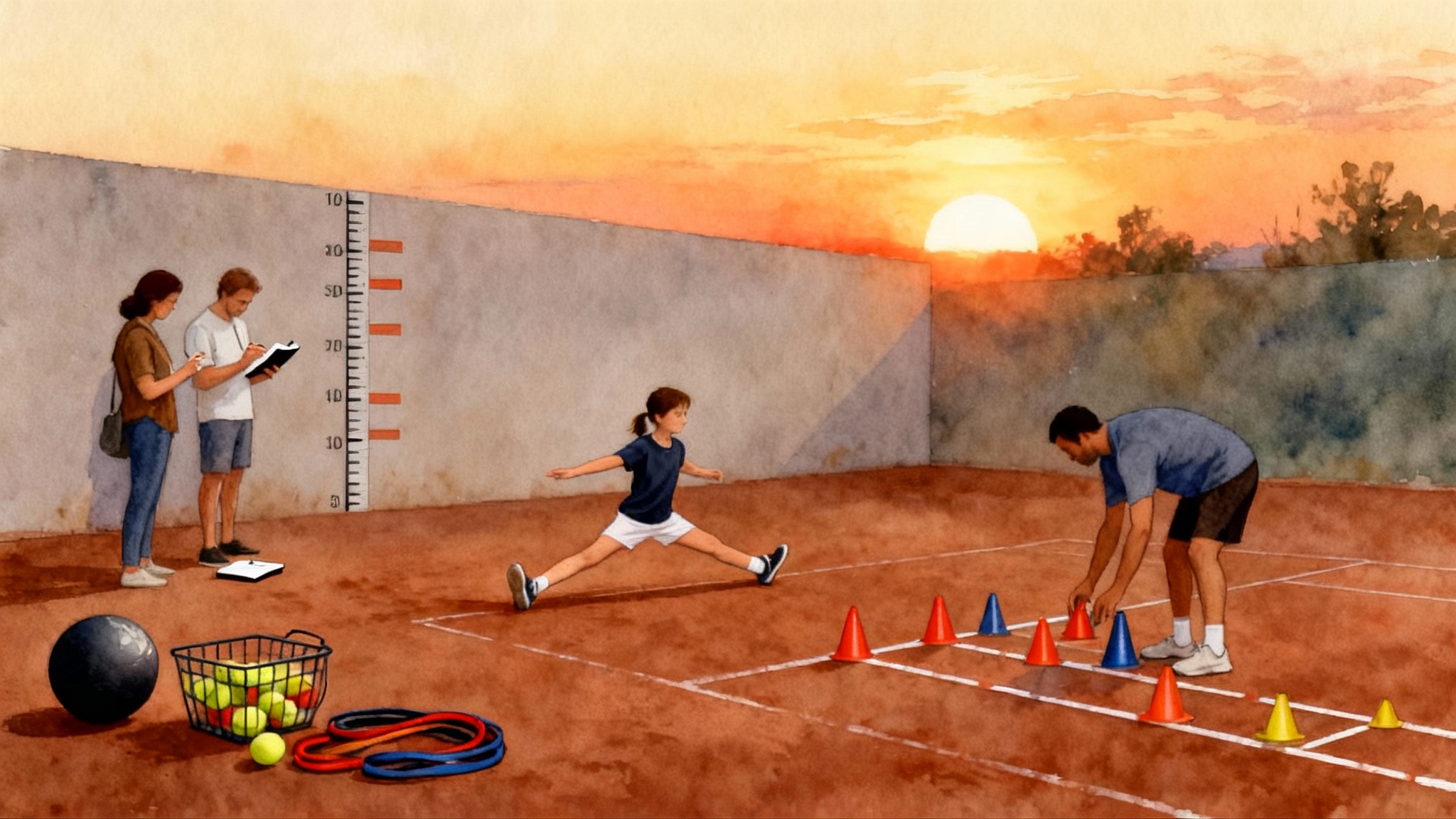
Why growth spurts decide more than forehands
If you coach or parent a 9 to 16 year old, you are not just developing a tennis player. You are stewarding a changing body that can grow faster than tendons and coordination can keep up. Peak height velocity, the period when a child grows at the fastest rate, often shifts timing, balance, flexibility, and resilience. Ignore it and you might get short term gains and long term setbacks. Work with it and you can protect joints, retain skills, and arrive in late adolescence with a healthier athlete who loves the sport.
This article gives you a field guide: how to spot peak height velocity at home, how to adjust practice loads without losing touch or confidence, a simple four week deload microcycle, a red flag checklist for knees, heels, and backs, and how to sync your plan with your academy. We will use examples from Legend Tennis Academy training to show exactly what PHV aware work looks like on court.
PHV in one page
- Peak height velocity is the fastest point of adolescent growth. For many girls it occurs between 10 and 13 years. For many boys it occurs between 12 and 15 years. That window varies by individual family history, nutrition, and training load.
- During the months around PHV, bones lengthen faster than muscle and tendon adapt. Coordination can feel off, feet grow rapidly, and landing mechanics change. Serve timing, split steps, and wide ball recovery are common casualties.
- The goal is not to stop training. The goal is to keep training smart. Think of PHV as fog on the highway. You do not park the car. You slow down, switch on better lights, and track the lane markers.
How to spot PHV at home
You do not need a lab. You need a stadiometer or a wall, a flat book, a tape measure, and five minutes each week.
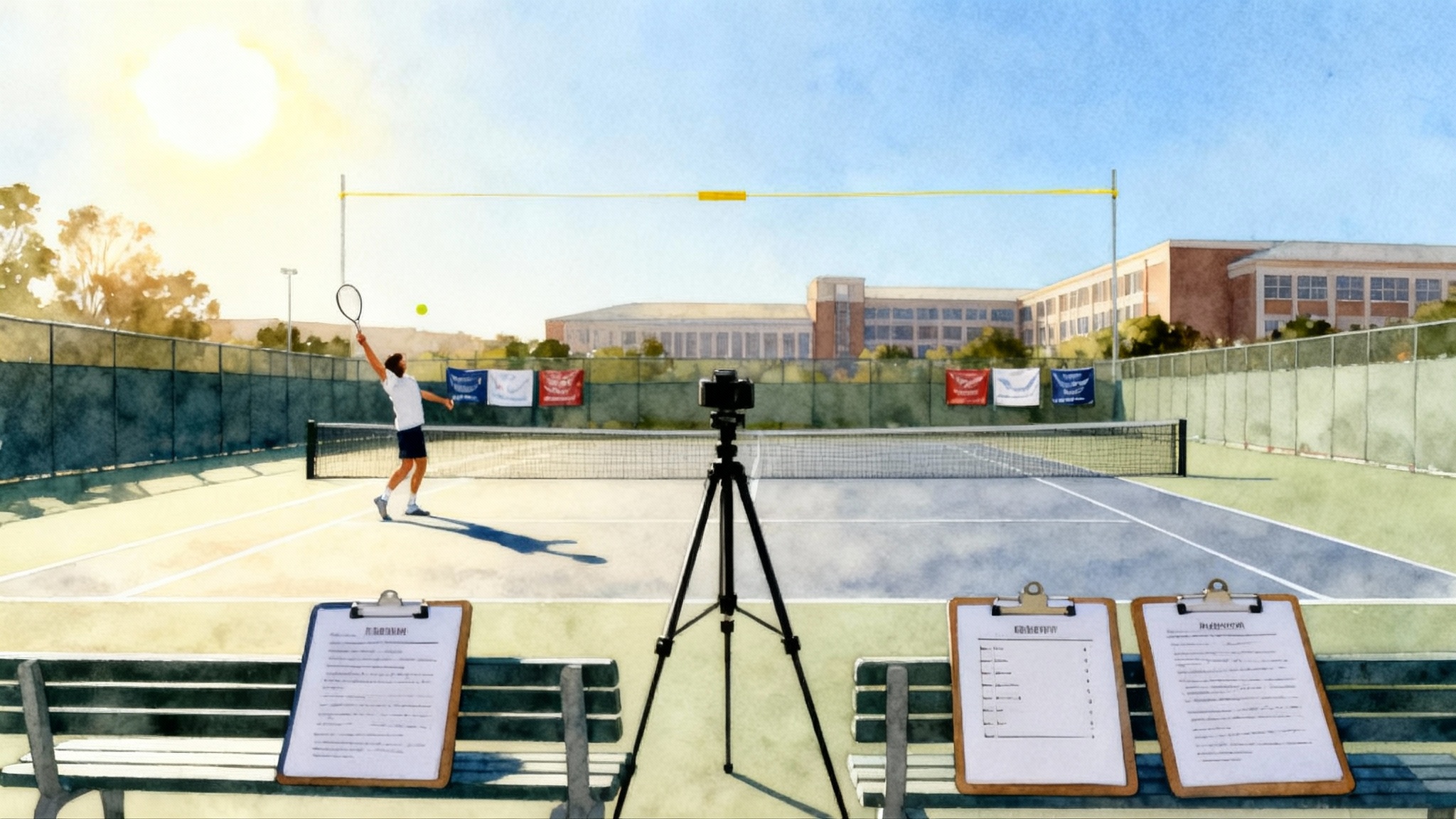
- Measure standing height
- Pick a fixed day and time each week. Morning after a bathroom visit works well.
- Stand barefoot, heels and back against a wall, head in a neutral position. Place a flat book on top and mark the wall. Measure to the nearest millimeter.
- Track growth velocity
- Enter height in a simple sheet. Our PHV tracking template does the math for you.
- Convert weekly change to a yearly pace by multiplying by 52. A rise greater than 7 to 8 centimeters per year for several weeks suggests you are near the spurt.
- Add sitting height and body mass every two weeks
- Sit on a box against the wall and repeat the book method. Subtract sitting height from standing height to estimate leg length. These values feed a maturity offset calculation that estimates years from PHV.
- If you like formulas, look up the Mirwald maturity offset method. It is a widely used field approach that uses age, height, sitting height, and weight to estimate how far a young athlete is from PHV. Use it as a guide, not a verdict.
- Watch the coordination cues
- Sudden clumsiness on routine balls, repeated net clips on second serves, and a drop in the quality of split step timing are common. Shoes feel small. Shins, heels, and lower back feel sore after sessions that used to be easy.
When 2 or more of these show up together for several weeks, act as if you are in a PHV phase. You can always ramp back later.
The biggest risks during the spurt
- Knees: The tibial tubercle, where the patellar tendon attaches, is vulnerable during rapid growth. Many young players feel a tender bump below the kneecap and pain when loading on serves or lunges.
- Heels: The growth plate at the back of the heel can get irritated by repeated sprints and jumps. This shows up as heel pain with warm up that improves when practice starts, then returns later in the day.
- Lower back: Extension based stress from serves and overheads can irritate the pars region of the spine. Fatigue and poor hip mobility make this worse.
None of this means stop everything. It means change the mix so tissues can adapt while technique continues to develop.
How to adjust weekly load without losing tennis
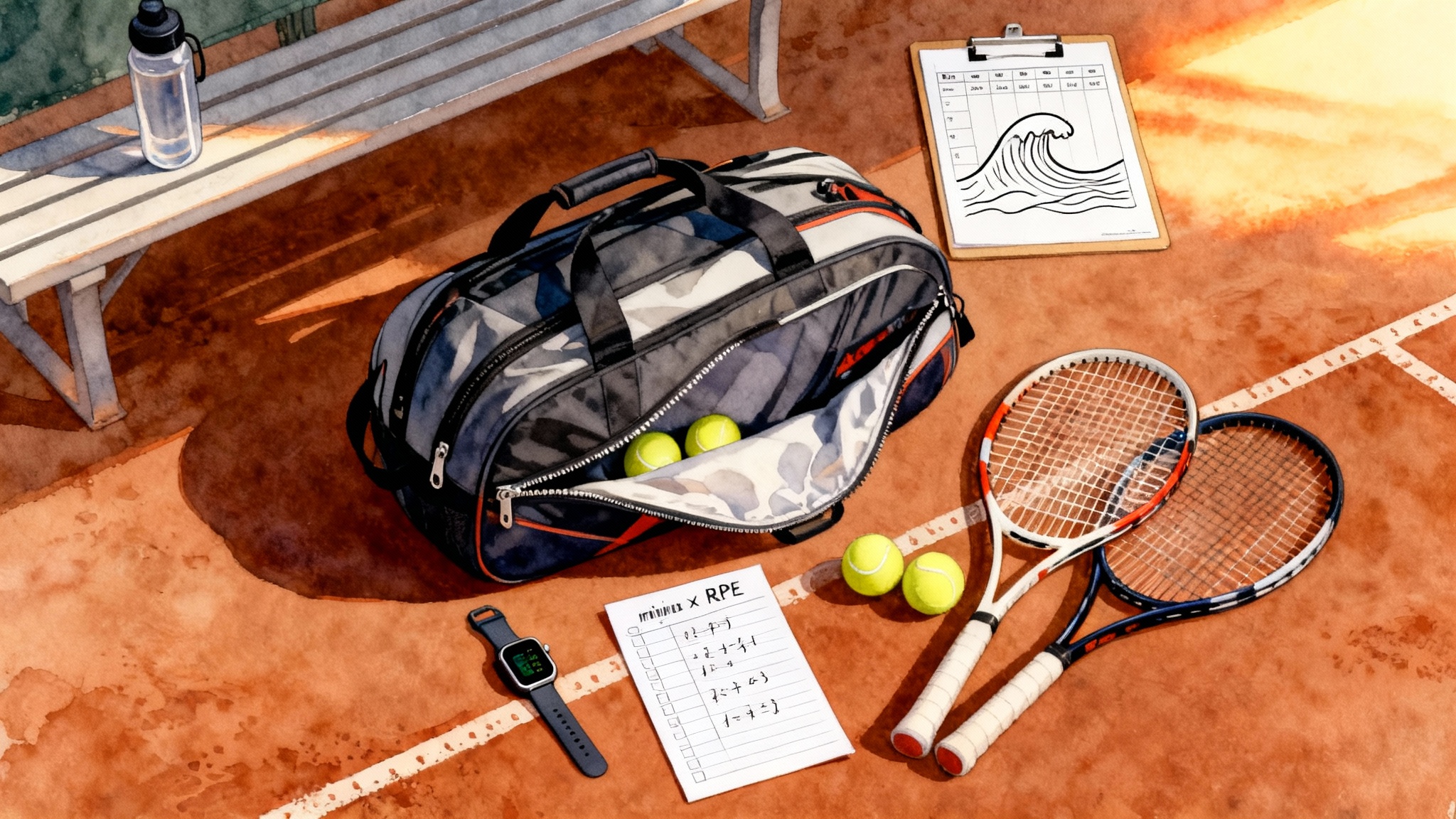
You only need two numbers for simple load monitoring:
- Minutes on court per session
- Session rating of perceived exertion from 0 to 10, where 0 is rest and 10 is a maximal effort match
Multiply them to get a simple training load score. For example, a 90 minute practice at an effort of 6 gives a score of 540. Keep a weekly total. In PHV phases, cap week to week changes to about 10 to 15 percent and favor more frequent, shorter sessions over big days. When in doubt, reduce the cost of movements that hit the knee, heel, and back hard. Keep the brain learning. If you prefer a system, see simple workload tracking with RPE.
Practical switches that maintain skills while cutting stress:
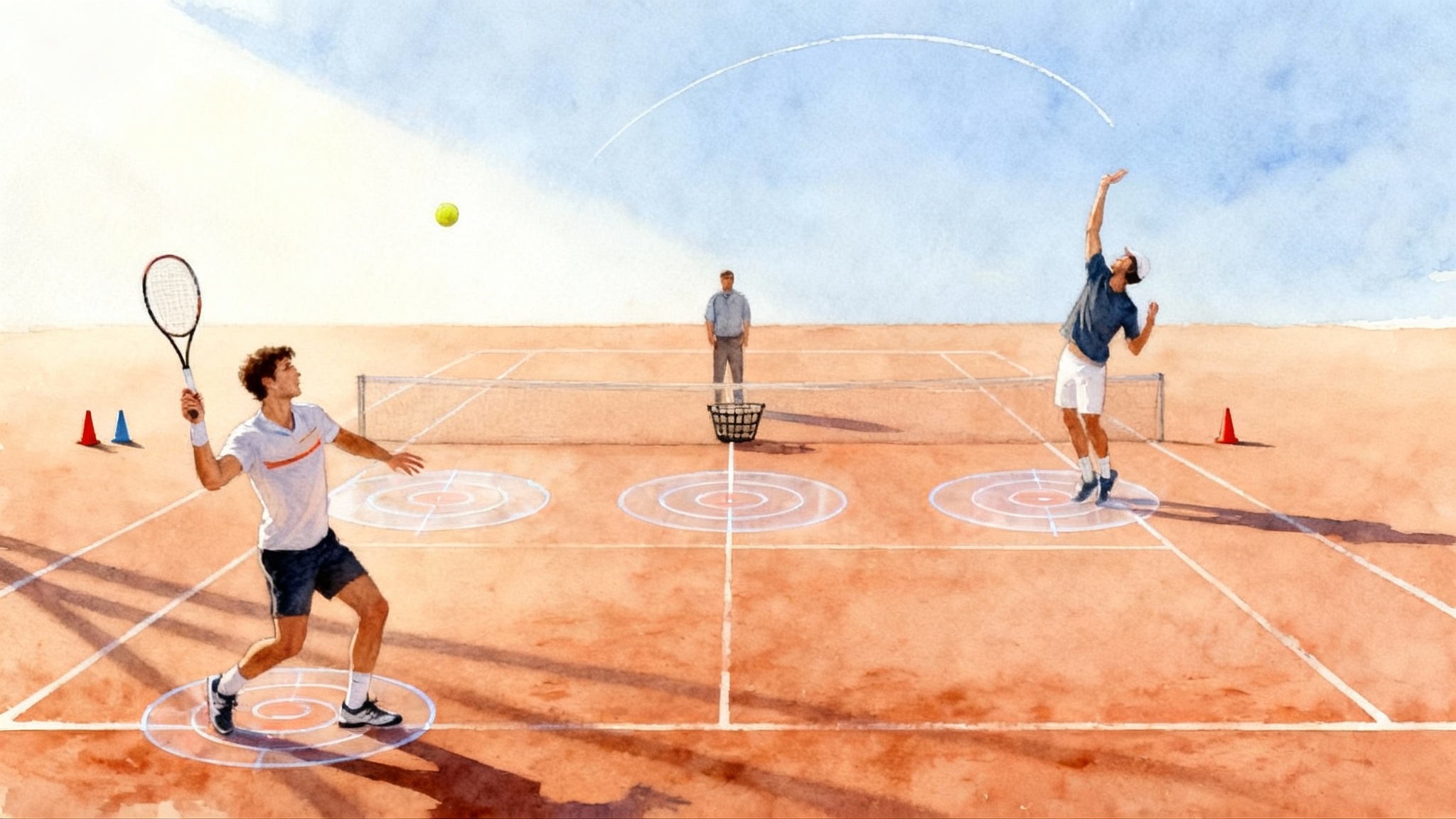
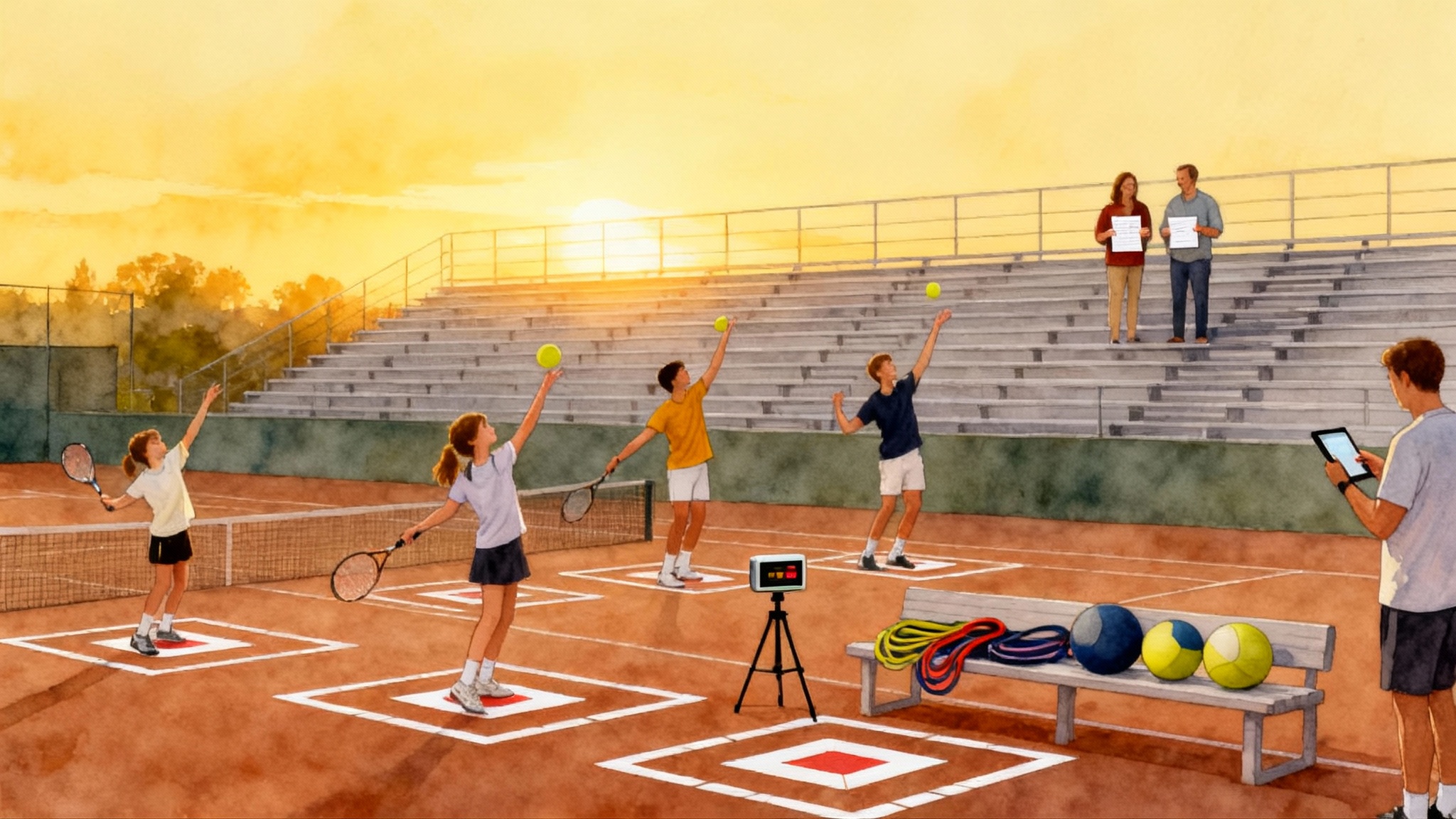
- Serve: Fewer full power serves, more rhythm ladders, shadow swings, and 50 percent pace accuracy games. Use low basket targets and thrower balls. Keep total full power serves under 40 to 60 in non match weeks for most 10 to 14 year olds in PHV phases.
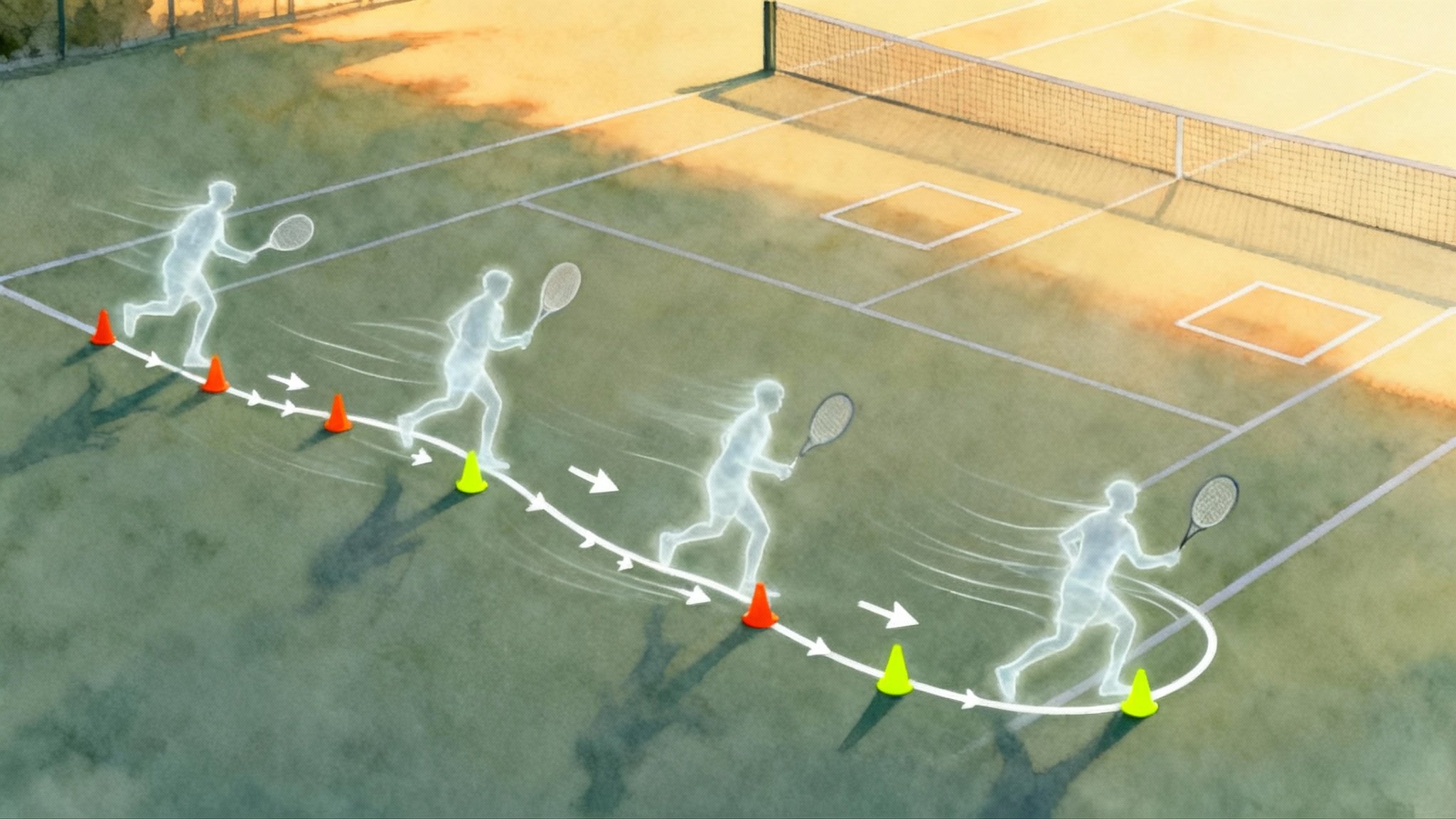
- Movement: Replace repeated deep lunge patterns with split step timing games and first step races over 3 to 5 meters. Use soft court lines or cones to reduce braking stress. For on court braking technique, study deceleration and change of direction.
- Hitting: Use mini tennis, cross court windows, and 2 on 1 control drills with a lower stance change. Focus on contact point and spacing.
- Conditioning: Swap repeated jumps for medicine ball patterns, sled drags, and resisted side shuffles. Emphasize hip mobility and trunk control.
A four week deload microcycle for growth spurts
This plan assumes a baseline of four court sessions and one match play slot per week. Adjust starting minutes to your player’s normal week. The percentages are relative reductions from your non PHV baseline.
Week 1: Reset and reframe
- Volume: Reduce total weekly on court minutes by 30 percent. No extra conditioning outside warm up and cool down.
- Focus: Contact point, split step timing, and serve rhythm.
- Serve count: 40 full power total across the week. Add 80 to 120 shadow or 50 percent serves.
- Drill menu: Mini tennis lanes, fixed target forehand and backhand, short box approach and volley, serve rhythm ladders, return blocks without full run in.
- Strength and mobility: 2 sessions, 25 minutes each. Hip airplanes, bodyweight split squats to a box, dead bug variations, side planks, ankle mobility. Zero jumping.
Week 2: Groove and stabilize
- Volume: 25 percent below baseline. Add one 10 minute competitive game at the end of two practices.
- Focus: Pattern building without full speed sprints.
- Serve count: 50 to 60 full power across the week. Continue rhythm work.
- Drill menu: Cross court to down the line switch with coach feed, 2 on 1 consistency sets to 20 balls, approach and first volley with controlled depth, returns to targets with two step recovery.
- Strength and mobility: 2 sessions, 30 minutes. Add light sled marches, band resisted shuffles, low amplitude pogo series on soft surface if heels are happy.
Week 3: Controlled build
- Volume: 15 percent below baseline. One internal match or set play with movement rules that reduce extreme reach and deep lunges.
- Focus: Rehearse serve plus one, plus two patterns.
- Serve count: 60 to 80 full power across the week split across two days, not back to back.
- Drill menu: Serve plus one cross court, return plus one deep middle, forehand inside patterns with two directional changes max per point.
- Strength and mobility: 2 sessions, 35 minutes. Add moderate medicine ball throws, hinge patterns with kettlebell if technique is sound.
Week 4: Stabilize and reassess
- Volume: 10 percent below baseline. Two short competitive sets or one UTR style match if player is fresh.
- Focus: Quality of movement, not volume.
- Serve count: 60 to 80 full power, monitored for back comfort.
- Drill menu: Full court live ball games to 21 with constraints on landing depth and recovery steps.
- Strength and mobility: 2 sessions, 30 minutes. Keep the dose, tighten the technique.
If growth velocity and symptoms settle, scale back toward baseline the following month at no more than 10 to 15 percent per week. If symptoms persist, hold the deload pattern or step back to Week 2.
Red flag checklist and what to do
Stop and modify sharply if any of the following show up for more than 48 hours or keep returning week after week:
- Point tenderness over the tibial tubercle below the kneecap with jumping and kneeling
- Heel pain that is worse with the first steps and after sessions
- Back pain during or after serves and overheads, especially with extension
- Night pain, limping, or swelling that does not settle with 48 hours of light activity
- Loss of strength or sensation in a limb, or sharp pain on impact
For persistent or severe signs, consult a clinician experienced with youth sport. The AAP guidance on overuse injuries outlines when to seek care and how to reduce risk. Use that as a safety net and keep good notes on what triggers symptoms.
Overuse hotspots and practical drill swaps
Knees
- Stressors to limit: Deep lunges to wide balls, repeated squat jumps, and heavy decelerations from open stance on hard courts.
- Swap in: Split step timing games, first step acceleration races, cross court control with stance width rules, static to dynamic approach and volley sequences.
- Cues: Land softer than you took off. Keep knees tracking over second toe on directional changes. Shorten recovery steps on wide balls.
Heels
- Stressors to limit: Continuous high impact skipping, repeated big court suicides, and hard surface hop patterns.
- Swap in: Sled drags, slideboard lateral work, curved runs on grass, cadence runs with lower bounce.
- Cues: Keep foot strikes quiet. Favor short ground contacts over big bounces.
Lower back
- Stressors to limit: High toss flat serves, rapid volume progression on kick serves, heavy rotation medicine ball throws without hip control.
- Swap in: Serve rhythm ladders, 50 percent serve locations, tall kneeling and half kneeling anti rotation holds, hip extension strength work.
- Cues: Share the load between hips and trunk. If the lower back is talking during serves, step down the toss height and pace.
Align with your academy’s plan
Parents and players do best when the academy is in the loop. Here is how Legend Tennis Academy training runs PHV aware work, and how you can ask your academy to mirror it.
Legend’s traffic light check
- Green: No pain, normal coordination, weekly growth under 5 centimeters per year pace. Train as planned.
- Yellow: Mild soreness that settles in warm up, noticeable coordination dips, weekly growth pace over 7 centimeters per year. Reduce volume by 20 to 30 percent and switch to the PHV drill menu.
- Red: Persistent pain, limping, or back pain with serving. Stop impact work, evaluate, and run the deload week.
Pre session routine
- 6 minute mobility circuit: Ankles, hips, thoracic rotation. Mini band walks.
- 4 minute coordination circuit: Single leg balance with head turns, ball toss and catch, reactive split steps.
- 10 minute feel circuit: Mini tennis to targets, serve slow motion ladders, return blocks.
On court structure in PHV weeks
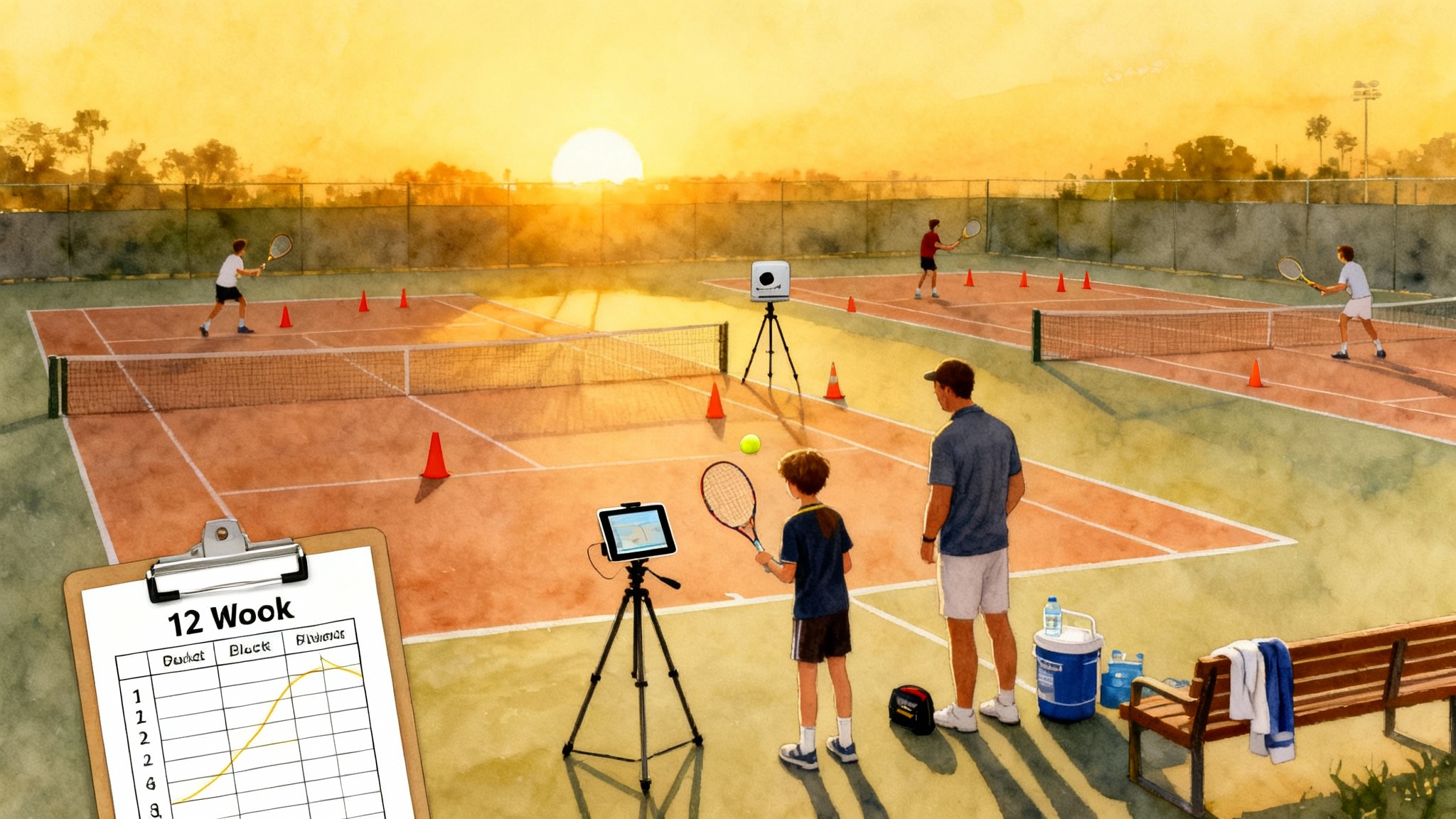
- Block 1, 25 minutes: Control games with constraints. Example: cross court to 15 with width cones.
- Block 2, 20 minutes: Serve plus one at 50 percent pace, accuracy windows only.
- Block 3, 15 minutes: First step races and spacing games on short court.
- Block 4, 10 minutes: Competitive game with rules that cap extreme reaches.
Recovery toolkit
- Post practice: 5 minutes of calf and quad soft tissue work, 5 minutes of hip flexor and hamstring mobility, 2 minutes of quiet breathing.
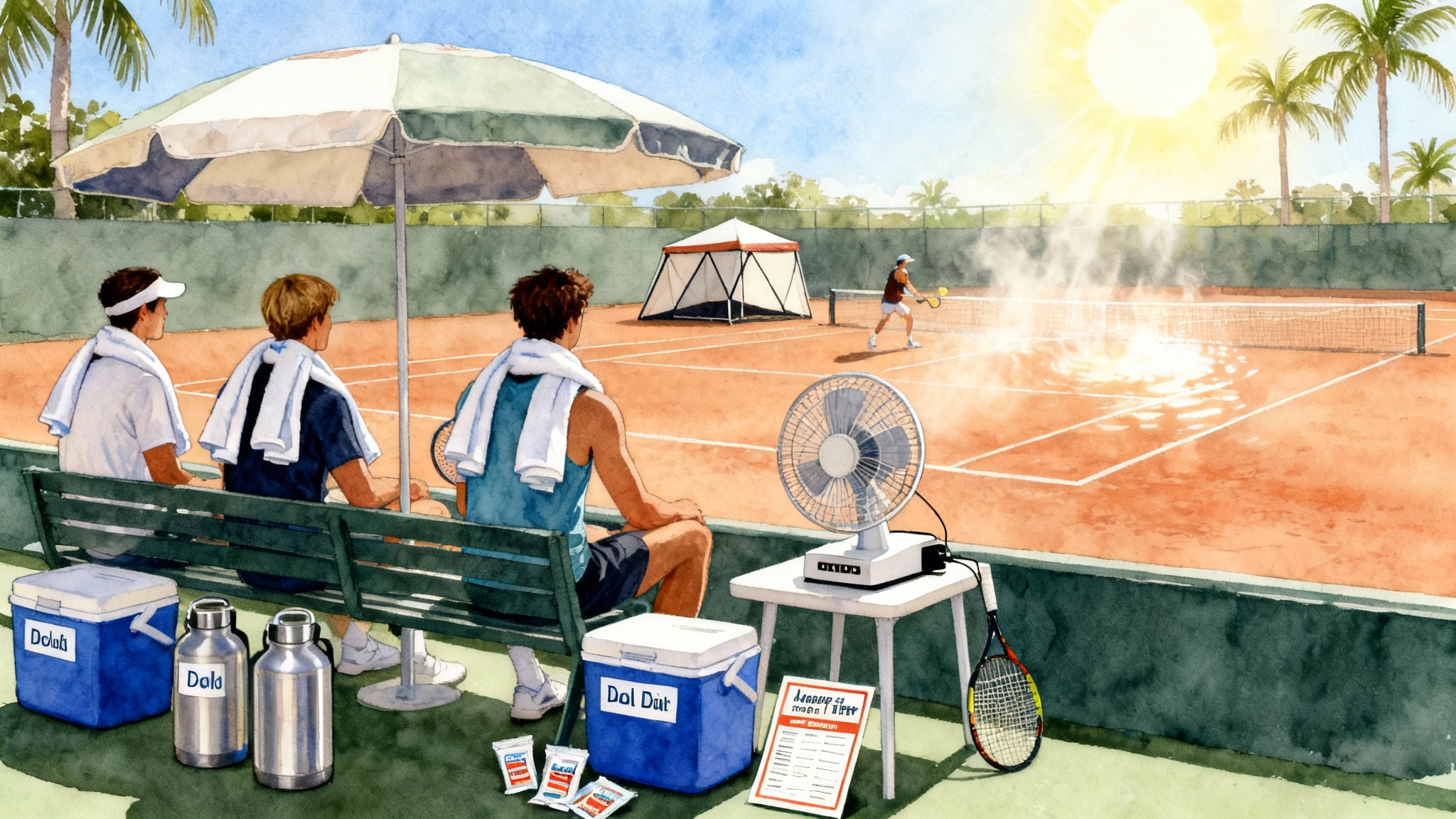
- Evening: 9 to 10 hours of sleep for most preteens and early teens, a protein and carbohydrate rich dinner, and water to clear straw colored urine before bed.
Tournament week adjustments
- If a player is in a PHV phase, Legend drops the day before match practice to 45 minutes with a feel based focus and a strict serve cap. Post match movement quality review replaces conditioning the next day.
Questions to ask your academy
- Do you track weekly minutes and session perceived exertion in juniors, and will you share those numbers with us weekly?
- What are your PHV friendly drill swaps for serves, movement, and conditioning?
- How do you cap serve counts and jump counts in 12 to 14 year olds during growth spurts?
- If a player turns Yellow or Red in your traffic light check, who decides the plan and when do parents hear about it?
Share your growth log and the weekly deload plan with the head coach. Ask them to place it into the player management platform they use, whether it is their internal system, Google sheets, or a junior tracking tool. The goal is the same: visible numbers, planned adjustments, and consistent communication.
Tools and templates you can use today
- PHV log: Date, standing height, sitting height, weight, shoe size, and weekly training load total.
- Symptom tracker: Knees, heels, back, rated 0 to 10 daily. A note next to any score over 3 describing the trigger.
- Practice planner: A weekly menu with two versions of each drill, normal and PHV friendly.
- The PHV tracking template includes a simple chart that flags Yellow when weekly growth pace exceeds 7 centimeters per year and Red when symptoms persist despite a 30 percent cut in volume.
Coach FAQ
Will we lose conditioning if we deload for a month?
- Not if you keep frequency and quality. You are trimming stress, not turning off training. If a junior does four shorter practices per week with precise focus and low impact strength, capacity holds steady and often improves once the spurt settles.
Should we stop match play entirely?
- In most cases, no. Keep short sets with constraints. For example, two short sets to 4 with no ad, and a rule that bans full splits on wide balls. Make the format serve and return centric.
What about strength training during PHV?
- Keep it. Use bodyweight and light external loads to groove patterns. Focus on hip hinge, split squat to a box, row, press, and trunk anti rotation. Avoid chasing soreness. The point is movement quality that supports tennis.
How do shoes and surfaces fit in?
- Shoes often become too small during PHV. Check fit monthly. Rotate in a model with good heel cushioning. If you have access to clay or a softer surface, use it for part of the week to reduce braking forces.
What metrics should we watch most?
- Weekly growth pace, session perceived exertion times minutes, serve counts, and the symptom tracker. You do not need more unless a clinician or performance staff asks for it.
For deeper dives on planning and on court movement quality, see simple workload tracking with RPE and deceleration and change of direction.
The bottom line
Growth spurts do not have to steal seasons. A simple at home height log, clear communication with your academy, and a drill menu that respects knees, heels, and backs will carry a young player through PHV with skills intact and motivation high. Keep the athlete first, keep the plan visible, and treat the spurt as another tactic you can master. The payoff arrives later when the bigger, stronger version of the player can serve, move, and compete with confidence that was protected during the messy middle.