Spain Tennis Academies 2025–2026: Barcelona, Mallorca, Tenerife
A data-first guide to Spain’s top training hubs for 2025–2026. We compare Barcelona, Mallorca, and Tenerife on weekly cost, court surfaces, weather, academics and boarding, UTR and ITF match access, visas, language support, and alumni outcomes.
 Tommy
Tommy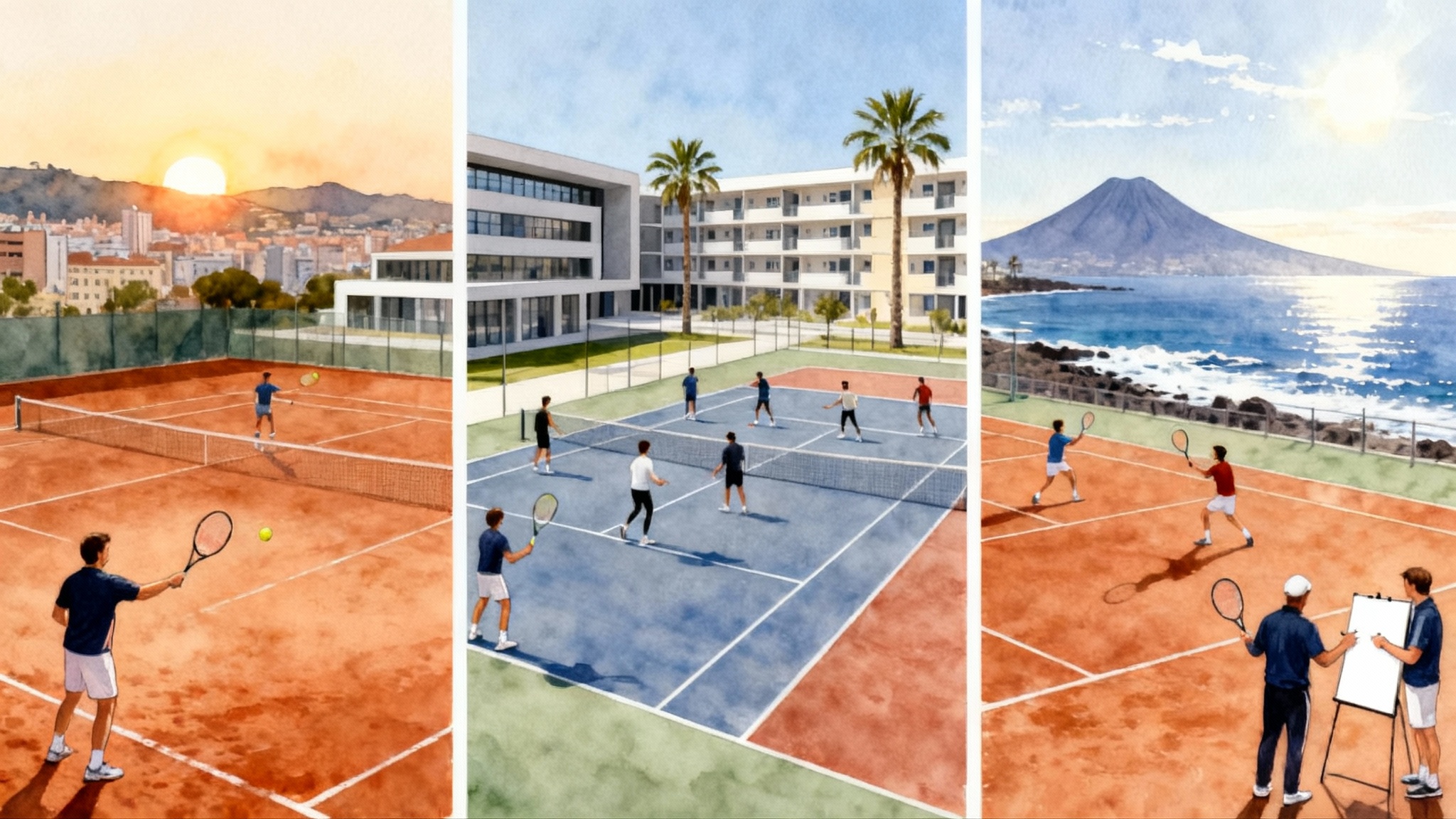
Why Spain is still the world’s training classroom in 2025-2026
Spain remains the most complete training environment in world tennis. The country’s density of coaches who can build point construction on clay, easy access to competitive matches at every age, and a culture that prizes repetition and resilience make it a safe choice for juniors and adults. If your goal is long-term development, the slow court tempo and rally length on Iberian clay force players to develop shape, spin, and patterns. If your goal is confidence in matches next month, daily point play against diverse styles gets you there quickly.
If you are also comparing U.S. bases, see our Best South Florida Tennis Academies guide and the Best New Tennis Academies guide for additional benchmarks.
In this guide we compare the three most requested hubs for United States families planning a 1 to 12 week stay in 2025-2026:
- Barcelona and its surrounding academy cluster
- Mallorca, centered around large and boutique programs
- Tenerife in the Canary Islands, led by the island academies
You will find cost ranges, surfaces, weather windows, academics and boarding options, match access for Universal Tennis Rating and International Tennis Federation events, visa and logistics notes, language support, alumni signals, and sample trial plans you can copy.
How we compare the academies
We use nine practical lenses that reflect the real decisions families make:
- Weekly total cost: training only, and training plus boarding, with typical 2025 price ranges and what those include.
- Surfaces and training model: proportion of clay versus hard, and what that means for your game style.
- Weather and seasonality: the months when training and matches feel easiest for travel and performance.
- Academics: on-site schooling, remote American curriculum support, and exam calendar alignment.
- Boarding options: dorms, supervised apartments, and vetted host families.
- Match access: Universal Tennis Rating and International Tennis Federation pathways, plus regional federation tournaments.
- Visa and logistics for United States families: lengths of stay, documents, and practical travel routing.
- Language support: English in coaching and classrooms, plus Spanish basics that help.
- Alumni outcomes: what the program’s track record suggests about training quality and player pathways.
The goal is not to crown a single winner. The goal is to match your player profile and calendar to the environment that removes friction and accelerates progress.
Barcelona: the deepest clay-and-compete ecosystem
Barcelona is a cluster, not a single academy. Within an hour of the city you will find several well known centers ranging from legacy programs with decades of touring experience to boutique shops that cap groups at 2 to 3 players per court.
- Weekly cost in 2025: training only often ranges from 700 to 1,300 euros for juniors and 900 to 1,500 euros for adults. Boarding packages commonly total 1,300 to 2,200 euros per week depending on room type, meals, and supervision level.
- Surfaces: clay dominates, with some hard courts available for contrast. Expect a heavy emphasis on topspin, height over net, and rally patterns that build space rather than chase pace.
- Weather and seasonality: March to June and September to early November are prime. July and August can be hot and crowded with tourists. Winter is playable with mild temperatures, though rain days occur.
- Academics and boarding: several programs plug into international schools or accredited online providers, with supervised study blocks and proctoring for exams. Nonresidential families can arrange daytime training and self-book apartments nearby.
- Match access: Barcelona’s calendar is dense. Juniors can find regional federation events most weeks, while older juniors and pathway pros can target entry level International Tennis Federation events in Spain and neighboring countries. Universal Tennis verified matches are available through academy-organized sessions and local clubs.
- Language: coaching staffs are comfortable in English, with Spanish used in group settings. A short list of tennis Spanish phrases goes a long way in match settings.
- Alumni signals: Barcelona is the classic European finishing school for patterns, defense-to-offense transitions, and clay court IQ. Several programs have a long record of placing players into strong college programs and helping pathway pros earn their first ranking points.
Who thrives here:
- Juniors who need to learn to build points and absorb pace
- College-bound players seeking match volume and fitness density
- Adults who want a technical reset with heavy ball repetition
Mallorca: big-stage facilities with serious structure
Mallorca is best known for a large, modern campus that anchors the island’s tennis identity, surrounded by smaller boutique programs that mirror Spanish fundamentals with more individualized attention.
- Weekly cost in 2025: adult improvement weeks commonly total 1,500 to 2,500 euros with hotel options. Junior boarding packages typically range from 1,600 to 2,600 euros per week depending on dorm category and schooling add-ons. Training-only weeks for juniors often price at 800 to 1,400 euros.
- Surfaces: a mix of high-quality hard courts and clay courts. Many players appreciate starting technical work on consistent hard courts and moving to clay for pattern building.
- Weather and seasonality: April to June and September to October are ideal. Summer is very busy but workable if you book far ahead. Winter is mild with some rain and shorter daylight.
- Academics and boarding: integrated dorms and structured study halls are common on the larger campus. Boutique programs rely on vetted host families or supervised apartments, with clear study schedules for online learners.
- Match access: regional junior events, UTR match sessions, and realistic travel to mainland Spain for International Tennis Federation events. Planning ahead for ferry or short-hop flights expands options.
- Language: English is widely available, especially in hospitality and coaching. Families who speak only English will be comfortable.
- Alumni signals: the island’s flagship facilities attract visiting pros for pre-season blocks and deliver a reliable development pipeline for strong collegiate placements.
Who thrives here:
- Juniors who benefit from structure, facilities, and on-campus convenience
- Adults who want resort-level amenities plus serious coaching
- Families who prefer a calmer base with easy logistics once on island
Tenerife: year-round sunshine and focused attention
Tenerife offers warm weather even in January and a more intimate training environment. For a deeper look at one of the island’s leaders, see our Tenerife Tennis Academy profile.
- Weekly cost in 2025: training-only weeks often run 650 to 1,100 euros for juniors and 800 to 1,300 euros for adults. Boarding totals commonly land between 1,200 and 2,000 euros with homestay or supervised apartments.
- Surfaces: a balanced mix of hard and clay. Ball speed is slightly higher in warm conditions, which can help aggressive baseliners sharpen first-strike patterns.
- Weather and seasonality: the Canary Islands shine in winter. November through March is peak value for Northern Hemisphere travelers who want outdoor training when most regions are indoors.
- Academics and boarding: smaller setups mean personal oversight. Expect tidy study schedules and clear communication with your online school. Homestays are common and can aid language immersion.
- Match access: academy-organized UTR match days, local club competitions, and strategic travel to mainland International Tennis Federation events. Winter weeks are ideal for match-focused training blocks.
- Language: English is available in coaching. Daily life includes Spanish, which can be a developmental plus for teens.
- Alumni signals: island programs often highlight individual player stories rather than long alumni lists, but their track record of helping players break through plateaus is strong.
Who thrives here:
- Juniors and adults seeking sun and focus in winter months
- Players who want smaller groups and more ball contacts per hour
- Families testing a short block before committing to a longer mainland stay
Cost comparison at a glance for 2025
Use these ranges to build a realistic budget. Prices vary by season, room type, and intensity level.
- Barcelona cluster: 700 to 1,300 euros training-only; 1,300 to 2,200 euros with boarding per week
- Mallorca: 800 to 1,400 euros training-only juniors; 1,500 to 2,500 euros adult camp packages; 1,600 to 2,600 euros with boarding per week
- Tenerife: 650 to 1,100 euros training-only; 1,200 to 2,000 euros with boarding per week
What is typically included:
- Tennis volume: 3 to 5 hours per day between drilling, point play, and fitness
- Fitness: 3 to 5 sessions per week focused on mobility, footwork, and injury prevention
- Extras: video analysis, mental skills sessions, and recovery access vary by program
Pro tip on currency: set a working exchange rate and add a 3 to 5 percent buffer for fluctuations and card fees. Recalculate before final payment.
Surfaces and training model
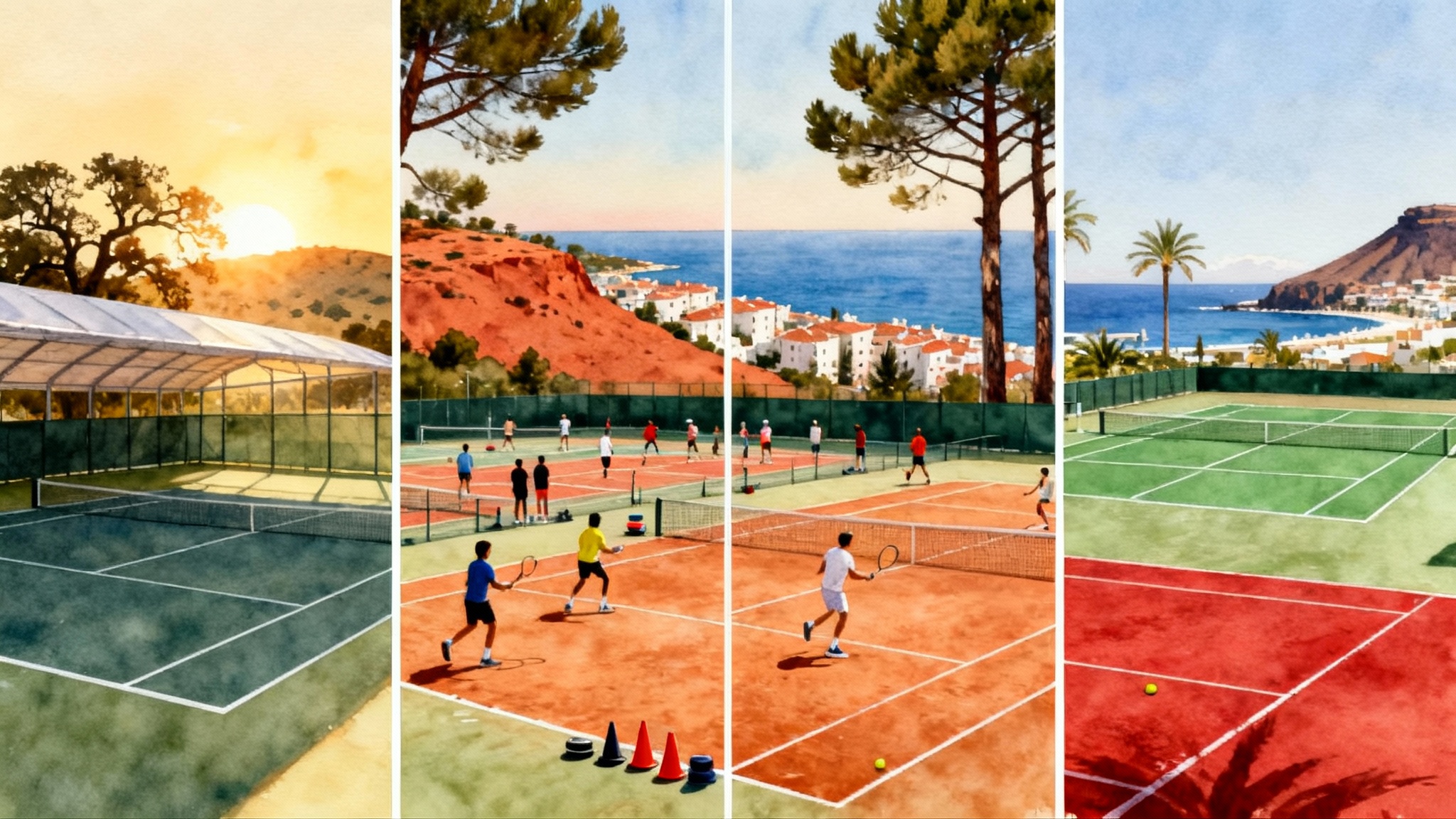
- Barcelona: mostly clay. Expect longer rallies, higher net clearance, and footwork that emphasizes balance and recovery. This environment rewires decision making for patience and court shape.
- Mallorca: split between hard and clay. Start technique and serve mechanics on hard, then go to clay for pattern building. This mix suits players transitioning from American hard courts.
- Tenerife: mixed surfaces with warm temperatures. Balls travel faster, so first-serve percentage and plus-one forehand get immediate feedback. Fitness sessions focus on heat management and hydration.
Weather and seasonality
- Barcelona: prime March to June and September to early November. Winter is playable with occasional rain. Summer heat is manageable with early sessions.
- Mallorca: April to June and September to October are sweet spots. Summer is crowded, winter is mild with shorter days.
- Tenerife: very consistent year-round, with November to March offering the best value for outdoor training compared to most of Europe and North America.
Academics and boarding
What to ask every academy in 2025 before you book:
- Academics
- Do you supervise accredited online programs from the United States and can you proctor exams
- How many hours of quiet study are scheduled on training days
- Who monitors assignments and communicates with teachers
- Boarding
- Dorm, supervised apartment, or host family availability for your dates
- Supervision ratio and curfew policy
- Meal plan details, including healthy options for dietary needs
- Player services
- On-site physio and recovery protocols
- Video analysis, tactical reviews, and mental skills support
- Transportation to matches and medical clinics
Match access: Universal Tennis Rating and International Tennis Federation
- Universal Tennis Rating
- Ask about weekly Universal Tennis verified matches and how results are posted.
- Confirm level-appropriate opponents and the number of verified matches you can expect in a one or two week block.
- International Tennis Federation pathway
- Juniors: plan your block around nearby events that fit your ranking. Entries close well in advance, so lock dates before flights. Use the ITF tournament calendar to map options.
- Transition tour and futures: pathway pros can practice in Spain and compete in neighboring countries to spread travel risk.
- Regional federation tournaments
- Barcelona and the Catalonia region are dense with events.
- Islands supplement academy sessions with club matches when calendars are lighter.
Tip: build a match matrix before you go. List possible UTR sessions, club matches, and target ITF events with dates and entry deadlines. Share it with the academy so they can align training loads.
Visas and logistics for United States families
- Length of stay: United States citizens traveling for tourism and short-term training can remain in the Schengen area for up to 90 days within a rolling 180 day window without a visa. Always verify current rules before booking.
- European Travel Information and Authorization System: this is a short online travel authorization that European authorities plan to use for visa-exempt travelers. Check the official timeline and apply if required for your travel dates.
- Documents to carry: passport valid for at least six months beyond your planned return, proof of lodging, proof of onward or return travel, and proof of funds or payment for the academy.
- Flights: Barcelona is the simplest mainland entry. Mallorca connects via Palma de Mallorca Airport. Tenerife has two airports, with Tenerife South often better for academy access. Consider open-jaw tickets if you train on an island then finish on the mainland.
- Insurance: purchase travel medical and sports injury coverage that includes outpatient physio and imaging. Ask the academy which clinics they use for fast appointments.
Language support and cultural fit
- Coaching: practical English is widely used, especially in adult programs. For juniors, ask whether corrections and tactical briefings will be in English during groups.
- Schooling: international programs provide English language academic support, with Spanish used in daily life. A few key phrases accelerate comfort in matches and shops.
- Culture: Spain runs on later evenings and big lunches. Plan dinner times and sleep accordingly, especially before tournament days.
Two sample trial plans you can copy
Trial Plan A: Junior, 12 to 14 days, Barcelona or Mallorca
- Goals: build point construction on clay, earn 2 to 4 verified UTR matches, and complete three online school assignments with proctored quizzes
- Week 1
- Monday to Friday: 3 hours tennis plus 1 hour fitness daily; 90 minutes study hall after lunch
- Wednesday and Friday late afternoon: academy-organized UTR match sessions
- Saturday: local club match play block or regional junior event if available
- Sunday: rest, light mobility, and school catch-up
- Week 2
- Monday to Wednesday: 3 hours tennis plus 1 hour fitness; one video analysis session
- Thursday to Sunday: target regional tournament, with practice sets on Thursday and recovery focus
- Budget: target 1,600 to 2,400 euros for two training-only weeks, or 3,000 to 4,600 euros with boarding depending on room type and intensity
Trial Plan B: Adult, 7 to 10 days, Tenerife in winter
- Goals: increase first-serve percentage, sharpen plus-one forehand, and play two verified UTR matches while staying healthy in warm conditions
- Days 1 to 3: morning technical blocks on serve and forehand, afternoon point play; daily mobility and hydration plan
- Day 4: verified UTR match day; evening video feedback
- Days 5 to 6: pattern work under fatigue; optional afternoon beach run for aerobic base
- Day 7: local club match or internal competition; travel next morning
- Budget: 900 to 1,300 euros training-only, plus accommodation and flights
Quick checklists before you send a deposit
Academy fit
- Player-to-court ratio and how it is enforced
- Number of weekly points-based sessions, not just feeding drills
- Access to a lead coach who will track your player’s three main corrections
Academics and boarding
- Written study schedule with a named supervisor
- Exam proctoring capability and proof of previous proctoring for United States online schools
- Room type, roommate policy, and nutrition details
Match access
- Confirm UTR session dates and posting procedure
- List of realistic tournaments within 60 to 90 minutes of travel during your window
- Clarify transportation and coaching at events
Budget and logistics
- All-in weekly total including training, boarding, meals, and laundry
- Airport transfer price and timing windows
- Insurance details and nearby medical clinics
Which hub should you pick
- Choose Barcelona if your priority is density of competition, classic clay development, and a deep bench of coaches who teach patterns from first ball to finishing ball.
- Choose Mallorca if you want top-tier facilities, integrated boarding and academics, and a calmer island base with easy connections.
- Choose Tenerife if you are traveling in winter, prefer smaller groups, and want warm-weather volume with a good balance of hard and clay.
If you still feel undecided, run a short trial block in Tenerife in winter, then step up to Barcelona or Mallorca in spring with a bigger match calendar.
Bottom line
Spain gives you three distinct training flavors that all work. Barcelona offers the highest match density and clay smarts. Mallorca delivers big-stage facilities with structure that calms logistics for families. Tenerife gives you winter sunshine and attention to detail that helps players move quickly from technical talk to point results. Choose the environment that removes your biggest bottleneck, align your dates with match opportunities, and make the first week intentional. Progress follows when volume, quality, and competition line up.