Dome-Season Tennis 2025–26: Vilnius SEB Arena and Kozerki
This winter, build a dependable base in Europe’s most reliable indoor corridor. Vilnius SEB Arena and Kozerki near Warsaw offer climate certainty, fair costs, abundant court time, and a smart path for juniors and adults.
 Tommy
Tommy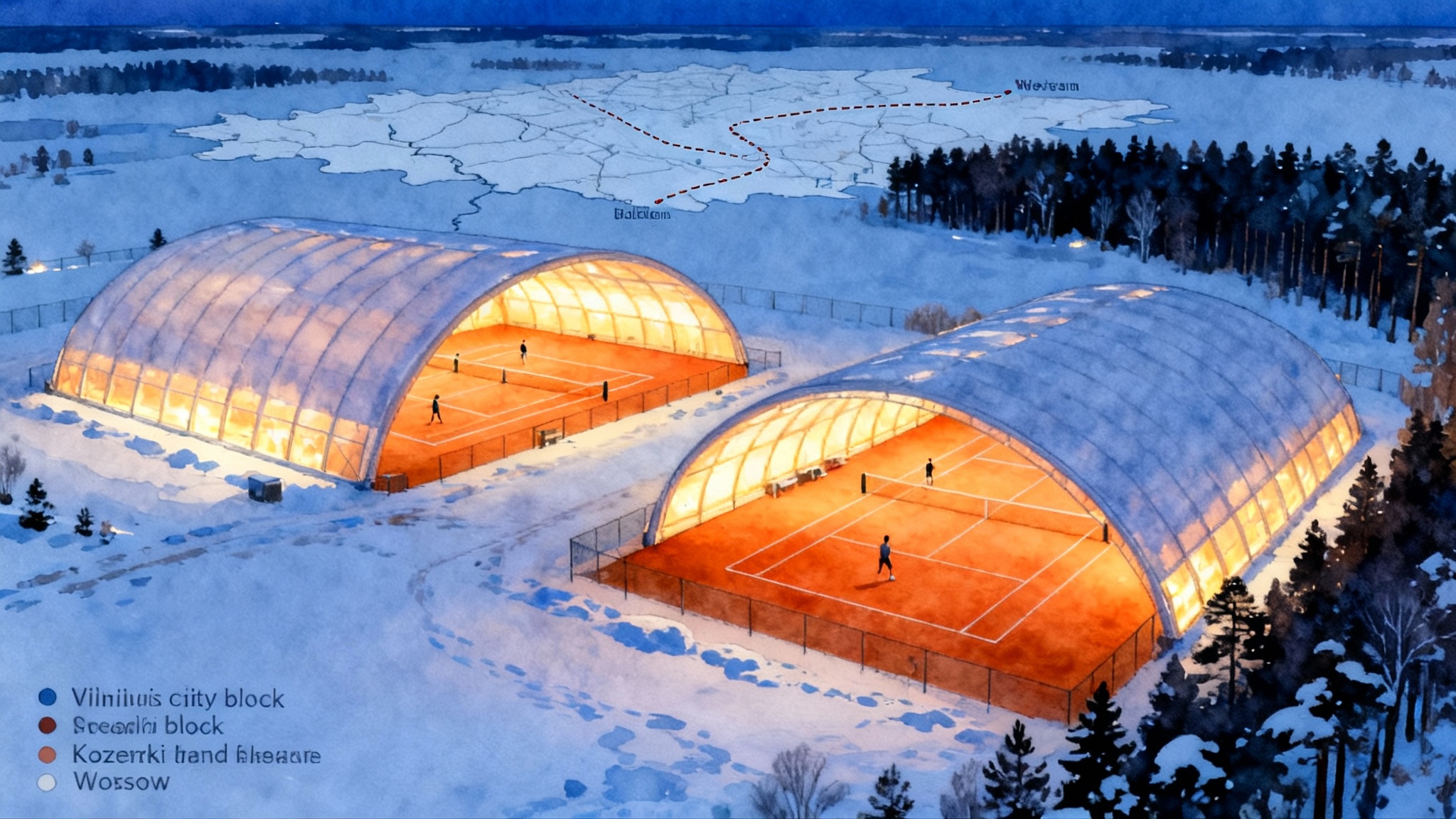
Why the Vilnius–Warsaw corridor is the smartest winter play
If your goal from December through March is uninterrupted training, the Vilnius–Warsaw corridor gives you what outdoor destinations cannot promise in winter: climate certainty. Temperatures fall and snow arrives outside, yet under the domes and in the indoor halls of Vilnius SEB Arena and Kozerki near Warsaw the courts stay the same speed, the air is still, and your plan actually happens. That reliability is not a small perk. It is the engine that lets a two week block become a habit of repetition, which is the most powerful force in skill building.
Climate certainty versus Spain and Florida
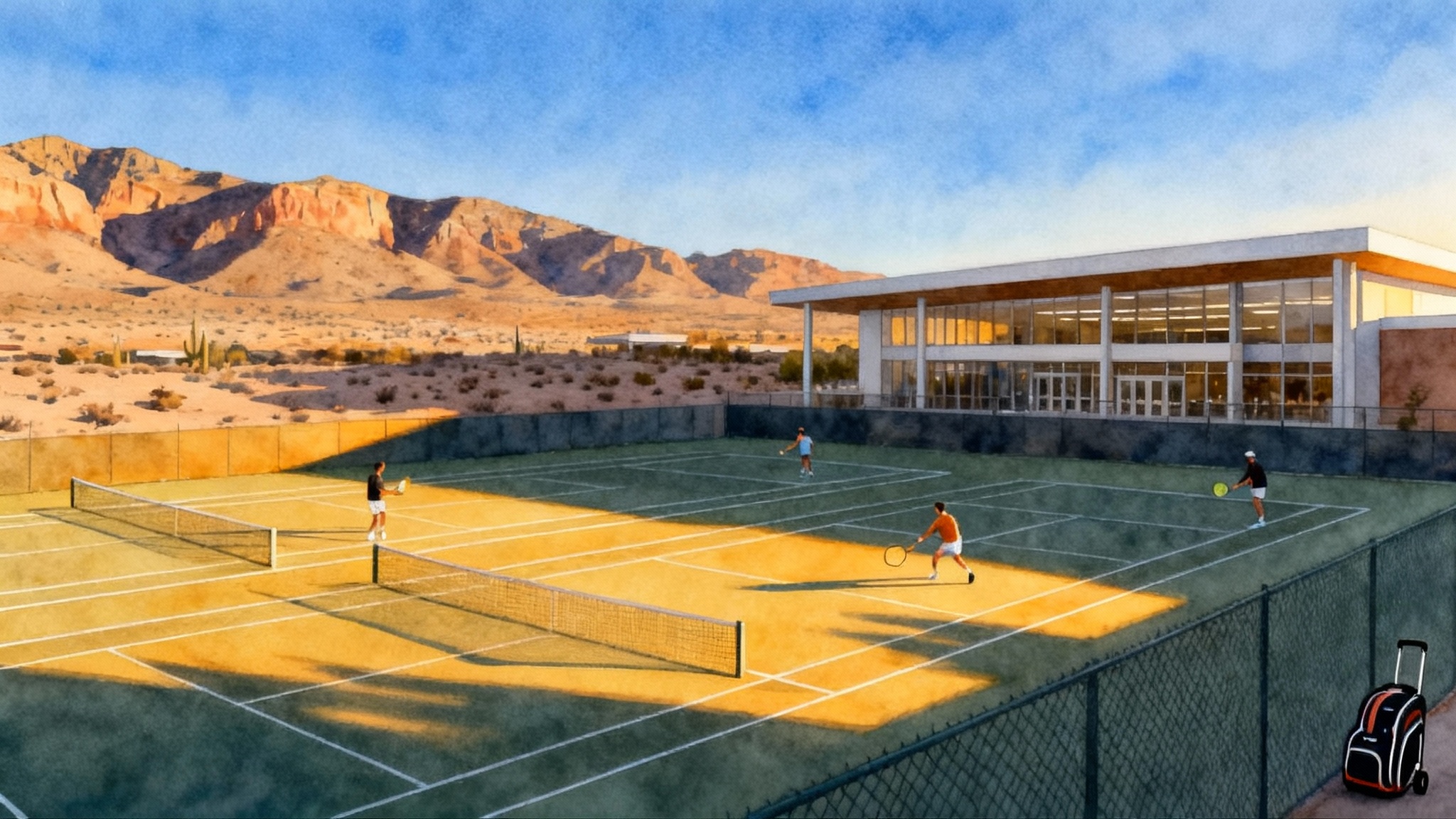
Spain and Florida are classic winter ideas for tennis. When weather cooperates, they can be excellent. But in December, January, and February, both regions have days that are windy, wet, or colder than ideal. Your schedule becomes reactive. You chase the sun on court bookings, scramble to move sessions, and sometimes miss the planned intensity day. The Vilnius–Warsaw corridor solves that with controlled indoor air, consistent lighting, and surfaces protected from the elements. The result is less friction and more volume at the right intensity. For players who need repetitions on serve, returns, first strike patterns, or footwork timing, that reliability is a decisive advantage. If you do want a sun-first option later in the season, see our guide to the Tenerife winter-sun tennis base.
Cost and court time availability
Winter demand in southern outdoor hot spots squeezes court access. Prices rise, prime hours vanish, and large academies can crowd players into short sets of balls per drill. In Vilnius and Warsaw, the indoor season is normal. Local clubs expect long winter blocks, so there is real inventory. Court rates for domes and indoor halls are typically lower than peak season coastal resorts and large American hubs, and daytime off peak windows are easier to secure. For traveling squads and families, this means you can pre book a realistic load of court hours rather than gambling on waitlists. It also means you can choose when to pay for coaching and when to run high quality sparring, a simple lever that keeps budgets sane without sacrificing development.
Surfaces: hard and clay without compromises
Both hubs in this corridor offer hard and clay under cover. That lets you build a true dual surface winter rather than an either or decision. A common pattern is to run hard court blocks for serve speed, return aggression, and first step acceleration, then switch to clay for depth control, rally tolerance, and pattern extension. Because both surfaces live indoors, you do not pay the usual tax of wind, glare, or drizzle that can skew feedback. The ball you feel is the one you actually produced.
The facilities that anchor the corridor
Vilnius SEB Arena
Vilnius SEB Arena is a large, modern indoor complex with multiple halls, domes, and a training ecosystem that includes nearby fitness, physio, and recovery options. The design priority is throughput. Courts are laid out to move groups without bottlenecks. Lighting is even, the air is steady, and the transitions from court to gym to recovery are minutes, not car rides. For traveling players, that short distance between stations is a quiet performance enhancer. It cuts setup time and keeps the day on schedule. For structured programs and a clear junior pathway, see the Vilnius Tennis Academy inside SEB Arena.
The surrounding neighborhood gives you what a winter base needs. There are apartments and hotels within a short ride, grocery stores that make simple nutrition logistics easy, and green pockets for short walks between sessions. Lithuania uses the euro, cards are widely accepted, and English is common in sport settings. For Americans, the time zone is typically seven hours ahead of Eastern Time in winter, which is demanding the first two days but then settles. Most families adapt by locking in a fixed sleep window and using daylight walks after morning sessions to anchor the clock.
Kozerki near Warsaw
Kozerki, in Grodzisk Mazowiecki just outside Warsaw, has grown into a multi sport campus with indoor domes and halls, on site training resources, and direct access to Polish match play. The courts sit in a quiet zone with low commute friction. You can run doubles on four courts side by side or set up a siloed technical block on two courts without traffic noise. Poland uses the zloty and prices for accommodation and food are generally moderate by European capital standards. Warsaw is a large air hub with many transatlantic options and reliable rail links, which helps both arrivals and quick weekend trips. Learn more at the Tenis Kozerki campus near Warsaw.
The big story in Kozerki is the density of tennis. Juniors and adults can find hitting partners at multiple levels, and the Challenger ecosystem that peaks in summer leaves a year round culture of competitive sparring. In winter, that culture simply moves under the domes.
A two week block that combines Vilnius and Kozerki
Below is a practical two week plan built for the December to March window. It assumes you arrive from the United States on a Saturday, shake out jet lag, then push a ten day training load split between Vilnius and Warsaw with one full recovery day.
Guiding principles
- Two intensity peaks per week, never on consecutive days
- Technical mornings, tactical afternoons, lower volume evenings
- Mobility before breakfast, short walks after dinner to stabilize sleep
- One monitored study window per day for juniors and one ninety minute remote work block for adults
Week one in Vilnius
- Saturday arrival: 30 minute mobility, hydration plan, 45 minute easy hit if timing allows, early dinner and lights out.
- Sunday acclimation day: 75 minute light rally and serves, 30 minute gym activation, afternoon nap, evening walk.
- Monday intensity 1: Morning technical serve plus first ball on hard court, two hours. Afternoon pattern drills with fed balls into live points, 90 minutes. Evening 30 minute mobility and red light if available.
- Tuesday volume day: Two by ninety minutes on clay. Morning depth ladders and cross court tolerance. Afternoon neutral ball to plus one patterns. Finish with 15 minutes of kick serve development.
- Wednesday mixed day: Morning gym strength lower body and trunk. Afternoon doubles plays and returns, 75 minutes. Evening sauna or contrast if cleared by your physio.
- Thursday intensity 2: Morning hard court returns and second serve pressure games, two hours. Afternoon points with specific constraints, 60 minutes. Finish with arm care.
- Friday taper: Morning clay touch work and drop shot plus lob patterns, 75 minutes. Afternoon optional 45 minute serves only. Pack for Saturday transfer.
- Saturday transfer to Warsaw: Midday travel, check in, 30 minute walk, no tennis.
Week two in Kozerki
- Sunday acclimation reset: 60 minute spar light, 20 minute mobility, early dinner.
- Monday intensity 3: Hard court serve plus forehand aggression ladder and first strike points, two hours. Afternoon returns focused on backhand quality, 45 minutes. Evening mobility.
- Tuesday volume mixed: Clay movement patterns, two by sixty minutes. Later, gym upper body strength and rotator cuff work.
- Wednesday match play: Universal Tennis Rating (UTR) style verified play set or organized practice match. Two to three sets. Recovery bike 15 minutes.
- Thursday recovery day: Sleep until naturally awake, pool or gentle bike, no hitting. Technical video review in the afternoon. Short study or work block.
- Friday intensity 4: Hard court return to return live sets, two hours. Afternoon serves and transition volleys, 45 minutes.
- Saturday test set day: Play a best of three format against a local player. Evening team dinner. Sunday flight home or extend one more week.
How to adapt this plan
- Juniors under 14: Cut each main session by 20 percent and add more coordinated games with softer feeds. Protect the elbow with lower serve volume.
- College players: Keep the four intensity anchors and add post session serve speed capture twice per week. Maintain two lift sessions.
- Adults returning from injury: Shift one intensity day to a technical build and emphasize isometric strength and controlled change of direction.
Travel and logistics from the United States
Flights and entry
- Fly into Vilnius or Warsaw first. Typical routes connect through Amsterdam, Frankfurt, London, Helsinki, or Copenhagen. Nonstop flights to Warsaw are common from major American gateways. Vilnius typically requires one connection.
- Lithuania and Poland are in the Schengen Area. Many American passport holders can enter visa free for short stays. Always check current entry rules before booking.
Time zones and circadian plan
- Vilnius is usually seven hours ahead of Eastern Time in winter. Warsaw is usually six hours ahead. Plan two easy days on arrival with early outdoor light exposure after the first session and a set bedtime. Avoid long naps after 2 p.m.
Getting around
- In Vilnius, rideshare and taxis are abundant and inexpensive for short hops between accommodation, arena, and grocery stores. Book apartments near the arena to cut commute time.
- In Warsaw, base in Grodzisk Mazowiecki for shortest door to court times at Kozerki. Trains into central Warsaw are frequent for off day city visits. For groups, a van shuttle simplifies life.
Money and connectivity
- Lithuania uses euro. Poland uses zloty. Contactless cards are widely accepted. Mobile data eSIMs are inexpensive and let juniors message coaches without hunting for Wi Fi.
Nearby match play that fits the training plan
Universal Tennis Rating (UTR) verified events and match sessions are common across both cities, and many clubs organize weekend match days under the domes. The International Tennis Federation (ITF) calendar places junior and entry level professional events across the region in most months. The idea is not to chase points every day. It is to drop one or two competitive days into the middle of the block when intensity is high and the body is primed.
Kozerki also benefits from its Challenger heritage. Even when the headline event is not on the calendar in mid winter, the training base and visiting players create a strong sparring network. For adults, this means reliable hits at your level. For juniors, this means exposure to different game styles without needing to travel far.
Recovery, accommodation, and study friendly routines
Recovery
- Daily: Ten minutes of joint mobility after warm up, ten minutes of soft tissue with a ball or roller in the evening, and hydration targets set by body mass.
- Two or three times per week: Sauna or contrast as tolerated. Alternate with light bike flushes. Use nasal breathing on the bike to keep intensity truly easy.
- Weekly: One complete day off court. Walk, stretch, read, sleep.
Accommodation
- Vilnius: Apartments within a short ride of the arena keep logistics simple and costs reasonable. Look for kitchens, laundry, and quiet bedrooms. Proximity beats city center glamour in winter.
- Kozerki and Grodzisk Mazowiecki: Use on site or near site hotels and apartments so you can go back for lunch between sessions. This one choice protects afternoon quality because players are not commuting across town hungry.
Study and work blocks
- Juniors: Two daily blocks of fifty minutes each, one between morning and afternoon sessions and one after dinner. Use the first for reading or writing, the second for assignments that require a screen.
- Adults: A ninety minute deep work window right after lunch works well when the gym session is in the morning and court is in the afternoon. Keep a short to do list and protect this window like a practice.
Nutrition that travels
- Breakfast: Greek yogurt or quark with fruit and oats, plus eggs. Simple, high protein, and available.
- Court snack: Bananas, small sandwiches, and simple hydration packets. Avoid new gels in winter unless you have already tested them.
- Dinner: Local soups, potatoes or rice, and a lean protein. Winter is a great time for warm, salt forward meals that replace what you lost in training.
Budgeting a realistic two week corridor block
Numbers swing with exchange rates and the size of your group, but a sample budget for two weeks for one player and one adult traveling together can look like this.
- Flights from the United States: Wide range depending on city and dates. Look for one stop to Vilnius and return from Warsaw or vice versa to avoid backtracking.
- Accommodation: Apartments near Vilnius SEB Arena and Kozerki area hotels or apartments are often more affordable than city center equivalents. Booking longer than seven nights tends to unlock better rates.
- Court time: Plan for roughly thirty to thirty five hours across two weeks, split across hard and clay. Buy blocks ahead to secure prime slots.
- Coaching: Mix private lessons for technical anchors with group sparring and supervised drills. A simple ratio is four private sessions per week plus group sessions.
- Ground transport and local rail: Budget for short rideshare hops and one intercity transfer. Groups should consider a small van to keep costs predictable.
- Food: Cooking breakfasts and some lunches and using restaurants for dinners balances cost and quality.
The value is in the ratio of paid coaching to total volume. Because court time is available and reliable, you can run high quality self led sessions on days when a private is not required, then spend on the coach exactly when you need technical change or scouting feedback.
Risks and how to remove them before you travel
- Booking drift: If you wait for weekly weather forecasts you will never commit. These hubs do not depend on the sky. Book the courts and coaching first and build the flights after.
- Over scheduling: Three courts per day for two weeks looks heroic and ends in fatigue. Cap days at two on court blocks and add gym or mobility for the third station when needed.
- Jet lag: The fix is boring. Early daylight, fixed bedtimes, and no late screen time the first three nights.
- Injury risk: Clay days reduce joint load but do not remove it. Rotate hard and clay with purpose, and monitor serve volume.
How to book the corridor
- Lock your week one in Vilnius first. Decide hard first or clay first based on your goals. Secure morning and early afternoon windows.
- Add week two in Kozerki with two intensity anchors and one recovery day in the middle.
- Build flights that arrive Saturday morning in week one and depart Sunday evening in week two. If you want an extra match day, add Monday morning and fly home Monday night.
- Confirm physio availability and gym access at both hubs before you press go. Protect the transition days.
The bottom line
Winter development is not about chasing sun. It is about removing blanks from your training calendar. The Vilnius–Warsaw corridor does that better than the usual winter postcards. You get courts when you need them, surfaces that fit your goals, and a culture of sparring that makes the whole plan feel alive. Build your base there this season and you will arrive in spring with more done and less to explain.