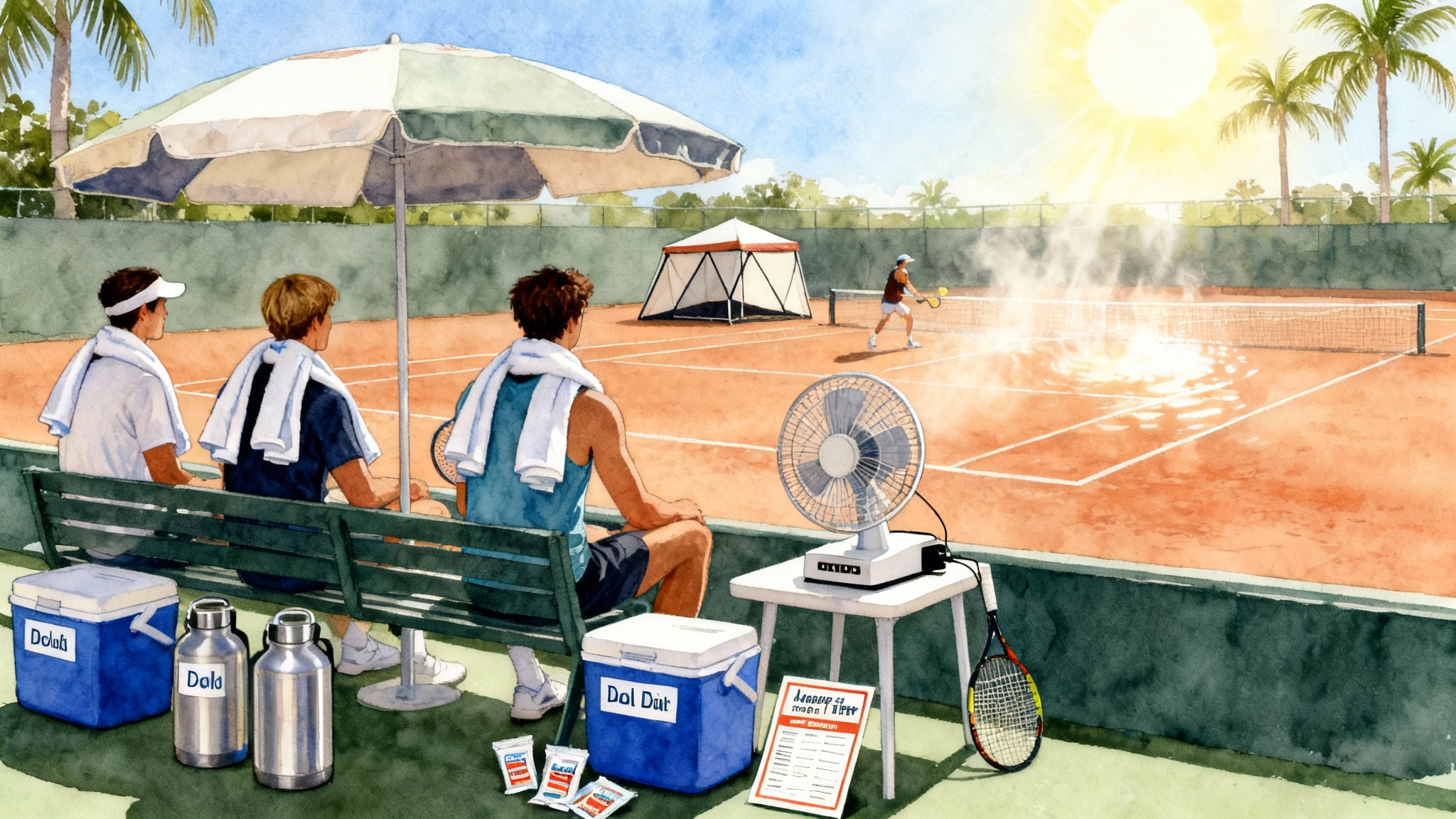
ROGY to Yellow: 2025 Parent Guide for Junior Tennis Progression
A parent-first roadmap for the red, orange, green, yellow pathway in 2025. Clear skill and fitness benchmarks, at-home drills, phone-video checklists, and a sample Legend Tennis Academy pathway to move up with confidence.
 Tommy
Tommy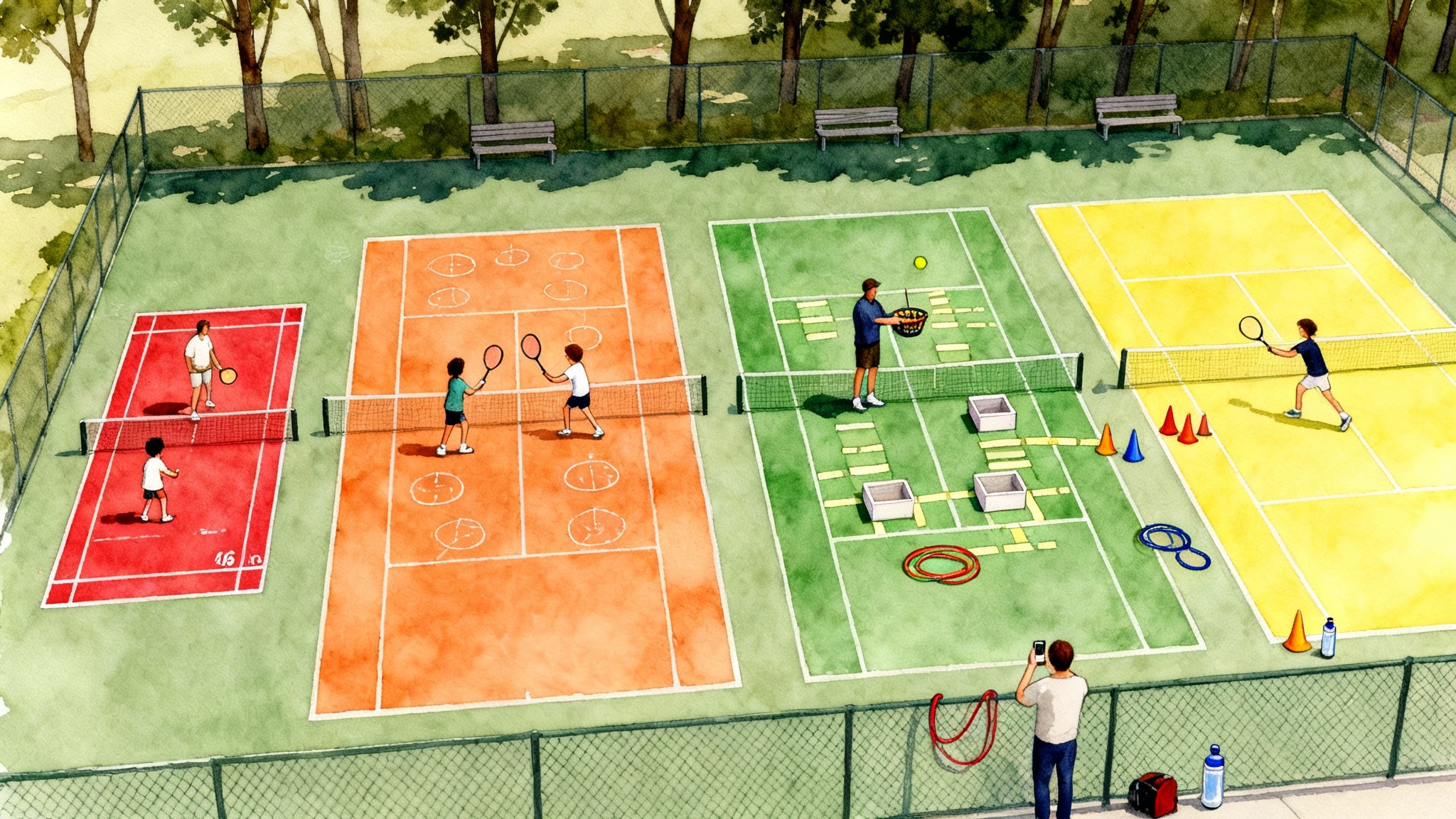
Why the color pathway matters in 2025
Parents often ask a simple question that has big consequences: When should my child move from red to orange, from orange to green, and finally to yellow ball tennis? The honest answer is this. Move up when the game is still challenging but no longer chaotic. That happens when a player can rally with purpose, serve to targets, and compete through an entire match format without breaking down.
Color stages exist for a reason. Slower balls and scaled courts let young bodies learn real strokes at real contact heights. The color system is not just tradition. It is backed by international rules and ball specifications that define court sizes and ball compression. For background, the International Tennis Federation publishes the official red, orange, green standards. The United States Tennis Association explains how courts scale from 36 to 78 feet in its USTA court size guidance.
This guide translates that structure into clear, measurable benchmarks you can use at home and at practice. You will find skill, fitness, and match-play targets for each color, short phone-video checklists, at-home drills with simple equipment, and weekly practice templates that track to those targets. We close with a sample pathway modeled on Legend Tennis Academy so you can see what a safe and efficient progression looks like across a full season.
How to read the benchmarks
Each color stage below includes four parts:
- Technical and tactical benchmarks that show a player can control the ball on the right court size
- Fitness checks that take five minutes and need only a tape measure or cones
- Match-play readiness indicators that cover scoring formats, behaviors, and routines
- A phone-video checklist you can capture in ten minutes to verify progress over time
Under each section you will also find a weekly practice template and a short menu of at-home drills. Use the numbers as your green lights. If two of the three categories are met for four straight weeks, test the next color in one practice per week. If it holds, move up.
Red ball, 36-foot court
Red is about body control, contact height, and simple patterns. You are teaching a young player to own the space from service line to service line.
Benchmarks
-
Technical and tactical
- Forehand and backhand push to swing: 12-ball cooperative rally with a coach or parent at 12 to 15 feet, waist-high contact, one bounce
- Serve start: 6 of 10 successful overhand serves from inside the baseline into a large service box target
- Net play: 6 of 10 controlled volleys in mini-tennis without a swing
- Direction: 6 of 10 forehands to a cone target five feet from the sideline
-
Fitness
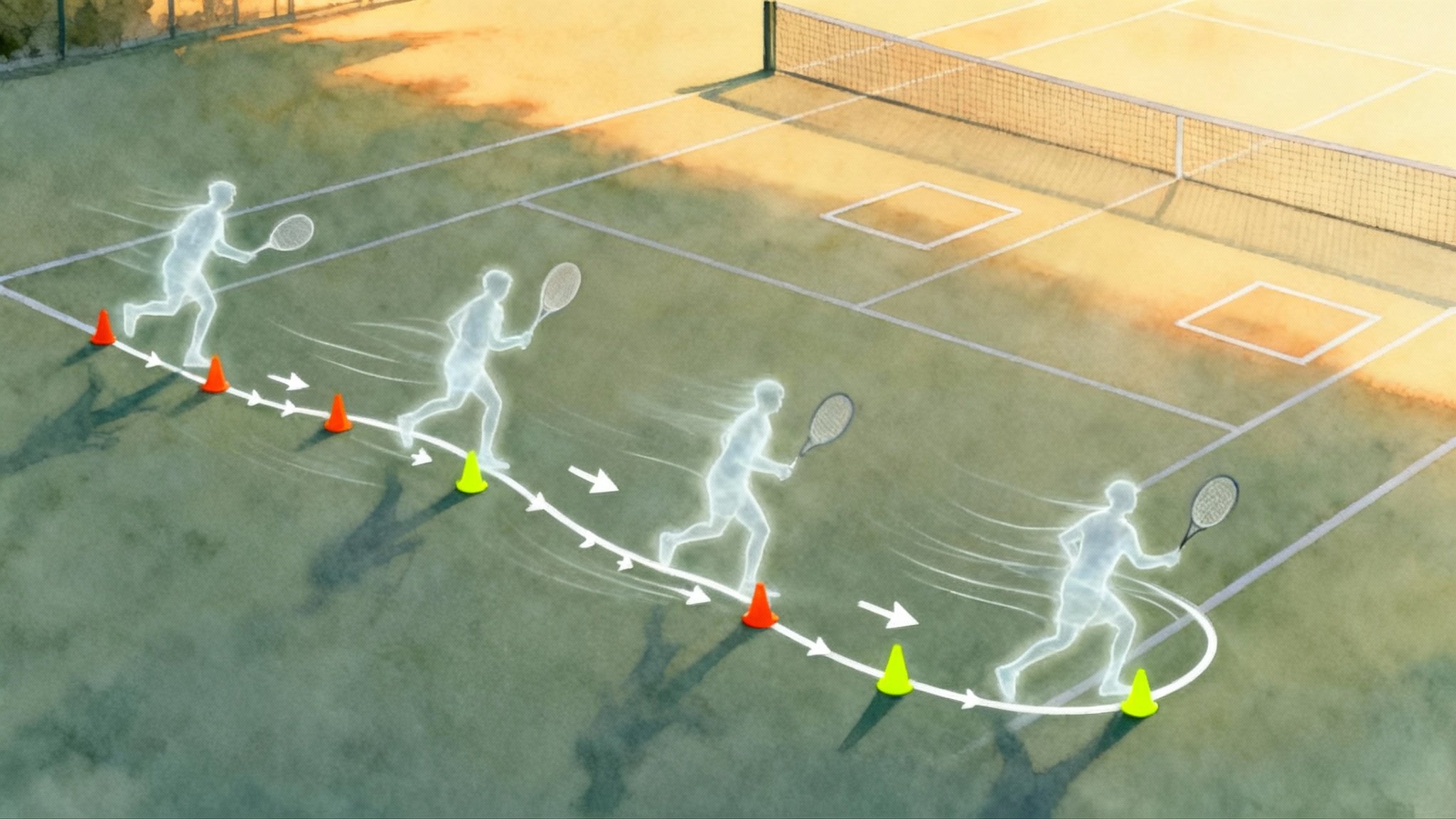
- Agility square: four cones at five yards, complete a right-hand loop in under 11 seconds and a left-hand loop in under 12 seconds
- Balance: single-leg hold eyes forward for 30 seconds each leg
- Throw: 10 chest passes and 10 overhead throws that reach a partner at 15 feet without a hop
-
Match play
- Can play two tie-breaks to 7 in one session, keeps score with help, serves from a fixed spot, recovers to the middle after each shot
Phone-video checklist
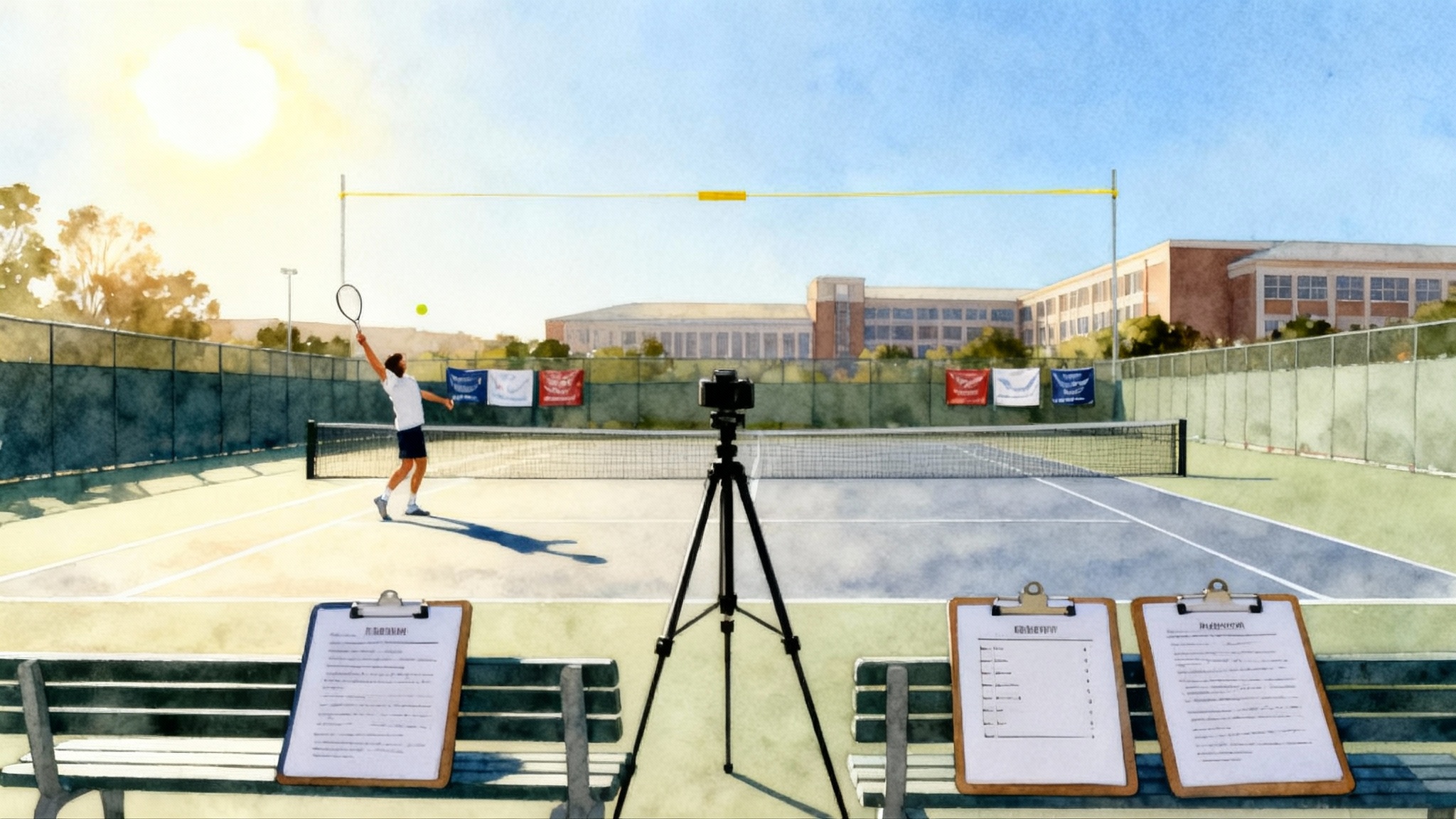
Record in portrait mode, 60 frames per second if possible, from 10 to 15 feet away.
- Forehand mini rally, 15 seconds, both players at service line
- Backhand mini rally, 15 seconds
- Serve progression, 10 attempts from a marked spot
- Two points of cooperative rally starting crosscourt, 20 seconds total
At-home drills
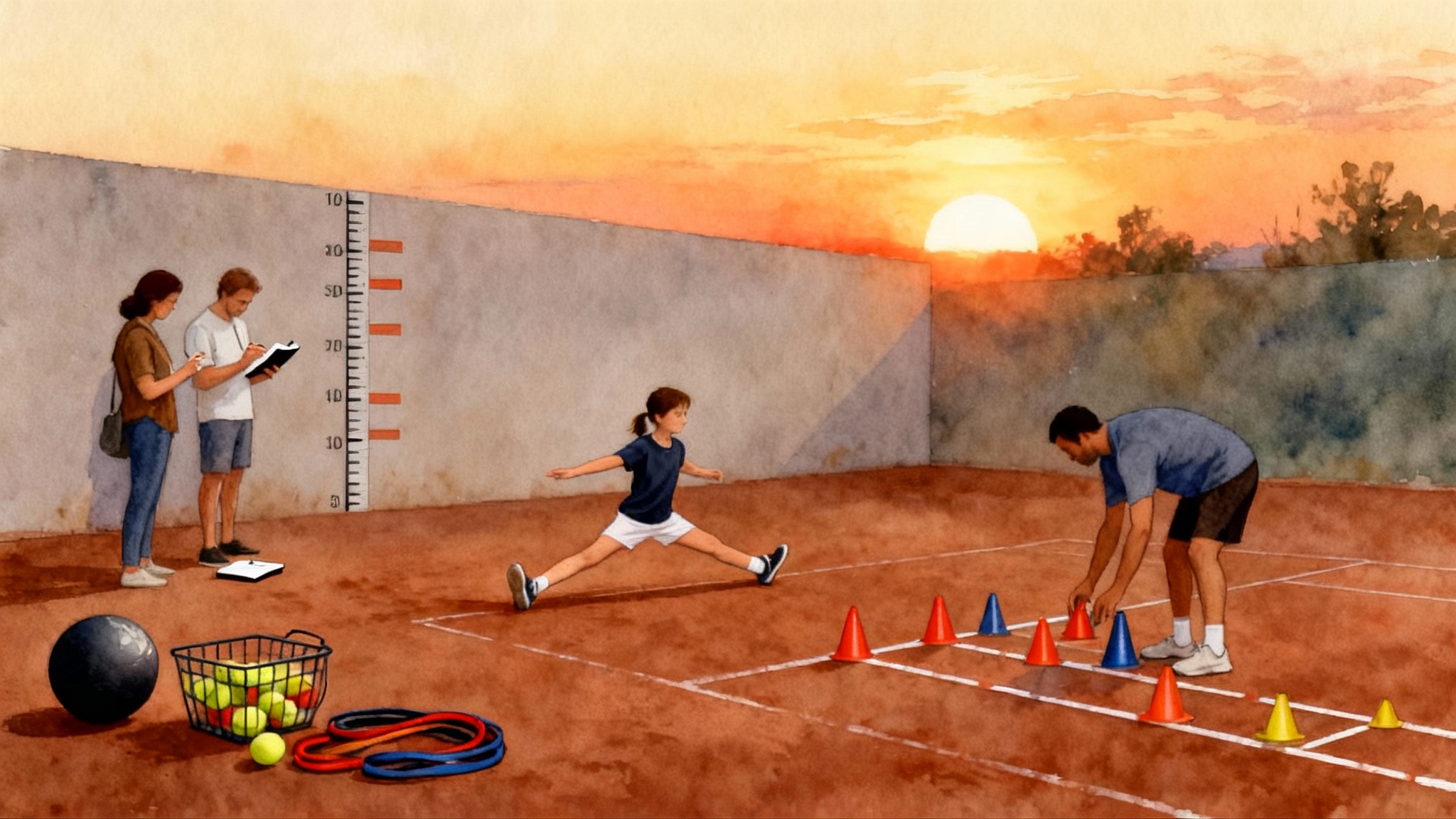
- Wall rally ladder: 10 forehands in a row at a chalked rectangle, then 10 backhands, then 12 alternating
- Cone zigzag: five cones two yards apart, shuffle through and shadow swing at each cone, three rounds
- Sock-serve: throw a tennis ball in a long sock over a string taped in a doorway, focus on a smooth rhythm
- For added movement quality, see the Tennis Footwork Blueprint plan.
Weekly practice template
- On court: two 45-minute sessions of red mini-tennis and serves
- Match-play: one 30-minute tie-break practice with scoring
- At home: two 15-minute wall and footwork sessions
Green light to orange
- 12-ball rally met on both sides for two weeks
- 6 of 10 serves land past the service line in target area twice in a row
- Two tie-breaks to 7 completed without meltdown or stoppage
Orange ball, 60-foot court
Orange widens the court and stretches time. Players should begin to aim over the middle of the net, defend crosscourt, and change direction to open space.
Benchmarks
-
Technical and tactical
- Rally: 10-ball cooperative rally from 60-foot baseline with a peer at moderate speed, one bounce
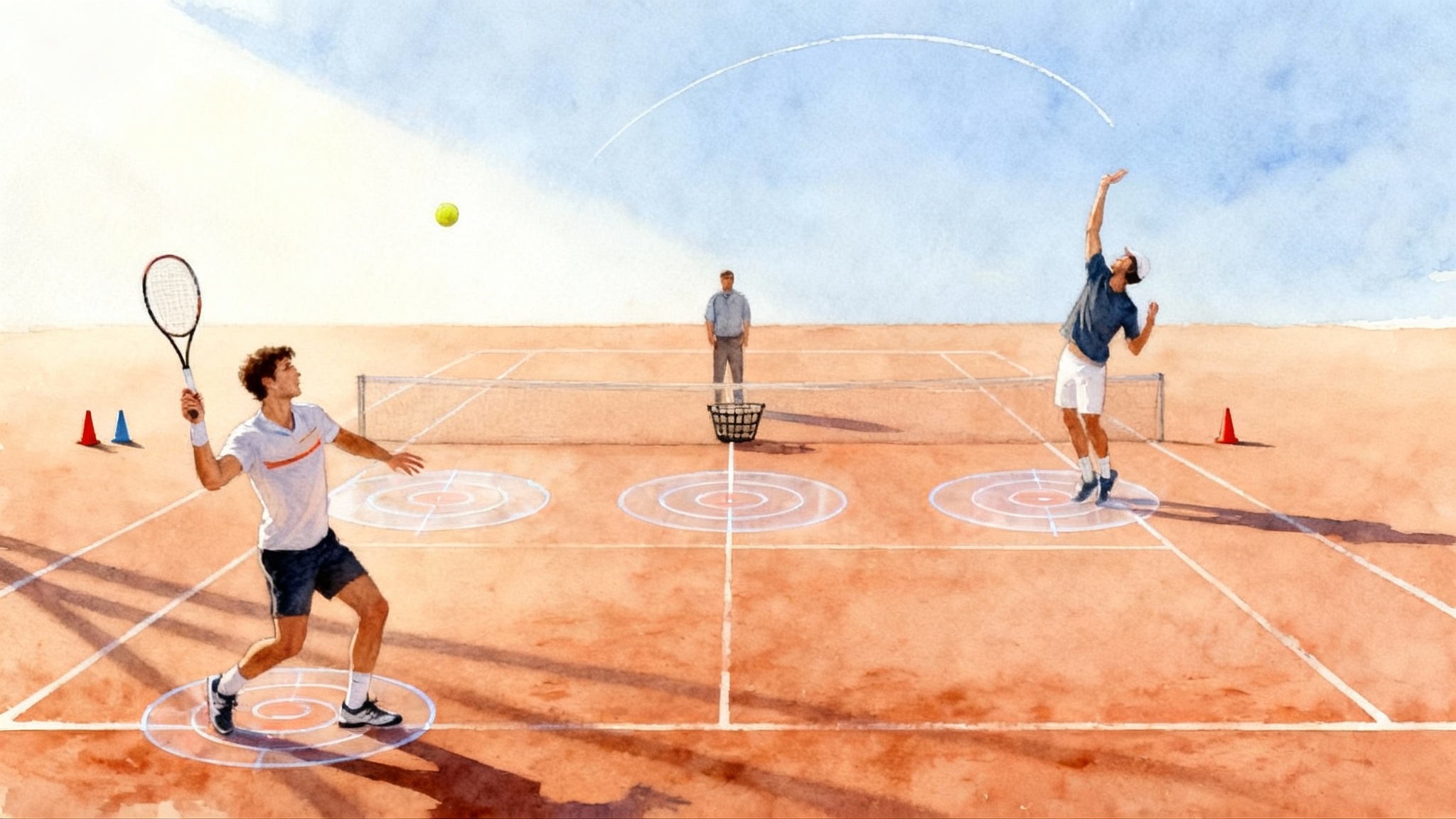
- Serve: 6 of 10 serves into the deuce box and 6 of 10 into the ad box, from the orange baseline
- Direction: 5-ball pattern, crosscourt three shots then down-the-line to a cone, reproduce twice on both sides
- Transition: two approach shots off a short ball and finish with a volley three times in a row
-
Fitness
- 5-10-5 shuttle: under 7.0 seconds with running shoes on a flat surface
- Jump rope: 60 unbroken skips
- Plank: 45 seconds with quiet hips
-
Match play
- Plays a one-set short set to 4 games with no-ad scoring and a 7-point tie-break at 3 to 3, keeps score and rotation without adult prompts
Phone-video checklist
- Baseline rally, two angles: behind the player and side-on, 20 seconds each
- Target serving, 10 balls deuce side, clip the basket target at least once
- Approach and volley drill, 3 reps captured from the sideline
At-home drills
- Box targets: chalk two targets three by three feet on a driveway, rally red or orange ball with a parent to each box for two minutes
- Serve toss truth: stand on a coin, toss, and hold the coin under the front foot when you catch, 20 reps without chasing
- Figure eight footwork: two cones 8 feet apart, loop them with small steps, shadow swing at each cone, four rounds
Weekly practice template
- On court: two 60-minute sessions focused on patterns and serve targets
- Match-play: one 45-minute set to 4 with a tiebreak at 3 to 3, chart first serve percentage by tally marks
- At home: two 20-minute sessions, jump rope and wall patterns
Green light to green
- Baseline rally holds 10 balls with purpose on both wings
- Serve accuracy reaches 12 of 20 total, at least five to each box, across two consecutive weeks
- Completes two short sets in one week without a big drop in form late in the set
Green ball, full court at lower bounce
Green is the bridge to yellow. The player learns point construction, serve plus one patterns, and basic defense. The ball still comes slower and stays a bit lower, which protects technique.
Benchmarks
-
Technical and tactical
- Baseline rally: 12-ball cooperative rally at 60 percent pace, crosscourt on both sides
- Serve: 14 of 20 total, at least 6 per box, with two second serves that land with spin and arc
- Return: block or chip return in play 7 of 10 on both sides
- Patterns: run three sequences, serve wide then hit into the open court, serve body then deep middle, and serve T then backhand crosscourt, two reps each
-
Fitness
- 20 yard shuttle for 6 repetitions in under 50 seconds total, focus on steady pacing
- Side plank 30 seconds each side, standard plank 60 seconds
- Broad jump distance equals body height
-
Match play
- Plays two short sets to 4 in one session or one set to 6 with a 7-point tie-break, manages water, towel, and between-point routines without a parent
Phone-video checklist
- Serve series: 10 first serves and 10 second serves from behind, show toss and landing
- Pattern play: three points starting serve plus one from deuce and ad sides, each pattern called out before the point
- Defensive neutral: two 20-second segments of heavy crosscourt rally at 60 percent pace
At-home drills
- Serve box challenge: tape two 3 by 3 foot squares near the corners of each service box, hit 40 balls, record makes and misses
- Wall two-ball: alternate forehand and backhand off a chalked crosscourt box, 60 hits without a double bounce
- Core ladder: 6 exercise circuit, 20 seconds on, 10 seconds off, plank, side plank, mountain climbers, squat jumps, reverse lunges, high knees
- For serve mechanics and age-appropriate progressions, use the Age-Smart Serve Blueprint 2025.
Weekly practice template
- On court: two 75-minute sessions, one technical and one patterns plus points
- Match-play: one 60-minute set to 6 or two sets to 4, track serve plus one winner errors
- At home: two 25-minute strength and jump rope sessions
Green light to yellow
- Serve accuracy 14 of 20 or better for two consecutive weeks, with a second serve that your player trusts
- Baseline rally at 10 to 12 balls crosscourt with the ability to change direction to the open court at least twice per point when set up
- Completes full-set match play without a large drop in footwork in games 7 to 9
Yellow ball, full court standard
Yellow is the destination, not the finish line. The game now asks for reliable first and second serves, directional control on the rise, and a repeatable match routine.
Benchmarks
-
Technical and tactical
- Serve: 16 of 24 total serves in, at least 7 per box, with a distinct first and second serve
- Return: 8 of 10 returns in play on both sides, at least four directed crosscourt
- Rally tolerance: 8-ball live-ball exchanges at match pace in both directions
- Patterns: choose and execute two personal patterns, for example serve wide plus forehand to the open court, or deep middle then backhand crosscourt
-
Fitness
- 5-10-5 shuttle under 6.5 seconds
- 10 minute run at a conversational pace covers at least one mile
- Single-leg stick landings, jump forward and hold, 10 each leg without wobble
-
Match play
- Plays a best of three short sets with a 10-point match tie-break or a single set to 8 games, manages score, tempo, and between-point routines
Phone-video checklist
- First and second serve sequence, 12 balls each, from behind and side
- Return plus two, record four points started by returns on both sides
- Two game sample of live rally points, normal match pace
At-home drills
- Serve plus one target ladder: place two cones on the baseline corners and two on the deep middle, serve to a corner and hit the next ball to the cone called by the parent, 20 points
- Crosscourt scramble: parent feeds deep crosscourt, player replies crosscourt, parent drops a short ball, player approaches and finishes, 12 reps
- Strength micro circuit, three rounds, 10 pushups, 15 squats, 30 second plank, 10 single-leg deadlifts each side
Weekly practice template
- On court: two 90-minute sessions, one technical, one live points and serve returns
- Match-play: one 90-minute match or two 45-minute match plays, chart serve percentage and unforced errors by pattern
- At home: two 30-minute mobility and strength sessions, foam roll, band work, jump rope
The parent toolkit for filming and timing
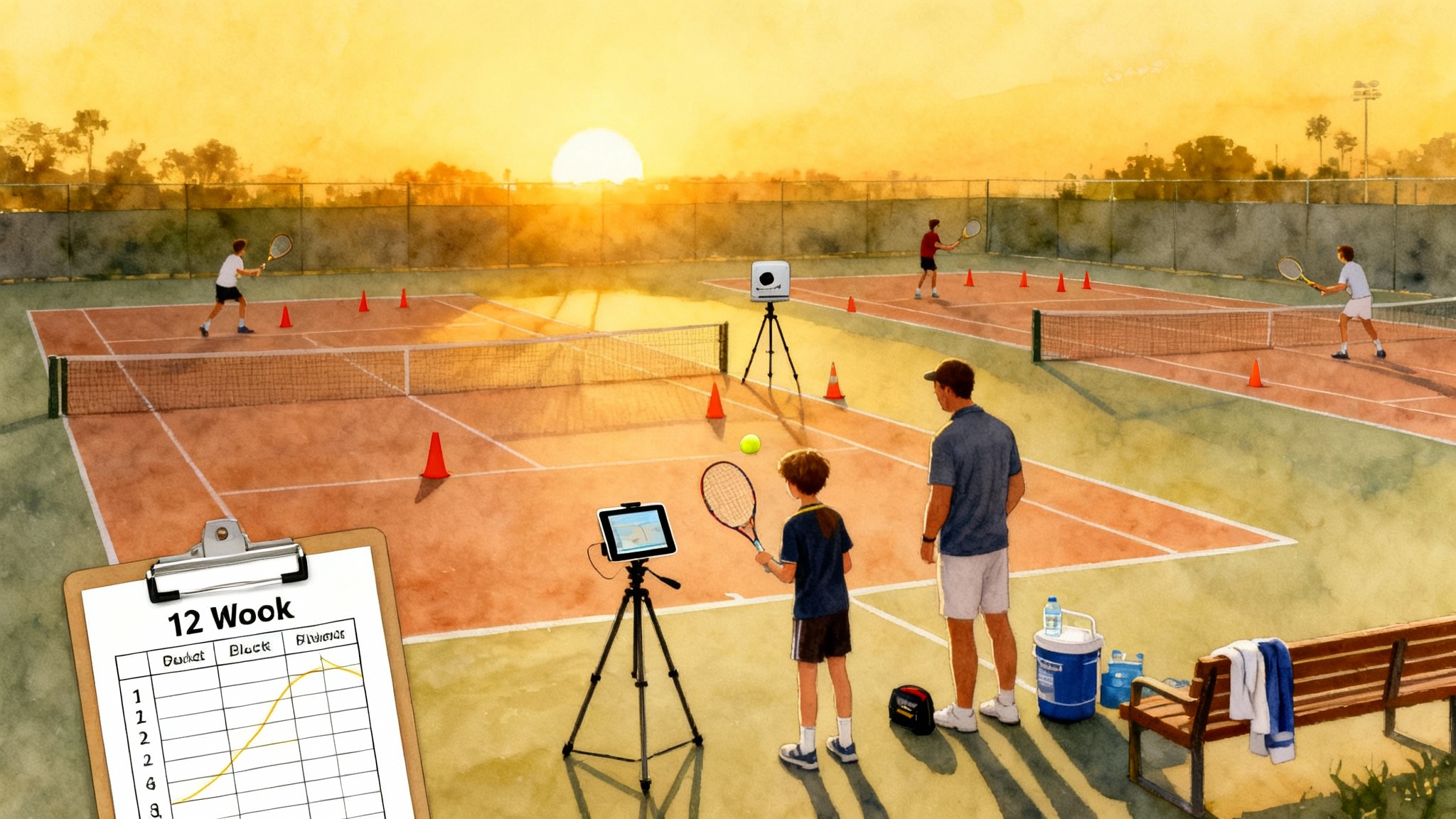
You do not need fancy gear to measure progress. A phone, five cones or water bottles, sidewalk chalk, and a notebook will do.
-
Camera placement
- For groundstrokes, stand behind the player near the baseline, slightly off center, and again on the sideline at the service line
- For serves, set the phone behind the server at knee height so the toss and contact are visible
-
Settings and habits
- Use 60 frames per second if your phone offers it, lock exposure by tapping and holding on the screen, and wipe the lens
- Film 15 to 25 seconds per clip, name files by date and color level, for example 2025-02-15_Orange_Serve
-
Timing and counting
- Use the phone stopwatch for shuttles and planks
- Use tally marks in a small notebook for serve and return counts
Create a simple shared album so coaches and grandparents can see the clips. Rewatch at 0.5 speed to notice balance, contact height, and recovery steps.
A sample pathway modeled on Legend Tennis Academy
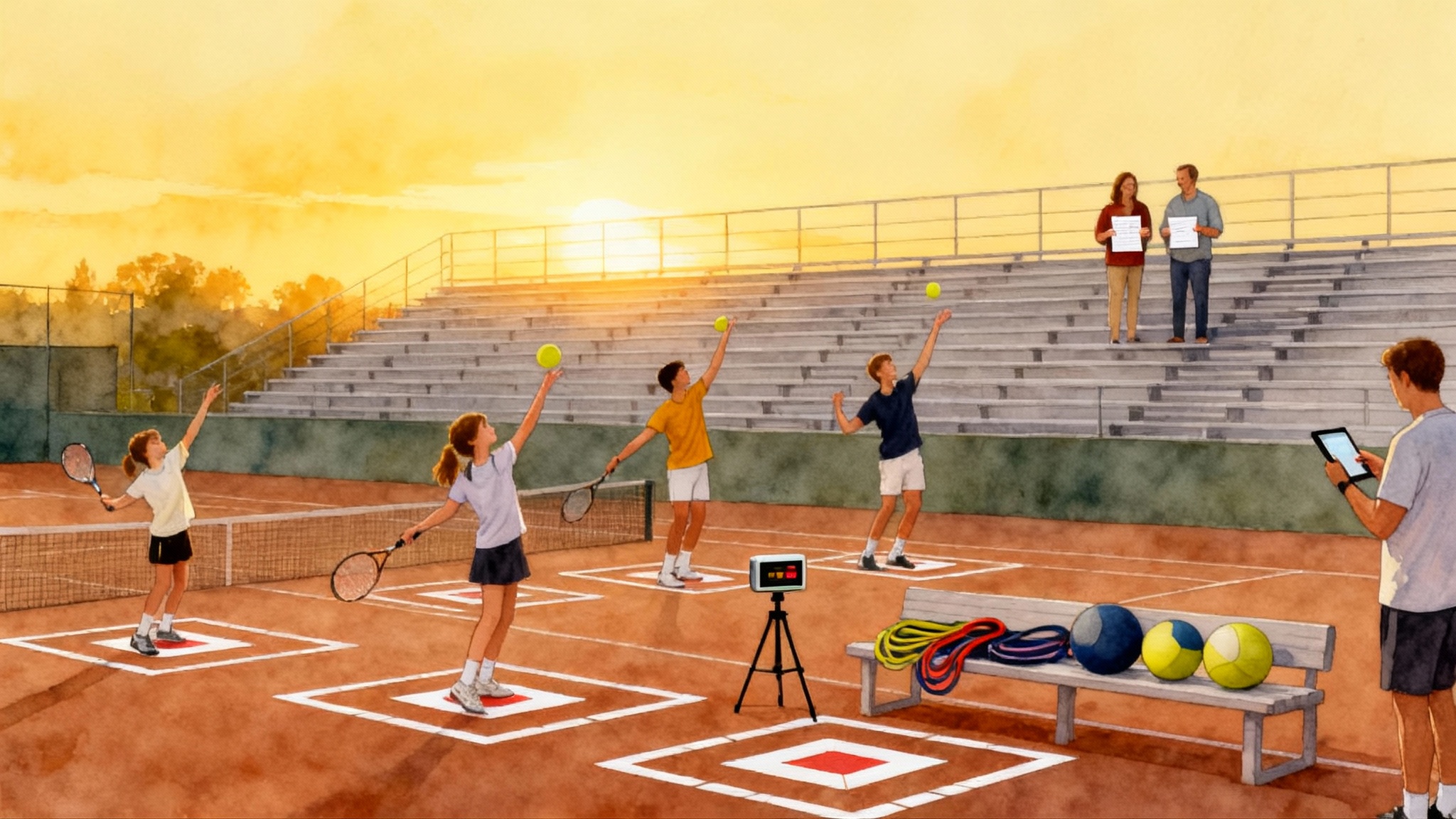
Legend Tennis Academy builds progression around clear competency gates and frequent low-stress match play. Review the Legend Tennis Academy profile to understand the environment this sample year reflects. Adapt the weeks to school calendars and other sports.
-
Weeks 1 to 8, Red focus
- Two short practices and one tie-break session per week
- Goal: 12-ball mini rallies, 6 of 10 serves in the big target, two tie-breaks to 7 without stoppage
- Event: one red ball festival or team challenge in week 6
-
Weeks 9 to 20, Orange transition
- Keep one red court session for confidence, add two orange sessions focused on serves and direction
- Goal: 10-ball baseline rally at 60 feet, 12 of 20 serves in two weeks, one short set each week
- Event: two orange match-play afternoons, chart first serve percentage
-
Weeks 21 to 34, Green bridge
- Two green sessions per week and one home strength circuit
- Goal: serve plus one patterns, 14 of 20 serves, two short sets or one full set weekly
- Event: a Junior Team Tennis season or a local non-elimination circuit day
-
Weeks 35 to 52, Yellow integration
- Two yellow sessions per week plus one match-play, maintain one green session as a confidence day when needed
- Goal: 16 of 24 serves with a distinct second serve, 8-ball live rallies at match pace, best of three short sets
- Event: two low-pressure tournaments or school matches across the block
Legend uses a simple rule. When the player holds the green lights for four straight weeks, schedule one practice entirely at the next color. If the session stays organized and the player looks in control, switch one more weekly session. This staggered move avoids the all-or-nothing jump that creates frustration.
Common pitfalls and fixes as you move up
- Skipping second serves in practice, then double faults in matches
- Fix: every practice includes 10 to 12 second serves under pressure, score two points per double fault for the opponent during practice sets
- Practicing perfect forehands but never learning neutral defense
- Fix: run two 20-second crosscourt neutral rallies each side at 60 percent pace before live points
- Moving up because of age rather than skill
- Fix: age can open doors, but movement occurs when benchmarks hold for four weeks, let the green lights decide
- Overloading matches before the player can hold a rally
- Fix: once-a-week match-play is plenty until the serve and rally targets are stable
- Managing workload poorly across growth spurts
- Fix: apply simple RPE tracking and small adjustments week to week using easy tools from our Smart Tennis Workload 2025 guide
Frequently asked questions
- Does my child need private lessons to advance?
- Not necessarily. Group sessions that focus on contact height, targets, and serve work can deliver the benchmarks. Short private tune-ups can help with grip changes or serve mechanics.
- Should we strength train before age 12?
- Yes, but call it movement training. Bodyweight patterns, skips, rope, and landing control build safety and speed. Keep it short and consistent.
- What about ratings and rankings?
- Ratings emerge once your player reaches yellow ball and plays formal events. Before that, treat every practice stat as a mini rating. Serve percentage, rally length, and pattern execution are the numbers that matter now.
Put it all together
Your child will move from red to yellow when the environment stops being the enemy and becomes a teacher. Slower balls and smaller courts give the feedback that builds confidence and skill. Use the checklists and the green lights. Film short clips. Count serves. Track one or two patterns. Advance only when rally control, serve reliability, and match behaviors stay stable for four weeks. That rhythm protects technique, reduces injuries, and makes match days fun. The result is a smooth, safe, and efficient climb from red to orange to green to yellow, and a player who loves the sport for the right reasons.