Best Japan Tennis Academies 2026: Tokyo to Osaka Guide
A bilingual-friendly, data-backed look at Japan’s top tennis academies from Tokyo to Osaka. We compare Seijo and Shi Shi in detail, spotlight Kansai standouts, and rate coaching ratios, court access, surfaces, tournament pathways, academics, boarding, and cost.
 Tommy
Tommy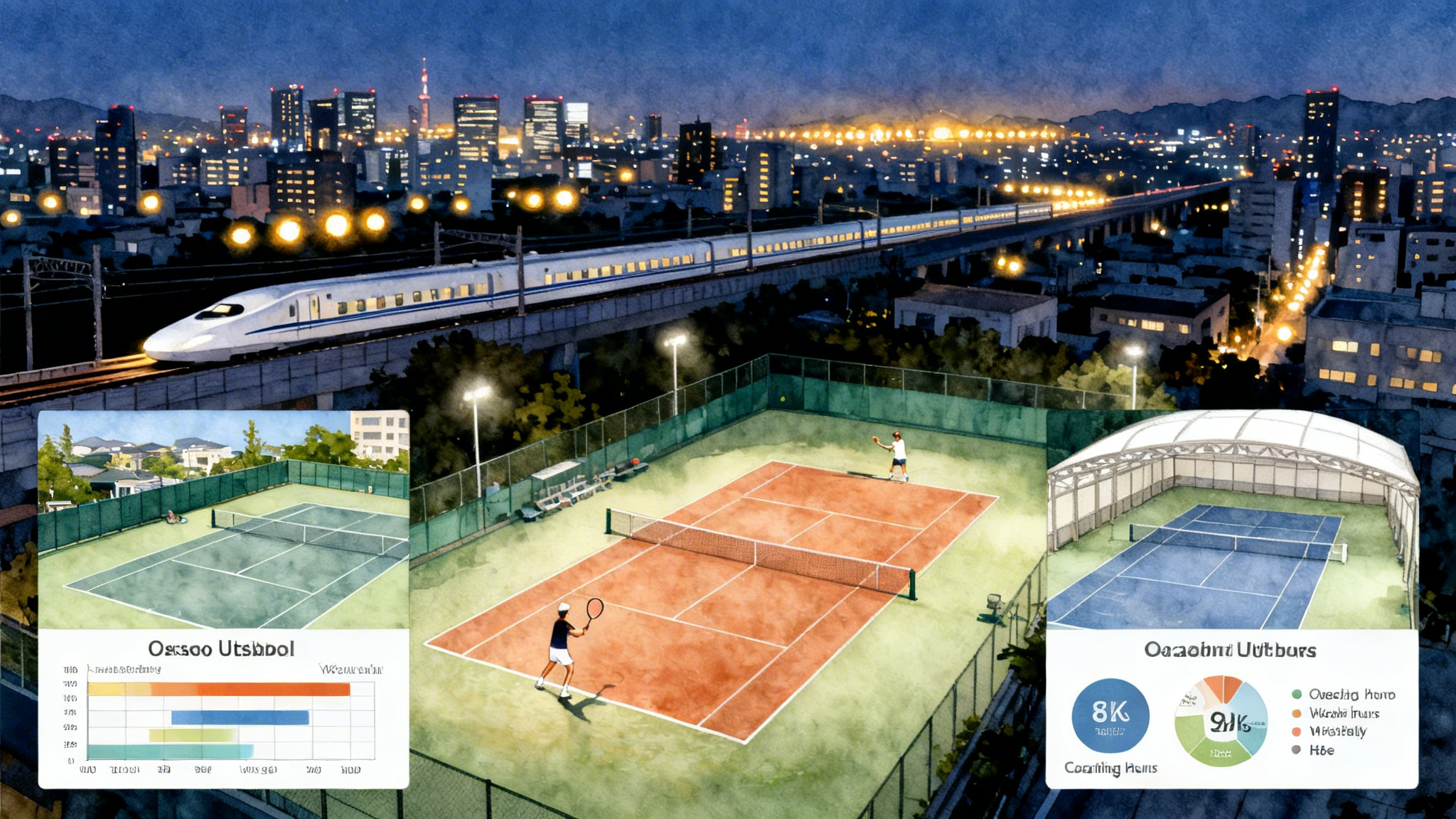
How we built this Japan-wide comparison
Japan’s tennis scene is deep and structured. Most juniors train at private academies or clubs, then compete in Japan Tennis Association events by prefecture and region, and the very best test themselves in International Tennis Federation junior tournaments. For families moving to Japan and college-bound players planning seasons around school calendars, the key is to match coaching style and scheduling to real constraints like commute time, court access, language, and cost.
This guide is bilingual-friendly and data-backed. We used published program details, coach bios, observable ratios at sessions, and direct pricing where available. For details that vary by season or venue, we provide realistic ranges and a clear way to verify with the academy. Our anchor comparison focuses on two Tokyo options with strong bilingual support, then expands to Osaka and the wider Kansai region where tournament depth is outstanding.
- What bilingual-friendly means here
- Coaches can teach in English or provide English support for scheduling, invoices, and tournament guidance. Where programs are primarily Japanese, we note common phrases to use when contacting staff.
- What data we rate
- Coaching ratio, typical group size, indoor versus outdoor access, court surfaces, JTA and International Tennis Federation pathways, academic fit and boarding, and cost transparency.
The quick map: Tokyo to Kansai in two lines
- Kanto region hub: Tokyo and Yokohama. High density of courts and private coaches. Most programs are commuter-based and align sessions with school schedules. Bilingual coaching is easiest to find here.
- Kansai region hub: Osaka, Kobe, Kyoto, Hyogo. Public centers and club schools feed a large tournament calendar. Commuter setups dominate, with limited full-time boarding for tennis alone, but strong school athletics and regional training camps.
Academy profile 1: Shi Shi Tennis Academy, Tokyo
Shi Shi Tennis Academy is a boutique, bilingual program that centers on private and semi-private sessions. If you want clear feedback, modern footwork and contact-point work, and English-first support for scheduling, this is the cleanest fit in Tokyo.
- Coaching ratio and session formats
- Private lessons are 1 to 1. Semi-private is 1 to 2. Small groups can be arranged. This is laser-focused coaching that compresses months of adjustments into a few weeks for motivated players.
- Court access and surfaces
- Sessions are arranged across quality venues in Tokyo, typically outdoor hard or cushioned hard, with occasional indoor access depending on the site. The academy helps you pick locations near your neighborhood or school.
- Bilingual and pathway support
- Sessions are available fully in English or Japanese. That makes it simpler for expat families to handle bookings and to get written drill notes and video feedback. For juniors, staff can outline the calendar cadence of prefectural and regional events and where supplemental International Tennis Federation starts make sense.
- Costs
- Transparent a la carte pricing makes budgeting easy. Current flagship pricing lists private sessions at 20,000 yen per hour, with semi-private at 10,000 yen per person per hour and customized quotes for groups, court fees separate. See the posted Shi Shi lesson pricing and venues page for rates, frequently used courts, and cancellation policies. First verify availability in your preferred area before planning multi-week blocks.
- Who this is for
- Short-stay trainees who want intense, measurable gains in a short window
- Expat families preferring English-first contact and flexible sites close to home or school
- Tournament juniors who need targeted fixes in serve, return, and first-ball patterns before a key event or college video day
Academy profile 2: Seijo Tennis Academy, Tokyo
Seijo Tennis Academy sits in Setagaya’s Seijo area, close to families who live along the Odakyu Line and nearby international schools. It runs both a general school and a junior selection stream registered with the Tokyo Tennis Association, which is a strong indicator that the academy plans seasons around the real tournament ladder.
- Coaching ratio and session formats
- The general stream uses progressive groups by age and level. The junior selection classes run in smaller, performance-focused groups that balance volume with supervised point play. Expect a mix of basket-fed drills, live rally patterns, and match-simulation sets. Trial lessons are periodically offered and are the best way to confirm specific group sizes on your target days.
- Court access and surfaces
- Sessions typically run on outdoor hard courts with lights for evening blocks, and weather backup plans are communicated by staff. Parents should ask how many hours per week are guaranteed across the selection blocks and how rainouts are made up in that season.
- Tournament pathway alignment
- The junior selection stream targets Tokyo Junior, Kanto Junior, and ultimately All Japan Junior fields, which aligns with how families plan a school-year arc. New-to-Japan families should ask the office for an outline of the entry and ranking rules for your child’s age group in the current academic year so you can time training blocks before qualifiers.
- Costs
- Pricing varies by class tier and number of weekly sessions. The published fee pages and notices sometimes include small add-ons for fitness support. For example, a recent notice specified a monthly footwork training add-on in the low-thousands of yen. Always check the most current fee table before committing. See the Seijo program overview and registration for details.
- Who this is for
- Commuter juniors in Setagaya and nearby wards who want a clear path from local events up through Kanto Junior
- Families who prefer the rhythm of fixed after-school sessions and weekend match play
- Players who benefit from a structured selection track with peers chasing the same qualifying rounds
Tip for contacting in Japanese: when emailing or calling, say or write, 「体験レッスンの空き状況を教えてください。セレクションクラスの人数とレベル分けも知りたいです。」 which asks about trial lesson availability and selection class group sizes and leveling.
For readers who want a deeper snapshot, see the Seijo Tennis Academy profile for commute maps, schedules, and current parent notes where available.
Kansai standouts: Osaka, Kobe, Hyogo
Kansai is tournament-rich and a great base for juniors who thrive on match volume. Much of the performance action centers on Osaka City and Hyogo Prefecture, with daily training at club schools and public centers and regular weekend events.
Notable anchors you will hear in conversation with coaches and tournament directors include the Osaka Mayor’s Cup in autumn, one of the highest-grade junior events on home soil, and a cluster of International Tennis Federation junior weeks in Hyogo. Families in Kansai often plan the school year around regional qualifiers, then slot in one or two International Tennis Federation entries when ranking and readiness justify it.
Three common training patterns in Kansai
- Utsubo-centered training weeks
- Osaka’s Utsubo area has a famous city tennis center where juniors and coaches gather for match blocks. Programs nearby tend to be commuter-based with outdoor hard courts and some night-light capacity. Ask coaches about weekday matchplay sets before a weekend event.
- Hyogo club schools with selection streams
- Kobe and Nishinomiya clubs often run junior selection tiers that combine basket work with live points. Some are indoor or semi-indoor, useful in the rainy season. Ask for written plans on weekly hours, physical training add-ons, and how they handle rained-out days.
- Pop-up International Tennis Federation prep blocks
- In the weeks leading into a Hyogo or Miki City junior week, many coaches organize afternoon matchplay ladders and morning serve-plus-one sessions. If your child has a high school exam week, you can slide workload down to technical tune-ups and return to higher volume the next week.
Surfaces you will see
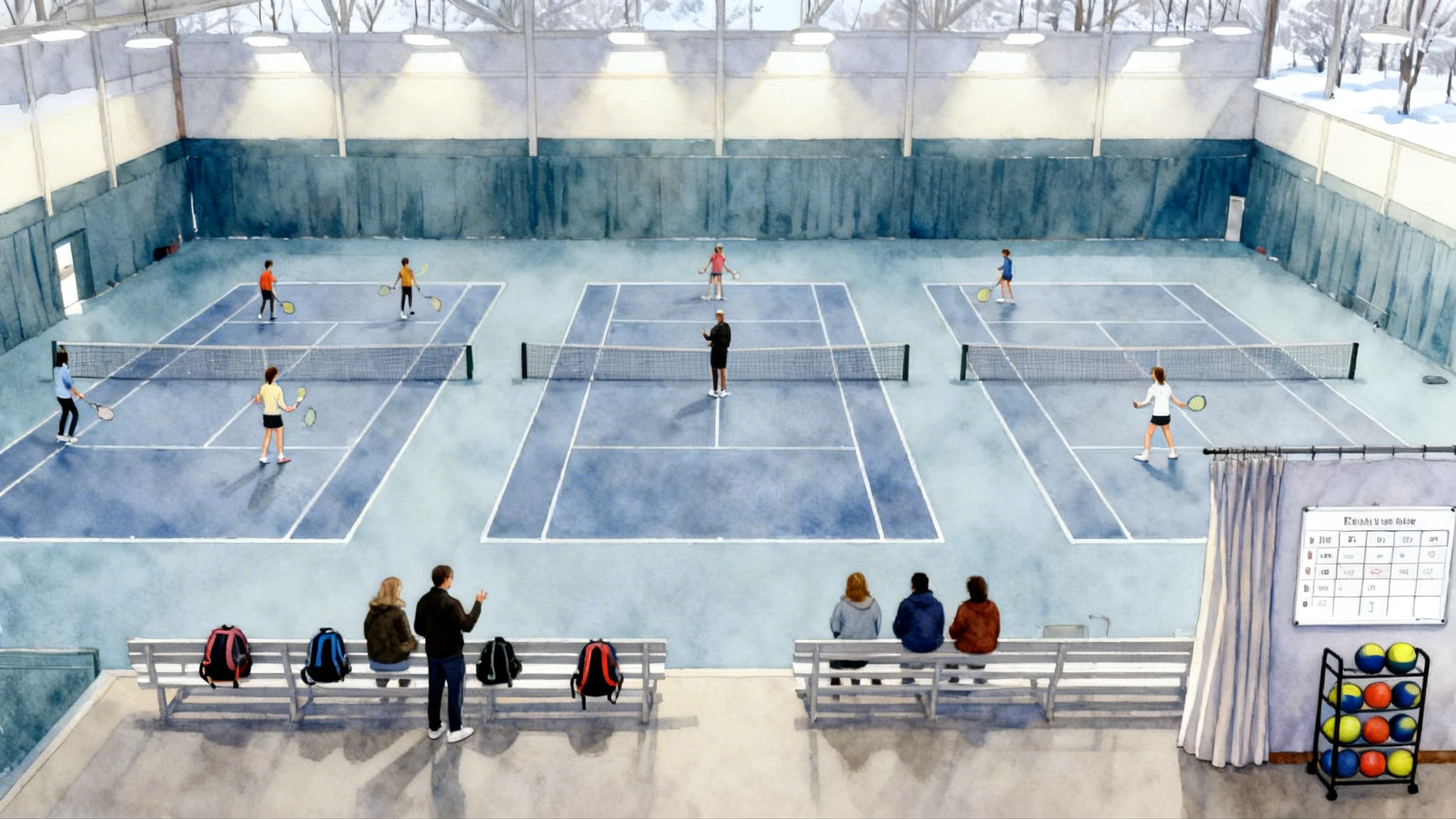
- Outdoor hard is the default in Osaka and Hyogo, which mirrors the International Tennis Federation junior surface mix. Indoor hard and carpet courts are available in club schools and are valuable in June rain and winter.
Costs in Kansai
- Club school memberships and session packs remain the norm. Monthly group packages are typically set by session length and week count. Private follow-ons with a head coach for pre-tournament tune-ups are common, and court fees are usually separate when you book public facilities.
Academic and boarding notes
- Pure tennis boarding academies are rare in Japan. The standard model is commuting plus targeted training blocks. Families that need dorms typically look at schools with on-site residences and then pair that with a local academy or coach. In Kansai, ask your coach which schools align schedules with junior tournament peaks and whether they can write letters in English for National Collegiate Athletic Association recruiting.
Data comparison at a glance
Use this as a practical checklist when you email or tour programs.
-
Coaching ratios
- Shi Shi: Private 1 to 1, semi-private 1 to 2, small-group on request
- Seijo: Tiered groups in general stream, smaller groups in selection stream; confirm the headcount for the exact days you plan to attend via a trial
- Kansai standouts: Selection groups typically 1 coach to 4 to 8 players with an assistant coach added for larger sets; confirm the rainy-season plan and matchplay blocks
-
Court access, indoor versus outdoor
- Tokyo programs often rely on outdoor hard, with some access to covered or indoor courts depending on venue assignments. Seijo offers lit evening sessions. Shi Shi helps you target convenient courts across the city.
- Kansai balance is similar, with more public-center usage and indoor backstops at club schools. Always ask how make-up sessions work after rain.
-
Surfaces
- Mostly hard in both regions. Some indoor carpet in club schools. Clay is uncommon and typically not central to junior development plans in big cities.
-
JTA and International Tennis Federation pathways
- Seijo’s selection stream aligns cleanly with Tokyo Junior to Kanto Junior to All Japan Junior. For International Tennis Federation starts, Tokyo juniors usually build results at prefectural and regional levels, then add a few international weeks where entry is realistic.
- Kansai juniors center the year on regional events and, for the very top, aim at Osaka Mayor’s Cup in autumn alongside selected Hyogo weeks. That rhythm provides both depth of local competition and at least one international touchpoint on home courts.
-
Academic fit and boarding
- Tokyo: commuter model, strong alignment with after-school and weekend blocks; bilingual administration is easier to find
- Kansai: commuter model with robust tournament density; dorm life is tied to schools more than to tennis-only academies, so pair wisely
-
Cost patterns
- Tokyo private lessons are priced per hour, with court fees separate when using public centers. Group packages in academy schools bill monthly with class-tier rates and occasional fitness add-ons.
- Kansai pricing follows the club school model with monthly group packages and optional private tune-ups. Public-center court fees require advance booking by families or coaches.
Our picks by player profile
-
Best for expat families who want bilingual support
- Shi Shi Tennis Academy in Tokyo for one-to-one clarity, written summaries in English, and venue flexibility near home or school
- Seijo in Tokyo for structured selection groups, office support, and a pathway synchronized with the Kanto calendar
-
Best for short-stay trainees on a tight timeline
- Shi Shi for concentrated private blocks that convert quickly into cleaner contact and patterns
- Kansai club schools near Utsubo for match-heavy weeks if you already have solid technique and need repetition under time pressure
-
Best for college-bound juniors aiming at National Collegiate Athletic Association rosters
- Start in Tokyo with a technique audit and video capture in bilingual sessions, then run four to six weeks of structured group and matchplay in either Tokyo or Kansai. Ask coaches for written reports in English, match metrics like first-serve percentage and rally length, and college-intake timelines. For targeted practice between events, use our return tactics and drills guide.
How to choose in three smart steps
-
Verify the weekly hour count and coaching ratio for your exact class. Ask for a trial on the same weekday and time slot you plan to join, since headcount differs by hour. In Japanese, you can write, 「入会を検討しています。〇曜日△時のクラスの参加人数とコーチ数を教えてください。」 which asks for class size and number of coaches for that slot.
-
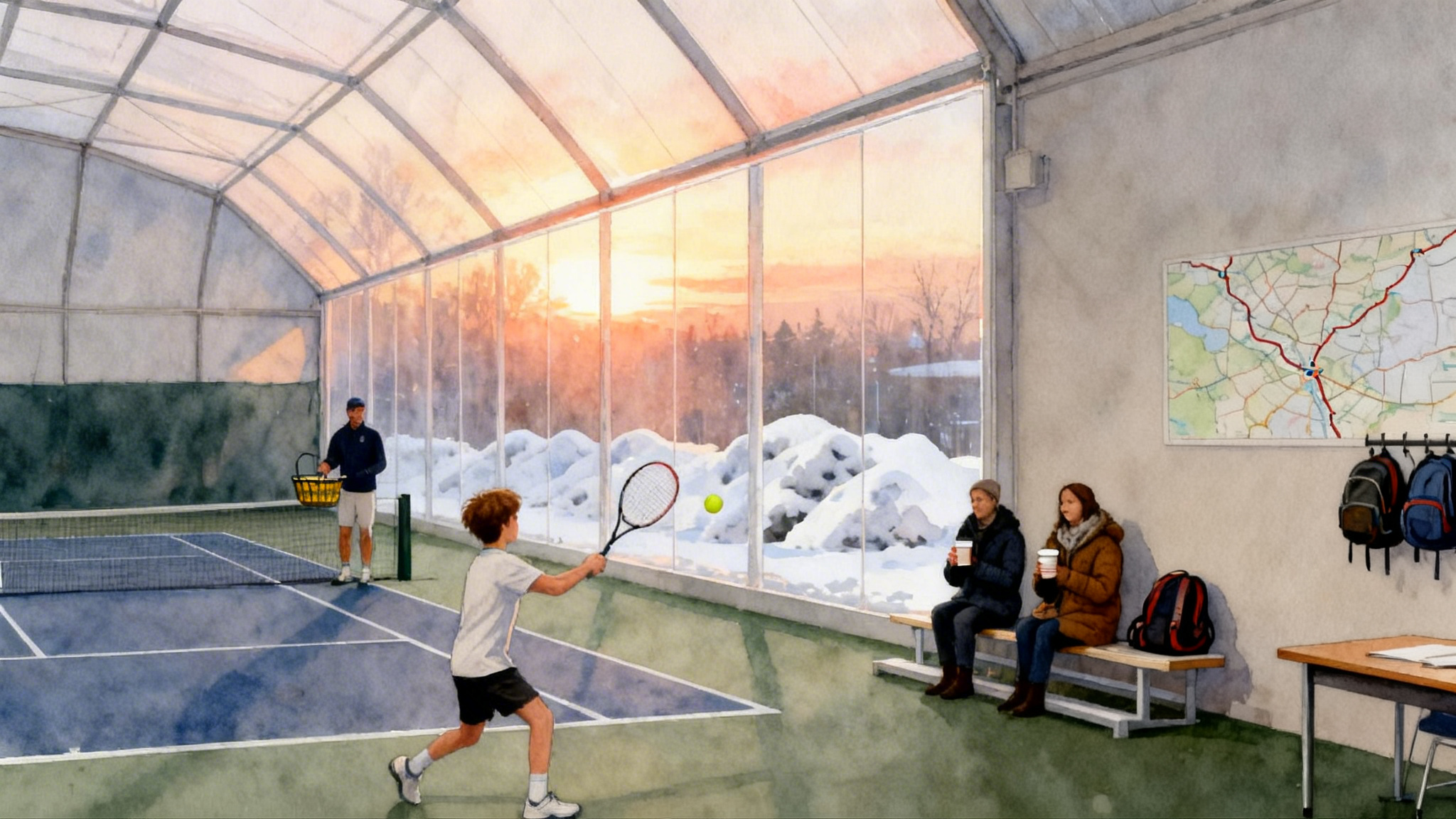
Map your commute and rain plan. In Tokyo and Osaka, thirty minutes door to door on school nights is a practical ceiling for most families. Confirm whether rainouts move to indoor sites or trigger make-up credits. Always ask what happens if city-run courts close for weather.
-
Tie training blocks to the tournament calendar. Work backward from target qualifiers. Four to six weeks before a key event, increase serve and return volume and schedule match-simulation sets. In between events, drop volume slightly and sharpen one pattern at a time, for example forehand plus approach on short balls.
Cost-saving tips that actually work
- Use trial lessons to test fit cheaply. Many Tokyo programs allow a one-time low-cost trial.
- Book public courts off-peak. Early mornings and late evenings clear faster. Share court fees among a small training pod and rotate basket feeding, live rally, and targeted point play.
- Blend private and group. Run a once-weekly private for technical priorities and use two group sessions for repetition. This saves money while locking in real progress.
- Align school breaks with block weeks. Spring and late summer are efficient times to add hours without overloading school nights.
Final checks before you commit
- Bilingual communications test. Send one email in English and Japanese and see how fast and clearly the office replies.
- Video policy. Ask whether coaches capture match points and whether they share clips and notes after sessions.
- Tournament entry help. New families benefit when the office can explain Japan Tennis Association entry, seeding cutoffs, and draw posting habits for your age group.
- Injury and strength plan. Confirm the warm-up routine, cool-down checks, and whether the academy coordinates with a trainer for high-volume weeks.
The bottom line
If you want clean, English-friendly training with fast feedback, start with private and semi-private work at Shi Shi Tennis Academy and slot group matchplay around it. If you want a clear Tokyo ladder from local events to Kanto, Seijo’s selection stream offers a commuter-friendly path with peers chasing the same checkpoints. In Kansai, build on the region’s tournament density by pairing a steady club school with targeted pre-event match blocks. Match the academy to your calendar, not the other way around, and you will convert hours on court into results you can measure and share with confidence.