
USA · College recruiting

Best Tennis Academies for College Recruiting in the USA (2026)

NCAA · D1/D2/D3 · Scholarships · UTR · Year-Round & Boarding Programs

Choosing a junior tennis academy for NCAA college recruiting is one of the highest-impact decisions a family makes. The right environment combines daily high-level training, a realistic tournament schedule, academic support, and staff who understand how coaches evaluate players in 2026. This hub highlights US programs we feature on TennisAcademy that families often shortlist when the goal is clear: build a recruitable profile for Division I, II, or III tennis without guessing which academies actually live in that world day to day.

What makes an academy "college-recruiting focused" is not a marketing label alone. Look for structured progression (technique, patterns, physical development, and mental skills), frequent match play against peers who will sign, video workflows, and staff relationships with college programs. The best college-prep academies also respect the academic calendar: they plan travel so players stay eligible, keep grades competitive for admissions, and communicate honestly about timeline and division fit.

UTR benchmarks by division (D1 / D2 / D3)

UTR is critical in modern recruiting. College coaches rely on Universal Tennis Rating to gauge skill level quickly, compare recruits to current roster players, and decide who deserves a deeper watch on film. It is not the only signal (trajectory, competition level, fitness, doubles, grades, and coachability all matter), but ignoring UTR is not realistic in 2026.

Typical men's singles UTR bands coaches use as a first screen (not official cutoffs; conference, international depth, and position move the bar). Women's averages often sit slightly lower on paper while remaining highly competitive—always compare to recent commits at target schools.
DivisionRough recruiting UTR bandHow coaches use it
NCAA D1Often ~12–14+ for many rosters; top conferences skew higherCompared to bottom half of current roster; used to prioritize film and campus visits
NCAA D2Wide band, frequently ~10–13+ depending on regionMore roster styles; coaches weigh UTR against travel schedule and academic fit
NCAA D3Strong players often ~11–14+; academics drive the shortlistNo athletic scholarships—coaches still use UTR to forecast lineup impact

Numbers are planning guides from common recruiting conversations, not promises. Always pair UTR with verified match video, tournament history, and direct feedback from college programs.

International recruiting context

College tennis has one of the highest shares of international athletes across NCAA sports. In Division I men's tennis, published roster analyses commonly cite that about 34.4% of players are international recruits—meaning US families are not only competing with the next town over, but with well-supported juniors from around the world for the same roster spots.

That does not mean US players cannot win those spots; it means your academy choice should reflect global match play, language and culture support, and honest roster math. The right program helps you train and compete at a level where coaches can compare you fairly to international peers already on their depth chart.

Recruiting timeline (NCAA D1 / D2 rules families remember wrong)

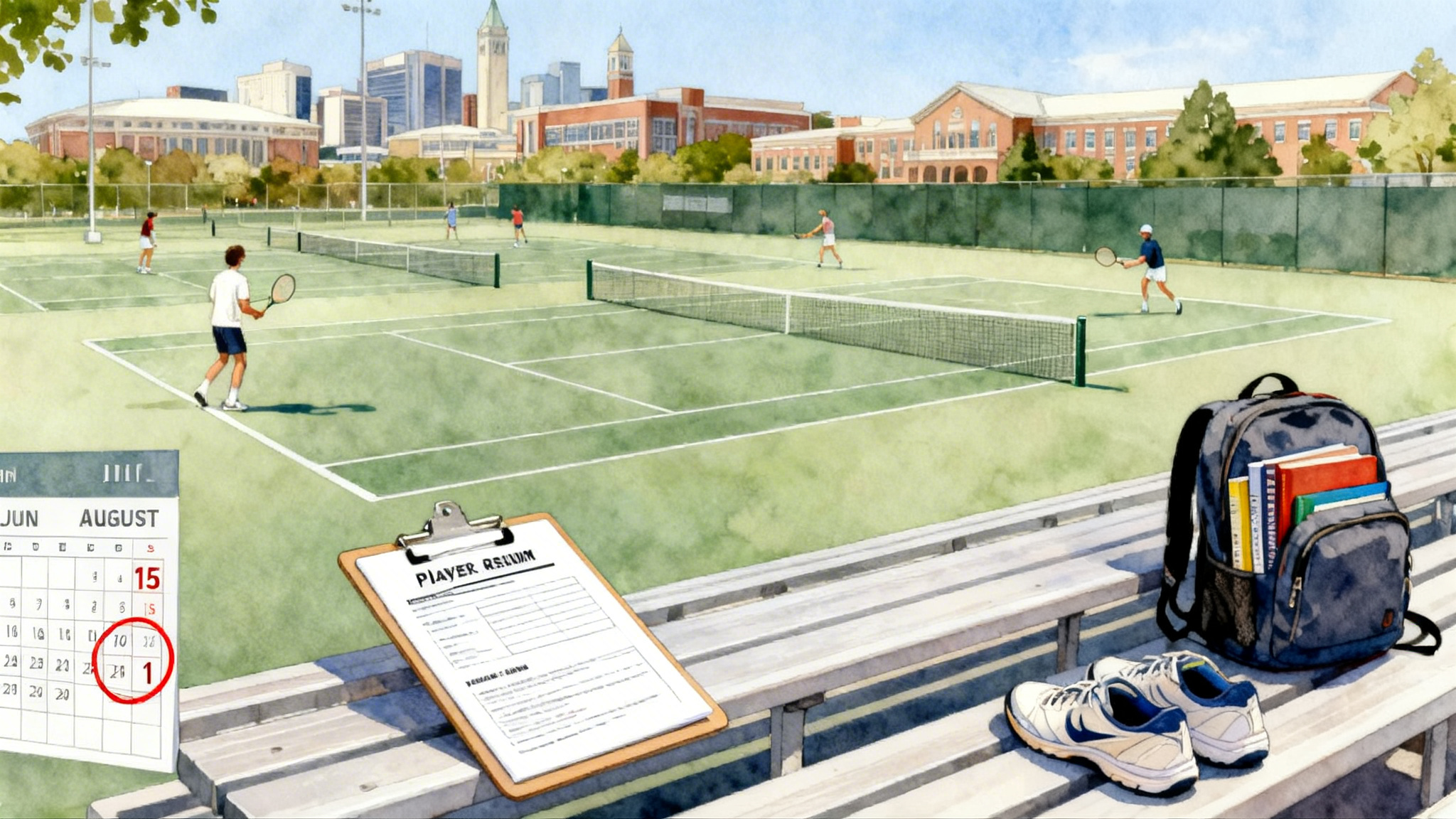
Under NCAA Division I and II rules most families care about first, coaches may begin recruiting communication on June 15 after the athlete's sophomore year of high school (with further limits on how contact escalates). For Division I, official visits (school-funded) commonly open on August 1 before the junior year; unofficial visits follow different rules and may be possible earlier with restrictions—always confirm the current NCAA recruiting guide for tennis because rules update.

That timeline does not mean "wait until then." Film, transcripts, character references, and tournament selection matter earlier. Junior and senior years narrow the school list, complete visits where allowed, and align with signing windows such as National Letter of Intent periods where applicable. Division III differs on portions of contact timing; read the NCAA recruiting guide for your path every season.

Scholarship reality check

Of 187,000+ US boys who play high school tennis in a typical season (per NFHS-scale participation reporting), only a small fraction ever play any level of college tennis. Industry estimates often describe on the order of ~9,700 men competing across NCAA programs when all divisions are counted—orders of magnitude fewer than high school participation. Less than 1% of high school players sign with a Division I program.

That funnel is not meant to scare you out of the sport; it is the honest math that drives serious families toward better training plans, smarter tournament selection, and tighter academic strategy. The right academy is the one that helps you improve fast enough—with proof on video and in results—to belong in that narrow band if D1 is the goal, or to pivot early toward a division where you can thrive and graduate on time.

What coaches look for—and how the right academy prepares you

College coaches prioritize athletes who can protect the team's GPA and graduate. They prefer well-rounded recruits with strong academic records because eligibility, admissions, and travel absences all stress the student side of "student-athlete." Tennis matters, but so does whether you can handle a Tuesday exam after a Sunday final.

  • Transcript trend: rigor plus upward or stable grades; SAT/ACT or test-optional strategy aligned with target schools.
  • Competition calendar: enough high-level matches to move UTR without burning out or skipping exams.
  • Film and positioning: concise match video and a clear role projection (singles, doubles, lineup depth).
  • Communication habits: prompt email tone, honesty about offers, and coachable body language on visits.
  • Academy infrastructure: study halls, proctoring, NCAA course-planning, and travel that does not quietly wreck eligibility.

Scholarship math differs by NCAA division. Division I men's tennis allows up to 4.5 equivalency scholarships per team; women's D1 allows up to 8. Division II allows up to 4.5 for both men's and women's tennis. Those figures are ceilings, not promises that every roster is fully funded. Division III does not award athletic scholarships, though strong need-based and merit aid can still make the net price attractive. NAIA and junior college systems use different limits. Families should always confirm current funding and academic packages directly with each institution.

When evaluating a college-prep academy, ask blunt questions: How many weekly hours on court versus conditioning? How are tournaments chosen? Who owns college outreach and video packaging? What is the school model (online, hybrid, brick-and-mortar) and what SAT/ACT support exists? Request examples of recent commits by division and conference, then cross-check realism against your child's goals. Visit unannounced when possible, watch a full practice block, and speak with current parents from the last two recruiting cycles.

Below you will find a live directory grid of featured academies grouped by state hubs we use on TennisAcademy (Florida, Georgia, Texas, California, New York, and the Pacific Northwest). Each card links to the academy's full profile. In the column on the right, the FAQ answers common recruiting questions in a format search engines can surface, and the article cards pull full details from our blog for grade-by-grade strategy and pathways (UTR, USTA, ITF juniors). When you are ready, contact programs directly to confirm availability, pricing, and the next intake that fits your recruiting clock.

Guides & playbooks

Best Tennis Academies for USA College Recruiting in 2026

Best Tennis Academies for USA College Recruiting in 2026

College coaches reveal what they actually look for in recruits. Discover which US academies are placing the most juniors in NCAA programs and what it takes to build a recruiting profile that gets noticed.

Year-Round Boarding Tennis Academies in the USA: 2026 Guide

Year-Round Boarding Tennis Academies in the USA: 2026 Guide

Choosing a live-in junior tennis program is one of the biggest decisions a tennis family will make. This guide breaks down what boarding academies actually deliver, how costs stack up, what the weekly schedule looks like, and how to spot the programs worth your investment.

College Tennis Recruiting 2026: Timeline, UTR Targets, Video, Emails

College Tennis Recruiting 2026: Timeline, UTR Targets, Video, Emails

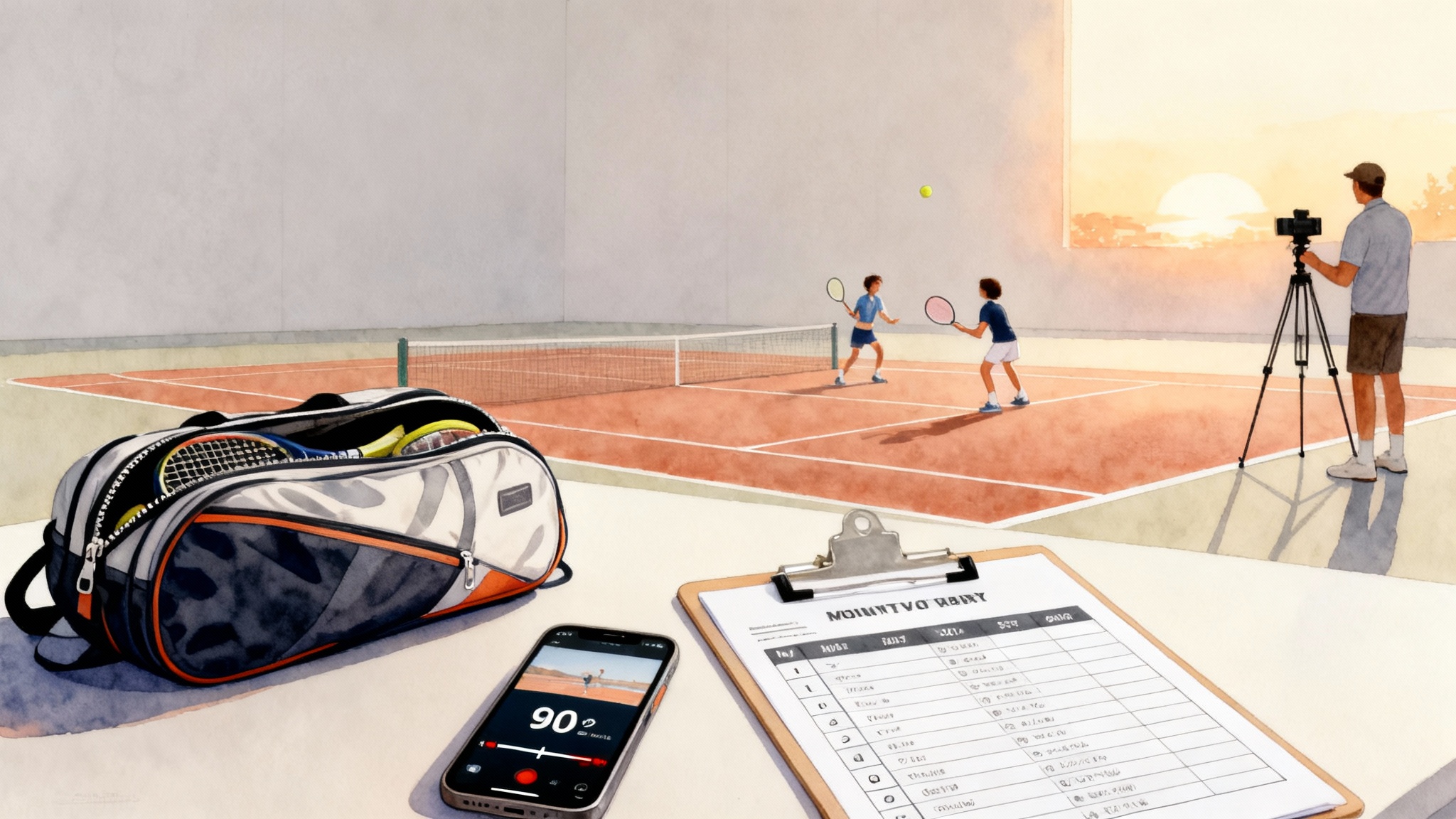
A month-by-month roadmap for the Class of 2026 with realistic Universal Tennis Rating targets by level, a 90-second highlight video checklist, copy-paste coach emails, and a Legend Tennis Academy case study that ties it all together.

2026 Tennis Pathways: UTR vs USTA and ITF Juniors, plus NTRP

2026 Tennis Pathways: UTR vs USTA and ITF Juniors, plus NTRP

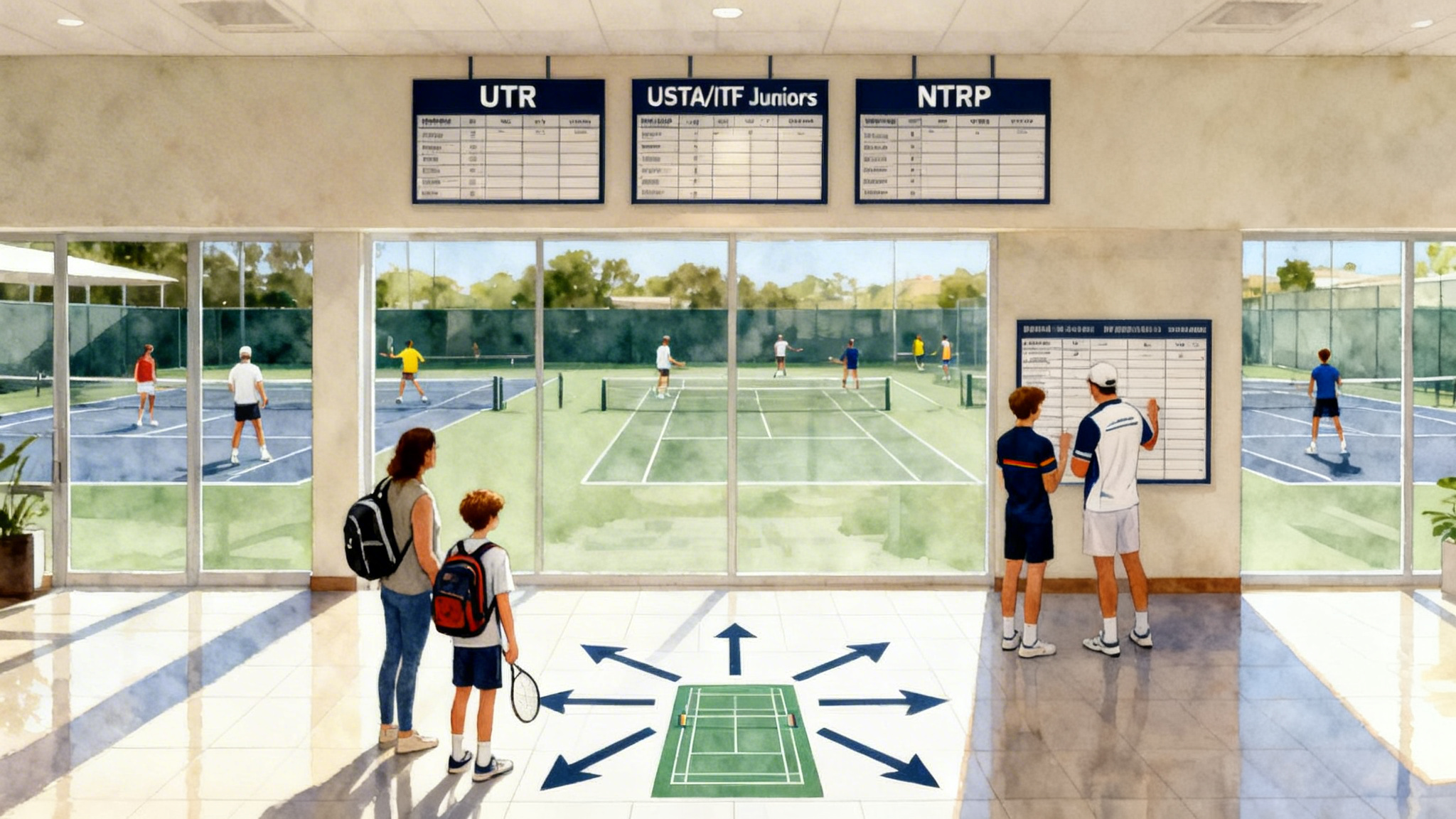
A plain-English playbook for juniors, parents, and adults to choose and sequence the right competition ladder in 2026. Learn when to use UTR events, how USTA and ITF Juniors fit, where NTRP belongs, and plan 12-week calendars.

2026 College Tennis Recruiting Playbook: Timeline, Email, Video

2026 College Tennis Recruiting Playbook: Timeline, Email, Video

An action-first guide to U.S. college tennis in 2026. Learn when to contact coaches by grade, what to put in emails, how to film a sharp 2–3 minute skills plus match video, plan unofficial and official visits, and use showcases to get seen.

FAQ: USA tennis academies and NCAA recruiting

What UTR do I need for D1, D2, or D3?

There is no official NCAA UTR minimum. Coaches use UTR to compare recruits to their current roster and to prioritize film. As a rough men's singles planning band on this page: many D1 programs first screen prospects roughly in the low-to-mid teens, with top conferences skewing higher; D2 spans a wider band often from high single digits into the low teens and beyond depending on region; D3 includes very strong players where academics drive the shortlist and published UTRs can still look like D1 commits. Women's averages often read slightly lower on paper while remaining fiercely competitive. Always pair UTR with verified match video, tournament level, fitness, grades, and direct coach feedback for your position.

What are the odds of playing college tennis after US high school?

Participation scales often cite 187,000+ US boys playing high school tennis in a typical season. Only a small fraction continue to any NCAA level; aggregated roster reporting commonly lands on the order of roughly 9,700 men competing across NCAA divisions, which is tiny next to high school participation. Well under 1% of high school players ultimately sign with a Division I program. Use that funnel to plan seriously: better training, smarter scheduling, and honest division conversations—not panic.

Why does international recruiting matter for US families?

College tennis has one of the highest international participation rates in NCAA sports. Published analyses of Division I men's rosters often quote about 34.4% of players as international recruits. US families are competing globally for the same roster spots, which raises the bar for match play quality, travel, and how quickly coaches can trust your level. Choose an academy that prepares you to be evaluated next to international peers already on depth charts.

When can NCAA D1 and D2 coaches contact me, and when can recruiting visits start?

For NCAA Division I and II tennis, coaches may begin recruiting communication on June 15 after the athlete's sophomore year of high school, subject to additional limits on how contact expands. For Division I, official visits (school-funded) commonly begin August 1 before the junior year; unofficial visits follow different rules and may be possible earlier with restrictions—read the current NCAA recruiting guide for tennis because rules update. Before those milestones, build film, grades, and tournament history; after them, stay organized around official visits where applicable and signing periods in senior year. Division III differs on portions of contact timing.

How many scholarships do D1 vs D2 programs offer?

NCAA Division I men's tennis allows up to 4.5 equivalency scholarships per team; women's D1 allows up to 8. Division II allows up to 4.5 for both men's and women's tennis. Those are maximums, not guarantees that a program is fully funded. Division III does not offer athletic scholarships, though strong aid packages can still make net cost competitive. NAIA and junior college systems use different limits. Always confirm funding and academic aid directly with each school.

What do college coaches look for academically—and how should an academy help?

Coaches prioritize recruits who can stay eligible, handle travel absences, and graduate on time. Strong transcripts, course rigor, and test planning (where used) signal you will protect the team GPA. The right academy pairs court hours with structured study halls, NCAA-aware course planning, proctoring for online school, and travel that does not quietly wreck deadlines. Ask how the program tracks academic progress weekly—not only at report cards.

Boarding academy vs day academy for college prep?

A boarding or full-time residential academy can maximize court hours, strength training, and tournament travel support, which helps players who need rapid development or lack elite sparring at home. A strong day academy near home can work if you already have high-level match play, academic support, and a realistic travel schedule for national events. For NCAA recruiting, coaches care about level of play, trajectory, academics, and character. Choose the environment where you will actually improve, stay healthy, and keep grades strong.

Which US states have the most college-recruiting academies?

Florida, California, and Georgia are common hubs because of weather, flight connectivity, and dense junior tournament calendars, but strong options exist across the country including Texas, the Northeast, and the Pacific Northwest. The "best" state is the one where you can train consistently, compete at the right level weekly, and manage school without burnout. Use this hub to compare programs, then validate fit with visits, references, and clear questions about tournament plans and academic support.

How do I choose a tennis academy for NCAA recruiting?

Start with your goals: target division, timeline, budget, and academic needs. Evaluate coaching staff experience with college placement, daily structure, match play volume, fitness and injury prevention, and school options. Ask for examples of recent commits, how video and outreach to coaches are supported, and how the academy tracks academics alongside travel. Finally, speak with families who went through the process in the last two years. TennisAcademy profiles are a starting point; always confirm details directly with the academy and with college coaches.