Best Carolina Tennis Academies 2026: Hilton Head to Raleigh
A parent-first, data-backed scorecard of the Carolinas. We compare Hilton Head, Charleston, Charlotte, and Raleigh programs on coach ratios, college placement, match-play density, surfaces, indoor access, boarding, pricing, and scholarships.
 Tommy
Tommy
How we built this 2026 Carolinas scorecard
Parents asked for a clean, comparable view of the top training hubs in the Carolinas. We focused on four locations most families shortlist first: Hilton Head Island, Charleston, Charlotte, and the Raleigh area. Our scorecard weights eight factors that predict real development and college outcomes for players ages 12 to 18.
Weights and what they mean
- Coach to player ratio (20 percent): Live ball and decision training work only if coaches can see and correct details. Gold standard is small squads and on-court video breakdown during live points.
- College placement (20 percent): We reviewed 2021 through 2025 signing classes and where players matriculated. We prioritize transparency of lists, recency of placements, and fit across Division One, Division Two, and top academic Division Three.
- Match-play density (15 percent): How many Universal Tennis Rating and International Tennis Federation matches a player can play within ninety minutes of the base each month. We considered event frequency, in-house verified match play, and travel time.
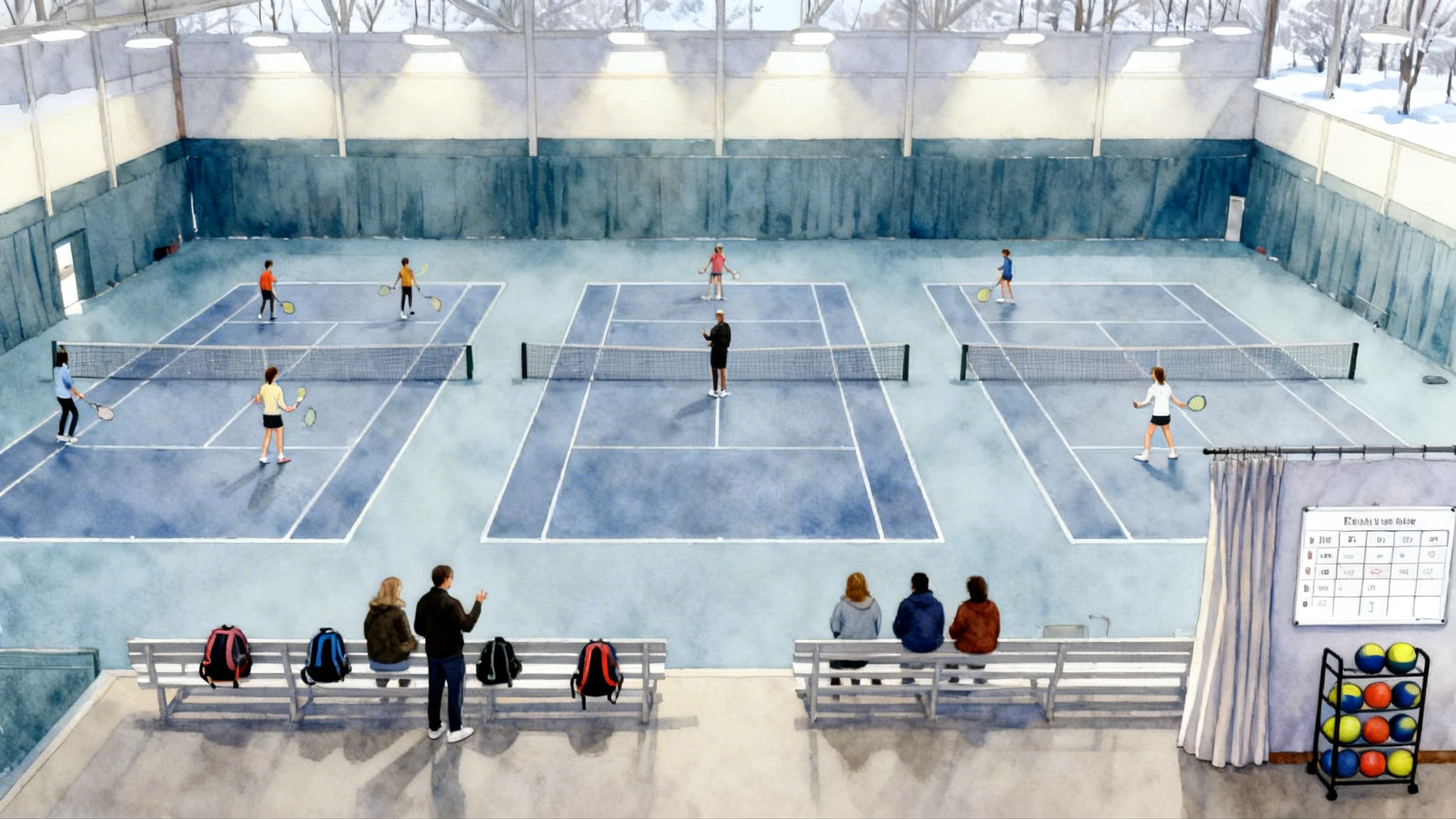
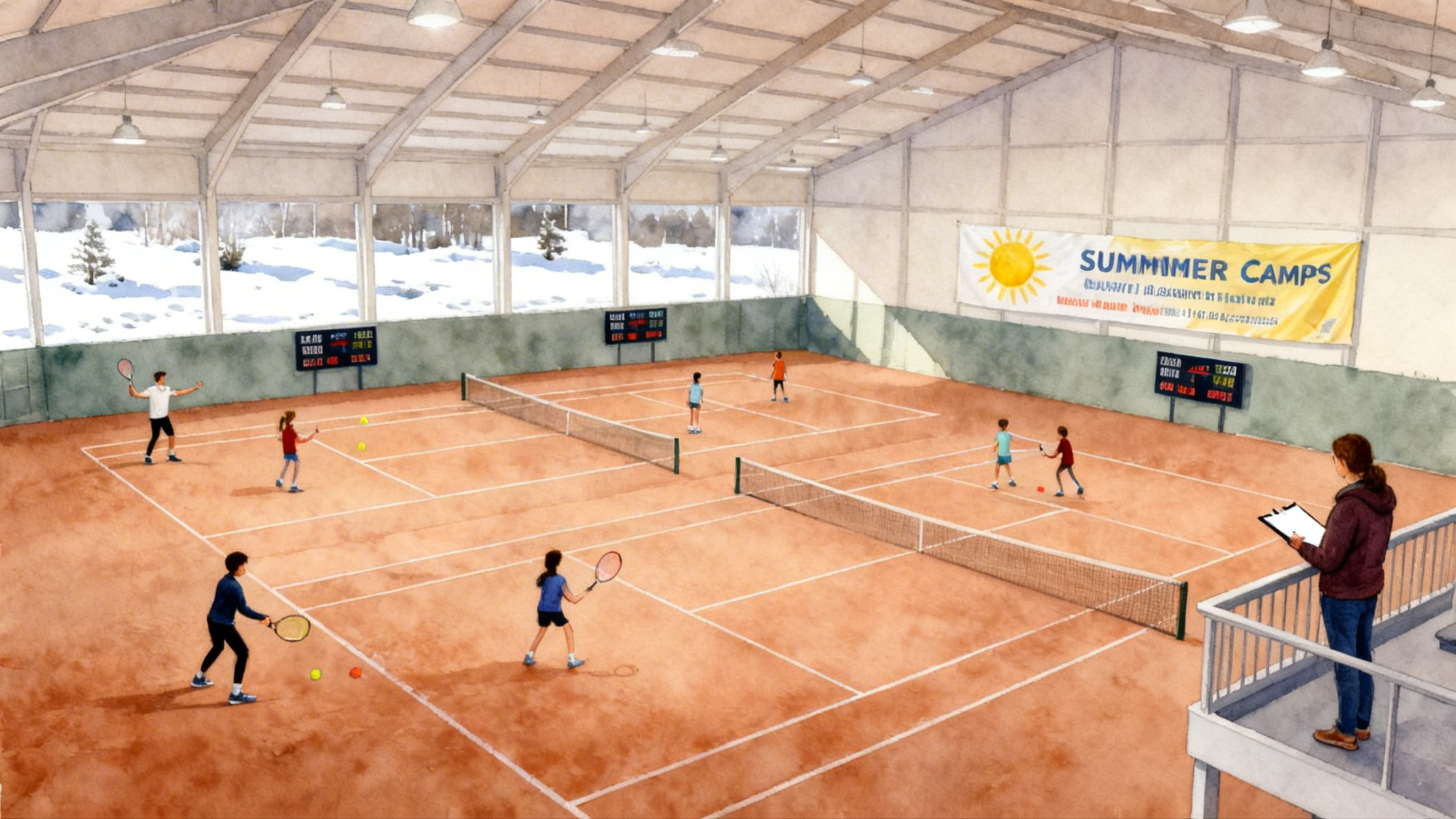
- Surfaces and indoor access (15 percent): Clay builds patterns and patience, hard courts build first strike tools. Indoor access protects training volume during summer storms and winter cold snaps.
- Boarding and academics (10 percent): Options that keep school on track and make housing predictable. We give credit for integrated academics, vetted host families, and safe walkability.
- Pricing transparency (10 percent): Clear posted rates, written inclusions, and month to month flexibility.
- Scholarships and tryout windows (5 percent): Whether March through August 2026 evaluation days are on the calendar and how aid is communicated.
- Travel and weather (5 percent): Reliable airports, realistic drive times, and likely rain or heat delays in peak training months.
Data sources and how to use them
- Public rosters, player announcements, and academy materials.
- Parent interviews and recent player schedules gathered in winter 2025-2026.
- Open event searches, especially the UTR event listings in the Carolinas. This is the fastest way to check current match-play density around any academy.
Use this scorecard as a decision tool. Confirm specifics with each academy, ask to see last season’s weekly plan and the actual player to court map for a random Tuesday.
Quick leaderboard: who fits where and why
Different hubs suit different player profiles. Here is the practical short list.
- College bound 15 to 18 who need match volume and polish: Raleigh area and Charlotte. Reliable weekend events, more indoor options, and strong travel access for showcases.
- Younger technical builders 11 to 14 who need reps on clay and hands-on coaching: Hilton Head and Charleston. Daily clay keeps points longer and encourages better footwork.
- Late starters who also prioritize academics and internship access: Charlotte and Raleigh. Big city resources, more high schools with flexible schedules, and strong airport links for college visits.
- Heat sensitive players or those who miss sessions when courts are wet: Charlotte and Raleigh. Coastal thunderstorms and afternoon humidity in summer reduce court hours in the Lowcountry more often than in the Piedmont or Triangle.
Comparing beyond the Carolinas? See our Atlanta tennis academies 2026 for nearby options.
Hilton Head Island: Smith Stearns and Van der Meer
Hilton Head is a true tennis town. Courts are common, and clay is everywhere, which shapes both point construction and joint health for juniors training six days a week.
What stands out
- Coach to player ratio: Boutique groups are common, especially in technical blocks and pattern sessions. Parents report smaller squads in the morning during school months, then slightly larger in summer. Ask to observe two full sessions on different days to see if the posted ratio matches what happens on court.
- College placement 2021 to 2025: A steady pipeline to Division One and Division Two programs is a key draw. Ask for a written placement list by year and whether the academy still coaches those players remotely during their first college fall.
- Match-play density: Hilton Head weekends often include verified match play and local UTR events. Savannah and Bluffton expand the circle. Expect more clay-based competition, which suits patient baseliners and counterpunchers.
- Surfaces and indoor access: Clay heavy, limited true indoor courts on the island. Wind teaches adjustments on toss and spin, which is a quiet advantage for servers.
- Boarding and academics: Homestay and local school coordination are the norm. Some families pair online school with a host family inside a gated community so the player can bike to courts.
- Pricing transparency: Packages are usually posted for summer weeks and holiday camps. Year round pricing tends to be shared on request and varies by age and hours.
- Scholarships and tryouts March through August 2026: Expect spring open evaluations, then scholarship updates in early summer as rosters settle. Ask whether financial aid is tied to tournament participation or to training attendance alone.
- Travel and weather: Hilton Head Island Airport is small. Savannah makes travel easier, but plan the extra drive. Summer storms build fast in the late afternoon and can wash out evening sessions.
Parent checklist for Hilton Head
- Watch a full serve lesson in wind, not just a calm morning. See how the coach adjusts targets and toss height.
- Ask for the match calendar from March through July and how many Fridays include verified matches.
- Confirm who handles boarding drop offs, medical needs, and school reporting.
Charleston area: LTP High Performance and the Lowcountry advantage
Charleston has a deep tennis culture, from green clay parks to pro events in the spring. The training footprint blends clay learning with hard court speed.
What stands out
- Coach to player ratio: Technical groups are often tight. Open summer weeks can be busier, so ask for caps by court and how they split players when thunder delays stack up.
- College placement 2021 to 2025: The recent wave includes a mix of Power Five signings and strong mid-majors. Request a list with graduation year, commitment date, and coaches who shepherded the player.
- Match-play density: The metro area is event rich and within a short drive of Mount Pleasant, Daniel Island, and Summerville. Players can often find Friday night round robins and Sunday singles blocks with verification.
- Surfaces and indoor access: Clay is abundant. True indoor courts are limited, which matters on weeks with multiple storm days.
- Boarding and academics: Mix of homestays and apartments with parent chaperones in summer. Traffic across the bridges can add commute time, so map your daily loop.
- Pricing transparency: Summer and holiday rates are usually posted. Year round pricing is sent as proposals after an evaluation.
- Scholarships and tryouts March through August 2026: Early spring tryouts are common. Scholarship updates often follow after spring championships as rosters finalize.
- Travel and weather: Charleston International is efficient and close. Expect high humidity and frequent pop up showers June through August. Morning blocks are gold, late afternoons can be choppy.
Parent checklist for Charleston
- Ask how clay and hard court days are balanced weekly. Look for planned switches tied to tournament surfaces.
- Verify who runs weekend verified match play when rain shifts the schedule.
- Confirm commuting time from likely housing to the primary courts during rush hours.
Charlotte metro: a network of high performance options
Charlotte is a travel hub with a large ecosystem of clubs, bubbles, and collegiate courts. More indoor choices keep the weekly volume steady even in stormy stretches.
What stands out
- Coach to player ratio: Larger markets can scale quickly. The best groups protect small tactical pods and rotate court leaders every forty minutes to keep feedback fresh.
- College placement 2021 to 2025: Deep placement lists reflect both strong training and access to college showcases. Ask whether your player will be guided into fall college visits and how video and stat packages are produced.
- Match-play density: Frequent UTR events across the metro keep reps close to home. Drive to Greensboro or Columbia when you want different opponents without flights.
- Surfaces and indoor access: Hard courts are plentiful, and indoor availability smooths winter and storm weeks. Clay is available but less dominant than on the coast, so schedule targeted clay blocks before clay heavy stretches on the calendar.
- Boarding and academics: The market supports both homestays and rental apartments near major clubs. Top public and charter schools offer flexible options, and there are multiple private schools with established athlete support.
- Pricing transparency: Corporate clubs often post clear monthly rates, while boutique programs share custom plans. Ask for a written hour by hour breakdown that includes fitness and mental skills.
- Scholarships and tryouts March through August 2026: Rolling evaluations are common. Financial aid is competitive and often tied to tournament cadence and leadership expectations.
- Travel and weather: Charlotte Douglas is a major hub. Summer is hot but afternoon storms are less frequent than on the coast, and indoor courts reduce cancellations.
Parent checklist for Charlotte
- Ask to see the indoor court booking pattern for June and July. Confirm backup times.
- Request the last three months of verified match play for players at your child’s level and age.
- Confirm video access and analytics tools, and who reviews them with your player.
Cary and Raleigh: the Triangle advantage
The Triangle blends big event hosting with a deep junior scene and strong academic options. It is a practical base for families who want a high volume of quality matches without constant travel.
What stands out
- Coach to player ratio: Morning small groups during the school year, then focused afternoon hit squads for older players. Ask how they handle banding by rating or by age and whether players can play up when ready.
- College placement 2021 to 2025: Reliable placements across divisions, boosted by easy travel to college campuses in North Carolina and Virginia. Ask about alumni return weeks in May and December for mentoring.
- Match-play density: Weekend events and in-house verified blocks are common across the Triangle. That keeps travel time lower and wallets happier.
- Surfaces and indoor access: Many outdoor hard courts, with a growing pool of covered or indoor options to keep winter and rainy weeks productive. Clay blocks are available through select clubs, so plan them intentionally.
- Boarding and academics: Multiple homestay programs and respected online school partners. The university ecosystem creates tutoring depth in math and science for players carrying heavy course loads.
- Pricing transparency: Posted rates are more common than not. Ask for a written list of inclusions and whether there is a pause option for heavy tournament months.
- Scholarships and tryouts March through August 2026: Clear evaluation days, often monthly. Aid decisions typically follow within two weeks with defined renewal criteria.
- Travel and weather: Raleigh Durham International is convenient. Summer storms are present but less frequent than on the coast, and cooler mornings make early blocks productive.
Parent checklist for Cary and Raleigh
- Ask for the month by month plan that pairs training blocks with the local tournament rhythm.
- Confirm whether your player can get three verified matches within a weekend without long drives.
- Ask for school support references from families who balanced honors courses with travel.
Scorecard at a glance
We aggregate the eight factors into a simple three tier rubric. This is not a trophy table. It is a planning aid that shows where each hub tends to excel for most families.
- Hilton Head: Strength in clay development and boutique coaching time, lighter on indoor coverage and flight options.
- Charleston: Strength in event access and clay reps, lighter on indoor coverage, strong airport convenience.
- Charlotte: Strength in indoor reliability, event density, and travel convenience, clay access must be planned.
- Cary and Raleigh: Strength in event density and academic balance, strong travel access, clay needs intentional scheduling.
How to read it
- Gold means consistently strong for most players most weeks.
- Silver means strong but plan around known gaps.
- Bronze means useful when targeted, but not the defining strength.
Example composite, based on public information and parent reports
- Coach to player ratio: Hilton Head Gold, Charleston Gold, Charlotte Silver, Raleigh Silver
- College placement: Hilton Head Gold, Charleston Gold, Charlotte Silver, Raleigh Silver
- Match-play density: Raleigh Gold, Charlotte Gold, Charleston Silver, Hilton Head Silver
- Surfaces and indoor access: Charlotte Gold, Raleigh Silver, Hilton Head Bronze, Charleston Bronze
- Boarding and academics: Raleigh Gold, Charlotte Gold, Hilton Head Silver, Charleston Silver
- Pricing transparency: Raleigh Gold, Charlotte Silver, Hilton Head Silver, Charleston Silver
- Scholarships and tryouts March through August 2026: Raleigh Gold, Charlotte Silver, Hilton Head Silver, Charleston Silver
- Travel and weather: Charlotte Gold, Raleigh Gold, Charleston Silver, Hilton Head Silver
Use this composite to narrow to two candidates, then let on-court feel, peer group fit, and coach chemistry make the final call.
Pricing and scholarships: what parents actually pay
Ballpark figures help you plan, even though each academy will quote based on hours and services.
- Year round high performance, school months: Expect four to six days per week, two to three hours on court, plus strength and mobility two to three days. Monthly tuition often lives in the mid to high four figures before private lessons.
- Summer blocks: Rates are usually weekly. Ask whether the week includes verified match play, fitness, and video, or if those are add ons.
- Private lesson load: One technical lesson and one situational hitting session weekly is a common pattern. Budget accordingly.
- Scholarships: Merit aid is real but limited. Prepare a short video, coach references, and a tournament plan. Ask for clarity on renewal rules so aid is not a surprise decision each August.
Weather days and training cadence
- Coastal hubs, Hilton Head and Charleston: Build your plan around earlier mornings in summer. Add classroom blocks for film and scouting when storms roll in. Clay dries quickly, but lightning rules will still cost hours.
- Piedmont and Triangle, Charlotte and Raleigh: More indoor options mean fewer lost hours. Winter can be cool, so pair indoor days with serve returns and first ball patterns that translate well when you head outdoors.
Travel logistics at a glance
- Airports: Hilton Head Island Airport for convenience, Savannah for reliability. Charleston International is close to most courts. Charlotte Douglas is a major hub with many nonstop flights. Raleigh Durham International is efficient with strong coverage.
- Housing: Coastal areas favor host families and short term rentals close to clubs. Charlotte and Raleigh offer more neighborhoods within a fifteen to twenty five minute commute of training.
- Car time: Map daily loops before you commit. Ten minutes each way becomes real time when combined with school and fitness stops.
If your calendar includes Florida tournaments, scan our Florida tennis academies 2026 to pair schedules and travel.
A recommended March through August 2026 tournament calendar
Treat this as a template and adapt to your player’s level and school schedule. Use the USTA Southern tournaments calendar to lock dates, then backfill with local UTR matches. The goal is two competitive exposures per week across training and competition.
- March: Open with two local UTR events and one USTA level six or level five within ninety minutes. Emphasize doubles to speed up net instincts after winter.
- April: One USTA level four or level five and one UTR weekend. Clay block for Lowcountry players and mixed hard plus clay for inland hubs.
- May: Add one higher level event if the player has two or more wins at the last level. Use the non event weekend for a full match rehearsal day, two out of three sets with changeover routines.
- June: Pick a stretch with back to back weekends to build match toughness. Add a midweek verified match if training volume is high and fitness looks good.
- July: Target the Southern Closed or the best regional level three available. Plan a deload week after, with technical rebuild and limited points.
- August: If Nationals are on the table, sharpen first strike patterns in July and build in doubles. If not, pick two quality events and lean into school prep and fitness screening.
Tip for busy families
- Every month, book events first, then lay training around them. Confirm transportation and housing by the fifteenth of the prior month to keep costs controlled.
How to choose in one focused week
- Day 1: Align goals. Write down your player’s two outcomes for 2026, such as a Universal Tennis number goal and a college program type. Agree on which one is primary.
- Day 2: Shortlist two hubs. Use the composite above to choose based on match-play density and travel first. If DC, Maryland, or Virginia are in play, compare our Mid-Atlantic academies scorecard.
- Day 3: Call and request documents. Ask for the last two months of group rosters, a weekly plan, and a recent college placement list with contactable families.
- Day 4: Visit and watch. Observe a full session and a fitness block. Track actual coach to player counts by minute.
- Day 5: Trial. Book one day of practice sets with the training group your child would join. Ask for two written corrections from the coach and what they would prioritize in month one.
- Day 6: Budget. Put lessons, travel, and stringing into one spreadsheet. Add a ten percent buffer for unplanned events.
- Day 7: Decide. Sleep on it, then say yes to the option that most clearly supports the two outcomes you wrote on Day 1.
Red flags you can spot fast
- Ratios drift without explanation across the week.
- No recent placement list or only highlight stories without dates.
- Weekend matches are ad hoc without verification.
- Fitness is generic and not periodized around events.
Frequently asked questions
What is a healthy coach to player ratio for development months?
- Four to one in technical blocks and six to one in live ball is a practical ceiling. Bigger than that and quiet players can disappear.
How many verified matches should a college bound 15 to 18 year old play?
- Aim for two competitive exposures per week. That can be a Friday UTR and a Sunday match set, or a USTA event that covers both in one weekend.
How do we compare offers across academies fairly?
- Put all hours in one weekly table. Break out on court, fitness, mental skills, video review, and match play. Prices make more sense when everything is itemized the same way.
What is the best surface blend if we split time between coast and inland?
- Two clay weeks for every hard week in the spring, then invert to two hard for every clay in July if your calendar leans to hard court events.
What should a first month plan include?
- A technical priority for serve and one for groundstrokes, one tactical pattern goal, a fitness screening baseline, and a scheduled check in at Day 21 with clips and written feedback.
The bottom line
If your player needs clay reps and hands on coaching, Hilton Head and Charleston shine. If your family needs steady match volume, backup indoor courts, and easy travel, Charlotte and Raleigh make weekly life simpler. The best choice is the one that turns your calendar into a repeatable rhythm of practice, feedback, and verified matches. Build your plan, watch a real session, and choose the group where your player is seen, corrected, and challenged every day.