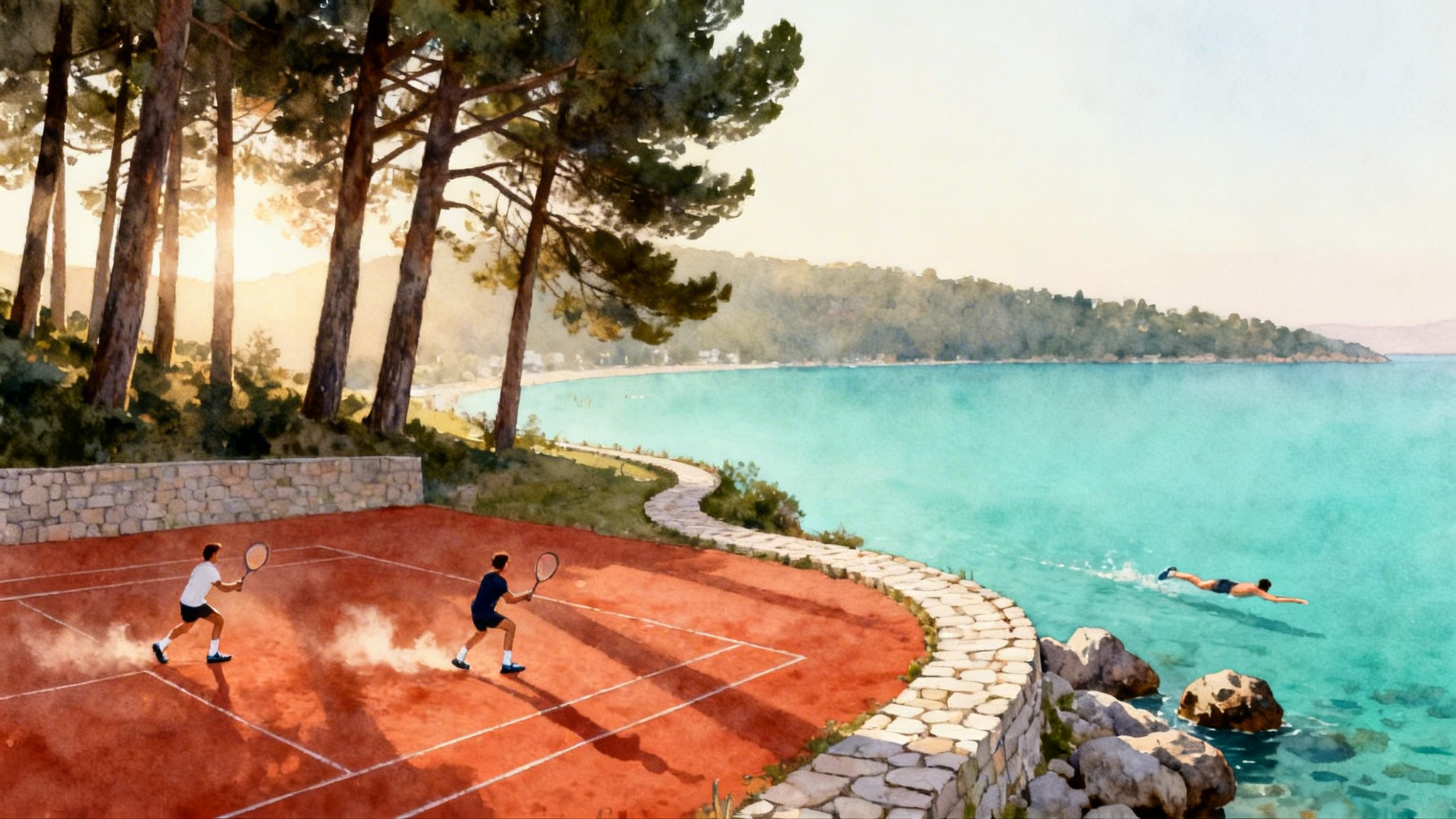
Gulf Winter Tennis Guide: Dubai, Abu Dhabi and Doha Bases
A climate smart, data led plan for a 1 to 3 week winter tennis block across Dubai, Abu Dhabi and Doha. Learn ideal heat and UV windows, court access, surfaces, sample schedules, visas, flights, Ramadan timing, etiquette, and realistic budgets.
 Tommy
Tommy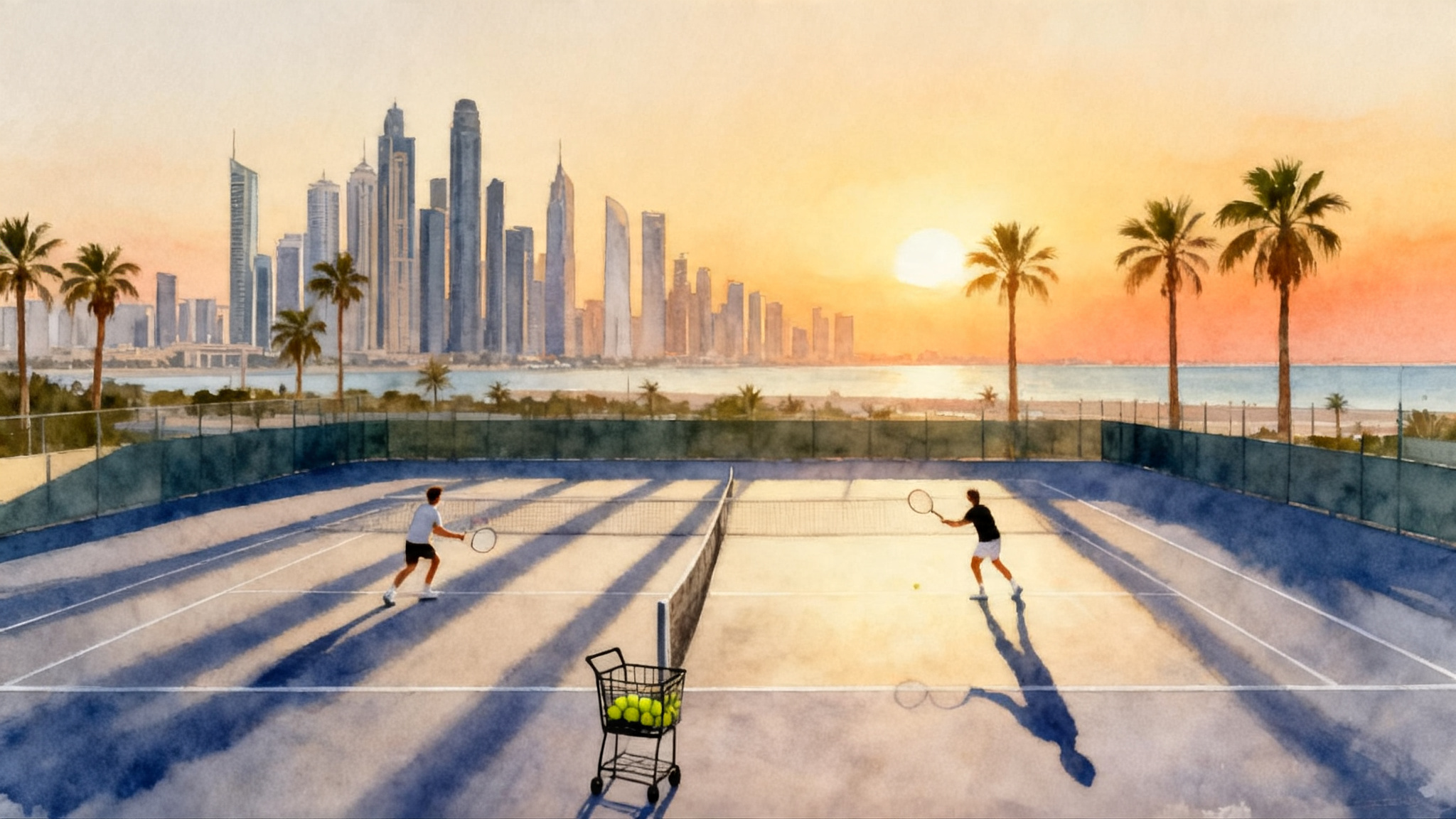
Why the Gulf is a smart winter base
From November to March, the southern Gulf offers what tennis players want in winter: dry air, reliable sunshine, fast hard courts, and short rain interruptions. Add big tour events in February, modern airports, and family friendly hotels, and you get a training circuit where a junior, an adult improver, or a traveling team can sharpen form in one to three weeks. February typically brings top tier events to Dubai and Doha, which lets you combine your own training with live scouting. Check the current dates on the official ATP calendar.
This guide explains how to plan by the numbers. You will see when the heat and ultraviolet intensity are most forgiving, how to access courts by city, what surfaces to expect, and how to time travel around tour events and Ramadan. It ends with budgets that reflect what visitors actually spend, not wishful thinking. If you are comparing midwinter destinations, scan our Florida vs Tenerife midwinter data guide and consider Europe’s mild option in this Portugal's reliable winter base.
Climate snapshot, November to March
The region’s winters are dry and warm rather than hot. Daytime highs range from the mid 70s to mid 80s Fahrenheit, roughly 24 to 29 Celsius, with cooler evenings. Humidity is noticeable near the coast but far below summer levels. Rain tends to arrive in short bursts and clears quickly. Wind is usually light to moderate, strongest in late afternoons.
- November: Warm days, balmy nights. Midday is playable but bright. Start gently if you arrive jet lagged.
- December to January: The sweet spot. Many days feel like early summer in Southern California. All day play is realistic if you manage breaks.
- February: Near perfect for volume. Align this month with pro events for built in inspiration.
- March: Warmer trend returns. Mornings and late afternoons remain ideal.
Daily heat and UV comfort windows
Plan your daily court time around two low strain windows and one midday shadow work block.
- Morning window: 6:30 to 10:00. Air and court surface temperatures rise from the night minimum. Ball feels lively without the sting of overhead sun.
- Late afternoon window: 15:30 to 19:30 in the United Arab Emirates, 15:00 to 19:00 in Qatar. The sun drops, winds settle, and recovery between drills improves.
- Midday block: 11:30 to 15:00. Use this for gym work, mobility, video review, lunch, and short naps. If you must hit, make it light patterning or serves in the shade.
How to personalize this: track two numbers on your phone each morning.
- UV Index. Target sustained play when UV is at or below 6. Above 7, mandate shade breaks every 20 to 30 minutes and reapply sunscreen.
- Wet Bulb Globe Temperature, if your weather app provides it. Under 26 Celsius supports moderate to hard work. Between 26 and 29, shorten drills and increase water plus electrolytes. Above 29, move high intensity to evening.
Carry two liters of fluid per two hour session, with 500 to 700 milliliters as electrolyte mix. Set alarms for 20 minute sip intervals. Salt intake matters; the air is dry and sweat deceptively light.
Where and how to play: court access by city
You will find three access types in each city: public facilities, hotel courts, and academies. All three lean hard court. Booking is generally straightforward when you build a weekly rhythm and reserve two to three days ahead for morning and evening slots.
Dubai
- Public courts: Several parks and community sports centers offer bookable hard courts by the hour. Early morning and evening slots fill first on weekends. Bring a government issued ID for check in.
- Hotel courts: Many beachfront and marina hotels have one to four courts. Guest use is typically free by reservation, with outside bookings possible for a fee. Ask for lights, ball machine availability, and racket hire if needed.
- Academies: The city hosts multiple academies that run daytime and evening groups, plus private lessons. Look for structured adult clinics, junior performance squads, and matchplay evenings.
Travel time: Dubai is long but connected by expressways and the metro in the central corridor. For two sessions a day, aim to sleep within fifteen to twenty five minutes of your main courts to protect recovery.
Abu Dhabi
- Public courts: Larger sports complexes and some community parks offer hourly bookings. Abu Dhabi’s spacing is wider than Dubai, so rent a car or cluster your venues.
- Hotel courts: A number of resort hotels maintain well lit courts, often with resident pros. Day guest access can be arranged if you are polite and flexible with times.
- Academies: Expect a performance focus, with junior squads strong on footwork and patterns. Adults can often join evening groups that include drilling plus points.
Travel time: Distances are longer than they look on the map. Factor in ten to fifteen extra minutes when crossing the main island bridges at peak hours.
Doha
- Public courts: City parks and larger sports centers host hard courts, with some offering online booking. Evening play is popular, so reserve early.
- Hotel courts: Business hotels and seaside resorts frequently have one or two courts. Confirm lighting before you commit to evening work.
- Academies: Doha’s calendar aligns with the big February and March events, so you will find visiting player traffic and energetic matchplay lists in those weeks.
Travel time: The city is compact. Most court to court trips take fifteen to twenty minutes outside rush hour.
Surfaces, speed, and balls
Hard court dominates across the three cities. Cushion systems vary by venue, but most play medium fast with predictable bounce. You can find pockets of clay at private clubs and artificial grass at a few hotels, useful for variety and joint relief on recovery days. When you book, ask for the court brand, the resurfacing date, and whether the court bakes in direct sun all afternoon, since that changes ball speed.
Ball availability is excellent. Expect premium cans from the major brands. In winter conditions, a can lasts one to two sessions of drilling. Budget for new balls every other hit and fresh balls for matchplay.
Sample one to three week schedules
The key is stacking high quality sessions in the cool windows, then recovering like a pro so you can repeat. Use the midday block for video and mobility, and plan an easy day every fourth or fifth day.
Seven day tune up, Dubai base
- Day 1, arrival and shakeout: Evening light hit, twenty to thirty minutes of serves and touch volleys.
- Day 2: Morning private lesson on first step speed and neutral rally ball height. Evening group clinic for patterning and point starts.
- Day 3: Morning doubles patterns and returns. Midday gym. Evening matchplay set play.
- Day 4, easy day: Morning mobility and shadow swings. Optional thirty minutes of serves. Beach walk and early dinner.
- Day 5: Morning technical block on forehand and transition footwork. Evening point construction, play first to four.
- Day 6: Morning matchplay with a slightly stronger partner. Evening mixed doubles or cross court games.
- Day 7: Morning test set. Afternoon pro tennis viewing if the tour is in town, or video review.
Ten to fourteen day build, Abu Dhabi plus Dubai
- Days 1 to 3 in Abu Dhabi: Two sessions daily focused on fitness and depth control. Use hotel courts for morning drilling, academy groups in the evening for pressure games.
- Day 4 easy: Mobility, pool, and a short serve tune. Early night.
- Days 5 to 7 in Abu Dhabi: Add matchplay two evenings in a row, then a morning private on patterns that broke down.
- Transfer to Dubai by car on Day 8 after an easy morning. Evening light hit to learn the new bounce.
- Days 9 to 12 in Dubai: One private, two groups, and two matchplay sessions. Slot a rest afternoon for tour event viewing if dates align.
- Day 13 easy: Video review and thirty minutes of serve targets.
- Day 14: Morning matchplay test and afternoon recovery.
Twenty one day circuit, Doha to Dubai to Abu Dhabi
- Week 1 in Doha: Emphasize volume and fitness. Three mornings of drilling, two evenings of matchplay, one evening of returns and volleys, and one easy day. If your week overlaps with the Doha tournament, grab day session tickets and scout live patterns.
- Travel weekend: Short flight to Dubai, check in, evening walk, early sleep.
- Week 2 in Dubai: Mix technique and competition. Two privates targeted at your serve plus first ball, three groups, two matchplay blocks, one easy day. Attend one or two tour sessions for ideas and energy.
- Week 3 in Abu Dhabi: Consolidate. Three matchplays, two privates, one group, one easy day. End with a test match and a written plan for the next four weeks at home.
Sync your block with the pro weeks
Dubai and Doha host major tour events in February. Abu Dhabi runs a top women’s week in early February, plus a December exhibition many years. To time your visit, check the current WTA tournament calendar, then verify the local ticketing pages once dates are firm. Early round day sessions are cost effective and let you see more practice courts.
Practical tip: book your base courts first, then buy event tickets around the training plan. A live night session pairs well with a lighter morning practice and a midday nap.
Visas, flights, and hops between cities
- Entry and visas: Many nationalities receive visa free or visa on arrival entry to the United Arab Emirates and Qatar for short stays. Rules vary by passport and can change. Check your government and airline guidance before you book, and carry a passport valid for at least six months, proof of onward travel, and a hotel booking.
- Flights from the United States: Nonstop services run from major hubs to Dubai, Abu Dhabi, and Doha with the national carriers. Typical winter economy fares range from 800 to 1,600 United States dollars depending on city, date, and how early you buy. Flight times from the East Coast run around twelve to thirteen hours, longer from the West.
- Intra Gulf moves: Dubai to Abu Dhabi by car takes ninety to one hundred twenty minutes outside traffic, and Dubai to Doha is a short flight. Consider a one bag strategy, since taxis and ride hailing are efficient and you will change venues.
Money notes: The United Arab Emirates dirham and the Qatari riyal are pegged to the United States dollar, about 3.67 dirhams and 3.64 riyals per dollar. Cards are widely accepted. Keep a small float of cash for parks and taxis that prefer it.
Time zones: United Arab Emirates is UTC plus 4. Qatar is UTC plus 3. That one hour shift matters when you slot remote school or work.
Ramadan and holiday timing
Ramadan shifts roughly ten to eleven days earlier each solar year. In some seasons it overlaps with February or March. During Ramadan, fitness centers and academies often shift schedules later into the evening, and restaurants adjust daytime service. Training is still very feasible. Do this:
- Push your main hit to the evening window and add a late night mobility block.
- Be discreet with food and drink in public during daylight hours unless you are in designated areas.
- Allow extra buffers around sunset and late evening traffic spikes.
School holidays in Europe and the United Kingdom increase hotel prices in late December and February. If you want calmer courts, target early December, late January, or early March inside the November to March band.
Safety, etiquette, and practicalities
- General safety: These cities are among the safest urban environments in the world. Standard travel caution applies. Photograph your passport and store it securely, use official taxis or ride hailing, and leave valuables out of sight.
- Court etiquette: Book and cancel early. Bring your own towels. Use tennis shoes to protect surfaces. Lights usually switch off exactly at the hour, so end on time.
- Culture: Dress modestly in public areas and resorts. Alcohol is served in licensed venues. Avoid public arguments. Do not bring any restricted medications without documentation.
- Hydration and sun: Sunscreen, hat, and sunglasses are not optional. Plan electrolyte intake and snacks with salt and simple carbs. Dried fruit, bananas, and small rice bowls travel well.
- Family logistics: Kids clubs in larger hotels can cover the midday block. Pools and beach walks are safe recovery tools. Short museum visits or aquariums slot well between sessions.
Realistic budgets for juniors, adults, and families
Prices shift with location, brand, and season. The ranges below reflect what visiting players report in winter.
Assumptions: two hour hits on most days, with a mix of privates, groups, and matchplay; one rest day each week; and hotel or serviced apartment lodging. Currency conversions use the pegs noted above.
Court time and coaching
- Public or hotel courts: 30 to 70 United Arab Emirates dirhams or 40 to 80 Qatari riyals per hour for basic public facilities. Hotel guest use is often free. Non guest bookings can run 80 to 150 dirhams or 80 to 150 riyals per hour with lights.
- Private lessons: 250 to 450 dirhams per hour in Dubai, 220 to 400 in Abu Dhabi, 200 to 350 riyals in Doha. Add 30 to 60 for coach court fees where applicable.
- Group clinics: 80 to 160 dirhams or 80 to 150 riyals per ninety minutes.
- Matchplay fees: Often free via academy boards, sometimes 30 to 60 in venue fees. You can also post a request via our player network on TennisAcademy.app to find level matched hits.
Lodging per night
- Serviced apartment with kitchenette: 400 to 700 dirhams in Dubai, 350 to 600 in Abu Dhabi, 300 to 600 riyals in Doha.
- Midscale hotel: 350 to 600 dirhams or 300 to 550 riyals.
- Resort hotel: 700 to 1,400 dirhams or 600 to 1,200 riyals.
Transport
- Ride hailing across town: 20 to 60 dirhams or 20 to 40 riyals.
- Car rental per week: 900 to 1,200 dirhams or 800 to 1,100 riyals plus fuel.
Food and incidentals per person per day
- Groceries and simple meals: 60 to 120 dirhams or 50 to 100 riyals.
- Eating out most meals: 120 to 250 dirhams or 100 to 220 riyals.
- Balls and grips: 15 to 25 dirhams or 15 to 25 riyals per can or pack.
Example totals
- Junior on a performance block, seven days, Dubai base: 1,100 to 1,800 United States dollars. Breakdown: lodging 500 to 900, coaching and courts 350 to 600, food 200 to 300, transport 80 to 150, extras 50 to 100. Add flight cost separately.
- Adult improver, ten days, Doha base: 1,400 to 2,300 dollars. Lodging 600 to 1,000, coaching and courts 450 to 700, food 250 to 400, transport 100 to 150, extras 50 to 100.
- Family of four, fourteen days, Abu Dhabi and Dubai: 3,800 to 6,500 dollars. Lodging 1,600 to 3,000, coaching mix 800 to 1,400, food 800 to 1,400, transport 250 to 400, extras 150 to 300. Event tickets add 100 to 400 depending on sessions.
Frugal play: Book public courts and group clinics, cook breakfast and one other meal, and walk to evening hits. Premium play: Choose a resort with courts, schedule private doubles clinics, and pair training with center court tickets in tournament week.
Booking checklist and timeline
- Six to eight weeks out: Pick your base city and book lodging within twenty minutes of courts. Reserve morning and evening slots for at least the first four days. If February is in play, set calendar alerts for ticket sales.
- Four weeks out: Lock in privates and group clinics. Post your level and hit availability on local boards or with your coach. Build a packing list with hats, sunscreen, grips, dampeners, and a spare set of strings.
- Two weeks out: Confirm airport transfers. Pre buy electrolyte packets. Set up a shared family or team calendar with session times and rest windows.
- One week out: Finalize matchplay partners. Save offline maps for each venue. Check visa and entry rules and print confirmations.
- Arrival day: Hydrate on the flight. Nap on arrival, not longer than ninety minutes. Book a light evening hit to reset timing. If weather turns on you at home, keep momentum on a year-round indoor tennis circuit.
A last word before you book
Winter in the Gulf rewards structure. Put your hardest work in the morning and early evening, protect your midday block, and align your calendar with the pro weeks. Start with one city if this is your first time. If you already know your rhythms, use Doha, Dubai, and Abu Dhabi as a triangle where you move each weekend and collect new bounces and new partners. Make your plan, then let the light and the fast courts do the rest.