Florida Tennis Academies 2026: Miami, Orlando, Tampa, Naples
 Tommy
Tommy
How to use this 2026 Florida guide
If you are choosing a junior tennis academy in Florida for 2026, treat this like a school search with sport added in. The right fit blends five ingredients that compound over time: coaching attention, surface mix, daily structure, academics, and regular competition. In this guide we compare those variables across cities, lay out realistic costs, and give you a trial-week checklist so you can evaluate programs with clarity rather than hope.
We also go deep on two programs that many families ask about: Revolution Tennis Academy in the Orlando area and Gomez Tennis Academy in Naples. Along the way we explain how Universal Tennis Rating and United States Tennis Association competition calendars fit into a junior’s development plan.
If you are also weighing options beyond Florida, compare formats and costs in our regional look at Texas tennis academies 2026.
The variables that actually decide outcomes
When you tour academies, anchor your questions around these variables. Each one has a cause and an effect you can observe in a single week.
-
Coaching ratios and touch points per hour
- Why it matters: Stroke change and decision training require reps plus immediate feedback. If one coach must watch eight players across two courts, feedback decays. If a coach manages four players on one court, feedback density rises and mistakes get corrected sooner.
- What to look for: Count how many live-ball interventions and technical cues your player receives per hour. Ask who is on court each day, not just on the website bio.
-
Surface mix and transfer
- Why it matters: Florida gives you both hard and Har-Tru green clay. Clay lengthens rallies and trains movement, patterns, and patience. Hard courts sharpen first-strike tennis and pace tolerance. Juniors who cross-train on both surfaces carry more adaptable patterns into tournaments.
- What to look for: How the week splits between hard and Har-Tru. How the staff uses clay days to teach point construction instead of just volume.
-
Boarding versus day model
- Why it matters: Boarding consolidates training, recovery, and academics in one place. Day programs keep family routines intact and can be better for some school commitments. The wrong model for your child creates friction that reduces training quality.
- What to look for: Supervision ratios in housing, transportation to tournaments, mealtime nutrition, and quiet study blocks. In day settings, look at commute time, after-school options, and weekend match play.
-
Integrated academics
- Why it matters: Missed classes and poor pacing create stress that leaks into training. The best academies either run their own school or partner with academic providers that understand tournament calendars.
- What to look for: Who certifies the curriculum, how tests are proctored on travel days, and which counselor handles eligibility for National Collegiate Athletic Association when relevant.
-
Competition access and planning
- Why it matters: Skill gains must show up under pressure. Smart schedules walk a player through local tournaments, then sectional and national events with intentional steps. Universal Tennis Rating verified matches and United States Tennis Association levels should be used to select events, not as trophies on a wall.
- What to look for: The staff’s written plan for your next six to twelve months of events. Ask how they decide when to move up a level and when to consolidate.
-
Cost transparency
- Why it matters: Tuition is only part of the bill. Tournament travel, stringing, strength training, and physio can double the headline number if you do not plan for them. You need a full-season budget, not a monthly price.
- What to look for: A written list of all expected add-ons, typical travel patterns, and which services are optional versus mandatory.
-
Player identity work
- Why it matters: Juniors stall when every day looks like the one before. The best programs shape a player’s identity by weapon, preferred patterns, and competitive habits. That identity then guides daily drills and match plans.
- What to look for: Individual plans that go beyond generic footwork circuits. Listen for language about patterns, not just strokes.
Deep dive: Revolution Tennis Academy, Orlando area
Revolution Tennis Academy operates on The Roth Family Jewish Community Center campus in Maitland, just north of downtown Orlando. The program is directed by former professional player Vladimir Obradovic. Families in Central Florida choose Revolution because it feels like a true day academy with serious intent. The location makes weekday school and weekend tournament travel realistic for many households.
-
Coaching and group design
- The staff’s pitch centers on individualized attention, high live-ball time, and daily match play. In practice that means most juniors train in compact groups where the lead coach can hear and correct each rep. During a trial week, count interventions per hour and note whether the same cues appear across sessions. Consistency matters more than hype.
-
Surfaces and facilities
- Juniors train on lighted outdoor hard courts with access to on-site fitness spaces and recovery options. That setup allows two-session training days without leaving the complex. If your player thrives on routine, having strength work and study spaces a short walk away is a real advantage.
-
Boarding and academics
- Revolution runs as a day-first environment. Families typically pair the academy with local schools. For families considering a partial online schedule, ask the staff to show you quiet study blocks and how they supervise them. The goal is not to maximize hours on court. It is to build a day that repeats well.
-
Competition access
- Orlando is saturated with United States Tennis Association events and Universal Tennis Rating match play within a short drive. During your visit, ask the coaches to map your player’s next eight to twelve events by level and location. Good answers connect training themes to event selection.
-
Who fits best
- Revolution suits committed juniors who want a serious training rhythm without the boarding-lifestyle jump. If your child needs a balanced school-first week and heavy weekend competition, this environment makes sense.
For more context and photos, see our academy profile for Revolution Tennis Academy Orlando.
Deep dive: Gomez Tennis Academy, Naples
Gomez Tennis Academy Naples operates inside the Imperial community in North Naples. Parents often praise two things: small-cohort training and a clear daily structure that combines tennis and fitness.
-
Coaching ratio and schedule
- Gomez caps groups at a four-to-one player-to-coach ratio and runs a year-round schedule that blends on-court work with fitness, including yoga and beach runs. Lunch is provided to both boarding and non-boarding athletes. You can read the detailed weekly rhythm and the stated four-to-one cap on Gomez’s academy page.
-
Surface mix and facility context
- Naples tennis leans into Har-Tru green clay and hard courts. Training on clay extends rallies and sharpens balance, while alternating hard courts keeps first-strike skills sharp. Ask how the staff sequences clay and hard days across a training week and how they connect that to upcoming events.
-
Boarding and academics
- Boarding is available for full-time players, with transportation and meals included. For academics, Gomez partners with Hibernian Private School and ICL Academy. Both are fully accredited and designed to fit the cadence of a competitive junior schedule, which helps remove friction during travel weeks. The academy’s page outlines these partnerships plainly.
-
Competition access
- The staff builds schedules that include Universal Tennis Rating events and a run of United States Tennis Association tournaments, then extends to International Tennis Federation juniors as players progress. During your trial week, ask to see a sample twelve-week calendar for athletes at your child’s level and age.
-
Who fits best
- Gomez is a strong fit for families that prioritize small-group technical attention with a predictable daily rhythm, and for athletes who will benefit from regular Har-Tru training.
City-by-city honorable mentions
Below are selective programs many families consider when building a Florida short list. This is not exhaustive. It is meant to shape questions and on-site observations.
-
Miami and South Florida
- Rick Macci Tennis Academy in Boca Raton. Known for high-touch technical work and flexible weekly or monthly formats. Families often use it as a short, intensive block during school breaks.
- Saviano High Performance Tennis in Davie. Development-first culture with clay-court preparation blocks. A good option for players who need focused decision training and pattern development.
- Evert Tennis Academy in Boca Raton. Established boarding and non-boarding options and a deep history of college placement. Especially interesting for international families who want more on-campus support.
- Johan Kriek Tennis Academy in Boca Raton and Jupiter. A boutique feel that many families like for the personal attention and clear progression through ball-color stages into tournament play.
-
Orlando area
- USTA National Campus programs in Lake Nona. This is not a boarding academy, yet the performance programs and massive tournament calendar make Orlando a competition hub. Many families anchor their schedule here while training with a local academy.
- Local high-performance day academies. In addition to Revolution, the metro area offers several serious after-school programs and summer intensives. When comparing, prioritize travel time to Lake Nona events and the availability of weekend Universal Tennis Rating match play.
-
Tampa Bay
- Saddlebrook Tennis Academy in Wesley Chapel. One of Florida’s best known integrated boarding school models with tennis, academics, and housing on a single campus.
- Emerging boutique programs in North Tampa. Smaller academies have appeared with classroom partnerships, supervised apartments, and shuttles to local schools. Ask each one to show teacher-student and coach-player ratios, plus who coordinates tournament logistics.
-
Naples and Southwest Florida
- In addition to Gomez, the area hosts clubs with a strong Har-Tru footprint, which is valuable for building balance and point construction. Look for programs that bridge to hard courts weekly so serve and return work remains sharp.
Cost reality check for 2026
Sticker prices vary widely, but a realistic annual plan includes both tuition and the ecosystem around it. Below are ranges and a concrete example to ground your budgeting.
-
Full-time day training with school-year focus
- Typical range: twenty to thirty thousand dollars per year for five-day training blocks during the academic year, with seasonal camps extra. Add stringing, strength sessions, and occasional private lessons and your true spend may approach thirty to forty thousand dollars.
-
Boarding with integrated academics
- Well-known Florida boarding programs that include tennis, school, and housing often sit in the mid fifty to high seventy thousand dollars per academic year. For example, Saddlebrook Preparatory School lists 2025 to 2026 combined tennis, academics, and boarding at just under seventy seven thousand dollars for tennis boarders and mid fifty thousand for non-boarding student athletes. You can review the published line items on Saddlebrook tuition and fees.
-
Add-on costs to model before you commit
- Tournament travel: six to fifteen thousand dollars depending on how many national events you chase and how many flights are required.
- Stringing and equipment: fifteen to fifty restrings per year for competitive juniors, which can run one to two thousand dollars including replacement grips and balls for practice.
- Physio and recovery: five hundred to three thousand dollars depending on needs. Budget something, not nothing.
- College consulting and video: optional, but families often add highlight reels and application support in sophomore or junior year.
Practical tip: ask for a one-page, all-in seasonal budget from the academy. If they will not provide it, build one yourself and have the director mark it up during your visit.
UTR and USTA, explained in plain terms
-
Universal Tennis Rating is a global rating scale that assigns a number based on match results. Think of it as a speedometer that moves with verified play rather than a set of labels. For development, it is useful when used to select the right opponents often, not just higher numbers occasionally.
-
United States Tennis Association tournaments are organized into levels. Level selection should match a player’s current skill, confidence, and goals. Smart coaches build ladders where a player alternates between stretch events and consolidation events so the rating grows without confidence breaking.
What to ask during a tour: Request a six-week block plan that shows how training themes line up with event choices. The answer should explain why three of those weekends are local, and why one is a higher-stakes trip.
The trial-week checklist parents actually use
Use this list to turn a visit into data. Bring a small notebook and capture specifics.
-
Session density
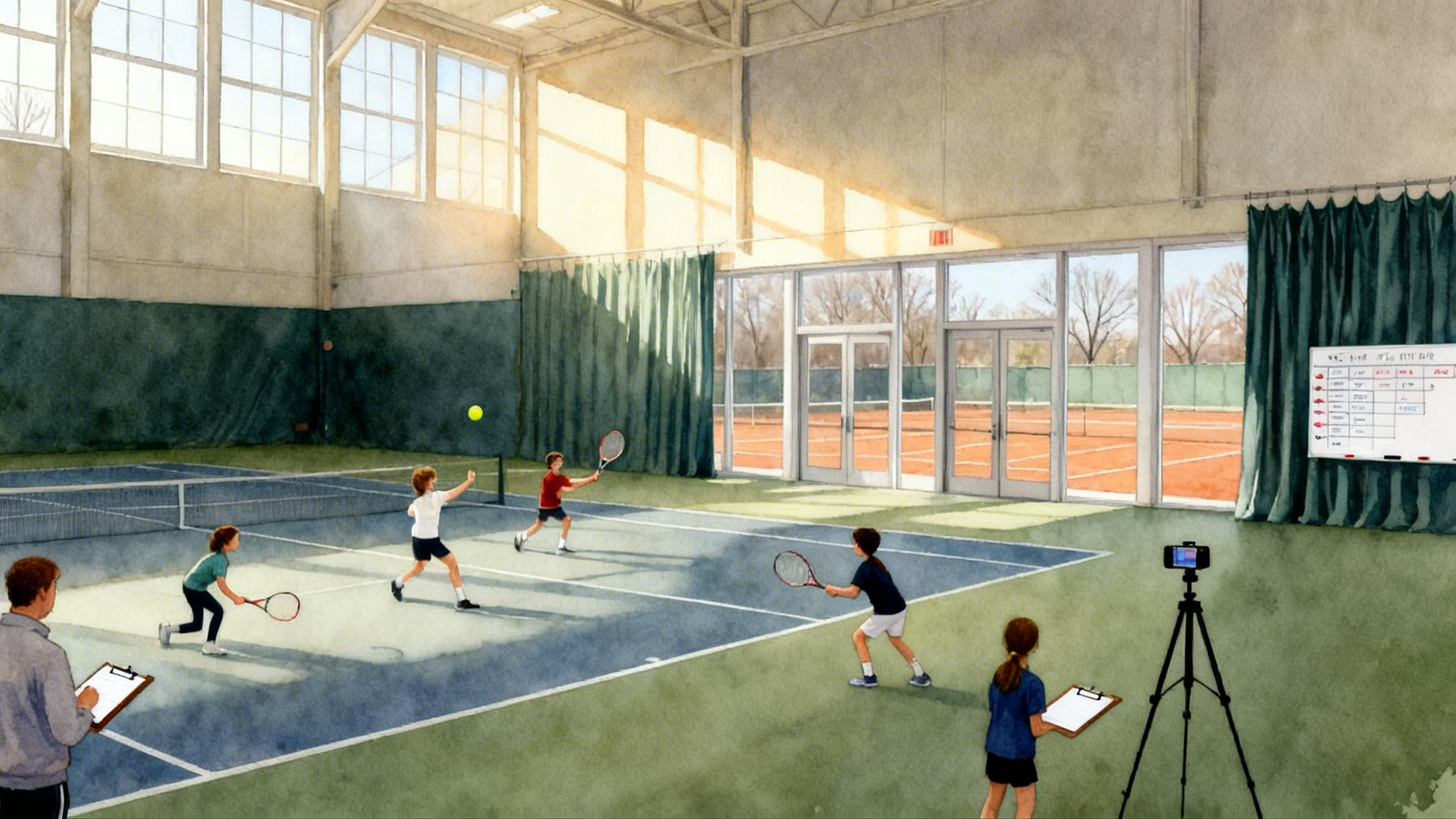
- Count live-ball minutes versus ball pickup and chalk talk. Your target is at least forty to fifty minutes of live-ball time per hour during drilling blocks, and thirty to forty minutes during tactical games with instruction.
-
Coaching attention
- Tally verbal or visual interventions directed at your player per hour. Note who gives the cues and whether the language is consistent across coaches.
-
Ratio in the wild
- Do not rely on a brochure. Walk the fence line and count. Note whether groups shrink for technical blocks and expand only for fitness or point play.
-
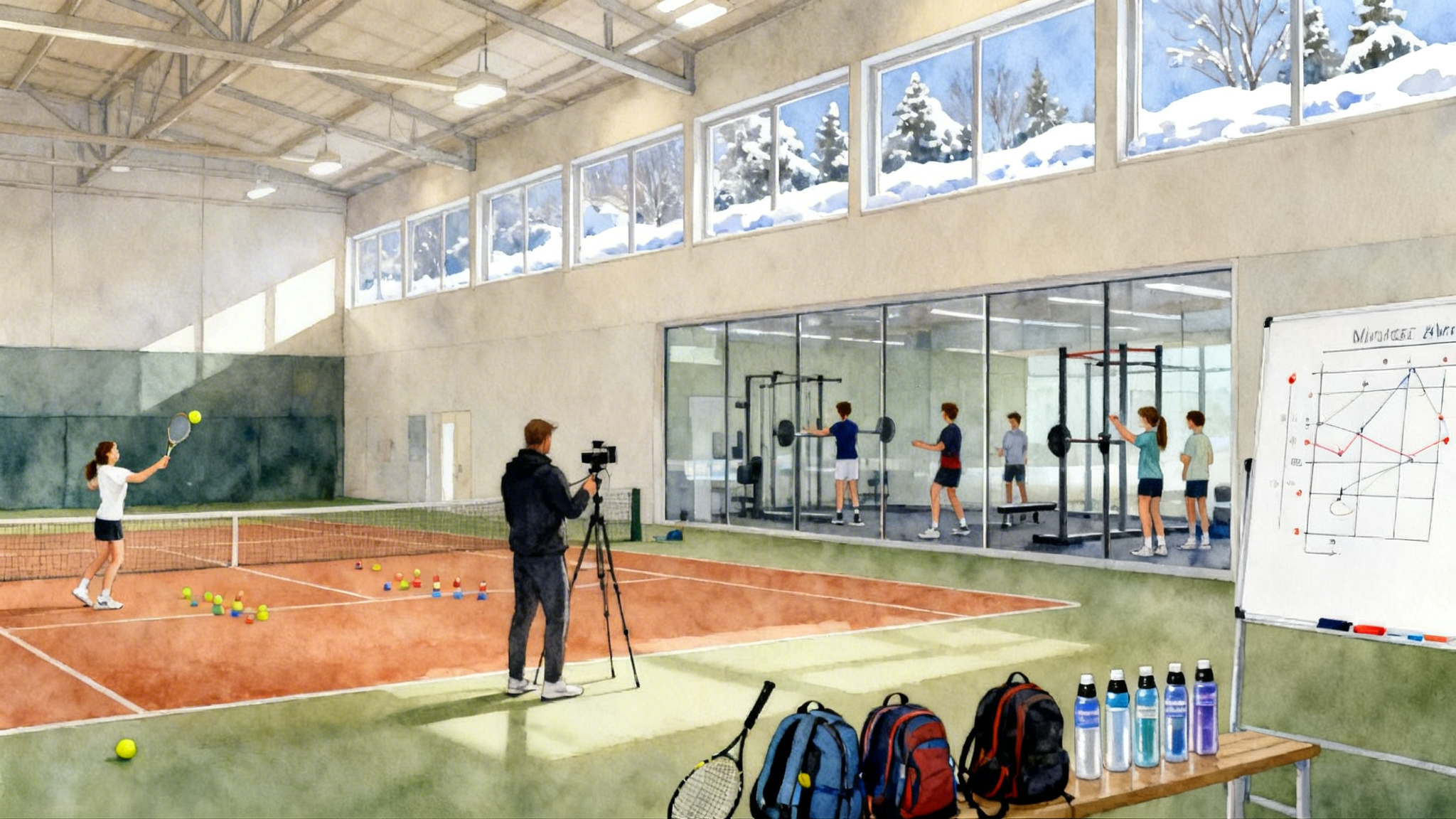
Video and feedback loop
- Ask how often the academy records serves and backhands, where the footage lives, and who reviews it with your child. Write down the date of your next planned review.
-
Surface planning
- Log which days are on Har-Tru and which are on hard. Ask how that week maps to upcoming tournaments. You want a reason for each court choice, not habit.
-
Fitness and injury prevention
- Look for a warm-up that includes mobility, not just jogging. Ask who designs strength plans and how they progress loads across the school year. Note whether recovery tools are used intentionally rather than as decorations.
-
Academics and study blocks
- If the program is integrated, sit in on a study hall. Ask how tests are handled when travel collides with exam windows. In a day setup, ask for a written sample schedule that shows commute time, meals, and homework windows on training days.
-
Competition calendar
- Request a dated outline of the next eight to twelve events with a short sentence on why each event made the list. Take it home and see if the logic holds after you have slept on it.
-
Culture check
- Walk the lunch area and listen. Are athletes respectful and relaxed or chaotic and loud. Watch how coaches interact with quieter players. Your child will grow to match the environment more than the website copy.
-
Exit debrief
- Before leaving, ask the lead coach for three strengths and three priorities for the next month. If those do not align with what you observed, keep looking.
Putting it together: two strong but different fits
-
Choose Revolution in the Orlando area if you want a serious day-academy rhythm that complements a traditional school week and offers dense competition within short drives. The program’s strength is daily consistency with individualized coaching in a community setting. Start with a trial week, map your weekend tournament plan, and test whether the commute and homework windows feel sustainable.
-
Choose Gomez in Naples if you value small-cohort technical work, predictable structure, and a board-or-day choice backed by accredited academic partners. The four-to-one cap and year-round schedule are built for steady, compounding progress. Use your trial week to watch how the staff sequences clay and hard days and how that links to your child’s current match patterns.
A clear next step
Shortlist by city first, then run a trial week with a clipboard in hand. If you capture live-ball minutes, coaching touch points, surface use, and a draft event calendar, the decision tends to make itself. Florida gives you year-round reps. The right academy turns those reps into identity and confidence. Pick the setting where your child’s best habits feel repeatable in real life and where the plan on paper becomes action on court.