Atlanta Tennis Academies 2026: Peachtree, Alpharetta, Marietta
 Tommy
Tommy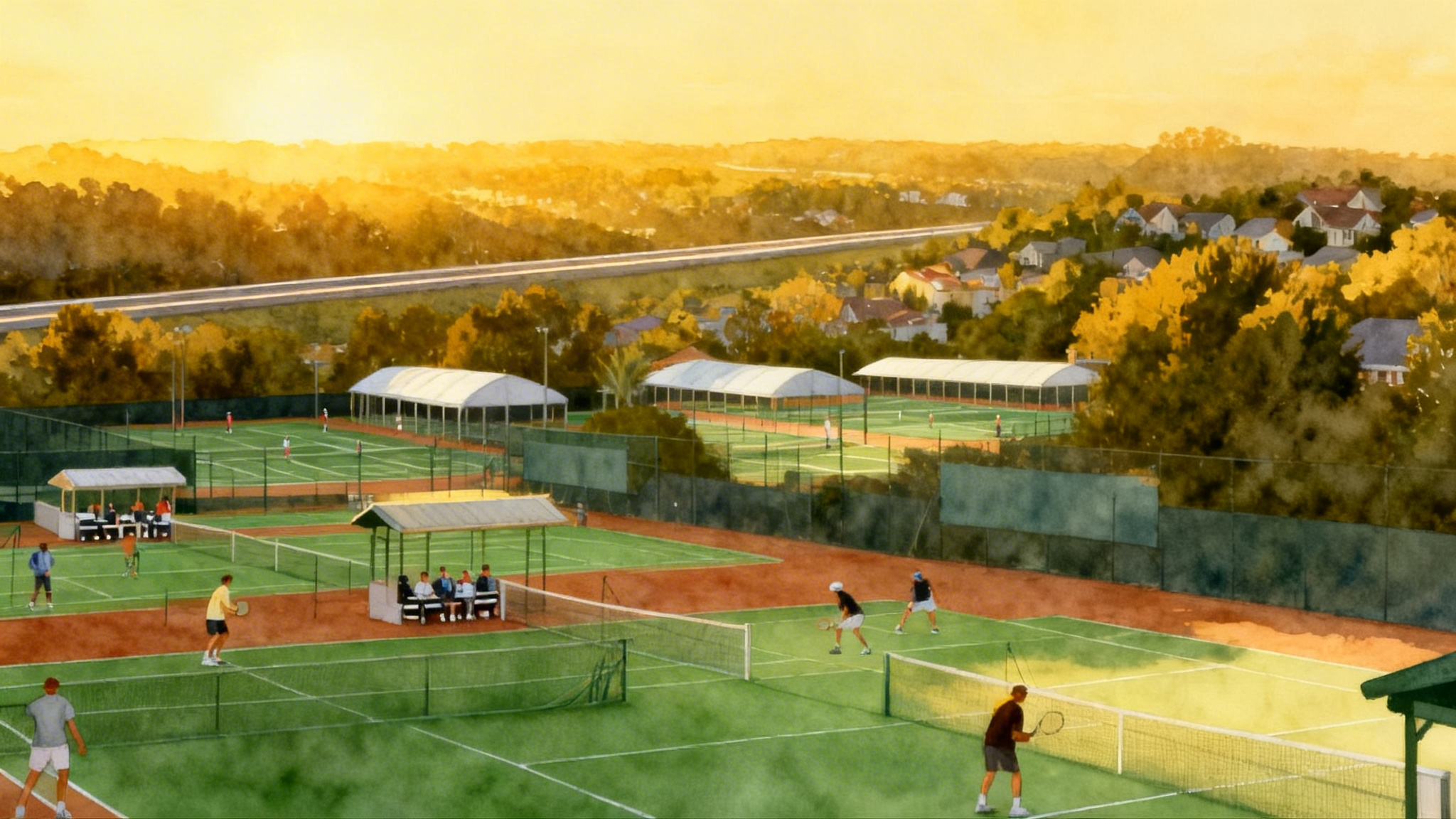
How to choose a North Atlanta tennis academy in 2026
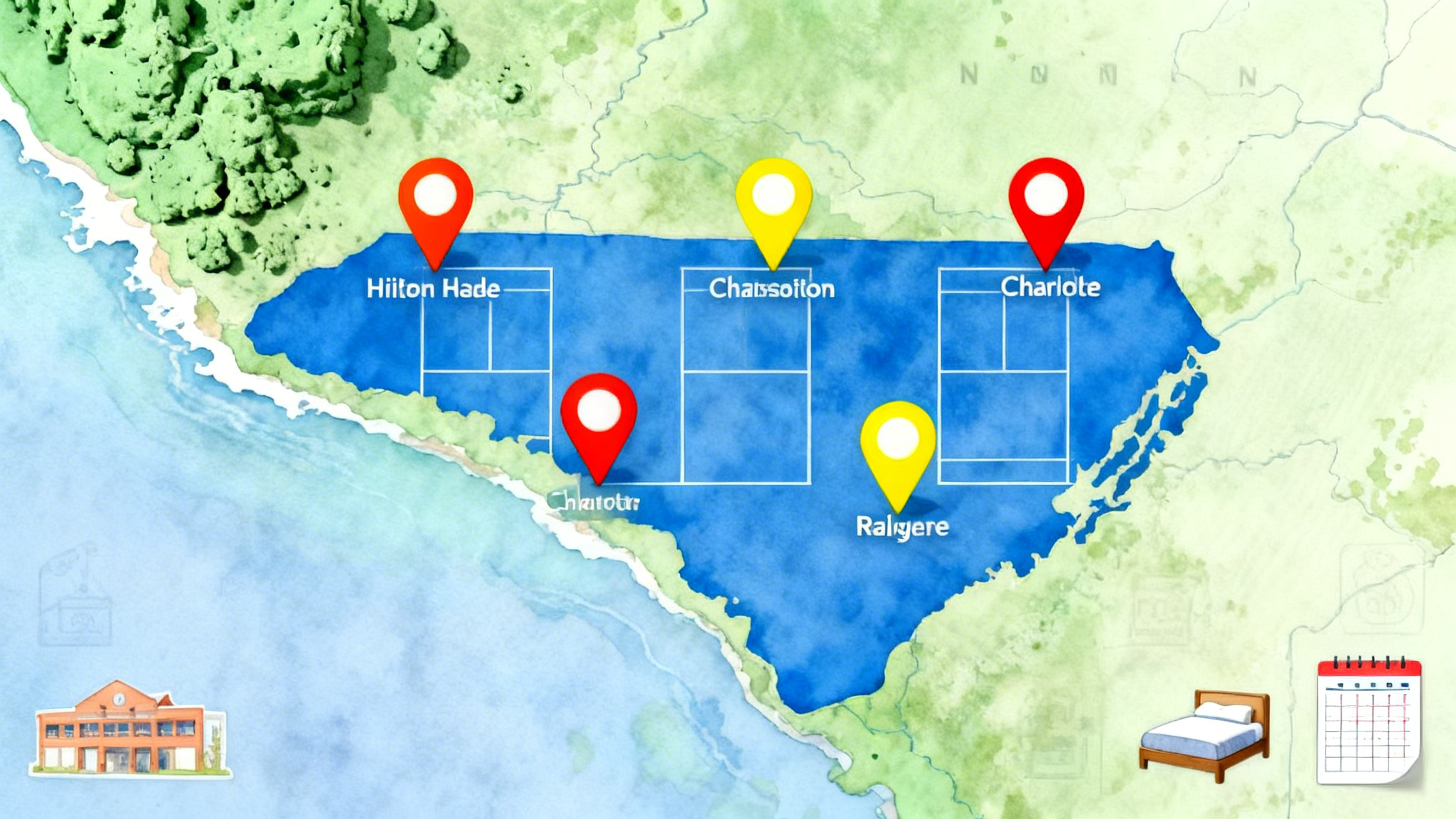
Families around Peachtree Corners, Alpharetta, and Marietta have a rare advantage. Within a 30 to 50 minute drive you can compare club-embedded high performance programs and independent academies that train national juniors and serious adults. If you are also scouting the Southeast, compare benchmarks in our Florida Tennis Academies 2026 and Best Carolinas Tennis Academies guides.
Before we get into specific programs, align on the goal. A great academy will do four things consistently:
- Build a measurable training spine each week, not just a collection of drills.
- Connect practice to verified match play that affects your Universal Tennis Rating, also called UTR. If you are new to it, read a short primer on what UTR measures.
- Manage total load. That means balancing court time, strength, recovery, and school or work.
- Communicate. You should know exactly what a month of training will target and how progress will be evaluated.
Deep dive: Life Time Tennis Academy, Peachtree Corners
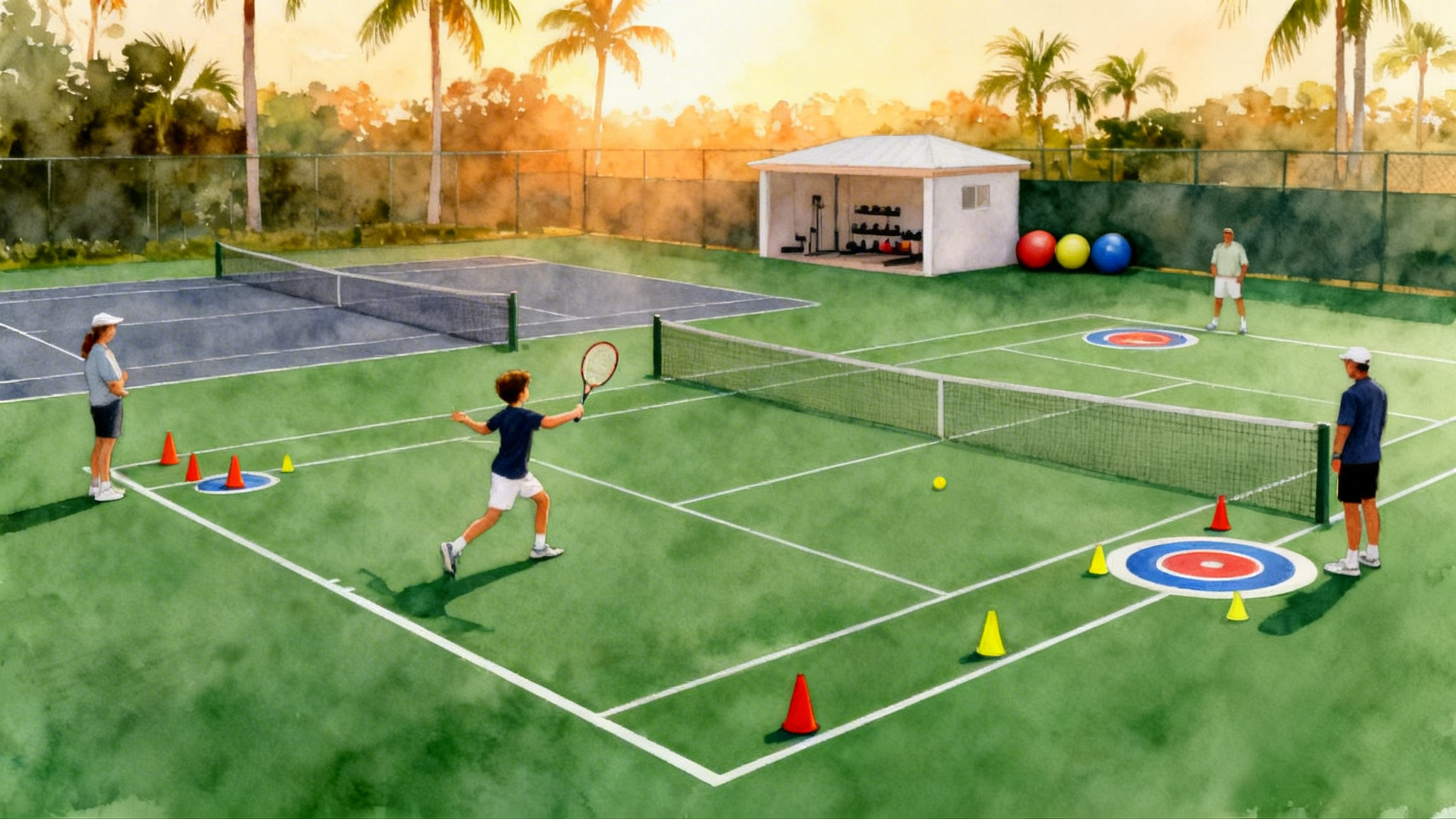
Life Time Tennis Academy in Peachtree Corners is a club-embedded pathway. That means the academy sits inside a full service health club. For many families this solves two frequent problems at once: access to courts and access to off-court resources. You can expect on-site strength spaces, recovery tools, and a front desk that answers the phone when weather shifts.
What to know about the model
- Court inventory and surfaces: Expect a deep bank of hard courts and a meaningful number of clay courts for volume work and joint-friendly days. Covered or indoor availability varies by season and by court block. Ask precisely what is covered during peak summer storms and winter cold snaps, and whether high performance groups get priority on those slots.
- Ratios: Typical afternoon high performance groups aim for 1 coach to 4 or 6 players during drilling, and 1 to 6 or 8 during live ball and point play. Private add-ons are common for serve or pattern work.
- UTR integration: Club programs increasingly run Verified match nights and weekend flex events so players do not have to drive across town midweek. Confirm the cadence of Verified play per month and how coaches seed, record scores, and review film afterward.
- Academic fit: Most Atlanta players are day students. At club-embedded programs, daytime training blocks can be arranged for online or hybrid learners. Ask whether the academy offers supervised study hall, test-day schedule relief, and liaison notes for school counselors.
Sample training week at Life Time Tennis Academy (junior performance, age 13 to 16)
- Monday: 90 minutes themed drilling on baseline patterns, 60 minutes point play on clay, 30 minutes mobility and shoulder care.
- Tuesday: 45 minutes serves and returns with video, 75 minutes live ball cross-court to down-the-line transitions, 30 minutes speed and acceleration.
- Wednesday: UTR Verified set play, best of three short sets. Post-match stat sheet and two clips tagged per player.
- Thursday: Volley and transition theme, 45 minutes doubles return formations, 30 minutes medicine ball rotational power, 15 minutes guided breathwork.
- Saturday: Fitness block or tournament travel. If in town, 90 minutes of set play, then 30 minutes of recovery on a stationary bike and light stretch.
Estimated monthly costs in 2026
- High performance group training 3 days per week: 600 to 900 dollars.
- Optional fourth day: add 150 to 250 dollars.
- Private lessons: 100 to 150 dollars per hour depending on coach seniority.
- Club membership for facility access: family tiers often 200 to 400 dollars per month. Ask whether tennis access requires a specific add-on.
- UTR Verified events and in-house match nights: 35 to 60 dollars per entry.
- Stringing and grips: plan 60 to 120 dollars per month for a competitive junior during heavy training blocks.
Strengths to consider
- The club layer reduces friction. Parking, check-in, towels, water, and training space are centralized.
- Covered or indoor access during pop-up storms can save entire practice days in June and July.
- Multi-sport siblings can train in the same building.
Watch-outs
- Membership plus academy tuition adds up. Get the full monthly number on paper with taxes and fees.
- Peak after-school hours are busy. Request a trial during the exact hour your child would train so you can observe court turnover and coach attention.
Independent program archetypes in Alpharetta and Marietta
North Atlanta has excellent independent programs that operate from member clubs or public tennis centers. The details vary by site, but the patterns below will help you compare apples to apples during tryouts.
Boutique squads at private clubs, common in Alpharetta
- Format: Smaller squads, often 6 to 12 athletes per block, with a head coach who controls the plan and assistants who float.
- Ratios: Commonly 1 to 4 during drilling, 1 to 6 during live points.
- Surfaces: Mix of hard and Har-Tru clay. Ask for the weekly split and which days are clay for volume.
- Cost: 700 to 1,400 dollars per month for 3 to 5 days per week. Private add-ons 110 to 160 dollars per hour.
- Who thrives: Players who need closer attention on patterns, serve mechanics, and tournament planning.
High capacity programs at public centers, common in Marietta and East Cobb
- Format: Larger squads with clear tiering by level and age. Outdoor hard is typical, with some sites offering clay.
- Ratios: 1 to 6 or 1 to 8 during groups, with extra courts opened for match play.
- Cost: 400 to 800 dollars per month. Event fees and privates are add-ons.
- Who thrives: Players who want more match volume, team culture, and lower cost per hour.
Adult performance and league-plus training
- Format: Evening or early morning squads for UTR 7 to 10 and for United States Tennis Association league 4.0 to 5.0. Expect focused patterns, serve and return reps, and heavy live ball.
- Ratios: 1 to 6 to keep tempo high. Cuts to 1 to 4 for serve work.
- Cost: 200 to 400 dollars per month for one or two sessions per week. Small-group privates 45 to 70 dollars per person per hour.
Court surfaces and covered options
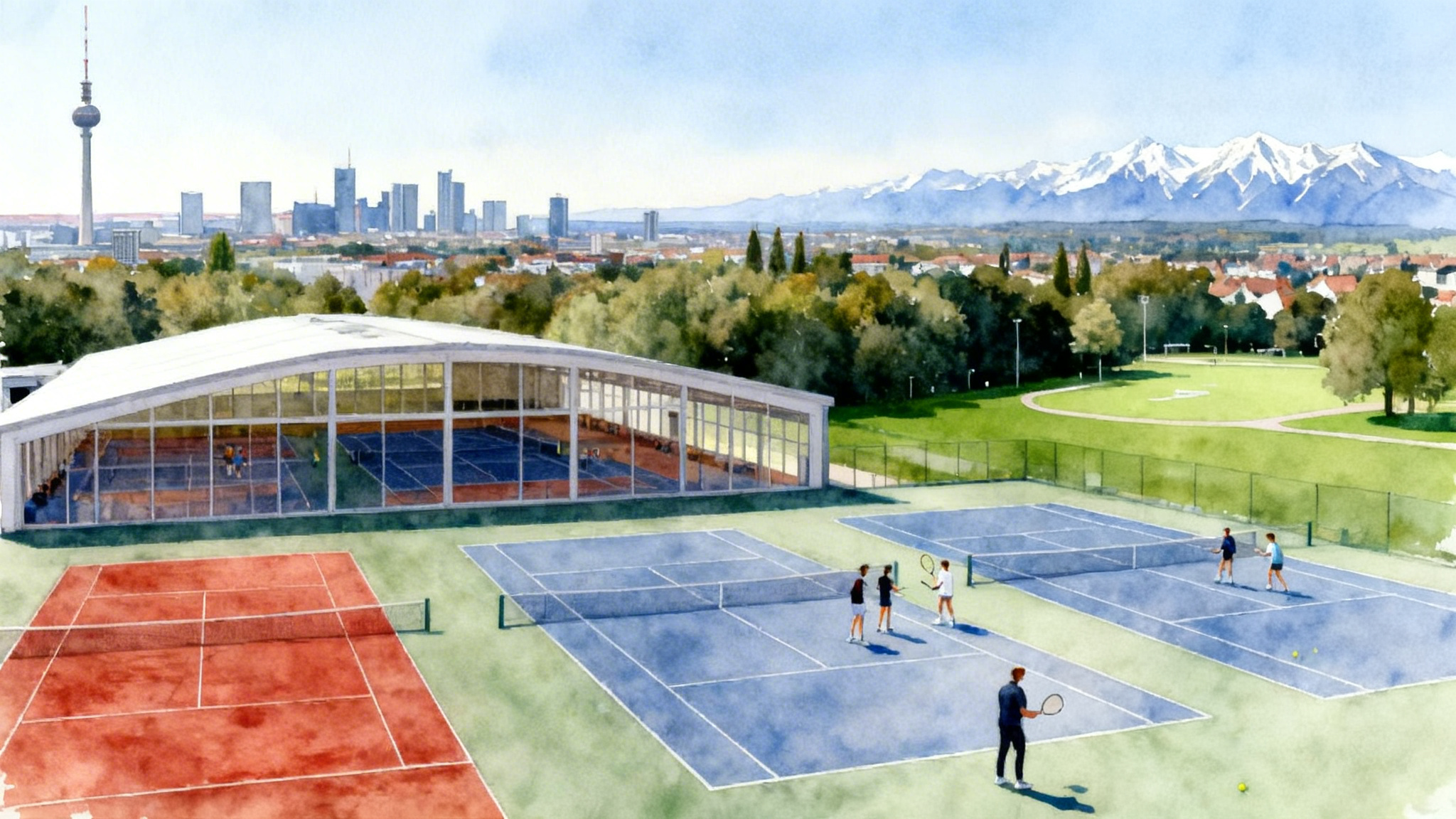
- Hard courts: Best for speed of play and for preparing for most USTA and high school matches. Plan more recovery after long hard-court weeks.
- Clay courts: Great for volume work, joint friendliness, and developing point construction. Ask which days are designated clay days.
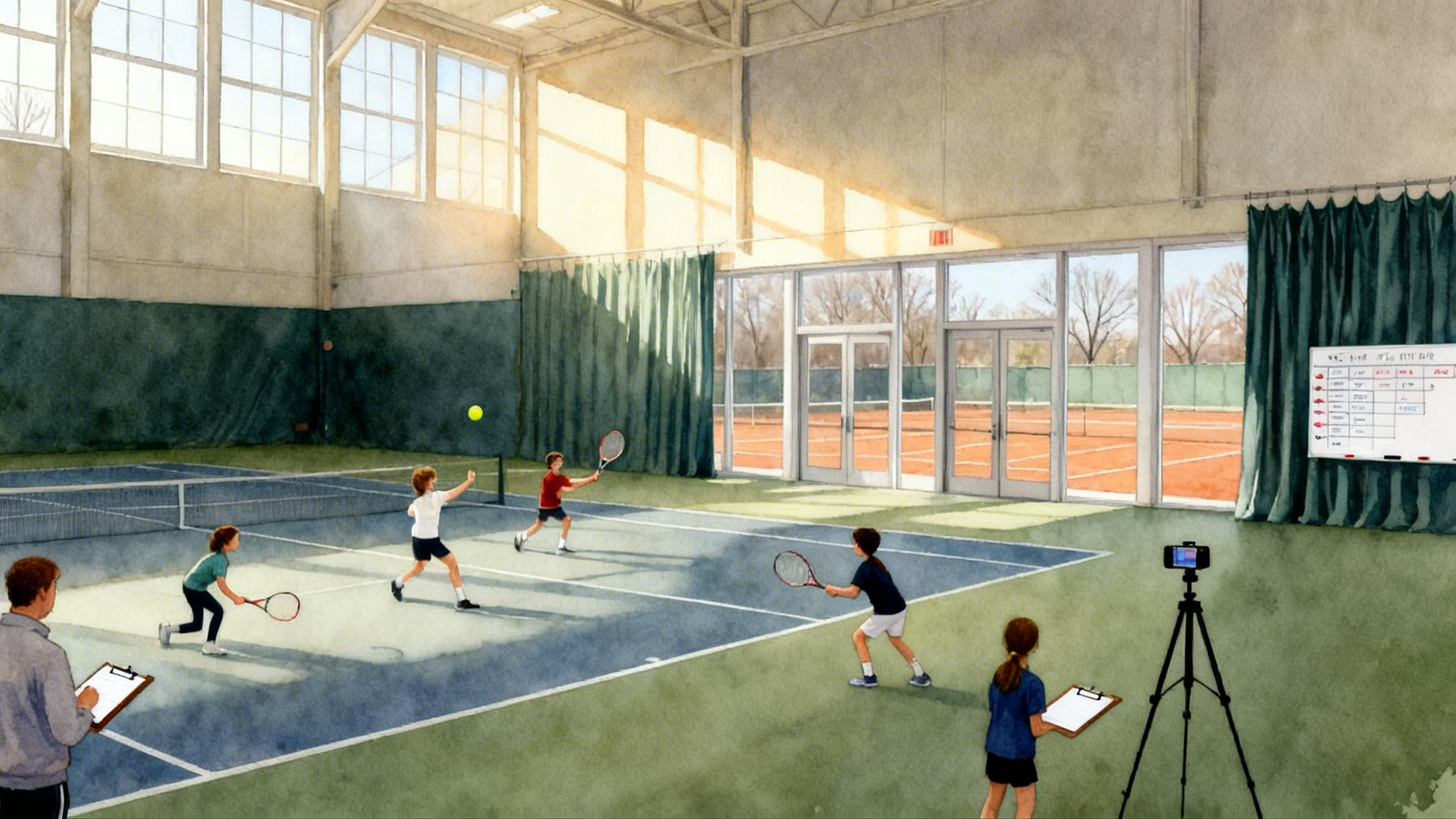
- Covered or indoor: Limited but valuable in North Georgia for summer storms and winter cold snaps. Confirm how many covered or indoor courts the academy can actually assign to your group at your time slot.
Action step: on your first visit, walk the actual courts your child would use, not just the main stadium court. Note drainage, shade, and wind exposure.
UTR match play, explained and applied
Universal Tennis Rating is the connective tissue between practice and competition in Atlanta. Verified events let you collect a rating signal inside a training week rather than waiting for a full tournament weekend. The best academies schedule in-house Verified sets on Wednesdays or Thursdays so the weekend can flex for travel or rest.
A practical target for juniors: two to four Verified matches per month during school terms, then four to six during summer. Adults training for fall and spring league can aim for two Verified sets per month on top of league play.
Ask these five UTR questions on your tour
- How many Verified opportunities does the program schedule per month in season, and who runs them?
- Does the academy create level based draws so matches are tight enough to move the rating?
- Who inputs scores and how quickly are they posted?
- Do coaches review film or stats from those matches in the next practice?
- What is the plan when there is a mismatch or a withdrawal?
Academics and day vs boarding options
North Georgia is primarily a day-academy market. Serious juniors often use a hybrid school plan during peak tournament windows. That can mean early dismissal blocks, online coursework in fall, or private school schedules that allow travel. Ask for written attendance policies and grade reporting expectations. For online learners, request supervised study hall on double training days and a quiet room near the courts for test taking.
Commute times by suburb, with realistic windows
Traffic defines feasibility. Below are practical drive-time ranges to training hubs during the school year. Use them as planning bands, then map your exact route for your time slot.
- To Peachtree Corners from Johns Creek and Duluth: 15 to 35 minutes off peak, 25 to 50 minutes in the 3 to 6 p.m. window.
- To Alpharetta club clusters from Cumming and Milton: 20 to 35 minutes off peak, 30 to 50 minutes in the 3 to 6 p.m. window.
- To Marietta centers from East Cobb and Kennesaw: 10 to 25 minutes off peak, 20 to 40 minutes in the 3 to 6 p.m. window.
- Cross-corridor examples: Alpharetta to Peachtree Corners 25 to 45 minutes, Alpharetta to Marietta 35 to 55 minutes, Peachtree Corners to Marietta 35 to 60 minutes depending on Connector or surface-street choices.
Action step: do one live test drive during your intended arrival time before you commit. The difference between a 25 minute and a 50 minute commute changes homework, dinner, and sleep.
Year-round heat and weather planning
- Summer heat: June to August afternoons in North Georgia often push high heat index numbers. Smart academies shift heavy drilling to clay or to shaded courts, load serves and returns earlier in the session, and prioritize evening match play. Expect coaches to enforce ice towels, electrolyte plans, and 90 second shade breaks.
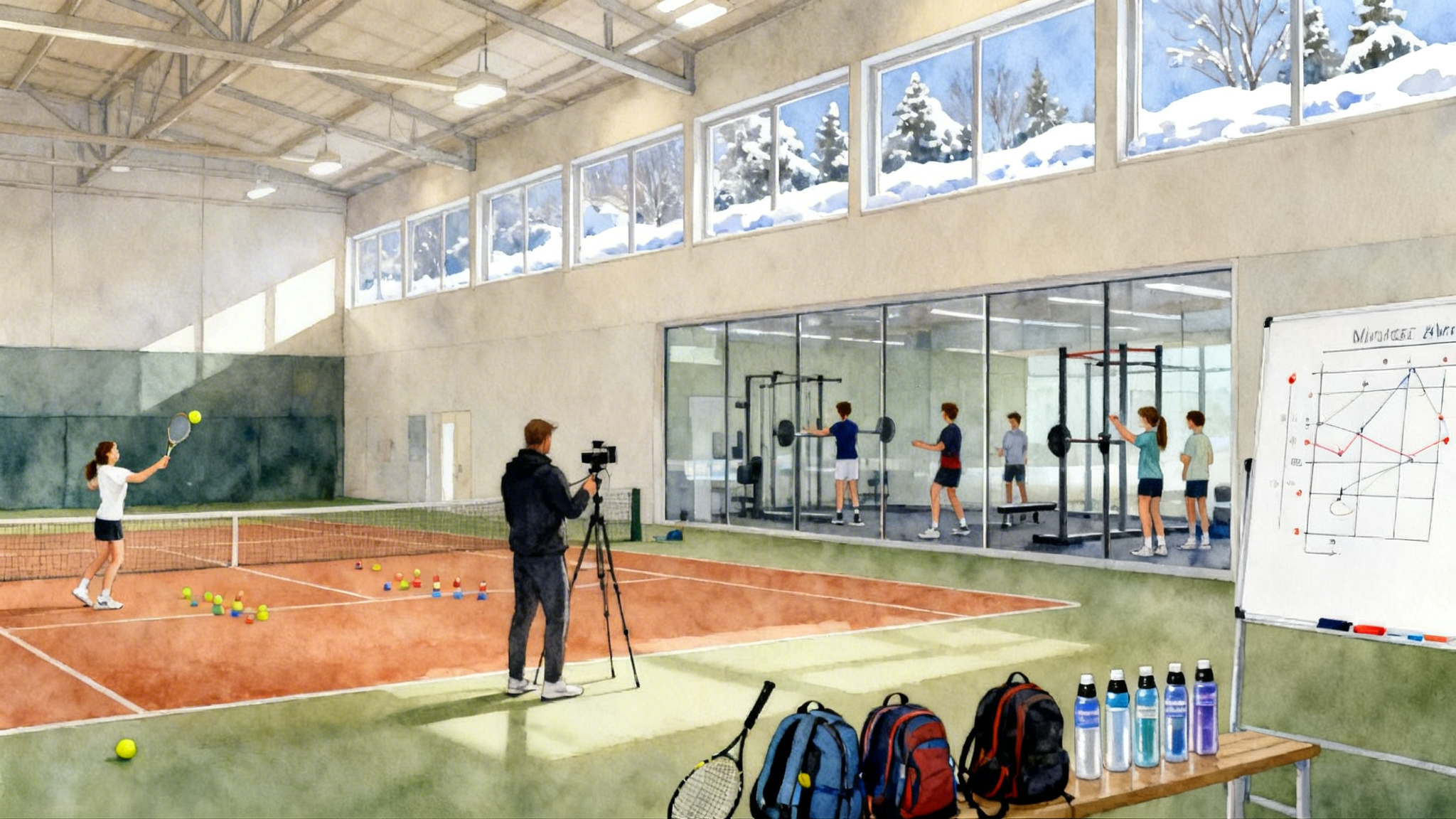
- Storm management: Pop-up thunderstorms are a given. Covered or indoor courts, when available to your group, let you pivot to set play or serve work instead of canceling. Otherwise, programs should have a clear rain plan for video, scouting, or strength.
- Winter: January and February mornings can be sharp. Look for wind-friendly courts, communal warmup spaces, and progressive warmup protocols that protect shoulders and hamstrings.
What to pack in the car in every season
- Two to three shirts and a second pair of socks.
- Wide-mouth insulated bottle, 32 ounces or larger, with a premixed electrolyte solution.
- Small towel for grip and a larger towel for ice.
- Extra strings and overgrips, plus a simple first aid kit.
Sample training blocks and calendars
Profile A: committed junior, age 10 to 12, UTR 2 to 4
- Weekly spine: three academy days plus one family match day.
- Monday: 90 minutes skill block on movement and spacing, 30 minutes serve basics on targets, 15 minutes core stability.
- Wednesday: 60 minutes live ball cross-court, 30 minutes approach and first volley, 30 minutes green or yellow ball set play.
- Friday: 45 minutes serves, 45 minutes doubles patterns, 15 minutes mobility.
- Weekend: One Verified match or a short match simulation at the academy.
Twelve-week focus: Weeks 1 to 4 technique and movement, Weeks 5 to 8 pattern building and serve progression, Weeks 9 to 12 match repetitions and tournament prep. Enter two local events in weeks 6 and 11.
Profile B: high school pathway, age 14 to 16, UTR 5 to 7
- Weekly spine: four academy days plus one Verified set.
- Monday: Pattern theme, 120 minutes on hard, 20 minutes sprint mechanics.
- Tuesday morning: 45 minutes serve and return film study. Evening: 60 minutes doubles return plays, 30 minutes overheads and transition.
- Thursday: 90 minutes set play on clay, 30 minutes heavy ball forehand development, 15 minutes prehab.
- Friday: UTR Verified match night.
- Weekend: USTA Level 6 or 7 every 4 to 6 weeks.
Twelve-week focus: Two loading weeks, one consolidation week, repeat. The goal is to lift one full UTR band by keeping matches tight against slightly higher rated opponents.
Profile C: competitive adult, UTR 8 to 10
- Weekly spine: two squad sessions and one private or small-group serve lab.
- Monday 6 a.m.: 75 minutes tempo drilling and approach patterns.
- Wednesday 7 p.m.: 90 minutes live ball and tie-break sets.
- Saturday: 60 minutes serve and return lab in a group of four, then optional 45 minutes strength.
Eight-week focus: Four weeks of tempo and depth bias, two weeks of finishing skills at net, two weeks of return of serve and first-ball targets. Enter one Verified set every two weeks on top of league play.
Tournament calendar planning for 2026
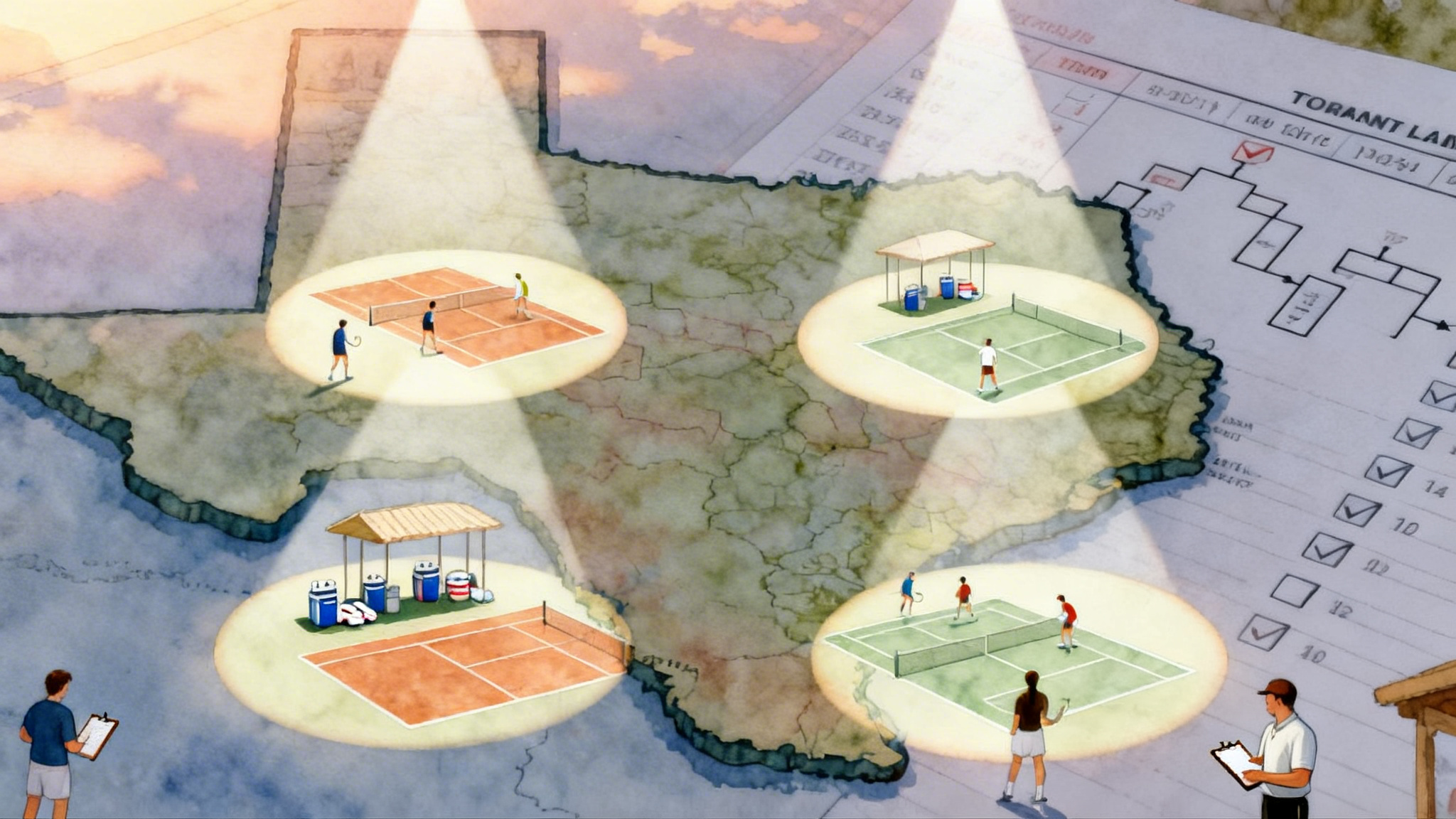
Your best friend is a blended calendar that includes UTR Verified play and USTA events. Start local to reduce travel days during school terms, then expand into Southern Section events once results stabilize.
- School-year cadence for juniors: Two Verified matches per month and one USTA weekend every 6 to 8 weeks.
- Summer cadence: One tournament every 3 to 4 weeks, plus weekly Verified sets to keep rhythm between events.
- Adults: Two Verified sets per month, one local weekend money event or flight tournament per quarter.
Tools to build the calendar
- Use the Universal Tennis search to find appropriate draw levels within a 30 mile radius. Start with 55 to 45 percent win probability bands to maximize rating movement with competitive matches.
- Use the USTA Georgia tournament calendar to place Level 6 and Level 5 weekends around family obligations. Place rest weeks after heat-heavy events.
Comparison benchmarks at a glance
Use these ranges to calibrate what you see during a tour.
- Coaching ratios: high-performance drilling 1 to 3 or 1 to 4 is excellent, 1 to 5 or 1 to 6 is common. Point play 1 to 6 to 1 to 8 is reasonable when courts are plentiful.
- Clay access: at least one dedicated clay day per week during volume blocks. Ask what happens after rain and who makes the call.
- Covered or indoor access: valuable but limited. Secure your group’s exact access window during storm season and winter.
- UTR integration: two to four Verified matches per month during school terms, four to six in summer. Scores posted within 24 hours, and film or stats reviewed in the next practice.
- Academics: clear policy for early dismissals, supervised study for daytime trainees, and an academic point of contact.
- Monthly cost bands for a serious junior in 2026: 600 to 1,400 dollars for group training, plus 100 to 300 dollars for Verified play and stringing, plus optional privates.
- Adult training cost bands: 200 to 400 dollars per month for squads, 50 to 70 dollars per person for small-group serve labs.
A step-by-step trial plan
- Shortlist three programs: one club-embedded option like Life Time Peachtree Corners and two independent programs near Alpharetta or Marietta.
- Watch a session at your exact time slot. Count the ratio, observe coach voice and feedback frequency, and note ball cart time versus live-ball time.
- Book a two-week trial in the same group you observed. Keep a simple log of serves made, break-point conversions, and between-point routines. Share it with the lead coach.
- Lock your calendar: Verified match night every other week, one USTA event every 6 to 8 weeks during the school year.
- Review the all-in monthly cost. Write line items for tuition, membership if applicable, privates, match fees, stringing, and travel.
- Decide with data, not vibes. After four weeks, compare your log and match results to what the coaching staff predicted. If they align, you found a fit.
The bottom line
North Atlanta offers something rare in junior and adult development. You can choose between the scale and convenience of a club-embedded academy like Life Time Peachtree Corners and the precision or value of independent programs around Alpharetta and Marietta. Use ratios, surfaces, Verified match cadence, academics, cost, commute, and heat plans as your six decision levers. If a program can explain how those levers will move your serve speed, your first-strike percentage, and your ranking over the next twelve weeks, you have the clarity you need to commit with confidence.