Best Carolinas Tennis Academies 2026: Hilton Head to Raleigh
A parent-first guide to Smith Stearns, Van der Meer, LTP Charleston, Randy Pate in Winston-Salem, and Cary High Performance. Compare training models, surfaces, boarding, academics, 2026 monthly cost bands, and USTA Southern access.
 Tommy
Tommy
Who this guide is for
You are a parent weighing a major decision. Your player is committed, probably competing weekly, and your family calendar already orbits practice blocks and tournament weekends. The Carolinas offer a rare blend of elite coaching, year-round outdoor training, and dense tournament access. This guide focuses on five of the region’s most discussed junior programs in 2026: Smith Stearns and Van der Meer in Hilton Head, LTP Charleston, Randy Pate in Winston-Salem, and Cary High Performance in the Triangle. You will find how they train, which courts they use, how academics fit, what boarding looks like, realistic monthly cost bands, and how easily each taps into United States Tennis Association Southern events.
If your search extends beyond the Carolinas, compare nearby ecosystems in our Best Georgia tennis academies 2026 and the broader Southeast in Top Florida tennis academies 2026.
The parent lens for 2026
Choosing an academy is not just about the loudest ball pace or the most famous alumni. It is about fit. Fit shows up in three places: training model, life logistics, and competitive runway. Training model answers how your child will actually improve in twelve weeks. Life logistics covers where your child will sleep, how school works, and whether practice is ten minutes away or an hour. Competitive runway is the weekly reality of match play, from practice sets to the right level of tournaments.
Think of an academy like a school with a major. Everyone takes math and writing, but one school might be known for its labs, while another nails writing workshops. Tennis is similar. Every academy has fitness, drilling, and point play. The differentiators are volume, technical emphasis, and the way coaches structure feedback and accountability.
Quick snapshots by program
Below are parent-facing snapshots. These are general contours for 2026. Always confirm current schedules and availability with each program before committing.
Smith Stearns, Hilton Head
- Training model: Small-group drilling, disciplined patterns, and lots of live-ball situational work. Frequent fitness blocks and a clear emphasis on college readiness.
- Surfaces: Heavy use of green clay, with access to hard courts for speed adaptation and tournament prep.
- Boarding vs day: Full-time and seasonal boarding exist, along with day enrollment. Boarding is structured, with supervised study and set lights-out.
- Academics integration: Commonly a blend of online school or a local private option for full-timers. Day players pair with their current schools.
- Tournament access: Weekend trips to Savannah, Charleston, Columbia, and Augusta are realistic. Many USTA Southern Level 4 and Level 5 events are within a three-hour drive.
- Who thrives: Disciplined competitors who respond to structure and repetition, and families targeting college placement.
Van der Meer, Hilton Head
- Training model: Technical fundamentals and footwork sequencing. Clear progressions. Useful for players who need consistent stroke shaping without losing live-ball volume.
- Surfaces: Mix of hard and clay across Hilton Head facilities, giving variety week to week.
- Boarding vs day: Seasonal boarding has been available historically, with many day students from within driving distance.
- Academics integration: Online school plus on-site study windows for full-timers. Day players stay at existing schools.
- Tournament access: Similar to Smith Stearns, with regular access to coastal and inland Southern events.
- Who thrives: Players who need patient technical refinement paired with structured competition.
LTP Charleston Player Development
- Training model: Competitive culture with frequent point play and fitness that reflects match demands. The program benefits from proximity to a professional event footprint in the city and a deep local player pool.
- Surfaces: Both clay and hard are common in Charleston. The humidity teaches physical management and point construction on clay.
- Boarding vs day: Primarily day enrollment, with periodic short-term housing solutions. Families often relocate to be near the program.
- Academics integration: Mixture of local private or public schools for day players, with online options for heavy tournament travelers.
- Tournament access: The Charleston metro offers frequent junior events, plus reasonable drives to Myrtle Beach, Columbia, and Savannah.
- Who thrives: Match-tough players who want frequent tournaments and a lively competitive ecosystem.
Randy Pate Tennis Academy, Winston-Salem
- Training model: College-style intensity, heavy live-ball sets, and fitness rooted in point patterns. Strong emphasis on accountability and match charts.
- Surfaces: Mostly hard courts with some access to clay nearby for variety.
- Boarding vs day: Primarily day enrollment, with host-family or apartment solutions for older players. Check seasonal boarding availability.
- Academics integration: Local private and public school partners for day athletes, with online pathways for regional commuters.
- Tournament access: Central North Carolina is a highway hub. Charlotte, Greensboro, Raleigh, and Columbia are all reasonable weekend drives.
- Who thrives: Competitors comfortable with a tough daily standard who want to simulate college practice rhythms.
Cary High Performance, Triangle Area
- Training model: High-rep drilling, point construction, and frequent practice sets. Emphasis on fundamentals, movement, and tournament readiness.
- Surfaces: Predominantly hard courts with a subset of clay for longer-rally training.
- Boarding vs day: Day program. Families often choose Triangle neighborhoods for school plus tennis convenience.
- Academics integration: Public and private school choices are strong in the Triangle. Many players use standard school days and train after class.
- Tournament access: Dense year-round calendar across Raleigh, Durham, Chapel Hill, plus quick drives to Greensboro, Winston-Salem, and Fayetteville.
- Who thrives: Balanced student athletes who want strong academics and reliable training blocks without boarding.
Clay vs hard court mix and why it matters
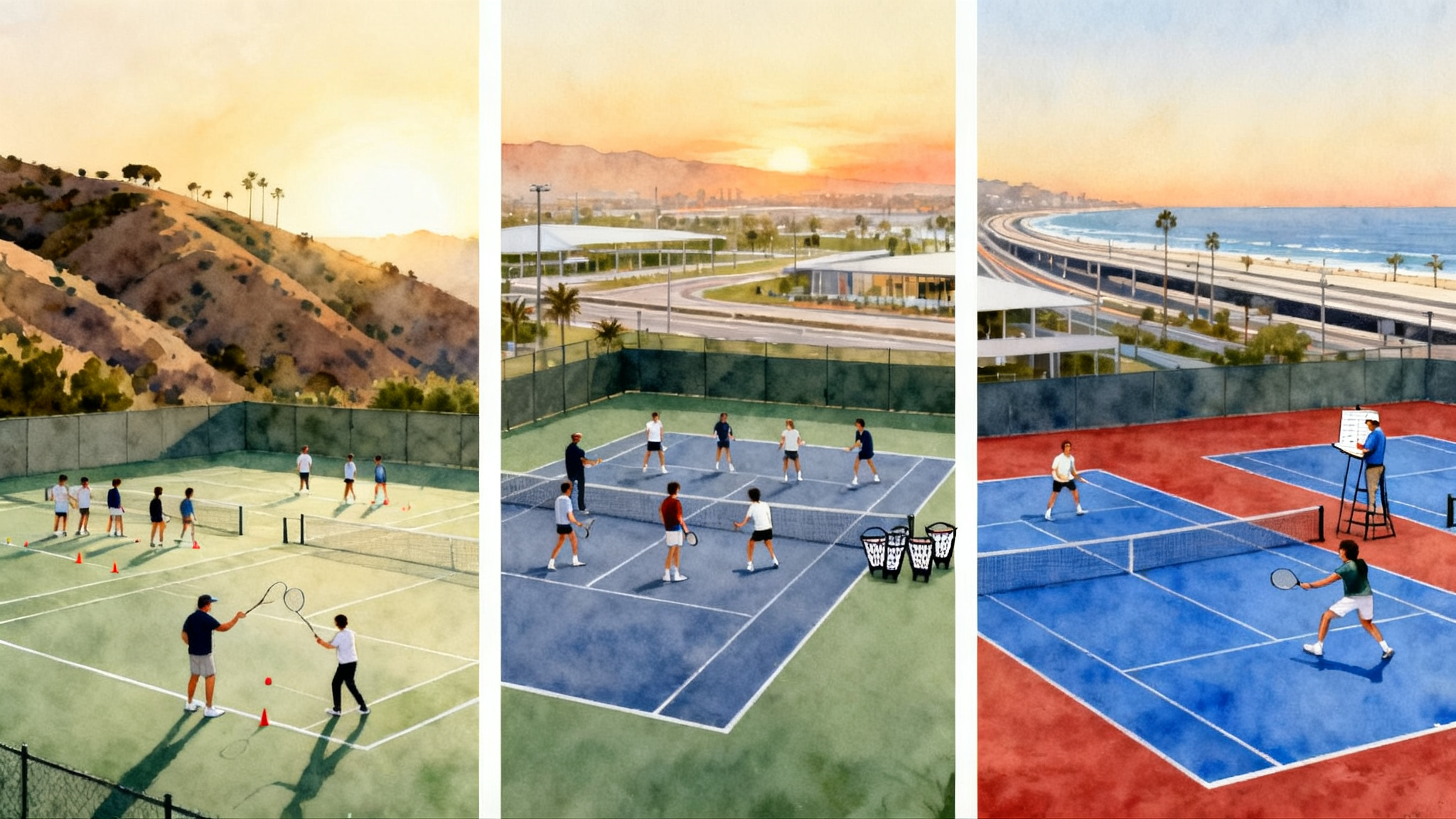
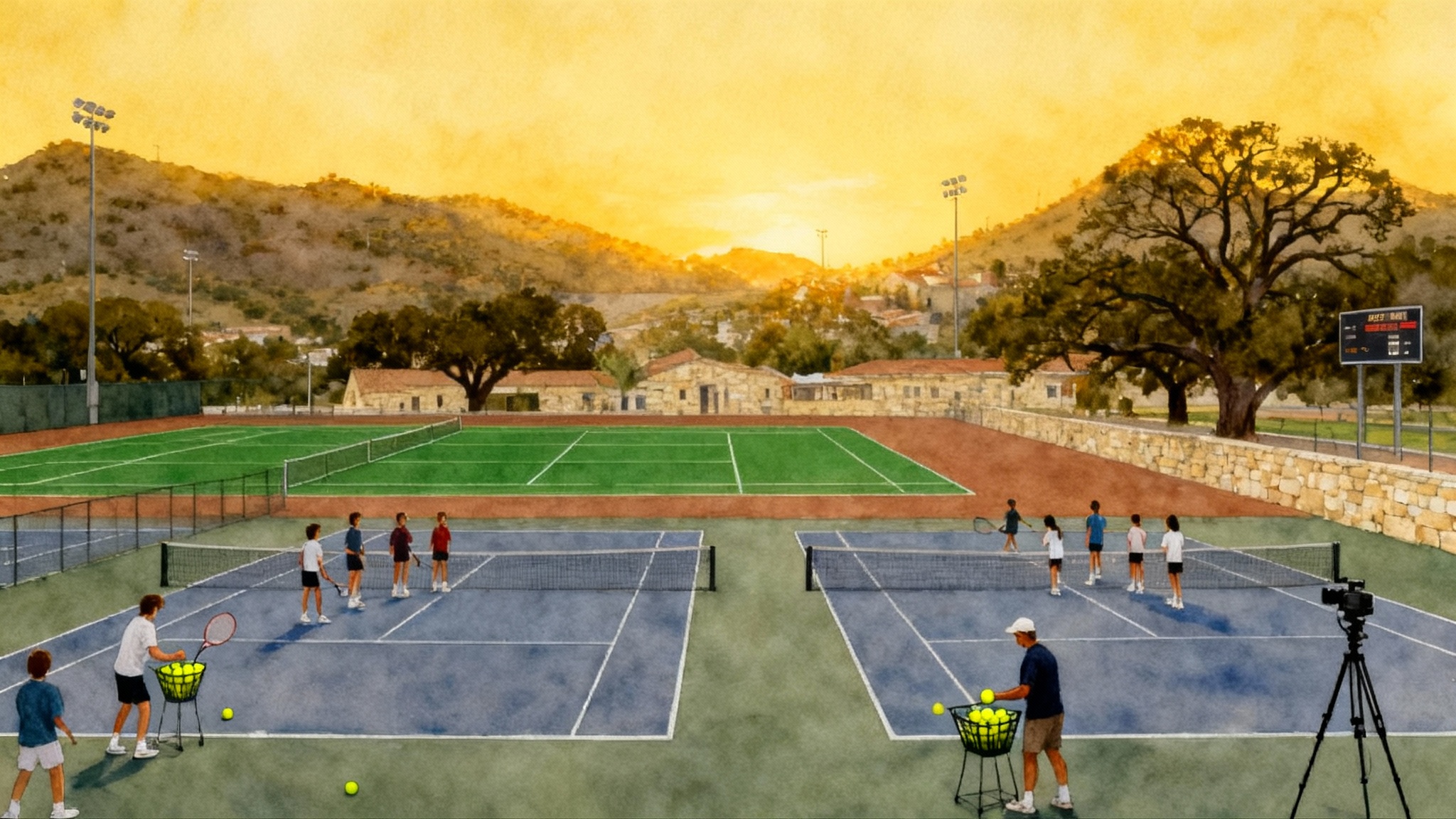
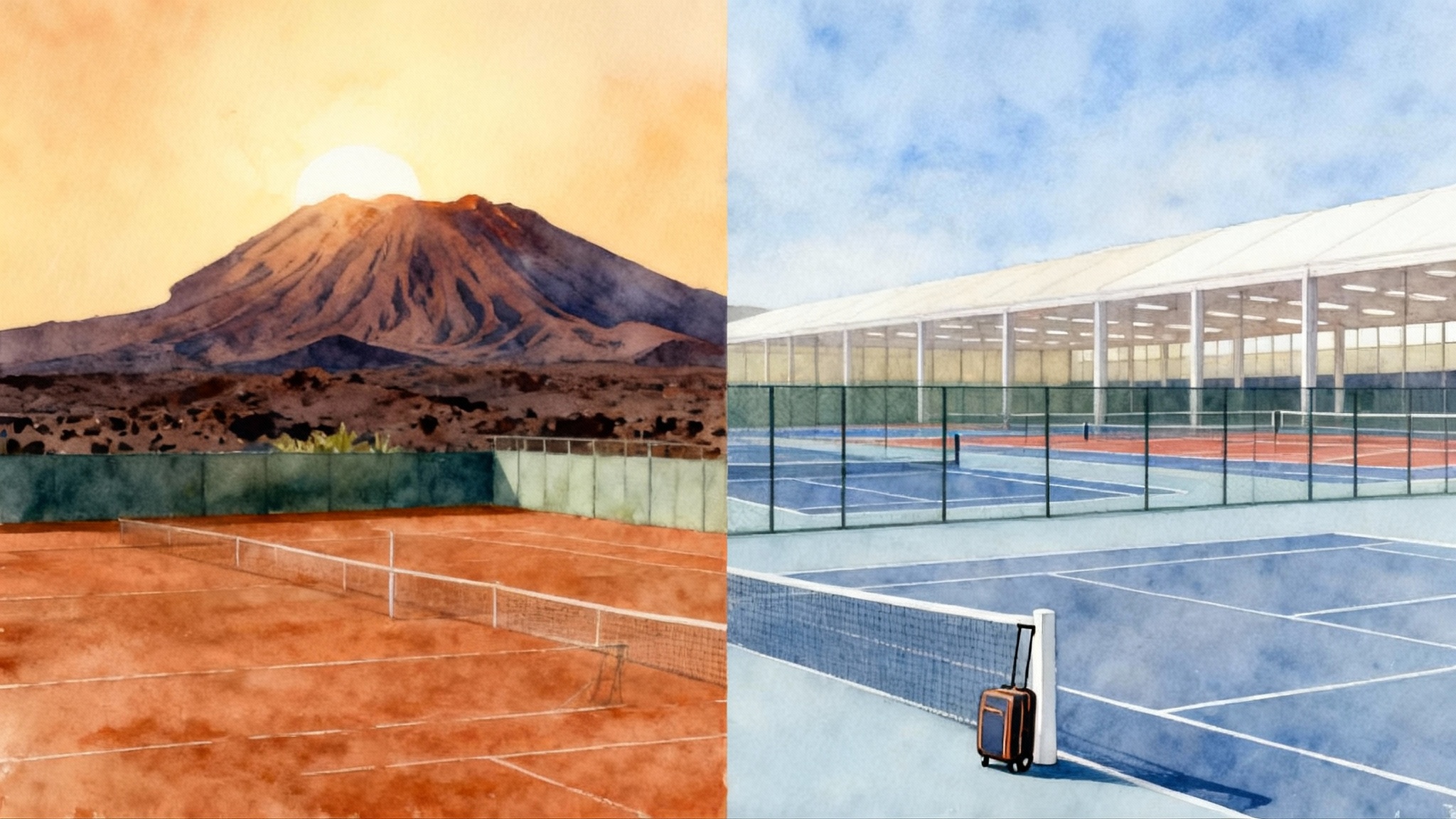
Hilton Head and Charleston skew toward green clay. Clay lengthens rallies, magnifies footwork, and rewards shape and margins. If your player tends to redline too early, clay acts like a patient teacher. Players learn to build points with height, spin, and direction. Hard courts, more common in Winston-Salem and the Triangle, compress time. They demand earlier preparation and punish late contact. If your player needs to sharpen the first strike and returns, hard courts provide that urgency.
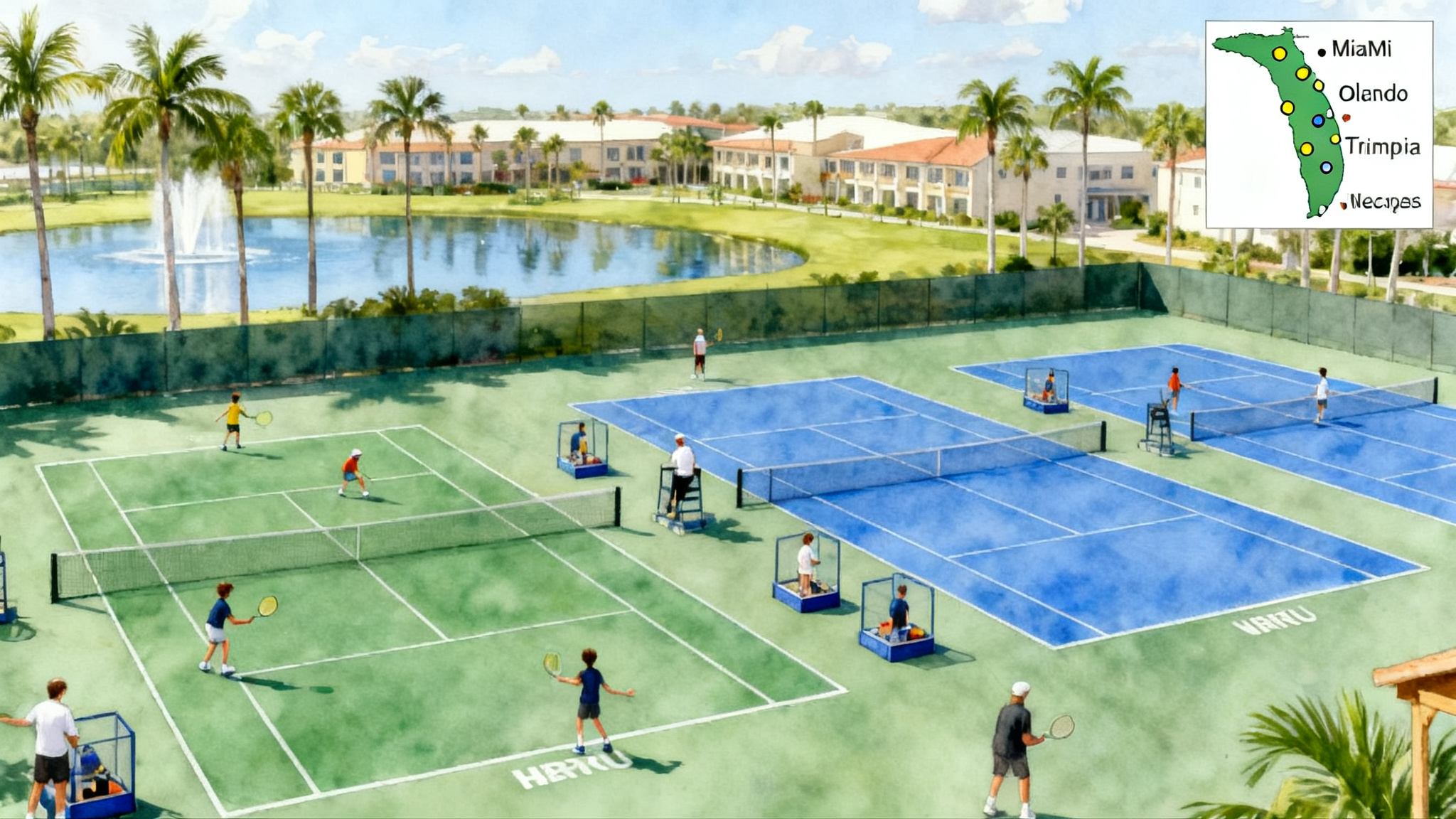
A useful season plan mixes both. Twelve weeks leaning clay can recalibrate shot selection and fitness. Four to six weeks leaning hard before key hard-court tournaments tunes the first step and transition game. Parents often worry that clay players will lose pace. In practice, the fitness and decision making they gain often translate into better hard-court results after a short re-acclimation period. For a Florida Har-Tru comparison, you can also review Gomez Tennis Academy Naples.
How each program puts the week together
- Smith Stearns: Expect morning technical blocks, midday fitness, and afternoon match play. Feedback is specific. Players keep journals of patterns and goals.
- Van der Meer: Technical progressions are explicit. A player may rehearse footwork ladders tied to a forehand shape, then move into live-ball pods that bring the shape under pressure.
- LTP Charleston: More match play midweek and on Fridays to prime for tournaments. Conditioning mirrors Charleston heat, with hydration and recovery coached into daily habits.
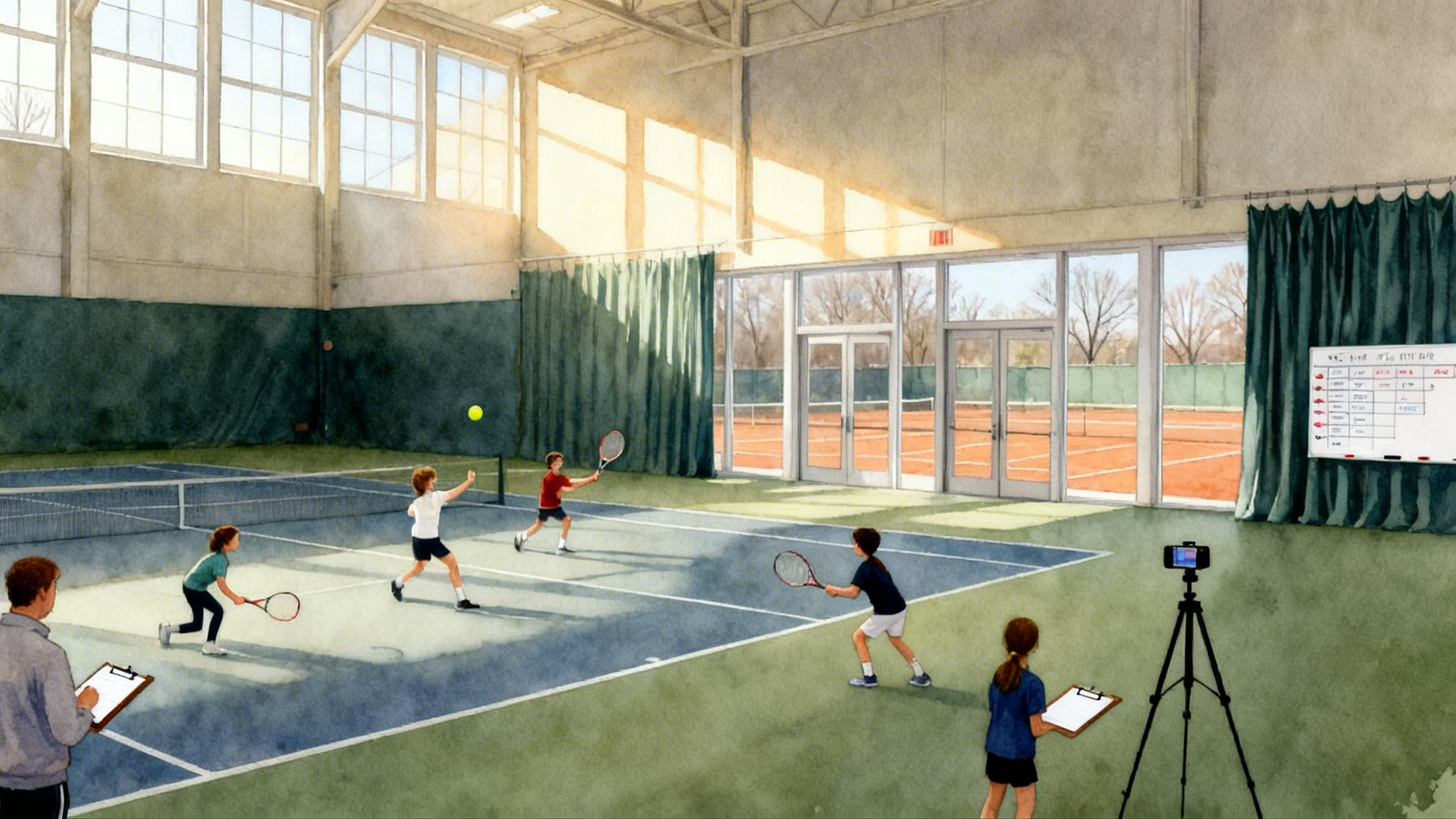
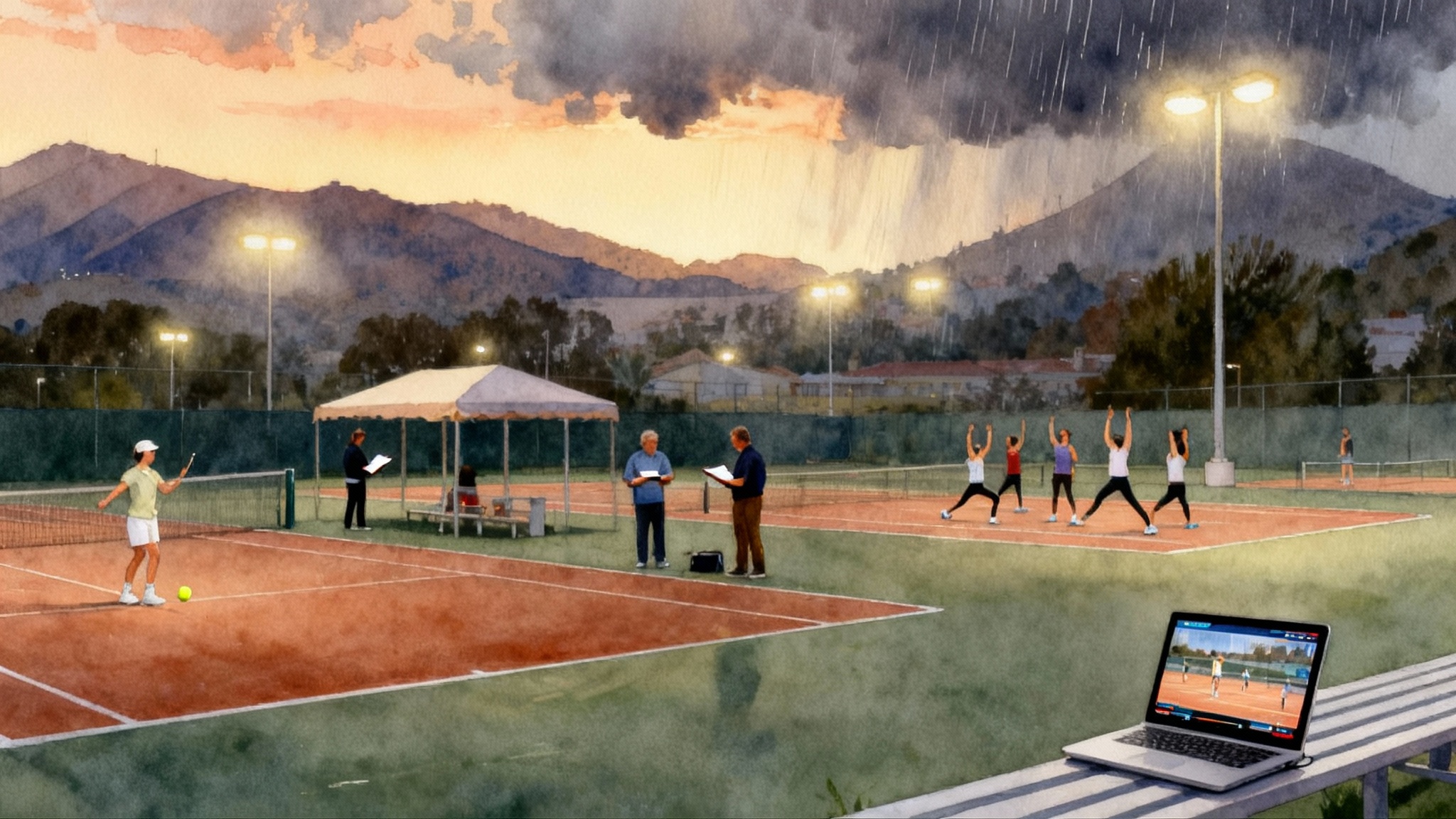
- Randy Pate: College-practice feel. High-energy warmups, fast rotations, and recorded sets. Video or charting is used to hold players accountable to patterns.
- Cary High Performance: Afternoon sessions that blend drilling and point play. Strong fundamentals for players balancing school load and tournament schedules.
Academics integration you can actually live with
There are three workable models, and all five academies can support at least two of them:
-
Traditional day school plus after-school training. Best for middle school and early high school students in Charlotte, Raleigh, or Winston-Salem. It preserves classroom structure and friend groups. Make sure dismissal times align with warmups so your player is not late to the first ball strike every day.
-
Online or hybrid school with daytime training. Common for nationally ranked juniors who travel. The win is freedom in the midday window when courts are open and coaches are less stretched. The risk is isolation. Budget for study hall supervision and weekly teacher check-ins.
-
Full-time boarding with a coordinated academic plan. Found most cleanly in Hilton Head. The benefit is a single team running training, school blocks, meals, and sleep. The test is readiness for independence. Look for clear study hall policies, proctored exams, and a point person who communicates with you weekly.
USTA Southern tournament access
With the United States Tennis Association Southern section you get a deep calendar and realistic driving weekends. Before you pick an academy, open the USTA Southern junior tournament search and map how many Level 4 and Level 5 events sit within two hours. Two hours is the magic number for most families. It allows an early Friday departure, a full Saturday slate, and a return Sunday night without wrecking Monday school.
- Hilton Head: Regular access to Savannah, Charleston, and Augusta. Many families group players by age and share vans to keep costs sane.
- Charleston: Events in the metro almost every month, plus drivable runs up to Myrtle Beach and Columbia.
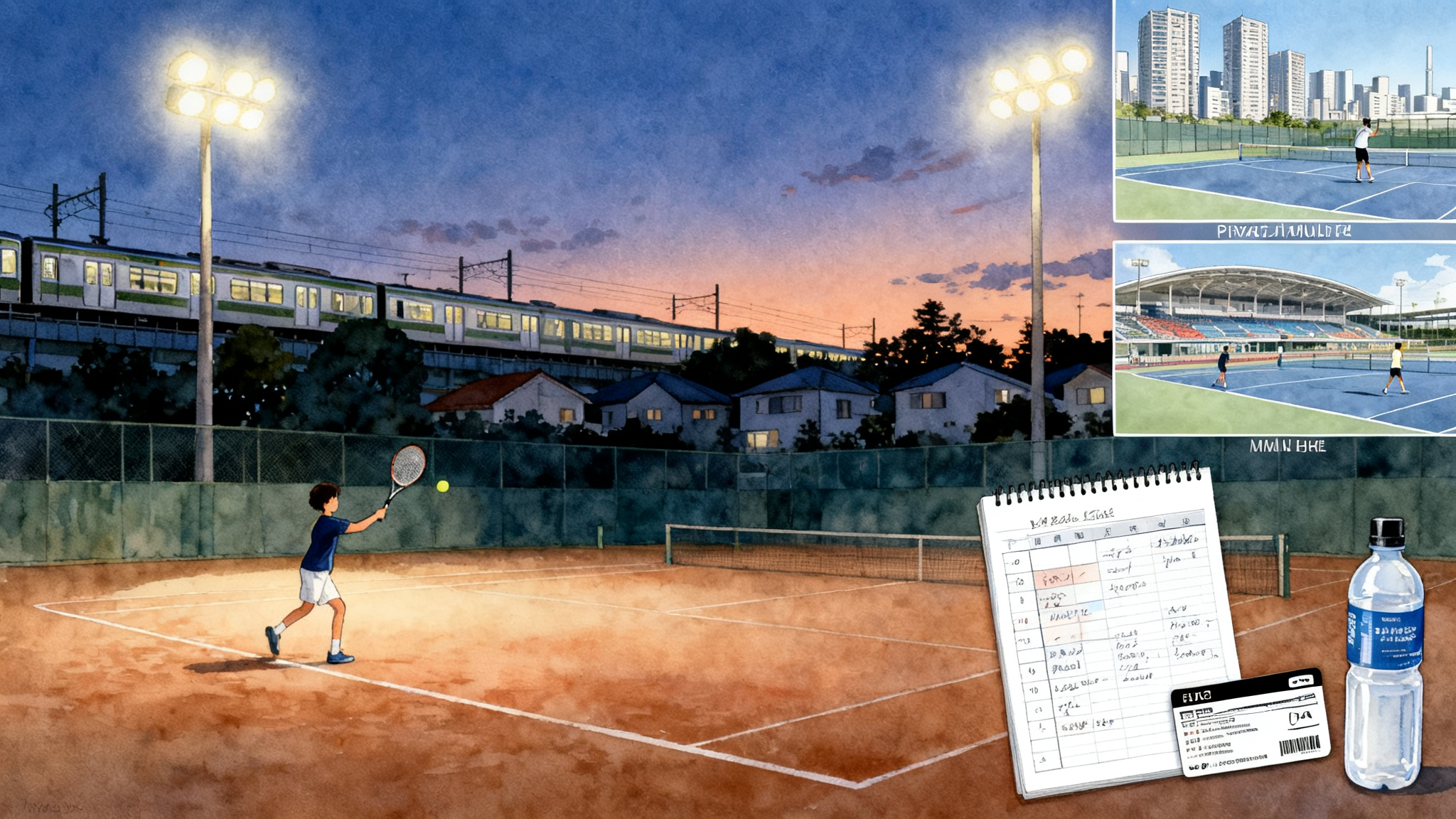
- Winston-Salem: Central to Greensboro, High Point, Charlotte, and Raleigh. Winter indoor options are better here than on the coast.
- Cary and the Triangle: Dense local events. Easy to chase points without overnight stays.
When your player begins chasing Southern points for selection into higher levels, ask the academy how they seed weekly match play to mirror tournament pressure. The best programs give players pressure reps on Tuesday and Wednesday so they are not surprised by intensity on Saturday.
Monthly cost bands for 2026
Prices vary month to month and by season. The bands below reflect common 2026 realities in the Carolinas. They are a planning tool. Always ask for a written quote that matches your child’s exact plan.
- Full-time boarding with integrated academics: 4,000 to 7,500 dollars per month, excluding private lessons and tournament travel. Housing, meals, group training, fitness, and study hall are typically included.
- Full-time day high performance, five days weekly: 1,200 to 2,500 dollars per month, often with two to four hours per day and a weekly fitness component.
- Part-time day plan, three days weekly: 600 to 1,200 dollars per month, suitable for balanced school schedules.
- Private lessons: 90 to 180 dollars per hour depending on coach seniority.
- Tournament weekends within driving distance: 300 to 800 dollars including entry fees, gas, hotel if needed, and meals. Carpools and shared rooms reduce this quickly.
Cost is not just fees. It is also time. Ask each academy for a travel calendar with estimated departure and return times. Three extra hours in the car every weekend is the difference between a rested Monday and a cranky one.
Boarding vs day: lifestyle tradeoffs
- Boarding strengths: One schedule, fewer distractions, peers chasing the same goals. Ideal for self-driven athletes who thrive with routine. Parents get clear reporting lines and a single point of contact.
- Boarding risks: Homesickness, fewer non-tennis social anchors, and less flexibility to pivot schools midyear.
- Day strengths: Academic continuity, family life, and the ability to choose different coaches for different phases. Often lower total cost.
- Day risks: Commuting fatigue and juggling school demands against practice punctuality.
A practical test: For one week, rehearse the schedule your child would live under. Keep the wake time, commute time, training hours, and study hall windows. If the household feels stable, you likely found a sustainable model.
Fit profiles by family goal
- College tennis target by eleventh grade: Smith Stearns and Randy Pate offer the most college-style rigor, with Cary High Performance a strong day-based alternative. LTP Charleston adds frequent tournament play and a visible competitive scene.
- Technique rebuild in a single semester: Van der Meer’s progression systems are built for this, followed by a move into more live-ball heavy environments.
- Younger players building foundations: Cary High Performance and Charleston day programs let kids thrive in school while building volume and consistency.
Questions to ask every academy
- What are the player-to-coach ratios during live-ball sets, not just during feeding drills?
- Who runs study hall and how are grades tracked for full-time or hybrid students?
- What percentage of weekly volume is clay versus hard, and why?
- How often do players log match plans, and who reads them?
- What is the plan if my child is injured for two weeks? Ask for a written recovery protocol.
- Can I see a sample month that includes one tournament trip, one mock match day, and one recovery day?
Decision checklist for parents
- Training model fit: My child needs more of A or B right now. A is technical shaping. B is match-pressure reps. Which program delivers that balance weekly?
- Surfaces: Do we need twelve focused weeks on clay to learn patience, or six weeks on hard to quicken first strike?
- Academics: Which of the three models are we truly ready to live with for the next semester?
- Commute: If day program, is the one-way drive under 35 minutes during school traffic? That number is a tipping point for most families.
- Budget: Which monthly band are we targeting, and have we added 10 to 20 percent for private lessons and tournaments?
- Tournament access: How many Level 4 or Level 5 events sit within two hours, and does the academy coordinate travel?
- Communication: Who is the single point of contact and how often do we get written updates?
Three sample training weeks
Below are realistic sketches. Adjust days and hours to match each academy’s current schedule.
-
Full-time boarding, Hilton Head focus
- Monday: 8:00 a.m. dynamic warmup. 8:30 a.m. technical block on forehand patterns and serve rhythm. 11:00 a.m. fitness with footwork ladders and medicine ball throws. 1:00 p.m. study hall. 3:30 p.m. live-ball games to seven on clay. 6:30 p.m. dinner. 8:00 p.m. recovery and lights out routine.
- Tuesday: Pattern review, return games on hard. Afternoon point play with targets. Evening video review of five key points.
- Wednesday: Fitness emphasis. Doubles drills and first-volley work. Optional private lesson.
- Thursday: Match charts during practice sets. Coaches collect tactical notes.
- Friday: Lighter hitting. Serve practice, then travel briefing for weekend tournament.
- Saturday to Sunday: USTA Southern event. Coach-led warmups, post-match journals.
-
Day student, Triangle routine
- Monday to Friday: School day until 3:00 p.m. 4:00 to 6:30 p.m. academy training on hard with one clay day midweek. One private lesson slotted Wednesday. Homework 7:30 to 9:30 p.m. Saturday practice sets or local tournament. Sunday recovery and mobility.
-
Hybrid commuter, Winston-Salem anchor
- Monday: Afternoon drilling and fitness. Evening study block.
- Tuesday: Two-hour live-ball followed by serve plus one patterns. Short video checkout.
- Wednesday: Light day or rest. Tutoring for two classes.
- Thursday: Practice sets with charting. Conditioning finisher.
- Friday: Pre-tournament rhythm sets. Pack and prep.
- Weekend: Drive to Charlotte or Raleigh event. Coach texts checkpoints after each match.
How to close the loop
Ask for a trial week. Most academies will let your player drop in for a few days. Watch a full session from warmup to cooldown. Count coach interventions during live points. Track how often your player is corrected, how specific the cues are, and whether those cues appear again the next day. Improvement is not magic. It is repetition tied to feedback that sticks.
The smart conclusion
Start from your child’s next three months, not the next three years. If the goal is better decision making and stamina, a clay-heavy block in Hilton Head or Charleston can change shot selection and rally tolerance fast. If the goal is faster first strike and return aggression, a hard-court block in Winston-Salem or the Triangle can sharpen timing and transition instincts. The right academy in 2026 is the one that solves the next bottleneck and does it inside a life your family can sustain. Fit beats fame. Process beats promises. Pick the place that your player is excited to walk into on Monday morning, and the rest follows.