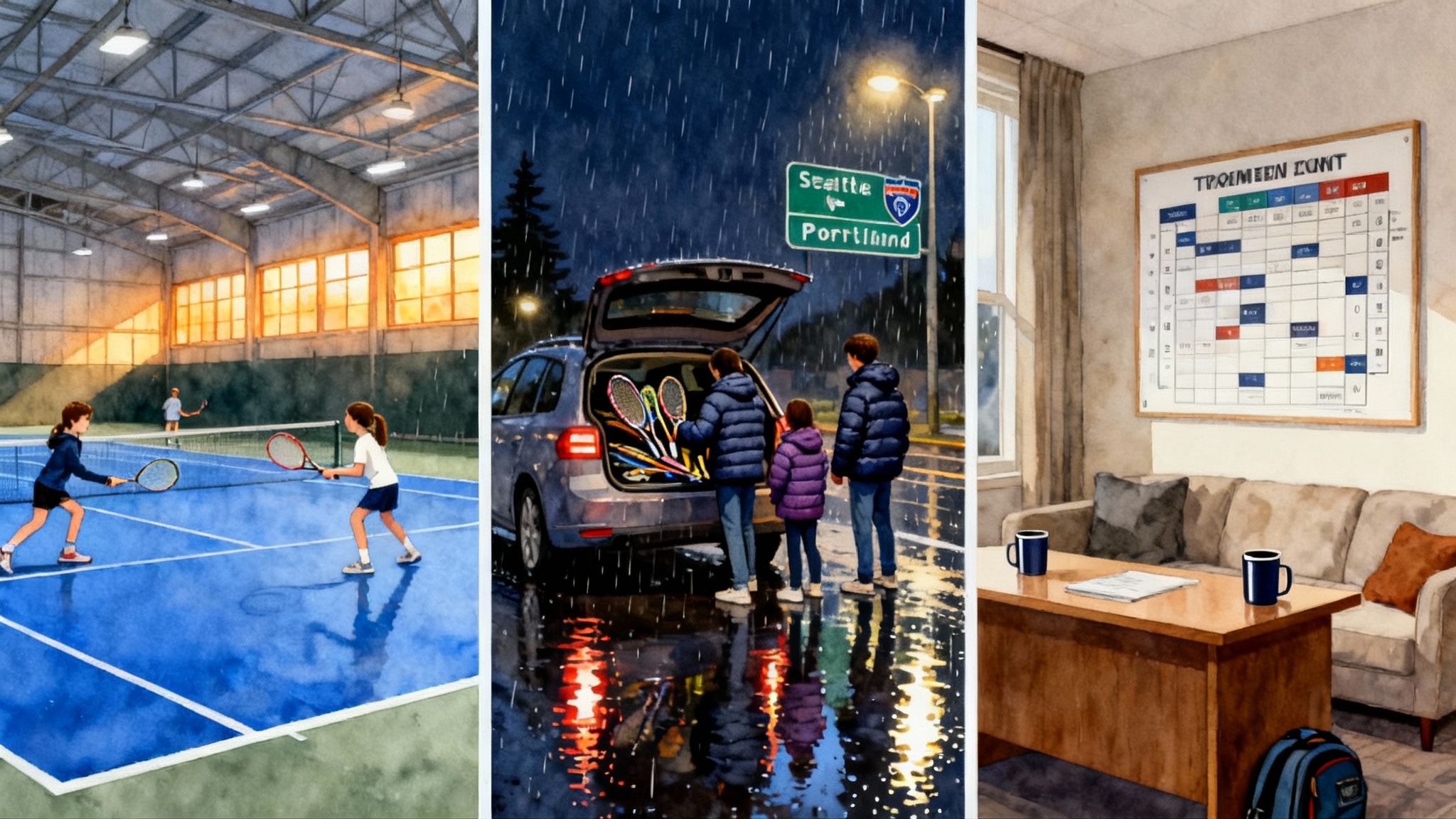
Best Tennis Academies in Japan 2026: Tokyo and Kansai Guide
A commuter-friendly, bilingual guide to Spring to Summer 2026 junior enrollments in Tokyo and Kansai. We compare program structure, surfaces, pricing, and junior pathways, with deep dives on Seijo and Shi Shi plus vetted Kansai options.
 Tommy
Tommy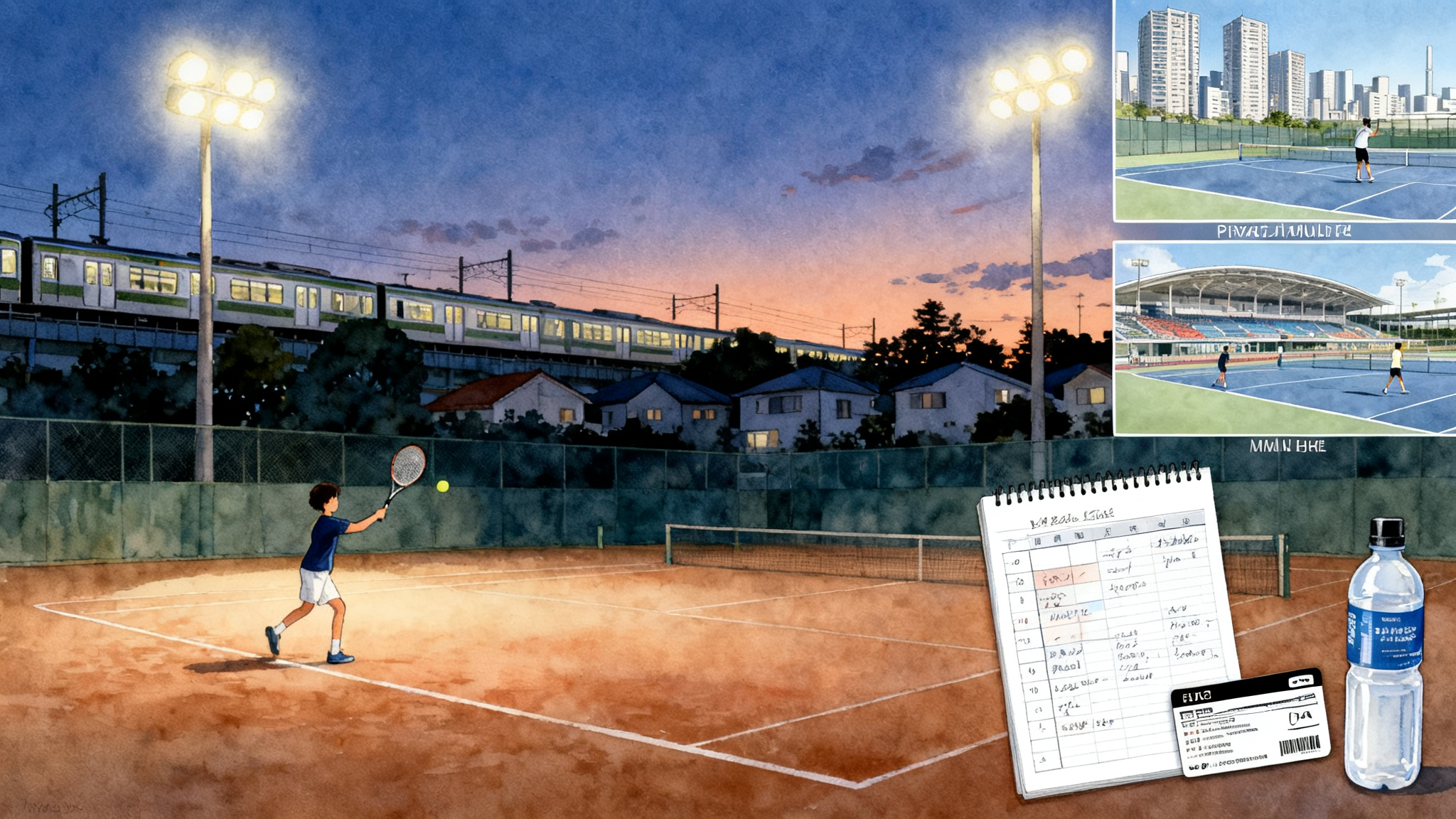
Who this guide is for
If your family is based in Tokyo or Kansai and you want bilingual, academics-compatible tennis for a junior athlete between March and August 2026, this guide will save you weeks of research. We focus on commuter logistics, program structure, training surfaces, realistic costs, and how the Kanto and Kansai junior ecosystems actually work. We then profile two Tokyo standouts, Seijo Tennis Academy profile and Shi Shi Tennis Academy profile, and recommend vetted alternatives in Osaka, Kobe, and Kyoto so you can shortlist and book quickly.
Before we dive in, note two calendar anchors for Japan in 2026:
- Spring term training blocks typically run April to June 2026.
- Summer camps, intensives, and tournament peaks cluster from late July through late August 2026.
The three decisions to make before you tour a court
- Training model: group pathway, private-led, or hybrid
- Group pathway: predictable schedule, clearer peer laddering, lower cost per hour. Good for U10 to U14 who benefit from repetition and social motivation.
- Private-led: faster technical correction, flexible scheduling, higher cost per hour. Best for players fixing a specific biomechanical issue or balancing school exams.
- Hybrid: one private per week plus two groups. Often the sweet spot for time-pressed middle and high school students.
- Surface match: hard, omni, or carpet
- Hard courts build point-ending weapons and serve patterns; omni (artificial grass with sand) rewards footwork efficiency and consistency; indoor carpet is fast and teaches early preparation.
- Japan mixes all three. Tokyo’s Ariake cluster and many private clubs are hard. Residential clubs and multi-court complexes in both Kanto and Kansai often default to omni.
- Junior pathway fit: Kanto vs Kansai calendars and rankings
- Your competition plan is the spine of the year. In Kanto, the junior calendar, registrations, and ranking rules are published by the Kanto Tennis Association. Read the latest guidance first so you know which events open when and which points count toward seeding in spring and summer.
Tip: Put pathway dates into a family calendar now, then back-schedule exam weeks, travel, and recovery days. You will avoid double-booking during U12 and U14 peaks in late June and late August.
Deep Dive: Seijo Tennis Academy, Tokyo
Seijo sits inside Setagaya, one of Tokyo’s most commuter-friendly districts for families. If you live along the Odakyu Odawara Line, Seijogakuen-mae Station puts you within a short walk or bike ride of the academy. From central hubs like Shinjuku, the ride is typically around 20 minutes on an express; families coming from Shibuya transfer easily via Shimokitazawa. The routine is simple: train, short walk, train home, dinner.
Program structure
- Age bands: expect clear tracks for kids, pre-teens, juniors, and a separate competitive stream. Entry evaluations are common and help place students at the right tempo.
- Weekly rhythm: most juniors slot into two to four group sessions per week during the school term, plus optional match-play weekends before tournaments.
- Surfaces and weather: Seijo primarily operates on outdoor hard courts, which serve juniors well if they expect to compete on hard at Ariake or travel abroad.
Scheduling with school
- For elementary and junior high students, late-afternoon sessions keep homework intact. High schoolers often train after dinner two nights a week plus a longer weekend block.
- During midterms, Seijo will usually allow temporary downshifts or make-up sessions, but it pays to ask in advance how rescheduling works in April and May 2026.
Costs to expect in 2026
- Group pathway: typical monthly tuition for one session per week often falls in the low teens of thousands of yen; two to three sessions push the total toward the upper teens to low twenties.
- Private add-on: expect five figures per hour in yen, with small court or lighting surcharges in the evening.
- One-time fees: many Tokyo academies collect a registration fee at sign-up and may require mandatory team shirts for tournament entries.
Why Seijo makes sense for commuters
- Door-to-door predictability is the hidden value. Trains are frequent, stations are safe, and the walk is easy. For families who want steady attendance without a parent driving nightly, Seijo’s location on the Odakyu spine is a practical advantage.
Who thrives here
- Technically minded players who want consistent hard-court repetitions and like structured, Japanese-style group sessions with clear progressions.
Rapid-fire questions for your trial visit
- How are players promoted between bands and who decides when a junior is ready to spar up an age group?
- What is the ball color and court size progression in U10 and U12?
- How are tactical themes sequenced week to week during tournament build-ups in June and August?
Deep Dive: Shi Shi Tennis Academy, Tokyo
Shi Shi is a private-led, bilingual coaching academy designed for international families and competitive juniors who want one-to-one precision in English or Japanese. Sessions run across a network of central and suburban courts including Yoga, Shinagawa, and Ariake. That means you can meet the coach where your life is, not the other way around.
How it works
- Private first: the default is customized one-to-one or small semi-private training. Group sessions exist but the engine is individualized planning and video-assisted feedback.
- Venue flexibility: commonly used courts include Otsukaen Tennis Center near Yoga, Takanawa Tennis Center near Shinagawa, Ariake Tennis no Mori in Koto, Kugayama Auto Tennis in Mitaka, and SENKO Shiomi in Koto. Surfaces range from hard to omni, which is useful if your junior competes in both Kanto and Kansai.
- Bilingual environment: instruction is available in full English or Japanese, which eases the stress for returnee families and international school students.
Booking and policies
- You pick a convenient court and time window, the academy confirms and meets you there. For families with rotating club activities or cram school, this model removes commute friction.
- Travel fee and weather: the academy publishes a straightforward travel fee policy and a clear cancellation protocol, which helps you budget for spring rains and summer heat. Details are spelled out on the Shi Shi lesson page.
Costs to expect in 2026
- Private lessons in Tokyo with bilingual, former elite players typically price in the mid five figures per hour in yen, plus any court booking and lighting fees. Semi-private splits the hourly but still includes the court share.
Who thrives here
- Tournament-active juniors fixing a stroke pattern or serve mechanics before a ranking event, and international students who prefer coaching and feedback in English.
Practical commute examples
- International school families along the Den-en-toshi Line can book in Yoga for a zero-transfer routine. If you work near Shinagawa, a post-work session at Takanawa reduces total travel time while keeping a hard-court feel.
Vetted Kansai alternatives: Osaka, Kobe, Kyoto
Kansai’s junior scene is anchored by public hard-court centers and large omni complexes, plus reputable school chains with clear junior ladders. Here are three commuter-friendly categories to consider.
- Kobe’s island and west-side complexes
- What to expect: large multi-court sites with roofed omni plus outdoor omni, lighting, and robust junior ladders from red ball to tournament squads.
- Why it helps commuters: Rokko Island is a rail-linked mini-city with simple transfers via the Rokko Liner. West-side sites near Seishin and Akashi line up well with family homes and international employers.
- Typical pricing: one weekly junior class often falls in the high four to low five figures per month in yen, with frequent trial lessons and family discounts.
- Osaka’s indoor chains near central work hubs
- What to expect: climate-proof indoor programs, weekday late blocks, and separate high-school tracks. Look for campuses near Awaza or Nishi Ward to combine school pickup with a short Osaka Metro hop.
- Why it helps commuters: parents working in Umeda, Hommachi, or Honmachi can arrive by subway, watch the last 15 minutes, and be home by dinner.
- Kyoto suburban programs with flexible weekends
- What to expect: community-rooted academies in Rakusai, Uji, and southern Kyoto, with strong weekend blocks and tournament prep for Kyoto Junior events.
- Why it helps commuters: Saturday and Sunday ladders are reliable, and surface variety prepares juniors for both omni-heavy locals and hard-court travel.
Questions to ask any Kansai academy in 2026
- Do you run separate match-play blocks ahead of the Kyoto Junior and Osaka-area events in late spring and late summer?
- If my junior competes at Utsubo or in Hyogo indoors in November, how do you simulate those conditions in September and October?
- How many weekly touches can we guarantee during exam month without losing momentum?
Junior pathways, explained simply
- Kanto pathway: governed locally by the Kanto Tennis Association, with registrations, ranking point rules, and tournament calendars that determine seeding and entry in April through August. Always confirm age-group eligibility and ranking windows on the Kanto junior guide and rules.
- Kansai pathway: Osaka’s Utsubo Tennis Center hosts major junior fixtures during autumn, and Kobe’s covered courts make winter laddering practical. If your child plans to chase points across both regions, build two calendars, then plan recovery weeks after each peak to avoid over-scheduling.
Families exploring overseas summer blocks can also compare European options in our Spain vs France academies 2026.
What this means for training design
- Surfaces: if your peak event is on hard, ensure at least 50 percent of live-ball volume is on hard six to eight weeks out. If it is on omni, include split-step and directional-change drills that reward early balance.
- Match fitness: use 60- to 75-minute point-play blocks twice weekly in the month before a tournament. That is the fastest way to convert pretty strokes into scoreboard pressure.
- School balance: designate a no-tennis day during exam week. Use it for mobility, light strength, and tactical video instead so total load stays stable without spiking fatigue.
Cost reality check for Spring to Summer 2026
Every academy prices a bit differently, but these ranges will keep your budget honest in Tokyo and Kansai this year.
- Registration and apparel: many programs charge a one-time registration fee and require a team shirt for official matches.
- Group tuition: one session per week commonly lands in the high four to low five figures per month in yen. Two to three sessions per week bring the total into the mid to upper five figures.
- Private lessons: bilingual, elite-background coaches in Tokyo are often mid five figures per hour, plus court and lighting fees. Semi-private reduces the per-player cost.
- Trials and promotions: large Kansai chains frequently run free or low-cost trial lessons and family discounts, which can shave 10 to 20 percent off the first month.
How to compare fairly
- Normalize the hourly: divide total monthly cost by coached hours, not by number of calendar weeks.
- Add commute time: a 60-minute session with 70 minutes of round-trip train time is a different family commitment than a 90-minute session down the street.
- Count live-ball reps: ask how many players share a court and how they cap group sizes in peak months.
Sample week plans you can copy
Tokyo middle schooler during exam month (late May 2026)
- Monday: rest and mobility at home, 20 minutes of serve shadow swings.
- Tuesday: Seijo group, 90 minutes hard-court reps focused on neutral rally tolerance.
- Thursday: 60-minute private on a nearby venue, forehand shape and depth.
- Saturday: match-play ladder, two hours. Homework catch-up before dinner.
Kobe high schooler in pre-summer block (June 2026)
- Monday: indoor session, 90 minutes, patterning on omni.
- Wednesday: strength and movement, 45 minutes at home, then 30 minutes serves.
- Friday: technical tune-up, 60 minutes.
- Sunday: ladder play, two hours, set-play emphasis.
Booking checklist for March to August 2026
- Confirm tryout and intake dates in March and April. Spots for after-school time slots go first.
- Get on the rainy-season plan. Ask how cancellations are announced and whether makeup credits expire.
- Document the exam calendar. Block dates in advance with your coach to avoid last-minute conflicts.
- Build a two-region pathway if needed. Kanto and Kansai dates can collide in late August; decide which ranking matters more this year.
- Lock in recovery. One light week after each tournament keeps progress compounding.
Quick-reference shortlists
Tokyo
- Seijo Tennis Academy in Setagaya: structured group pathway on hard, strong commuter access via the Odakyu Line, clear junior banding, and predictable ladders. See the Seijo Tennis Academy profile for more.
- Shi Shi Tennis Academy: private-led, bilingual coaching with venue flexibility near Yoga, Shinagawa, Ariake, Kugayama, and Shiomi; transparent travel and cancellation policies; strong fit for international families. See the Shi Shi Tennis Academy profile.
Kansai
- Kobe island and west-side complexes: multi-court omni facilities with night lighting, active junior ladders, and frequent trials near rail-linked neighborhoods.
- Osaka indoor chains near Awaza and Nishi Ward: climate-proof scheduling, strong junior tracks, and parent-friendly access for office workers.
- Kyoto suburban programs in Rakusai, Uji, and southern corridors: weekend-heavy ladders that mesh with school and local tournament calendars.
How to contact and book fast
- Seijo Tennis Academy: call during business hours and request a junior placement trial. Prepare recent match results or a coach note so placement is accurate. Share any exam dates for April to June 2026.
- Shi Shi Tennis Academy: propose two or three venue and time options that align with your commute. Use the Shi Shi lesson page to confirm travel fees and weather policy, then pre-reserve the court so your first session is locked.
- Kansai chains: book a trial online, then ask for ladder availability and maximum group size in June and July. If you plan to add a second weekly class, negotiate the multi-class discount before you enroll.
Final word
Japan’s junior tennis is deep, organized, and increasingly bilingual. The trick is alignment: a surface plan that matches your tournaments, a weekly rhythm that your family can keep for six straight months, and coaches who speak your child’s learning language. Setagaya’s Seijo gives you structure on hard courts with one of Tokyo’s easiest commutes. Shi Shi gives you private-led precision in English or Japanese at venues that match your life. In Kansai, large omni complexes and reliable indoor chains make it simple to stack touches without wrecking the school week. Choose the model that fits your calendar, confirm the pathway dates, and get on court. Good habits formed between March and August 2026 will carry your junior athlete through the rest of the year.