Best Northern California Tennis Academies 2026 Buyer’s Guide
A clear, parent and player guide to Northern California’s top tennis academies in the Bay Area, Silicon Valley, and Sacramento. Compare coach ratios, match play cadence, surfaces, academics, boarding, costs, and commute time with confidence.
 Tommy
Tommy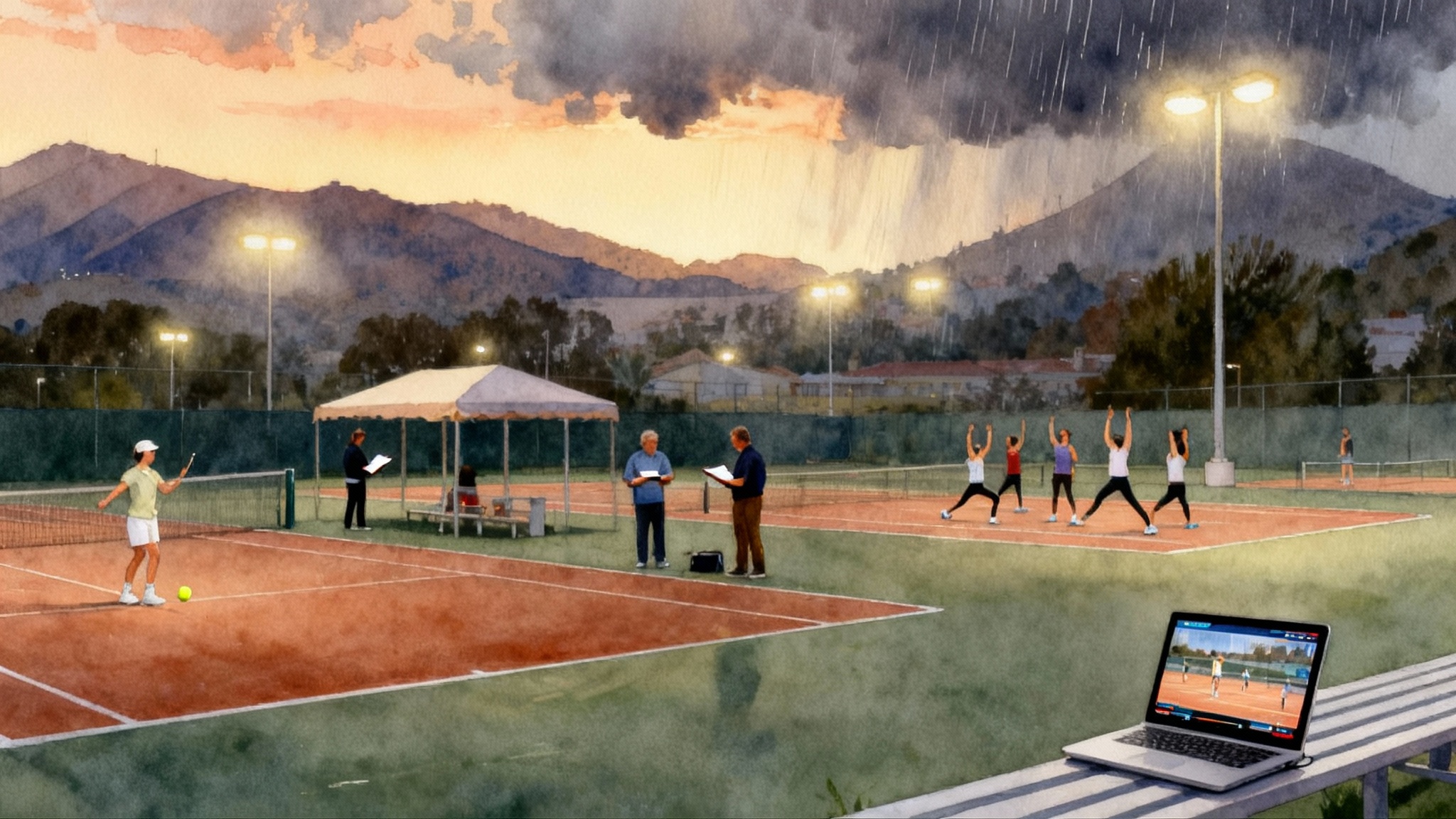
How to read this 2026 guide
Families across Northern California ask the same question in January and again in August: Which academy will actually improve my player’s match results and keep school on track? This guide answers that by ranking and comparing leading programs in the Bay Area, Silicon Valley, and Sacramento against practical criteria a family can verify in a single visit. We focus on coaching quality and true coach to player ratios, Universal Tennis rating and United States Tennis Association match play cadence, surfaces and wet weather plans, academics integration, boarding and day options, costs that are actually paid, and real commute time.
Where we cite ratings, we use Universal Tennis rating. If you are new to it, see the overview on how Universal Tennis rating works. We also refer to the United States Tennis Association Northern California calendar for match opportunities, which you can find on the USTA NorCal junior competition page.
If you are weighing out-of-region options, compare climate, court access, and travel in the Southern California academies 2026 guide and the Florida tennis academies 2026 guide.
Our method and why it matters
We designed a scoring rubric that rewards what moves the needle in match play.
- Coaching quality and delivery: Head coach presence on court, stability of lead coaches through the season, and how often instruction turns into measurable patterns in points. We look for coaches who demonstrate patterns with drills and then require those patterns in live play.
- True coach to player ratio: Posted ratios can be misleading. We score what we observe on court during peak hours, not what a brochure promises.
- Match play cadence: Weekly internal matches, challenge ladders, Universal Tennis flex events, and United States Tennis Association tournaments within a four week cycle. Training is fuel. Matches are the race.
- Surfaces and wet weather plans: How often you can train when it rains, whether courts drain quickly, and whether the academy has indoor or covered options, or alternative strength and video plans that keep the week productive.
- Academics integration: Options for full time study, flexible school partners, tutoring, or study halls aligned with travel blocks.
- Boarding vs day options: If your family is outside the immediate metro area, lodging and supervision are not nice to have items. They are a requirement.
- Transparent costs and commute: We compare real monthly totals including registration fees, ball fees, strength sessions, and the private lesson rhythm needed to unlock group work. For commute, we use realistic after school windows, not Sunday morning.
Use this rubric as a checklist during your trial. You should be able to verify every input within a week.
The 2026 Northern California shortlist
Northern California offers fewer boarding academies than Southern California or Florida. Most elite training here is day based, with strong after school pathways and a handful of full time options. Below is an editorial shortlist families ask about the most. Programs are grouped by metro and then ordered by overall training quality and pathway depth. Your best fit may be different based on school, level, and commute.
Silicon Valley and Peninsula
- Eagle Fustar Tennis Academy (Cupertino and surrounding South Bay sites)
- Why it scores well: Experienced staff that keeps head coaches visible on court, a clear after school to high performance ladder, and frequent live ball that flows into sets.
- What to verify: Posted coach to player ratios during 4 to 6 p.m. windows, which groups get video review, and the match play slot your player will enter within week one.
- Best for: Strong after school development from Universal Tennis rating 6 to 10, with selective full time options by arrangement.
- Player Capital Tennis (Menlo Park and Atherton)
- Why it scores well: Clear junior pathway, reliable communication, and a culture that values doubles patterns along with baseline building.
- What to verify: Where your player sits in the daily ladder, the number of Universal Tennis ladder matches offered monthly, and the plan for wet weeks.
- Best for: Committed student athletes in mid Peninsula schools who want steady match volume without losing classroom time.
- Tompkins Tennis (Alameda and Fremont)
- Why it scores well: Technical teaching with consistent progressions and experienced sparring partners in evening blocks.
- What to verify: The specific technical goal set for the first four weeks, how often sets are played to seven games, and the private lesson cadence expected.
- Best for: Players who need mechanical upgrades paired with patient match play exposure.
- Silicon Valley high performance clusters anchored at municipal hubs
- Examples: Sunnyvale, Mountain View, and Cupertino facilities operated by established contractors that run selective high performance pods inside larger programs.
- Why it scores well: Access and convenience. If the coach quality and match play cadence are confirmed, this is the most commute friendly path for many families.
- What to verify: Who leads the high performance pod, the posted ratio at peak time, and match opportunities beyond the same ten practice partners.
- Best for: After school athletes who value proximity and predictable schedules.
San Francisco and North Bay
- Private club anchored academies with guest access
- Examples: Bay Club locations and historic clubs that host elite junior pods.
- Why it scores well: Court availability, solid hitting partners, and shelters or canopies that keep some training alive in rain.
- What to verify: Guest policies, how many non member academy days you can book ahead, and costs beyond tuition.
- Best for: Players who need reliable courts, live ball, and access to adult sparring.
- Community based high performance pods
- Why it scores well: Smaller groups, hands on instruction, and flexible schedules that accommodate San Francisco school days.
- What to verify: Weekly match play slots and how the program handles the city’s frequent winter showers.
- Best for: Motivated learners who thrive in small, technical groups.
Sacramento and the Foothills
- Gorin Tennis Academy (Granite Bay and Roseville area)
- Why it scores well: Deep training culture with a track record of juniors advancing to college and professional pathways, plus full day blocks that mimic tournament demands.
- What to verify: Current group composition at your player’s level, the true coach to player ratio in afternoon blocks, and travel support to United States Tennis Association Northern California events.
- Best for: Full time junior pathway and serious after school athletes from Universal Tennis rating 8 to 12 and up.
- JMG style high performance programs in Sacramento clubs
- Why it scores well: Physically demanding sessions, structured point play, and a competitive sparring pool drawn from the Sacramento metro.
- What to verify: Strength and conditioning oversight, academic support, and who manages tournament planning.
- Best for: Tournament driven juniors who want a competitive training room and frequent match play.
- Spare Time Clubs junior performance tracks (Gold River, Johnson Ranch)
- Why it scores well: Reliable court access, consistent scheduling, and weekend match play options.
- What to verify: How your player will move between levels, the monthly Universal Tennis match quota, and rain day alternatives.
- Best for: Families seeking balance between training quality, facilities, and convenience.
Comparison by the numbers you can verify in person
Use these checkpoints at any academy on your list.
-
Coach to player ratio in real time: Stand at the fence from 4 to 6 p.m. Count active coaches and players on court. Divide. A ratio of 1 to 6 in live ball and 1 to 4 in technical drill blocks is a practical target. If the ratio drifts to 1 to 10 during peak hours, ask how and when the program tightens groups for the players who need it most.
-
Match play cadence: Your player should log two to three competitive set days per week in practice plus one meaningful match block every week or two through Universal Tennis or United States Tennis Association. Set days do not need to be full best of three. Play two short sets with tiebreaks, then a ten point tiebreak. The key is scorekeeping and pressure.
-
Surfaces and wet weather plan: Northern California is mostly outdoor hard court with minimal indoor options. Ask to see the rain plan in writing. A strong plan includes tarps or squeegees that make courts playable within an hour after light rain, covered hitting or footwork stations, strength and mobility blocks, and video breakdown that ends with a written action for the next dry session.
-
Academics integration: If your player is full time or on a flexible school schedule, look for attendance expectations, quiet study blocks near courts, and a named academic coordinator. If the academy does not have formal academics, ask about trusted local tutoring and proctoring services.
-
Boarding vs day: True boarding in Northern California is limited. Most out of area families choose homestay or short term rentals near the club. If the academy offers housing, ask for supervision details, daily routines, and transportation plans. For a club-embedded example of housing and supervision, read the Legend Tennis Academy profile.
-
Transparent costs: Build a realistic month. Include group tuition, one or two private lessons per week, strength sessions, and three to four local tournament entry fees across a six week cycle. Private lessons in Northern California often run 120 to 200 dollars per hour. Full time group blocks range widely, commonly from two thousand five hundred to four thousand dollars per month depending on hours and staffing. After school high performance tracks often range from eight hundred to eighteen hundred dollars per month.
-
Commute time: Drive the route during a school day. A twenty minute map estimate can become forty five minutes with South Bay traffic. Commute friction is the hidden cost that derails consistency.
What it costs in practice
Families often budget for the headline tuition and forget the glue that makes training stick. Here is a realistic picture for a committed junior.
-
After school pathway month: High performance group four days per week, eight private lessons in total, one strength session per week, and one tournament or Universal Tennis ladder weekend. Expect a monthly total between two thousand and three thousand five hundred dollars after fees and entries.
-
Full time junior month: Daytime group blocks, eight to twelve private lessons, strength three times per week, recovery, and match travel. Expect four thousand to seven thousand dollars per month depending on program level and travel.
-
Adult high performance month: Three to four group sessions per week plus four private lessons. Expect one thousand two hundred to two thousand four hundred dollars.
These ranges reflect what families in the region report paying in 2025 and early 2026. Always ask for a new family month that bundles a trial block of group, two private lessons, and one match play event. That single month will show you the true all in cost.
Commute and scheduling playbook
-
Silicon Valley: Congestion spikes from 3 to 6 p.m. If school ends at 3:20 p.m., plan for a 4:15 p.m. arrival even for a ten mile trip. Favor academies that offer a 4:30 to 6:30 p.m. high performance block and a later 6:30 to 8:30 p.m. block, so you can pick the one your commute actually allows.
-
Peninsula and San Francisco: Weather can cancel evenings from December through March more often than inland regions. Choose programs with quick drying courts and study spaces for rain delays.
-
Sacramento: Winter rain arrives but dries faster. Summer heat drives morning training. If you live in the foothills, target 8 to 11 a.m. summer blocks and 4 to 7 p.m. during the school year.
If you are expanding your search across states, use the Florida tennis academies 2026 guide to compare travel density and tournament access.
Trial session checklist you can bring to the gate
Print this and take it with you. Your goal is to leave with a yes or not yet answer.
Coaching and culture
- Did a lead coach learn your player’s name and strengths within the first thirty minutes?
- Did instruction appear in live points the same day?
- Did coaches give your player one written focus for the week?
Ratios and groups
- Count coaches and players from 4 to 6 p.m. What is the true ratio? Does it match what you were told?
- Where would your player land in the daily ladder? Who are three likely practice partners?
Match play
- How many set days per week are guaranteed?
- When is the next Universal Tennis or practice match for your player and who signs them up?
Wet weather plan
- Where do players go when it rains? What gets done in that hour?
- How soon after rain are courts usually playable on site?
Academics
- If you need it, who handles school coordination? Are there quiet study blocks with supervision?
Logistics and costs
- What is the realistic monthly cost with group, private lessons, strength, and entries?
- What is the refund or makeup policy for rain or illness?
- How does pickup work if practice runs late?
Red flags
- Ratio above 1 to 10 during peak hours with no plan to tighten it.
- No written match play schedule for the next two weeks.
- Vague answers about rain days, or private lessons that are the only way to fix what group training ignores.
Best for profiles to choose quickly
-
Full time juniors chasing college tennis: Look for Sacramento and South Bay programs that run daytime blocks with supervised strength, planned Universal Tennis and United States Tennis Association schedules, and at least one academic integration option. Prioritize coach presence and a sparring pool that challenges your player daily. Boarding is limited in Northern California, so confirm housing or homestay support.
-
After school pathway athletes: Choose a commute friendly program with two to three high intensity group days and one private lesson each week. Verify that your group plays two set days weekly. In the Peninsula and San Francisco, demand a rain plan that keeps you productive.
-
Adult high performance players: Target academies that run adult live ball and point construction with reliable sparring partners. Ask for a mini cycle plan that rotates serve plus one patterns, return games, and transition skills every two weeks. Confirm that the coach setting your plan is on your court often.
Quick rankings by category for 2026
These snapshots reflect what families report and what academies publish for the 2025 to 2026 seasons. Always verify during your trial month.
-
Coaching quality and delivery: Sacramento flagships and Eagle Fustar lead with head coach visibility and planned progressions. Peninsula programs follow closely with strong assistant benches.
-
True ratios: The best groups hold 1 to 6 in live ball and 1 to 4 in drill blocks at peak times. You will see this most reliably at dedicated high performance programs rather than broad recreational programs with a single elite pod.
-
Match play cadence: Sacramento programs tend to enter more weekend United States Tennis Association events due to shorter drives and more club partners. Silicon Valley programs often compensate with Universal Tennis ladders and internal matches when travel is harder.
-
Surfaces and rain: Sacramento dries faster. San Francisco and coastal Peninsula programs that invest in squeegees, blowers, and canopies preserve more training days. Indoor courts are rare, so video and strength plans matter.
-
Academics: A few Sacramento area programs offer structured study blocks. In Silicon Valley, expect flexible school options and private tutoring networks rather than in house academics.
-
Boarding vs day: True boarding is limited. Families usually choose homestay, short term rental, or a commuter school schedule. Confirm details in writing.
-
Costs and commute: South Bay private lessons trend toward the high end of the range. Sacramento offers more court time per dollar and shorter drives to tournaments. Peninsula programs cost more per hour but can save time if they are close to school.
How to make the decision in seven days
- Day 1 to 2: Build a shortlist of three programs based on commute and schedule. Book one trial session at each and one private lesson where possible.
- Day 3 to 5: Attend two programs on back to back days. Use the checklist. Film ten minutes of live points at each with permission. Note ratio, coaching, and how instruction shows up in points.
- Day 6: Play a Universal Tennis or practice match to test what stuck. Track serve percentage, second serve win rate, and unforced errors per set. Simple numbers reveal whether training is transferring.
- Day 7: Decide. The right program is the one where your player can show up four days a week with the least friction, gets precise feedback tied to video or stats, and plays real sets at least twice per week. If two options tie, choose the shorter commute. Consistency beats perfection.