Best SoCal Tennis Academies 2026: LA, OC, and San Diego
A February 2026 parent buyer’s guide to Los Angeles, Orange County, and San Diego tennis academies. Compare coaching credentials, ratios, weekly hours, surfaces, UTR outcomes, placements, day vs boarding, pricing, trials, and scholarships.
 Tommy
Tommy
How to use this February 2026 guide
You are choosing an environment, not just a coach. In Southern California, programs vary widely by coaching pedigree, player-to-coach ratios, weekly training hours, hard vs clay court access, and the outcomes that matter for juniors: Verified UTR gains, ITF exposure, and college placements. This guide focuses on Los Angeles County, Orange County, and San Diego, and reflects publicly listed offerings as of February 10, 2026.
Two quick truths to anchor expectations:
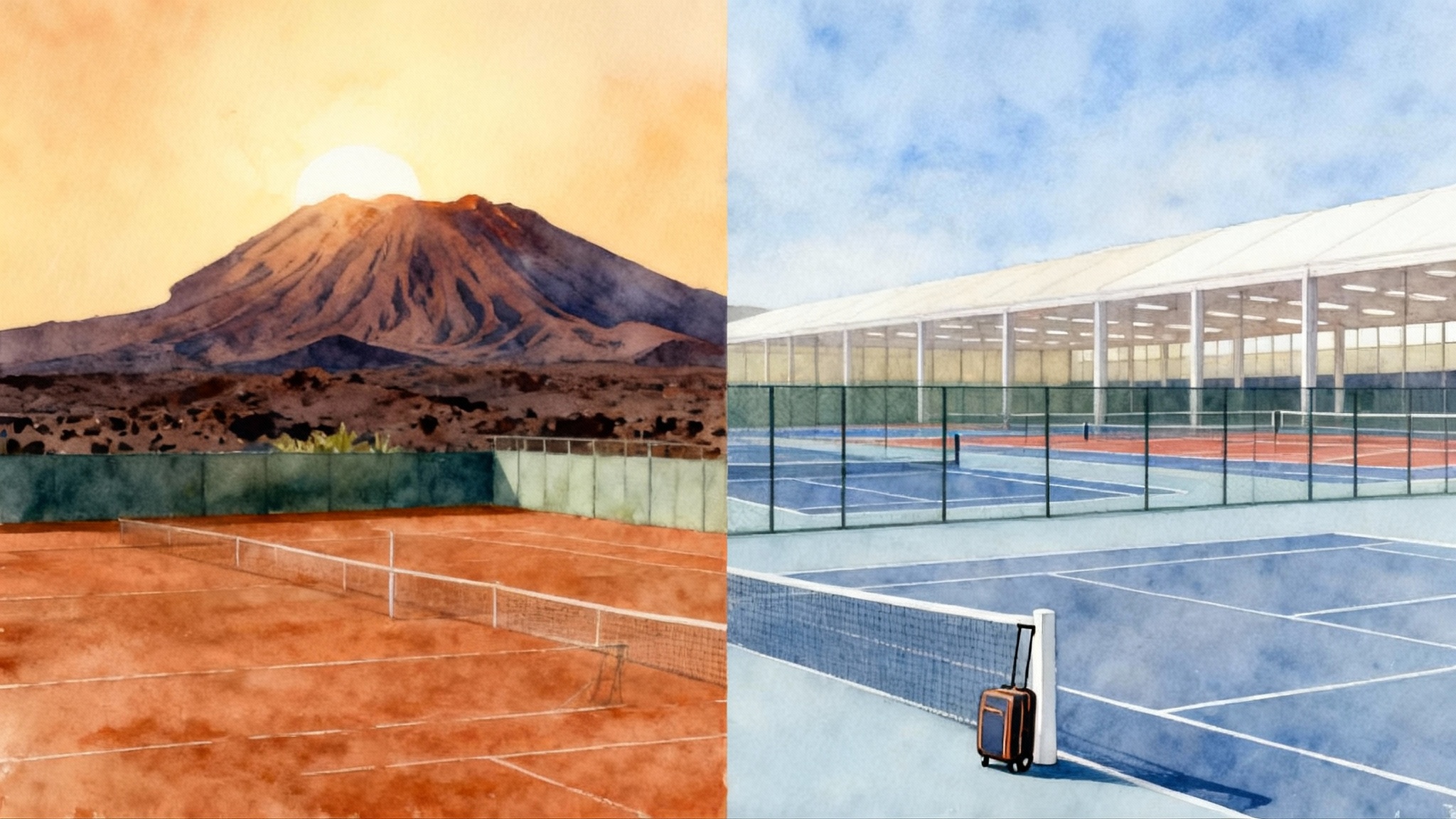
- Clay is scarce in SoCal. One of the few hubs with both hard and clay is San Diego’s Barnes Tennis Center, which lists 23 hard courts and two Cali-Clay courts. See the facility details on Barnes’ page: 23 hard courts and 2 Cali-Clay courts.
- Full-time boarding inside LA, OC, or SD proper is rare. Most families choose strong day academies plus local tournament play. If you must have boarding within driving distance, you will likely look slightly outside these three metros.
Below, you will find side-by-side takeaways for the leading programs parents ask about most, organized by county. If you are also comparing the Bay Area, see our guide to Best Northern California Academies 2026.
Los Angeles County
Jack Kramer Club High Performance - Rolling Hills Estates
- Coaching credentials: Legacy South Bay program with multiple high-performance tracks led by veteran coaches. Groups are organized by Verified UTR level, with defined workout structures for intermediate, advanced, and elite players. Public listings show named coaches and UTR gating for top squads, plus college consultation built into some offerings.
- Player-to-coach ratio: Not universally listed by group. Elite groups cap enrollment; advanced sessions and “Lizardo’s 4 Pt. System” highlight small-court coaching density. When evaluating, ask for the current cap per court for your child’s slot.
- Weekly training hours: Menu of options. Examples from current schedules include 2-hour advanced sessions three days per week, 2.5-hour elite clinics up to four days per week, and evening high-performance blocks that can stack toward 8-10 plus weekly on-court hours. Families commonly add private lessons for targeted work.
- Surface mix: Primarily hard courts.
- UTR/ITF outcomes and college placements: UTR-gated grouping accelerates appropriate match variables in practice. The club has a long history of elite juniors and college players; request recent placement sheets during your visit.
- Boarding vs day: Day only. Private club membership is required for junior programs.
- Pricing bands: Transparent drop-in and monthly clinic rates are published, and membership pricing is posted separately for juniors and families. Review current junior membership terms before enrolling.
- Commute logistics: Convenient for South Bay families. Proximity to Pacific Coast Highway, the 110, and neighborhood arterials makes after-school sessions realistic if you are based in Palos Verdes, Torrance, or Redondo.
- Trial-week access: One-time clinic trials are available by request, with published drop-in pricing. See the juniors page for schedules, UTR groupings, and sample fees: Jack Kramer junior tennis programs.
- Scholarships: Typically not posted for this private-club setting; ask about needs-based options through affiliated nonprofits in the area.
Top Seed Tennis Academy at Calabasas Tennis and Swim Center - Calabasas
- Coaching credentials: City-partnered program with a multi-decade footprint. City pages highlight an elite junior track and a staff of more than a dozen pros. Public claims note more than 300 college scholarships over time; request a current list by graduating class.
- Player-to-coach ratio: Group clinics vary by level; ask for per-court maximums for high-performance squads.
- Weekly training hours: After-school high-performance blocks typically 2-3 hours per session. Players aiming at varsity or college often mix 3-5 group sessions per week with 1-2 private hours.
- Surface mix: Sixteen plus lighted hard courts. Clay availability is limited in this corridor.
- Outcomes and placements: The academy’s partnership with a high-volume tournament site in Calabasas means frequent match play opportunities nearby. Request their updated placement and UTR progression data for 2024-2026 cohorts.
- Boarding vs day: Day only.
- Pricing bands: Mid to upper mid for SoCal group training; private lessons vary by coach seniority.
- Commute logistics: Best for families along the 101 corridor: Agoura Hills, Calabasas, Woodland Hills, and Malibu.
- Trial-week access: Most city-partnered programs allow paid trials if space permits; confirm at the front desk.
- Scholarships: Some municipalities or friends-of-the-park funds provide assistance. Ask the center manager.
Orange County
Brymer Lewis Tennis Academy - Great Park, Irvine
- Coaching credentials: Co-founded by Chris Lewis, a former Wimbledon finalist, and Chuck Brymer. Public materials emphasize a decade plus of national and international junior success and a competition-forward culture.
- Player-to-coach ratio: Published at 5:1 in the high-intensity academy blocks, which is excellent for live-ball feedback.
- Weekly training hours: Great Park schedules list multiple 2-hour blocks Monday through Friday. A typical five-day plan produces about 10 hours on court weekly, with players often adding a private lesson or a weekend match set to reach 12-14 hours.
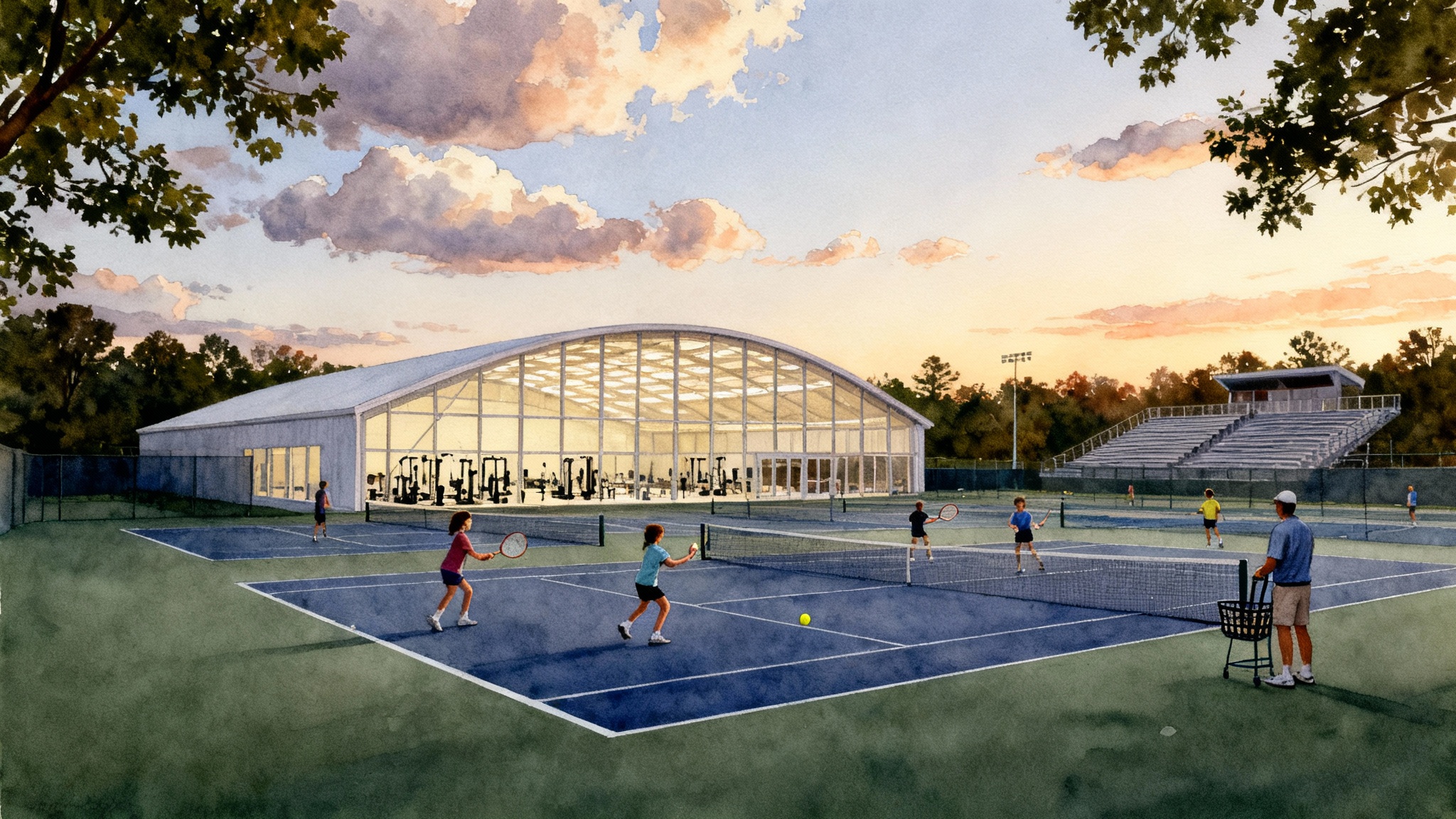
- Surface mix: Great Park has 25 lighted hard courts and a championship court. No clay at this site.
- UTR/ITF outcomes and college placements: The staff highlights national title runs and a steady pipeline into top college programs. Ask for their current honor roll and the last two graduating classes’ matriculations.
- Boarding vs day: Day only.
- Pricing bands: Mid to upper mid by Orange County standards; ratio and coach pedigree account for the premium.
- Commute logistics: Ideal for Irvine, Tustin, Lake Forest, and North Laguna. The location is just off the 5 with easy access from the 133 and 241.
- Trial-week access: Contact the listed coordinator for an evaluation slot and short-term tryout placement.
- Scholarships: Limited and typically performance-based; inquire early in the calendar year.
For more on culture, expectations, and what stands out to parents, see our academy profile: Brymer Lewis Tennis Academy.
The Tennis Club at Newport Beach - High Performance
- Coaching credentials: A staff with Division I backgrounds and tour exposure. Public bios cite players and alumni competing in top NCAA conferences, and the program integrates UTR Verified match play into weekday training.
- Player-to-coach ratio: Varies by court; ask for the max-per-court number for the specific after-school slot.
- Weekly training hours: The current high-performance schedule runs 4:00-5:30 training plus 5:30-6:30 UTR match play on weekdays. Five days yields roughly 12.5 on-court hours, a strong volume that blends technical reps with pressure points.
- Surface mix: Hard courts.
- Outcomes and placements: UTR verification each week gives families a clean, comparable scoreboard for progression. Ask for the program’s rolling UTR deltas and recent college placements.
- Boarding vs day: Day only.
- Pricing bands: Published 12-week blocks price at the upper mid tier for OC for five days per week, with scaled options for 3-4 days.
- Commute logistics: Jamboree corridor and the 73 make it reachable from Newport, Costa Mesa, and Irvine.
- Trial-week access: Enrollment is block-based; paid drop-in is sometimes available if a court is under cap. Call the desk.
- Scholarships: Not generally posted. Ask the director about case-by-case support or nonprofit partners.
Agape Tennis Academy at Fountain Valley Tennis and Pickleball Center - Fountain Valley
- Coaching credentials: Contracted city program with defined UTR gates. High Performance groups require UTR 2.5-5.0 for lower HP and 5.0 plus for HP I, with tournament participation expectations.
- Player-to-coach ratio: Not universally listed. Groups are sized to match gates and goals. Ask for per-court caps by session.
- Weekly training hours: After-school blocks of 2-2.5 hours. Two or more days per week minimum are recommended for HP. Players typically add weekend tournament play to meet program requirements.
- Surface mix: Hard courts only.
- Outcomes and placements: The UTR threshold and monthly tournament requirement keep competitive density high. Parents should ask for the recent record of varsity and college placements.
- Boarding vs day: Day only.
- Pricing bands: City-partnered pricing is often more accessible than private-club academies.
- Commute logistics: Direct access from the 405 corridor serves Fountain Valley, Huntington Beach, Westminster, and Costa Mesa.
- Trial-week access: Most city programs allow a paid evaluation or short trial when space permits.
- Scholarships: City-run facilities sometimes have needs-based assistance. Ask the front office.
Advantage Tennis Academy - Irvine
- Coaching credentials: Known for integrating training, fitness, mental skills, tournament planning, and academics with day and full-time tracks.
- Player-to-coach ratio and hours: Vary by block and time of year. Full-time families typically combine morning and afternoon sessions with fitness for a school-year cadence.
- Surface mix: Access to hard and, within an OC commute radius, green clay for tournament prep.
- Outcomes and placements: Staff emphasize process-based college placement including transcripts, outreach timelines, and video. Ask for the latest college list and a sample annual plan.
- Boarding vs day: Historically offers both. Confirm current boarding availability for 2026 intakes.
- Pricing bands: Full-time and boarding sit in the upper tier relative to day-only OC options.
See our internal profile for what stands out to families: Advantage Tennis Academy, Irvine.
San Diego County
Barnes Tennis Center - High Performance and a deep pathway
- Coaching credentials: A nonprofit hub operated by Youth Tennis San Diego, with high-performance blocks and developmental pathways under experienced directors. The campus also hosts major junior and professional events, which keeps competitive energy high.
- Player-to-coach ratio: Varies by block. Junior programs and high-performance groups set court caps. Ask for the coach-to-court plan for your child’s specific session.
- Weekly training hours: The full-time academy option on posted schedules runs 9:00-11:30 and 4:00-6:30 Monday through Friday in-season, which is approximately 25 on-court hours weekly, plus fitness add-ons.
- Surface mix: One of SoCal’s only large mixed-surface centers with hard and Cali-Clay. Verify current counts on the facility page.
- UTR/ITF outcomes and college placements: Frequent on-site tournaments and UTR match play opportunities create reliable data points. Ask for the high-performance group’s recent UTR deltas and the last two years of college placements.
- Boarding vs day: Day only.
- Pricing bands: Membership pricing for the facility is published, with separate fees for academy sessions. Full-time fall blocks are posted with daily drop-in options for trial days.
- Commute logistics: Point Loma location is minutes from San Diego International Airport and near the I-5 and I-8, which matters for weekend tournament travel.
- Trial-week access: Daily and half-day drop-ins are available for many blocks, which is ideal for a one-week test.
- Scholarships: Youth Tennis San Diego publicly advertises significant annual scholarships and free-access programs. Families with need should apply early in the session calendar.
San Diego Tennis and Racquet Club - Angel Lopez Tennis Academy
- Coaching credentials: Directed by Angel Lopez, a USPTA Master Professional and longtime Southern California developer. Public bios list work with notable professionals and top collegiate athletes.
- Player-to-coach ratio: Group sizes vary by level. The club can share per-court caps for each clinic tier.
- Weekly training hours: After-school junior track, tournament-prep sessions, and summer intensives. Players pursuing varsity or college typically target 8-12 hours per week across clinics and privates.
- Surface mix: Large hard-court inventory with a stadium court in a private-club setting.
- Outcomes and placements: Strong history of high-level junior development in San Diego, with alumni including ATP and NCAA names. Ask for a current list and recent UTR gains.
- Boarding vs day: Day only.
- Pricing bands: Private-club membership with program fees. Value is strong if your family also uses club amenities and on-site fitness.
- Commute logistics: Tecolote Road location just off I-5 and I-8 works well for central and coastal San Diego.
- Trial-week access: Tours and paid drop-in evaluations are common. Call the tennis desk.
- Scholarships: Inquire about member assistance and community partnerships.
Commute and daily logistics parents actually feel
Think in blocks, not miles. A 2-hour after-school session becomes 3-3.5 hours when you add school pickup, drive time, warmup, and return. Here is a practical way to model your week in SoCal traffic:
- School bell to curb: 10-20 minutes. If school ends at 3:15, assume you depart at 3:30.
- Drive window: Plan on 30-45 minutes intra-county on weekdays. The 101 and 405 corridors will swing more than the I-5 in North County San Diego.
- Session time: 90-150 minutes depending on program.
- Return: 20-40 minutes. Add 10 minutes for a recovery snack stop.
If you do not love that math for five days per week, pick a program nearer to school and reserve the two longest training blocks for low-traffic days.
Pricing bands at a glance in February 2026
- Day academies with college-track blocks: Expect about 10-15 hours weekly through 4-5 days of group training. At SoCal rates, that often falls in the mid to upper-mid tier month to month, with premium coaches and lower ratios at the top of the range.
- Full-time day programs: When you combine morning and afternoon on-court plus fitness, the weekly load can reach 20-25 hours. The monthly equivalent is a premium and will vary by facility.
- Private club settings: Membership dues plus program fees. Great value if multiple family members play or you leverage the club’s fitness and pool in one place.
Action step: Ask each academy to express costs per actual on-court hour for your child’s plan. That normalizes apples-to-apples comparisons between 90-minute and 150-minute sessions.
Trial weeks, evaluations, and scholarships
- Trials: Many programs allow paid day trials or one-week tryouts if space permits. Full-time blocks often offer paid daily drop-in, which is ideal for testing volume. Ask for a court where your child will see 60-90 minutes of live-ball sets, not just feeding lines.
- Evaluations: For UTR-gated groups, request a 30-45 minute on-court assessment on the first day, then a written plan with 2-3 measurable goals for the next four weeks.
- Scholarships: Nonprofits and city-partnered centers frequently maintain needs-based assistance. In San Diego, Youth Tennis San Diego publicly promotes scholarship support across programs. In Orange County and Los Angeles, ask city centers and friends-of-the-park groups first, then speak with academy directors about partial aid for tournament-caliber athletes.
Clear-fit recommendations by player pathway
Here are specific matches based on your child’s goals, schedule, and surface needs.
- Junior pathway, ages 8-12, building skills and love of sport
- What to prioritize: A five-to-one or better ratio, daily live-ball games, a visible ladder or challenge board, and weekly UTR or in-house match play by age 10-11.
- Good fits to explore:
- Brymer Lewis at Great Park for the 5:1 feedback density and competitive pace across multiple daily blocks.
- City-run high-performance on-ramps like Agape Fountain Valley that use UTR gates to ensure competitive peers.
- A private-club setting only if you intend to use the club for family play two to three days a week.
- Action plan: Book a three-day trial week with one private lesson in the middle. Ask the coach to write one technical cue, one tactical cue, and a serve routine to practice at home.
- High school varsity track, ages 13-17, aiming to start or lead lines
- What to prioritize: 10-12 weekly on-court hours that split roughly 60 percent drilling and live-ball, 40 percent set or tiebreak play, with structured fitness. UTR gates around 2.5-5.0 ensure peers push your child.
- Good fits to explore:
- The Tennis Club at Newport Beach high-performance blocks, which pair daily training with UTR Verified match play.
- Jack Kramer Club’s advanced and elite groups, where UTR-gated cohorts and experienced coaches accelerate decision-making under pressure. Review the juniors page to match the right group.
- Agape Fountain Valley HP I if your child has crossed UTR 5.0 and can commit to monthly tournaments.
- Action plan: For February through May, map two tournament weekends per month and two 90-minute privates per month. Ask each academy for a four-week block plan that specifies which days are point-construction and which are set-play.
- Pro-track or blue-chip college pathway, ages 14-18, UTR 9-12 and above
- What to prioritize: 18-25 weekly on-court hours in-season, deep match volumes against older or stronger peers, mixed-surface exposure, and coordinated fitness and recovery oversight. College or tour-experienced coaches should be on court daily.
- Good fits to explore:
- Barnes Tennis Center’s full-time blocks if you live in the county or can manage the commute. The volume and on-site tournament density help convert practice to outcomes.
- A custom hybrid in Orange County that pairs a high-intensity program like Brymer Lewis or Newport Beach with scheduled clay days when available and selective travel to high-value UTR and ITF events.
- Action plan: Pilot a seven-day test with two double-sessions, two heavy set-play days, and one clay session if you can schedule it. Measure first-serve percentage, plus-one forehand errors, and break points created per set. If those do not move, adjust court groups or volume.
Bottom line
In Southern California, the fastest path to better tennis is not a brand name. It is the right daily opponent set, the right coach-to-player density, the right weekly volume, and clear, verified match metrics. Use this guide to shortlist two programs within a 30-40 minute drive of school, do a one-week trial at each, and ask both staffs to write your player’s four-week plan with two concrete metrics. Pick the environment that puts your child in the most hard points against slightly better players, most often. That is how confidence becomes results, and how SoCal’s busy families get the most from every hour on court.