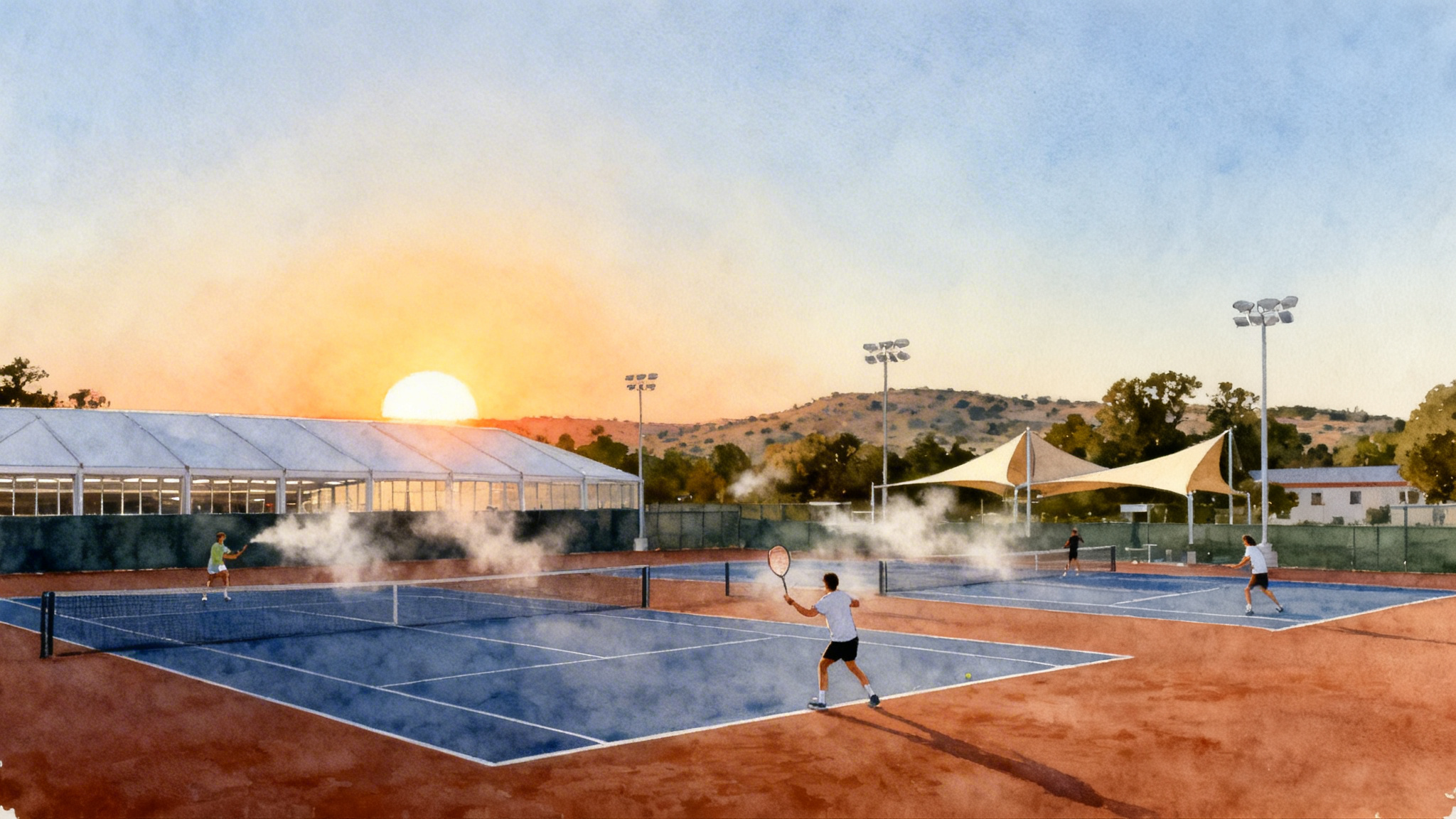
Best Germany Tennis Academies 2026: Berlin, Aachen, Munich
A data-backed, parent-friendly guide to Germany’s best tennis academies for Summer 2026. Compare Berlin, Aachen, and Munich on indoor capacity, surfaces, boarding, school fit, costs, match-play access, and ratios, plus itineraries and travel tips.
 Tommy
Tommy
How to use this guide
Summer 2026 is closer than it feels. If you are choosing a German academy for June to August 2026, this guide helps you shortlist quickly, budget clearly, and plan travel without surprises. We highlight boutique, high-touch programs like TennisTree in Berlin and ToBe in the Aachen corridor, then compare the three most practical hubs for families flying from the United States: Berlin, Aachen in the greater Cologne-Aachen corridor, and Munich. Use the comparison criteria, then jump to the sample one-week and four-week itineraries and the step-by-step path for converting a summer block into a semester stay.
If you are also weighing southern Europe, compare options in our Spain tennis academies 2026 guide.
What makes this parent friendly: specific criteria you can verify in writing, realistic cost ranges, clear coach-to-player ratios, and practical logistics like train times and school integration options.
The criteria that matter for families
When you evaluate programs, ask for these details in writing. They are the backbone of a smooth summer block and an even smoother semester.
- Indoor capacity for winter and rainy weeks: Number of guaranteed indoor courts your child can access during bad weather, and the policy for moving sessions indoors without cancellations.
- Surface mix: Clay to hard-court ratio across training and matches. Germany is mostly clay, but you can find hard-court time if you plan ahead.
- Boarding and day options: Clarify host family, residence, or apartment solutions, and exact mealtimes included.
- School integration: Local school seat, international school, or remote schooling support. Ask how morning sessions and mid-day school blocks are scheduled.
- Estimated monthly costs: Training, fitness, physio, accommodation, meals, transport, and tournament fees. Request a line-item quote.
- UTR and DTB match-play access: How the academy enters players into Universal Tennis events or the German federation calendar. The official DTB tournament calendar explains structures and licensing, while Universal Tennis Germany events show local open play and verified matches.
- Coach-to-player ratios: Differentiate between technical blocks, live-ball drilling, fitness, and match coaching on the road. Ratios should be stated per block type.
Quick snapshot by hub
Below are realistic, parent-tested ranges. Treat them as benchmarks to frame your questions. Your written quote should confirm exact figures for your player’s age and level.
Berlin
- Indoor capacity: Strong. Many academies secure 3 to 8 indoor courts via partner clubs during poor weather. Confirm your slot times in advance.
- Surface mix: Roughly 70 to 85 percent clay, with increasing access to hard courts in private clubs and municipal centers.
- Boarding or day: Day training is easiest; boarding is usually organized through vetted host families or serviced apartments in safe neighborhoods.
- School integration: Berlin has robust international school options and flexible timetables. Remote U.S. school or IGCSE-style programs can pair with morning or afternoon training blocks.
- Estimated monthly costs: 2,200 to 4,500 euros for training plus accommodation and meals depending on intensity and housing choice. Add 250 to 600 euros for tournament travel and fees in heavy match months.
- UTR and DTB access: Frequent UTR match nights and DTB junior and adult opens within the city. Travel by rail or short car rides keeps fatigue lower.
- Typical coach-to-player ratios: Technical 1 to 2 or 1 to 3; live-ball 1 to 3 or 1 to 4; fitness 1 to 6; travel coaching 1 to 2 per court.
Aachen in the Cologne-Aachen corridor
- Indoor capacity: Good. Partner clubs often offer 2 to 6 indoor courts, with winter bubbles and permanent halls common across the Rhineland.
- Surface mix: 80 to 90 percent clay. Hard-court access is available but must be booked deliberately.
- Boarding or day: Balanced. Host families and small residences are typical. Day training fits well for families staying in Aachen, Cologne, or Dusseldorf.
- School integration: Smaller class sizes in local schools are possible with German support. International and bilingual options are reachable by train or car. Remote schooling fits well due to shorter commute times.
- Estimated monthly costs: 1,900 to 4,000 euros depending on accommodation. Travel to tournaments across North Rhine-Westphalia is efficient and affordable.
- UTR and DTB access: Dense calendar of DTB opens and league matches within one hour by train. UTR offerings vary by week, so book early.
- Typical coach-to-player ratios: Technical 1 to 2 or 1 to 3; live-ball 1 to 4; fitness 1 to 6; tournament coaching 1 to 2.
Munich
- Indoor capacity: Excellent but in demand. Well-maintained halls are common; academy-held allocations are essential during wet weeks.
- Surface mix: 80 to 90 percent clay with limited but high-quality hard courts.
- Boarding or day: Boarding is available through residences and host families. Day training is popular, though commutes can be longer than in Aachen or Berlin.
- School integration: Strong international school network and robust German gymnasium options. Half-day timetables work if booked early.
- Estimated monthly costs: 2,400 to 5,200 euros, reflecting higher housing costs. Tournament travel in Bavaria is scenic but can add mileage.
- UTR and DTB access: Regular DTB tournaments and strong club league play. UTR is present, with pockets of verified match-play weeks.
- Typical coach-to-player ratios: Technical 1 to 2 or 1 to 3; live-ball 1 to 4; fitness 1 to 6; travel coaching 1 to 2.
Boutique spotlights
TennisTree, Berlin
Parents choose TennisTree for a small, method-driven environment inside a major city. See the TennisTree Berlin academy profile for facilities and pathway details. The program is built around technical work first, then progressive live-ball and constrained point play. What this looks like in practice:
- Micro-groups for stroke reconstruction: 1 to 2 or 1 to 3, with on-court video and targeted footwork ladders. The coach speaks in simple cues and repeats them in German and English when needed.
- Live-ball density without chaos: 1 to 3 or 1 to 4 in constrained games that fix a specific pattern, like backhand crosscourt to on the rise redirect.
- Match-play curation: A weekly plan mixing UTR nights inside Berlin and DTB opens on weekends, using public transport to reduce fatigue.
- Parent-facing reports: A two-page summary on Fridays that tracks technical keys, physical numbers, and mental skills prompts.
Indicative costs for a four-week summer block including training, fitness, and host family half-board typically land between 3,200 and 4,400 euros, depending on group size and housing. Ask for written confirmation of indoor slots and exact coach ratios by session type.
ToBe, Alsdorf near Aachen
ToBe appeals to families who want the intimacy of a boutique program with quick rail access to tournaments across North Rhine-Westphalia. Review the ToBe Tennis Academy Alsdorf page for leadership, schedule shape, and ratios. The academy pairs technical rebuilds with frequent verified matches.
- Precision morning blocks: 1 to 2 or 1 to 3 on clay, emphasizing spacing and contact in wind or light rain. Coaches prioritize repeatable patterns over show drills.
- Afternoon competitive ladders: Purposeful sets on alternating days to keep legs fresh, with coaches tracking serve patterns and return depth.
- Tournament-first weekends: DTB opens within 30 to 60 minutes and select UTR events slotted based on the player’s current load.
- Care model: Host families are vetted, with quiet study windows and consistent meals that match tournament schedules.
Typical four-week ranges, including training and host family half-board, run from 3,000 to 4,000 euros, plus 200 to 500 euros for tournament entries and travel. Confirm in writing how many indoor courts are guaranteed on rainy days and who drives to events.
Which hub fits your player
Match the city to your constraints rather than the other way around.
- Choose Berlin if you value a large, diverse tournament ecosystem inside city limits, excellent public transport, more hard-court access, and strong international school options.
- Choose Aachen in the Cologne-Aachen corridor if you want short commutes, dense clay tournaments in every direction, a calmer training base, and moderate housing costs.
- Choose Munich if you want premium facilities, deep club culture, and international schools, and you accept higher costs and some longer drives.
Sample one-week itinerary
Use this blueprint to evaluate how an academy will structure the days. Ask them to overlay their courts and coaches onto this template.
- Monday: Morning technical 1 to 3 with video on forehand spacing; afternoon fitness on acceleration; 30 minutes of serves. Evening recovery walk.
- Tuesday: Live-ball 1 to 3 with neutral-to-offense patterns; 60 minutes of returns; mobility circuit. Early sleep.
- Wednesday: Match-play set ladder with on-court coaching; group review and light bike flush.
- Thursday: Technical rebuild on the second serve and backhand shape; short points with serve plus one focus.
- Friday: Tournament preparation drills; 45 minutes mental skills run-through; parent report issued.
- Saturday: DTB or UTR competition day. Warm up at the event with coach notes on first four points of each game.
- Sunday: Off-court day. Short hike, museum, or pool. Five-minute video recap to lock in one improvement.
Sample four-week block
Here is a structure that moves from rebuild to robustness without overloading. Share it with the academy and ask for their court plan and ratios per session.
- Week 1, Rebuild: Two technical blocks per day at 1 to 2 or 1 to 3. Serve volume spread across the week. One UTR evening.
- Week 2, Integrate: Morning technical, afternoon live-ball, one or two match days. One DTB open on the weekend.
- Week 3, Compete: Two DTB or UTR events across the week, reduced drill volume, focused mobility and sleep targets.
- Week 4, Consolidate: Pattern rehearsal in the morning, single daily match or sparring set. One final tournament. Parent report with next-step plan.
Travel and logistics from major United States hubs
- Flights: From New York, Boston, Chicago, and Atlanta, nonstop to Berlin Brandenburg, Munich, and often Frankfurt with an easy train transfer to Cologne and Aachen. From Los Angeles, San Francisco, and Dallas, expect one connection.
- Trains: Berlin Brandenburg to city center is roughly 30 minutes. Munich airport to city is roughly 45 minutes. From Dusseldorf airport to Aachen is roughly 60 minutes by direct train. Frankfurt to Cologne is roughly 1 hour on fast trains.
- Car versus rail: In Berlin, rail wins. In Aachen and Munich, consider a compact rental car for weekend tournaments if coaching staff cannot drive.
- Packing for clay: Two pairs of clay-specific shoes, 10 to 12 freshly strung racquets if competing weekly, a compact stringing plan or local stringer contact, hat, and light rain layers.
- Insurance and medical: Carry travel health insurance. Ask the academy for the nearest sports medicine clinic and physio. Keep a printed consent to treat.
Budgeting a realistic month
These are common totals for a four-week summer block in 2026. Ask for a signed quote with inclusions and exclusions.
- Training and coaching: 1,400 to 2,400 euros based on group size and daily load.
- Fitness and physio screenings: 150 to 400 euros, more if weekly treatment is needed.
- Accommodation and meals: Host family half-board 1,200 to 2,200 euros; residence or apartment 1,600 to 2,800 euros.
- Tournament entries and travel: 200 to 600 euros depending on schedule and distance.
- Local transport: 60 to 120 euros for public transit in Berlin; similar or slightly higher monthly passes in Munich; Aachen often lower plus occasional ride shares.
Tip: Request a single monthly invoice with academy training, fitness, and housing together. Keep tournament fees and transport as pass-through receipts. This can simplify reimbursements for 529-style education accounts if your state plan allows eligible athletic travel tied to schooling.
Converting a summer block into a semester stay
If you decide by late July that the fit is strong, here is the path to a fall or spring semester.
- School integration: Secure a school slot by August 1 for a fall start or by December 1 for spring. Berlin and Munich have more international options; Aachen offers calmer local schools and efficient commutes.
- Visa and residency: For stays over 90 days, begin paperwork at least 8 to 10 weeks out. Ask the academy for a standard invitation letter that lists training hours and housing.
- Guardianship: If a parent cannot stay, arrange a local guardian through the academy or a partner service. Confirm who can consent to medical care and sign tournament forms.
- Health insurance: Purchase a policy recognized in Germany for minors in school. Many international student policies include this.
- Player licensing: For robust DTB play, you will need a club membership and player license aligned with the host region. The DTB calendar explains regional structures and will help your academy register correctly.
- Academic continuity: Keep your U.S. school looped in. Request weekly academic logs, grade export formats, and testing windows that match training peaks.
How to validate a boutique program in one call
Ask for these four documents and compare what you receive from TennisTree, ToBe, or any Munich program.
- Court plan for your first two weeks that states indoor fallback times.
- Ratios per block type with named coaches and their certifications.
- Tournament calendar for your month with UTR and DTB options circled.
- A written price sheet with inclusions, cancellation policies, and driver arrangements.
Programs that reply in 48 hours with concrete documents usually run reliable operations. If replies are vague, expect last-minute scrambles when summer storms hit.
Decision shortcuts by player type
- College-bound juniors at Universal Tennis 7 to 10: Choose Berlin or Munich for deeper weekday UTR options and strong sparring depth. For domestic comparisons, see our Mid-Atlantic academies 2026 overview.
- Younger technical rebuilders age 11 to 13: Choose Aachen for calmer sessions, shorter commutes, and heavy clay time.
- Big servers transitioning to clay: Choose any hub with guaranteed pattern sessions and match coaching. Ask for a second indoor hour on serve and return twice per week.
Calendar and timeline for Summer 2026
- By April 15, 2026: Lock your academy, housing, and tournament target dates. Request a signed quote and a draft court plan.
- By May 15, 2026: Book flights and train legs. Order strings, grips, and clay shoes. Share the four-week plan with coaches and get buy-in.
- By June 1, 2026: Confirm UTR and DTB entries for weeks one and two. Send medical consent and travel insurance to the academy.
- Arrival week: Plan a light first 48 hours with only one court session per day, movement screen, and grip recalibration for clay.
Practical training levers that create results
- Clay to hard-court transfer: End each Berlin or Munich clay session with 15 minutes of hard-court pattern rehearsal on a booked slot once per week. The contrast locks in spacing and depth control.
- Serve management: Cap total weekly serve volume at 450 to 600 balls split across two focused sessions. Use video checkpoints at 150-ball intervals.
- Recovery discipline: Berlin and Munich public transport can add steps that look healthy but create fatigue. Build a 20-minute afternoon nap window and keep one off-feet evening per week.
Final checklist for parents
- Written court allocations and indoor guarantees
- Named coach list with languages and certifications
- Coach-to-player ratios per block type
- Weekly UTR and DTB match plan with travel times
- Housing address, curfew, meals, and study windows
- Line-item budget with payment schedule
- Emergency contacts, guardian, and nearest clinic
The bottom line
Boutique German academies can deliver more progress in four weeks than a year of scattered lessons if you secure indoor fallbacks, demand precise ratios, and schedule weekly verified matches. Berlin rewards families that want depth and convenience. Aachen provides calm focus and short travel times. Munich offers premium facilities and club culture at a higher cost. Start with a written two-week plan, compare TennisTree and ToBe against it, and let the paperwork show you which program can execute. That simple filter turns a Summer 2026 experiment into a confident pathway for the semester ahead.