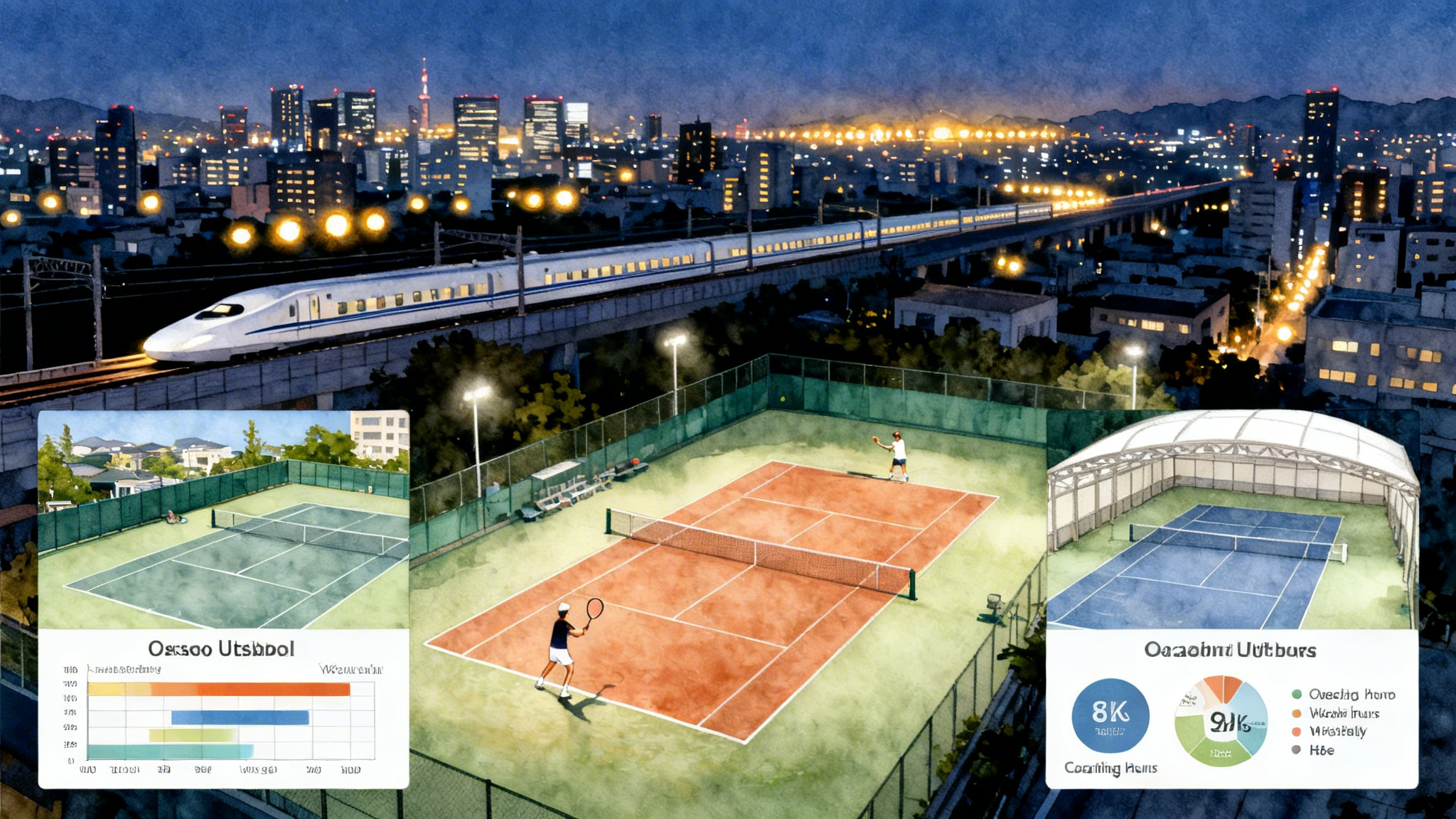
Best Texas Tennis Academies 2026: Austin to San Antonio Guide
Texas tennis is booming in 2026. This statewide, data-forward guide compares academies across Austin, Dallas, Houston, and San Antonio by court coverage, coaching ratios, boarding and academics, event access, college placement, and pricing.
 Tommy
Tommy
How we ranked Texas tennis academies in 2026
Texas players train through heat, wind, and surprise storms, so the right academy is more than a logo or a famous alum. We used seven practical criteria that affect daily reps, match readiness, and budget:
- Surfaces and court coverage: hard, clay, covered or indoor, plus lights and shade. Coverage matters because consistent training beats sporadic heroics in August.
- Coaching ratios: real coach-to-player pods during performance blocks. Small ratios help a player change patterns rather than just hit more balls.
- Boarding versus day options: what housing exists for out-of-area players or during tournament stretches.
- Integrated academics: can a player keep course load and match travel aligned, or will repeated absences chip away at grades and confidence.
- UTR and USTA event access: verified Universal Tennis events and steady Level 6 or Level 7 United States Tennis Association tournaments keep ratings and competitive rhythm moving.
- College placement: recent and consistent placements matter more than a single outlier recruit.
- Pricing: transparent session or monthly rates when available, plus value relative to facilities and programming.
We gathered public facility details, session flyers, and academy pages, then pressure tested claims with families and coaches where possible. When an academy updates pricing session by session, we show ranges and a concrete example so you can budget in real numbers.
Statewide leaderboard at a glance
- Best heat and weather coverage: Brookhaven Country Club Jr. Academy, Dallas area. Eight indoor courts, seven covered, and five clay courts create real flexibility on brutal or rainy days. Facility counts are listed on the club’s page for racquet sports: Brookhaven court counts.
- Best integrated academics, Austin: Austin Tennis Academy with ATA College Prep, a same-campus model that syncs classes with training blocks.
- Best boarding ecosystem, San Antonio area: John Newcombe Tennis Ranch in New Braunfels, a long-standing boarding environment with a full tournament calendar and adult camp ecosystem that benefits juniors.
- New entrant to watch, Austin area: Legend Tennis Academy in Spicewood, a four-court facility opened May 2025 that won early support from United States Tennis Association grants and local families. See the Spicewood facility opening report.
- Best public-center pipeline, Dallas suburbs: High Point Tennis Center, Plano, for scale and tournament familiarity, useful for late starters and adults.
- Houston’s best weather hedge: Club Westside’s mix that includes indoor options, plus multiple academies that host frequent events.
City-by-city maps and picks
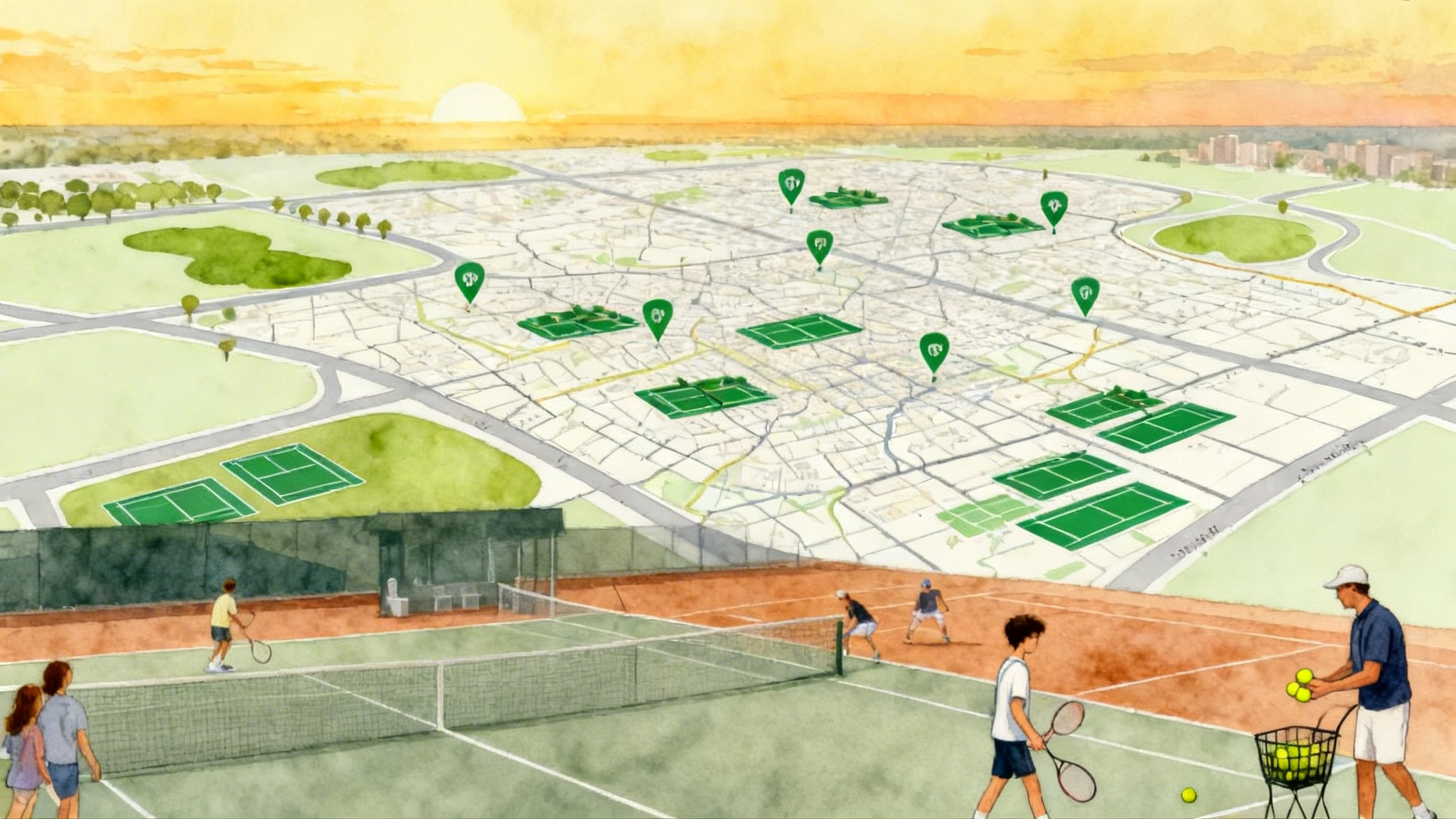
Below each map sketch, you will find our picks with facility notes, typical coaching pods, academics, competition access, and pricing signals.
Austin
Map sketch
- Southwest and Lake Travis: Austin Tennis Academy in Bee Cave corridor, near Southwest Parkway and Bee Caves Road. Roughly 25 to 35 minutes from central Austin in traffic.
- Hill Country west of the lake: Legend Tennis Academy in Spicewood near Crawford Road, about 40 to 55 minutes from central Austin depending on the hour.
Top programs
-
Austin Tennis Academy
- Facilities: outdoor hard with lights and shade. Training blocks run year round with dedicated fitness and video review.
- Coaching pods: performance blocks commonly run in small pods that keep players in live ball and situational point play. Expect pods of about 4 to 6 per coach in peak performance slots.
- Academics: ATA College Prep sits on the same property. The tight loop between class, court, and fitness is the core edge for full-time juniors who travel.
- Events: regular UTR events and a strong local tournament rhythm. Austin’s calendar is dense from fall through spring.
- College placement: consistent Division One and Division Three placements over the past decade, with strong doubles outcomes for many recruits.
- Pricing: full-time day and after-school tracks; tuition is typically quoted by semester or month. Expect premium Austin pricing, justified by integrated academics and coaching depth.
-
Legend Tennis Academy
- Facilities: four-court Spicewood site with structured junior pathway, adult sessions, and camps; launched as of May 2025. Backed by USTA venue support at opening. See the Community Impact coverage above for the opening details. For deeper background, read the Legend Tennis Academy profile.
- Coaching pods: boutique model that emphasizes small, progression-based groups and clear advancement criteria. Families highlight consistent feedback and film review.
- Academics: day-academy format. For players needing a full academic solution, homestay or independent school partners are the current path.
- Events: targets verified UTR blocks and weekend match play so late starters and tournament juniors both get calibrated results.
- Pricing: positioned to be competitive within West Austin day-academy rates. Ask for small-cohort pricing and multi-day discounts.
Who should pick Austin
- Tournament juniors who want an academic schedule that breathes with travel.
- Late starters who benefit from stable, small-cohort environments.
- Adults who want structured drill groups and occasional video review without a country club membership.
Dallas and the northern suburbs
Map sketch
- Farmers Branch: Brookhaven Country Club Jr. Academy near the Dallas North Tollway and I-635. Twenty to thirty minutes from many North Dallas neighborhoods.
- North Dallas: T Bar M Tennis Academy area, north of I-635 and east of the Tollway.
- Plano: High Point Tennis Center off West Park Boulevard. Large public complex with year-round programs.
Top programs
-
Brookhaven Country Club Jr. Academy
- Facilities: eight indoor courts, seven covered courts, 20 outdoor courts with five clay, and an indoor ball machine lane. The mix is unmatched for weather or heat pivots. Facility counts are listed on the club’s page for racquet sports: Brookhaven court counts.
- Coaching pods: high-performance blocks are staffed to keep pods small in the most technical windows, then expand for situational doubles and match play.
- Academics: day-academy model. Many families use area private schools or flexible public options and time their sessions accordingly.
- Events: regular USTA local levels and UTR events across the metroplex keep calendars full. Winter indoor availability helps maintain verified match volume.
- Pricing: club membership required for best rates. Expect indoor court surcharges to protect continuity in July and January.
-
T Bar M Tennis Academy
- Facilities: North Dallas legacy program with a deep competitive culture and alumni network. Indoor availability in the area is a key value for winter blocks.
- Coaching pods: performance pods aim for small ratios during drilling, then scale up for live points. Good for players who thrive on pace and variety.
- Academics: day-academy. Students pair with schools that allow early release or stacked mornings.
- Events: metroplex depth means weekly match play is realistic without long drives.
-
High Point Tennis Center, Plano
- Facilities: one of the most active public hubs in Texas. Court density and scheduling options help families thread practice around school. Great for late starters.
- Coaching pods: development tracks grouped tightly by level. Easy to add extra drills or private add-ons.
- Events: frequent USTA levels and in-house ladders speed up competitive reps.
- Pricing: public-center affordability with the option to layer private coaching.
Who should pick Dallas
- Tournament juniors who need indoor backup to preserve volume in peak heat or winter fronts.
- Late starters who benefit from dense calendars and public-center pricing.
- Adults who want structured leagues and the option to book covered courts when it rains.
Houston
Map sketch
- West Houston, Westchase corridor: Club Westside, with indoor options and a long tennis tradition. About 20 to 30 minutes from the Energy Corridor.
- Spring area north of the city: Giammalva Racquet Club and Elite Academy near Spring Cypress.
- Southwest loop: Chancellors Family Center with King Daddy Tennis Academy.
Top programs
-
Club Westside with Houston Tennis Academy
- Facilities: extensive outdoor hard courts plus four indoor hard courts used strategically during storms or extreme heat.
- Coaching pods: high-performance groups keep pods tight for live ball and situational work. Video and fitness are standard parts of the week.
- Academics: day-academy. Houston’s private and charter school mix gives families options to tailor training blocks.
- Events: steady UTR activity and a metro packed with USTA weekends, plus the ATP spring clay swing nearby for live inspiration.
- Pricing: tiered by track. Expect premium urban-club pricing with a real weather hedge from the indoor courts.
-
Giammalva Racquet Club and Elite Academy
- Facilities: large suburban complex with a juniors-first calendar and clubwide energy. Clay is limited in the metro, but hard courts are abundant.
- Events: frequent USTA Level 6 weekends and UTR sessions. Great for players who want match volume without long drives.
- Pricing: club membership plus academy fees. Good value for families that use the club beyond junior hours.
-
Chancellors Family Center with King Daddy Tennis Academy
- Facilities: indoor coverage for junior academy blocks, a serious advantage on storm days. The spring session flyer notes all classes held indoors.
- Pricing example, Spring 2026 session: Level 1 to 5 High Performance runs roughly 239 to 619 dollars per session depending on days per week, with member and non-member tiers. Ten and Under through Level 6 to 7 tournament training ranges from 109 to 579 dollars per session based on frequency. This is one of the clearest public price sheets in the state and a useful benchmark for Houston planning.
Who should pick Houston
- Tournament juniors who want predictable training even during summer storms.
- Late starters who prefer large-program energy and frequent in-house ladders.
- Adults who want a club environment with drill variety and indoor fallback.
San Antonio area
Map sketch
- New Braunfels, north of San Antonio: John Newcombe Tennis Ranch along Highway 46. About 35 to 50 minutes from many San Antonio neighborhoods.
- In-city clubs: Sonterra and Green Tree serve city residents who prefer shorter commutes.
Top programs
-
John Newcombe Tennis Ranch, New Braunfels
- Facilities: large complex with hard, clay, and several covered courts that protect training hours when weather turns. The boarding environment adds structure for tournament travel.
- Coaching pods: classic boarding cadence with morning and afternoon sessions, strength and conditioning, and monitored study periods.
- Academics: boarding pathway pairs with nearby schooling or accredited online solutions. Families should map test schedules to travel blocks early each term.
- Events: frequent weekend play opportunities plus easy access to San Antonio and Austin tournament calendars.
- Pricing: boarding rates are typically quoted by academic year and vary based on housing and academics. Plan for a comprehensive budget that includes travel.
-
City programs and private clubs, in town
- Facilities: mix of public centers and member clubs. Best fit for day students who want to keep everything inside the loop.
- Pricing: club dues plus clinics and privates often beat boarding costs by a wide margin, with less travel time.
Who should pick San Antonio area
- Tournament juniors and families who want a boarding structure without leaving Texas.
- Adults who want destination camps that compress skill work into a long weekend.
Sample weekly schedules you can copy and tailor
- Tournament junior, integrated academics, Austin Tennis Academy day model
- Monday to Friday
- 8:00 to 11:00: academics on campus
- 11:00 to 12:00: lunch and video review
- 12:00 to 2:00: on-court performance block, live ball emphasis
- 2:00 to 3:00: strength and conditioning
- 3:30 to 5:30: situational play or supervised match play
- Saturday or Sunday: UTR pool or USTA Level 6, alternating weekends
- Notes: teachers coordinate exams around travel weeks, so plan tournament bids two to three weeks ahead
- Late starter, boutique cohort, Legend Tennis Academy
- Monday, Wednesday, Friday
- 4:00 to 4:20: warm up, dynamic footwork
- 4:20 to 5:00: technical station with targeted reps
- 5:00 to 5:40: pattern building, cross court to down the line transitions
- 5:40 to 6:30: themed points and scoreboard play
- Tuesday or Thursday
- 30 minutes video review and a 60 minute private or small group add on
- Weekend: friendly match block to track verified results when scheduled
- Adult weekend, San Antonio area, destination camp
- Friday
- Evening welcome hit and serve tune up
- Saturday
- 9:00 to 11:30: clinic on patterns and net choices
- 1:30 to 3:30: live ball games and doubles formations
- 4:30: optional strength and mobility
- Sunday
- 9:00 to 11:00: supervised match play and take home plan
Choose-by-profile matrices
Tournament juniors
| If you are this player | Top fit | Why it works | What to do next |
|---|---|---|---|
| You travel 2 to 3 weekends per month and need your classes aligned | Austin Tennis Academy | On-campus academics, quick coach feedback loops, reliable match rhythm | Visit a full school day then a training block on the same day. Ask to see your projected class and lift timetable |
| You want all-weather practice and more clay in your weekly mix | Brookhaven Jr. Academy | Eight indoor, seven covered, and five clay courts keep you training when others cancel | Book a winter weekday visit and request time on indoor and clay in one afternoon |
| You want a small cohort feel and rapid feedback | Legend Tennis Academy | Progression-based pods, accessible coaching, and a quiet Hill Country setting | Ask for a one week trial with video review and a written advancement plan |
| You want a boarding structure without leaving the state | John Newcombe Tennis Ranch | Boarding cadence, covered courts, and tournament travel built into the routine | Request a two night shadow with dorm tour and study hall walk through |
Late starters and multi-sport teens
| If you are this player | Top fit | Why it works | What to do next |
|---|---|---|---|
| You need flexible hours and big program energy | High Point Tennis Center, Plano | Many class times, strong teaching depth, and easy add on privates | Start with two weekly drills plus one private. Reassess after six weeks |
| You want indoor sessions during storm season | Chancellors with King Daddy, Houston | Indoors during spring sessions, clear session pricing | Price two days per week for 12 weeks, then add a weekend match block |
| You learn best in smaller groups | Legend Tennis Academy | Small pods reduce noise, speed up swing changes | Ask for consistent coach assignment for six to eight weeks |
Adult players
| Goal | Top fit | Why it works | What to do next |
|---|---|---|---|
| Regain timing and stamina in 60 to 90 minute blocks | Club Westside, Houston | Drill menu, indoor hedge, and fitness on site | Book two drills weekly for four weeks and add a monthly private |
| Learn doubles patterns quickly | Brookhaven or T Bar M, Dallas | Dense doubles culture and indoor backup for rain days | Join a doubles clinic series and enter a club social within 30 days |
| One immersive skills reset | San Antonio area destination camps | Compressed learning with lots of live reps | Choose a weekend with clear themes and ask for a take home plan |
Pricing, in real numbers
Texas pricing spans a wide range. Here is how to think about it with a concrete session example.
- After-school tracks at public or club-run programs often price by session. In Southwest Houston, the spring 2026 Chancellors Family Center flyer shows Level 1 to 5 High Performance around 239 to 619 dollars per session depending on days per week, with member and non-member tiers. Ten and Under through Level 6 to 7 tournament training lists 109 to 579 dollars per session based on frequency. Indoors are specified for classes, which helps justify the rate when storms hit.
- Private clubs bundle membership plus academy fees. Indoor surcharges are common and worth paying during peak heat windows.
- Full-time day academies with integrated academics will quote by semester or year. Budget for tuition, strength and conditioning, physio, and tournament travel.
- Boarding academies quote by academic year. Build a full-year sheet that includes housing, meals, medical coverage, racquet service, and at least two long tournament trips per month during peak season.
Tip for comparing apples to apples
- Convert every program to cost per coached hour on court, then add a 10 to 20 percent buffer for weather downtime unless the site has covered or indoor courts. Coverage heavy facilities often win out on cost per completed hour, even when the sticker is higher.
- If you are comparing states, see the Florida junior academies scorecard and the California academies 2026 guide for context on pricing and coverage.
UTR and USTA access without the guesswork
- Verified UTR events move your rating reliably. Check whether an event is verified, then track your post match changes.
- USTA levels in Texas run from Level 7 up to national Level 1. For most juniors, Level 6 weekends across Austin, Dallas, Houston, and San Antonio are the backbone of the schedule. Favor academies that either host those events or sit near clubs that do, since verified results and points per round are the currency of progress.
How to audit any academy in a single visit
- Ask for a live schedule and count coaching pods at the main performance block. If you see more than six players shadowing one coach during a drilling set, ask how they rotate.
- Scan the court map for shade, fans, misters, and covered options. In July, that is the difference between completing two hours or calling it early.
- Request a sample tournament calendar with L7 and L6 targets two months out and a UTR pool or verified set every second weekend.
- For integrated academics, sit down with a school lead and ask to see one student’s last 30 days of travel and assignments.
Our 2026 verdicts by category
- Surfaces and coverage winner: Brookhaven Jr. Academy, Dallas area. The combination of eight indoor courts, seven covered, and five clay courts is unmatched for Texas weather pivots.
- Coaching ratio culture: ATA and Legend in the Austin area, plus boutique pods at select Houston programs, consistently keep performance pods small during technical blocks.
- Boarding versus day: John Newcombe remains the in-state boarding benchmark. Austin and Houston lead for strong day options tied to dense USTA calendars.
- Integrated academics: Austin Tennis Academy with ATA College Prep is the clearest same-campus solution in Texas.
- UTR and USTA access: Houston and Dallas have the highest weekend density, with Austin and San Antonio within drivable day trip range for Level 6 and Level 7.
- College placement: ATA and long-standing Dallas programs keep producing steady college outcomes. Boarding at Newcombe adds a classic route for out-of-state recruiters.
- Pricing: Public hubs like High Point and session-based indoor programs like Chancellors set transparent baselines. Private clubs charge more, but coverage often closes the value gap when you measure dollars per completed hour.
The smart next step
Shortlist two academies in your metro that match your profile, then do a one week trial while tracking three numbers: completed coached hours, verified matches played, and your coach-to-player ratio at the main performance block. If the week feels like a small college program that you can repeat every month, you found the right fit.
In 2026, Texas rewards players who choose coverage, cadence, and community over slogans. Pick the academy that builds your calendar into a habit. The results will follow.