French Riviera Tennis Academies 2026: Nice, Antibes, Cannes
 Tommy
Tommy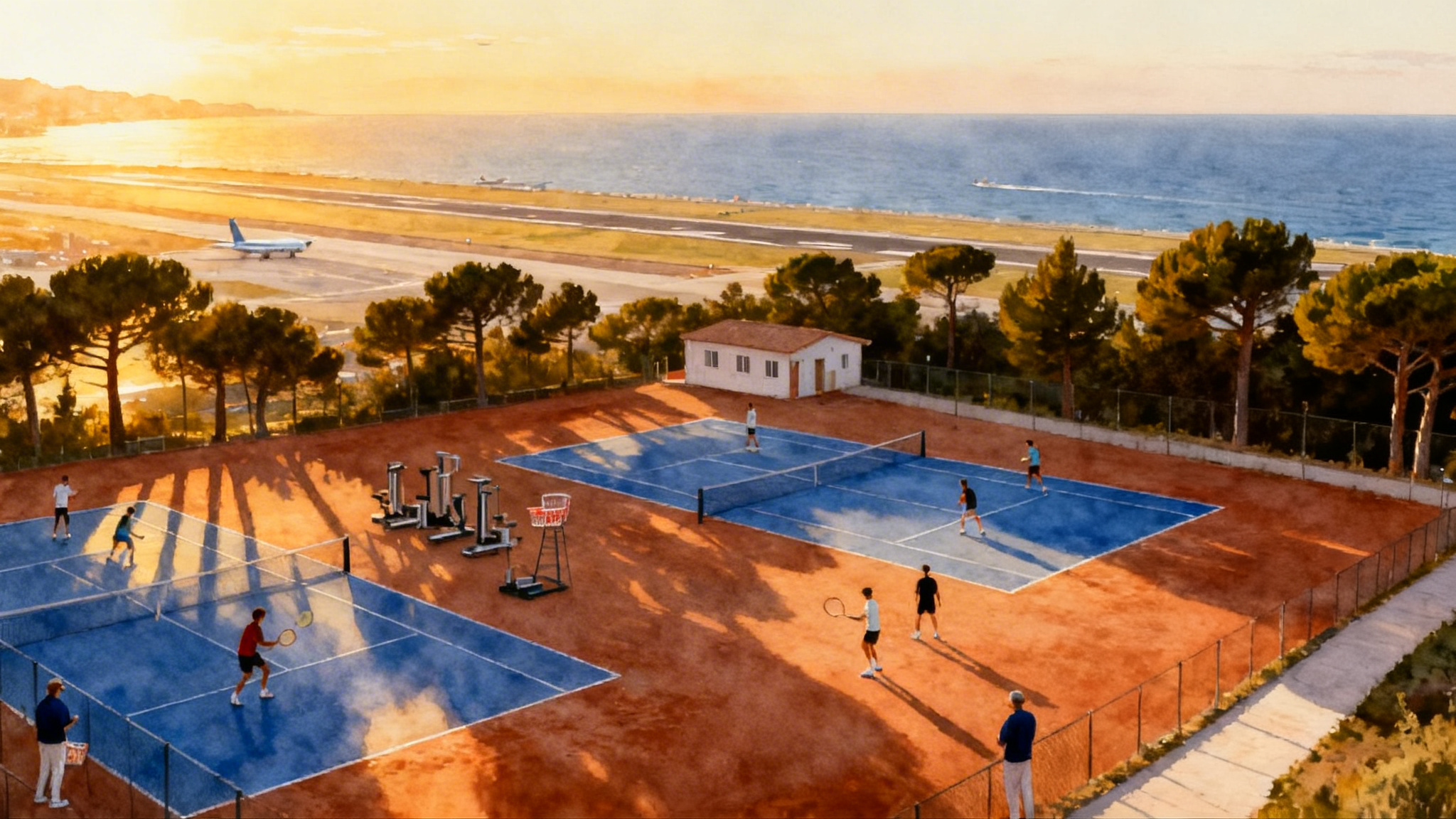
How to use this 2026 guide
This is a practical buyer’s companion for spring and summer 2026. It compares what matters when you are choosing between leading Côte d’Azur academies, including All In Academy’s Riviera campus and its peers in Nice, Antibes, Cannes, and Villeneuve‑Loubet. Use it to shortlist, book a trial week, and decide with confidence.
What you will find below:
- A quick map of the Riviera academy landscape
- Clay versus hard court mixes and why that matters for development
- Weekly camps versus full time programs, with true coaching ratios
- Price ranges, scholarship windows, and trial week timelines
- Housing and school integration that actually works
- Access to International Tennis Federation and Tennis Europe competition
- Travel logistics to Nice Côte d’Azur Airport, code NCE
- A checklist and a decision tree for juniors and for adults
If you are weighing a wider Mediterranean block, compare court mixes with our Best Spain academies 2026 guide and our Best Croatia academies 2026 overview.
The Riviera at a glance in 2026
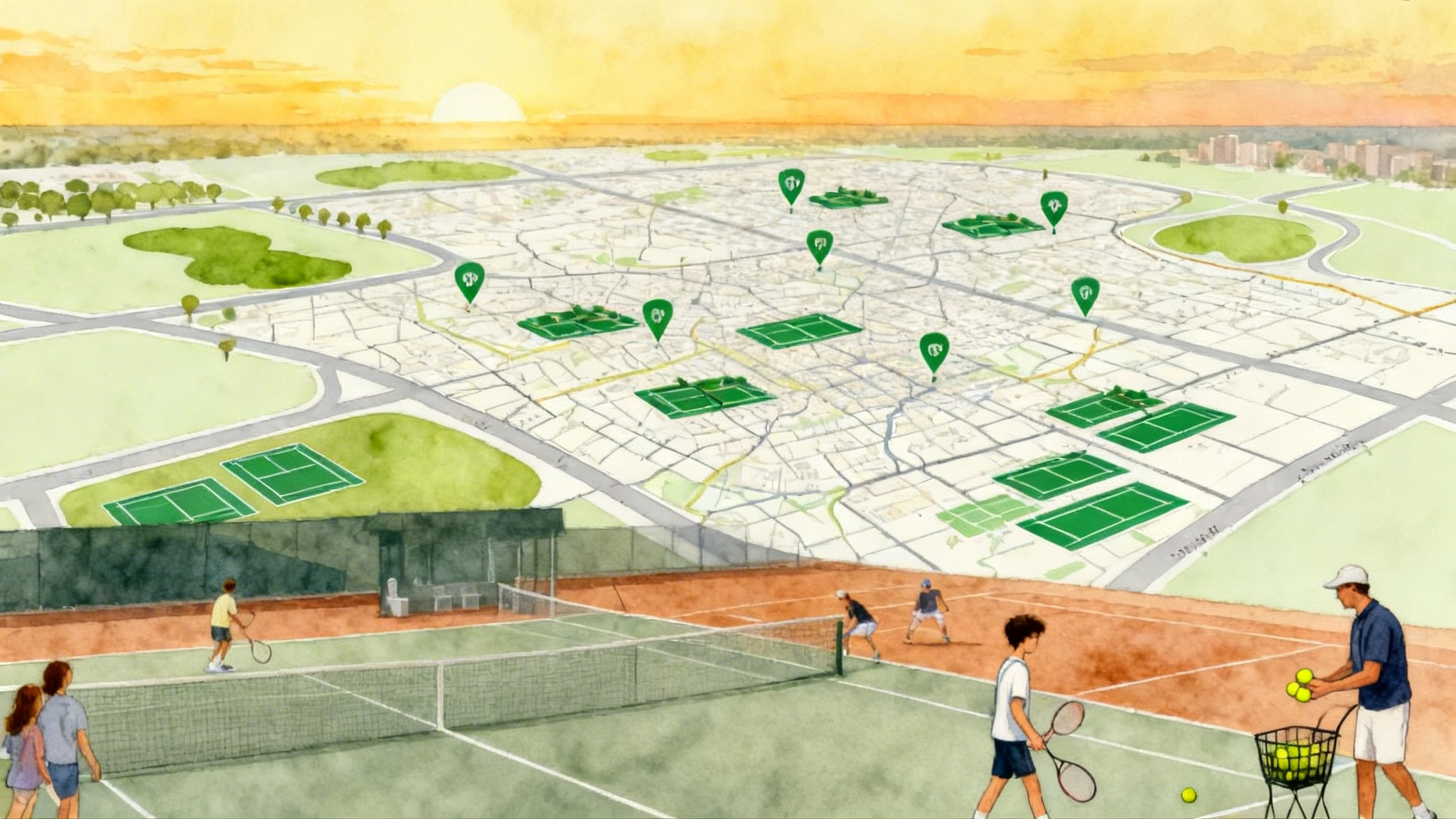
The Riviera is compact and connected, which means you can visit multiple academies in a single day and still have dinner in the old town of Nice. The corridor from Nice to Cannes is a string of tennis hubs: Nice city clubs with performance tracks, Antibes and Sophia Antipolis with resort‑scale campuses, Cannes with long tournament traditions, and Villeneuve‑Loubet with practical access to both clay clusters and the airport.
- Airport anchor: most families fly into Nice Côte d’Azur Airport. It sits on the western edge of Nice, roughly 10 to 15 minutes from central Nice by taxi, 15 to 25 minutes to Antibes depending on traffic, 25 to 40 minutes to Cannes, and around 15 to 20 minutes to Villeneuve‑Loubet.
- Rail and roads: the seaside TER train connects Nice, Antibes, and Cannes. Rideshare and taxis are easy for early sessions. When testing multiple academies in a week, plan a rental car for flexibility.
The academies to know in 2026
Here is how the landscape generally breaks down. Locations and offerings evolve each season, so treat this as a map, then confirm specifics during your trial.
- All In Academy, Riviera campus: positioned between Nice and Antibes, with a development model that blends French federation style drilling with individualized scheduling. Expect a modern fitness block, data‑friendly tracking, and a culture that balances intensity with clarity on goals. See campus details on the All In Academy Riviera profile.
- Mouratoglou area programs near Antibes and Sophia Antipolis: a resort‑scale environment known for event energy, broad court inventory, and international boarding cohorts.
- Nice performance tracks: city club environments with strong technical coaching and access to a deep local match play ecosystem. Good for families who prefer urban housing or who split time between school and sport.
- Cannes and Mandelieu high performance groups: favored by players who want quick access to coastal tournaments and who value environment over scale.
- Villeneuve‑Loubet options: practical for airport proximity and for players who want a quieter base with frequent day trips to tournaments across the coast.
If you are comparing All In Academy’s Riviera campus with a large resort academy, focus on three separators: the reality of daily coach contact time, how individualized the on‑court progressions are, and how effectively the team ties match play back into training themes.
Clay versus hard courts: which mix fits your goals
- Typical Riviera mix: 60 to 80 percent clay, 20 to 40 percent hard. The exact split varies by site and season.
- Development impact: clay slows the ball and rewards heavy spin and patience. It builds point construction and movement quality. Hard courts sharpen first‑strike habits, return speed, and serve accuracy under pressure.
- How to choose: if your player struggles with patterns and patience, a clay majority is a gift. If first serve and return need urgent upgrades, keep at least two hard court sessions per week in the plan.
- Practical test: during a trial week, ask for back‑to‑back days that flip the surface ratio. Note how the player’s decision making and errors change. Improvement should be visible in rally length and unforced error type, not only in win or loss.
Weekly camps versus full time: what changes day to day
- Weekly camps: think immersion. Two to three hours tennis and one to two hours fitness daily, plus match play blocks. Perfect for a focused skill or a seasonal reset. Families should ask to see the written plan for the week and how it links to a video review on day five.
- Full time programs: the rhythm matters more than any single session. Expect 18 to 22 hours weekly across tennis, fitness, and recovery, with school integrated around it. Successful full time setups show you a two to four week microcycle with a clear theme like first ball dominance or transition patterns.
True coaching ratios you should demand
Marketing often states ratios like 1 coach to 2 players, then groups stretch to 1 to 4 or even 1 to 6 when courts get busy. Ask for two numbers and write them down.
- Planned ratio: the schedule target on paper for drilling and for points.
- Observed ratio: the count you measure during three random blocks in your trial week.
Practical benchmark in 2026: 1 to 2 or 1 to 3 for technical drilling, 1 to 3 or 1 to 4 for live ball and points, and 1 strength coach to 6 to 10 athletes for fitness with clear supervision.
Pricing and scholarships: realistic 2026 ranges
Prices vary, but families report consistent bands along the Riviera. Use this to budget, then verify the current rate card.
- Weekly camps without housing: 600 to 1,200 euros per week depending on ratio, facilities, and video support.
- Weekly camps with housing and meals: 1,100 to 1,800 euros per week. Boarding quality and transport to tournaments drive the upper end.
- Full time annual tuition, training only: 18,000 to 35,000 euros per year.
- Boarding and meals add: 15,000 to 25,000 euros per year depending on dorms or host families.
- Total full time package: 35,000 to 60,000 euros per year is common for the coast.
Scholarship and aid windows in 2026:
- Performance aid: typically January to April for September starts. Late spring awards still happen if rosters have room.
- Need based or international study aid: rolling, but strongest from December to March.
- Action step: send match footage, two recent results sheets, and a coach reference by late February if you want priority for September intake.
Trial weeks: the most accurate way to decide
A good trial week is a live interview for both sides. To get a clean read, align expectations and collect objective data.
- Timeline: best windows are March to early June for September starts, and late August to October for January or spring arrivals. Summer trials are fine, but groups are more mixed and travel can disrupt ratios.
- What to ask for: a written weekly plan on Sunday night, one primary coach contact, two short video clips with voiceover by Friday, and two reference sessions you can watch from courtside.
- What to measure: serve percentage, rally length on neutral balls, number of first‑ball errors on return games. If the academy does not track these, ask to use your phone and a simple stat sheet.
Housing and school integration that works
Families make the jump to full time when schooling is predictable and recovery is protected.
- Boarding models: on‑campus dorms are simple for logistics. Host families boost language immersion and can be calmer for athletes who need quiet evenings.
- School formats: international day schools, online international programs, and the French national distance education pathway known as CNED. Ask who manages daily homework blocks and who signs off on missed classes during travel.
- Non negotiables: within a two week microcycle, there should be at least one active recovery day, one full rest afternoon, and quiet evening hours. If boarding staff or host families cannot guarantee that, training quality will slide by week four.
Tournaments: ITF and Tennis Europe access
Your player’s competitive calendar drives development speed. The Riviera is rich in events, but you still need clean processes.
- International Tennis Federation juniors: registration requires an IPIN and timely entries. Learn the basics at the official ITF IPIN juniors account. Entry deadlines are usually 18 to 21 days before the Monday of the tournament week. Plan travel only after acceptance or after confirming a realistic alternate status.
- Tennis Europe junior tour: entries run through national rankings and Tennis Europe processes. Riviera academies often organize car pools for qualifying weekends and can help with wild card requests, but no one can promise them. Ask to see last season’s actual tournament log from the academy, including how many players got into main draws versus qualifying.
- Match play on off weeks: check that the academy can arrange verified UTR‑style match days or club league doubles. The aim is to keep the competitive rhythm even when there is no ranking event.
Travel logistics to NCE for spring and summer 2026
- Flight timing: aim to land at NCE before 11 a.m. on Sunday for a calm check in. If your trial starts Monday morning, book a Saturday arrival to absorb delays.
- Airport to academy: keep it simple. Taxi queues at Terminal 1 and Terminal 2 are reliable, but family sized shuttles are often cheaper if you have gear bags. If you rent a car, confirm parking near the courts in advance.
- Packing for surfaces: two pairs of shoes, one for clay and one for hard. Clay soles help movement and reduce joint stress. Bring a spare grip and a hat for midday sun.
Side by side snapshots to focus your choice
Below are composite snapshots to make comparisons concrete. Use them as a starting point, then confirm specifics in your trial.
-
All In Academy, Riviera campus
- Surface mix: clay majority with scheduled hard court days for serve and return blocks.
- Program shape: individualized plans wrapped around a shared weekly theme. Clear communication with one primary coach.
- Ratios: drilling at 1 to 2 or 1 to 3, points at 1 to 3 or 1 to 4. Fitness groups capped around 8 to 10 with a dedicated coach.
- Who it fits: juniors who value feedback density and adults who want a serious, modern training feel without getting lost in a crowd.
-
Large resort style academy near Antibes and Sophia Antipolis
- Surface mix: deep clay inventory with several hard courts for specific blocks.
- Program shape: broad camp offerings, frequent internal match play, and a big international cohort.
- Ratios: peak weeks can stretch groups, so verify observed ratios during your visit.
- Who it fits: players who thrive in energetic, event‑like environments and families who want on‑site boarding with easy amenities.
-
Nice city performance tracks
- Surface mix: often more hard than clay compared with out‑of‑town campuses.
- Program shape: compact, coach‑dense sessions, strong local sparring, and easy school access.
- Who it fits: day students, bilingual families, and adults balancing work trips with high quality training blocks.
-
Cannes and Mandelieu high performance pods
- Surface mix: strong clay presence with targeted hard court access.
- Program shape: boutique groups, coaches who travel to tournaments with small squads.
- Who it fits: players who want a quieter base and direct hands‑on coaching during tournament weeks.
Decision tree: match a program to your goals
Follow this simple path. If you answer yes, move down that branch.
- Is ranking progression your top goal for the next 12 months?
- Yes: pick an academy that shows you last year’s tournament calendar by age group and surface, plus coach travel policy.
- No: choose the environment where your player smiles after practice and asks to stay longer. Consistency beats perfection.
- Do you need school on site with boarding?
- Yes: shortlist large resort style campuses and any Riviera program with proven dorms. Ask for a weekly study hall plan.
- No: include Nice city performance tracks and Villeneuve‑Loubet options that work well with host families.
- Is serve and return your biggest gap?
- Yes: insist on two hard court blocks weekly with video feedback.
- No: a clay majority is fine, but keep at least one hard day for speed.
- Do you learn best in small groups or in high energy crowds?
- Small groups: prioritize All In style individualized blocks or boutique Cannes pods.
- High energy crowds: resort scale programs with bigger cohorts will energize you.
- Do you want coach travel to tournaments?
- Yes: confirm travel fees and coach to player ratios on the road.
- No: make sure the academy runs quality internal match days during non tournament weeks.
Parent and player checklist for 2026
Bring this list to every visit.
-
Facilities and surfaces
- Count the playable clay and hard courts. Ask how many are reserved for your group during peak hours.
- Check for indoor or covered options in case of rain.
-
Coaching and planning
- Get the weekly theme and your daily plan in writing.
- Confirm observed ratios for drilling, points, and fitness.
- Ask how match data is captured and used on Monday.
-
Price and aid
- Request the 2026 rate card. Note add ons like tournament travel or video packages.
- Ask for scholarship windows and required materials. Send footage early.
-
Housing and school
- Visit dorms or meet the host family. Confirm curfew, meals, and study hall.
- Review the school schedule around training. Identify a single point of contact for absences.
-
Trial week quality
- Secure two clips with voiceover feedback by Friday.
- Schedule one parent coach debrief. Keep it to 15 minutes and ask for three concrete priorities for the next four weeks.
-
Tournament access
- Verify who submits entries and by what deadline. Track your IPIN and ranking yourself to prevent surprises.
-
Logistics
- Time the drive from NCE at the hour you will normally travel.
- Test the commute with a gear bag so you know the routine.
Adults: how to choose for spring and summer blocks
The Riviera is not only for juniors. Adults can make big gains in two to three weeks if the mix is right.
- Session design: look for heavy serve and return blocks, then transition drills into live points.
- Recovery: book a massage or mobility session after the third day to absorb the load.
- Ratios: press for 1 to 2 or 1 to 3 on drilling. For point play, 1 to 4 can still deliver if coaches rotate with purpose.
- Match play: ask for verified match sets twice weekly with simple stat targets.
How TennisAcademy.app can help
If you want a neutral shortlist and direct introductions to staff, send us your dates, goals, and recent match clips. We will help you align surface mix, ratios, housing, schooling, and tournament goals, then schedule a clean trial week.
Final take
The French Riviera is uniquely efficient for tennis. Within a 40 minute arc from NCE you can test All In Academy’s Riviera campus, a resort scale campus near Antibes, a Nice city performance track, and a Cannes boutique group in a single trip. Pick with your eyes and your stopwatch. Verify surface mix, observe true ratios, and judge programs by how clearly they turn match clues into Monday plans. When you treat the trial week like a friendly audit, the right choice becomes obvious and the next 12 months get simpler fast.