Best Texas Tennis Academies 2026: City-by-City Guide
A data-backed, family-first guide to Texas tennis academies in Austin, Dallas Fort Worth, Houston, and San Antonio. Compare coaching quality, court surfaces, boarding and academics, UTR and USTA access, pricing, and college placement.
 Tommy
Tommy
How to use this guide
This is a family-first buyer’s guide for 2026, built to help you compare tennis academies across Austin, Dallas Fort Worth, Houston, and San Antonio. We break down coaching quality and ratios, court surfaces, boarding and academics, access to Universal Tennis Rating and United States Tennis Association play, price ranges, and college placement pipelines. You will also find decision checklists sorted by age and by UTR level, sample weekly schedules, and practical scholarship tactics.
Two quick definitions, because acronyms can hide what matters most:
- Universal Tennis Rating, or UTR, is a global rating that estimates level from recreational beginner to professional. If you want the math, read the official explainer on how UTR calculates ratings.
- United States Tennis Association, or USTA, runs sanctioned junior and adult tournaments that affect rankings and, for juniors, college visibility.
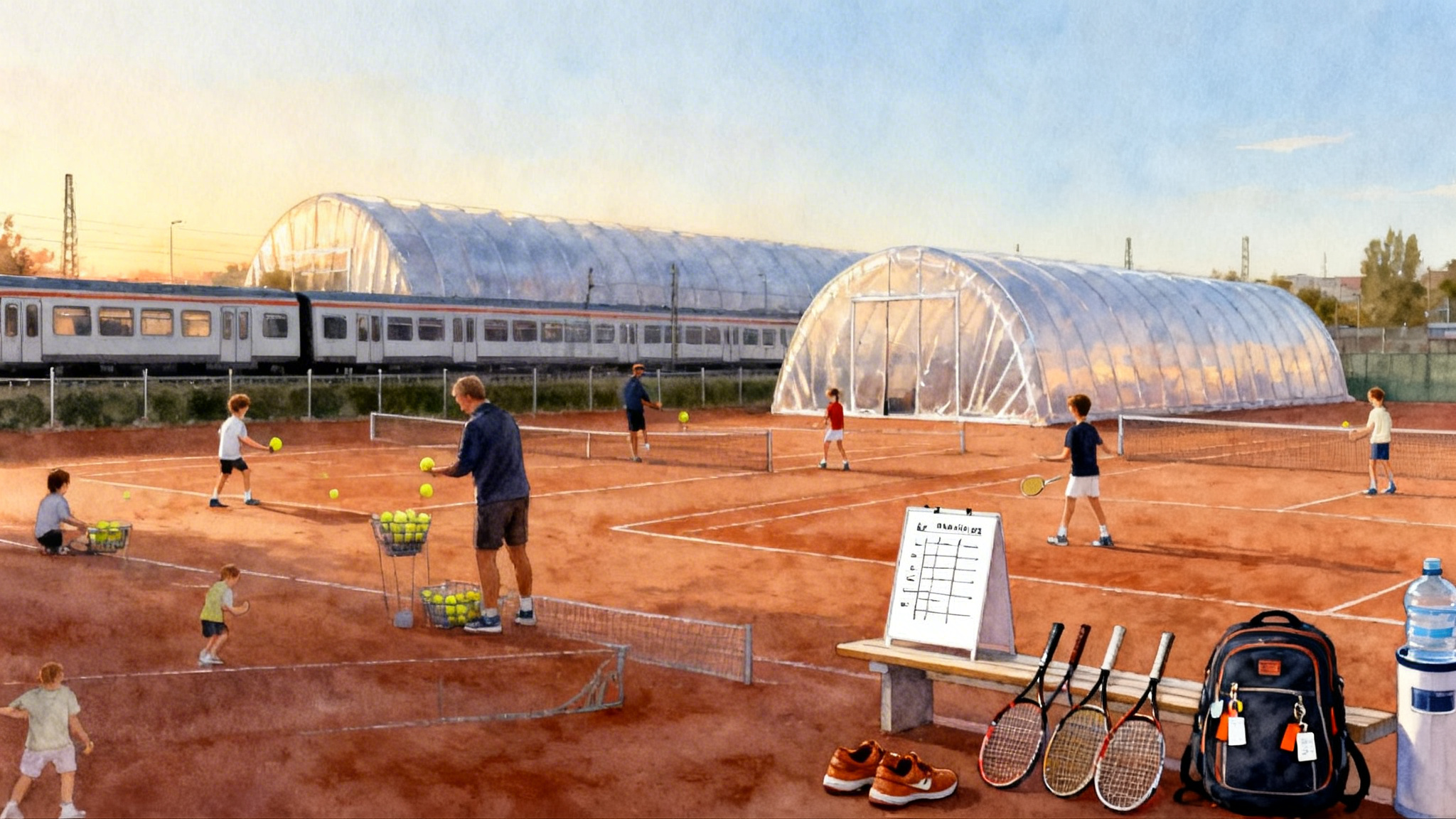
Har-Tru is a green clay surface that plays slower than standard hard courts. It reduces joint load, lengthens rallies, and develops point construction. Texas is primarily a hard-court state, but strategic clay exposure is a real development advantage.
Texas price and value snapshot for 2026
Rates vary by city, facility type, and coach pedigree. Use these as directional ranges to frame your questions. Always ask for a current rate sheet and what is included.
- Junior after-school programs: $300 to $800 per month for two to four days per week.
- Junior high-performance day programs: $900 to $2,200 per month for four to five days per week, often including fitness and match play.
- Junior boarding programs with academics: $3,500 to $7,000 per month equivalent once housing, meals, and school tuition are included.
- Private lessons: $90 to $180 per hour, higher for director or former tour staff.
- Adult clinics: $25 to $60 per session; performance groups $60 to $120 per session; live-ball programs are common in the cities.
What to check before you compare numbers:
- Ratio policy in writing. A true 1 to 4 coach to player ratio for live drilling doubles the quality of ball contacts versus a 1 to 8 block.
- What counts as a “session.” Sixty minutes or ninety minutes, and does it include fitness or match play.
- Surfaces in rotation. A week with both hard and Har-Tru gives tactical variety and better recovery.
The big four hubs at a glance
Every metro has a distinct ecosystem. Here is how they differ in 2026 and what that means for your family calendar.
Austin
- Profile: Tech-fueled growth, compact drive times, vibrant junior scene, strong college tennis community.
- Surfaces: Mostly hard courts with a handful of Har-Tru banks in the Hill Country.
- Tournaments: Frequent UTR events and steady USTA calendar within a 60 to 90 minute radius.
- Adult pathway: High-energy live-ball and performance groups, open- and league-play synergy.
Who thrives here: Players who value variety in match play without long weekend travel. Families who prefer small-group environments and access to Hill Country camps in school breaks.
Dallas Fort Worth (often shortened to DFW)
- Profile: The state’s deepest academy inventory, from country club systems to independent high-performance centers.
- Surfaces: Predominantly hard courts, with selected Har-Tru at private clubs.
- Tournaments: Dense UTR schedule and USTA events with national draw potential due to central location.
- Adult pathway: Abundant options from NTRP league prep to advanced sparring groups.
Who thrives here: Players seeking volume of quality reps, college-visit proximity, and a broad spectrum of coaching styles to trial before committing long term.
Houston
- Profile: Large commuter metro with weather variability. Big facilities and public center depth support wide ladders for progression.
- Surfaces: Mostly hard, some clay pockets on the west side and near larger clubs.
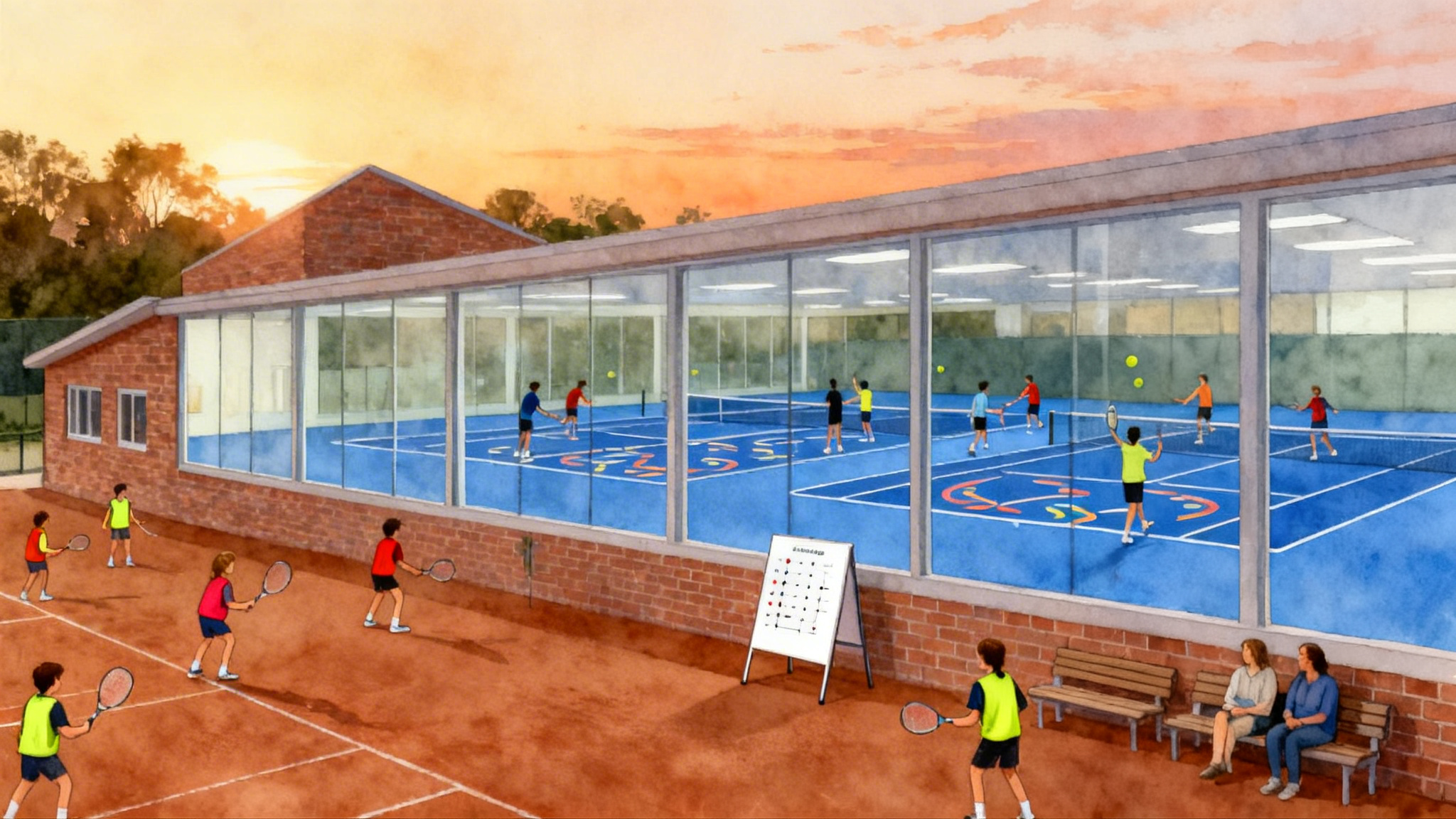
- Tournaments: Strong UTR frequency and reliable USTA schedule, with indoor bubbles at a few sites during storms.
- Adult pathway: Robust weekday morning and evening offerings, including point-play clinics.
Who thrives here: Players who want a large ladder to climb, resilient in heat and humidity, and families okay with cross-city drives for the right coach.
San Antonio and the I‑35 Hill Country
- Profile: A tight-knit scene with access to destination camps and ranch-style programs north and west of the city.
- Surfaces: Mostly hard courts, selective Har-Tru near Hill Country academies.
- Tournaments: Weekly UTR and a healthy USTA circuit extending into New Braunfels and Austin.
- Adult pathway: Strong public-center programming with advanced evening groups.
Who thrives here: Players who value community feel, longer rally development, and quick access to weekend competition up and down Interstate 35.
Spotlight: Legend Tennis Academy, Austin Hill Country
Legend Tennis Academy is an emerging program in the Austin Hill Country that opened in 2025. Families we speak with often want to know what sets a new academy apart. Read the Legend Tennis Academy profile and use this checklist for your first call and tour:
- Coaching tree and daily touch points: ask who runs each court, not just the director’s resume. Aim for a maximum of 1 to 4 on live drilling and 1 to 6 on pattern play.
- Surfaces and scheduling: confirm the weekly split between hard and Har-Tru and how they assign surfaces by age and UTR band.
- Verified competition: request the cadence of in-house UTR match play, how results are posted, and how coaches review film on Monday.
- Academic path: clarify whether the academy coordinates with online providers, local private schools, or public school release periods, and how they proctor exams on site.
- College pipeline: ask for a two-page placement sheet showing the last three graduating classes, with contactable references.
- Total cost of attendance: calculate program fees plus strength training, recovery, tournament coaching, travel, and school. A transparent quote earns trust.
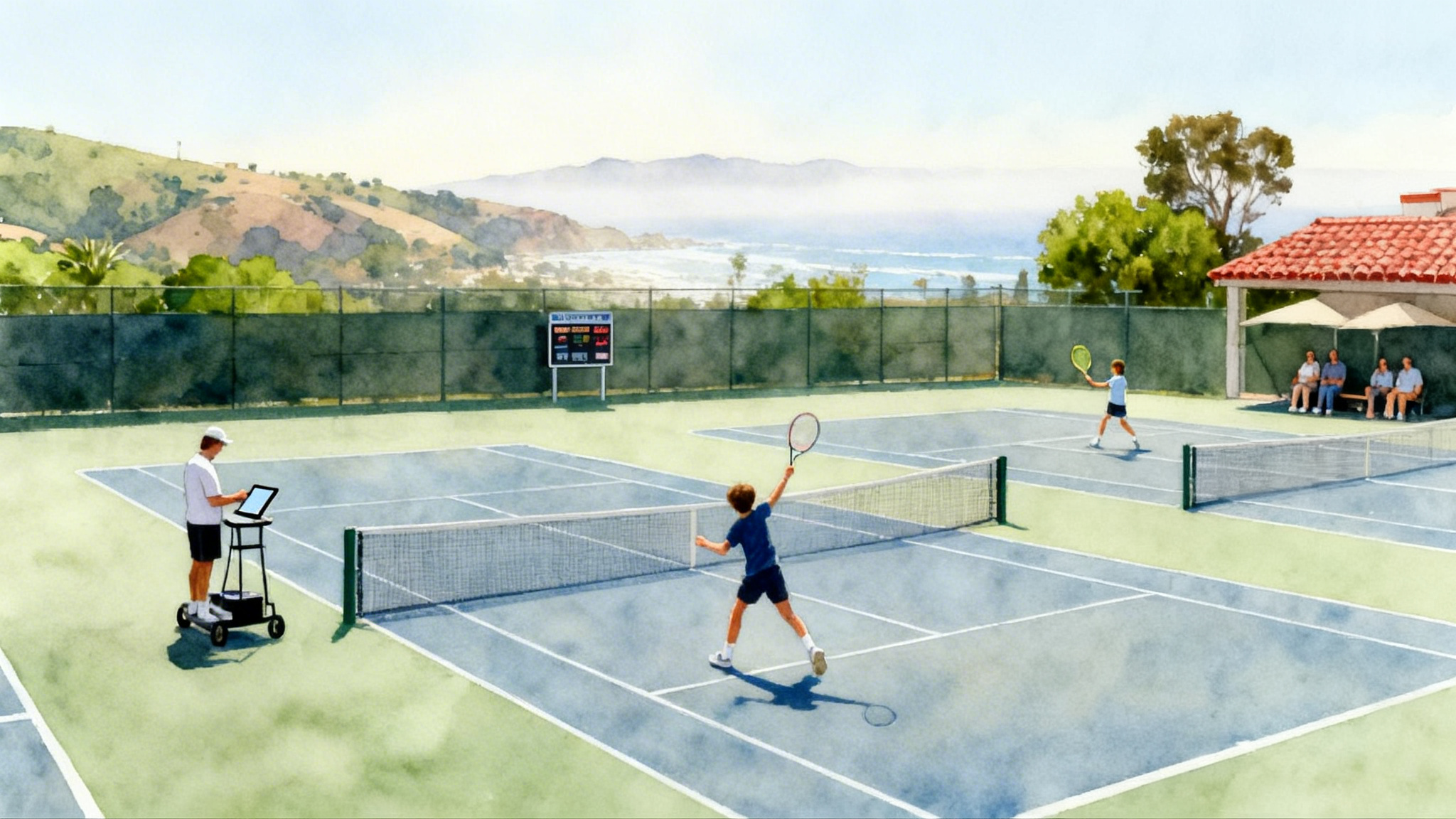
What early adopters often like about Hill Country academies: the cooler mornings, shorter drives to Austin and San Antonio tournaments, and a development arc that mixes clay and hard for better point construction.
Coaching quality, ratios, and session design
A good academy looks like a well-run airport. Courts launch on time, players know their gate, and someone is always tracking departures and arrivals. Here is what to look for on court:
- Contact targets: at least 1,000 quality ball contacts per two-hour high-performance session, tracked by drills that minimize standing.
- Ratio standards: 1 to 4 for live drilling and serve plus one patterns; 1 to 2 or private for technical rebuilds; 1 to 6 acceptable for situational games.
- Video feedback: at least one clip per player per week with a clear coaching cue and a re-test by Friday.
- Fitness plan: footwork ladders do not equal fitness. Look for movement patterns that mirror points and a written progression for injury prevention.
- Coach continuity: the same coach should see your child multiple days per week. Rotation helps, churn hurts.
Pathways by age and UTR level
Use these checklists to right-size expectations and select the correct lane. UTR bands are approximate and should be adjusted based on age, physical maturity, and match confidence.
Ages 6 to 9
- Red to orange balls, 60 to 90 minute sessions, two to three days per week.
- Ratio target 1 to 4; emphasis on fun, tracking, and split-step habits.
- First team events by month three; parent education on sideline behavior and weekends.
Ages 10 to 12
- Orange to green balls, transition to full court by readiness, not birthday.
- Ratio 1 to 4 for technique; one private lesson per two weeks for grip and serve foundations.
- Start UTR match play as a training tool, not an identity.
Ages 13 to 15
- Full yellow ball, four to five sessions per week with two strength blocks.
- One match-play day weekly with video review on Monday.
- First travel tournaments within a 2 to 3 hour drive to build resiliency.
Ages 16 to 18
- College lens turns on. Two monitored fitness sessions and one recovery session per week.
- Tournament calendar planned backwards from academic tests and college showcases.
- College list by June of junior year with target UTR band for each program.
UTR 1 to 3
- Focus on reliable serve starts, plus crosscourt depth. Two tournaments per month maximum.
- Progress metric: hold serve once per set.
UTR 4 to 6
- Add patterns: serve plus one, cross then line, plus neutral ball tolerance.
- Progress metric: at least six neutral-ball rallies per set and 55 percent first serves.
UTR 7 to 9
- Clay day each week for point construction, film analysis after losses, and fitness tests quarterly.
- Progress metric: break-point conversion above 40 percent and six wins in a twelve-match block.
UTR 10 to 12
- Scouting reports before tournaments, on-court heart rate targets, and a written college communication plan.
- Progress metric: 65 percent first serves, second-serve aggression, and two quality top-20 in-division wins per quarter.
Sample weekly schedules you can adapt
These are templates. Swap in exact times for your academy and school.
Junior commuter, high-performance
- Monday to Thursday: 3:45 to 4:15 warm up and mobility; 4:15 to 5:45 drilling and live ball; 5:45 to 6:15 match play; 6:15 to 6:45 cooldown.
- Friday: 3:45 to 5:45 match play block with UTR postings.
- Saturday: optional tournament or 60 minute private.
- Strength: Tuesday and Thursday morning, 45 minutes each.
Junior boarding with academics
- 7:30 to 8:00 breakfast and mobility.
- 8:15 to 11:15 on-court technical and patterns.
- 11:30 to 12:30 lunch and recovery.
- 12:45 to 3:00 academics.
- 3:30 to 5:30 live ball and match play.
- 6:00 to 7:00 study hall with tutor access.
- Saturday to Sunday: travel tournaments every other week.
Adult serious competitor
- Two 90 minute performance clinics midweek; one private lesson Friday; Saturday league or UTR match play.
- Fitness: three 30 minute strength sessions or one 60 minute plus two 20 minute mobility blocks.
Adult weekend warrior
- One live-ball clinic midweek; Saturday doubles, Sunday recovery hit.
- Ten-minute serve routine three times per week at home with a bucket and targets.
Academics and boarding in Texas
Texas academies use three academic models:
- Local school partner: attend a nearby public or private school with early release for training. Simple social life, more commuting.
- Online or hybrid provider: schoolwork on campus with a proctored study hall. Flexible, requires student discipline.
- Boarding school model: housing plus on-site academics. Max convenience, highest total cost.
Questions to ask any director:
- Who supervises study hall and what is their student to tutor ratio.
- How they coordinate standardized testing and exam proctoring.
- What the policy is for make-up classes after away tournaments.
Tournaments and verified match play
Repeated, verified match play turns practice into ranking movement. A good academy will host or partner for weekly UTR blocks and guide USTA entries.
- Ask for a 12 week competition plan with target events and rest weeks.
- Confirm who posts UTR scores and how soon video and statistics are reviewed.
- For scheduling, bookmark the USTA Texas tournament search and cross check with your academy’s calendar to avoid burnout.
Travel radius rules of thumb for Texas families:
- Austin and San Antonio: many options within 30 to 90 minutes along Interstate 35.
- Dallas Fort Worth: dense local grid with occasional state or national draws.
- Houston: frequent local tournaments, with some cross-city drives.
Surfaces: hard versus Har-Tru, and why a mix matters
- Hard courts: faster points, reward first-strike tennis, common in all four metros. Protect joints with good shoes, smart volume, and recovery work.
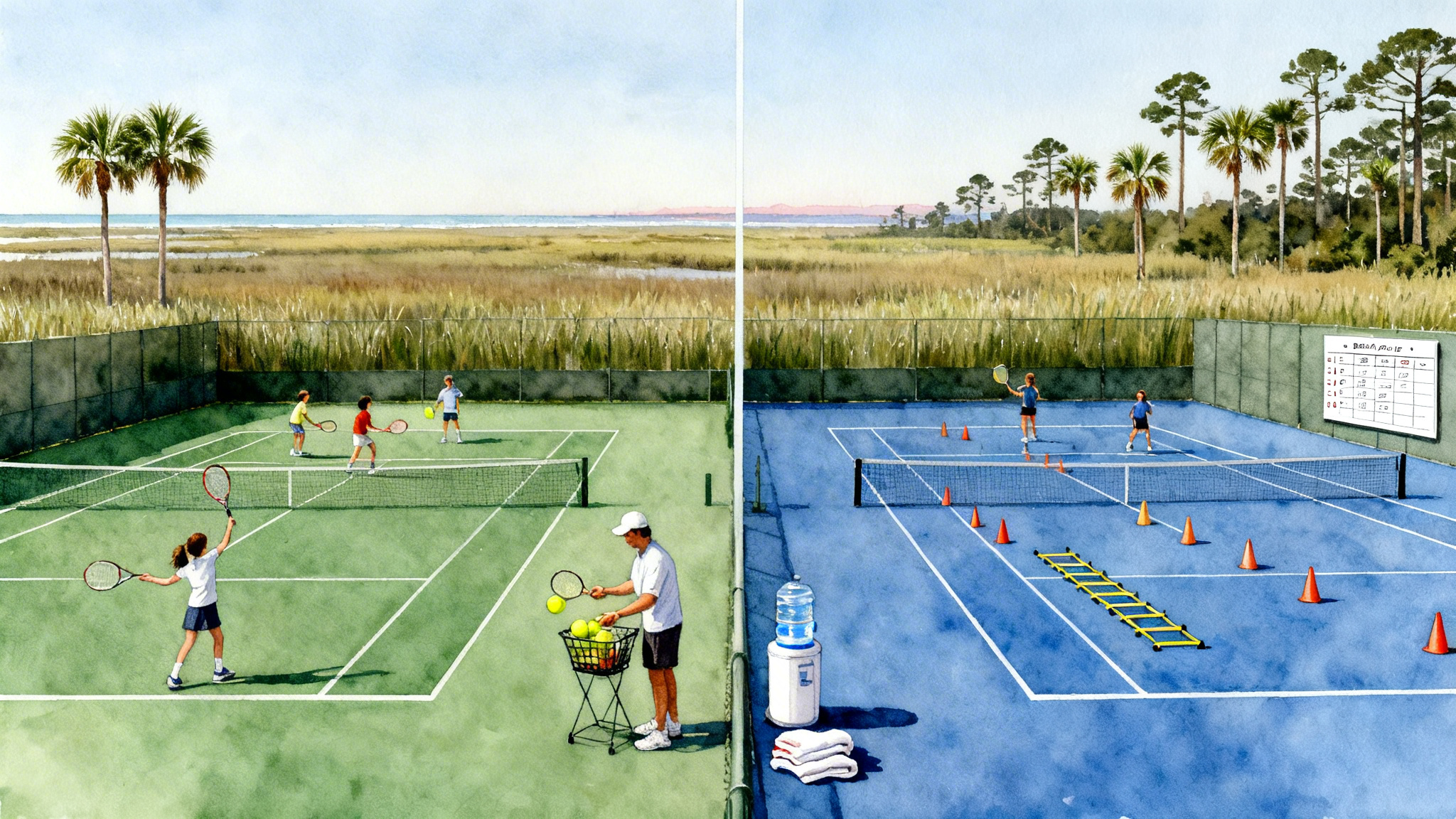
- Har-Tru: longer rallies, improves sliding, builds patience and defense. Texas families can find clay at select clubs and Hill Country sites.
Weekly target for developing players: one clay session if available, plus a match play day on hard. The contrast builds a more complete competitor.
Scholarships and financial aid that actually work
Sticker price is not the final price. Here are levers that Texas families used in 2025 and continue to use in 2026:
- Seasonal or midday rates: academies often discount summer blocks or late-morning sessions.
- Sibling and multi-month commitments: 5 to 15 percent savings are common if you book for a term.
- Work study: older juniors can string racquets, assist red-ball sessions, or help tournaments for credit.
- Needs-based aid: ask for a one page application and a decision timeline.
- Tournament coaching bundles: negotiate a lower per-event rate by booking a seasonal plan.
- Sponsor matching: if your employer matches youth-sport donations through a foundation, ask the academy if they can receive grants.
How to build your shortlist in each city
Use this process to keep emotions in check and compare apples to apples.
- Build a longlist: three to five academies in your metro plus one Hill Country option for contrast. For broader benchmarking, compare with the Best Florida Tennis Academies 2026 and our Tri-State academies 2026 guide.
- Request the facts: ask each program for a two page info pack that lists court inventory by surface, coach roster with credentials, ratio policy, session length, and a sample week.
- Watch a session: unannounced observations tell you more than polished tours. Count how many balls each player hits and how often coaches give specific cues.
- Verify competition: ask for the last 90 days of UTR postings, two recent USTA draws, and names of peer players in your child’s UTR band.
- Model the calendar: layer school, training, and tournaments for one quarter. If the model does not fit your life, the academy will not either.
- Sleep test: the best choice lowers family stress while raising player confidence.
Established centers and emerging programs to evaluate
Use this list as a starting point, then verify current details on each program’s site before visiting.
- Austin: a mix of independent high-performance programs and club-based systems in Westlake and the Hill Country, plus destination camps during school breaks.
- Dallas Fort Worth: multiple country club academies and independent training centers with strong ladders for both juniors and adults.
- Houston: large public complexes and west-side clubs that host frequent UTR and USTA play.
- San Antonio and New Braunfels area: community-based programs, public-center high performance, and ranch-style camps just up the road.
Add emerging programs like Legend Tennis Academy in the Austin Hill Country to your tour list if you want a small-group environment and the hard plus Har-Tru mix.
Decision checklists you can print
By player age
- Ages 6 to 9: does the program emphasize fun, movement, and basic grips; are groups truly small; do coaches include parents in the learning loop.
- Ages 10 to 12: is there an on-ramp from orange to green to yellow with clear criteria; is serve progress tracked; are there two events per month without pressure.
- Ages 13 to 15: are technical goals tied to match stats; is there weekly video; is the fitness age appropriate and supervised.
- Ages 16 to 18: is there a college plan with realistic target programs; does travel respect school; who writes recommendation letters and sends film.
By UTR band
- UTR 1 to 3: ask for a development plan that mentions first serve starts and crosscourt height; avoid grinding tournaments every weekend.
- UTR 4 to 6: confirm pattern training plus a clay session; ask for a three month stat goal.
- UTR 7 to 9: insist on scouting reports and video feedback; ask to see their college placement sheet.
- UTR 10 to 12: look for physical testing and periodization; make sure coaches have contacts at your target schools.
What college placement success really looks like
A credible placement story is not a wall of college pennants. Ask for:
- A list of the last three graduating classes with each player’s grad year, peak UTR, injury notes if relevant, intended major, and the coach contact who can vouch for the process.
- Two players who transferred or took a gap year and why. Honest programs do not hide detours.
- A sample email to a college coach and a 90 second video template. If an academy cannot show these, they are not organized enough for recruiting season.
The bottom line
Texas is one of the best places in the country to train because you can get the three ingredients that matter most in one week: high-repetition drilling, verified match play, and a surface mix that builds complete games. Start with a shortlist in Austin, Dallas Fort Worth, Houston, and San Antonio, add one Hill Country newcomer like Legend Tennis Academy for contrast, and let the data guide you. When ratios are real, schedules are balanced, and competition is verified, progress follows. Families feel it first on the calendar and players feel it first on the serve.