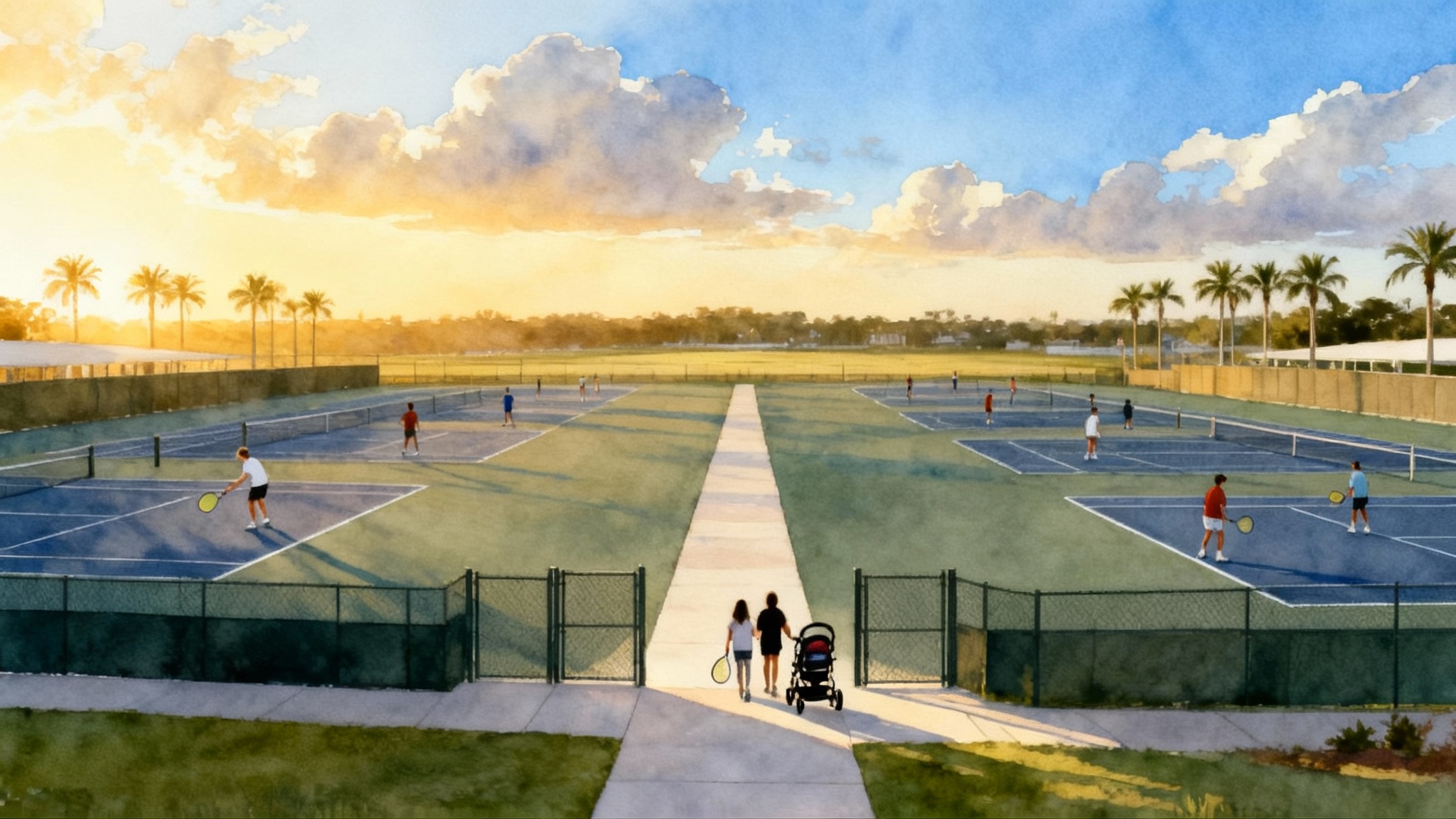
French Riviera and Lyon Spring Clay 2026: All In Academy Guide
Map a calm, structured March to May clay block across All In Academy’s Villeneuve‑Loubet and Décines campuses. Learn why the region’s spring suits pre‑season work, how to split time, and how to plan travel, lodging, and family add‑ons.
 Tommy
Tommy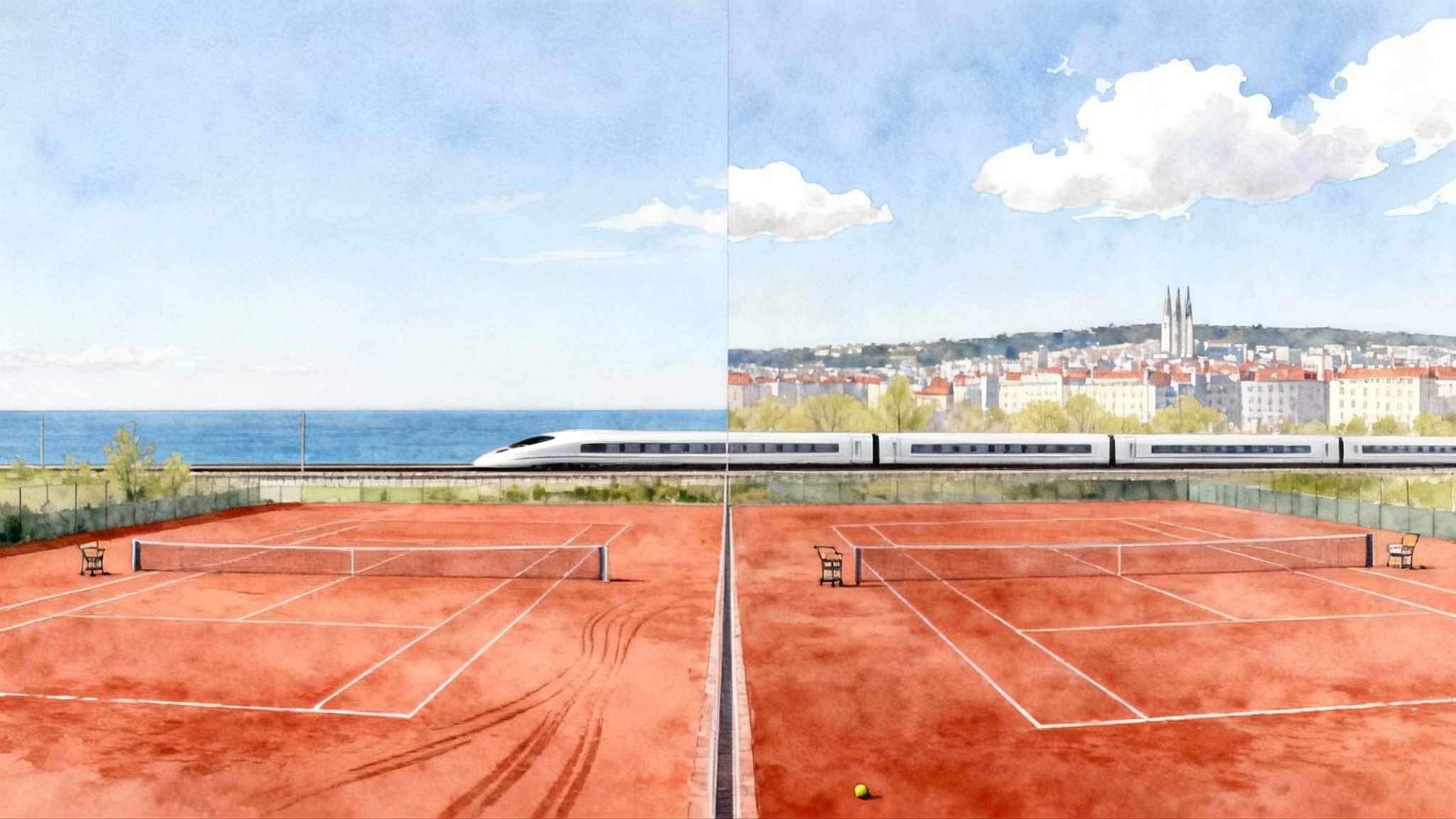
Why this corridor makes sense for March to May
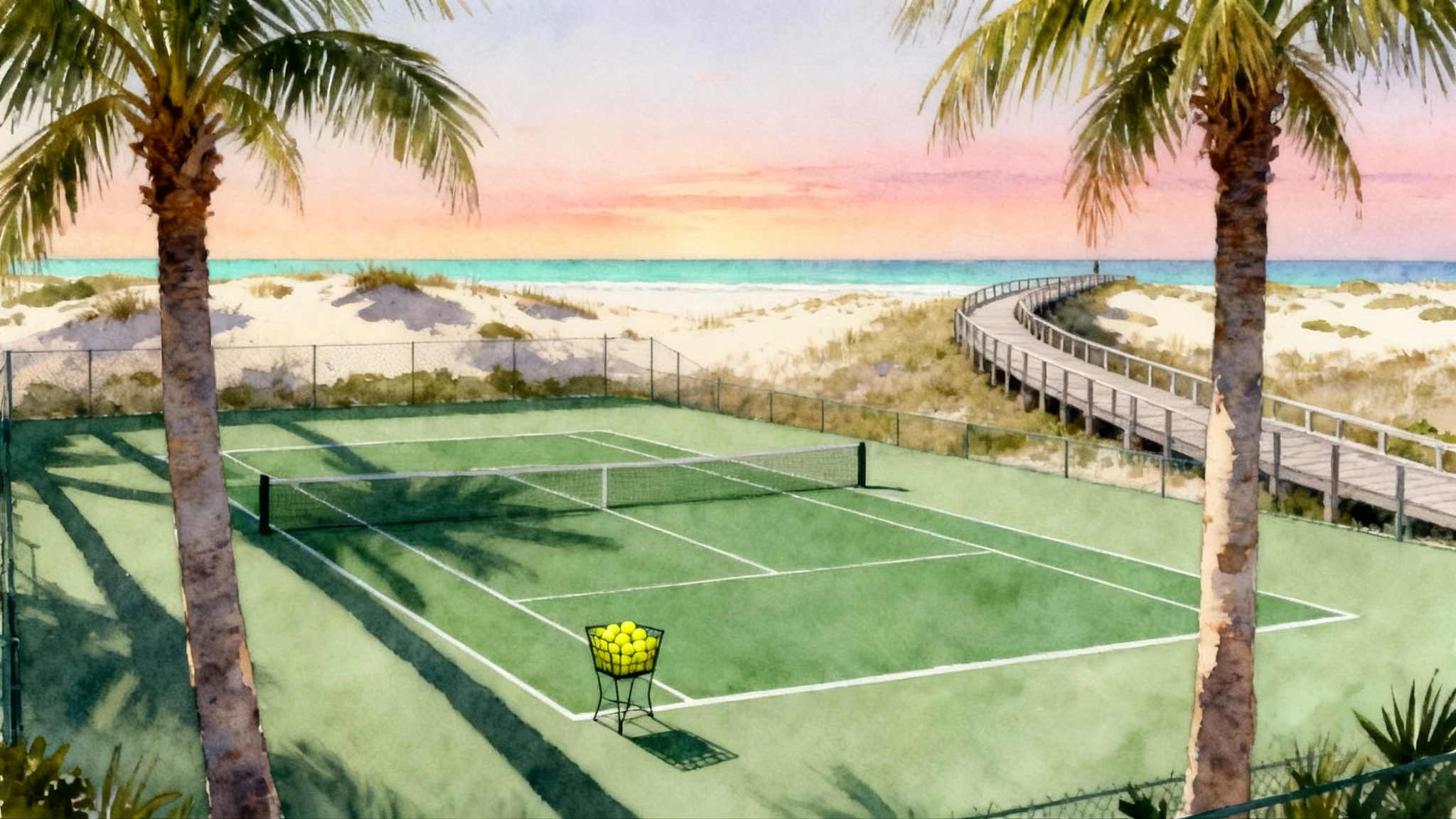
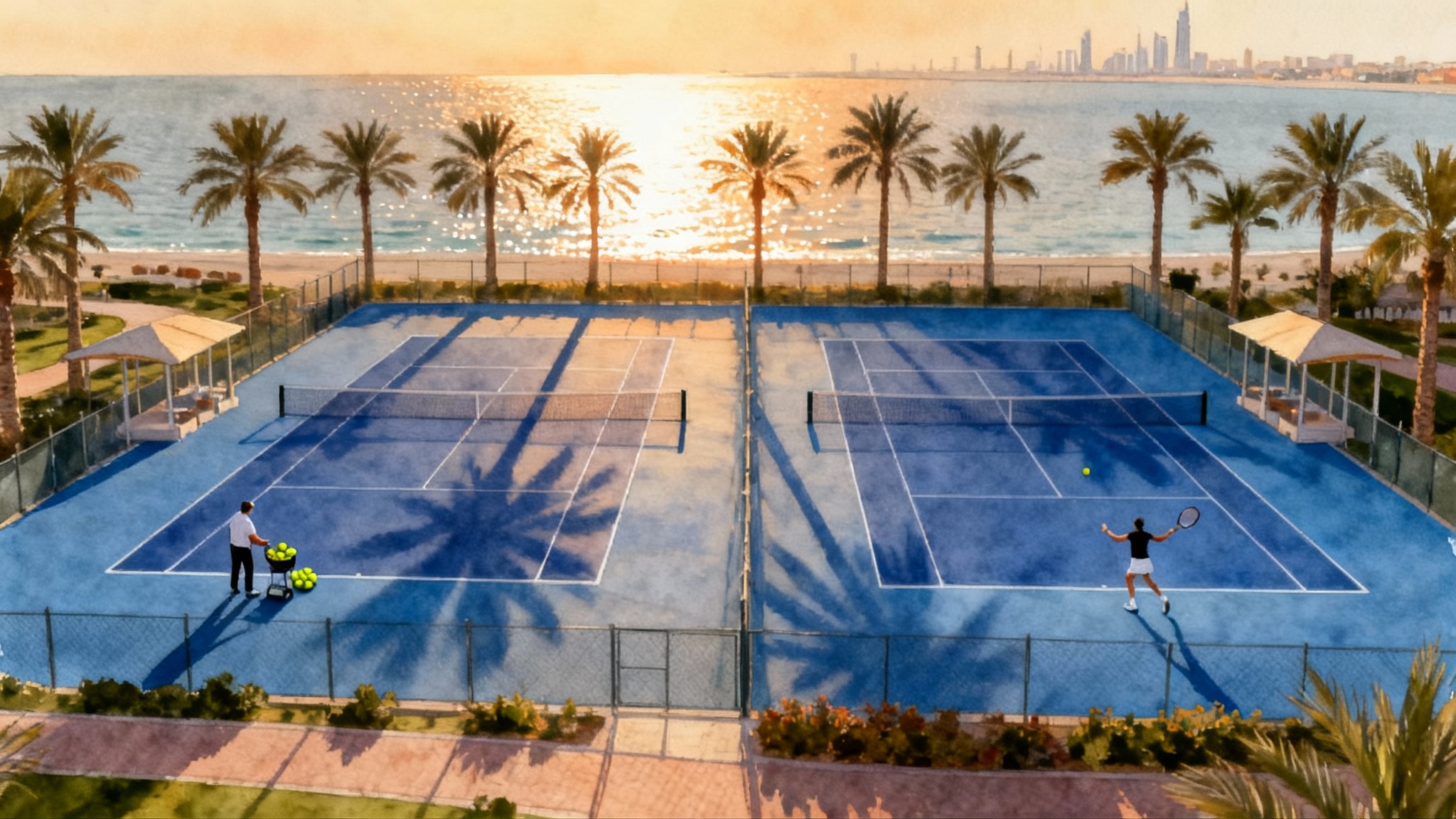
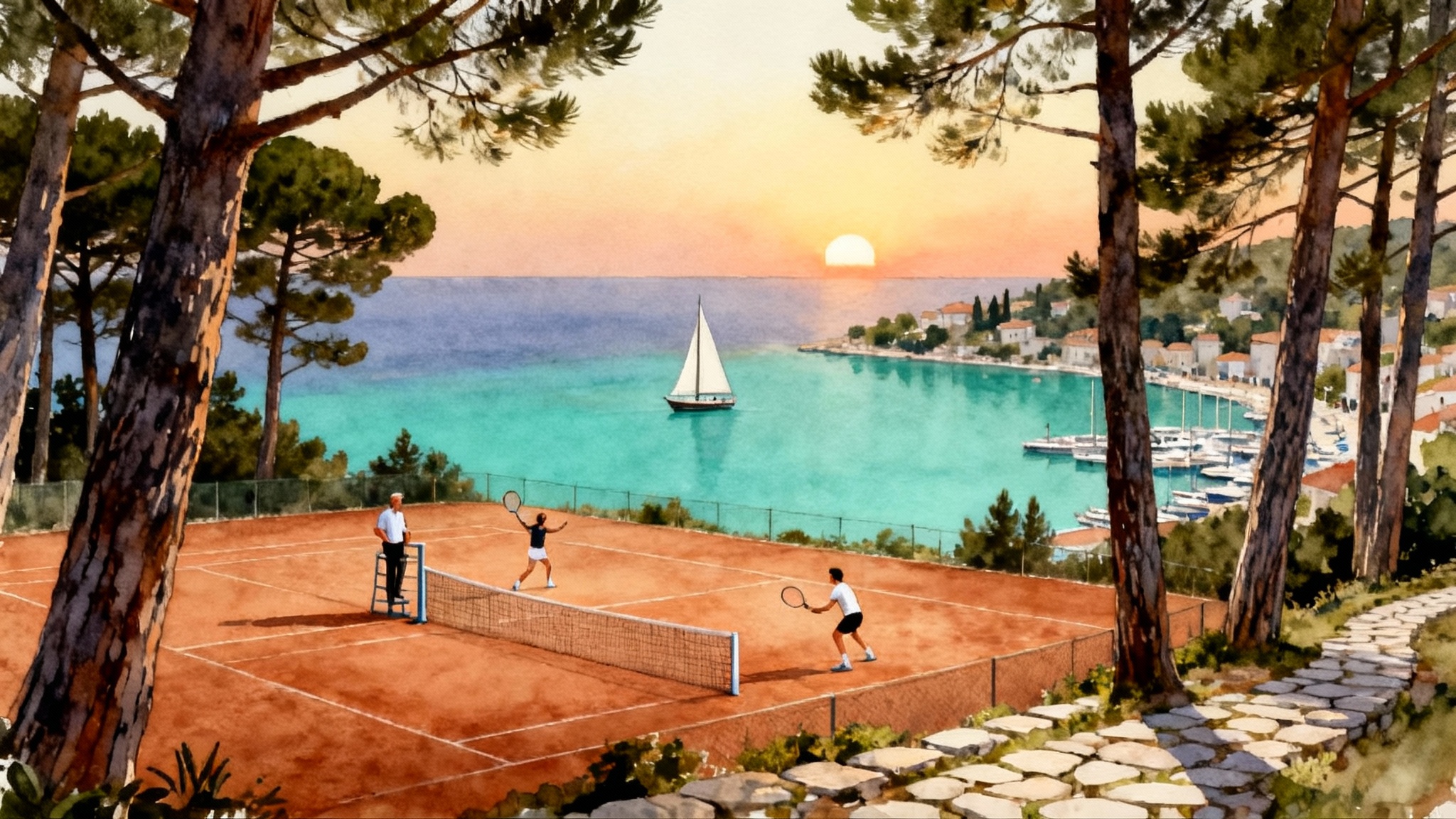
If you want a quiet, repeatable spring on red clay that builds real match fitness, the French Riviera to Lyon corridor offers a practical blueprint. The Mediterranean side around Villeneuve‑Loubet brings mild temperatures and a sea breeze that helps courts dry quickly after showers. Inland in Décines outside Lyon, cooler mornings and slightly heavier air make the ball sit a touch longer, which rewards clean footwork and tighter patterns. The two environments are close enough to stitch into one block, yet different enough to sharpen your range. That combination is rare, and it is exactly what All In Academy dual campuses make possible in spring 2026.
Think of the Riviera as your spring ignition. You settle into reliable daytime temperatures, lower wind inland than the seafront, and clay that soaks up sun. You add volume without fighting conditions. Then you shift to Décines for a denser, more competitive rhythm that nudges you to win points the hard way, with patterns and patience. The result is a pre‑season that reads like a good training block should: progressive, specific, and match ready.
All In Academy, two stops, one plan
- Villeneuve‑Loubet, French Riviera: tucked between Nice and Antibes, close to the coast and the airport. Expect light in the mornings, fast‑drying red clay, and an easy routine that lets you front‑load technical work.
- Décines, Greater Lyon: in the east of the city near the main sport complex, with quick access to tram and ring roads. Expect crisp spring air, slightly slower bounces, and deeper rallies that force better footwork and shot selection.
The pairing functions like a split‑screen of clay. On the Riviera you groove the slide and set up early. In Lyon you learn to take time away only when you have earned it. That contrast builds a second gear you can trust when tournaments start.
Why spring clay here suits pre‑season work
- Quick‑dry courts: Red clay in both locations sits on a draining base and is routinely rolled and brushed. After passing showers, surfaces return to playable faster than many inland European sites. You lose fewer sessions to weather, which protects your week’s plan.
- Mild temperatures without spikes: March and April on the Riviera are cool enough to lift volume, yet warm enough for quality footwork and lunges on clay. Lyon starts cooler, which helps you learn to generate your own ball through the court, then warms into May to prepare you for heavier tournament days.
- Structured training culture: French academies operate on planned microcycles. Sessions start on time, court prep is predictable, and there is a steady supply of sparring partners from local clubs and league teams. You can run a genuine pre‑season rather than a hit‑and‑hope holiday.
- Quieter than Spain or Florida in spring: You trade the crowded resort vibe for a calmer rhythm that still has high‑level coaching. That calm is not for show. It is the difference between a court change that happens in thirty seconds and a court change that steals five minutes every hour.
How to split your time between campuses
Use the calendar to your advantage. March favors the Riviera, April can straddle both, and early May plays beautifully in Décines as you ramp into late spring events.
- Seven days total: 4 days Riviera, 3 days Lyon. Start with a technique refresh on faster‑drying clay, then finish with pattern work and match play in Décines.
- Ten to twelve days total: 6 or 7 days Riviera, 4 or 5 days Lyon. Add conditioning and serve rhythm by the sea, then chase longer patterns inland to confirm fitness.
- Fourteen days total: 8 days Riviera, 6 days Lyon. Use the Riviera to build movement quality and confidence on wide patterns, then shift to Lyon for heavier rally tolerance and specific point patterns you expect to see in May events.
Within each campus, split court time across two surfaces when available: traditional red clay for most volume, and a day or two on a slightly firmer court if the campus offers it. The switch keeps your feet honest and helps your timing when weather shifts.
A 7‑day and 14‑day spring itinerary
Below are sample schedules you can hand straight to a coach. Adjust volumes to age and phase. Juniors and performance adults can hold this load if they manage recovery. Club adults can halve afternoon volume and keep the structure.
7‑day block
Day 1, Riviera arrival
- Morning: Light mobility, 30 minutes.
- Midday: On‑court 90 minutes, movement basics on clay, split‑step timing, first step out of the slide, serves at 60 percent with targets.
- Late day: Easy coastal walk, early dinner, early night.
Day 2, Riviera
- Morning: On‑court 2 hours. Forehand and backhand tempo, lift through contact, three‑ball live patterns. Finish with serve plus one, deuce and ad targets.
- Afternoon: Gym 45 minutes. Hips and ankles, single‑leg strength, core control.
- Evening: Local match play set or supervised tiebreak set.
Day 3, Riviera
- Morning: On‑court 2 hours. Transition to net on short balls, drop shot and counter‑drop patterns, wide serve patterns.
- Afternoon: Recovery swim or bike, 20 to 30 minutes.
- Evening: Stretch, film review if available.
Day 4, travel to Lyon
- Morning: Riviera hit 60 to 75 minutes. Focus on rhythm only.
- Midday: Train or flight to Lyon. Check into Décines base.
- Evening: Walk and light stretch.
Day 5, Décines
- Morning: On‑court 2 hours. Longer rallies, height over the net, depth to back corners, neutral ball tolerance.
- Afternoon: Gym 40 minutes. Eccentric calves and adductors for slide control, medicine ball throws.
- Evening: Local match play with a club player, one long set first to 8.
Day 6, Décines
- Morning: On‑court 2 hours. Return games and first ball after return. Finish with 20 minutes of serve and volley plays for variety.
- Afternoon: Recovery. Contrast showers or pool.
Day 7, test day
- Morning: On‑court 90 minutes. Points starting with serve and return only, scoring to 21 with constraints.
- Midday: Pack, debrief, travel home.
14‑day block
Days 1 to 3, Riviera base
- Build technical quality. Two hours on court each morning, one hour in the afternoon for serves, returns, and short‑court feel. Add one gym session focused on hips and landing mechanics.
Day 4, Riviera endurance skills
- Two hours of pattern play. Laddered scoring that rewards depth and height. Serve targets, then second serve plus two balls cross and one line.
Day 5, Riviera recovery and feel
- One hour hit. Recovery swim. Short mobility session. Afternoon tourist time.
Day 6, Riviera match day
- Morning: Practice set starting at 2 all to simulate middle‑set focus.
- Afternoon: Video review. Tendon care, calves and forearms.
Day 7, transfer day to Lyon
- Morning: One hour hit.
- Travel midday. Light jog on arrival and stretch.
Days 8 to 10, Décines pattern tolerance
- Two hours daily with 30 to 40 minute blocks. First day heavy on neutral rally tolerance and depth. Second day on return plus first ball. Third day on finishing at the right time. Gym twice for single‑leg strength and isometric holds.
Day 11, Décines match scrape
- Morning: Two sets with a local club player. Coach sets constraints for first four games of each set, then free play.
- Afternoon: Recovery. Massage or self myofascial work. Hydration plan.
Day 12, Décines density day
- Morning: Drills that combine defense to offense. Corner to corner recovery, then step in off a shorter ball. Scoring to 15 with bonus points for depth.
Day 13, Décines taper
- Morning: 75 minutes on timing and serves. Keep legs fresh.
Day 14, test and travel
- Morning: One long tiebreak to 15 and a serve plus one challenge, then pack and debrief.
Airports, trains, and time on the ground
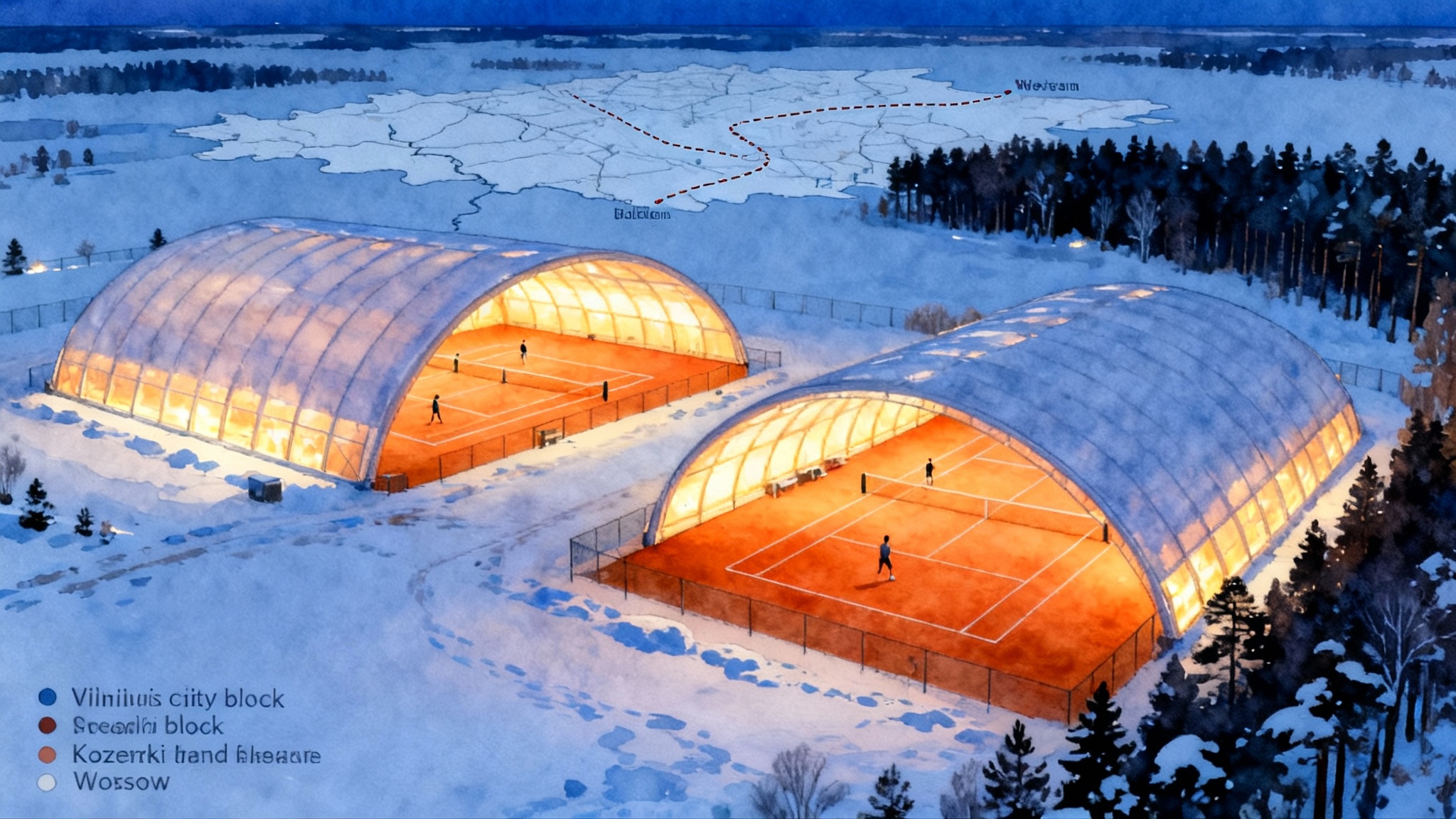
Nice Côte d’Azur Airport sits close to the Riviera campus. Lyon Saint‑Exupéry serves Décines. Direct trains between Nice‑Ville and Lyon Part‑Dieu typically take about four and a half to five hours, with high‑speed stretches and comfortable seats. If you prefer to fly between the two cities, flight time is about one hour in the air, plus security and transfer, which often makes the train the simpler choice.
Local transit is straightforward. From Nice Airport you can reach the Riviera base by car in about twenty to thirty minutes depending on traffic, or by tram and a short taxi. In Lyon, the Rhône Express links the airport to Part‑Dieu station, and trams connect to Décines. Ride‑hail and taxis are reliable in both cities.
If you rent a car, book compact sizes for easy parking. The Riviera coastline can be busy during weekend peaks, while Décines has wider roads but event‑day traffic around the stadium complex. Spring weekdays are calmer, which is another reason this corridor suits training.
Lodging and neighborhoods that work for training
On the Riviera, you want short transfers and a quiet sleep window. Villeneuve‑Loubet offers apartment hotels near the marina, townhouses set back from the coast, and family‑friendly residences with kitchens. Look for laundry on site, blackout blinds, and a balcony or terrace for drying gear. If you prefer a more urban pace, Nice’s western neighborhoods sit close enough to commute without stress.
In Lyon, Décines and its adjacent districts offer modern hotels and serviced apartments near the tram. You get easy morning access to courts and simple routes into central Lyon for dinner. Families often choose apartments with a small kitchen and a separate bedroom to keep early bedtimes realistic.
Book shoulder‑season rates by late January for March and April stays, and by mid‑February for May. Ask for flexible reservations that allow a one day shift in case your travel day changes. When comparing prices, factor in breakfast and laundry, since both affect training readiness.
Family add‑ons and day trips
A spring block does not need to feel like a grind. Plan one cultural or outdoor activity every third day, with a hard stop to be off your feet by late afternoon.
Riviera ideas
- Old Town Nice and the flower market for a short morning walk.
- Antibes ramparts and the harbor for an easy loop and a coffee.
- A coastal path segment to stretch the legs, then an early lunch.
Lyon ideas
- Vieux Lyon for a stroll through the traboules and small squares.
- Les Halles de Lyon Paul Bocuse for a simple lunch and fresh produce to take back.
- Parc de la Tête d’Or for a flat recovery walk.
Kids travel well with a routine. Pack a tennis starter kit for younger siblings, schedule a one hour junior fun session midweek, and bring a book for quiet time while the player naps or stretches.
Coaching structure you can count on
All In Academy coaches run clear session blocks. Expect a warm up with footwork patterns on the service boxes to practice the slide on a safe, small scale. The main block blends technical and tactical work, then live ball, then serve and return. Finishing drills often add scoring to lock in focus.
Ask for three themes across your days:
- Movement on clay: slide timing into and out of contact, especially the first step after the slide. Practice both the closing slide on defense and the braking slide on offense.
- Patterns that travel: serve plus one to both corners, backhand cross to backhand with the forehand waiting to step around, and change‑up height with a deep loop that pins opponents.
- Defensive optimism: build habits that keep points alive for two more balls. On clay, those two balls often flip field position.
Stringing is available at or near both sites. If you use polyester string, bring at least two reels or four sets per week. Clay rewards spin but punishes frayed strings. Many players drop tension two pounds on clay to add dwell time and height. Test this change on day one, not on match day.
Local match play and league culture
France has a deep club structure in spring. On most weekdays you can find a sparring partner through the academy network. Weekends often feature team matches, which provide a good watch or a chance to play practice sets in a quiet window. Ask the coordinator to place you at your level, then use repeated opponents to track progress. One smart approach is to face the same player twice in a week, with different constraints each time. First date, no drop shots allowed. Second date, you must change height at least once per rally.
What to pack for spring clay
- Two pairs of clay‑specific shoes with a herringbone outsole. Rotate daily so one pair dries while the other works.
- Extra socks, at least two per session. Clay holds fine dust and wet spots in spring.
- Tape and blister care. Small things save a week.
- Microfiber towels you do not mind tinting red.
- A hat with a dark under‑brim, sunglasses, and sunscreen. Spring sun feels gentle, but courts reflect light.
- Grips and overgrips, plus a small court bag that fits inside your daypack.
- A compact foam roller and a miniband.
- A light rain shell and a warm top for early mornings in Lyon.
Food and hydration that fit the work
Breakfast should be simple and steady. Think fruit, yogurt, oats, and a small espresso if you drink coffee. On court, water plus electrolytes and a small banana or an easy bar between blocks. Lunch stays light on heavy fats to keep the afternoon sharp. Dinner can be your bigger meal with rice or pasta, a lean protein, and vegetables. In both cities you can eat well without turning dinner into an event. Choose places within a short walk to keep bedtime intact.
Insurance, certificates, and practical details
Carry travel insurance that covers sport. France may require a basic medical certificate for competitive play at some clubs, so check in advance if you plan to enter a local event. Bring a digital copy of your passport, a list of any medications, and a note with your coach’s number and the academy address at each campus. If you drive, bring an international driving permit if your license requires it.
Booking checklist and timeline
Twelve weeks out
- Decide on a 7, 10 to 12, or 14 day format. Confirm dates.
- Secure refundable lodging near each campus.
Eight to ten weeks out
- Book flights into Nice and out of Lyon, or round trip to one city with a train between them.
- Reserve train seats at friendly times, late morning or early afternoon, to protect sleep.
- Confirm coaching package and stringing plan.
Four to six weeks out
- Lock in match play windows.
- Order extra strings and grips.
- Book one fun family activity in each city.
One to two weeks out
- Share your practice priorities with the head coach.
- Confirm airport transfers.
- Check weather and pack layers for Lyon mornings.
Why this beats the usual spring trip
Spain and Florida are great, but they can turn into crowd control. You want reps, not stories about waiting for a court. The Riviera and Lyon corridor gives you enough sunshine and drying breeze to build volume, then enough inland density to pressure test your game. The culture rewards planning. Sessions start on time, and you will find a match partner on a Wednesday afternoon without a scavenger hunt. If you want a winter lead‑in, consider our guide to the Tenerife winter‑sun tennis base or a stateside option like the Orlando practical U.S. tennis base.
A calmer, more structured path to May
Spring 2026 can be the season you prepare like a pro and still enjoy your trip. Start on the Riviera to put movement and timing in your legs. Shift to Décines to learn patience under a slightly slower bounce. Use the train to keep travel simple. Pick lodging that supports sleep and laundry. Give your family small but meaningful windows to explore. When you leave Lyon, you should carry two things: a repeatable slide that never surprises you and a set of patterns that survive a long rally. That is what this corridor, and this academy pairing, is built to deliver.