Legend Tennis Academy Review 2025–2026: Austin Hill Country Value
 Tommy
Tommy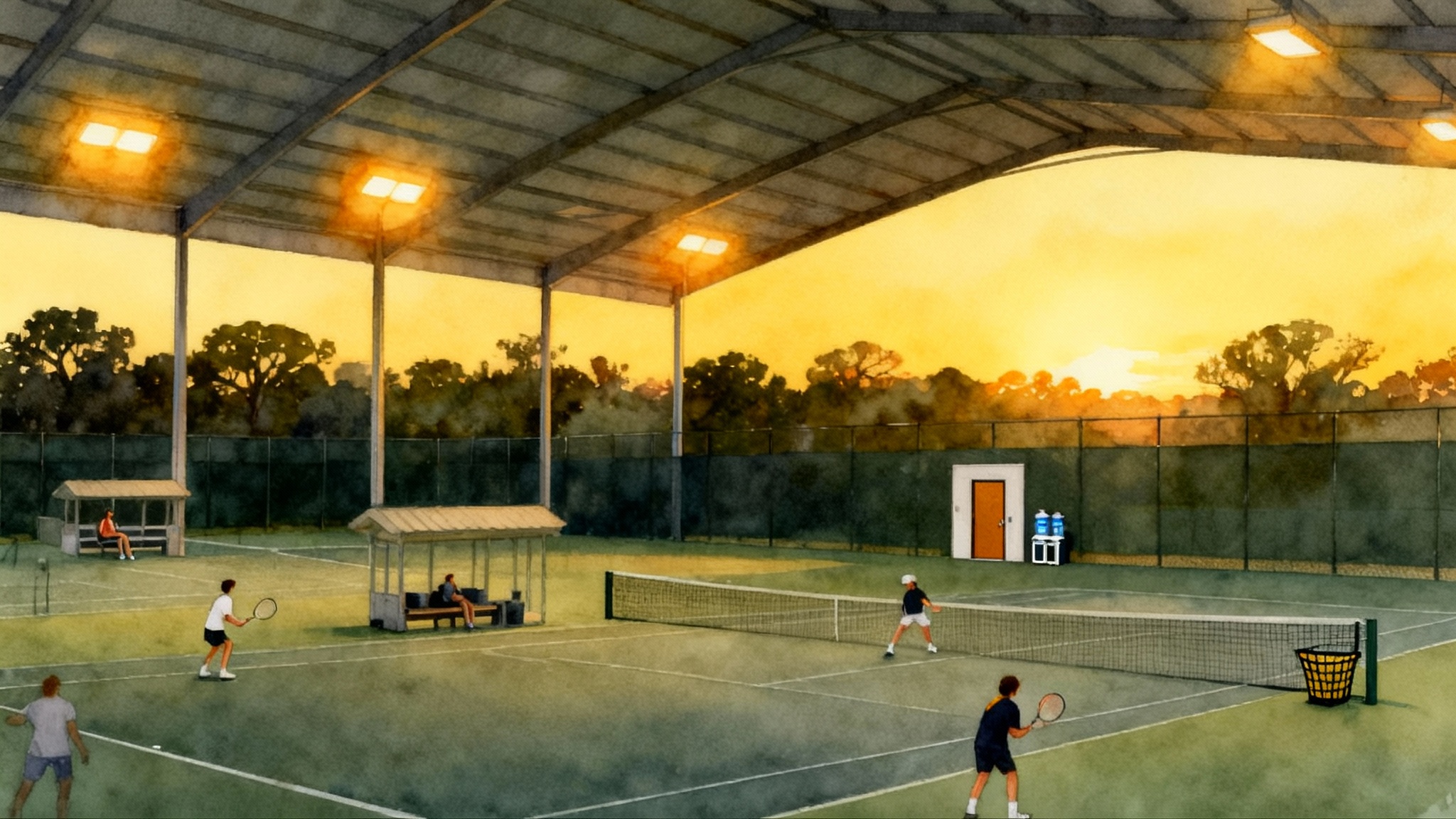
Snapshot: what Legend offers in 2025–2026
Legend Tennis Academy sits at 4200 Crawford Road in Spicewood, serving Bee Cave, Lakeway, and the western edge of Austin. The headline feature is simple but meaningful for families who juggle school, Texas heat, and after‑work schedules: covered and lighted courts for reliable year‑round play. See current offerings on the academy site at Legend Tennis Academy programs and pricing, and compare notes with our Legend Tennis Academy profile.
Legend opened its new Hill Country facility in 2025 and is positioning itself as a focused training environment rather than a full country club. Think of it as a purpose built practice garage where the essentials are tuned for juniors and motivated adults: shaded courts, proper lights, concise schedules, and a staff that runs consistent blocks.
Facility and the covered court advantage
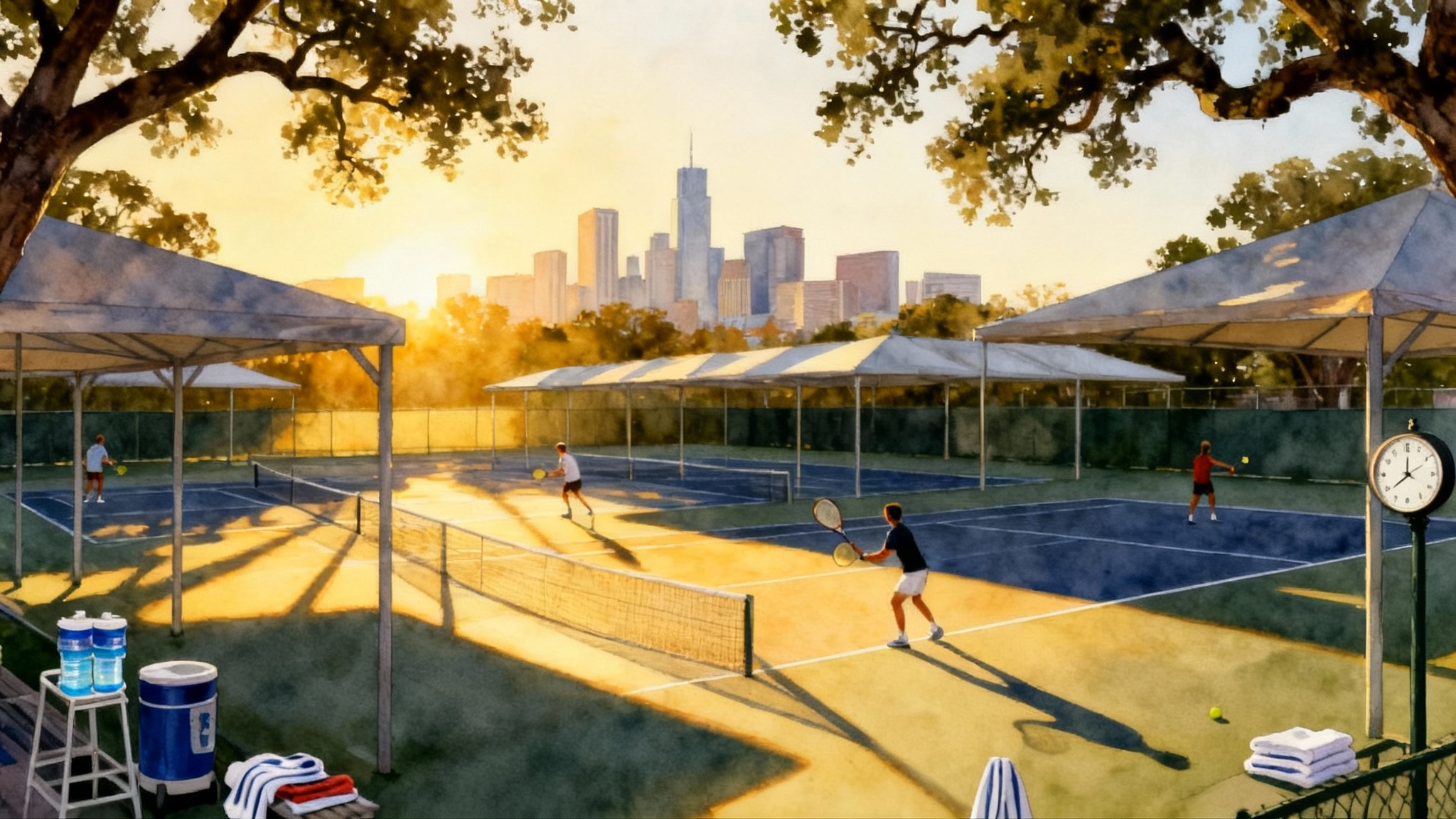
If you have ever cut a session short in July or waited out a drizzle on a Tuesday, the value of shade and lights is obvious. Covered courts are not the same as indoor courts, but they solve three real problems for Austin families:
- Sun and heat management: shaded hard courts reduce on‑court surface temperature and let players train at intensity without the midday bake. Parents also get shade while watching.
- Rain recovery: covered surfaces keep most showers off the hitting area so coaches can restart drills quickly.
- After school and after work flexibility: full lighting means usable hours extend into the evening when traffic and homework allow.
Legend has also publicly stated plans to expand with indoor courts in a later construction phase. That is rare in Central Texas and would push weather risk even lower. See the USTA Texas 2025 facility update for context.
What this means for parents: you are buying predictability. Covered and lighted courts turn the calendar into a training plan rather than a weather lottery.
Junior pathway: how the levels stack
Legend’s junior pathway is straightforward and maps cleanly to age, ball color, and school teams. The names matter less than the time per session and the ball your player uses.
- Rising Stars: ages roughly 4 to 8, red or orange ball, 1 hour per class. Monthly options from 1 to 4 days per week.
- Future Champs: ages roughly 8 to 14, green or yellow ball, 1.5 hours per class.
- Junior Circuit: middle school and early high school junior varsity, yellow ball, 2 hours per class.
- Junior Elite: middle school and high school varsity or tournament players, yellow ball, 2 hours per class.
Pricing posted for 2025 matches the time commitment. For example, Junior Elite lists about 2 hours per session at four days per week for around one thousand dollars per month, while Future Champs at two days per week runs about three hundred fifty dollars per month. Rising Stars starts near one hundred sixty dollars per month for a one day per week option. There is also a two athletes to one coach format on weekends at a higher per hour rate for families who want targeted reps. A one time annual registration fee applies and Legend caps most courts at up to five players.
How to read these numbers as a parent: multiply hours per week by weeks per month, then divide the monthly price by total hours. You will see that as athletes move up, you pay for more contact time and more competitive intensity. The structure is logical and lets you scale from one to four days without getting stuck in a contract.
Training blocks and daily rhythm
Legend’s posted group training windows run Monday through Friday in the late afternoon and evening, typically 4:00 to 8:00 p.m. Weekend slots are available for semi‑privates and makeups, commonly 8:00 a.m. to 8:00 p.m. The membership terms list member court access windows earlier in the day on weekdays and later on weekends, with adjustments during June and July when summer camps are on the schedule.
Why this matters: you can design a realistic week that fits school, homework, and dinner. A common plan for a varsity hopeful might look like this:
- Monday: Junior Elite 2 hours on court, 30 minutes recovery and stretch.
- Wednesday: Junior Elite 2 hours on court, 20 minutes serves.
- Friday: Junior Elite 2 hours on court, 15 minutes video review at home.
- Weekend: 90 minutes semi‑private for serve returns or transition volleys.
You can swap Friday for Tuesday if that fits a lab period or club meeting. The point is that Legend’s blocks support three to five contacts per week without forcing midday sessions that conflict with school.
Academics fit and school integration
Legend markets itself primarily as a training center rather than a school plus tennis model. Families that need supervised study halls and midday hitting to replace traditional school will likely look first at larger academies with dedicated classroom spaces and daytime practice groups. For most Austin families who want after school training that respects homework and bedtimes, Legend’s schedule is the right shape.
A quick decision framework:
- If your athlete is in traditional school and needs two to four late afternoon sessions, Legend’s schedule aligns well.
- If your athlete trains like a college prospect with daytime blocks and proctored academics, consider whether a school integrated academy is a better fit, or maintain your current school and add private morning sessions on off days.
Pricing, membership, and what it really costs per month
Legend has two layers: a membership that grants access to book courts and facility basics, and program fees for training. Membership as posted for 2025 lists individual around one hundred twenty five dollars per month and family around one hundred seventy five dollars per month, with court booking limits designed to keep access fair. Non members can pay a posted walk in hourly rate when available. Group and semi‑private training prices are separate and scale with frequency.
How to budget it: if your family chooses a family membership plus a two days per week Future Champs slot, the all in recurring number is the membership fee plus around three hundred fifty dollars per month for training. Add a small annual registration fee and the occasional tournament weekend. If you plan to book semi‑privates, expect about two hundred forty to four hundred fifty dollars per month for one to two days per week, depending on level and duration.
Tip: use cost per hour as your baseline. A Junior Circuit plan of two days per week is eight hours per month of coached time, plus optional court access via membership for serves and wall work.
Commute times: what your week will feel like behind the wheel
Legend’s location in Spicewood is convenient for Bee Cave and Lakeway, and a tradeoff for families in the northern suburbs. The times below reflect typical weekday travel between 3:00 and 6:00 p.m. when most juniors head to practice. Always check your exact route, but these ranges will help you plan carpools.
- Bee Cave: 10 to 20 minutes
- Lakeway and Rough Hollow: 15 to 25 minutes
- Westlake Hills: 25 to 35 minutes
- Dripping Springs via Hamilton Pool Road: 30 to 40 minutes
- Circle C Ranch: 35 to 45 minutes
- Steiner Ranch: 30 to 40 minutes
- Cedar Park: 35 to 50 minutes
- Leander: 40 to 55 minutes
- Round Rock: 45 to 60 minutes
Two practical tips:
- Pick consistent days and share rides with one or two families from your school. That reduces your weeknight drives without reducing reps.
- Use the covered court to your advantage. Later start times are viable since lighting keeps play quality high after sunset.
How Legend compares to other Central Texas options
Parents usually compare three archetypes in Austin and the Hill Country.
-
Focused training academies with sizable campuses: examples include long established programs that operate larger court counts, strength rooms, and on site classrooms for students who need daytime blocks. Expect broader tournament travel support, higher private lesson rates for senior coaches, and a deeper player ladder for match play. The upside is a college pathway ecosystem under one roof. The tradeoff is cost and commute if you live outside the western corridor.
-
Full service clubs with leagues and clinics: examples include large neighborhood clubs where monthly dues cover court access, mixers, and adult programs, with junior clinics as an add on. These are great for multi sport families or for siblings who want to swim or play pickleball while one child trains. The tradeoff is that junior high performance blocks may be limited or spread across multiple times.
-
City facilities and school courts with private coaches: the most flexible and often the lowest cost. You assemble your own schedule from a mix of clinics and private lessons. The tradeoff is consistency and weather risk. If you get rained out and there are no covered courts, you lose the day.
Where Legend fits: it combines the reliability of covered and lighted courts with a clean junior pathway and clear pricing. It is not a country club and does not present itself as a full school integrated academy. That clarity helps parents who want structured after school training without paying for amenities they will not use.
Pros and cons checklist
Pros
- Covered and lighted courts reduce weather cancellations and heat exposure.
- Simple, scalable pricing that increases with session length and frequency.
- Clean junior ladder from red ball to varsity level with 1 to 4 days per week options.
- Weekend semi‑privates for targeted skill work and makeups.
- Family membership option that allows practice serves and family court time during posted member hours.
- Location is ideal for Bee Cave and Lakeway families and manageable for Westlake.
Cons
- No published, formal academics program or supervised study halls on site.
- Northern suburbs face longer commutes at peak times.
- Four court footprint limits the number of simultaneous groups, so popular blocks may fill quickly.
- Tournament travel, college placement, and college showcase infrastructure are not yet at the scale of long established, larger academies.
A one week trial plan to decide with data
Treat the first week like a product test. Keep notes and decide with evidence.
Before you start
- Set one clear objective, such as a cleaner forehand contact at shoulder height or two more first serves in per game.
- Choose a frequency that matches your long term budget. If you can sustain two days per week, trial the same.
- Block commutes in your calendar and set up a carpool if possible.
During the week
- Session 1: ask your coach for one technical priority and one tactical priority. Log it on your phone.
- Session 2: film 10 minutes of serves from two angles. Note toss height, knee bend, and contact point.
- Optional semi‑private: use the second half for pattern work that matches your school team position, such as deuce point serve plus first ball.
After the week
- Measure what changed. Look for a specific feel cue, such as “racket tip higher before drop” or “split step timed as opponent starts forward swing.”
- Tally hidden costs. Did the commute feel reasonable on both days? Did homework still get done before 9:30 p.m.?
- Ask the coach how they would map the next four weeks and what match play they recommend.
To see how Legend stacks up around the state, read our Texas academies city‑by‑city guide. If you are open to emerging programs, scan our best new academies for 2025–2026.
Who will love Legend, and who should look elsewhere
Choose Legend if:
- Your player is 8 to 16 and motivated to train two to four times weekly after school.
- You live in Bee Cave, Lakeway, or Westlake and value predictable sessions regardless of weather.
- You want coaching continuity with options to add semi‑privates on weekends without rebuilding the week.
Consider a different path if:
- You need daytime training blocks plus integrated academics under one roof.
- You live in Round Rock, Leander, or Cedar Park and do not want a 35 to 60 minute commute at peak times.
- You need frequent, high level match ladders every afternoon with deep draws of state and national level players.
Bottom line
Legend Tennis Academy brings something Central Texas families have asked for: reliable, after school training on covered and lighted courts with a junior pathway that makes sense and prices that scale clearly with time and frequency. If you live in the Hill Country suburbs and want more finished reps and fewer cancelled days, Legend is worth a serious look. If your athlete needs a school integrated program or you live far north, weigh the commute and consider whether a larger campus better fits your goals. Use a one week trial plan, measure real improvements, and let the data decide for you. If the sessions deliver technical clarity, if homework still fits, and if the drives feel routine by day three, you have likely found a training home.