Tennis Academies India 2026: Delhi, Mumbai, Bengaluru, Mohali
A parent-and-player guide to India’s top tennis academies in Delhi, Mumbai, Bengaluru, and Mohali. Compare coaching depth and ratios, surfaces, boarding and academics, cost bands in INR and USD, and AITA, UTR, and ITF competition calendars.
 Tommy
Tommy
Who this guide is for
If you are a parent mapping a long runway for a 10-year-old or a player in Class 9 to 12 targeting either a United States college roster or a first professional ranking point, this 2026 guide is built to help you compare India’s strongest academy options in Delhi, Mumbai, Bengaluru, and Mohali. You will find data cues to evaluate coaching depth, athlete-to-coach ratios, training surfaces, boarding and academic integration, realistic cost bands in both Indian rupees and United States dollars, and how each program supports AITA, UTR, and ITF tournament calendars.
If you are also benchmarking against overseas hubs, see our comparisons in the Florida junior academies 2026 scorecard and the Mid-Atlantic academies 2026 guide.
How we compared academies
Think of an academy like a small high-performance company. Its product is improvement, and it shows up in habits, ratings, and results. We used seven practical criteria you can verify on a visit or trial week:
- Coaching depth and specialization
- Count full-time coaches, not part-time hitters. A robust junior program usually shows 1 dedicated coach for every 6 to 8 players across the day, with the elite squads narrowing to 1 to 3 or 1 to 4 in live ball and 1 to 1 or 1 to 2 for technical rebuilds. Look for specialist roles: a lead technical coach, a point-construction or tactics coach, a fitness lead, and an injury prevention therapist.
- Group ratio policy by age and phase
- 10 and under: 1 to 4 on technical stations, 1 to 6 in games-based blocks.
- Transition years 12 to 14: 1 to 4 or better during rebuilds; 1 to 6 in match play.
- High-performance 15 plus: 1 to 3 in drilling; privates weekly for video and serve work.
- Surfaces and court access
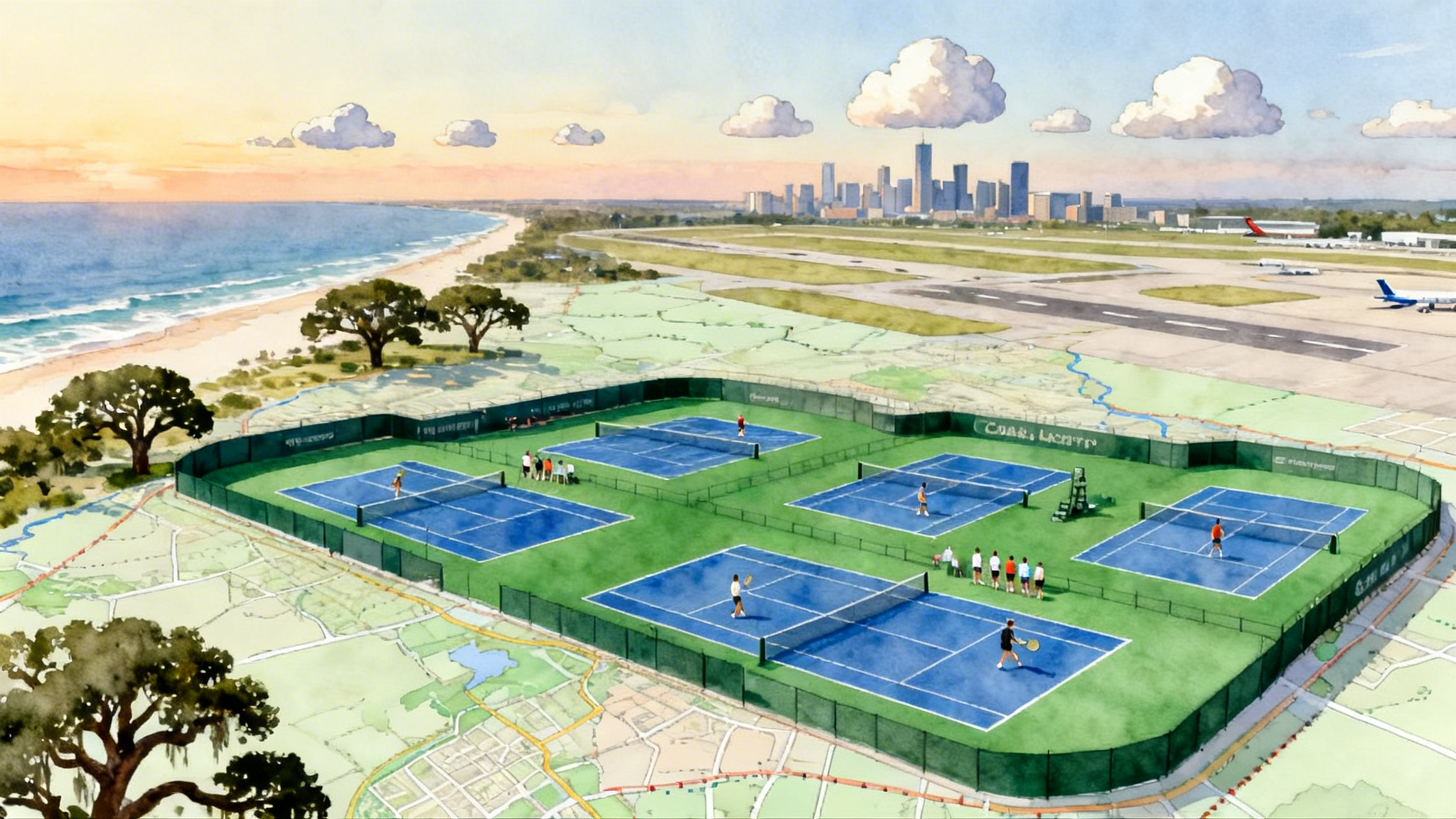
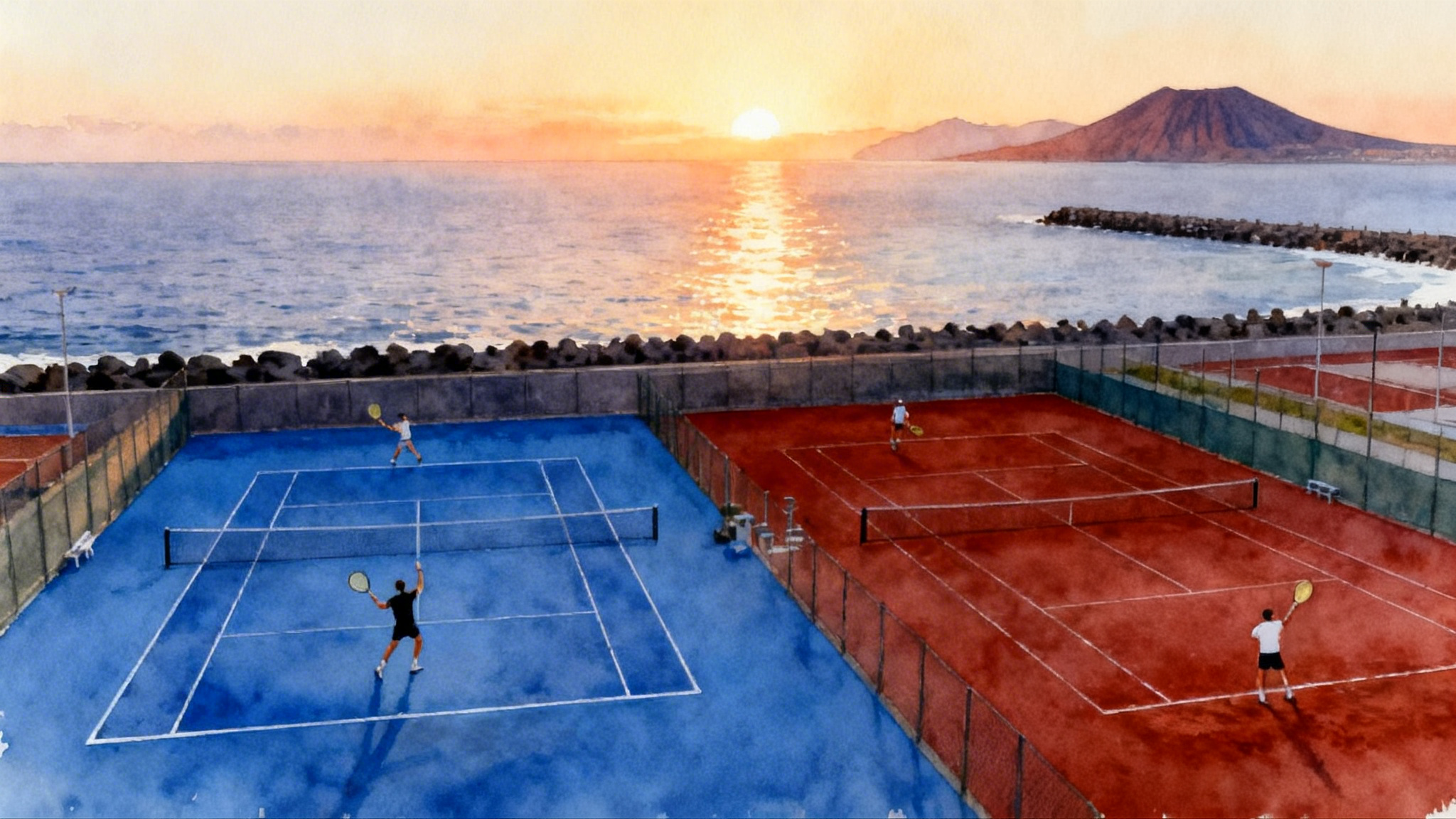
- Check the surface mix relative to your calendar. AITA and ITF weeks in North India trend to hard courts, while coastal metros mix acrylic, synthetic grass, and clay. A balanced academy offers at least 8 to 12 courts so top squads avoid court starvation in peak hours.
- Boarding and academics integration
- Strong programs show a clear schooling pathway: on-campus school, partnered day school with shuttle, or independent study boards like National Institute of Open Schooling or Cambridge International. Ask for an attendance policy during travel weeks, proctored exam options, and grade-level homework labs.
- Cost bands (2026 norms)
- Day scholar development: INR 6,000 to 18,000 per month.
- High-performance squads: INR 20,000 to 50,000 per month.
- Individual sessions: INR 1,500 to 4,000 per hour in metros.
- Full boarding high-performance: INR 6 lakh to 14 lakh per year. At a reference conversion near the current market range, that is roughly USD 7,500 to 17,000. Always confirm the live exchange rate and what is included in the package.
- Competition calendar support
- Your academy should help with entries, travel groups, and peak-taper blocks aligned to the AITA tournament calendar. Ask who manages sign-ups and who travels as coach of record.
- Progress tracking and communication
- Look for a written plan that defines your two or three technical themes for the quarter, measurable fitness targets, and match-play key performance indicators such as first serve percentage, break point conversion, and neutral ball error rate.
City-by-city context that actually matters
- Delhi National Capital Region: Summer heat peaking May to June, winter chill December to January. Courts are largely acrylic hard with a few clay pockets. Travel is relatively predictable by metro and ring roads, while pollution peaks can affect outdoor work in winter.
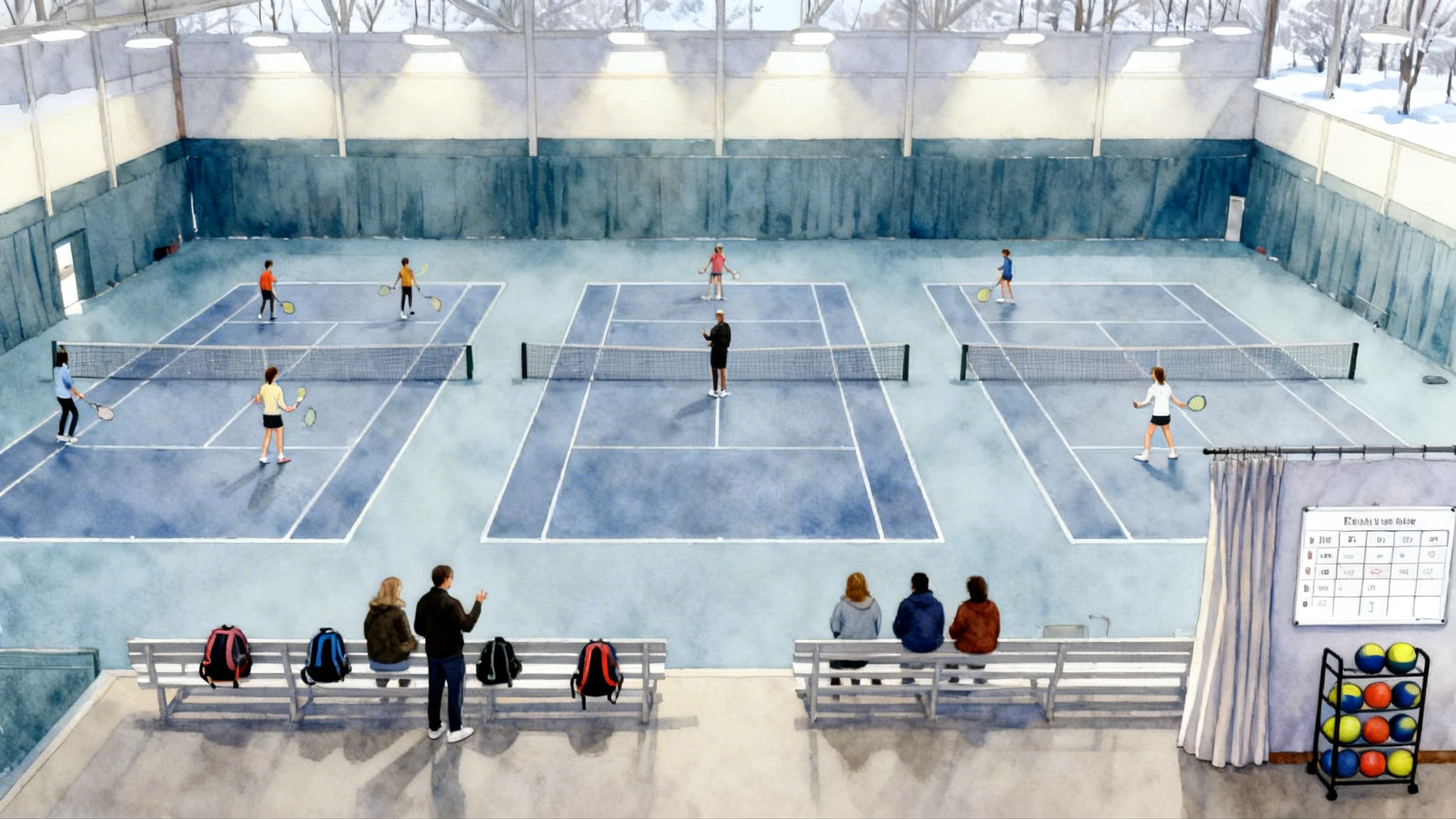
- Mumbai: Heavy monsoon from mid June to September. Excellent year-round competition density but court availability tight in peak evening slots. Synthetic hard and clay dominate. Covered courts matter in monsoon months.
- Bengaluru: Milder climate, afternoon showers common May to October. Altitude and dry air produce a livelier bounce, great for serve and first-strike tennis. Acrylic hard and clay mix, plus a few deco turf installations.
- Mohali and greater Chandigarh: Dry winters and warm summers, with a manageable monsoon. A strong base for North India AITA and ITF swings, and an easier airport commute compared to big-metro crunch.
Mini-profiles: standouts parents ask about
Below are concise snapshots to help you start shortlisting. Treat them as a first-pass map. Visit, watch a full squad block, and speak with at least two current parents before committing.
RoundGlass Tennis Academy, Mohali
- Facilities and surfaces: Purpose-built training environment within the tri-city area, with a strong emphasis on consistency of court speeds and reliable scheduling even during rain. Expect multiple acrylic hard courts, on-site fitness space, and recovery support.
- Coaching structure: Blended model of technical rebuild blocks and tactics-based live ball, with small-squad ratios for match play. Typical high-performance windows target 1 to 3 or 1 to 4 on drill courts, and 1 to 1 for serves and patterns review.
- Competition access: Easy van access to tri-city AITA weeks and North India ITF juniors. The airport proximity enables two- to three-hour hops to Delhi or Mumbai for bigger swings.
- Boarding and academics: Boarding available with a structured study hall. Ask about partner schools and independent study options for travel-heavy players. Expect exam support during multi-week tours.
- 2026 cost band: Commonly in the mid to upper high-performance range. Day scholar options also exist for tri-city residents. Expect separate line items for physio screens and tournament travel.
- Who it suits: Players wanting a quieter base with professional structure, families who value consistent court-time over big-metro bustle, and athletes aiming to ladder from AITA points to first ITF qualifying draws in a 12 to 18 month horizon.
For deeper background, read our RoundGlass Tennis Academy profile.
DLTA National Tennis Centre, New Delhi
- Facilities and surfaces: A large complex environment with tournament-grade acrylic hard courts and access to match play year-round. The breadth of courts helps with volume in peak months.
- Coaching structure: Multiple groups across ages with specialist blocks for serve, return, and first four shots. Ratios for top squads trend toward 1 to 3 or 1 to 4 during technical work.
- Competition access: Regular AITA events on-site or within metro reach. Frequent match-play opportunities as visiting players come for tournaments.
- Boarding and academics: Typically day scholar focused. Families often pair with nearby schools that accommodate travel weeks. Some private hostels exist within commutable distance.
- 2026 cost band: Mid to upper for metro high-performance. Privates billed separately. Travel coaching fees assessed per tournament week.
- Who it suits: Players who learn best in a big-pond environment with frequent match variety and families that can manage day-to-day logistics in the capital.
KSLTA Stadium Programs, Bengaluru
- Facilities and surfaces: Central location with a blend of hard and clay courts and a culture of frequent tournament hosting. The climate allows consistent volume throughout the year.
- Coaching structure: Balanced technical and tactical frameworks with a strong feeding pipeline from development to performance squads. Top-rung groups keep tight ratios in drill blocks and open sparring in the evenings.
- Competition access: Regular AITA and periodic ITF junior events in the city or a short flight away. The altitude adds a useful challenge for serve and aggressive baseline patterns.
- Boarding and academics: Primarily day scholar with a growing network of school partnerships. A few reputable student hostels serve outstation players.
- 2026 cost band: Mid for high-performance by metro standards. Privates and fitness sessions add to the monthly spend.
- Who it suits: Athletes who thrive on consistent climate and like building weapons, especially serve plus one patterns.
MSLTA Centres, Mumbai
- Facilities and surfaces: High-quality hard and clay courts across multiple hubs in the city. During monsoon, covered slots become a premium, so plan early.
- Coaching structure: Strong emphasis on live ball, point construction under pressure, and situational games. Top squads narrow to 1 to 3 during technical blocks when needed.
- Competition access: One of the densest calendars of AITA and privately run match-play events in India. Great for players who want weekly competitive reps.
- Boarding and academics: Largely day scholar. Outstation players often choose homestays near the center or short-term serviced apartments.
- 2026 cost band: Mid to high in the metro context, with monsoon-court premiums for covered time slots.
- Who it suits: Players who value frequent matches and can handle city logistics. Families targeting college placement often base here for the depth of match play.
Cost bands decoded, with a realistic annual budget
Here is a sample annual budget for a high-performance day scholar in a metro, excluding racket replacements and medical costs:
- Squad fees: INR 30,000 per month x 10 months of full training blocks = INR 3,00,000.
- Private sessions: 1.5 hours per week at INR 2,500 per hour x 40 weeks = INR 1,50,000.
- Fitness and physio screens: INR 6,000 per month x 10 months = INR 60,000.
- Tournament coaching: 12 weeks at INR 6,000 per week = INR 72,000.
- Travel and lodging for 10 outstation weeks: INR 18,000 per week = INR 1,80,000.
- Balls, grips, stringing: INR 30,000 to 50,000 depending on volume.
Total: approximately INR 7,92,000 to 8,12,000. At a commonly referenced conversion range, that sits near USD 9,500 to 10,000. Boarding programs streamline some travel and lodging but add housing and meals to the invoice. Always request a one-page fee sheet that clarifies inclusions and coach-travel sharing rules.
Monsoon and heat scheduling that saves seasons
- Delhi: Peak heat in May and June. Schedule early morning and post-sunset blocks, double up on hydration and heat acclimation, and consider short indoor strength sessions mid-day.
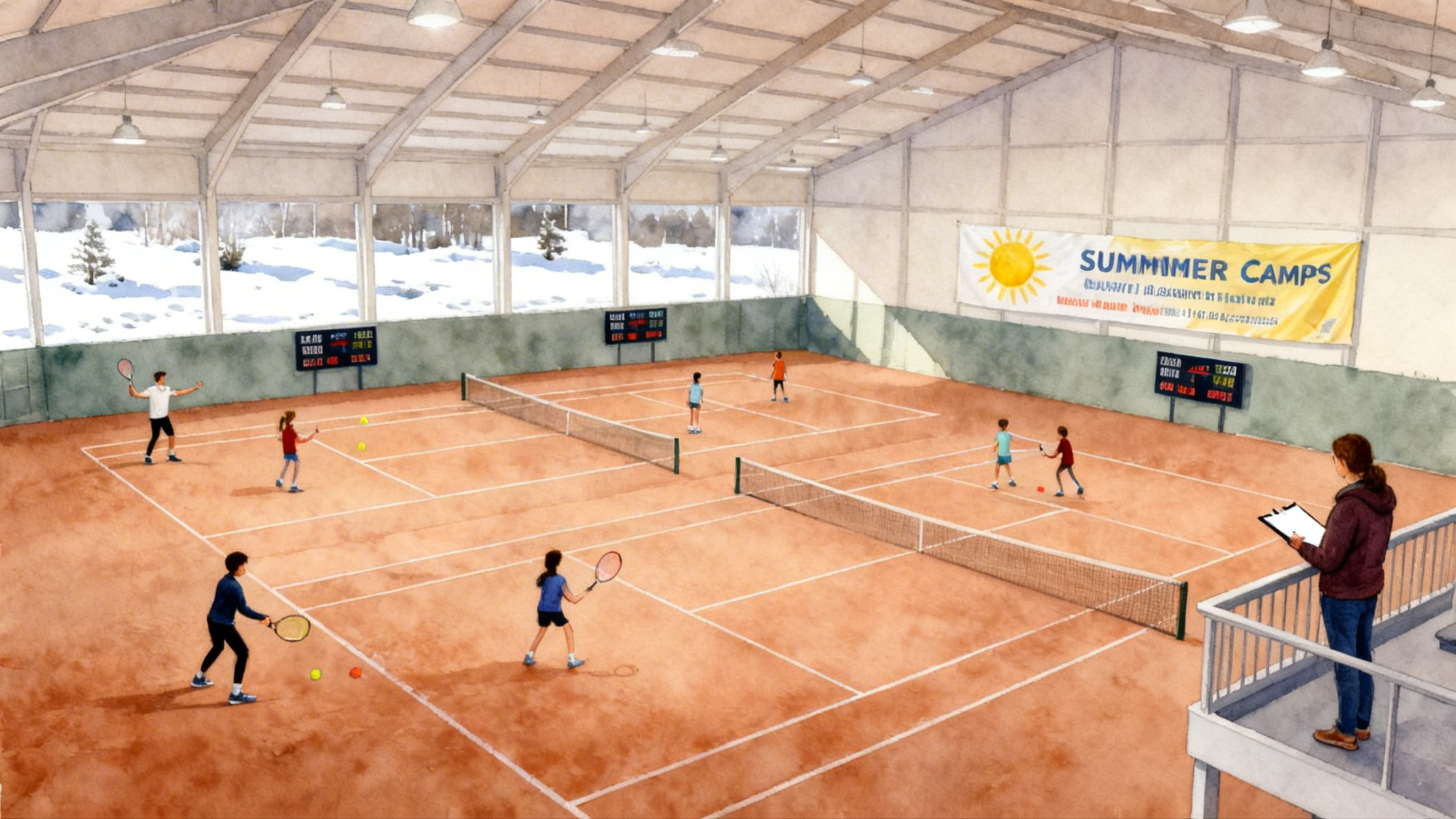
- Mumbai: Monsoon from mid June to September. Book covered courts or accept a swim-lane schedule that stacks technical work, video or tactical sessions on rain days. Keep a resistance band kit and a small tripod for indoor serve drills.
- Bengaluru: Showers May to October, but many days remain trainable. Build microcycles with flexible afternoon swaps to indoor strength and mobility. Ball compression can feel jumpy in dry spells, so string a touch tighter.
- Mohali: Manageable monsoon and cool winters. Use winter blocks for aerobic base and technical consolidation. Summer accelerates weapon development with faster bounces on hot acrylic.
Pro tip: Ask each academy for a written monsoon plan. The serious ones show a daily alternate schedule that includes footwork ladders, medicine-ball patterns, video analysis, and serve-shadow protocols with targets taped to a wall.
Competition calendar: from AITA to ITF to UTR
Your calendar choices decide which skills you actually train. Start with the official AITA tournament calendar and map 10 to 14 events you can realistically reach by train or a short flight. For college-bound players, add Universal Tennis events because college coaches read the UTR like a common language.
Sample 12-month map by age band:
- Under 14: 6 to 8 AITA weeks plus 2 to 3 Universal Tennis weeks. Goal is exposure and pattern stability, not volume for its own sake.
- Under 16: 8 to 10 AITA weeks, 3 to 4 Universal Tennis weeks, and test one ITF J30 or J60 week when ready. Build travel fitness.
- Under 18: 10 to 12 AITA or ITF junior weeks plus 4 Universal Tennis weeks for rating stability. Target a peak block every quarter with a lighter training week before each peak.
Entries and peaks: Freeze technical changes three weeks before a key event. Two weeks out, increase live ball and sets. Five days out, taper volume by 25 to 35 percent while keeping intensity. The head coach should own these calls.
Logistics that actually reduce stress
- Travel hubs: Delhi and Mumbai are nonstop hubs for most national routes. Bengaluru and Chandigarh airports are efficient and usually less chaotic in morning slots.
- Where to stay: In Mumbai and Delhi, short-term serviced apartments near the center save time. In Mohali and Bengaluru, quiet homestays in residential pockets work well for recovery.
- Commuting windows: Budget 45 to 75 minutes in Mumbai peak traffic, 30 to 60 in Delhi depending on ring-road direction, 20 to 45 in Bengaluru near the stadium, and 15 to 30 in Mohali.
- Team travel: Ask for the academy’s per-week coaching fee on the road, the maximum player-to-coach travel ratio, and who carries medical and stringing kits.
Choosing a pathway: United States college placement or pro first
You do not have to decide on Day 1, but you should train with one north star each six months.
-
United States college placement
- What matters: A stable UTR profile, solid video, consistent academics, and results that show you can travel and win indoors or out. For many Division 1 mid-majors, typical men’s rosters show UTR 12 to 13 for top-six contributors, while women’s top-six often sit near UTR 9 to 10. There is wide variation, so treat these as directional ranges.
- How to train: Maintain one weekly technical private for the serve, keep a doubles block, and schedule Universal Tennis matches that reduce rating volatility. Keep school grades within target requirements and plan standardized testing only if a chosen college requires it.
- What to ask an academy: Who writes coach references, who manages highlight reels, and which alumni have gone to colleges similar to your goal list.
-
Pro development first
- What matters: Weapon quality that wins cheap points, physical resilience for back-to-back matches, and a travel-tested routine. Plan your first ITF points through juniors or entry-level pro events only when your hold percentage and return games won at practice meets the benchmark your coach sets.
- How to train: Two technical privates weekly, one set-play day, and one heavy fitness day with sprint and lift focus. Build a body-maintenance plan that you can run solo on the road.
- What to ask an academy: How many players earned first pro points in the last two years, who travels to Futures and Challengers, and what the off-court support looks like.
For both pathways, understand the UTR framework in plain terms. A useful primer is UTR rating explained by Universal Tennis.
Red flags and smart questions on your trial visit
- Ratios that drift: If a posted 1 to 4 becomes 1 to 8 in peak hour, ask how they protect elite blocks.
- Court starvation: Fewer than 6 to 8 courts for a large program leads to too much ball feeding and not enough live play.
- Injury storylines: Repeated shoulder or back niggles across the group may point to poor serve mechanics or load management.
- Vague match data: If no one can tell you your first serve percentage or unforced error rate from last week’s sets, accountability is weak.
- No monsoon plan: If rain equals canceled practice without a replacement routine, improvement will stall.
Questions to bring:
- What are the three technical priorities for the next 12 weeks and how will we measure them?
- How do you set squads and when can an athlete move up?
- What is the travel-coach fee per tournament week and what ratio do you cap on the road?
- Which schools do you partner with for travel flexibility?
- What is your return-to-play protocol after a strain or illness?
Three example roadmaps
-
Age 10 multi-sport athlete in Delhi
- Join a development squad with 3 to 4 on-court sessions per week, 1 fun match-play block on Saturday, and a 20-minute daily movement routine. Play 6 local AITA or club events across the year. Budget two private sessions monthly to groove the serve and contact point.
-
Age 15 college-aiming player in Mumbai
- Base at a high-performance squad with weekly doubles play, schedule 8 AITA and 4 Universal Tennis weeks, and hold one private weekly for serve and return. Keep school grades steady and use short weekly video clips to track patterns. Target a UTR rise in two six-month steps rather than quick bursts.
-
Age 17 pro-leaning player in Mohali
- Anchor at a structured program like RoundGlass with two technical privates weekly, a Monday lift block and a Thursday sprint block. Plan a North India AITA stretch followed by two ITF J30 or J60 attempts. Add a recovery routine and nutrition plan with checklists you can run on the road.
How to use TennisAcademy.app during shortlisting
- Save academies to a single shortlist and compare their posted ratios, surface counts, and boarding notes side by side.
- Message programs to request a one-week trial with a clear schedule. Ask for a simple skills audit at the end of that week.
- Track tournament weeks you favor and pin them to your calendar so the training plan can backfill the right loads.
- If you are also exploring international options, skim our Florida junior academies 2026 scorecard and Mid-Atlantic academies 2026 guide to see how top US programs structure ratios and boarding.
The bottom line
Choose environments, not logos. The best academy for your player is the one that can protect small ratios for the right hours, deliver the surface mix that matches your calendar, and carry school alongside travel. Use the numbers in this guide to interview academies and pressure test their details. If you can leave your trial week with a one-page plan you believe in, the venue is probably right. Improvement compounds when the calendar, the court, and the classroom all point in the same direction.