Tournament Weekend Playbook 2025: Nutrition, Warm-Up, Recovery
A practical, hour-by-hour guide for juniors and adults to fuel, hydrate, warm up, cool down, and reset between back-to-back tennis matches. Includes a 48-hour template, printable checklists, and academy sidebars.
 Tommy
Tommy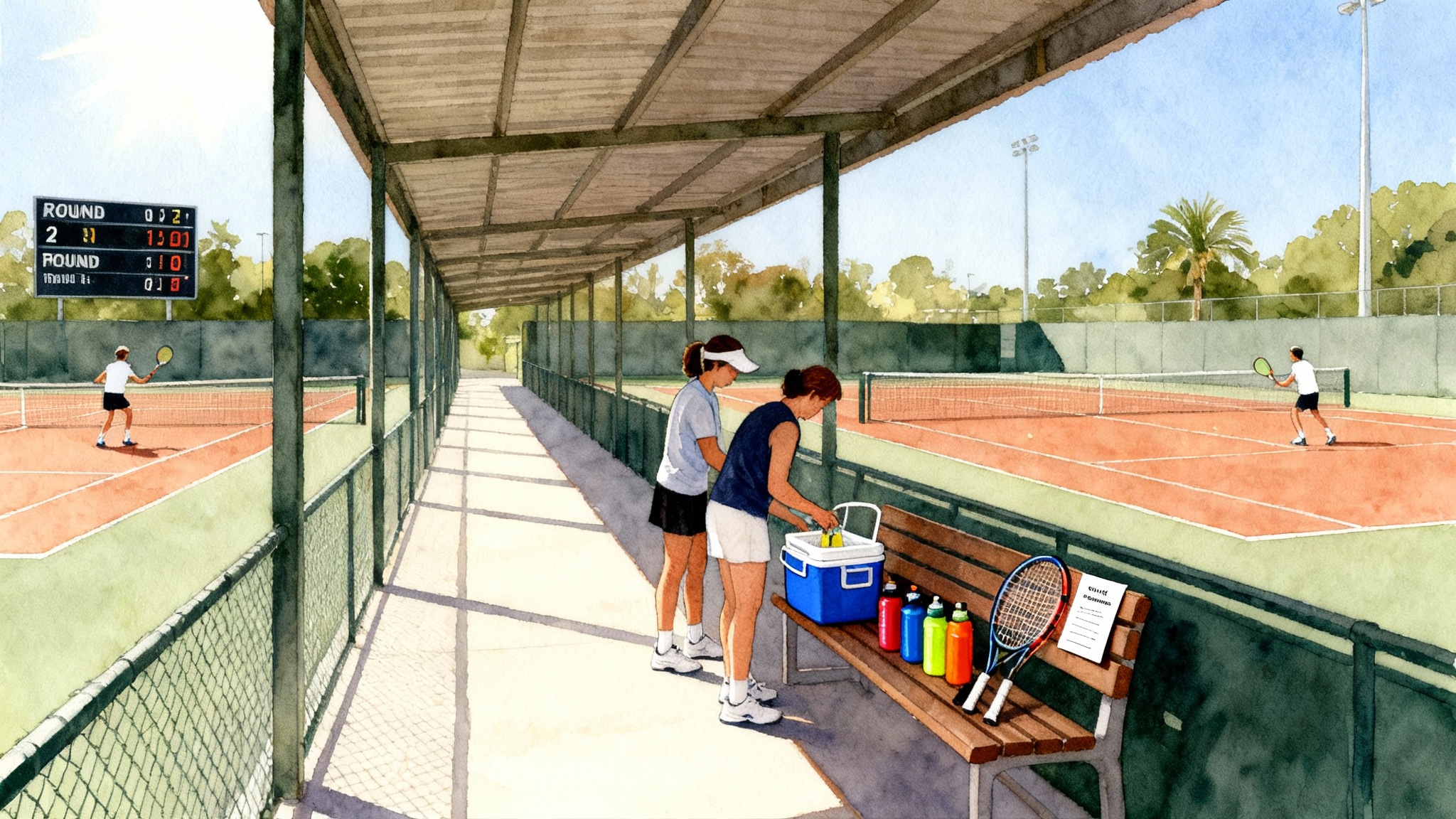
Why tournament weekends feel hard, and how to make them easier
Tournament weekends compress two demands into one box. You must perform at a high level, and you must repeat it with little time to spare. The difference between feeling flat in your second match and feeling ready often comes from what happens off the court. This playbook gives you an hour-by-hour plan for nutrition, hydration, dynamic warm-ups, cooldowns, and between-match resets. It is written for juniors, parents, and adult competitors who want simple steps that work on real courts, in real heat, with real schedules.
You will find:
- A 48-hour template you can print and use
- Clear fueling numbers and examples
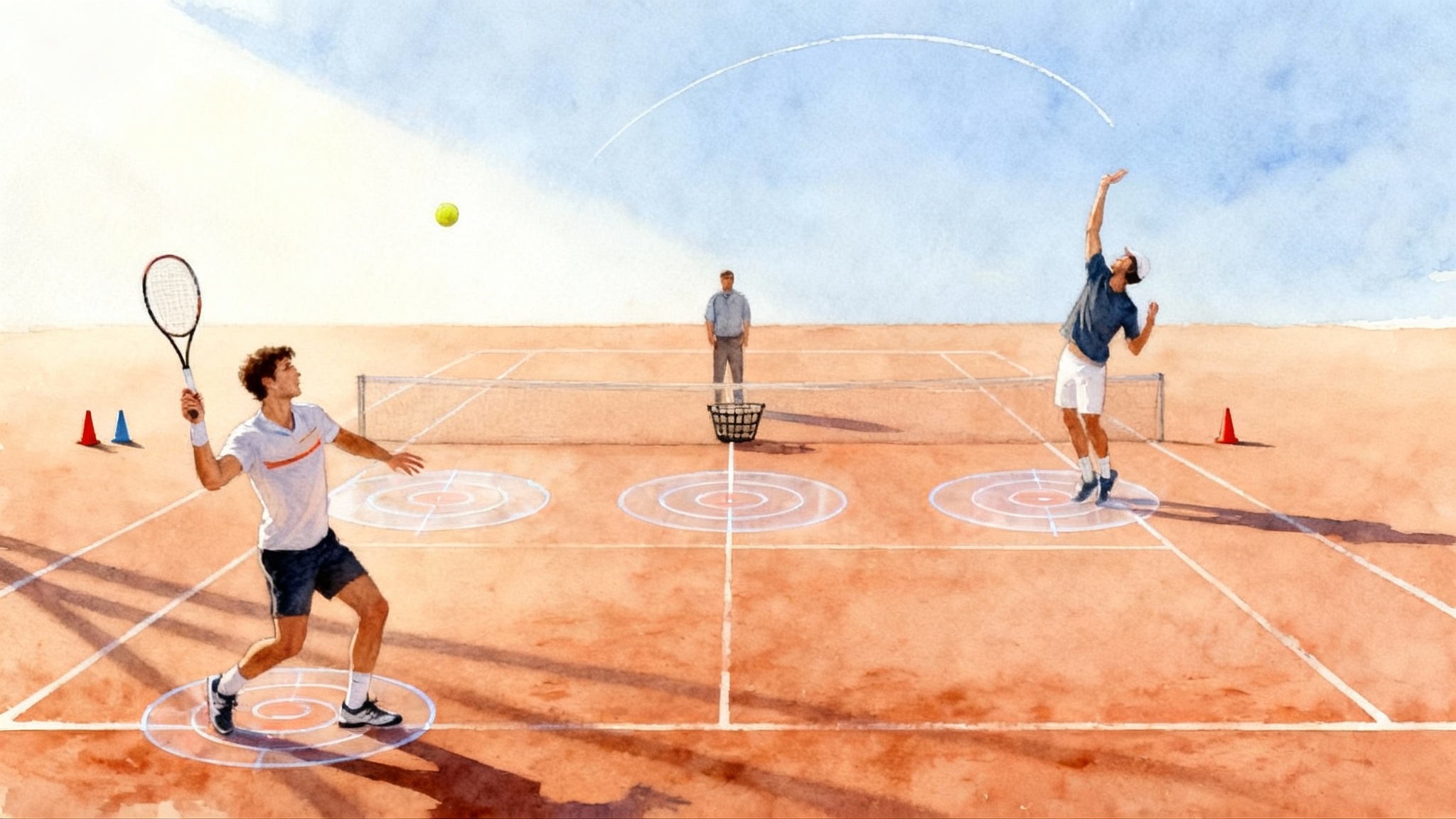
- A field-tested warm-up you can finish in 25 minutes
- A 15-minute reset between back-to-back matches
- Sidebars that show how Legend Tennis Academy in Austin and Life Time Tennis Academy prepare their athletes
Use the parts you need today. Personalize it as you learn your own responses to heat, nerves, and tight turnarounds.
The 48-hour template at a glance
Think of tournament success like packing a parachute. Each small fold is simple, but skipping one matters later. Here is a Friday to Sunday template you can adjust for match times.
Friday evening, 24 hours out
- Dinner: focus on carbohydrates and familiar foods. Target 1 to 2 grams of carbohydrate per kilogram of body mass. For a 60 kilogram player, that is 60 to 120 grams from rice, pasta, potatoes, quinoa, fruit, or tortillas. Add lean protein the size of your palm and a thumb of olive oil, avocado, or nuts.
- Hydration: sip water with electrolytes during the evening. Stop heavy drinking one hour before bed to protect sleep.
- Pack: see the checklists below. Freeze two bottles so they double as ice packs in the cooler.
- Sleep: aim for your regular bedtime. Keep screens dim and the room cool and dark.
Match day morning
- Wake time: at least three hours before your first match if possible.
- Breakfast, two to three hours out: 1 to 2 grams of carbohydrate per kilogram of body mass, plus moderate protein and low fiber. Examples: oatmeal with banana and honey, a bagel with peanut butter and jam, yogurt with granola and berries if dairy sits well.
- If nerves limit appetite: drink calories. Options include a fruit smoothie with milk or a sports drink plus a banana.
- Pre-match top up, 30 to 60 minutes out: 15 to 30 grams of easy carbohydrate. Examples: half a bar, applesauce pouch, ripe banana, rice cake with honey, two dates.
Two to four hours before the match: hydration plan you can count
- Drink 5 to 7 milliliters of fluid per kilogram of body mass in the two to four hours before start time. For a 60 kilogram player, that is roughly 300 to 420 milliliters. If urine stays dark, add another 3 to 5 milliliters per kilogram about two hours out. Include sodium if you tend to sweat salty or play in heat.
Your 25-minute dynamic warm-up
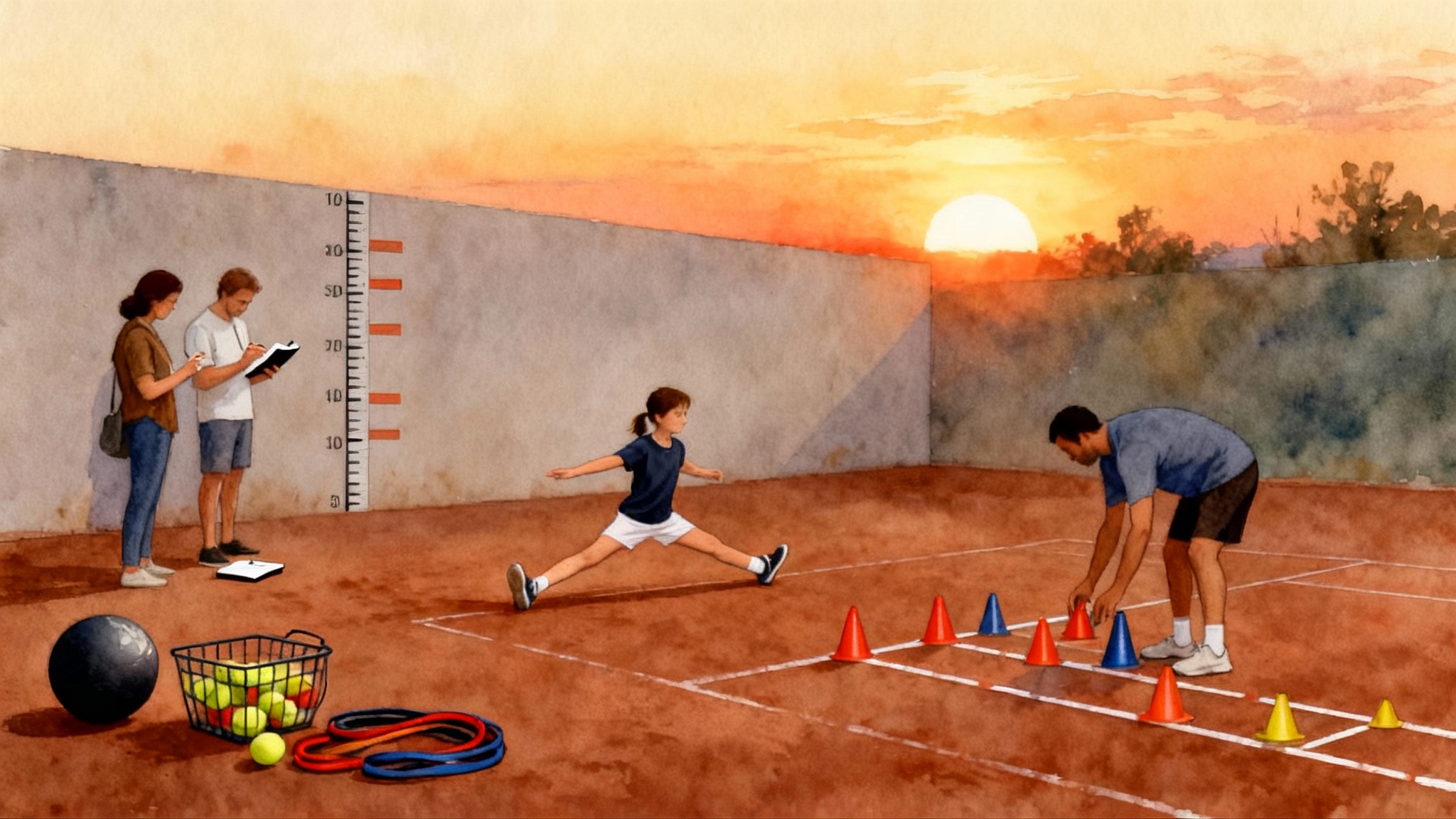
This sequence raises temperature, opens range of motion, and primes tennis patterns without fatigue. For more on movement quality, see our faster feet footwork plan.
- Light locomotion, 4 minutes: brisk walk into jog, sidesteps, backpedal, plus 2 short skipping runs.
- Mobility, 5 minutes: ankle rocks, knee hugs to lunge, world’s greatest stretch, thoracic spine rotations, arm circles front and back.
- Activation, 6 minutes: mini band walks, single-leg glute bridge, plank shoulder taps, calf raises, scap squeezes with a light band.
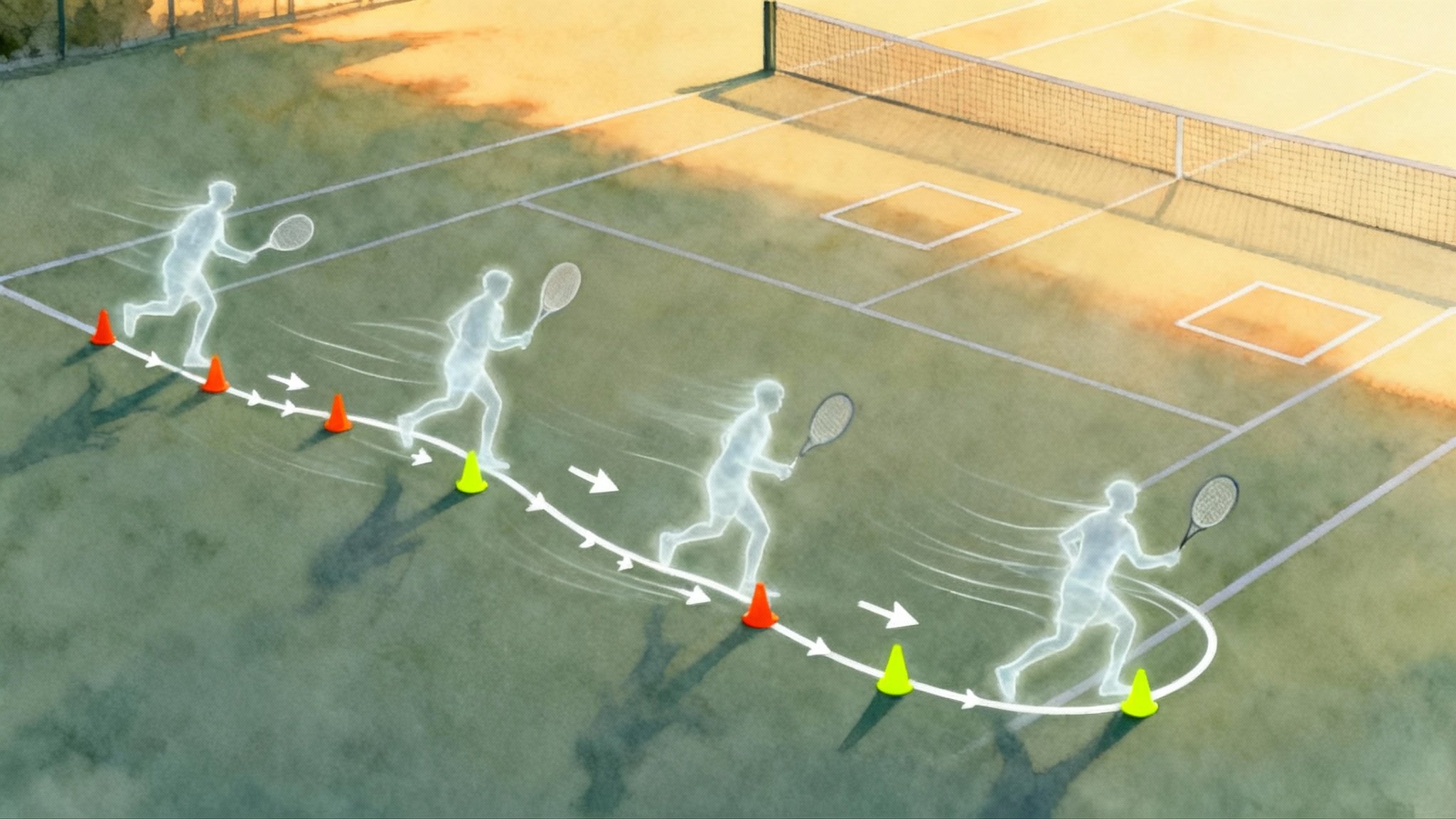
- Tennis footwork, 6 minutes: split step and first step, crossover and recover, drop step and run, three shadow forehands and backhands, approach and split at the service line, two shadow serves at 60 percent effort.
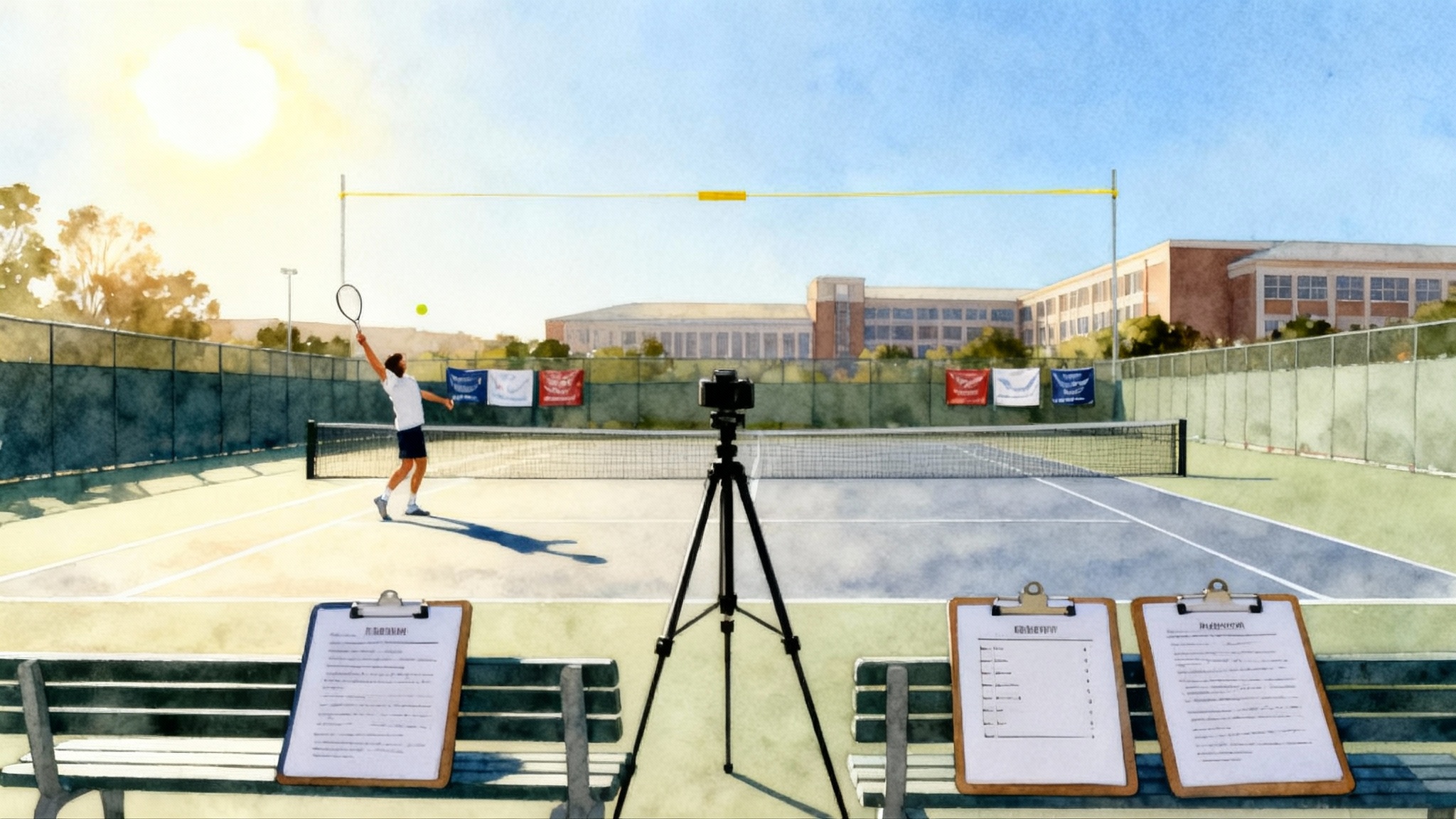
- Serve ramp, 4 minutes: 5 to 6 half-speed serves, then 4 at match speed, finish with 2 targeted second serves.
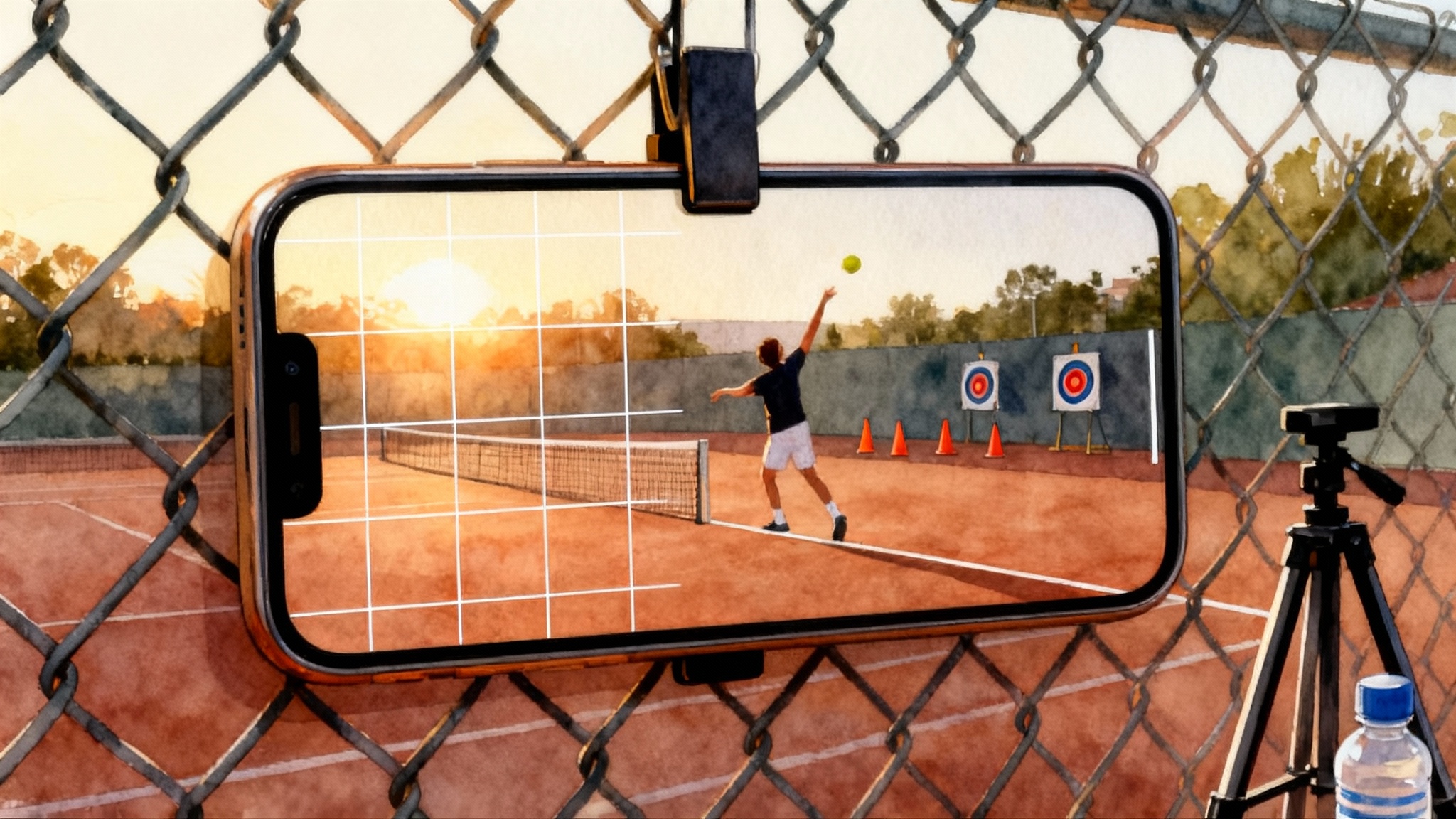
Keep rating of perceived exertion modest. You should feel warm and springy, not tired. If you are a junior, show a parent this list and ask them to time it. Once you know the routine, you will finish it anywhere, even on a dusty walkway behind court four.
During the match: simple rules that always help
- Sip every changeover. Aim for 0.4 to 0.8 liters per hour in normal conditions, up to your sweat tolerance in heat. Include sodium for long matches or heavy sweaters.
- Take in 30 to 60 grams of carbohydrate per hour for matches longer than 60 minutes. Options: chews, a sports drink, or half a bar each set. Practice these in training to avoid stomach surprises.
- Between points: three slow breaths while you reset your strings, and a single cue word that moves you forward. Examples: feet, heavy spin, tall toss.
After the match: cooldown and recovery window
- Walk the length of two courts, 3 to 5 minutes. Add two easy laps of sidesteps and backpedal.
- Stretch the hips, calves, quads, forearms, and chest, about 30 seconds each. Save deep stretching for later at home.
- Refuel within 30 minutes: 1 to 1.2 grams of carbohydrate per kilogram of body mass plus 20 to 30 grams of protein. Examples: chocolate milk and a banana, turkey sandwich and fruit, rice bowl with chicken and salsa. If appetite is low, use a smoothie or drinkable yogurt.
- Rehydrate: weigh yourself if you can. Replace about 1.25 to 1.5 liters per kilogram of body mass lost. If scales are not available, drink steadily until urine is pale straw.
The 15-minute between-match reset
Use this when your turnaround is tight.
Minute 0 to 3
- Shade first. Shoes off if feet are hot, insert dry socks.
- Drink 250 to 350 milliliters of a cold fluid with electrolytes.
- Three slow breaths with long exhales. Shoulders drop, jaw soft.
Minute 3 to 7
- Snack 20 to 30 grams carbohydrate. Pick low fiber, low fat. Examples: applesauce pouch, ripe banana, two fig cookies.
- If you are a salty sweater, add 300 to 600 milligrams sodium from a sports drink or a small electrolyte capsule. Only use products you have tested in practice.
Minute 7 to 12
- Mobility quick hits: ankle rocks, hip flexor stretch, two thoracic spine rotations per side.
- Soft tissue: 60 seconds per calf with a roller or ball. Avoid aggressive work.
Minute 12 to 15
- Activate: 10 mini band steps each way, 10 pogo hops, 10 shadow split steps, 3 half-speed serves.
- Check strings, regrip if needed, pick your first serve location for game one.
Evening recovery between days
- Dinner: carbohydrate focus to restock, lean protein, colorful vegetables, and salt to taste. Keep spice and fiber modest.
- Light walk or easy spin, 10 to 15 minutes, followed by a warm shower.
- Screen curfew one hour before bed. Lay out clothing, bottles, and snacks for the morning.
What to eat before a tennis tournament: examples you can copy
These combos cover common schedules. Adjust portions to body size, nerves, and heat.
- Early match breakfast, two to three hours out: bagel with peanut butter and jam, banana, and 300 milliliters of sports drink. If dairy sits well, add yogurt for 15 to 20 grams of protein.
- Late morning start, small pre-match snack 45 minutes out: rice cake with honey and a few sips of sports drink.
- Afternoon first match, lunch three hours out: turkey wrap with white rice or baked chips, an apple, and water. Pre-court top up 30 minutes out: applesauce pouch or two dates.
- If you prefer savory: potato with olive oil and salt, a small portion of grilled chicken, and fruit.
Foods to avoid close to start time: very high fat, very high fiber, and very spicy meals. They slow the gut and raise the risk of stomach cramps once rallies stretch.
Best warm-up for a tennis match: why each step matters
- Light locomotion raises core temperature, which makes muscles contract and relax faster.
- Mobility drills free the hips and shoulders so you can load the legs and finish the swing without strain.
- Activation drills wake up stabilizers in the feet, hips, and shoulder blade. This improves serve rhythm and first-step speed.
- Tennis footwork grooves your split timing and recovery steps so spacing feels automatic in the first game.
- The serve ramp brings the forearm and rotator cuff up to speed without shock. Many players skip this part and then feel tight on the first service game.
Juniors can turn this into a routine with a laminated card in the racket bag. Adults can set a phone timer for 25 minutes and move through each block without checking the watch.
Heat-ready hydration in plain numbers
Use these targets as a starting point and adjust to your sweat rate and urine color.
- Two to four hours before: 5 to 7 milliliters per kilogram of body mass. Add 3 to 5 milliliters per kilogram about two hours out if urine is still dark.
- On court: 0.4 to 0.8 liters per hour, sipping every changeover. In extreme heat, move toward your higher tolerance, not past it.
- Sodium: if you see white streaks on clothing, if sweat stings the eyes, or if you cramp late in matches, include sodium in fluids and snacks. A range of 300 to 600 milligrams per hour helps many players in heat.
- After play: replace 1.25 to 1.5 liters of fluid per kilogram of body mass lost. Add salty foods or an electrolyte tablet to help retention.
If you get lightheaded, nauseated, or stop sweating, stop play and seek shade. Coaches and parents should watch juniors closely in heat and treat hydration like they treat sunscreen and hats: part of the uniform.
Printable checklists
Cut, paste, and print these. Keep a copy in the car and one in the racket bag.
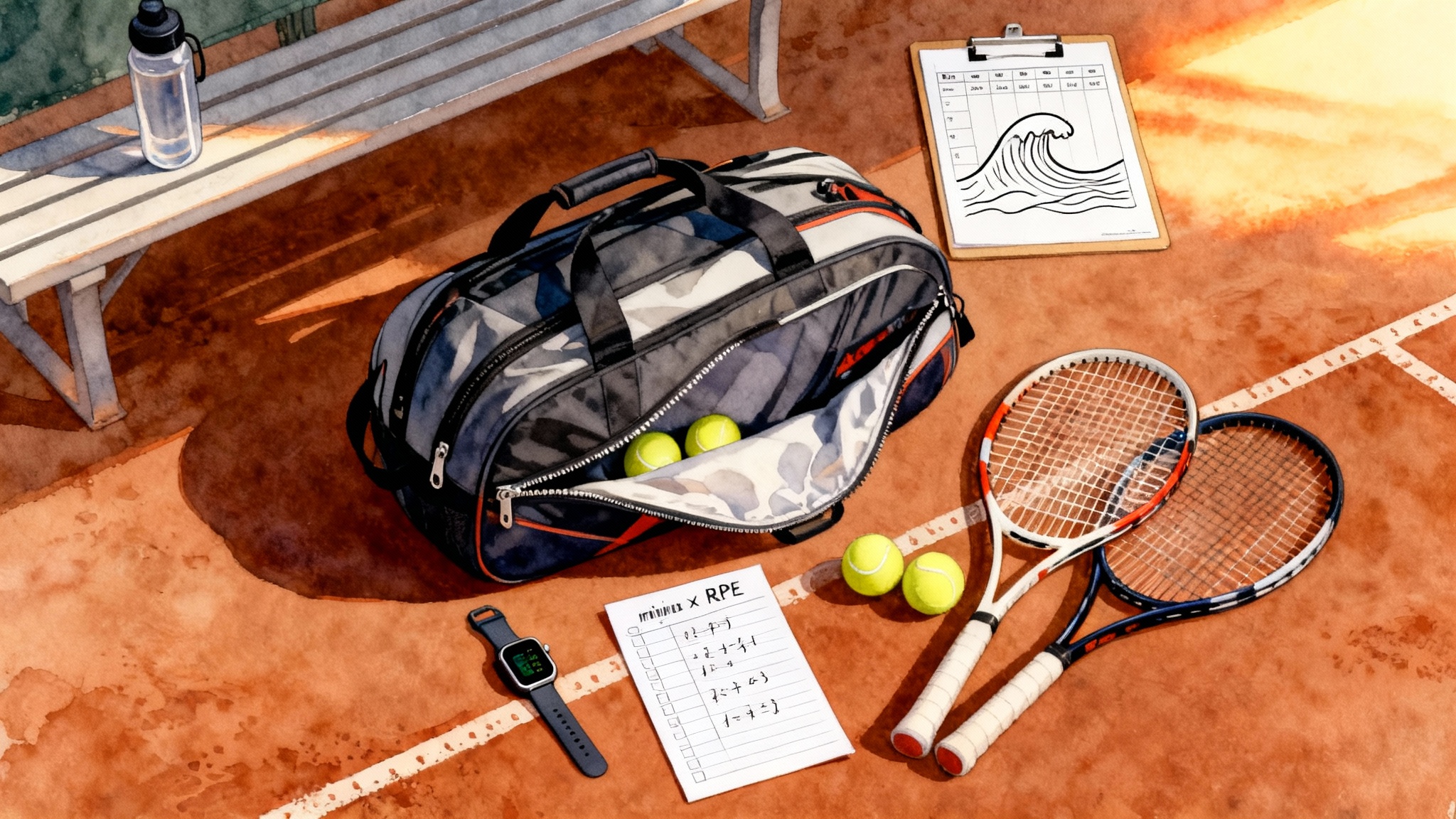
Court bag
- Two strung rackets, overgrips, dampener
- Hat or visor, sunglasses
- Towel and small sweat towel
- Sunscreen and zinc stick for nose and ears
- Mini band and light resistance band
- Roller or ball for calves and feet
- Athletic tape and small scissors
- Hand sanitizer and tissues
Cooler and fuel kit
- Four bottles: two water, two electrolyte mix
- Two frozen bottles to act as ice packs
- Applesauce pouches or fruit purée
- Bananas or grapes in a container
- Chews or gels you have tested
- Two simple sandwiches or wraps
- Yogurt or chocolate milk if dairy is tolerated
- Salted crackers, pretzels, or rice cakes
Pre-match routine card
- 25-minute warm-up list
- First serve target and first return pattern
- Breathing cue, between-point reset words
- Changeover checklist: sip, towel, strings, score
Quick repair kit
- Blister pads, bandages, and athletic tape
- Dry socks and an extra shirt
- Small sunscreen, lip balm, and deodorant
- Spare contact lenses or prescription glasses
Sidebars: how academies prepare athletes for multi-match days
Legend Tennis Academy, Austin
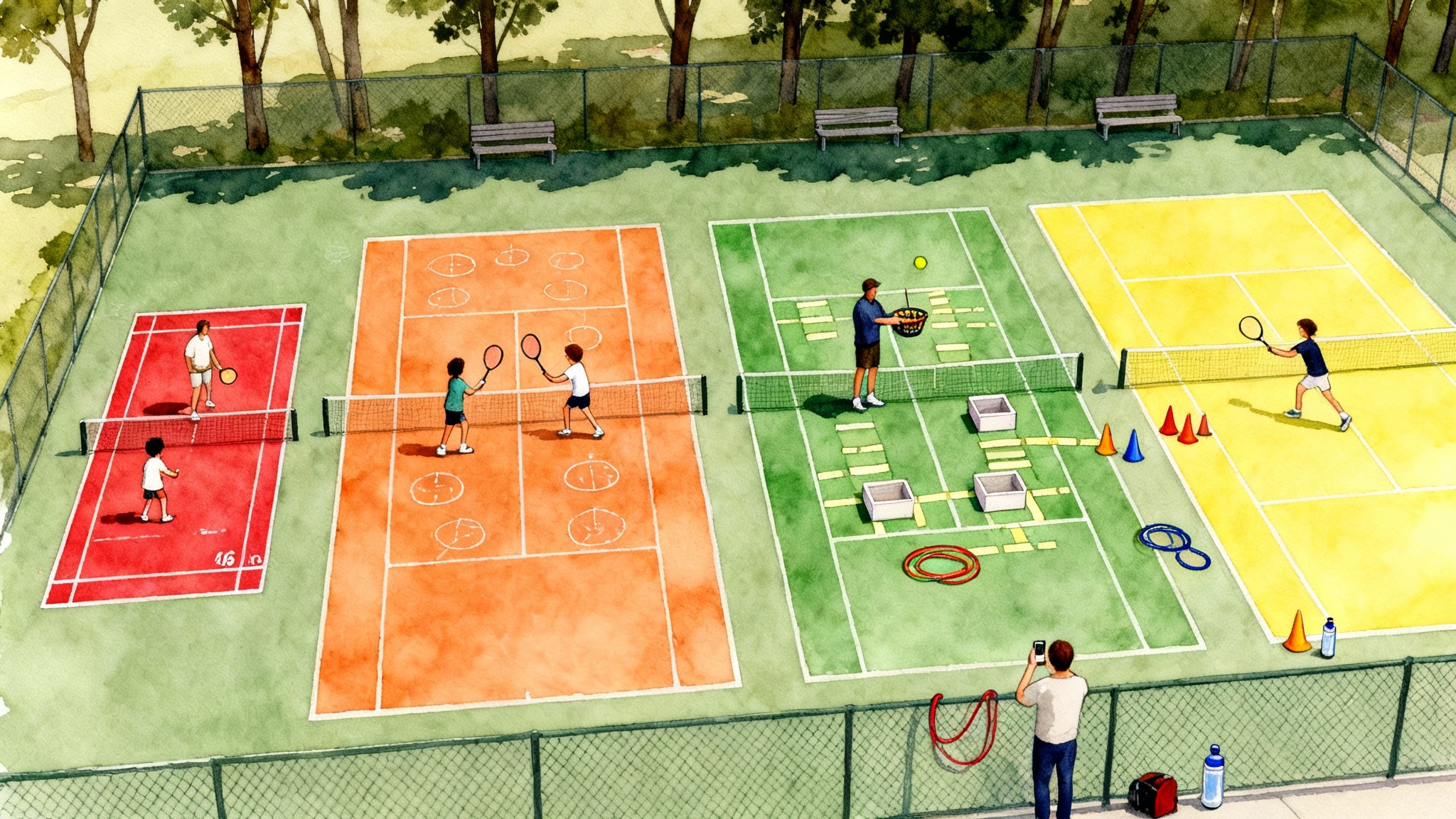
The juniors at Legend Tennis Academy in Austin learn to own the controllables on hot Central Texas weekends. Their players use a personal match-day menu that is planned on Thursday and packed on Friday, with portions scaled to body mass. At practice, warm-ups include a simple serve ramp, shadow movement into live ball, and a measured finish so the body is ready but fresh. Coaches encourage families to try all race fuels during weekday hitting sessions and to log what works. For between-match resets, players have a color tag system on bottles to avoid mix-ups and a three-item checklist taped to the cooler lid: drink, snack, socks. The goal is to make decisions automatic when nerves run high.
Life Time Tennis Academy
Athletes at Life Time Tennis Academy balance busy junior and adult schedules by building repeatable systems. They use a shared dynamic warm-up, so partners move in sync even when traveling. Between matches, they rotate through quick mobility stations that target ankles, hips, and shoulders, then finish with three short serves to restore rhythm. On hot weekends, coaches track simple pre and post weights for older juniors and adults when scales are available, which guides fluid targets the rest of the day. The emphasis is learning the skill of recovery, not guessing.
What to do if you have back-to-back matches
- Keep the first match under control with smart pacing. Play your patterns and manage changeovers. Standing in the sun between points is a tax you do not need to pay.
- Use the 15-minute reset. Parents can help juniors stay on script and keep the tone calm and normal.
- If time is short, skip heavy food in favor of liquids and light carbohydrates. Aim for about 20 to 30 grams of carbohydrate and a small sip pattern rather than a big drink.
- Change to dry socks and shirt to reduce skin irritation and to feel new again.
Common questions in one place
- Can I drink coffee before I play? If caffeine sits well for you in training, a small coffee 60 minutes before a match can help alertness. If it makes you jittery, skip it on tournament day.
- Are gels better than bars? Use what your stomach accepts at match pace. Gels are easier near start times and in heat. Bars work well in cooler conditions or with longer breaks.
- Do I need protein during a match? Focus on carbohydrates and fluids on court. Add protein after play to support recovery.
- Should I take an ice bath? Short, cool showers often feel better between matches and allow steady rewarming. Use colder immersion after your last match of the day if you like it and have tested it before.
- Is pain medication a good idea? Do not start new medications on tournament day. If you use over the counter products, clear them with a health professional in advance and never to mask an injury.
The 48-hour template to print
Copy this section into a note and print it.
Friday evening
- Dinner: 1 to 2 grams carbohydrate per kilogram body mass. Lean protein, simple sides, fluids with electrolytes.
- Pack: court bag, cooler, fuel kit, extra socks and shirt, warm-up card.
- Sleep: regular time, cool room, screens off one hour before bed.
Saturday, match day one
- 3 hours out: breakfast with 1 to 2 grams carbohydrate per kilogram, moderate protein, low fiber.
- 2 hours out: sip fluids, check urine color, add electrolytes if needed.
- 25 minutes out: complete dynamic warm-up.
- On court: sip every changeover, 30 to 60 grams carbohydrate per hour for long matches.
- After: cooldown walk and mobility, refuel within 30 minutes, replace fluids.
- Evening: walk 10 minutes, simple dinner, set gear for Sunday, lights out.
Sunday, match day two
- Repeat the morning steps.
- Between matches: run the 15-minute reset.
- After final match: full meal, hydration, light stretch, and a short recap of what worked.
How parents can help juniors without adding pressure
- Be the logistics captain. Pack, freeze bottles, and set timers so your player can focus on tennis.
- Keep language simple and supportive. Ask about the plan, not the outcome. Try this: What is your first serve target today, and what is your first return pattern?
- Model calm breathing when things get tight. Your behavior is a mirror your player will use.
Ready to personalize your plan
This playbook gives you the structure. The best results come when you adapt the numbers to your body, your climate, and your schedule. If you want a coach to help you build a personal blueprint for weekend tournaments, connect with a trusted local program and test your plan in practice.
Conclusion
Tournament weekends reward players who prepare like pros and keep their choices simple under stress. Pack the same fuel, follow the same warm-up, and run the same reset between matches. When each step becomes a habit, you free your brain for tactics and grit. That is how juniors and adults play their best in match one and still have legs left for the handshake in match two.