Best Pacific Northwest Tennis Academies 2026: Seattle to Portland
A parent-focused, data-backed buyer’s guide to the Pacific Northwest’s top tennis academies. Compare training volume, indoor access, surfaces, costs, match play, academics, boarding, and college support, plus tryout dates and trial weeks.
 Tommy
Tommy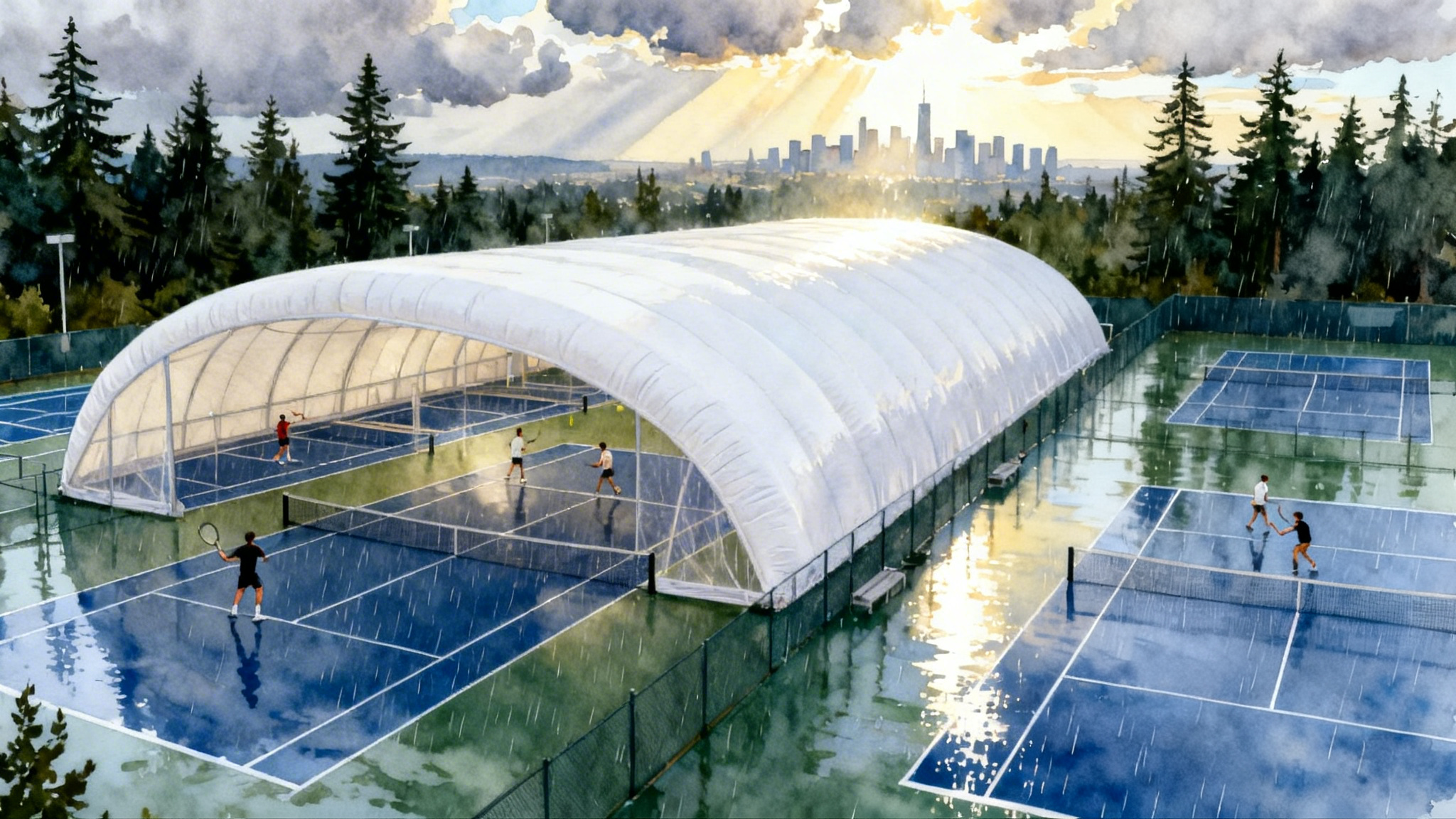
How to use this guide
Parents in the Pacific Northwest face a unique tennis puzzle: world class coaches and motivated players set against nine months of drizzle, limited daylight, and heavy school loads. This guide breaks down the region’s leading academies by what matters most to families in 2026: weekly training volume, year-round indoor access, court surfaces, total cost of ownership, match play through Universal Tennis Rating and United States Tennis Association pathways, academic fit, boarding or host options, and college placement support. We also include best for picks by age and level, trial-week ideas, and a practical Spring to Fall 2026 tryout calendar.
If you want a quick shortlist near you, start with the TennisAcademy.app directory. We track programs by region, level, and schedule so you can build a list in minutes and contact coaches directly through profile pages.
If you are comparing other regions too, see these related guides: Best SoCal Tennis Academies 2026, Best Midwest Tennis Academies 2026, and Top Florida Tennis Academies 2026.
What we measured and why it matters
We used seven decision pillars that affect day-to-day family life and long-term development. Here is what each pillar means in practice.
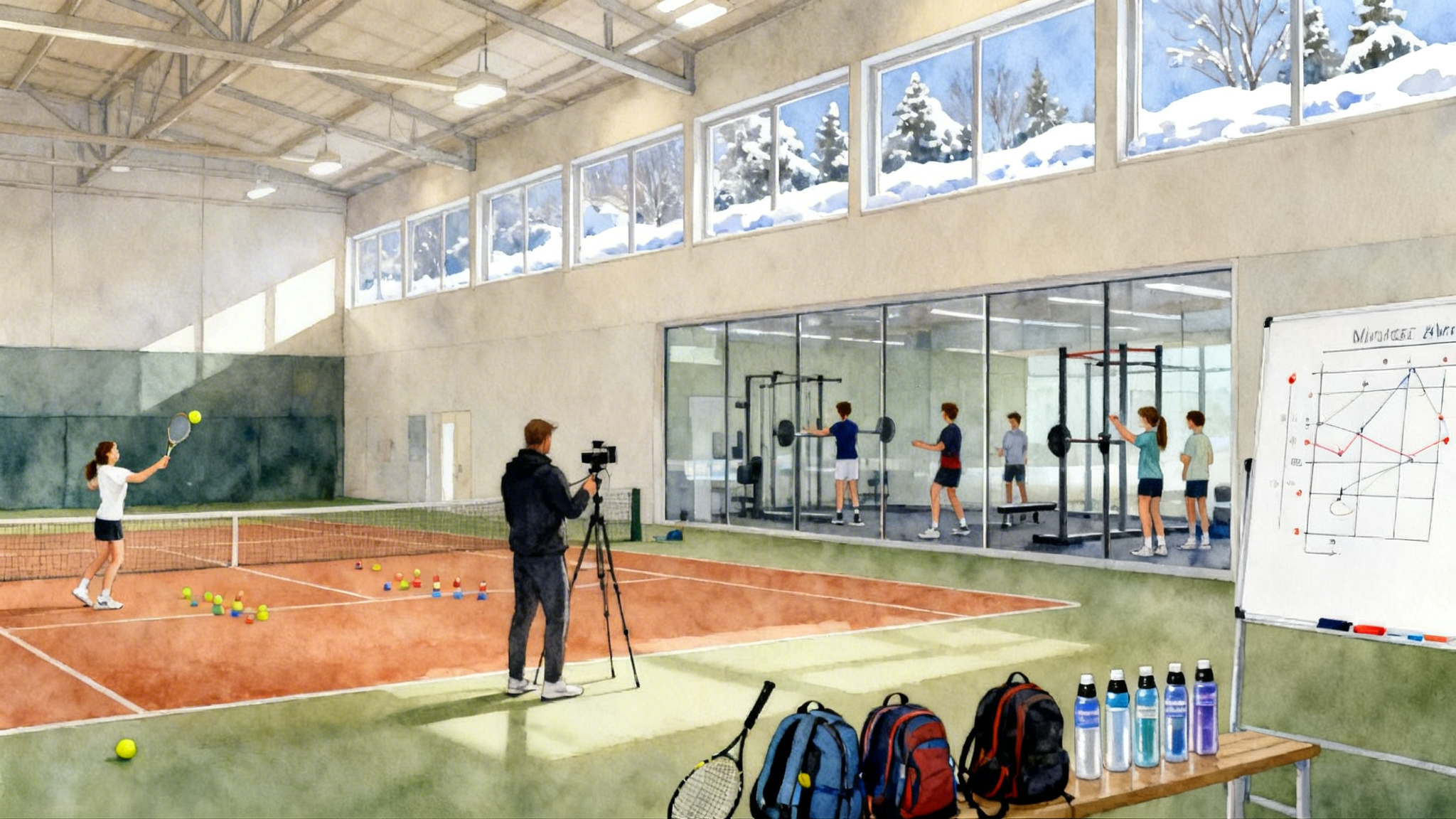
- Training volume and structure: Weekly hours on court, live ball versus basket-feeding ratio, and fitness. For high performance teens, the sweet spot in the Pacific Northwest is often 10 to 15 court hours per week during the school year, plus 2 to 4 hours of strength and mobility. Under 12 players usually thrive on 6 to 9 court hours with coordinated athletic work.
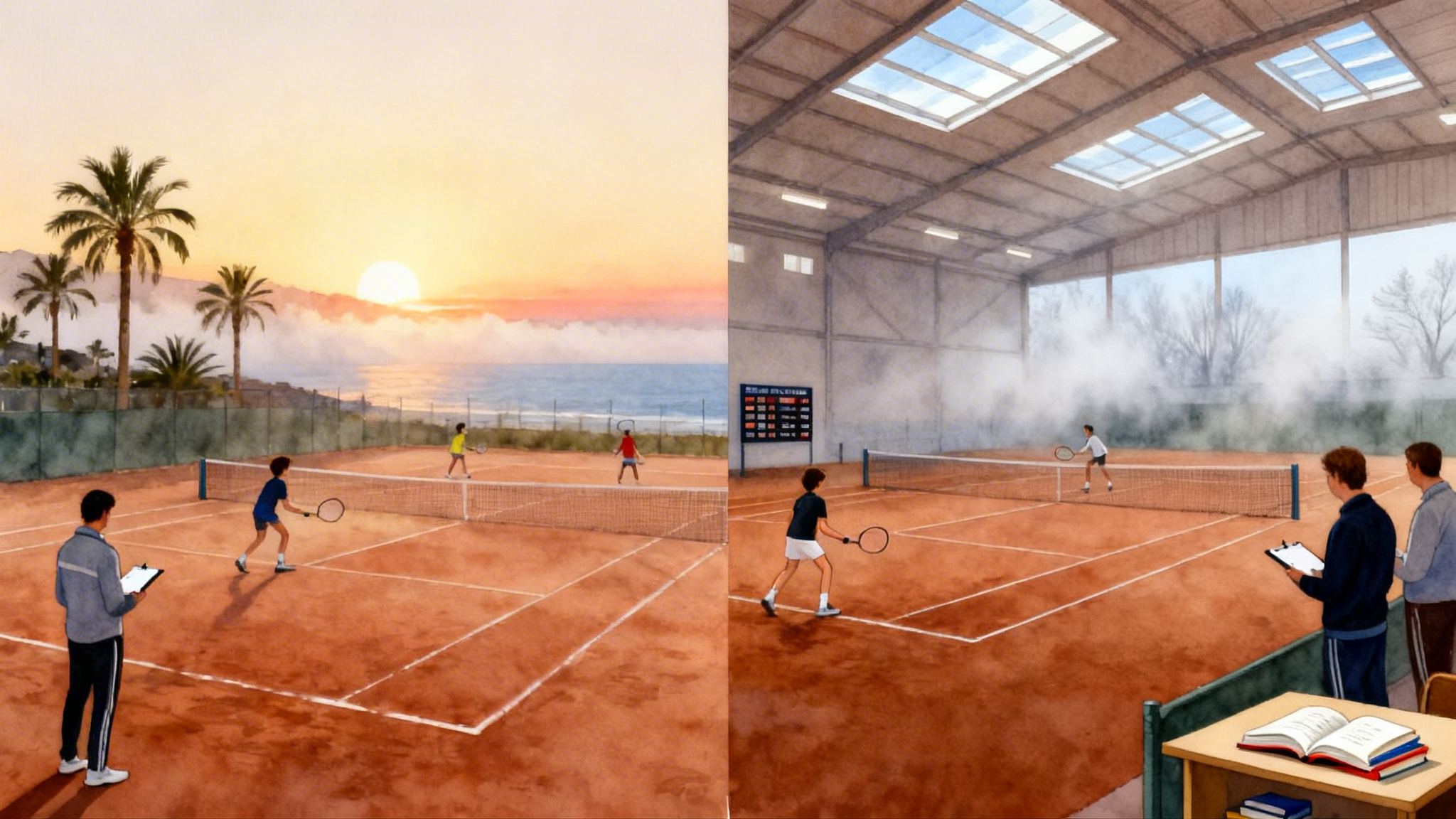
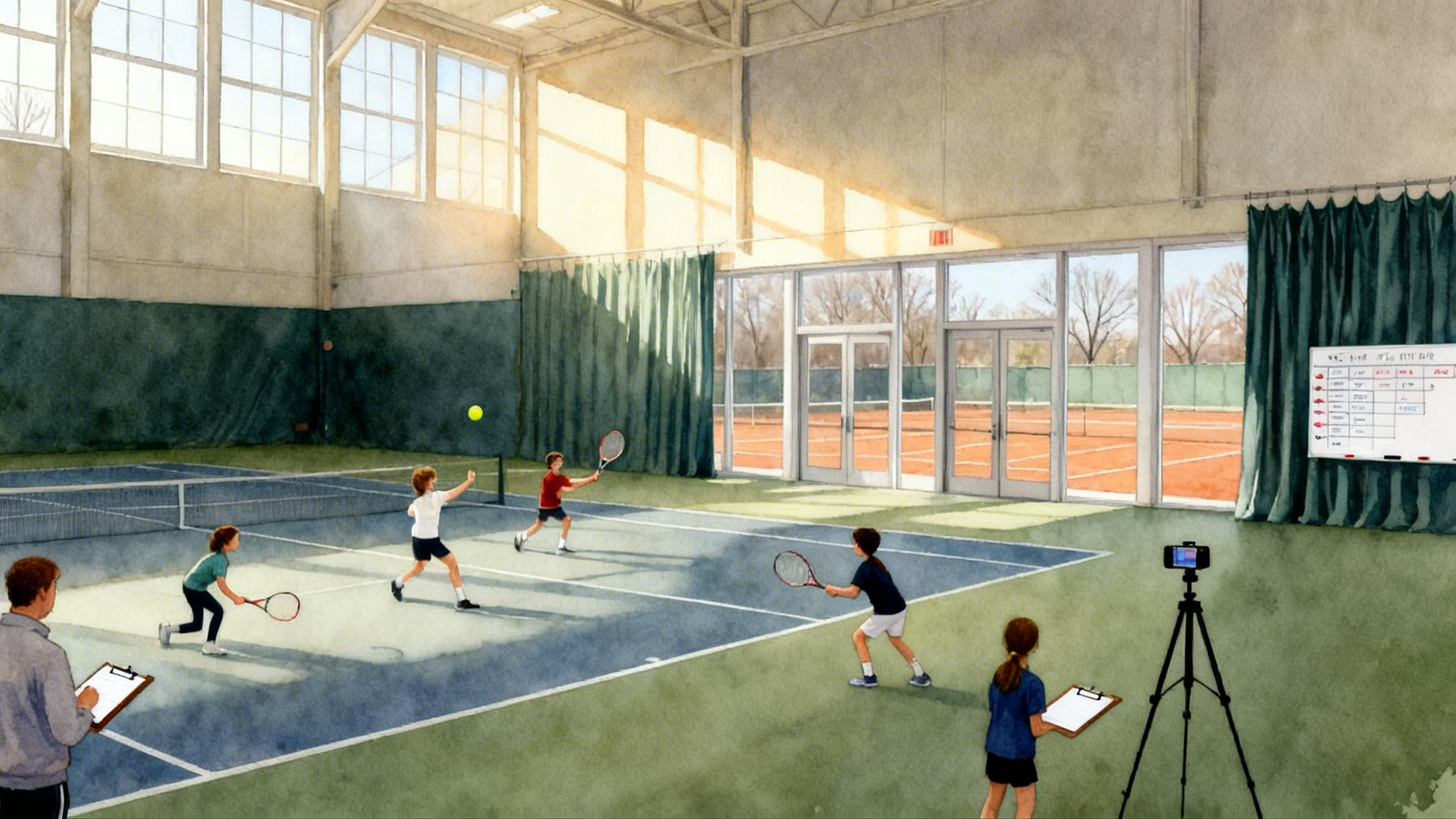
- Indoor access in winter: Rain is a fact of life from October to April. Facilities bridge the weather in two ways. Air supported bubbles are pressurized and can be installed seasonally. Tensioned fabric domes are semi-permanent and tend to be quieter with more stable temperatures. Both beat getting rained out, but dome acoustics and lighting are often better for long sessions.
- Surfaces: Almost all top Pacific Northwest academies train on acrylic hard courts. Some facilities maintain a few clay or cushioned courts that can be helpful for footwork and joint health. Ask where your child will spend most of their time, not just what the club owns.
- Cost: Monthly training packages in 2026 commonly run from the mid four hundreds for two to three sessions a week to the low four figures for five to six sessions and integrated fitness. Add private lessons at local market rates, which are often 90 to 150 dollars per hour, plus tournament travel and stringing.
- Match play: Look for scheduled Universal Tennis Rating match nights and access to United States Tennis Association sanctioned events. UTR, see the Universal Tennis Rating overview, is a continuous scale that rewards competitive matches, while USTA competition provides the national pathway for rankings and section championships.
- Academic fit: Most Northwest players attend traditional school. The best academies help with scheduling and offer homework windows or quiet study areas. A few coordinate with online programs or local alternative schools.
- College placement support: Ask to see a recent list of players and where they landed. Real support includes video days, honest level-setting, outreach templates, and targeted showcase events.
The 2026 shortlist by metro area
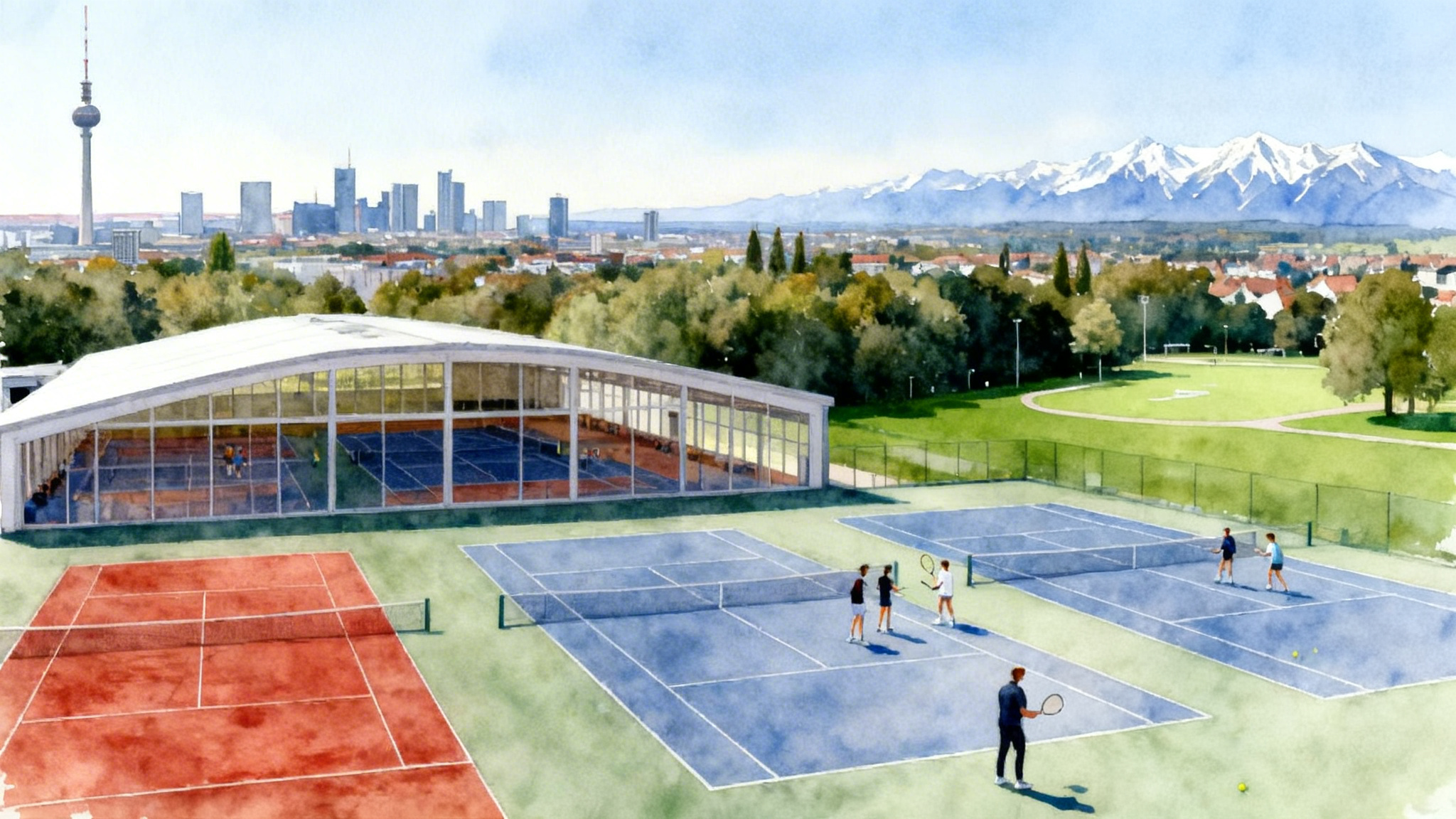
Below are the programs most families in Seattle, Portland, and nearby cities consider first. We group related facilities in the same commuter radius, since families often piece together a plan across two nearby sites.
Seattle and the Eastside
- Tennis Center at Sand Point, Seattle: Known for structured high performance blocks and heavy ball live hitting. Strong winter reliability with indoor courts and seasonal coverage. Typical week for a rising 14 to 18 player includes four to five academy sessions plus a dedicated fitness slot. Best for multi sport middle schoolers moving into year-round tennis, and for high school players targeting college rosters.
- Central Park Tennis Club, Kirkland, and Pro Club, Bellevue: Member and membership-supported settings with deep coaching benches. Reliable winter schedules and strong sparring pools. Good fit for families who value predictable time blocks right after school and easy add-on privates.
- Amy Yee Tennis Center and the University of Washington’s Nordstrom Tennis Center public programs: Community friendly price points and broad match play offerings. Plan ahead, since prime indoor slots fill quickly. Good on-ramps for 12 and under and for adults returning to the game.
What stands out: depth of sparring. Seattle area hubs can assemble eight to twelve similar-level teens for live-ball and points on short notice. That consistency is pure gold for players chasing college roster spots.
Costs and cadence to expect: during the school year, three-day academy tracks often sit in the 500 to 750 dollars per month range, while five-day tracks with fitness commonly exceed 1,000 dollars. Add one private per week if budget permits.
Tacoma and South Sound
- Galbraith area high performance programs and Tacoma community clubs: Purpose-built indoor coverage makes winter weeks dependable. Schedules here often include more coach-led pattern work and serve plus first ball repetitions. Good match night culture with UTR verified hits during the rainy season.
Best fit: driven 12 to 14 players who need more touches per ball and teens who thrive on specific tactical drills that translate into match plans.
Portland and Southwest Washington
- Portland Tennis Center and Tualatin Hills Tennis Center: Large programs with many court blocks and a healthy feeder system from orange and green ball up to performance squads. Portland city programs often deliver strong value per hour and a wide ladder of groups so a player can move up without changing facilities.
- Stafford Hills Club and Lake Oswego area programs: Smaller groups, strong coach continuity, and easy add-on fitness options. Many families combine two days at a city center with two days at a private club to balance consistency and cost.
- Vancouver Tennis Center just across the river: Reliable bubble coverage and a dense calendar of match play, useful for both Oregon and Washington players. A good fit for high school athletes who want late evening options.
What stands out: structured green to yellow ball progression. Portland area coaches tend to be meticulous about technical checkpoints during the 10 to 12 window, which helps prevent rework in the teenage years.
Costs and cadence to expect: two to three day junior performance plans often sit in the 400 to 650 dollars per month range. Four to five day plans with integrated strength and recovery typically run 900 to 1,200 dollars per month. Adult performance and team practices are usually sold in monthly packs or seasonal blocks.
Spokane, Bend, and the I-90 corridor
- Spokane and Coeur d’Alene clubs: Stable indoor access and a tight community of tournament travelers. A good place for teens who need more coach attention per court and do not mind intentional reps. Expect thoughtful planning around school schedules and carpooling.
- Central Oregon programs in Bend: High altitude reps and outdoor volume from late spring to early fall. Many families use Bend as a summer accelerator, then return to their home base academy for the school year.
Best fit: teens who will benefit from lower player-to-coach ratios and families who want a defined summer block to build weapons and fitness.
Bubbles vs domes, and why indoor design affects development
- Air supported bubbles: quick to deploy and cost effective. They can be louder and draftier, which can make hearing the ball and coach directions a bit harder. For younger players, that can lead to shorter attention spans unless coaches keep drills moving.
- Tensioned fabric domes: more stable temperature and lighting, plus better acoustics. The experience is closer to a traditional building. Some players report feeling less fatigue on long winter sessions thanks to quieter courts.
- Permanent buildings: consistent lighting, less wind at the seams, and usually better locker rooms and study spaces. Many Northwest facilities blend permanent buildings with seasonal covers to expand winter capacity.
Practical takeaway: if your child is noise sensitive or easily distracted, try a trial week in different structures before you commit for a full season. The environment itself can add or subtract five percent from the quality of a session.
Surfaces and injury management
Nearly all performance blocks in the Pacific Northwest are on acrylic hard courts. That is perfect for speed and first strike tennis but can be tough on growing bodies. Ask about alternating surfaces if available, and make sure the plan includes mobility, posterior chain strength, and footwork patterns that reduce pounding. A smart week alternates high-intensity days and movement-focused technical days so the player feels sharp on match day.
Match play that actually moves the needle
- Universal Tennis Rating: Aim for one verified match per week during the school year and two per week in summer. Academy hosted hits count and are easy to schedule. UTR uses a continuous scale, so even competitive losses can raise rating and confidence if the score is close. Share the USTA competitive structure overview with your player so they see how sectional events and national levels fit together.
- United States Tennis Association events: Plan a two-month rolling calendar so you balance training blocks with tournaments. The best academies will help you choose events that match your player’s current rating and confidence, not just the highest points on paper.
Concrete rule of thumb: two quality practice sets during the week plus one verified match on the weekend is enough for steady Universal Tennis Rating movement for most 12 to 18 players.
Academic fit and family logistics
- Traditional school families: Look for after school blocks starting between 3:30 and 5:30 p.m., plus one late evening option for homework-heavy weeks. Many programs now offer a quiet table or study room. If your player must miss last period twice a week, ask the coach to write a simple learning plan that you can share with teachers.
- Online or alternative school: Confirm daytime courts and a full morning fitness plus on court block. The benefit is open afternoons for homework and recovery.
- Commuting: In Seattle and Portland traffic, that last mile can break a plan. Choose a home facility within 25 minutes or less, then schedule one longer drive per week to a sparring hub for variety.
Boarding and host options
The Pacific Northwest is not a full-time boarding hotbed like Florida. Most academies are commuter based. Summer host families and short-term rentals near facilities are common during July and August. If you need boarding during the school year, speak early with program directors. A few will coordinate vetted host arrangements on a limited basis, usually for older teens with clear training goals.
College placement support: what good looks like
- Transparent player lists with graduation years and where they signed or walked on
- Two video days per year with clear baselines, serves, returns, and point construction
- Honest level-setting conversations with parents at least twice per year
- Templates and timelines for coach emails, plus realistic target conferences based on current ratings and results
If a program cannot show you where its last three graduating classes landed, consider blending its on court strengths with an outside college advisor.
Best for picks in 2026
These picks are organized by fit, not by hype. Use them as a starting point and verify schedules with each program.
- Best for 12 and under technical foundation: Portland city program ladders and Seattle public center pathways. Why: frequent small-group progressions, lots of ball touches, and frequent match play in a low-pressure setting. Action: book two academy days and one match-play evening each week, then reassess after eight weeks.
- Best for 14 to 18 high performance: Seattle Eastside hubs and Portland performance groups with regular live-ball sparring. Why: reliable winter indoor access and deep player pools. Action: target four academy days with one fitness block and one verified match per week.
- Best for adults: Larger public centers and membership clubs with NTRP team practices and live-ball clinics. Why: broad time options and consistent captains. Action: choose a twice-weekly live-ball clinic and one practice match night for eight weeks, then reevaluate the time slot and coach fit.
Trial-week playbook
Before you commit to a full season, run a structured trial week.
- Watch one session without your player and listen for clear, actionable coaching points. Do the players get time to apply feedback in live points, or is it all feeding drills?
- Have your player join two different groups that match their level. Ask for one session heavy on technique and one heavy on point play.
- Book one private with the likely lead coach. You want a written checkpoint list that other staff can use when your child is not with that coach.
- Ask for a sample month plan. A good plan shows court hours, fitness, and match play. It also explains rest days and school deadlines.
- Debrief with your player on the car ride home using three questions: what did you hear, what did you feel, what will you try in your next match?
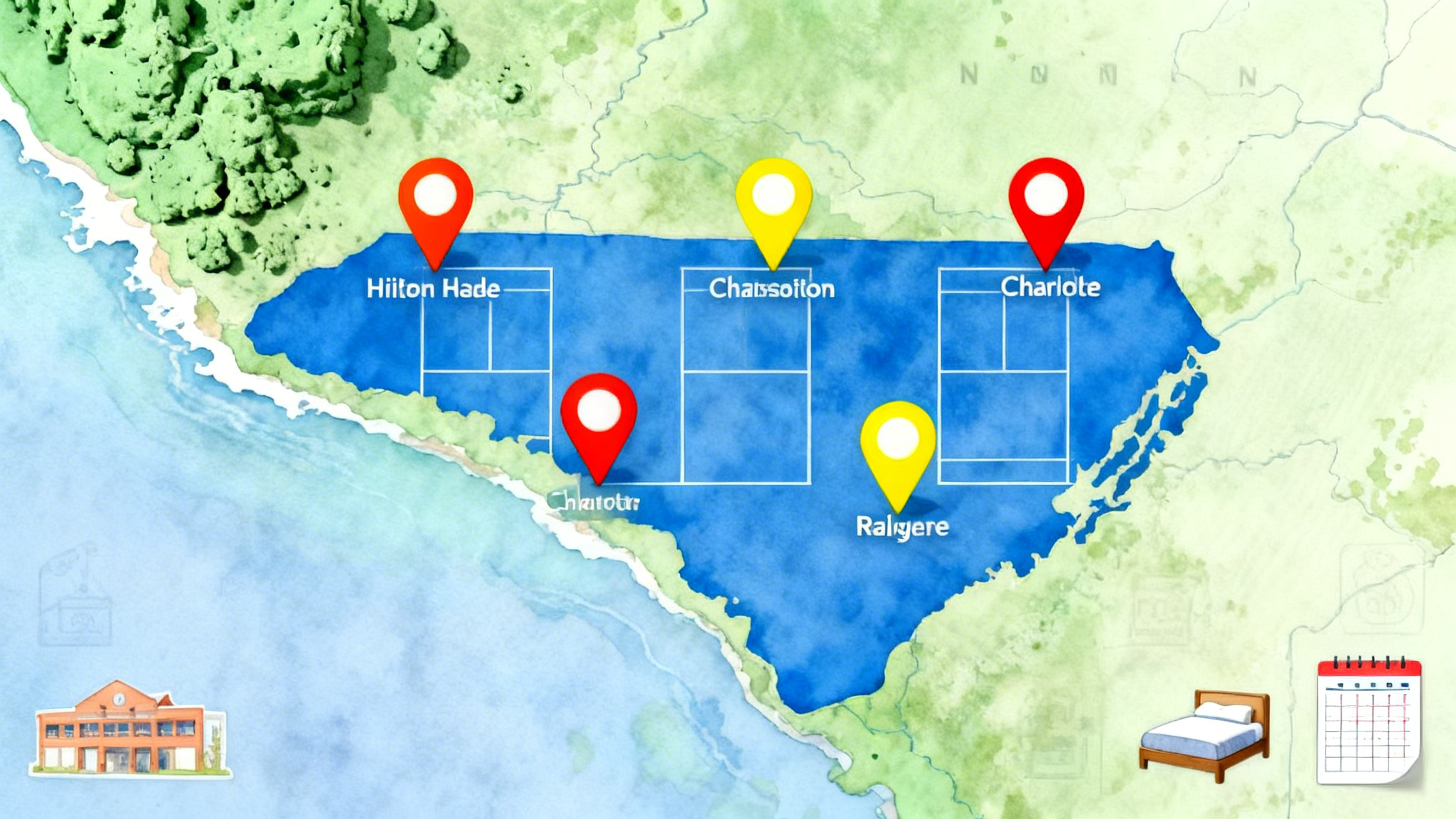
Spring to Fall 2026 tryout calendar you can put on the fridge
Academy schedules publish at different times, so list these windows now and confirm specifics six to ten weeks out. Use week-of dates to anchor your planning.
- Seattle North and City programs: week of March 9 to March 15 for spring intake; week of August 24 to August 30 for fall teams. Mid summer re-evals typically run the week of July 13 to July 19.
- Eastside hubs in Kirkland and Bellevue: week of March 16 to March 22 for spring; week of August 17 to August 23 for fall. Look for a late May touchpoint the week of May 18 to May 24 to place players for summer intensives.
- Tacoma and South Sound: week of March 2 to March 8 for spring; week of August 31 to September 6 for fall. A June check-in often lands the week of June 8 to June 14.
- Portland city centers: week of March 9 to March 15 for spring; week of August 24 to August 30 for fall. Many sites run a July placement the week of July 20 to July 26 ahead of late summer camps.
- Lake Oswego, Tualatin, and Southwest clubs: week of March 23 to March 29 for spring; week of August 10 to August 16 for fall. Expect a May mini tryout the week of May 11 to May 17.
- Vancouver, Washington: week of March 1 to March 7 for spring; week of August 17 to August 23 for fall. A September top up session often lands the week of September 7 to September 13 for late additions.
- Spokane and Inland Northwest: week of March 23 to March 29 for spring; week of September 7 to September 13 for fall. Summer placement weeks usually fall the week of June 22 to June 28.
Tip: bring your player’s most recent UTR profile, a short video clip, and a simple availability grid. Coaches place faster when they can see level and schedule at a glance.
Build your 2026 budget the simple way
Here is a quick calculator families in the region use to avoid surprises. Adjust numbers to match your chosen program.
- Academy block: pick 3 days per week at 600 to 750 dollars per month, or 5 days at 1,000 to 1,200 dollars per month during the school year
- Private lessons: 4 per month at 100 to 140 dollars per hour
- Stringing: 2 to 4 jobs per month at 25 to 40 dollars per job plus string
- Tournaments and UTR matches: plan 2 local events per month at 40 to 80 dollars per entry, plus one quarterly travel event
- Fitness and recovery: 1 to 2 sessions per week at 20 to 40 dollars per session if not included in academy dues
Action step: put these items into a simple spreadsheet with monthly and seasonal totals. The clarity reduces stress and prevents mid-season cutbacks that can stall progress.
Questions to ask every director before you sign
- What is the live-ball to feeding ratio in my child’s group, and how does it change by day of the week?
- How will you measure progress across eight weeks and across the full school year?
- When will my child play verified UTR matches, and how will you help me plan United States Tennis Association events?
- Who are the two backup coaches that can run my child’s lesson plan when the lead is away?
- What is your policy on makeups during high school tennis season and exam weeks?
A note on high school season in the Northwest
Schedules vary by state and gender. Ask the academy to coordinate with school coaches so your player can maintain two to three quality sessions per week without burning out. A good plan defines match priority weeks, rest weeks, and specific goals like improving return plus first ball or building a kick serve that holds up outdoors.
What to do next
- Build a shortlist of three programs within your commute radius
- Schedule a trial week that mixes technique and point play
- Put the week-of tryout windows for March and August on your calendar today
- Decide on a realistic 2026 budget and commit for eight weeks before you reevaluate
The Pacific Northwest rewards planners. Families who secure winter indoor time, schedule regular match play, and keep schoolwork under control tend to see their players thrive when the sun finally shows up. Pick a plan that you can sustain from February through November, then let the daily reps do their quiet, compounding work.