Murcia to Villena: How Juan Carlos Ferrero Academy Built Alcaraz
From a family club in Murcia to full-time life in Villena, this is the inside story of how Equelite and Juan Carlos Ferrero shaped Carlos Alcaraz’s training, team, and schedule to speed his leap from junior promise to ATP contention.
 Tommy
Tommy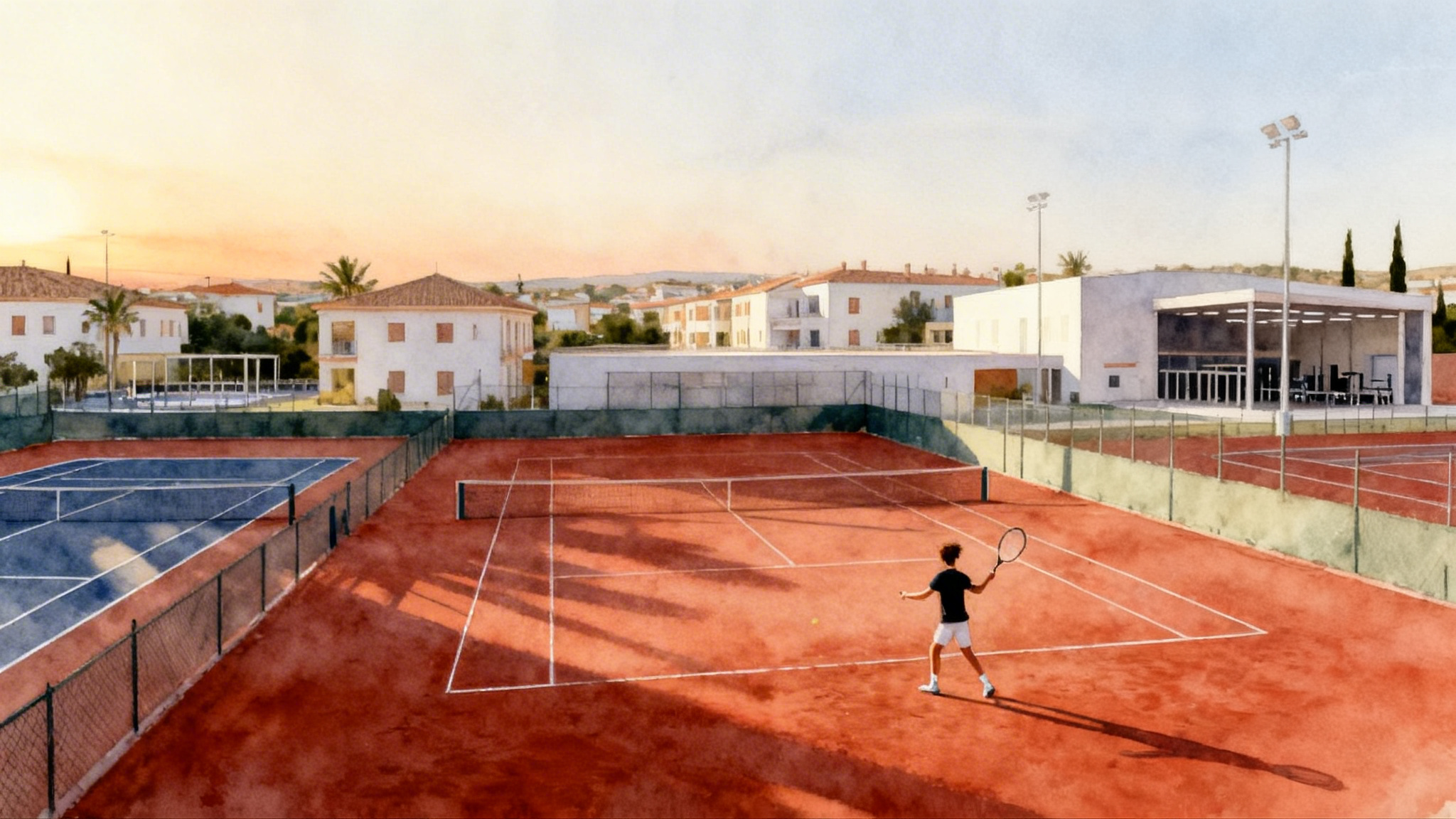
The road out of El Palmar
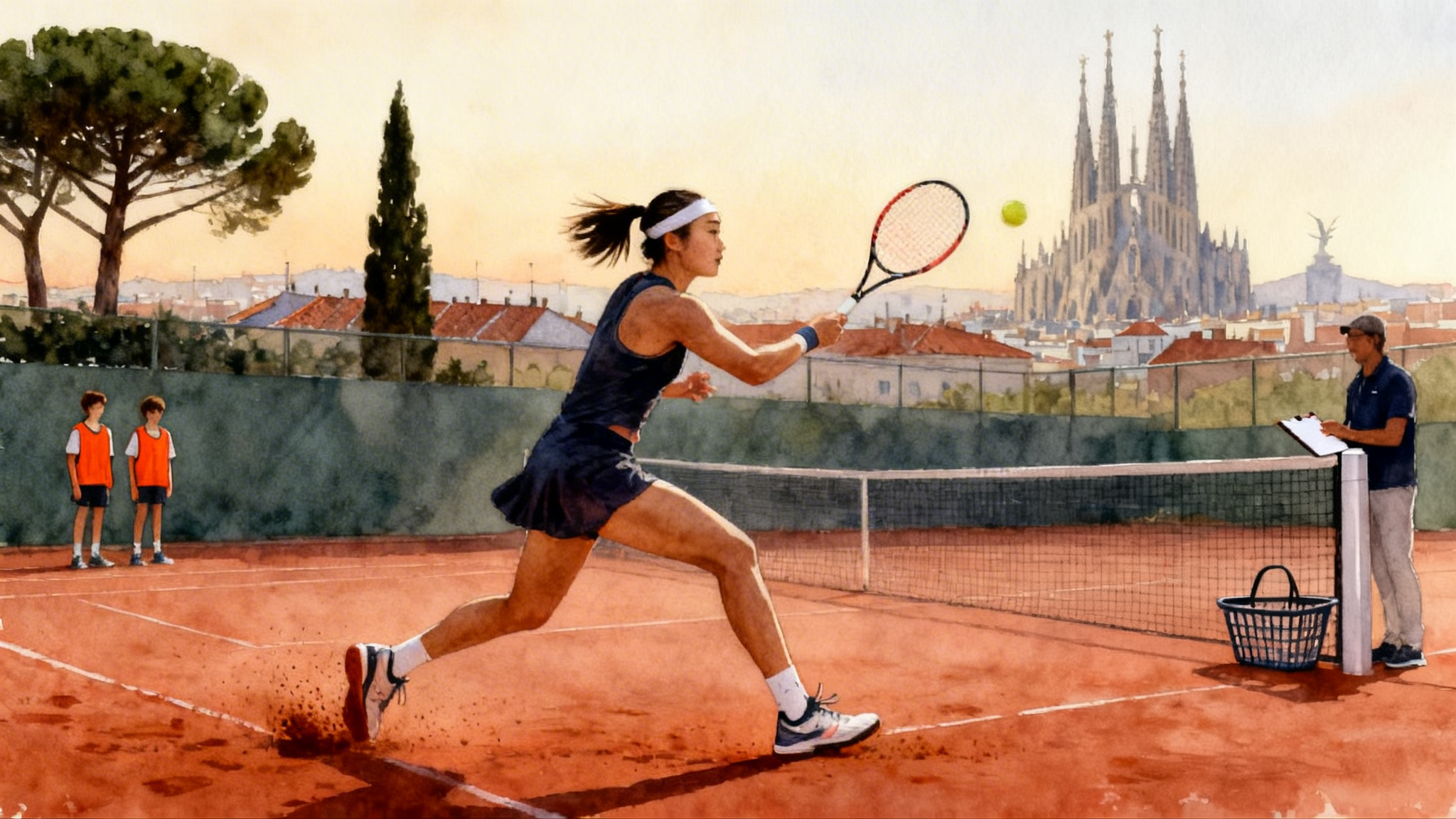
Carlos Alcaraz did not appear from nowhere. His foundation was poured at the Real Sociedad Club de Campo in El Palmar, Murcia, a family hub where his father directed the tennis program and where older players and coaches became uncles and aunts in sport. The environment mattered as much as the clay. The kid who could not leave the fronton wall at dusk learned two things early: repeat good habits, and compete with joy.
When it was time to stretch beyond the comfort of home, Alcaraz’s team trialed a hybrid life. He would commute to Villena, Alicante a few days each week to train at Juan Carlos Ferrero’s Equelite academy, then return to Murcia for school, friends, and family rhythm. That arrangement was not accidental. Ferrero and agent Albert Molina wanted to scale exposure to high-performance work without shocking a teenager’s system. Over time, the Villena days increased until the academy became home base. The pivotal structure of that transition is documented by the ATP, including the initial two-days-in-Villena model and the core performance staff around him, notably fitness coach Alberto Lledó and physiotherapist Juanjo Moreno at Equelite, balanced by a small support group in Murcia. For staffing and transition details, see the ATP profile on early build.
You can see parallel academy-to-pro arcs in How Piatti forged Sinner and Nadal Academy fueled Ruud, where consistent daily structure mattered as much as raw talent.
What Equelite built, piece by piece
Think of a player as a three-layer system: base, engine, and transmission.
- Base: court craft and habits that hold under stress
- Engine: strength, speed, and endurance that deliver power over time
- Transmission: decision making that converts ideas into patterns, and patterns into points
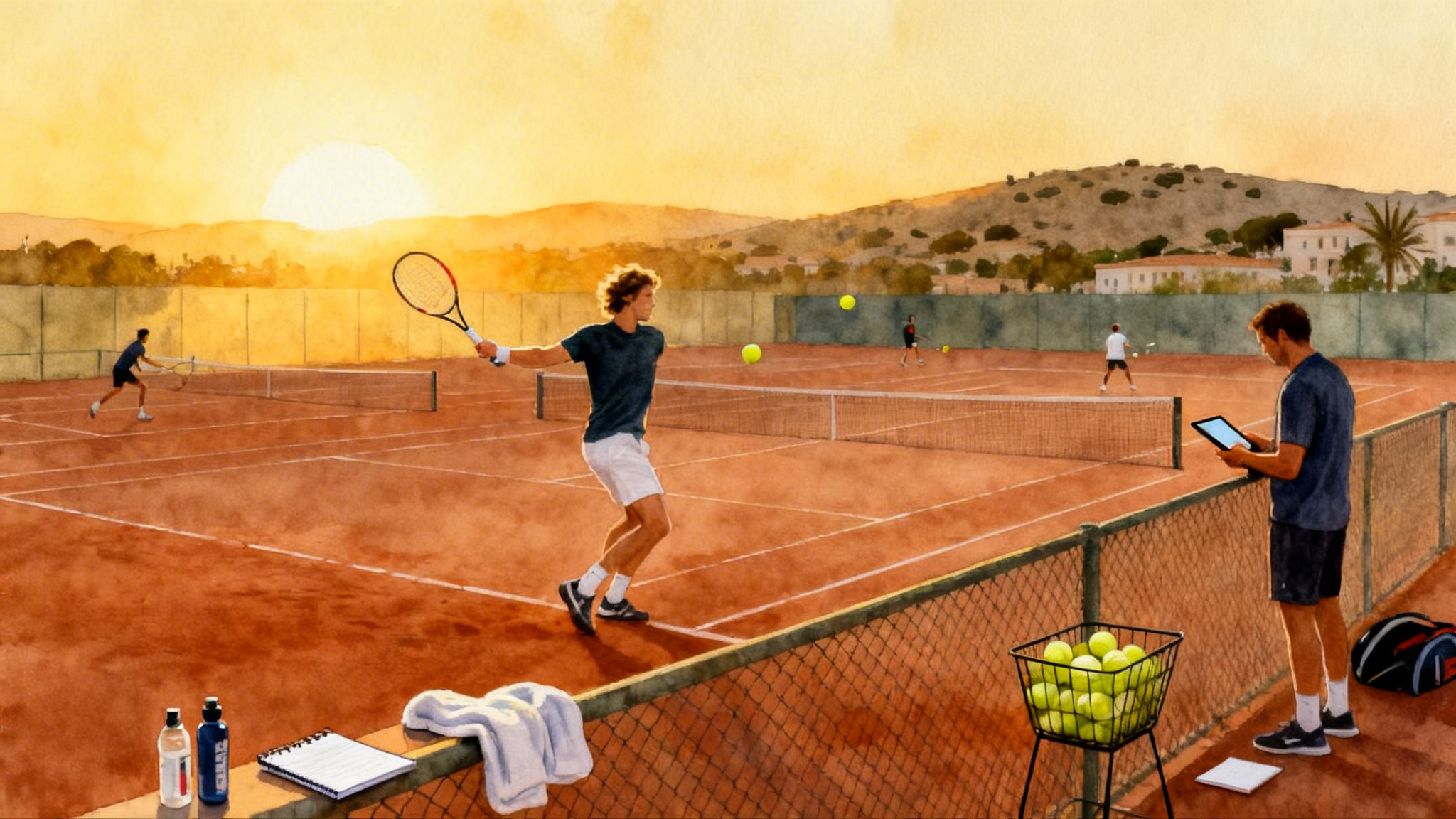
At Equelite the base is clay. Not because clay is romantic in Spain, but because it multiplies learning moments. On slower courts, a player hits more balls per rally, spends more time in neutral and defensive phases, and must create advantages rather than only take them. That is where body-habits form. The staff taught Alcaraz to build points without rushing, to change up trajectories, and to mix a heavy, kicking ball with sudden acceleration through the court.
Then they layered an engine. Lledó’s frame was simple, practical, and ruthless over time. In early years the focus was fundamental strength and movement literacy, not chasing biceps in a mirror. As match loads grew, work emphasized speed endurance and elastic strength, the qualities that let a player explode to a short ball in the third hour and repeat it again the next game. The language was not fancy: hinge, push, rotate, recover. The metrics were clear: clean lifts with intent, repeated sprints off the mark, heart rate recovery between sets, jump height preserved late in sessions. The output is the version of Alcaraz we now recognize, who can trade in heavy clay rallies yet still knife forward in two steps.
Finally, the transmission. Ferrero’s mentorship shows up most in decision speed. He encouraged variety, but always with a scoreboard purpose. In simple terms: give the opponent one ball he expects, then one he hates. From there the staff wired a few repeatable patterns that show up on any surface.
The day-to-day structure in Villena
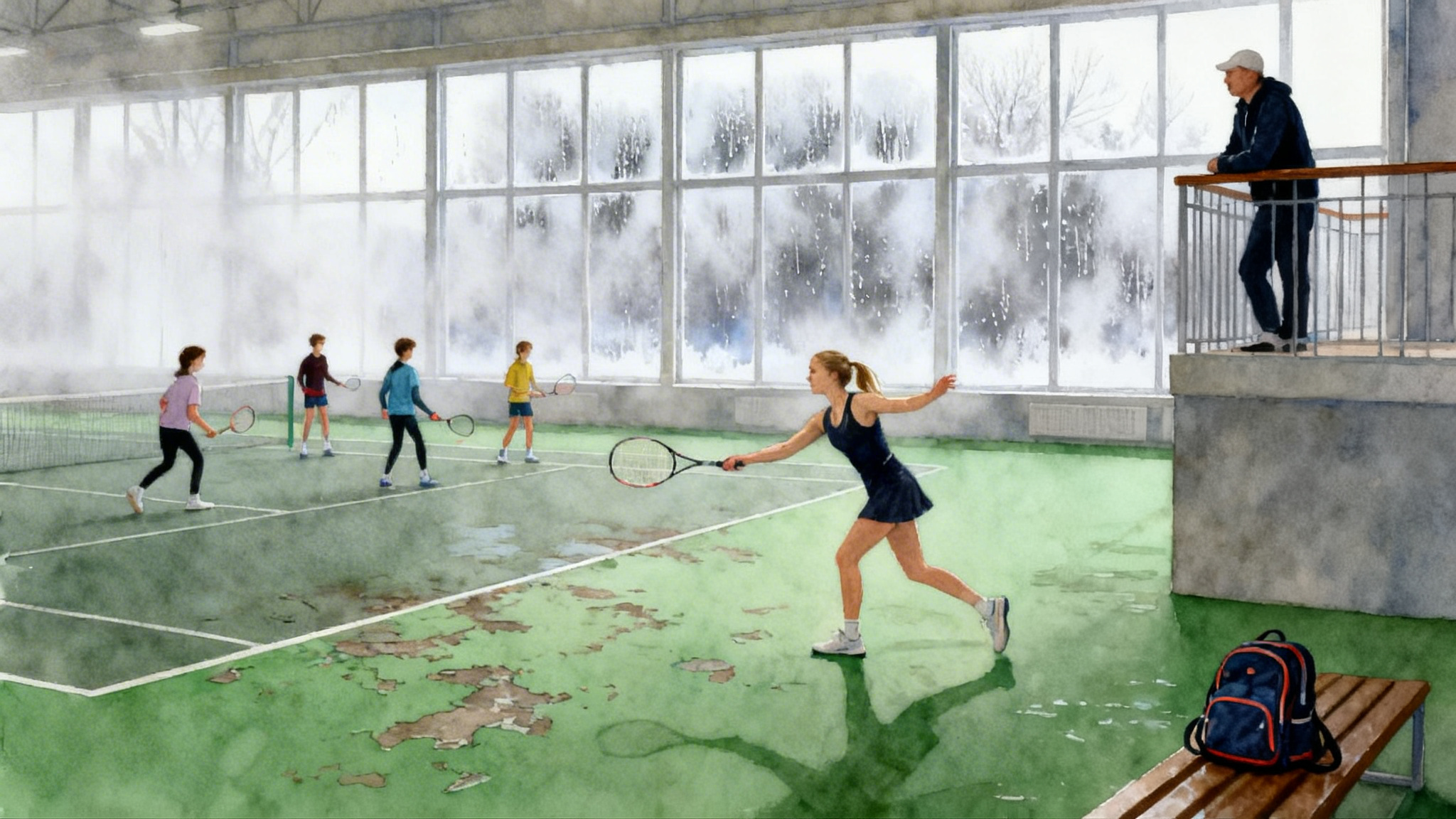
Equelite’s week followed a clean cadence. Below is a representative outline of how those Villena blocks often worked as Alcaraz matured. This is not a secret recipe; it is a disciplined assembly line.
- Spanish clay foundations
- Long crosscourt forehand exchanges with height and shape until both players are breathing. This grooves spacing and patience. It also builds the habit of hitting heavy to the backhand wing before changing direction.
- Neutral-to-offense sequences: coach feeds a neutral ball to Alcaraz’s backhand, he plays solid crosscourt, then receives a shorter ball and must create depth down the line. The next feed is a defensive scramble to the forehand corner, where he has to loop high, recover, and restart. The goal is not winners; it is to control the back-and-forth of rally phases.
- Hard-court speed work
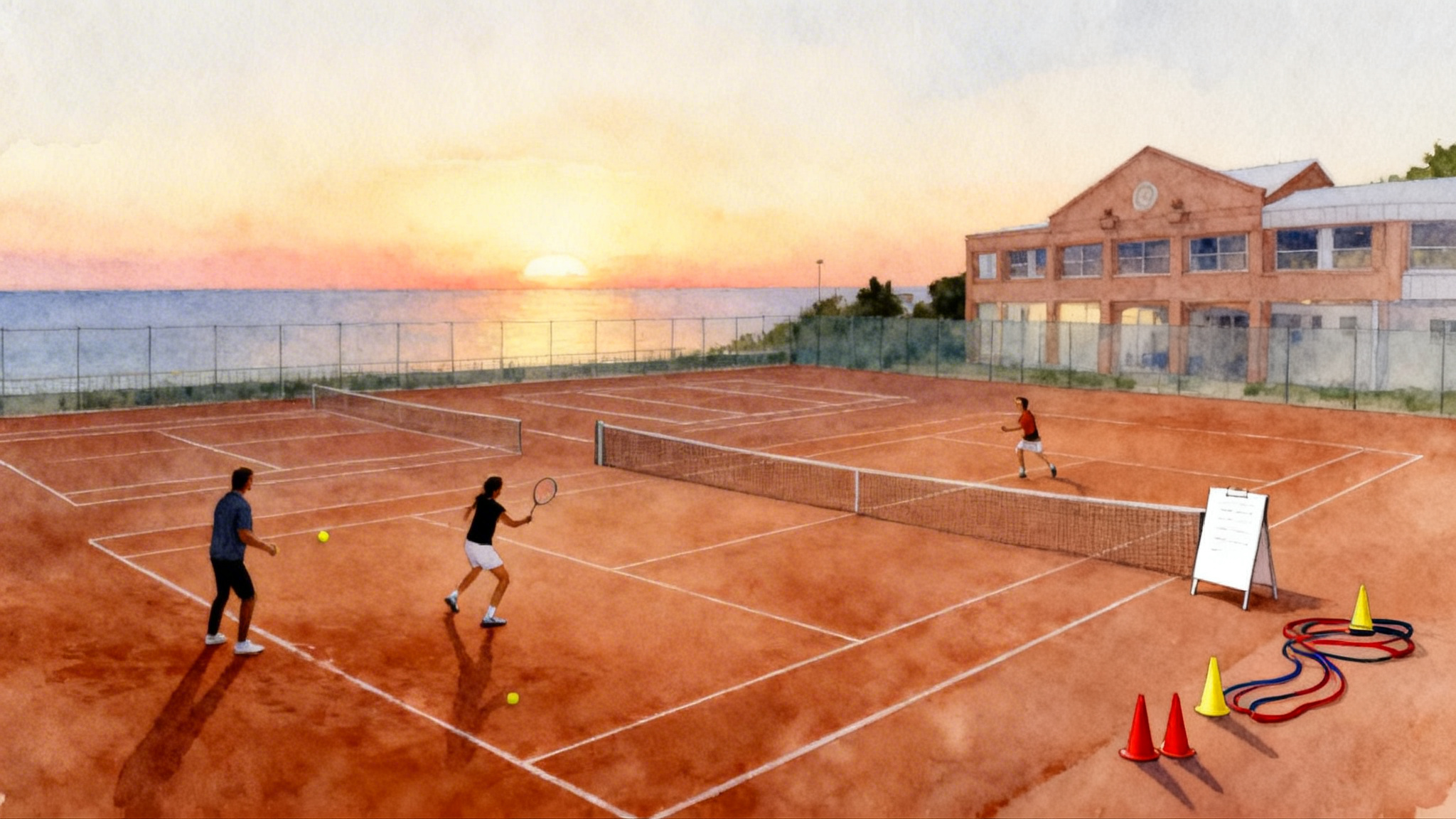
- Same patterns, but on the academy’s hard courts to compress time. Serve plus first-ball drills at 70 to 85 percent pace, focusing on hitting the first groundstroke inside the baseline. Returns alternate between blocked, deep middle, and aggressive body-line punches to start neutral.
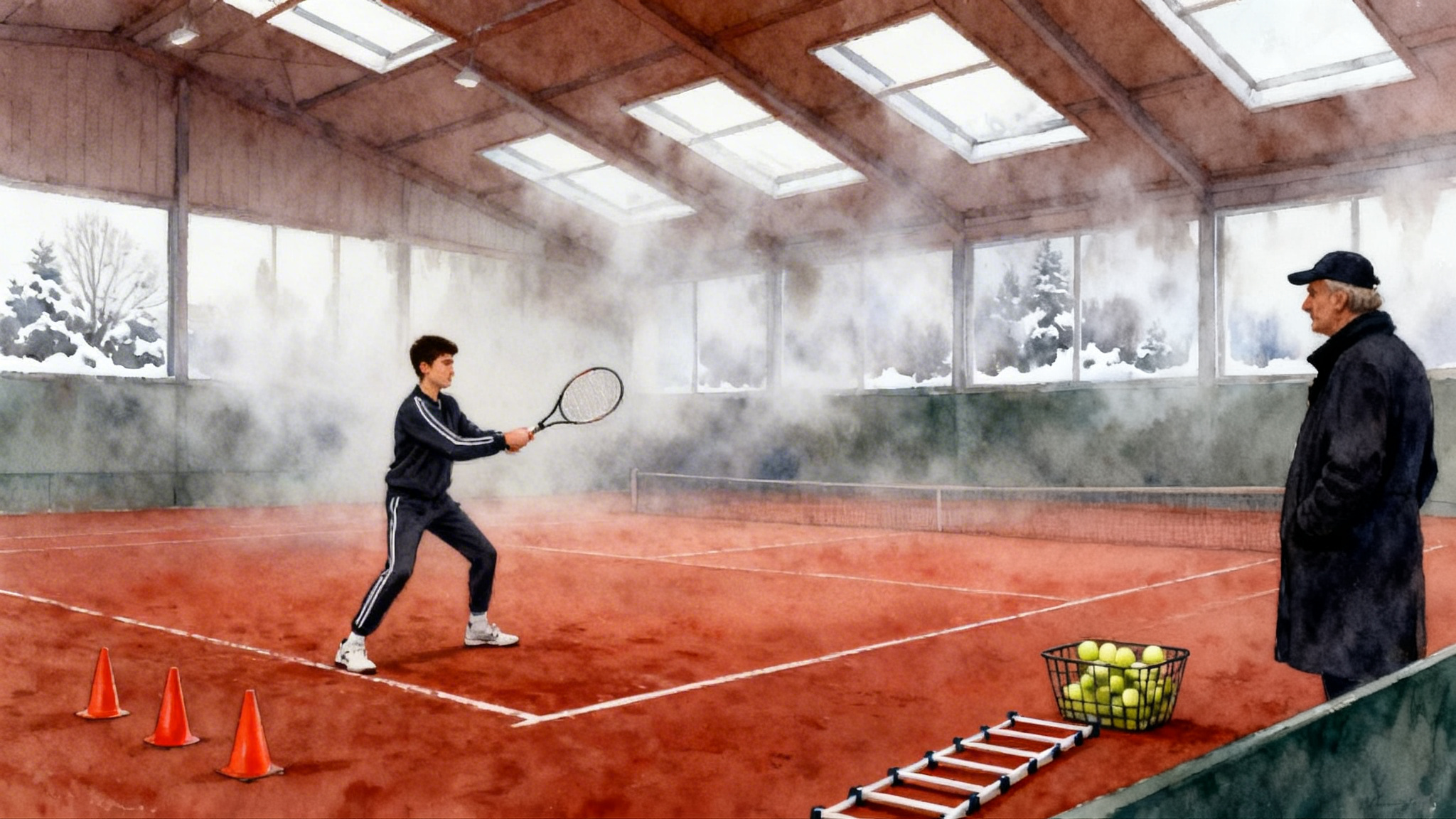
- Burst-and-brake ladders: short sprints into open-stance forehands, decelerate within two steps, then re-accelerate to a short backhand pick-up. Count the steps, then cut one. The aim is not only faster, but fewer wasted steps.
- Transition drills
- Approach off a deep forehand to the backhand corner, split-step inside the service line, then volley to the open court and recover diagonally. Repeat left side, right side, then on the rise off a shorter hop. Net play is not an accessory here; it is part of the point-building logic.
- Response-to-short: coach drops a mid-court ball at random. The player must decide within one step whether to take on the forehand with pace, change the spin, or use a short slice to force a low reply and come forward.
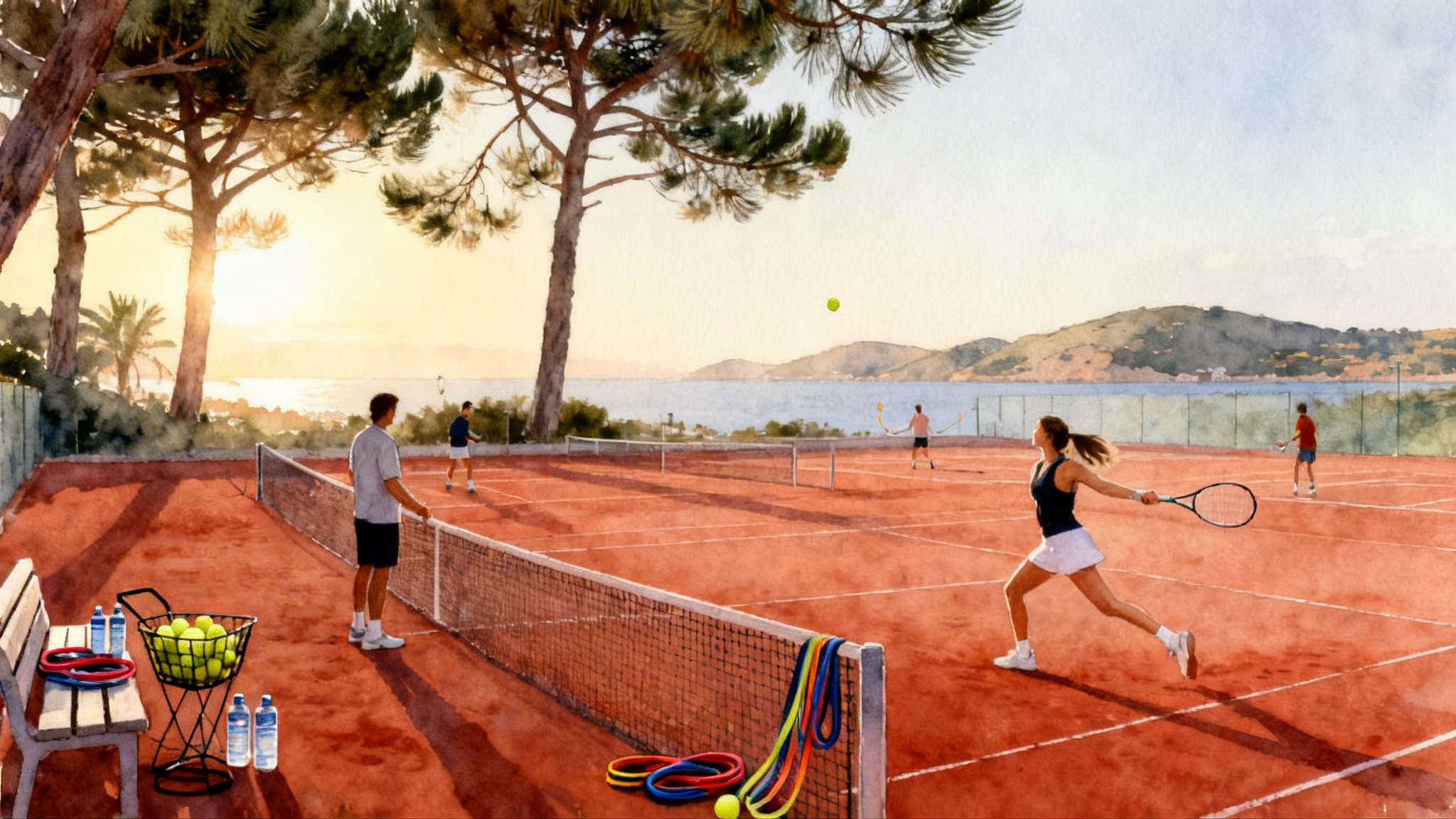
A typical training day had two court blocks of 75 to 100 minutes with a gym session bracketed between them. Video review lived in short, specific bursts: one or two clips to prime a theme before practice, then a five-minute debrief afterward. Ferrero kept feedback simple: explain the why, demonstrate the how, then test it live.
Ferrero’s mentoring and staff choices
Alcaraz’s gifts have always been obvious. What Ferrero and the staff did was choose the right constraints at the right times. Variety was not treated as freedom to improvise without aim, but as a toolbox to be curated. If Monday’s theme was forehand patience, Tuesday’s reward was forehand acceleration in green-ball zones. Lledó’s strength blocks matched the week’s tennis goals. Heavy lower-body lifts showed up before volume rally days, not before maximum-speed work. Moreno’s physio care was anticipatory rather than reactive. Sore adductors were addressed before a spike of open-stance hitting, not after.
The team also made a crucial social choice. Older sparring partners were not an occasional treat; they were part of the weekly fabric. Pros passing through Villena and top national players increased the difficulty without changing the drill. That was as valuable psychologically as technically. The message to a teenager is simple: your tools must work against men.
The scheduling choices that sped the jump
Many talented juniors get lost in the gray zone between Futures, Challengers, and early ATP main draws. The Alcaraz team treated the calendar as a curriculum.
- Futures to Challenger density: After testing himself in professional events, Alcaraz banked volume on the ATP Challenger Tour through 2020 and early 2021. He won his first Challenger in Trieste in August 2020, then added Barcelona and Alicante later that year, with Alicante coming on his academy’s courts. In May 2021 he won Oeiras in Portugal to break into the Top 100. As the ATP Top 100 feature notes, timing and full-block training were levers, not accidents.
- Wildcards as situational learning: Select ATP wildcards were treated as labs, not shortcuts. The 2020 Rio Open was the first taste, but the point was always to return to the Challenger grind with new information.
- Surface sequencing: Clay-heavy blocks built confidence and patterns, followed by hard-court swings where the same ideas had to survive less time and higher pace. The team did not split the player into a clay version and a hard-court version. They unified the identity and adjusted timing.
- Periodization: Training blocks were defined before tournament blocks, not the other way around. If the aim was to upgrade backhand depth under pressure, entries focused on events where a minimum of two to three matches was likely. That may mean a weaker Challenger draw over a shiny ATP 250 wildcard. Ranking points mattered, but learning throughput mattered more.
The result was a two-step acceleration. First, competitive density at the Challenger level produced an adult’s match library by 18. Second, the lessons from those weeks were baked into practice while confidence was high, not after a rough ATP loss when players often change too much too fast.
Why the model worked
- Consistency of cues: Everyone on staff used the same language. The words for rally phases, the names of patterns, even the way targets were taped on the court were consistent. That is how a 16-year-old internalizes complexity without confusion.
- Micro-margins: Equelite measured small things that compound, like return contact height, how often the first two steps after contact were forward rather than lateral, and whether emergency balls landed beyond the service line. These are not statistics for television, but they tell you if a style survives bad days.
- Social fit: A teenager learned how to live at an academy, not just train at one. The Villena residence gave independence in small doses. He learned to manage rest, meals, and schoolwork on site while staying connected to home on weekends.
Families exploring Spain often start with Tenerife Tennis Academy for dual-surface training and practical academics while they assess long-term options.
For parents: a playbook you can use
There is no single road, but there are reliable checkpoints. If you are guiding a promising player, here is a practical framework to adapt.
- When to change academies
- Trigger on density, not novelty. If a player cannot find three older, tougher hitters at their current base on most days, it is time to add or change environments.
- Test before you move. Do a two-week trial with clearly defined goals. For example, one technical focus and one competitive focus. Ask the new staff to plan two microcycles and explain the why. If the explanations are vague, keep looking.
- Non-negotiables. The new base must offer consistent hitting partners across levels, a gym with free weights and space to sprint, and a physio who sees the player before they hurt.
- How to secure older sparring partners
- Trade value. Offer structured sessions, not open hit-and-giggle. Send a short plan the night before: themes, sets, and constraints. Good players say yes when they know the work will be high quality and time-bounded.
- Build a ladder. Line up two or three adults from slightly different levels and styles. One heavy-crosser, one first-strike baseliner, one defender. Rotate them through the week so your player adapts without losing identity.
- Incentivize reliably. Pay on time, cover lunch, and share match video if the sparring partner wants it. Professional courtesy attracts professionals.
- Periodize training versus tournaments
- One theme per week. Pick a single technical or tactical upgrade and make it the headline of every session. Example: forehand depth under pressure. That week, every drill starts with a depth constraint and ends with a transition decision.
- Two-week build, two-week compete. In general, use a 2:2 rhythm at developmental ages. In build weeks, emphasize high volume on clay and strength progressions. In compete weeks, keep gym loads lower and sharpen serve plus first ball, return patterns, and short-burst movement.
- Choose events for repetition. Favor draws where you can play at least two matches. A semifinal in a strong regional or Challenger often teaches more than a first-round ATP loss. Use match video to extract one upgrade for the next build block.
- Build a lean travel team
- Roles first, names second. You need three functions on the road: a coach for daily planning and in-match adjustments, a performance lead who handles warm-ups and recovery, and a physio or trainer who can treat and also teach self-maintenance. One person can cover two roles if they have the skills.
- Pack the same routine. Travel with identical warm-up scripts, a small recovery kit, and a nutrition plan that fits local options. Consistency reduces decision fatigue.
- Communicate like pros. Daily debriefs with three questions only: what worked, what broke, what we will try tomorrow. Keep notes. Patterns emerge in two or three weeks that feelings will miss.
- Budget for quality over quantity. One excellent ten-day camp with strong hitters often beats three mediocre event swings. Protect training density.
- Templates you can copy tomorrow
- 90-minute court block, clay: 20 minutes of heavy crosscourt forehand with height targets, 25 minutes of neutral-to-offense sequences, 15 minutes of approach and first volley, 15 minutes of serve plus forehand, 10 minutes of point play to one pattern win condition.
- 45-minute gym block: hinge pattern plus rotational medicine ball throws, short acceleration sprints, mobility that targets hips and thoracic spine. Log lifts so you track progress, not feelings.
- Recovery checklist after tough matches: 10 minutes bike flush, 8 minutes lower-limb mobility, 6 minutes diaphragmatic breathing, protein and carbohydrate within 30 minutes, and a five-minute video clip review that names one theme for tomorrow.
The big picture
Alcaraz’s rise looks spectacular from the outside. From Murcia’s club life to Villena’s structured grind, it was systematic inside. Clay gave him more touches and more time to think. Hard courts compressed those same ideas into fewer steps. The gym made those steps repeatable in the fourth set. Ferrero and staff taught choices, not tricks, and they built a weekly life that a teenager could actually live.
Your player does not need to be a prodigy to use this blueprint. They do need a base that multiplies learning moments, an engine that can deliver on any surface, and a transmission that turns ideas into points under stress. Build those in order, periodize the calendar with intent, and find older hitters who expose the truth quickly. Progress rarely looks like a straight line. In the right environment, it looks like compounding interest.
If you are unsure what to prioritize next, borrow the Equelite test. Ask a simple question before each session: what habit can we prove today that will still hold in the third hour of a tough match in two months’ time. If you can answer that clearly, you are already on the right court.