Best Tennis Academies in Germany 2026: Berlin, Munich, NRW Guide
A practical parent’s guide to Germany’s top junior academies in Berlin, Munich, and North Rhine-Westphalia. Compare coaching ratios, clay vs hard-court access, boarding and academics, pricing bands in euros, and DTB and Tennis Europe pathways.
 Tommy
Tommy
Who this guide is for
Parents who want a clear, practical way to compare junior tennis academies in Germany for 2026. You will find how programs are structured, what real training weeks look like, what you can expect to pay, how clay versus hard-court access shapes development, and how to book trial weeks and assessments without wasting time. You can also cross-check program styles with our Spain vs France academies comparison for context on different European models.
This guide spotlights two high-touch programs that parents frequently ask about: ToBe Tennis Academy in Alsdorf, North Rhine-Westphalia, and TennisTree Berlin. It then compares Berlin, Munich, and the broader NRW region so you can choose a city that matches your child's goals, schooling needs, and tournament plan.
How German junior academies work in 2026
German academies share common building blocks, but the mix differs by city and by program design.
- Training model: Most programs blend three blocks. Technical rebuild blocks focus on stroke mechanics, usually 1 to 2 weeks each quarter. Matchplay blocks simulate tournament conditions with heavier point construction and pressure drills. Periodized fitness blocks peak before a tournament series. The ratio among these blocks dictates what a week will actually feel like.
- Court surfaces: Outdoors is predominantly red clay. Indoors you will find a mix of hard, carpet, and modern multi-layer surfaces. Clay rewards patience, footwork, and shape. Hard courts reward first-strike patterns and return depth. If a player is targeting United States college tennis, ask explicitly about year-round hard-court access and not just winter hall time.
- Coaching ratios: High-touch sessions run 1:1 or 1:2 for technical work. Controlled drilling is often 1:3. Situational games and fitness frequently scale to 1:4 or 1:6. Ratios matter more than raw hours because feedback frequency drives change.
- Boarding versus day: Germany has more day academies with partner boarding than all-in-one campuses. Expect options such as supervised apartments, host families, or partner residences. Fully residential packages exist but are less common than in Spain or France.
- Integrated academics: Pathways include German public or private schools, bilingual or international schools in major cities, or online schooling combined with local tutoring. Families from outside the European Union should plan early for visas and school enrollment timelines.
- Pricing bands: Use ranges rather than single numbers. For 2026, a realistic band for day training is typically 350 to 600 euros per week for mid-range programs, 700 to 1,200 euros per week for high-touch setups, plus fitness, physio, and tournament coaching as add-ons. Boarding usually adds 1,500 to 2,800 euros per month depending on room type and meals. Private lessons commonly run 60 to 120 euros per hour.
Tournament pathways that matter
Your player's calendar should connect local matchplay with ranking events. In Germany, junior competition ladders into the national system through the Deutscher Tennis Bund. Study the DTB rankings and calendar to see how regional and national events feed points and acceptance lists.
For cross-border development and international exposure, the Tennis Europe Junior Tour is the next rung for Under 12, Under 14, and Under 16. Familiarize yourself with circuits, acceptance methods, and travel clusters on the Tennis Europe Junior Tour. A practical approach is to plan a three-month block that pairs two local DTB events with one Tennis Europe event inside a drivable radius.
Spotlight: ToBe Tennis Academy, Alsdorf, NRW
Tomas Behrend's program in Alsdorf sits in a sweet spot for families who want personalized attention, serious clay-court schooling, and fast access to tournaments across Germany, Belgium, and the Netherlands. For program specifics, see the ToBe Tennis Academy profile.
- Location and surfaces: Alsdorf, near Aachen, in North Rhine-Westphalia. Outdoor red clay, indoor access through partner halls that include hard or carpet. The cross-border location makes weekend trips to dense tournament hubs feasible.
- Training model: High-touch, small cohorts. Technical sessions often run 1:1 or 1:2 with measurable checkpoints. Drilling days balance pattern work with decision training. Players cycle through targeted stroke weeks, then matchplay blocks before tournament windows.
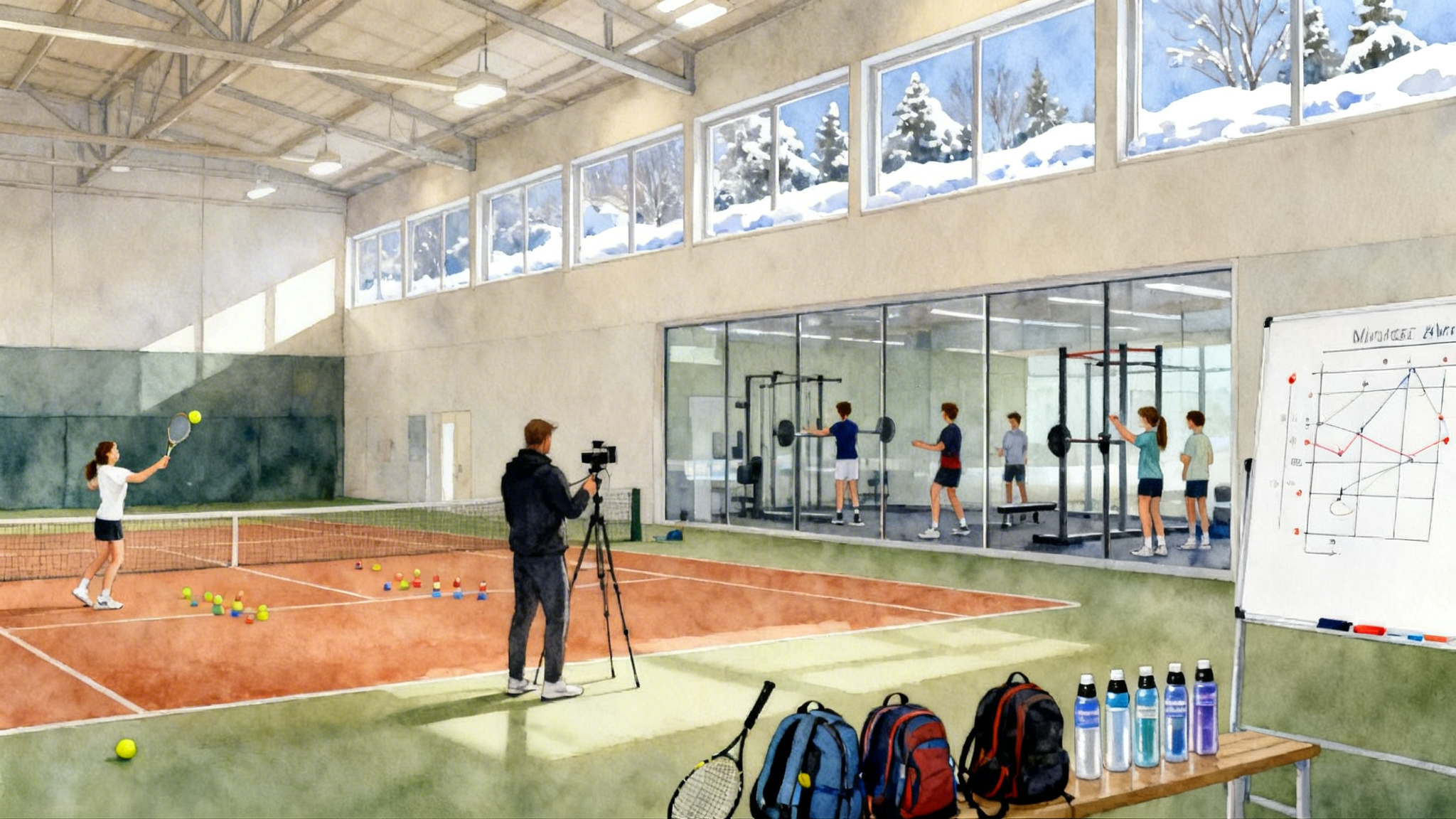
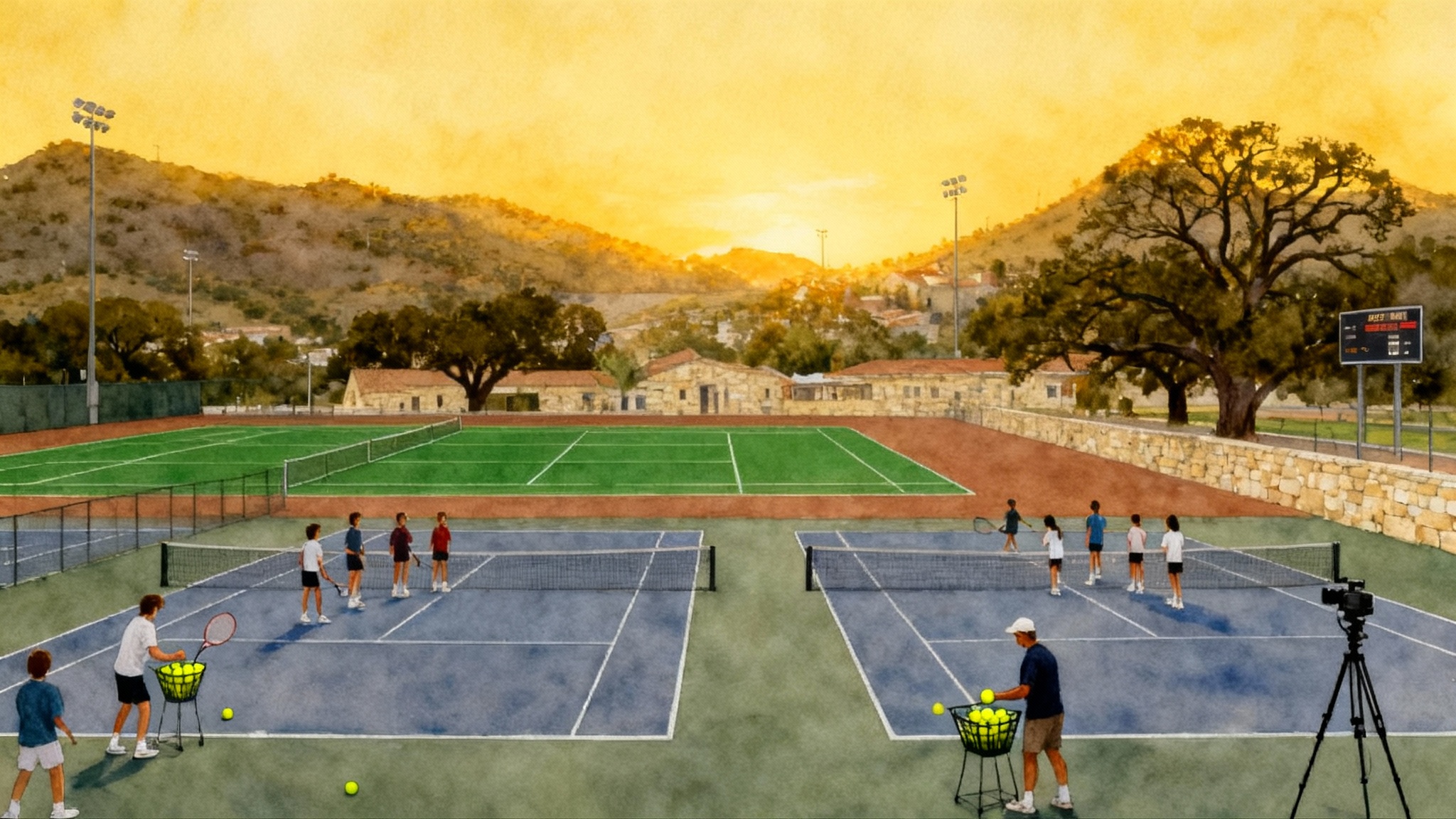
- Coaching ratios: Expect 1:1 or 1:2 for rebuilds, 1:3 for drilling, and 1:4 to 1:6 for fitness or point-based games. Parents notice that the coach is on court with a live basket and video, not from a distance.
- Academics and boarding: Day-student friendly. Boarding usually arranged via vetted apartments or host families, which keeps costs below large-campus pricing. Families using online schooling can schedule morning or afternoon blocks depending on time zones.
- Tournament pathway: DTB regionals around NRW, plus quick access to Belgium and the Netherlands for extra starts. Tennis Europe events within driving distance broaden acceptance options without long trips.
- Player profile fit: Suits players who need a technical tune-up on clay, who benefit from consistent coach voice, and who want a compact team that travels.
Strengths parents highlight:
- Attention per player is high, and feedback is specific. Tactical periodization is visible on the weekly plan.
- Location allows frequent competitive starts without heavy travel budgets.
- Clay fundamentals carry over to hard courts when combined with targeted indoor hard sessions.
Consider if:
- Your player needs large peer groups every session. Small cohorts can feel intense or repetitive for highly social players.
- You need an all-in-one boarding campus with on-site schooling. Housing is partner based, not a single dorm complex.
Sample in-season week, ages 14 to 16:
- Monday: 90 minutes technical forehand and serve, 60 minutes footwork and mobility, 60 minutes study block
- Tuesday: 90 minutes patterns to the ad court, 90 minutes matchplay sets, 45 minutes strength circuit
- Wednesday: 60 minutes video review, 60 minutes returns and second-serve patterns, 60 minutes active recovery
- Thursday: 120 minutes point construction on clay, 60 minutes speed and agility, 30 minutes prehab
- Friday: 90 minutes matchplay ladder, 60 minutes serves and first ball, 45 minutes flexibility
- Saturday or Sunday: DTB or local open tournament, coach attends for key matches when scheduled
How to book a trial week and assessment:
- Share match video and a short goals note. Two to five minutes is enough.
- Request a one to three day technical assessment inside a normal training week, not a showcase day.
- Ask for a written microcycle with your child's name on it. It should list the coach name, session targets, and how success will be measured.
- Confirm add-on costs for tournament coaching and travel in writing before the trial.
Spotlight: TennisTree Berlin
TennisTree Berlin has built a reputation for individualized junior development within the city's deep club network. It is a clean fit for families that want day training tied to strong academics and city life. Review venues and staff on the TennisTree Berlin academy page.
- Location and surfaces: Central and suburban Berlin clubs with extensive red clay outdoors, plus winter indoor capacity across partner facilities, which can include hard and modern multi-layer courts.
- Training model: Diagnostic first. The staff maps a player's strengths and constraints, then prescribes short technical sprints that feed into matchplay blocks. The program leans into decision training and court awareness, not just volume.
- Coaching ratios: Technical rebuilds 1:1 or 1:2, drilling 1:3, situational sets and fitness 1:4 to 1:6. Video and ball-tracking appear in progress reviews.
- Academics and boarding: Designed for day students. Berlin offers several bilingual and international schools, plus a large tutoring market. Short-term boarding is typically through partner residences or host families for trial periods.
- Tournament pathway: Dense DTB competitions within Berlin and Brandenburg reduce travel time. Tennis Europe events in northern and eastern Germany are reachable by rail, which helps older juniors travel independently.
- Player profile fit: Ideal for players who enjoy a city environment, want academic optionality, and need coaches who customize around a known constraint such as growth spurts, overuse history, or time-limited schedules.
Strengths parents highlight:
- Clear, written progress reviews with video clips and simple key performance indicators.
- Strong integration with school schedules and public transport, which keeps logistics manageable.
- Access to indoor hard courts in winter when planned early, which balances clay development.
Consider if:
- You prefer a secluded campus. Berlin is energetic and logistical, with commute planning part of the routine.
- You want full-time boarding handled inside one facility. Boarding is partner based and limited.
Sample in-season week, ages 12 to 14:
- Monday: 60 minutes technique on backhand shape, 60 minutes court awareness games, 30 minutes mobility
- Tuesday: 90 minutes serve and return, 45 minutes speed ladder and landing mechanics
- Wednesday: Study priority day, 60 minutes video and mental rehearsal, optional 45 minutes recovery bike
- Thursday: 90 minutes live ball patterns, 60 minutes strength basics and core
- Friday: 60 minutes tie-break matches, 30 minutes serve targets, 30 minutes prehab
- Weekend: DTB event or club matchplay set day with coaches rotating
How to book a trial week and assessment:
- Send recent match clips and a short history of training loads and injuries.
- Request a two-day assessment that includes both technique and decision training.
- Ask to see a sample progress review so you know what reporting looks like.
- Clarify indoor court availability for your months in Berlin and the exact surfaces planned.
City-by-city comparison: Berlin, Munich, NRW
Each location offers a distinct mix of surfaces, logistics, schooling, and tournament density.
Berlin
Pros
- Large club network, many clay courts, and reliable winter indoor capacity
- Multiple international and bilingual schools, strong tutoring options
- Public transport allows older juniors to commute independently
Cons
- Commute planning is essential, with travel time between clubs a real factor
- Winters push more sessions indoors, which adds hall fees if not bundled
- Boarding is partner based rather than one campus
Best fit: Families who value academics and independence, and who want matchplay density without constant travel.
Munich
Pros
- High-quality clay facilities and well-run clubs with organized matchplay
- Strong academic options including international schools
- Proximity to Austria and northern Italy opens additional tournament clusters in holiday periods
Cons
- Costs for court time and housing run on the higher side
- Winter indoor access requires early booking and can be expensive
- City spreads east to west, so commute times vary
Best fit: Families who want top-notch facilities, strong academics, and are comfortable with higher budgets.
North Rhine-Westphalia (NRW)
Pros
- Extremely dense club network across Cologne, Düsseldorf, Bonn, Aachen
- Easy cross-border tournament access to Belgium and the Netherlands
- More programs with small-cohort coaching and pragmatic boarding setups
Cons
- Fewer fully residential campuses with on-site schooling
- Mix of indoor surfaces can skew toward carpet and hard in some halls
- Car logistics often needed outside city centers
Best fit: Players who want frequent tournaments within a short drive and hands-on coaching in compact groups.
Pricing bands and what they usually include
Use these 2026 ranges as planning anchors. Confirm what is included in writing.
- Day training packages: 350 to 600 euros per week for mid-range volume with shared courts and limited privates. 700 to 1,200 euros per week for high-touch programs that guarantee privates and smaller ratios.
- Private lessons: 60 to 120 euros per hour depending on coach seniority and technology use.
- Fitness and physio: 150 to 300 euros per month for small-group strength and mobility, plus per-session rates for therapy.
- Tournament coaching: 60 to 150 euros per match, or flat day rates of 120 to 300 euros, plus travel share. Ask for a cap per day.
- Boarding and meals: 1,500 to 2,800 euros per month for supervised apartments or host families. Fully catered options cost more where available.
- Indoor court surcharges: Common in winter. Either bundled or billed per hour. Clarify for December to March.
Clay versus hard-court access: how to think about it
- Development phase: Clay accelerates learning in spacing, height, and shape. Younger juniors often benefit from more clay volume.
- Translation to hard courts: Pair clay blocks with targeted serve, return, and first-ball sessions on hard. Even one or two indoor hard sessions per week can preserve first-strike skills.
- Injury and growth: Hard courts require strict landing mechanics and strength basics. Programs that coach landings and decelerations reduce overuse risk.
- Tournament calendar: If your child will play United States hard-court events in summer, schedule a spring mini-block with indoor hard sessions to sharpen timing.
Sample daily flows: day students and boarders
Day student, school-first template
- 07:00 to 08:00: Breakfast, commute
- 08:00 to 13:00: School
- 14:00 to 15:30: Tennis technical or patterns
- 15:45 to 16:30: Strength basics and mobility
- 16:45 to 17:30: Serve targets or video review
- 18:00: Homework and recovery routine
Boarding or partner residence template
- 07:30: Breakfast, activation
- 09:00 to 10:30: Tennis technical 1:2
- 10:45 to 11:30: Speed and footwork
- 12:00: Lunch and study block
- 14:00 to 15:30: Matchplay or situational games
- 16:00 to 16:45: Prehab and flexibility
- 17:30: Dinner, recovery, lights out routine
How to evaluate and book a trial week
A good trial reveals the true coaching voice, not a marketing day.
- Step 1: Share context. Two paragraphs on goals, current weekly load, injuries, and target tournaments.
- Step 2: Ask for a named plan. The microcycle for your child should list exact session types, coach names, and surfaces.
- Step 3: Insist on measurement. What stroke keys, speed splits, or matchplay targets will be used to define success by Friday.
- Step 4: Clarify costs. Get indoor fees, tournament coaching, and travel shares in writing. Ask for a not-to-exceed daily cap when a coach travels.
- Step 5: Book early. Winter and summer holiday weeks fill first. Spring and autumn have better flexibility.
- Step 6: Debrief in writing. After the trial, ask for a one-page summary with the next four weeks mapped if you enroll.
You can also compare options in one place using our site. Families often start with a two to five day assessment, then commit to a four to eight week block. If you prefer a single contact point, request side-by-side availability for ToBe and TennisTree through our team.
Practical questions parents ask
- What language is used on court? Coaches in Berlin and Munich commonly instruct in English and German. In NRW, English plus German is typical. Clarify for younger players who need simplified cues.
- How does transport work? Berlin favors public transport and bikes. Munich and NRW often mix public transport with car shuttles. Ask for safe pickup points and written schedules.
- What about equipment and stringing? Most academies provide same-day stringing. Set a weekly stringing budget. For clay, consider a slightly higher tension to keep depth consistent.
- What medical support is standard? Expect partner physio and access to sports medicine clinics. Programs that schedule prehab and landing mechanics reduce downtime.
- How do winters affect training? Expect more indoor volume from November through March. Reserve indoor hard slots early if first-strike tennis is a priority.
Decision guide: Berlin vs Munich vs NRW
- Choose Berlin if: You want academic flexibility, dense matchplay, and the option for your teen to commute independently on public transport. TennisTree Berlin fits day-student families who want structured feedback and clear progress reviews.
- Choose Munich if: You prioritize premium club environments, can budget for higher indoor fees, and want a springboard to Austria and Italy tournament clusters in school holidays.
- Choose NRW if: You want compact, hands-on coaching with frequent weekend tournaments in driving range. ToBe Tennis Academy in Alsdorf is strong for players who need clay fundamentals plus targeted hard-court time.
Final checklist before you pay a deposit
- Training clarity: Do you have a named weekly plan that matches your child's needs, with ratios, surfaces, and coach names.
- Academic fit: Is the school pathway secured with confirmed timetables.
- Tournament map: Do you have a three-month calendar that blends DTB and Tennis Europe, with travel costs estimated.
- Budget reality: Do you know the weekly training fee, private lesson rate, indoor surcharges, tournament coaching rate, and boarding cost. Is there a written cap for travel shares.
- Health and growth: Has someone assessed landing mechanics, range of motion, and workload from the last season.
Conclusion: pick, plan, and commit for one season
Germany remains one of the best places in Europe to build a junior who understands patterns on clay and can still strike first on hard courts. Start with a trial week that measures what matters, choose a city where logistics match your family life, and commit to a full season plan tied to DTB and Tennis Europe calendars. Programs like ToBe Tennis Academy in Alsdorf and TennisTree Berlin show how a clear coaching voice and small ratios can accelerate progress. With a named weekly plan, transparent costs, and a tournament map that fits school, your player will know what to do on Monday morning and why it leads to better Sundays.