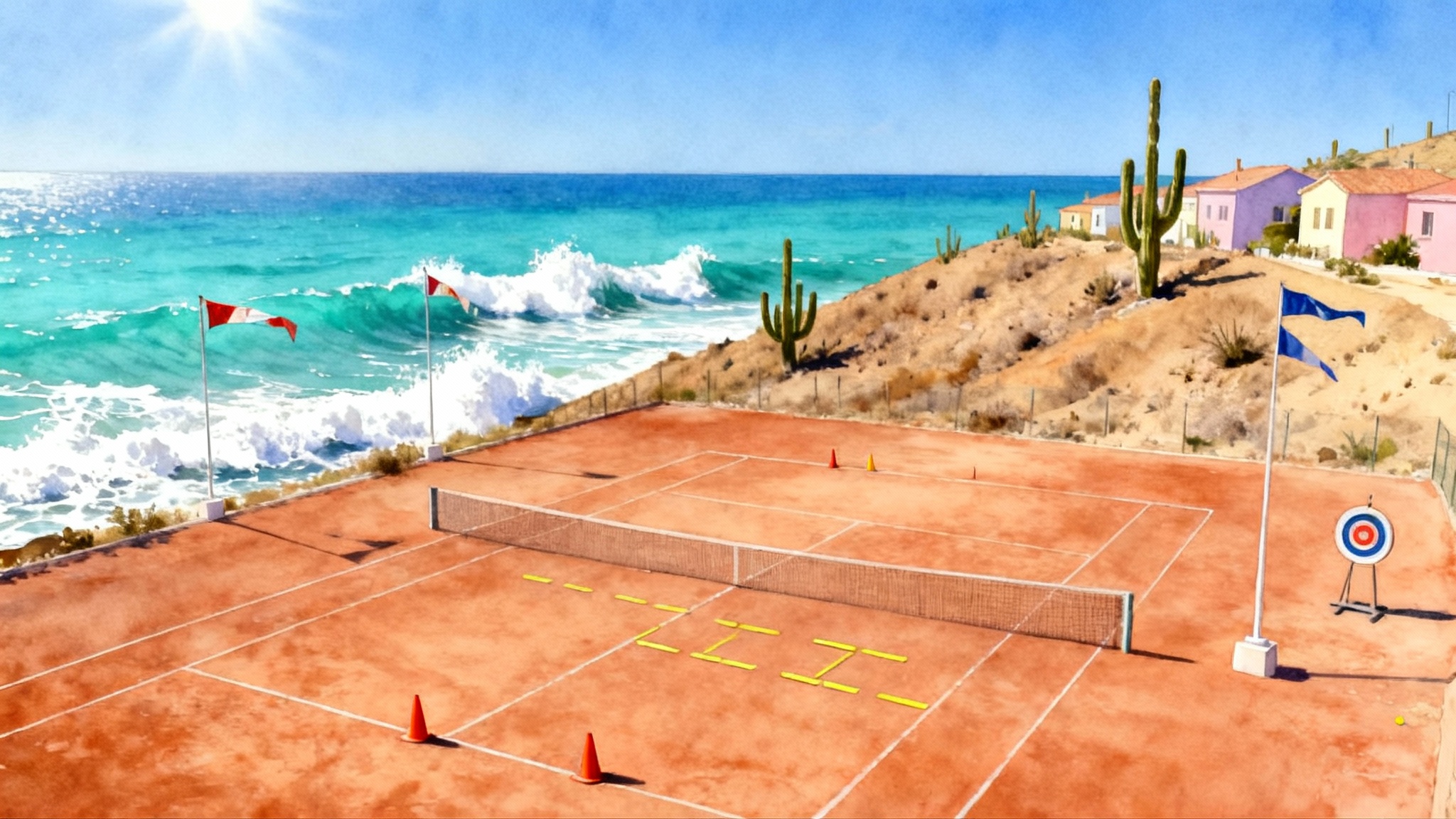
French Riviera Clay Corridor: Train March to June, Nice to Cannes
Build a pre Roland Garros block on the Riviera’s red clay. From March to June, a protected microclimate, the Monte Carlo Masters, and a dense club network make training efficient. Base at All In Academy in Villeneuve Loubet.
 Tommy
Tommy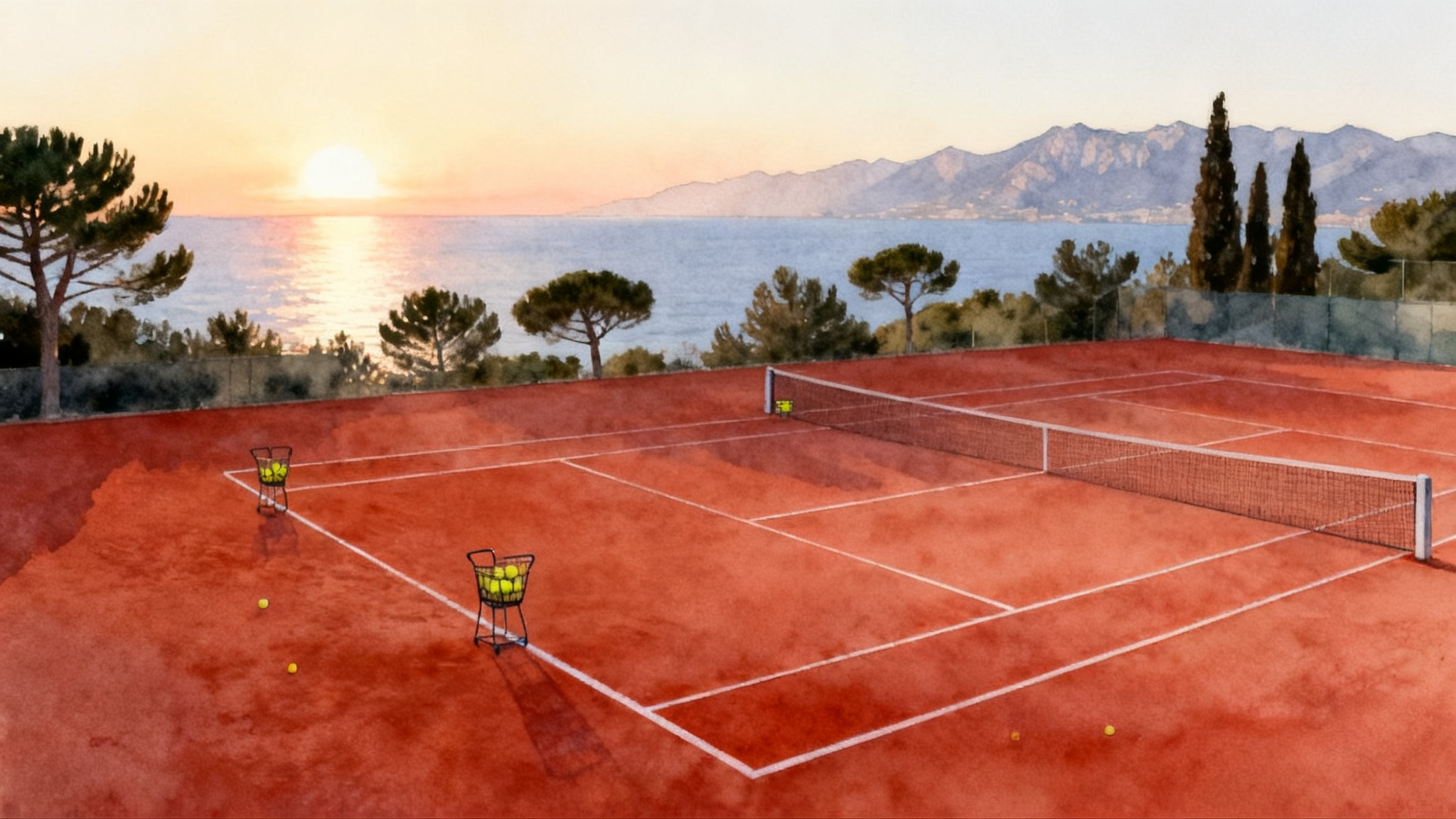
Why March to June is the Riviera's prime clay window
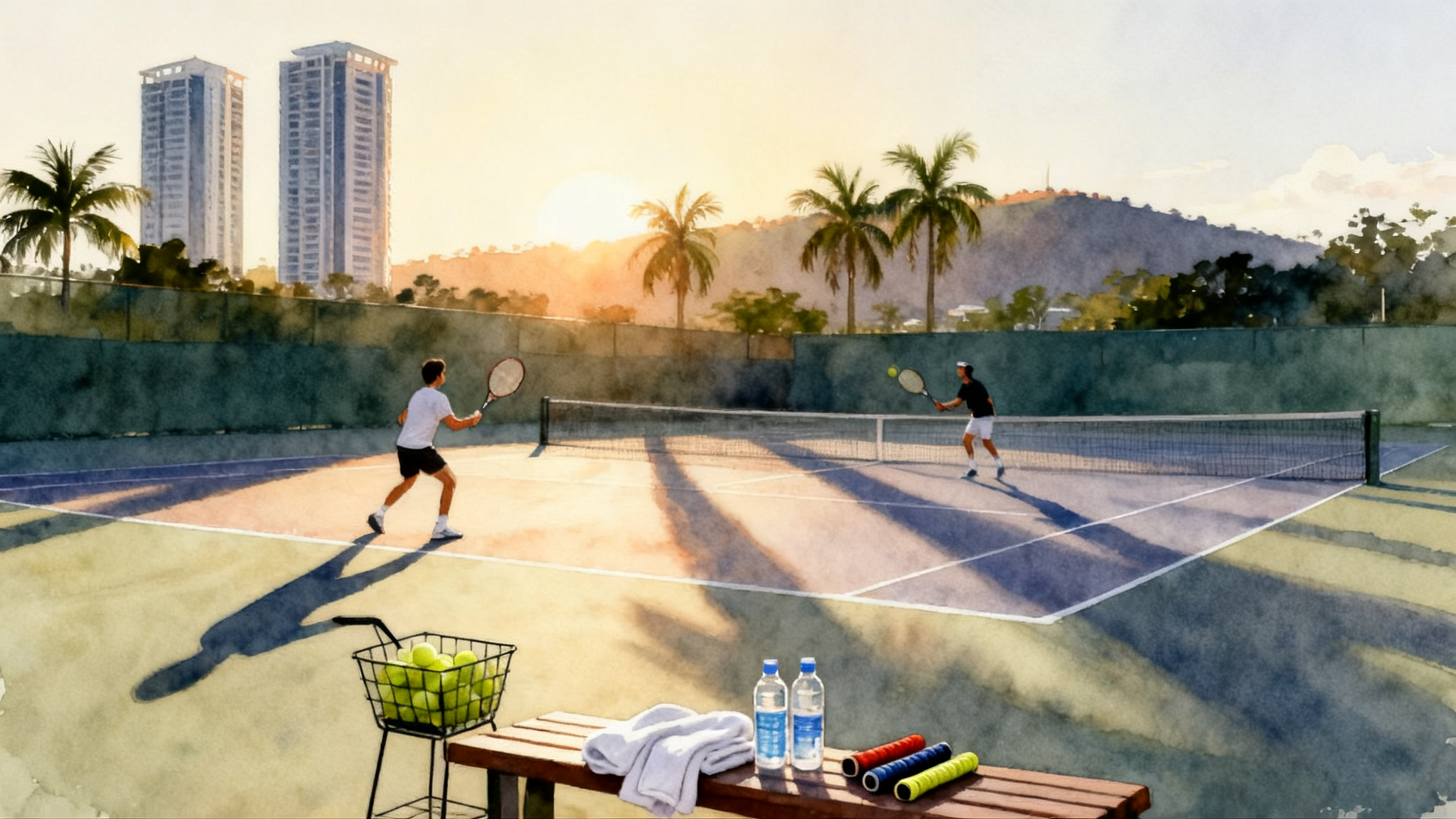
If you want a spring block that feels like a dress rehearsal for Roland Garros, the stretch of coastline between Nice and Cannes delivers a rare blend of conditions. The Maritime Alps sit just behind the coast, sheltering the bays from harsher inland weather. This means steadier temperatures, plenty of playable mornings, and clay that can be prepped quickly after light showers. Pair that with a calendar anchor, the Monte Carlo Masters overview, which opens the European clay swing in early to mid April. You get top pros nearby for inspiration, a surge of quality sparring partners in town, and a reason to structure a block that peaks in late May.
The 'clay corridor' is not marketing fluff. Between Nice and Cannes you can step off a regional train and be on red clay within minutes. Courts sit at sea level with light winter residue burned off by March sun, so you can rack up high-rep footwork sessions without fighting cold or wind. Add in coastal humidity that keeps the top dressing in a sweet spot, and sliding, loading, and resetting become repeatable rather than risky.
If you like to front load your season, pair this block with a warmup on volcanic courts at our Tenerife winter and spring base.
The microclimate, simply explained
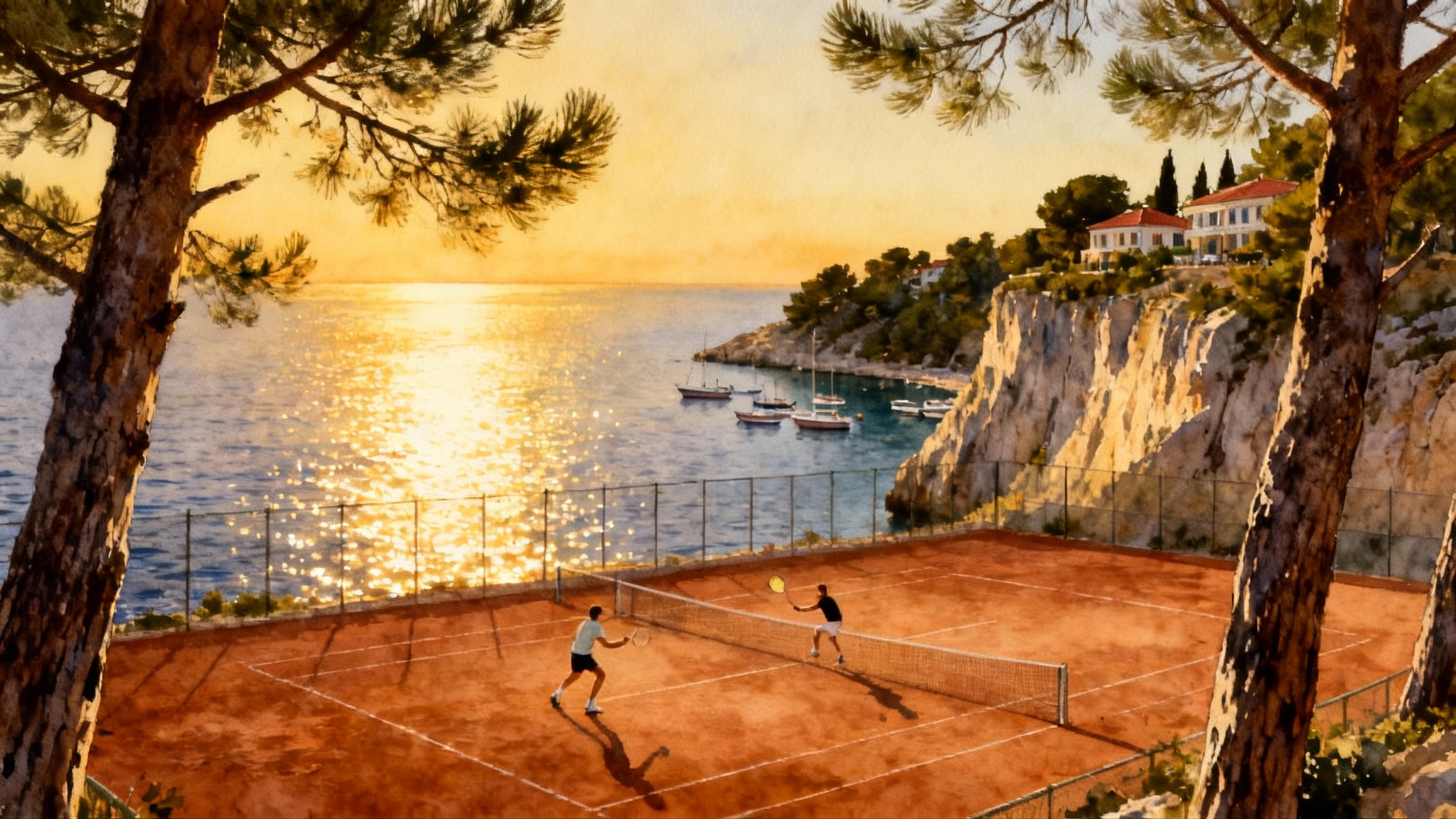
Think of the Riviera as a long amphitheater. The sea is the stage, the hills are the walls, and the audience is you and your training group. The Maritime Alps block stronger northern winds that sap body heat and dry out the surface. The Mediterranean moderates big temperature swings. The result is more days that sit in the middle band where clay stays grippy and the bounce remains honest.
Expected weather, March through June, for coastal clubs between Nice and Cannes.
- March: 12 to 16°C by day, 7 to 9°C at night, roughly 54 to 61°F by day, 45 to 48°F at night. Showers happen, but courts drain fast and dry with a short sun break.
- April: 15 to 18°C by day, 9 to 11°C at night, about 59 to 64°F by day, 48 to 52°F at night. More sunshine hours and frequent playable mornings.
- May: 19 to 22°C by day, 13 to 15°C at night, about 66 to 72°F by day, 55 to 59°F at night. Ideal for double sessions, light sea breeze most afternoons.
- June: 23 to 26°C by day, 17 to 19°C at night, around 73 to 79°F by day, 62 to 66°F at night. Warm but not oppressive near the water, hydrate and plan earlier starts.
For a data-backed snapshot of long-term norms in Nice, see the official Météo-France Nice climate normals. Use those ranges to choose start times, clothing layers, and your hydration plan.
Where to base your week: All In Academy, Villeneuve Loubet
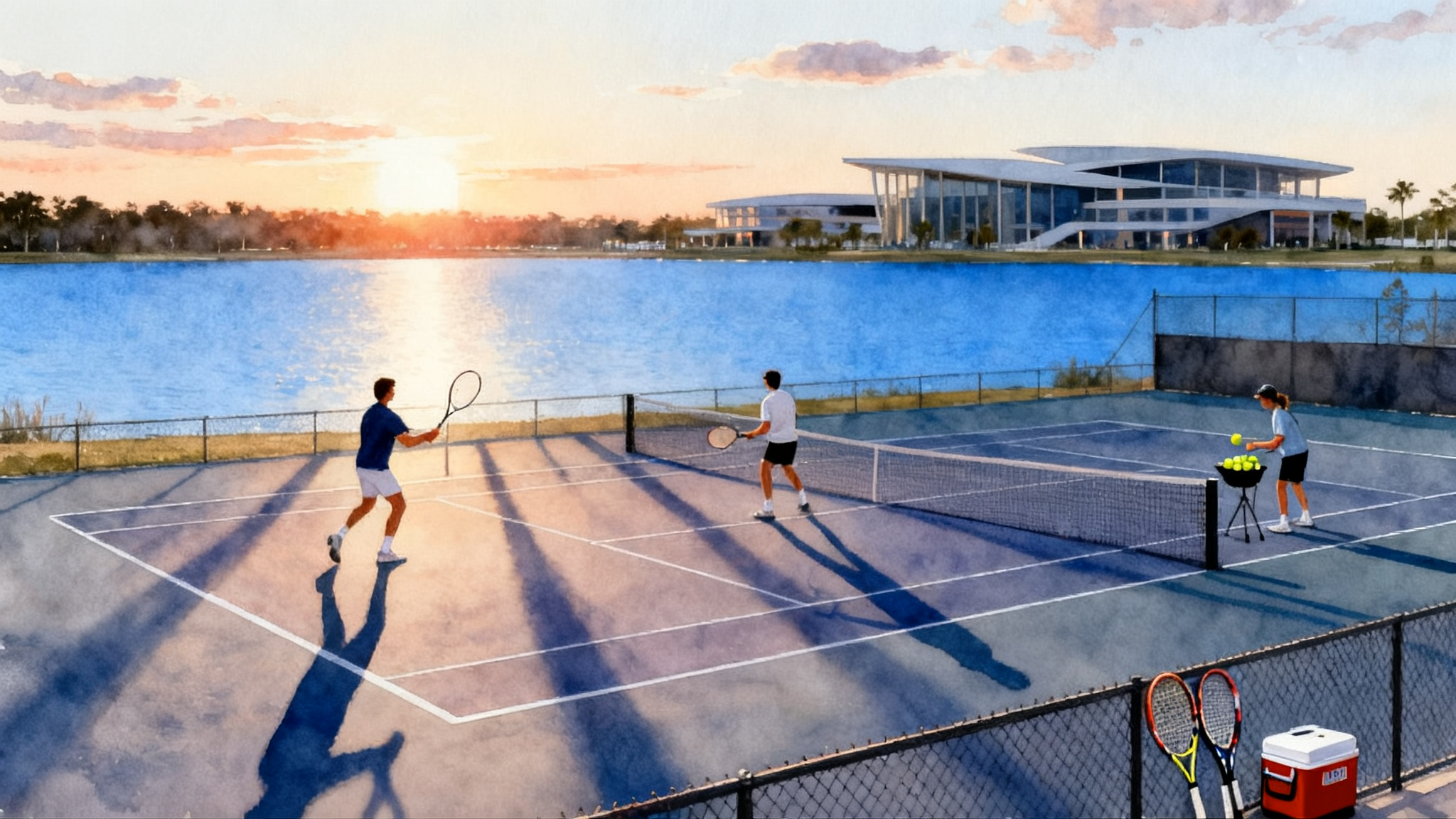
Set your home court at All In Academy in Villeneuve Loubet, a sweet spot between Nice and Antibes. The location puts you within a short regional train hop of Monaco to the east and Cannes to the west. That centrality matters. You can train in the morning, recover at the beach after lunch, and still grab a match play set before dinner when the air is cooler. See our All In Academy profile for current camp formats and contact details.
What a typical weeklong camp looks like at this base:
- Mornings emphasize movement patterns specific to clay: first step out of the split, deceleration into the outside leg, and neutral recovery shuffle. Drills are designed to make sliding a tool rather than a stunt.
- Afternoons pivot to patterns that win on red clay: using the heavy crosscourt to stretch, looping up the line to pin, and finishing with the forehand inside the baseline.
- Fitness blocks are short and specific. Expect resisted lateral shuttles, short hill sprints, and core stability with rotational medicine ball work.
- Video review turns tiny shape changes into gains you can feel. On clay, five degrees of torso angle at contact can shift whether you trade or take time.
Facilities and coaching ethos
All In's coaching groups are built so you are matched by level and by goals. Junior squads lean into high ball tolerance and court craft. Adult squads spend more time translating movement cues into shot selection, so footwork and tactics evolve together. Ball machines, dedicated recovery spaces, and easy access to the beach for contrast bathing make the day feel like a pro setup without the friction.
Where to sleep and eat
Villeneuve Loubet has beachside apartments and family-run hotels that keep you near both the courts and the sea. Self-catering works well for camps. Shop local produce and bakery staples in the morning, then anchor lunches with simple carbohydrates and clean protein. Evenings are a chance to try regional dishes like socca, fougasse, and grilled sea bass, all easy on recovery.
Month by month: how to shape your training
March: foundation and footwork
- Goal: relearn depth control and establish sliding mechanics.
- What to do: two technical sessions and one conditioning block per day, six days. Keep targets big, aim heavy crosscourts, and end with 15 to 20 minutes of approach plus first volley.
- Why: your brain needs reps in slower conditions to re-tune spacing. Start with neutral patterns, add direction changes on day three.
For drill ideas that translate directly to clay, use our 4-week footwork plan for club players.
April: add patterns and match play
- Goal: convert movement into tactical edges while the Monte Carlo Masters runs nearby to sharpen your eye.
- What to do: maintain one technical block daily, add one set of pressure drills, then play one set of live points. Practice two closeouts you will use in matches: the high backhand up the line to open the forehand, and the inside-out forehand to the ad corner to finish inside in.
- Why: the tournament puts clay patterns in high definition, which speeds learning through imitation.
May: build density and decision speed
- Goal: increase rally length while keeping first-strike opportunities.
- What to do: three on-court blocks most days. Alternate heavy rally days with serve and return emphasis. Add one day of mixed formats, for example 30 minutes of Spanish drills, 30 minutes of serve plus one, and 30 minutes of tie-breakers.
- Why: tournament play in late May demands both legs and choices. You want to recognize when to trade and when to take time.
June: finishers and heat management
- Goal: turn fitness into confidence under warmer sun.
- What to do: shift to earlier starts, 90-minute morning blocks, 60-minute evening blocks. Include cramping prevention routines, sodium strategy, and five-minute cool downs in shade.
- Why: the clay rewards patience, but heat punishes indecision. Plan your pace so your quality does not dip after 70 minutes.
Sample training itineraries you can steal
Juniors: one-week pre Roland Garros block
- Sunday arrival: check in, light shakeout on the beach, early night.
- Monday
- 08:30 Warm up on the track, ankle mobility, mini-bands.
- 09:00 Technical block: crosscourt forehand control, 20-ball tolerance series.
- 10:30 Patterns: forehand inside-out to backhand corner, recover to neutral.
- 12:00 Lunch and shade.
- 15:30 Fitness: lateral bounds, resisted slides on a low-friction mat, core circuit.
- 17:00 Points: serve plus one to ad side, two-on-one defending.
- Tuesday
- Morning: return plus depth, aim body and backhand corners.
- Afternoon: match play sets with deuce-deciding point to simulate pressure.
- Wednesday
- Morning: backhand up-the-line development, change grip pressure cues.
- Afternoon: pool recovery and video breakdown.
- Thursday
- Morning: transition patterns, drop shot plus lob, or drive volley as a finish.
- Afternoon: fitness with short hill sprints, 8 to 10 seconds, full recovery.
- Friday
- Morning: serve targets and patterns, add kick out wide to ad.
- Afternoon: tournament set, coaching only on changeovers for tactical cues.
- Saturday
- Morning: team tie-breaker ladder. Awards and review.
- Afternoon: free time in Antibes Old Town, short walk on the Cap d'Antibes path.
- Sunday departure: stretch and go.
Coaching cues for juniors are simple and repeated. Slide, load, and lift rather than lunge, reach, and chip. Ask for video feedback on your posture at contact when sliding left to right. On clay, that scene is your report card.
Adults: five-day spring tune-up
- Wednesday arrival: check in near the sea, early dinner.
- Thursday
- 08:00 Dynamic warm up and movement ladder.
- 08:30 Technical block: timing the split step, first step out of corners.
- 10:00 Pattern play: heavy crosscourts, then forehand up the line only after neutral.
- 12:30 Lunch, siesta.
- 16:30 Serve and return workshop, second serve kick, blocked returns deep middle.
- Friday
- Morning: approach plus first volley, targets to big zones not lines.
- Evening: coached points with constraints, for example finish by the third ball.
- Saturday
- Morning: long rally day, two-on-one defense, end with 20-minute tie-breaker series.
- Afternoon: coastal recovery swim, gentle 10-minute walk in the shallows.
- Sunday
- Morning: match day, two short sets, coaching only on tactics at 2 to 2.
- Afternoon: museum visit or harbor stroll, early night.
- Monday departure or optional extra day for sightseeing.
Adults improve fastest when intentions are clear. Pick two intentions per day and say them out loud before each point, for example 'high heavy crosscourt' and 'recover to neutral.' That small ritual reduces decision fog when points stretch.
Logistics that save energy
Getting to the corridor
- Fly into Nice Côte d'Azur Airport. The terminal is close to the regional rail corridor. The airport tram gets you to Nice Saint-Augustin station in minutes.
- The coastal rail line is run by the national operator. Look for regional trains called Transport Express Régional, abbreviated TER, serving Nice, Cagnes-sur-Mer, Villeneuve Loubet, Antibes, Juan-les-Pins, and Cannes. Trains run frequently and the ride times are short. Monaco is less than an hour from Villeneuve Loubet, often closer to 40 minutes depending on the service.
Navigating daily
- Stay within a 10 to 15 minute walk of a station or the courts. That buffer is the difference between a calm warm up and a sprint to make your start time.
- Use the regional train for morning sessions, then pair the return ride with groceries or a beach stop. Buses fill in the gaps. Local operators publish live timetables by stop.
- Taxis and ride hailing work well for odd hours, but trains will be faster during daylight.
Packing list tuned for clay
- Clay court shoes with a full herringbone outsole, plus a spare insole set.
- Two racquets strung 1 to 2 kilograms lower than your hard court tension for better dwell time and net clearance.
- A bright overgrip and a muted one. Swap mid session when humidity rises.
- Rosin or a dry grip aid for afternoons. Sunscreen, zinc stick, and a cap.
- Two large towels and one microfiber travel towel.
- Reusable bottles that hold at least two liters. Add an electrolyte mix that you have tested.
- A light jacket for cool mornings and a breathable long sleeve for late finishes.
Court etiquette and maintenance
Brush from the outside in, especially after lateral movement drills. Sweep the lines last, then water lightly if the club requests it. On busy days, ask a coach or attendant whether to water pre or post session to keep the top dressing from blowing. Clay is a living surface. Treat it that way and your consistency climbs.
Pair your court time with coastal downtime
- Old Town Antibes: narrow lanes, a short museum visit, and gelato on the ramparts. Keep the walk under an hour on double session days.
- Cap d'Antibes coastal path: stunning viewpoints and easy footing. Use as a recovery stroll, not a hike.
- Nice: the Promenade des Anglais for an evening spin on a city bike, the Matisse Museum for a quiet hour of color theory that mirrors shot patterns on clay.
- Cannes: a late afternoon sandwich on the sand after your set, then a calm train home.
- Monaco during the Masters: watch a morning practice, then head back for your own afternoon hit. Even a short window around the pros calibrates your eye to higher rally tolerances and smarter court positions.
How to build match play without burning out
- Alternate days: one day of long-rally training, one day of serve and return with short points.
- Use formats: play a two-serve tie-breaker to seven, then a one-serve tie-breaker to seven. The second format forces better first ball focus without extra volume.
- Ask the academy to group you for ladder play based on current UTR or national ratings. If you do not track a rating, give recent match scores and a short video clip so they can place you well.
Budgeting and booking, the practical bits
- Book trains in-app or at station machines. For short hops, buy on the day. Keep paper or digital tickets handy for inspectors.
- If you prefer a car for family logistics, choose lodging with on-site parking. Parking near popular beaches can be tight after lunch in May and June.
- Plan restaurants around your training rhythm. Early dinners the night before match-heavy days help. On late-finish days, choose a light early dinner and a recovery snack before bed.
A simple week plan you can copy today
- Pick your month based on the goals above, then select a Monday to Saturday week.
- Reserve your camp block at All In Academy, confirm group size, and share your level and goals via the All In Academy profile.
- Book a flight that lands before noon, or add a buffer day to beat jet lag.
- Choose lodging within walking distance of either the academy or the nearest station.
- Build a menu for breakfasts and snacks. Plan lunches with carbohydrates and fruit. Keep dinners simple.
- Pack two racquets, your clay shoes, and recovery tools. Put sunscreen and electrolytes in your carry-on.
- Add one cultural visit on the lightest training day. That off-court change of scene keeps motivation fresh.
Why this corridor beats a one-club trip inland
- Density: if a session gets rained out, you can often shift to a nearby club that dries faster. Coastal breeze and sun help.
- Travel time: a 15 to 30 minute train ride puts you on a new court or at a pro practice, which multiplies learning without long drives.
- Rhythm: you can live like a player, not a commuter. Morning hit, lunch, beach, afternoon points, dinner, stretch, sleep.
Closing thoughts
Spring on the Riviera is the rare training environment that feels like a nudge rather than a fight. The weather cooperates often enough to stack sessions. The pros pass through in April, which plants sharp pictures in your head. The rail line ties everything together so your energy goes to learning, not logistics. Base yourself at All In Academy in Villeneuve Loubet, set clear goals by month, and use the coast as your recovery room. If you build this block with intention, your red clay tennis will not just travel to Roland Garros season. It will stay with you all year.