How JTCC Forged Frances Tiafoe, From College Park to Ashe
Frances Tiafoe grew up inside JTCC in College Park, where near-constant court access, a trusted coach, and community support shaped a pro who could handle the tour. Here is how that model works and how families can copy it.
 Tommy
Tommy
The kid who lived at the club
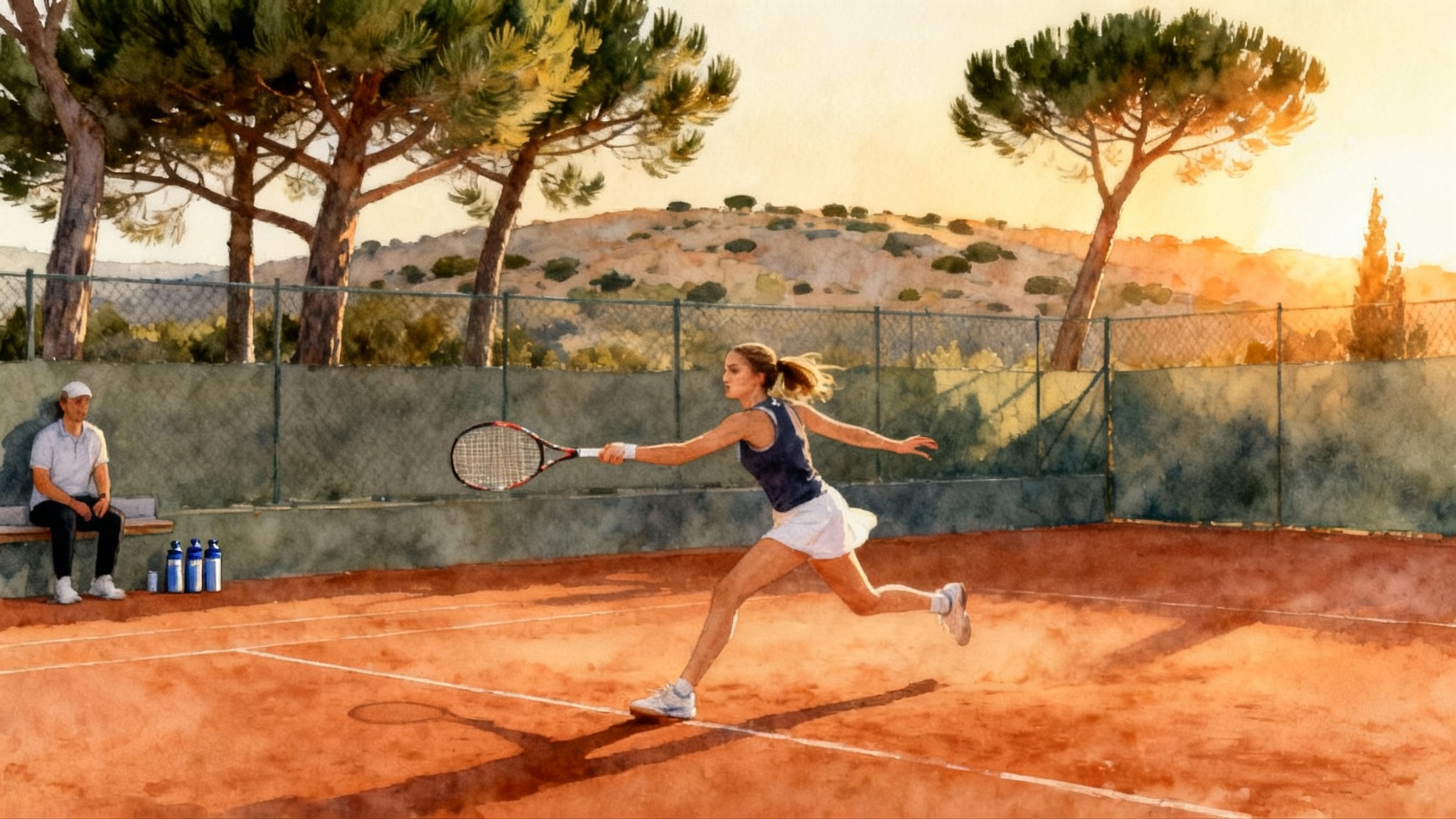
The easiest way to misunderstand Frances Tiafoe is to call his rise a miracle. Miracles are one‑offs. Tiafoe is the result of a system that made repetition possible: countless hours on court, the same voice in his ear, the same courts under his shoes, and a community that turned a local practice court into a launching pad. That system had a name and an address: Junior Tennis Champions Center in College Park, Maryland.
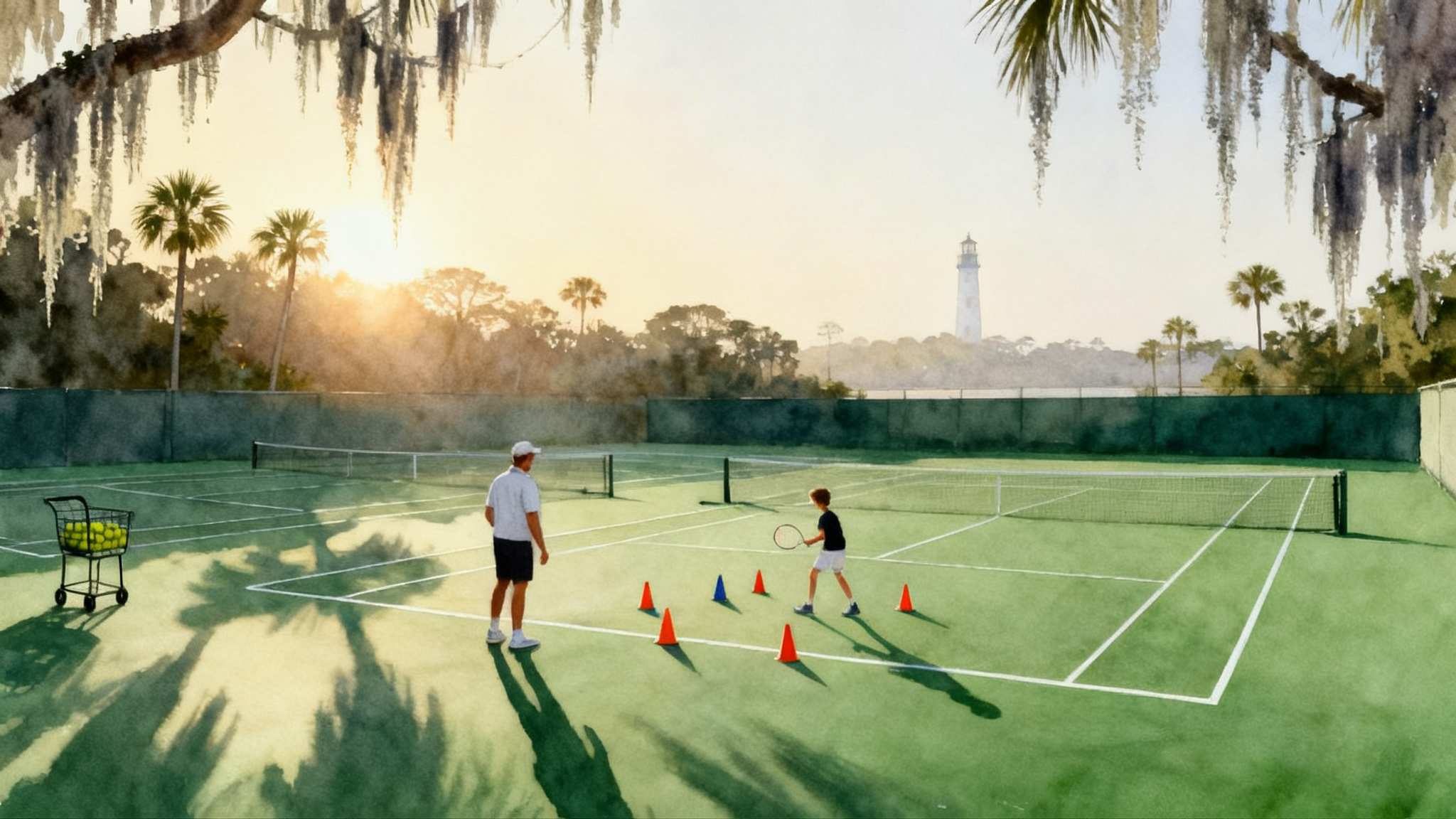
Tiafoe did not just train at JTCC. He grew up there. His father worked at the facility, which meant Frances and his twin brother could spend long stretches on site. Courts were not a privilege for weekends. Courts were the floor under their day‑to‑day life. When access shifts from rare to routine, skill development stops being about inspiration and starts being about iteration. That was the first edge JTCC gave him: time and repetition.
Inside that world, a young Tiafoe found a coach who became a through line. Misha Kouznetsov guided him through the hunger years, taught him to build points with feel, and reinforced good patterns when the scoreboard was not generous. Continuity did not mean soft guidance. It meant that feedback came from someone who saw the full arc, not just a single session. When a coach understands your baseline posture, your go‑to bailout shot, even your sleep habits during tournament weeks, the corrections come fast and land deep. That is what Kouznetsov provided, and JTCC protected it.
What JTCC did differently
Many centers aim high performance. JTCC added high reliability. Three design choices mattered most for Tiafoe and for players like him. We have seen echoes of this reliability‑first thinking in other places, including how Equelite forged Carlos Alcaraz.
- Affordability paths instead of a single sticker price. JTCC built on‑ramps: scholarships for local talent, work‑and‑train opportunities, and need‑based support that removed the biggest friction source for consistent training. The goal was not discount tennis. The goal was to hold the practice schedule steady. If a family never knows whether the next month is funded, a player never knows if the next month will include two‑a‑days. JTCC’s affordability paths made the calendar predictable, which made progress predictable.
- Travel support as a program, not a favor. Strong practice blocks are necessary, but the junior calendar is a road game. JTCC pooled resources for tournament trips, grouped players by level, and sent coaches who already knew each athlete’s plan. That let Tiafoe test his game against national fields without resetting his support network each time. On the road he received the same scouting notes and the same between‑match routines that he had at home. Reps under pressure matter more than reps at home.
- Mentor continuity. JTCC matched young standouts with slightly older players who had already survived a level jump. The message was concrete: here are the five things that break during your first national schedule, and here is how to tape them back together. Big brother energy beats lecture energy every time. For Tiafoe, that culture normalized ambition. Winning an Orange Bowl final felt like the next step in a ladder he could see, not a leap into darkness.
Under that structure, Tiafoe piled up the kind of experiences that bend a career line early. He learned to play front‑foot tennis without panic, to counterpunch with style rather than fear, and to ride the energy of a crowd instead of shrinking from it. The confidence was not bravado. It was the muscle memory of someone who had already lived through hundreds of similar rallies in training.
The Florida chapter that followed
The United States Tennis Association runs a centralized Player Development program in Florida. At a key point in his late teens, Tiafoe joined that track. The move was logical. JTCC had given him a home base and a core coach. The national program could add breadth: more high‑level sparring partners, dedicated fitness and recovery resources, and a wider travel schedule. You can see similar federation‑supported breadth in Naomi Osaka’s Florida path.
Think of it like moving from a great local lab to a national research center. The hypothesis had already been proven. Now the experiments needed bigger data sets. Florida provided that scale. The integrations mattered. Tiafoe could tap into analytics support, face the top American juniors and pros week after week, and pick up the routines that make long tour swings sustainable.
Across those years he also adjusted his coaching team as he moved from prospect to pro. Kouznetsov’s early imprint remained visible, but Tiafoe later added voices with veteran tour experience. Those adjustments were not detours. They were a continuation of the same principle: keep the circle small enough for trust, add expertise when the game level demands it, and never disrupt the core identity.
The choices that turned promise into results
A player’s first two professional seasons often decide whether the talent window stays open. Tiafoe and his team made several smart choices.
- They scheduled to build wins, not headlines. Early runs at Challenger and ATP 250 events gave him match volume, late‑round nerves, and ranking points that travel well. Big stages would come in time. Confidence on Wednesday helped him play freely on Sunday.
- They kept a simple technical north star. Tiafoe could always create power and variety. The focus became first‑serve percentage, return‑position clarity, and one or two bread‑and‑butter patterns on big points. Simplicity survives stress.
- They treated fitness like a weapon, not a chore. The U.S. Open semifinal run in 2022 was not just a shotmaking showcase. It was endurance under New York’s heat and noise. Training blocks had prepared him to hold form in the fourth set when adrenaline dips.
- They stabilized the coaching voice around match weeks. Adding new insights is valuable. Changing pre‑point language is dangerous. The team made sure that the cues he heard under pressure sounded familiar.
The payoff was visible. First tour title in Delray Beach in 2018. A quarterfinal at the Australian Open in 2019 that proved he could go deep at a major. The electric semifinal at the 2022 U.S. Open that turned his athleticism into a household story. Titles in 2023 and a new career‑high ranking that announced not just potential but presence. Each step looked sudden from the outside. From the JTCC vantage point it looked like the next line on a checklist.
How a community‑rooted model becomes tour readiness
Families often ask what a training center can actually transfer to the pro arena. JTCC’s answer shows up in mechanisms, not mottos.
- Reps under a constant eye. The same coach watches a player through technique tweaks, growth spurts, and mental dips. That coach knows which drills trigger confidence, which triggers lead to rushed forehands, and which triggers calm the player after a double fault. When competition gets loud, the familiar cue cuts through the noise.
- A team that solves logistics before they become psychological. Missed flights and last‑minute hotel changes sap energy, then decision quality. JTCC treated travel like a second curriculum. Players learned to pack in a pattern, check weather and court speeds before leaving, and plan match‑day nutrition with the same specificity as a crosscourt rally drill. That kind of competence frees mental space on match days.
- A culture that normalizes service. Older players string a younger player’s racquets on a travel day, not as a stunt but as a signal. You are part of something bigger, and help is a given. On tour, that memory makes it easier to ask for what you need from physios, tournament staff, or a new practice partner.
- Affordable pathways that protect stability. Nothing breaks a development arc faster than irregular attendance. JTCC’s scholarship ladders and community support let attendance stay steady. A steady calendar lets a coach plan five blocks ahead rather than week to week. Planning depth becomes a competitive advantage.
Lessons for families navigating the academy‑to‑pro leap
Here are practical steps you can apply, whether you are in a big metro area or driving to a smaller regional program. Mentor continuity across moves shows up in many success stories, including how Niki Pilic Academy forged Djokovic.
- Buy access before you buy amenities. A lesser facility you can use six days per week beats a world‑class center you reach twice per month. Ask a center to outline court‑access guarantees for scholarship or reduced‑rate athletes. If they cannot speak in specifics, the calendar will not hold.
- Demand a single accountable coach. Variety in input is useful. Responsibility must rest somewhere. Name a lead coach who builds the plan and owns outcomes. If your player is hearing four different return‑position instructions in one month, performance will wobble.
- Ask how the program travels. Who books group travel. How many coach‑to‑player ratios for nationals. What is the daily on‑site coaching plan. Look for written answers. The difference between a program that improvises on Thursday and one that planned three weeks ago is visible on the first changeover.
- Make scholarships a two‑way street. Need‑based aid is powerful when paired with clear expectations. Agree on attendance, academic minimums, and volunteer hours where appropriate. The point is to remove ambiguity. Players perform best when the rules are known.
- Keep mentor continuity through transitions. If your player moves from a regional center to a national program, keep at least one mentor or coach in the loop. Monthly check‑ins help the new team respect the old fingerprints while adapting to higher demands.
- Treat the first two pro seasons like college redshirt years. Target levels where your player wins matches, not where the social‑media photo looks impressive. Volume builds pattern recognition. Pattern recognition builds calm. Calm wins tiebreaks.
- Turn fitness and recovery into routines as specific as serve‑plus‑one. Write the warm‑up, cool‑down, hydration, and sleep times as nonnegotiables. If you do not put them on the schedule, stress will erase them.
- Decide what to ignore. A tour swing fills an inbox with suggestions. Protect your player from idea overload. Once the team agrees on technical priorities for the next eight weeks, stick to them. Curiosity is good. Churn is not.
A simple blueprint you can adapt
Here is a three‑phase framework built from the JTCC model that any family can tailor.
- Build Phase, 12 to 16 months. Choose a home base with reliable court time and a coach who signs up to own development. Write a training calendar that sets weekly targets: hours on court, hours in the gym, and match‑play blocks. Enter a tournament schedule that stretches the player 20 percent beyond comfort.
- Test Phase, 6 to 9 months. Add travel to stronger fields. Keep the same lead coach’s language on the road. Track two match stats that map to your player’s identity, for example first‑serve percentage and forehand unforced errors to total forehands. Review weekly, not daily. The aim is pattern detection, not overcorrection.
- Scale Phase, 9 to 12 months. If results validate, expand sparring pools, seek federation support where available, and add specialist input in strength, psychology, or nutrition. Preserve the lead coach’s voice as the constant. Build a small performance team, but keep one person in charge of synthesis.
If you need help mapping programs in your region, explore our tools to compare academies and coaching structures. The filters will not select a coach for you, but they will force the same clarity JTCC brought to its pathway: time, trust, and travel.
What Tiafoe’s story clarifies about talent
Natural gifts matter, and Tiafoe has plenty. The forehand speed. The hands around the net. The run‑and‑hit swagger that lights up a stadium. But the lesson is more technical and more hopeful than the word talent suggests.
- Technique can be taught when there is time to teach it. Near‑constant access at JTCC gave that time.
- Courage can be trained when early tournaments are planned. Travel support made pressure familiar rather than novel.
- Identity can be protected when one voice stays central. Mentor continuity kept his game from becoming a collage of short‑lived fixes.
When families think in those terms, they stop chasing labels like elite and start building conditions. Conditions produce elite.
The Arthur Ashe finish line, and the next starting line
The image is unforgettable. Tiafoe thumping serves and smiling through storm weather inside Arthur Ashe Stadium, feeding on the noise as if the place were his home court. In a way, it was. Not because he was born for it, but because he was trained for it by a center that turned habit into courage and community into performance.
For families, the path from College Park to Ashe is not about finding the one right academy. It is about designing a system that looks a lot like JTCC’s: court time that never wobbles, travel that feels like a classroom, and a coaching voice that sticks through growth spurts and ranking swings. Do that, and the big arenas stop being destinations. They become the most familiar room in a much larger house.
That is the real meaning of Tiafoe’s climb. A local program built global readiness. A boy who lived at a club learned to live with the demands of a worldwide tour. The next Frances is out there right now, somewhere inside a regional center, stringing racquets after practice and packing a tournament bag with military precision. Give that player time, trust, and travel, and one day their home court will be Arthur Ashe too.