Best Tennis Academies 2026: Croatia, Poland, Lithuania Guide
 Tommy
Tommy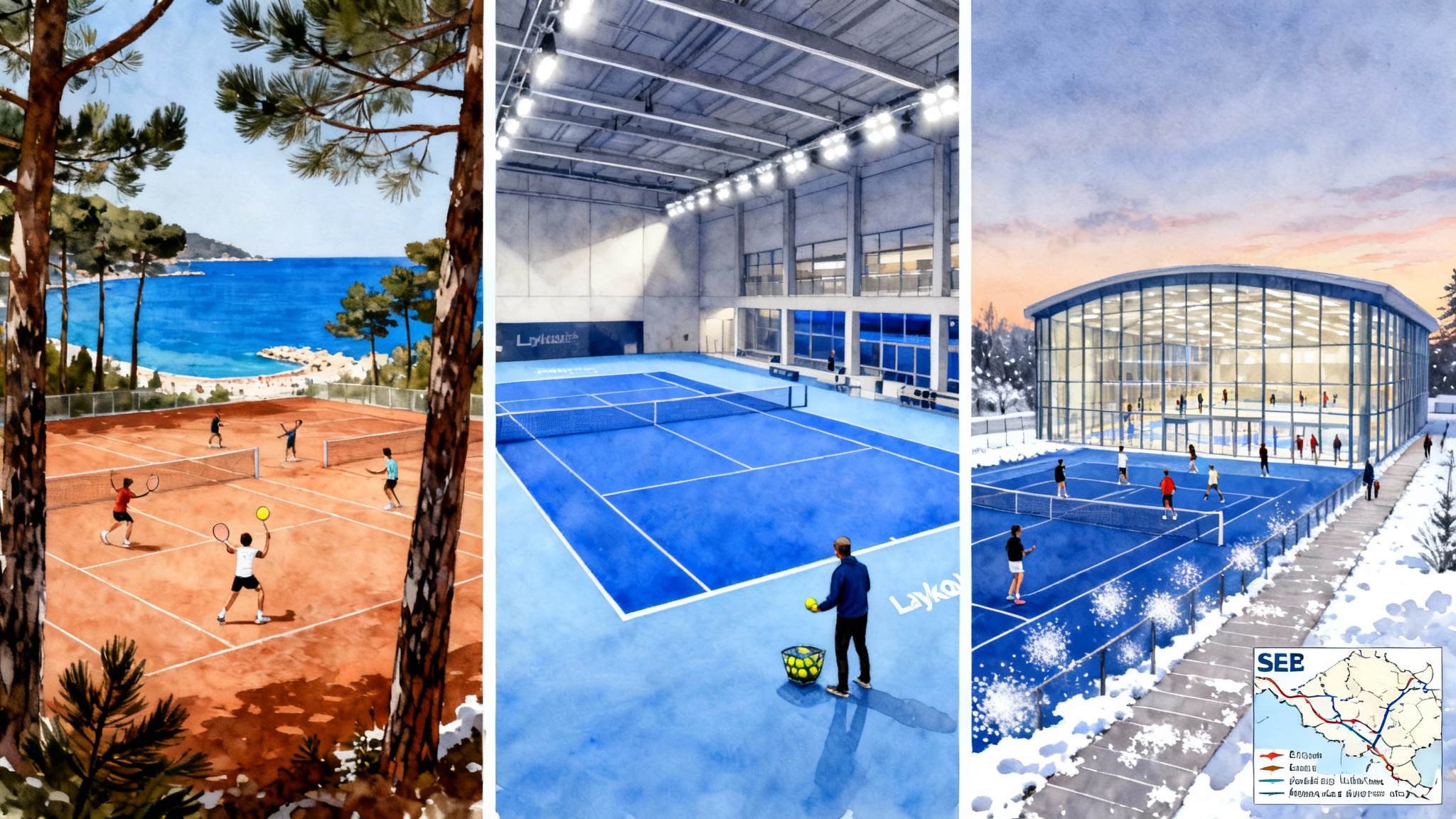
Why these three academies for 2026
If you are planning a European training block in 2026, three hubs keep coming up in conversations with traveling families and college‑track players: Ljubicic Tennis Academy on the island of Lošinj in Croatia, Tenis Kozerki just outside Warsaw in Poland, and Vilnius Tennis Academy at the SEB Arena in Lithuania. Each offers modern courts, serious coaching, and direct access to competitive calendars. The right choice depends less on brand name and more on fit: court surface needs, winter weather, schooling setup, language support, budget, and how easily you can reach tournaments.
Before we compare, note the travel backdrop for U.S. families. As of February 1, 2026, the European Union’s planned pre‑travel authorization called ETIAS is expected to begin in late 2026, after the Entry and Exit System finishes rolling out. Until ETIAS starts, Americans can visit Schengen countries visa‑free for up to 90 days in any 180‑day period. For the timeline and what will change once ETIAS begins, see the European travel authority summary at ETIAS expected in late 2026.
How to read this guide: we break down each site by surfaces and climate, boarding and academics, language support, cost bands, tournament access, and travel ease from the United States. We then add sample weekly schedules, pros and cons, and clear fit profiles.
Ljubicic Tennis Academy, Lošinj, Croatia
- Location: Veli Lošinj, on a pine‑covered island in the northern Adriatic.
- Surfaces: a heavy clay presence with additional hard courts; limited indoor backup compared with continental hubs.
- Climate: Mediterranean. Winters are mild and playable, with rain days in December to February. Spring and fall are reliable for long clay blocks.
Boarding and academics
This is a camp‑first setup rather than a full boarding school. The academy is integrated with the Vitality Hotel Punta complex, and families typically book rooms there for on‑site convenience. Unaccompanied minors can sometimes be accommodated with prior parental consent and supervision policies. There is no in‑house academic program, so full‑time juniors usually bring a U.S. online school or coordinate with their home district for independent study. If you need structured schooling with fixed hours and transcripts, Croatia’s island setting is less plug‑and‑play than Poland or Lithuania.
Language support
Coaching is in English and Croatian. The international mix makes English common on court, with staff used to visiting juniors.
Estimated price bands
Ljubicic publishes week‑based packages that are straightforward to budget. As of current listings:
- Half‑day weekly programs from roughly 675 to 1,150 euros depending on season and group size.
- Full‑day weekly programs from roughly 990 to 1,500 euros. Prices cover tennis and fitness only; accommodation and meals are extra. Program structure and current fees are described at year‑round camps and schedule.
Accommodation: Vitality Hotel Punta often runs partner discounts. Expect island seasonality. Summer weeks book far ahead.
Access to ITF and Tennis Europe events
The academy regularly appears on junior calendars, and Croatia’s circuit is dense in spring and late summer. Lošinj and nearby coastal cities host Tennis Europe under‑14 and under‑16 events, while U18 ITF juniors cluster around Zagreb, Rijeka, and elsewhere on the mainland. Families often base on Lošinj for training blocks, then drive or ferry to mainland events.
Visa and travel ease for U.S. families
Fly to Zagreb, Rijeka, Pula, or Trieste in Italy, then connect by car and ferry to Lošinj. The final leg takes planning, but once on the island you can walk between hotel, gym, and courts. Short stays are Schengen visa‑free; for long stays beyond ninety days, research Croatia’s national long‑stay options.
Sample weekly schedule
This sample mirrors the academy’s published structure for a full‑day block in shoulder season.
- Monday: AM fitness 45–60 minutes, AM clay drills 90 minutes. PM patterns and point play 90 minutes. Video feedback.
- Tuesday: AM fitness 45 minutes, AM serve and return 90 minutes. PM situational games 90 minutes.
- Wednesday: AM fitness 45 minutes, AM live ball 90 minutes. Afternoon recovery, mobility, and match charting.
- Thursday: AM fitness 45 minutes, AM forehand and inside patterns 90 minutes. PM match play 90 minutes.
- Friday: AM fitness 45 minutes, AM backhand and transition 90 minutes. PM pressure sets and tiebreak ladder 90 minutes.
- Saturday: AM fitness 45 minutes, AM test sets 90 minutes. Afternoon off; travel or beach recovery.
Pros
- Clay volume that is hard to match, with a true coastal climate.
- Simple logistics once on site. Courts, hotel, and sea are within a short walk.
- Great for blocks that focus on footwork, point construction, and patience on clay.
Cons
- Limited indoor backup compared to continental mega‑centers. A rain system plan is required in winter.
- No embedded academic track. Families must self‑manage school.
- Island transfers add time and cost compared with a city hub.
Best fit
- Short to medium clay blocks for U12 to U18 players who need movement and rally tolerance.
- Adult competitive players wanting a training holiday with quality coaching.
- Not ideal for full‑year boarding students who need fixed school hours.
Explore more details on our directory: Ljubicic Tennis Academy profile.
Tenis Kozerki, Grodzisk Mazowiecki, Poland
- Location: 30 to 45 minutes by car from Warsaw Chopin Airport.
- Surfaces: a large hard‑court footprint including multiple indoor Laykold courts like the U.S. Open, plus a bank of outdoor clay.
- Climate: Central European. Winters are cold, but indoor capacity keeps training consistent year‑round.
Boarding and academics
Kozerki stands out for its integrated ecosystem. Tennis, gym, hotel, restaurant, and classrooms share one campus. The adjacent Kozerki School operates a private high school track with a performance profile and a home‑education option for flexible travelers. While Kozerki does not operate a traditional dormitory, long‑stay players typically use the on‑site three‑star Hotel Kozerki or vetted homestays. The on‑campus setup makes timetabling easier for full‑time juniors who need predictable academics around double‑session training.
Language support
Polish on campus, with English widely used by coaches who support international juniors and visiting pros during tournament weeks.
Estimated price bands
Exact academy tuition depends on group size and the training plan. A realistic planning range for a serious junior mixing group training, strength and conditioning, and weekly private lessons is:
- 2,500 to 4,500 Polish zloty per month for training services, depending on the number of individual sessions and whether fitness is bundled or à la carte.
- Private lessons typically price similar to other major Polish hubs. Plan 150 to 250 zloty per coached hour, and add indoor court time when it is not included in the coaching rate. Indoor court rentals at big Warsaw complexes often run 85 to 135 zloty per hour in winter. Your actual package rate may include court costs.
Accommodation: Hotel Kozerki offers athlete‑friendly packages. Budget separately for meals at the ToTu restaurant and groceries.
Access to ITF and Tennis Europe events
This is a competition magnet. The site hosts an ATP Challenger week in August and regular ITF junior events in the shoulder seasons. Tennis Europe under‑14 tournaments also cycle through. That means two concrete benefits for player development: first, you can watch higher‑level tennis in person; second, you can enter nearby events without long travel. Warsaw and greater Poland add further ITF and national tournaments across the year.
Visa and travel ease for U.S. families
Warsaw Chopin has frequent one‑stop itineraries from major U.S. gateways via Frankfurt, Amsterdam, Paris, or London. From the airport, airport taxi or a prebooked van brings you to Kozerki in under an hour. Short stays remain visa‑free; long placements use Poland’s national long‑stay pathways.
Sample weekly schedule
A sample for a full‑time U16 player during winter block.
- Monday: AM indoor hard technical warm‑up, rhythm forehands and backhands 90 minutes. PM strength 60 minutes, then 45 minutes serve targets and second‑ball patterns.
- Tuesday: AM returns and neutral patterns 90 minutes. PM mobility 30 minutes, 60 minutes live points to seven with constraints.
- Wednesday: AM video‑led footwork block and cross‑court control 60 minutes, then 45 minutes transition volleys. PM school study hall on campus, optional recovery swim.
- Thursday: AM serve plus one and depth windows 90 minutes. PM match play 90 minutes with charting by a coach.
- Friday: AM defensive skills and neutral slides 60 minutes, 30 minutes overhead and approach. PM gym strength circuit 60 minutes, then 30 minutes tiebreak ladder.
- Saturday: Tournament day or test sets. Sunday: Off or light recovery.
Pros
- Year‑round reliability with significant indoor inventory.
- On‑site hotel, restaurant, gym, and a private school give full‑time juniors a coherent day.
- Regular pro and junior events on campus create a live learning lab.
Cons
- Winter is all indoor, so clay miles are limited until late spring.
- Pricing is modular. Families must manage the mix of lessons, court time, and fitness to stay on budget.
Best fit
- Full‑time juniors who need a tight loop of school plus daily training.
- Players who thrive on hard‑court patterns and want to observe Challenger‑level tennis up close.
- A practical base for college‑track athletes who need consistent video, fitness benchmarks, and stable weekly hours.
Explore more details on our directory: Tenis Kozerki academy profile.
Vilnius Tennis Academy at SEB Arena, Lithuania
- Location: Ten minutes from Vilnius city center and a short ride from the airport.
- Surfaces: one of the largest indoor complexes in Central and Eastern Europe. The arena offers dozens of indoor hard and carpet courts year‑round, with additional outdoor clay in summer at the Bernardine Garden facility.
- Climate: Baltic winters are cold. This is the point of the arena. Training runs every week with no weather drama.
Boarding and academics
SEB Arena sits within a full sports and wellness complex that includes a 90‑plus room hotel connected to the venue, a modern gym, medical and recovery services, and food options. That gives traveling units a plug‑in base similar to a campus. Vilnius Tennis Academy itself does not grant diplomas, so full‑time juniors typically enroll in a local school with flexible scheduling or continue U.S. online school from the hotel or apartments near the arena.
Language support
Lithuanian is the official language. Coaches and front‑of‑house staff commonly work in English with international families. Russian and Polish are also heard in the building.
Estimated price bands
Lithuania publishes transparent court pricing. Winter indoor court time at SEB Arena generally ranges around the low to mid‑30 euros per hour in daytime and around 40 to 45 euros in prime time, with lower summer rates. Adult small‑group course examples run roughly 300 to 385 euros per month for two sessions per week. From this, families can model a junior program:
- Group‑heavy month: 300 to 600 euros for group tennis plus 100 to 200 euros for conditioning.
- Mixed month with weekly private sessions: 900 to 1,600 euros depending on coach rate and number of privates. Add court fees if not bundled.
Accommodation: the on‑site hotel and nearby apartments keep commutes short and predictable.
Access to ITF and Tennis Europe events
SEB Arena hosts an ATP Challenger week and frequent ITF and national junior events, plus Davis Cup and Billie Jean King Cup ties when scheduled. Lithuania’s junior calendar also includes summer clay weeks in Šiauliai and Kaunas that are a train ride away.
Visa and travel ease for U.S. families
Most itineraries route via Frankfurt, Amsterdam, or Warsaw into Vilnius. Schengen short stays are visa‑free for U.S. citizens. For multi‑month placements, families use Lithuania’s national long‑stay options and should plan lead time for paperwork.
Sample weekly schedule
A winter block for a 18 player building volume on indoor hard.
- Monday: AM dynamic strength and mobility 45 minutes. AM tempo baseline work 60 minutes. PM serve rhythm and second‑ball patterns 60 minutes.
- Tuesday: AM return tolerance 45 minutes, AM live points 45 minutes. PM analysis and match charting 45 minutes, light aerobic flush.
- Wednesday: AM footwork and neutral defense 60 minutes. PM doubles skills 60 minutes.
- Thursday: AM approach and volley sequences 60 minutes. PM practice set to eight with tight deuce scoring.
- Friday: AM depth and direction targets 60 minutes. PM tiebreak ladder and mental skills session.
- Saturday: Test matches or local event. Sunday: Off or easy recovery.
Pros
- Weather‑proof training with world‑class indoor capacity and on‑site hotel.
- Efficient city access for errands and travel.
- Year‑round matchplay opportunities without long drives.
Cons
- Limited clay access during winter. True clay blocks are best scheduled in summer or in a spring tour in neighboring countries.
- Schooling is not embedded. Families must coordinate academics separately.
Best fit
- College‑track athletes who need a predictable winter training runway with high indoor volume.
- Players who thrive on structured, metrics‑driven sessions and reliable schedules.
Explore more details on our directory: Vilnius Tennis Academy profile.
Surface and climate comparison in plain language
- Need real clay miles now: Croatia’s Lošinj is your most reliable clay volume from March through June and again in September to October. Winter is playable but plan rain contingencies. Poland and Lithuania offer clay mainly from late spring to early fall.
- Need winter reliability: Poland and Lithuania win on indoor capacity. If a missed session is not acceptable, large indoor blocks in Grodzisk Mazowiecki or Vilnius are safer.
- Need outdoor hard as your base: Kozerki’s Laykold setup mirrors North American hard courts, which is attractive for U.S. tournament prep.
Boarding and academics in practice
- Fully integrated day: Kozerki has the closest thing to a campus day of tennis, school, meals, and recovery with short walks between buildings.
- Hotel‑centric models: Lošinj and Vilnius are both excellent for hotel‑based stays. They are easier for short blocks and require more planning for long stays with credits and transcripts.
Language
- All three locations can coach in English. Families who prefer English‑only environments will find the most density of English usage in Vilnius and at Kozerki during international tournament weeks, and at Ljubicic during summer international camp periods.
Tournament access
- Lošinj, Croatia: Tennis Europe under‑14 and under‑16 events nearby; Croatian ITF juniors on the mainland within driving distance. Good for clay‑focused match play.
- Grodzisk Mazowiecki, Poland: Regular ITF juniors on campus plus an ATP Challenger week. Excellent for hard‑court match play and benchmarking.
- Vilnius, Lithuania: An ATP Challenger week in‑house and regular ITF juniors, with summer clay events in other Lithuanian cities.
Travel notes for U.S. families in 2026
- Passport and insurance: Carry a passport valid at least three months beyond departure and proof of travel medical insurance. Keep digital copies.
- ETIAS planning: ETIAS is expected to start late 2026. Until then, short visits are visa‑free. Once live, expect a quick online application, a modest fee, and multi‑year validity. Build this into booking checklists.
- Entry and Exit System: biometric registration at the border is rolling out across 2026. Leave extra time on the first Schengen entry of a trip, especially during peak holidays.
Clear fit profiles
- Full‑time juniors who need school plus training: Tenis Kozerki. It balances indoor reliability with an on‑site school and consistent day plans.
- Short clay blocks for movement and point construction: Ljubicic Tennis Academy on Lošinj. Clay volume and coastal recovery make two‑week blocks productive.
- College‑track player needing a winter runway: Vilnius Tennis Academy at SEB Arena. Indoor volume, consistent scheduling, and frequent matchplay simplify periodization.
How to decide in one afternoon
- List surface and climate priorities for the next twelve months. Example: two clay blocks before summer; indoor hard from November to March.
- Decide your schooling model. Fixed classroom hours favor Kozerki. Self‑managed online school fits Lošinj and Vilnius.
- Build a test budget. Use published program fees in Croatia, pair Kozerki’s and Vilnius’s known court rates with local private‑lesson estimates, then add accommodation and meals. Compare monthly totals rather than hourly rates.
- Map the tournament calendar you can reach within two hours by car. If your target stretch is August hard courts, Kozerki is compelling. If it is spring clay, Croatia has density. If it is winter indoor volume plus a February or March event, Vilnius is efficient.
Final word
There is no single best academy. There is a best fit for your next training phase. Ljubicic turns clay into a classroom, Kozerki turns a campus into a daily rhythm, and Vilnius turns winter into a non‑issue. Pick the environment that solves your next constraint, and your player will feel it in the quality of every rep.