Seattle, Portland, Spokane Tennis Academies 2026 Guide
A Pacific Northwest buyer’s guide to true year‑round junior training. We rank Seattle, Portland, and Spokane programs by indoor access, coaching, UTR and USTA match volume, academics, cost, commute, and 2025–2026 upgrades, plus smart travel circuits.
 Tommy
Tommy
Why indoor access rules the Pacific Northwest
When the rains arrive, Pacific Northwest tennis becomes a logistics puzzle. Your player's progress depends on whether a program can deliver true year-round training on indoor courts, not just seasonal coverage or optimistic weather windows. In this guide, we compare the Seattle, Portland, and Spokane areas on six practical dimensions parents care about: coaching quality, match volume that actually moves a Universal Tennis Rating, academic fit, cost, commute, and verified facility upgrades for 2025-2026. Where it helps, we point to travel circuits in Vancouver, British Columbia and Northern California to boost competition exposure.
How we ranked programs for 2026
Think of these criteria like strings in a racquet; miss one and performance suffers.
- Indoor access and schedule reliability: number of true indoor courts, rainproof coverage periods, and block booking flexibility during peak months.
- Coaching and development model: staff depth, progression pathways, sparring depth, and video or analytics use.
- UTR and USTA match volume: frequency and quality of verified matches, not just practice sets. If you are new to ratings, review the UTR calculation method to understand why verified, competitive sets matter most.
- Academic options: after-school vs partial-day training, homework windows, study areas, and a realistic plan for missed class time during travel.
- Cost to train: court fees, membership, drill pricing, and hidden costs such as paid sparring or travel.
- Commute friction: time-of-day travel on your common routes and parking predictability.
Scoring note: We emphasize repeatable winter training over summer capacity, since that is the season that determines whether players in the Pacific Northwest keep climbing or stall.
Seattle area ranking
Seattle's public and nonprofit ecosystem quietly rivals private academies if you know how to combine it. Here is how the top options stack up for year-round development.
- Tennis Center Sand Point, Seattle
- Why it leads: Ten indoor championship courts with a deep lesson and clinic slate. Stronger sparring depth than most public sites and robust junior performance tracks. Booking is competitive, which signals demand and coaching depth. Parents who set recurring blocks and accept early mornings or late evenings unlock the most value.
- Match volume: Consistent access to weekend match play and pathways into regional USTA events. Pairing Sand Point training with city-run events at Amy Yee (below) covers both development and rating maintenance.
- Academic fit: After-school blocks are the default; families targeting partial-day training should plan homework windows and teacher check-ins midweek.
- 2025-2026 notes: Continued high demand for prime hours; plan your recurring slot strategy two to four weeks ahead. Expect ongoing incremental facility refinements rather than major footprint changes.
- Eastside Tennis Center, Kirkland (Tennis Outreach Programs)
- Why it is a contender: Six full-size indoor courts and six youth-size courts in a nonprofit that exists to make year-round court time accessible. The facility lists study and multipurpose rooms that work for homework between drills, and the coaching staff runs a clear progression from red ball to high school excellence.
- Match volume: Reliable internal match play and frequent tournament traffic on the Eastside. For players in the 2.5 to 5.0 band, this is often the easiest place to book regular competitive reps without driving downtown.
- 2025-2026 upgrades: Publicly noted facility improvements include new lights, heaters, and fans, which noticeably improve winter training comfort.
- Amy Yee Tennis Center, Seattle
- Why it matters: Ten indoor courts run by Seattle Parks and Recreation give the city a true all-weather training backbone. Amy Yee hosts USTA junior events and weekly UTR match play blocks during school breaks, an efficient way to keep ratings current without a full tournament weekend.
- Access and cost: Publicly posted indoor court fees sit well under typical private club rates, and youth can access free walk-on play when courts are open. That combination makes Amy Yee a strong anchor for families balancing budget and development.
- 2025-2026 notes: The city continues to publish updated fee schedules and registration windows each term. Expect high demand for after-school slots; same-day booking can be a useful backup plan.
Honorable mentions and useful pairings
- Galbraith Tennis Center, Tacoma: Six indoor courts under the USTA Pacific Northwest umbrella with reliable programming and a similar operations model to Vancouver Tennis Center. Works well for South Sound families or as a weekend match hub when Seattle is full.
- Eastside public options: Robinswood Tennis Center and school-based outdoor courts help in summer, but for winter progression you will still need consistent indoor blocks.
Commute tip for Seattle: Treat Interstate 5 and State Route 520 like tides. Early morning training before 7:15 a.m. or late evening after 7:45 p.m. can cut your door-to-door time in half compared with 4 to 6 p.m.
Portland area ranking
Portland's public system punches above its weight, and the metro benefits from a cluster of indoor hubs within a 30-minute radius when traffic is kind.
- Portland Tennis Center, Northeast Portland
- Why it leads: Eight indoor and four outdoor courts with city programming that runs year-round. The junior pathway is clear, and USTA league logistics are straightforward. Operational consistency makes it easy to build a weekday routine.
- Match volume: Regular league and tournament hosting creates dependable competition blocks for juniors and adults.
- Academic fit: The schedule supports classic after-school training; families chasing daytime training should target early afternoons on shortened school days.
- Babette Horenstein Tennis Center, Beaverton (Tualatin Hills Park and Recreation District)
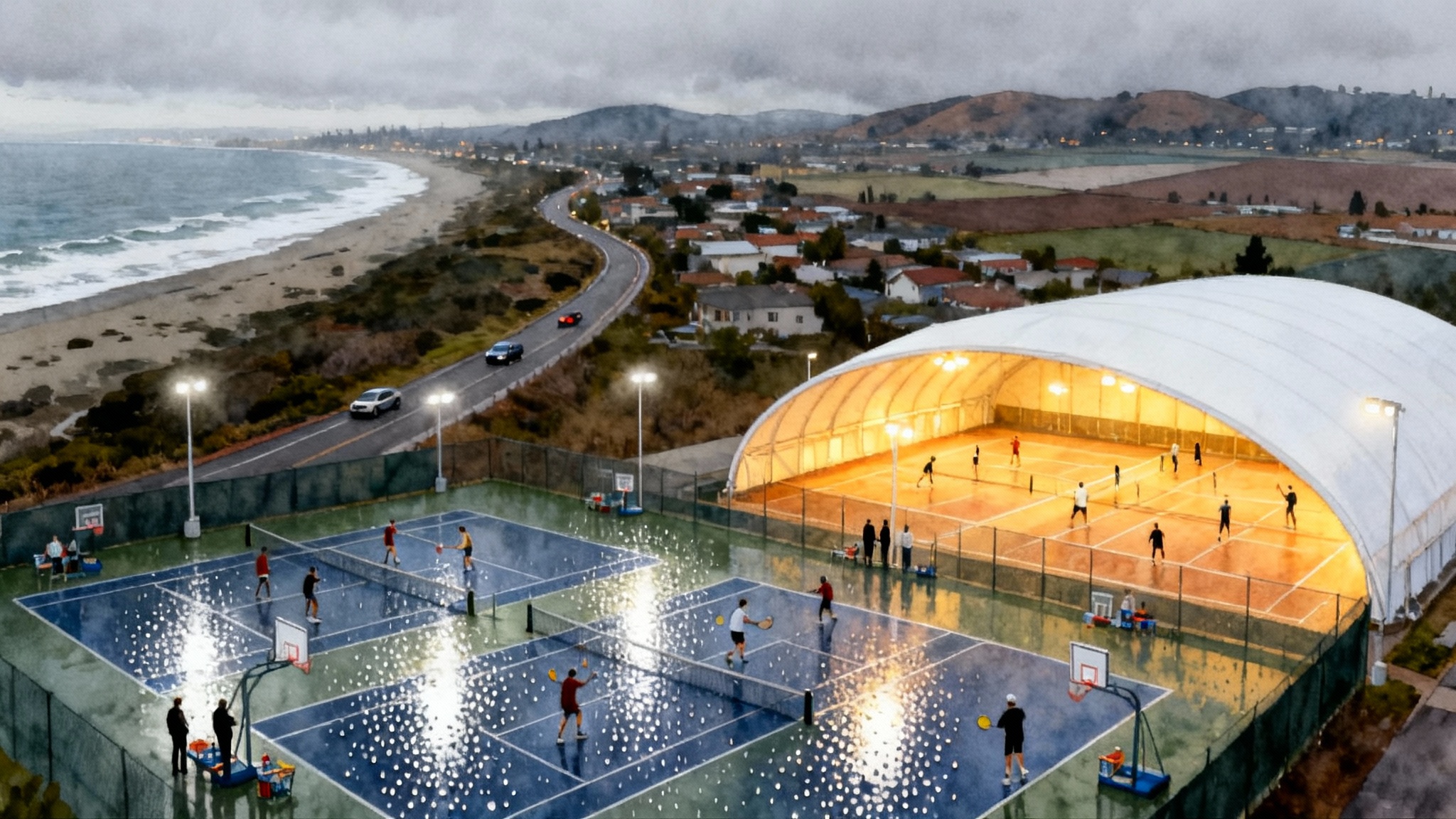
- Why parents like it: Six indoor courts plus eight outdoor courts that are covered fall to spring, so the wet months stay playable. The center's coverage plan is ideal for players who need additional court hours during the November to March crunch.
- Match volume: Deep adult league presence and steady junior programming. The covered courts expand capacity during the exact months you need it.
- Lake Oswego Indoor Tennis Center, Lake Oswego
- Why it is practical: A four-court indoor facility with well-run youth and adult clinics, city league access, and predictable booking policies. It is affordable and complements PTC and THPRD well for families on the south side of the metro.
Also consider
- Vancouver Tennis Center, Vancouver, Washington: Nine indoor and four outdoor courts operated by USTA Pacific Northwest with multi-year revitalization investments that have added resurfacing, lighting, and technology. Membership pricing is typically under one hundred fifty dollars per year, with pay-as-you-go programming and seven-day reservation windows. If you are on the north side of Portland, VTC can cut your commute and add tournament options via the USTA Pacific Northwest Tennis Centers site.
- Stafford Hills Club, Tualatin: A private, resort-style option with seven indoor courts. Strong amenities and junior programs for families seeking a club environment.
Commute tip for Portland: East-side families should plan PTC as the weekday anchor and THPRD for weekend capacity. West-side families can reverse that, using covered courts in Beaverton during rain weeks and dropping into PTC for tournaments and league nights.
Spokane area ranking
Spokane's indoor scene centers on multi-purpose fitness clubs and a long-standing private racquet club, with public stakeholders actively working on new covered access.
- ParkFit Athletic Club, Central Park location, Spokane Valley
- Why it leads: Six indoor tennis courts, a busy junior clinic slate, and predictable reservation policies. The membership model is cost effective and includes access to a second site.
- Match volume: Regular internal leagues and periodic USTA-sanctioned events provide steady competition without heavy travel.
- ParkFit Athletic Club, North Park location, North Spokane
- Role in your plan: Three indoor tennis courts plus a larger pickleball footprint. Use North Park for weekday drilling and cardio tennis, then shift to Central Park for league and tournament play.
- Spokane Racquet Club, South Hill
- Why consider it: Private club tradition with committed tennis culture. Families who prefer a classic club environment with teams and long-term relationships will find it here. Call ahead to confirm current court mix and guest policies.
Coming attraction to watch
- Public indoor expansion: Spokane Parks and Recreation, Spokane Public Schools, and USTA Pacific Northwest have publicly discussed an indoor project at Shadle Park using a seasonal bubble. If approved and built, this would materially increase public winter court access and reduce scheduling pressure on private operators.
Commute tip for Spokane: Winter roads and the grade up to South Hill can add surprise minutes. Keep late afternoon blocks in the Valley and morning blocks on the north side to reduce weather risk on school days.
Cost, commute, and scheduling in real numbers
- Court and program costs: Public centers in Seattle and Portland post indoor court fees that are often below fifty dollars per 75 to 90 minutes and offer discounted youth access. USTA Pacific Northwest-operated centers commonly charge modest annual memberships below one hundred fifty dollars with pay-as-you-go programming. Private clubs typically carry higher monthly dues or initiation fees, which can make sense if your player trains five or more times per week.
- The hidden line item is travel: A one-way 45-minute commute five days per week is the equivalent of an extra practice. Tighten your triangle by picking one weekday home base and one weekend match hub and sticking to them.
Academic fit that actually works
- After-school athletes: Aim for two 90-minute hitting sessions and one performance session per week in winter, with a weekly verified match set. Protect one homework hour at the facility between school and practice; Eastside Tennis Center's study rooms are designed for this. For other centers, a quiet lobby and noise-canceling headphones work.
- Hybrid or partial-day students: Schedule morning fitness or serve plus returns while courts are empty, then a mid-afternoon drill. Teachers appreciate a standing weekly note that lists tournament travel dates four weeks in advance; it turns make-up work into a routine rather than a scramble.
Building a match calendar that moves a rating
- Weekly verified play: Treat a UTR match block like a weekly quiz that keeps knowledge fresh. One verified set day plus one league dual keeps ratings responsive without burning weekends.
- Monthly tournaments: Target one USTA junior tournament per month in your home metro. When you are winning most matches at a level, move up rather than stacking easy points.
- Seasonal push weeks: In the winter holidays and spring break, stack a three-to-four day training plus match block to reset the rating and build endurance ahead of the high school season.
Two travel circuits that deliver big returns
- Vancouver, British Columbia loop: For Seattle and Spokane families, Vancouver is the closest major indoor market with frequent junior events and deep sparring. Drive up Friday midday, check in near the University Endowment Lands or Richmond for quick access to indoor facilities, play verified matches Saturday and Sunday morning, and return Sunday afternoon after an early lunch. Border waits spike late Friday and Sunday evening; aim for the opposite hours. This circuit is excellent for 8 to 12 UTR athletes who need fresh opponents.
- Northern California loop: Fly from Seattle or Portland to San Jose, Oakland, or San Francisco on a Friday afternoon, grab a compact rental car, and base in the South Bay or East Bay where indoor and covered hard courts are plentiful. For deeper scouting, see our Northern California academies buyer's guide. Play a Saturday UTR event plus Sunday morning sets and be back for school Monday. This is ideal when you are temporarily rating-blocked by playing the same local opponents.
City-by-city action plans
- Seattle: Combine Tennis Center Sand Point for high-intensity drilling with Amy Yee for verified match play and overflow indoor time. If you live south of the Ship Canal, add a monthly Galbraith day for variety.
- Portland: Anchor at Portland Tennis Center for weekday blocks. Use Babette Horenstein's covered courts in the wet months to add reps, and cross the river to Vancouver Tennis Center for weekend tournaments or when PTC is locked out.
- Spokane: Use ParkFit Central Park for leagues and match play, North Park for midweek drilling, and schedule one monthly trip west to Seattle or south to Portland when you need higher-density junior draws.
What to ask on your tour
- Coaching bandwidth: Who runs the top junior groups, and how many athletes are in each lane from red ball to high school varsity to college-bound? Ask to observe the highest-level junior session.
- Winter capacity math: How many indoor junior drill hours are scheduled Monday to Friday from November to March, and how quickly do they fill? Courts on paper are not the same as available court hours.
- Verified match pipeline: How often do you run UTR match play blocks or host USTA tournaments, and at what levels? A calendar tells you whether your player can gain rating traction without constant travel.
- Academic logistics: Is there a quiet space to study, reliable Wi-Fi, and an adult within eyesight? If not, plan your own system.
- True cost: Request a sample month's invoice for a typical junior in your lane. Include membership, drills, private lessons, court fees, and local tournament entries. For alternative models, compare notes with our review of rising boutique programs.
Bottom line
In the Pacific Northwest, the best tennis academy is the one that offers rain-proof hours when others cancel, verified matches that move a rating, and an everyday commute your family can sustain. In 2026, Seattle parents can build a high-level plan by pairing Tennis Center Sand Point with Amy Yee and Eastside Tennis Center. Portland families get year-round reliability by mixing Portland Tennis Center, Babette Horenstein's covered courts, and Vancouver Tennis Center's revitalized footprint. Spokane families can anchor at ParkFit and watch the public indoor expansion taking shape. If your player's progress plateaus, run a Vancouver or Northern California circuit to reset the competitive deck. Choose deliberately, schedule early, and treat winter like the season that separates the serious from the stuck.