New York’s Best Tennis Academies 2026: NYC, Long Island, Upstate
A data‑backed buyer’s guide for juniors and serious adults in New York. Compare indoor capacity, coaching ratios, UTR and USTA match access, price bands, commute math, and college placement signals, plus mini‑reviews and sample schedules.
 Tommy
Tommy
How to use this 2026 buyer’s guide
New York players make big tennis decisions in winter. Courts fill fast, traffic gets messy, and families juggle school, fitness, and tournaments. This guide compares the academies that matter across New York City, Long Island, Westchester, and Upstate using six decision pillars:
- Indoor court capacity and winter readiness
- Coaching ratios and coaching depth
- Match access via Universal Tennis Rating and United States Tennis Association pathways
- Price bands by session and by month
- Commute times door to door, not just miles
- College placement outcomes and how to read them
Everything below is written for two groups: committed juniors aiming for sectional to national play and serious adults who want purposeful training blocks, not casual hit-arounds.
Our method at a glance
- Snapshot date: January 2026. Programs and prices shift each season, so verify details when you enroll.
- What we looked at: published schedules, facility photos, seasonal court maps, roster sizes, tournament calendars, and public college commitments. We also weighed training density around USTA Billie Jean King National Tennis Center in Queens, SPORTIME and Life Time club clusters, and Upstate hubs in Rochester, Albany, and Syracuse.
- How to read ranges: use them to shortlist and then confirm with a director’s call. Your player’s fit matters more than tiny price differences.
Quick scoring rubric
- Indoor capacity: High means 12 or more consistent indoor hard courts or a multi-site network that guarantees winter lanes. Medium means 6 to 11 indoor courts. Boutique means 2 to 5 courts with selective rosters.
- Coaching ratio: For technical drilling, 3 to 1 or 4 to 1 is excellent, 5 to 1 or 6 to 1 is solid. For live ball or point play, 6 to 1 to 8 to 1 is common.
- Match access: Strong means regular Universal Tennis events, USTA team or tournament hosting, and coach-led travel squads. Medium means ad-hoc entries and scrimmages. Low means mostly practice-only blocks.
The landscape by region
New York City
- Winter readiness: The strongest networks are USTA Billie Jean King National Tennis Center in Queens and the SPORTIME system led by the Randall’s Island flagship. Private clubs like CityView in Long Island City operate smaller but well-run programs.
- Commute math: Subways reach Flushing Meadows and Long Island City reliably in winter. Randall’s Island is fastest from the East Side by car or rideshare, but account for bridge traffic during weekday rush.
- Price bands: Junior performance groups often run 90 to 150 dollars per 2-hour session. Private lessons are typically 150 to 250 dollars per hour with senior staff.
Westchester
- Winter readiness: SPORTIME Lake Isle, Yonkers Tennis Center, and Tennis Innovators programs in central Westchester offer reliable indoor options.
- Commute math: From Manhattan, plan 45 to 70 minutes by car in peak hours. From Scarsdale to local clubs, 10 to 25 minutes.
- Price bands: Groups often 80 to 130 dollars per 2-hour session. Private lessons 130 to 220 per hour.
Long Island
- Winter readiness: Strong density of indoor clubs in Nassau with performance programs at Syosset, Bethpage, Roslyn, Oceanside, and Manhasset. Suffolk has fewer winter lanes but excellent summer clay access.
- Commute math: From Queens to Nassau on the Long Island Expressway or Northern State, 25 to 60 minutes off-peak. Add 20 to 40 minutes in rush.
- Price bands: Groups 80 to 140 dollars per 2-hour session. Private lessons 130 to 230 per hour.
Upstate (Rochester, Albany, Syracuse corridors)
- Winter readiness: Fewer clubs, yet strong training cultures. Rochester and Albany areas anchor most indoor matchplay. Syracuse benefits from college facilities and steady junior pipelines.
- Commute math: Plan 10 to 30 minutes to your club in snow conditions. Build a weekend travel routine for tournaments.
- Price bands: Groups 60 to 110 dollars per 2-hour session. Private lessons 90 to 170 per hour.
Match access explained in one minute
Your player needs frequent, level-appropriate matches more than perfect technique in a vacuum. Two rails deliver that:
- Universal Tennis Rating events, which seed by level and let players trend up or down weekly.
- United States Tennis Association tournaments and team play, which provide formal ranking and pathway structure.
A practical starting point is the official USTA tournament search for New York. Filter by month, distance, and level, then layer your academy’s in-house matchplay nights on top.
Mini-reviews: who stands out in 2026
These are short, practical snapshots to help you shortlist. Confirm specifics with each director.
Empire Tennis Academy, Rochester: match-play intensity
What you feel first is the cadence: frequent weekend events, coach-organized travel to Upstate tournaments, and point-heavy weekday blocks. The culture leans competitive but supportive, with clear asks on fitness and match notes. See the profile for Empire Tennis Academy in Rochester for facilities and programming details.
- Indoor capacity: Medium. Enough winter lanes to run back-to-back point blocks.
- Coaching ratios: Drilling often at 3 to 1 or 4 to 1, point play 6 to 1 to 8 to 1.
- Match access: Strong. Regular exposure to Universal Tennis and USTA calendars through travel squads.
- Price band: Generally aligns with Upstate ranges listed above.
- Best for: Juniors who plateau in practice-heavy programs and need weekly match decisions under mild pressure.
Life Time Tennis Academy, New York Metro: club-embedded, year-round
Life Time’s academy model pairs indoor courts with a full fitness floor and recovery amenities. That combination matters in January when school, cold weather, and conditioning must share the calendar. Multiple New York metro sites provide options for schedule conflicts and snow days. Learn more about the Life Time Tennis Academy pathway.
- Indoor capacity: High via the multi-site network and winter court guarantees.
- Coaching ratios: Solid. Live ball blocks run efficiently, with technical tracks available.
- Match access: Medium to strong. Many sites run Universal Tennis nights and coordinate USTA entries.
- Price band: At or above metro averages, with value coming from consistent court time and cross-training access.
- Best for: Busy families who value predictable lanes, a single billing relationship, and integrated strength and recovery.
Boutique in Queens: CityView-style precision
Queens has smaller programs that move quickly from footwork to live ball without fluff. Expect selective rosters, tidy schedules, and transparent expectations. For context on compact, high-touch models, see three boutique academies compared.
- Indoor capacity: Boutique. Focused lanes and fewer distractions.
- Coaching ratios: Tight in technical portions, then 6 to 1 live ball to pressure decision making.
- Match access: Medium. Use USTA and Universal Tennis calendars to top off the week.
- Best for: Technically curious juniors and adults who want direct feedback in small groups.
Boutique in Nassau: Shelter Rock and Oceanside archetypes
Nassau’s boutique programs pair experienced directors with local high school and college pipelines. The upside is individual oversight and realistic tournament calendars.
- Indoor capacity: Boutique to medium depending on club.
- Coaching ratios: Strong on drilling days, pragmatic on point days.
- Match access: Medium to strong. Many directors help seed players into the right Universal Tennis pools.
- Best for: Families seeking hands-on guidance, not just an open spot in a large squad.
Player-type picks
Use these as templates, not absolutes.
- Rising 12 to 14 junior targeting sectional draws: Empire Tennis Academy or a Queens boutique plus one Universal Tennis event per week. Emphasize serve plus first ball and 60 to 90 minutes of conditioning across the week.
- Aspiring college-track junior in Manhattan: Life Time academy site for weekday reliability, plus weekend tournament trips and two private technical sessions per month.
- Late-starter 15 to 16 junior: Nassau boutique with a technical progression, two weekly live ball blocks, and once-monthly Universal Tennis entries to measure transfer.
- Adult 3.5 to 4.5 competitor: City program with early-morning live ball, one technical lesson every two weeks, and a monthly team or Universal Tennis league commitment.
- Upstate travel-ready junior: Rochester or Albany academy with consistent Friday night matchplay and a pre-planned USTA tournament route within 90 minutes.
Sample weekly schedules
Junior, winter block, school in session
- Monday: 30 minutes mobility and band work at home. Evening academy 2 hours technical plus live points.
- Tuesday: 45 minutes strength base. Serve bucket at home or club, 150 to 200 balls with targets.
- Wednesday: Academy 2 hours, point-play emphasis. 20 minutes post-session journaling and video review.
- Thursday: Off-court conditioning 45 minutes. Short shadow swing session for patterns.
- Friday: Academy 2 hours or a Universal Tennis match night. Early to bed.
- Weekend: USTA tournament or two-hour spar with a training partner. If off weekend, film one set and chart errors by type.
Adult competitor, winter block
- Tuesday early morning: 90 minutes live ball. Track first-serve percentage and return depth.
- Thursday evening: 60 minutes private lesson focused on two patterns. Ten minutes video at the end.
- Saturday morning: 90 minutes team practice or Universal Tennis league. Simple post-match debrief.
- Two short strength sessions per week: 30 minutes each, hinge, squat, push, pull, carry.
Price bands and what they imply
- Group performance session, 2 hours: Upstate 60 to 110 dollars, Westchester and Long Island 80 to 140, New York City 90 to 150.
- Private lesson, 60 minutes with senior coach: Upstate 90 to 170, Westchester and Long Island 130 to 230, New York City 150 to 250.
- Monthly winter block, 3 sessions per week: Upstate 700 to 1,300, Westchester and Long Island 1,000 to 1,900, New York City 1,200 to 2,200.
Higher prices often reflect guaranteed winter lanes, deeper coaching rosters, and integrated fitness. The best value is not always the cheapest or the most expensive. It is the program that delivers consistent reps at your level with timely feedback.
Commute math that saves seasons
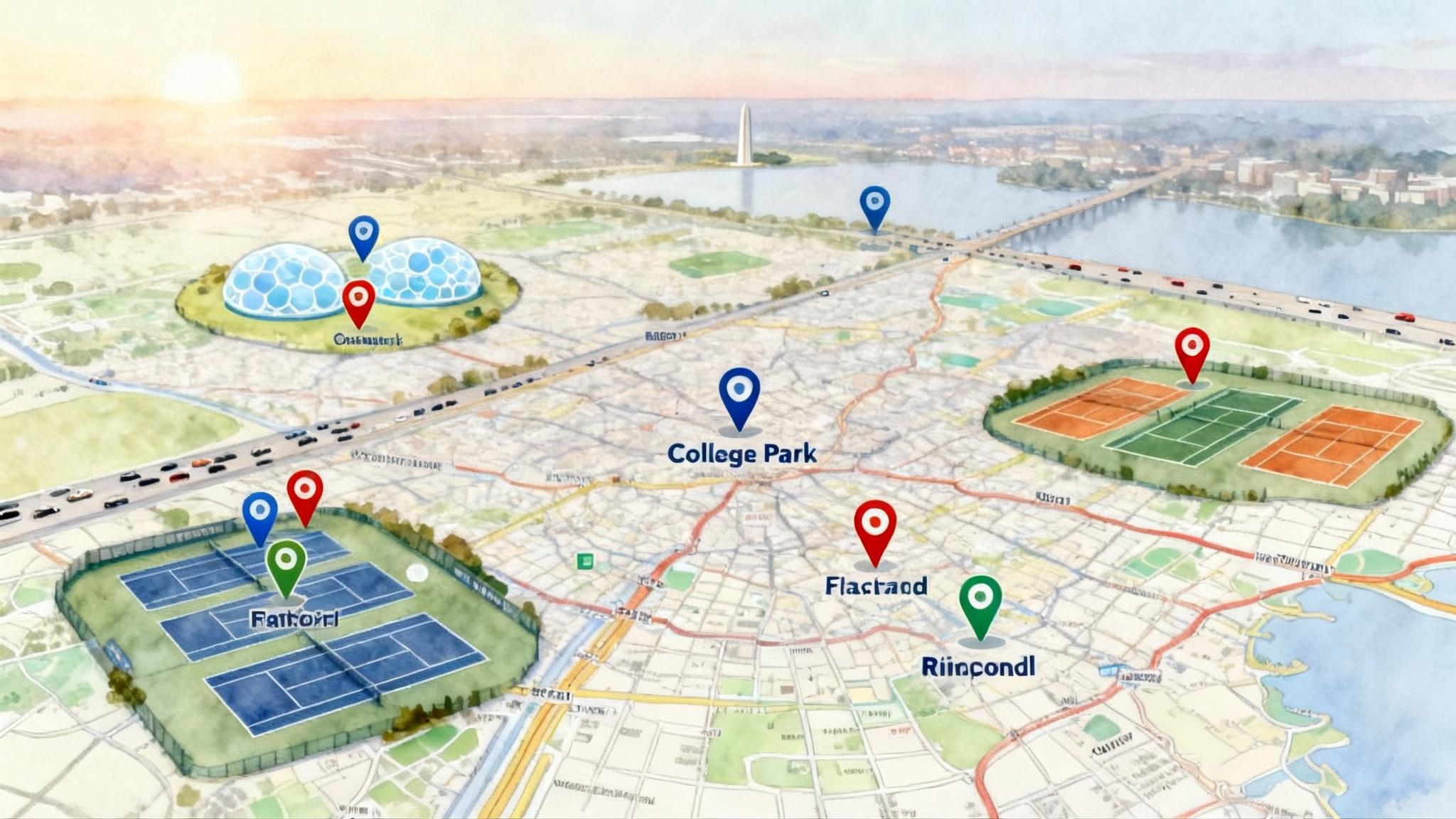
- Door to door beats mileage. A 7 mile trip that crosses a bridge at 5:30 p.m. can be slower than a 16 mile reverse commute.
- Aim for a 45 minute cap on school nights. If you must go longer, buy back time with homework in the car, pre-packed meals, and a stable start time.
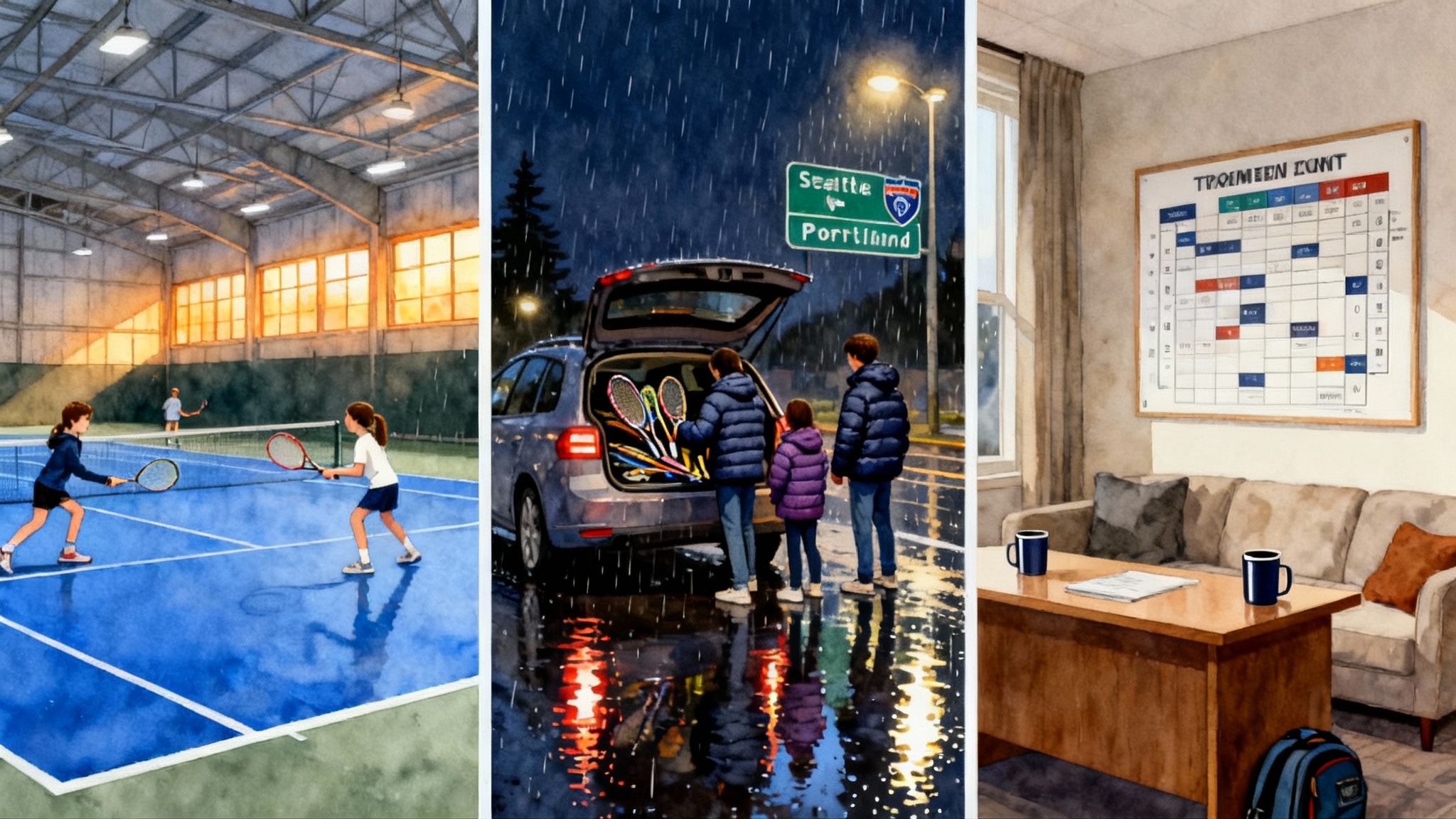
- Use weather buffers. New York’s winter can erase one or two sessions per month. Prefer programs that can slide you into a make-up slot within 7 days.
College placement outcomes without the hype
When academies list college logos, read them with method:
- Look for four years of recent grads, not a single glory year.
- Confirm who actually coached the player in their junior years. Transfers and late-stage polishing are different from long-term development.
- Ask for the denominator. Six signings from a graduating class of 40 is different from six out of 12.
- Division matters, but so does fit. A strong Division III program can be a better academic and athletic match than a marginal Division I roster spot.
Performance signals you can check quickly: sustained Universal Tennis trend lines, match volume in the last six months, and individualized fitness plans attached to tournament schedules.
Seasonal planning: winter to summer clay
- Winter blocks, January to March: lock predictable lanes, prioritize serve improvement, and run one pressure session per week. Keep a light tournament cadence to protect school.
- Spring pivot, April to early June: add return games and transition work. As outdoor courts open, begin one clay session per week to build legs and patience.
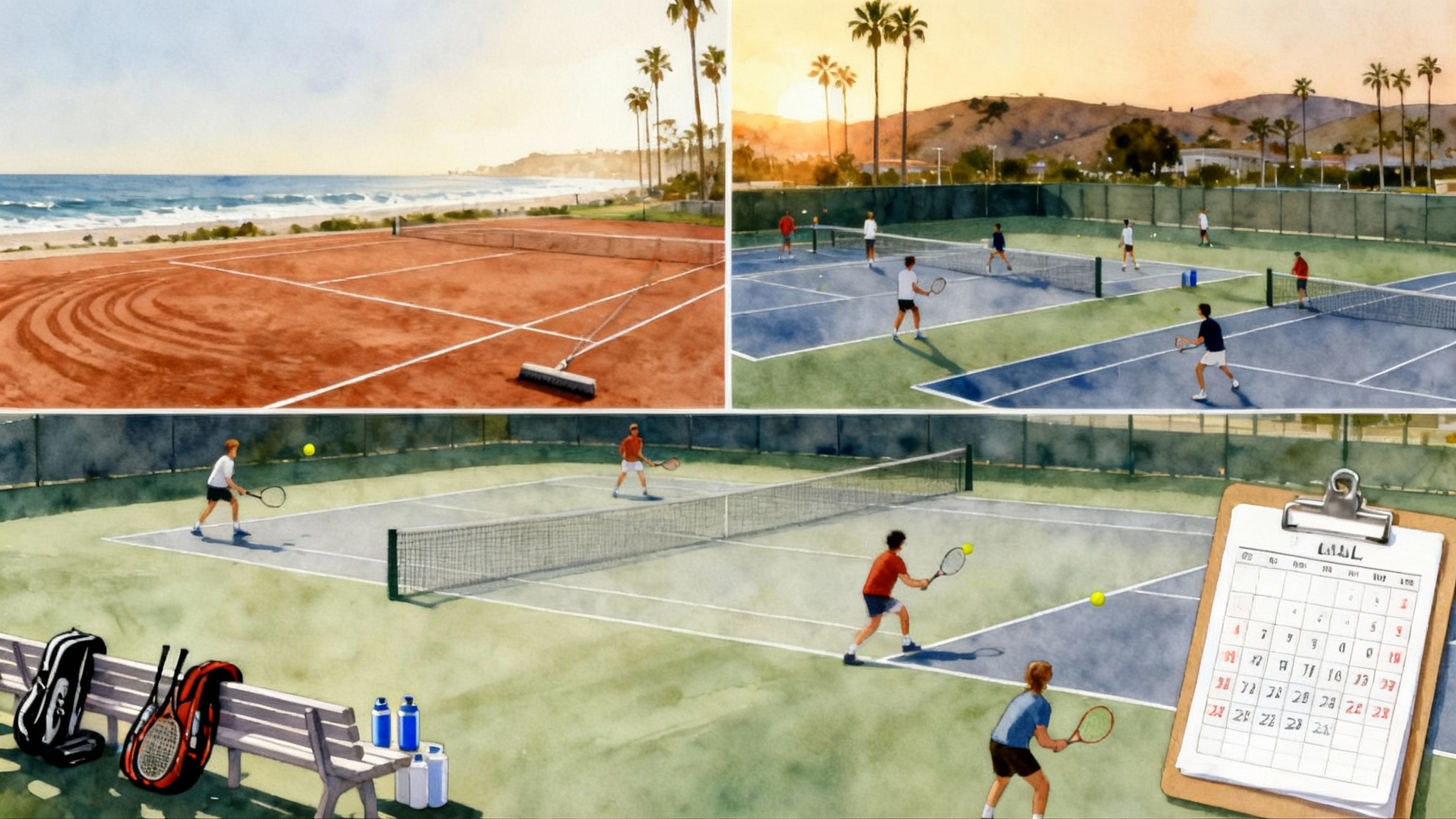
- Summer clay, June to August: two clay sessions weekly. Play a ladder of tournaments that climbs in difficulty across the summer. Schedule one rest week every five weeks.
- Pre-fall reset, late August: two weeks of light volume and targeted technical work. Retest fitness baselines before school starts.
What to ask directors before you sign
- How many indoor courts are guaranteed for the academy in January between 4 p.m. and 8 p.m.?
- What is the true on-court coaching ratio during technical drilling and during live ball?
- How many match opportunities can you guarantee per month and at what levels?
- What is the plan for snow closures and make-ups?
- Can I see a sample month of the schedule with fitness, video sessions, and tournament plans?
- How do you measure progress beyond wins? For example, first-serve percentage, return depth, or rally length.
Region cheat sheets
New York City
- Big-room options with deep rosters: USTA Billie Jean King National Tennis Center and SPORTIME Randall’s Island.
- Boutique feel: Long Island City programs with small-group technical focus.
- Who thrives: Players who need consistent winter courts and like the energy of larger squads.
Westchester
- Reliable indoor: SPORTIME Lake Isle, Yonkers Tennis Center, and Tennis Innovators in central corridors.
- Who thrives: Families that want a short commute and measured, long-term development.
Long Island
- Deep winter supply: Syosset, Bethpage, Roslyn, Oceanside, Manhasset corridors.
- Boutique oversight: Shelter Rock and other Nassau independents with personalized calendars.
- Who thrives: Players who want variety across clubs and strong summer clay options.
Upstate
- Match-play anchors: Rochester led by Empire Tennis Academy, with Albany and Syracuse close behind.
- Who thrives: Players who like organized travel squads and dense weekend competition.
One more tool for your kit
If your schedule is tight, pick one weekly practice block you will never miss and build around it. Then add one competitive rep each week: a ladder match, an in-house Universal Tennis night, or a local USTA event. Small, repeatable wins compound faster than occasional perfect weeks.
Final word
The best academy for New York tennis in 2026 is the one that guarantees winter courts, matches at your level, and coaching that turns feedback into simple, repeatable actions. Start with a shortlist that fits your commute window. Ask precise questions. Book a trial week. If your player ends the week clear on what to practice and when to compete next, you picked well.