Cannes to Côte d’Azur: How All In Academy Lifted Mirra Andreeva
Follow Mirra Andreeva’s real academy pathway from Jean‑René Lisnard’s Elite Tennis Center in Cannes to her new base at All In Academy with coach Conchita Martínez. Learn the exact training habits and scheduling moves that turned promise into WTA punch.
 Tommy
Tommy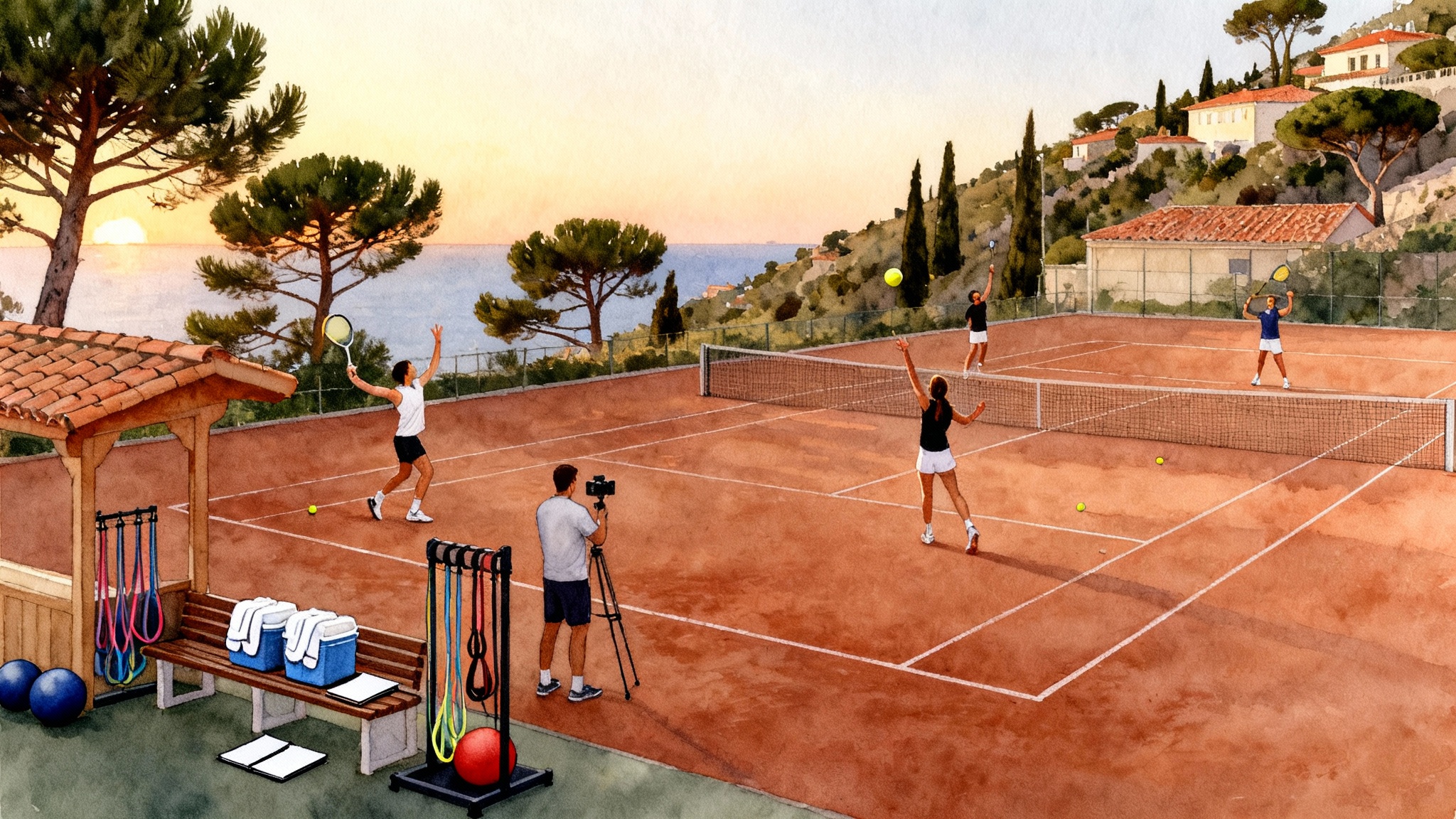
The pathway everyone asked about, mapped clearly
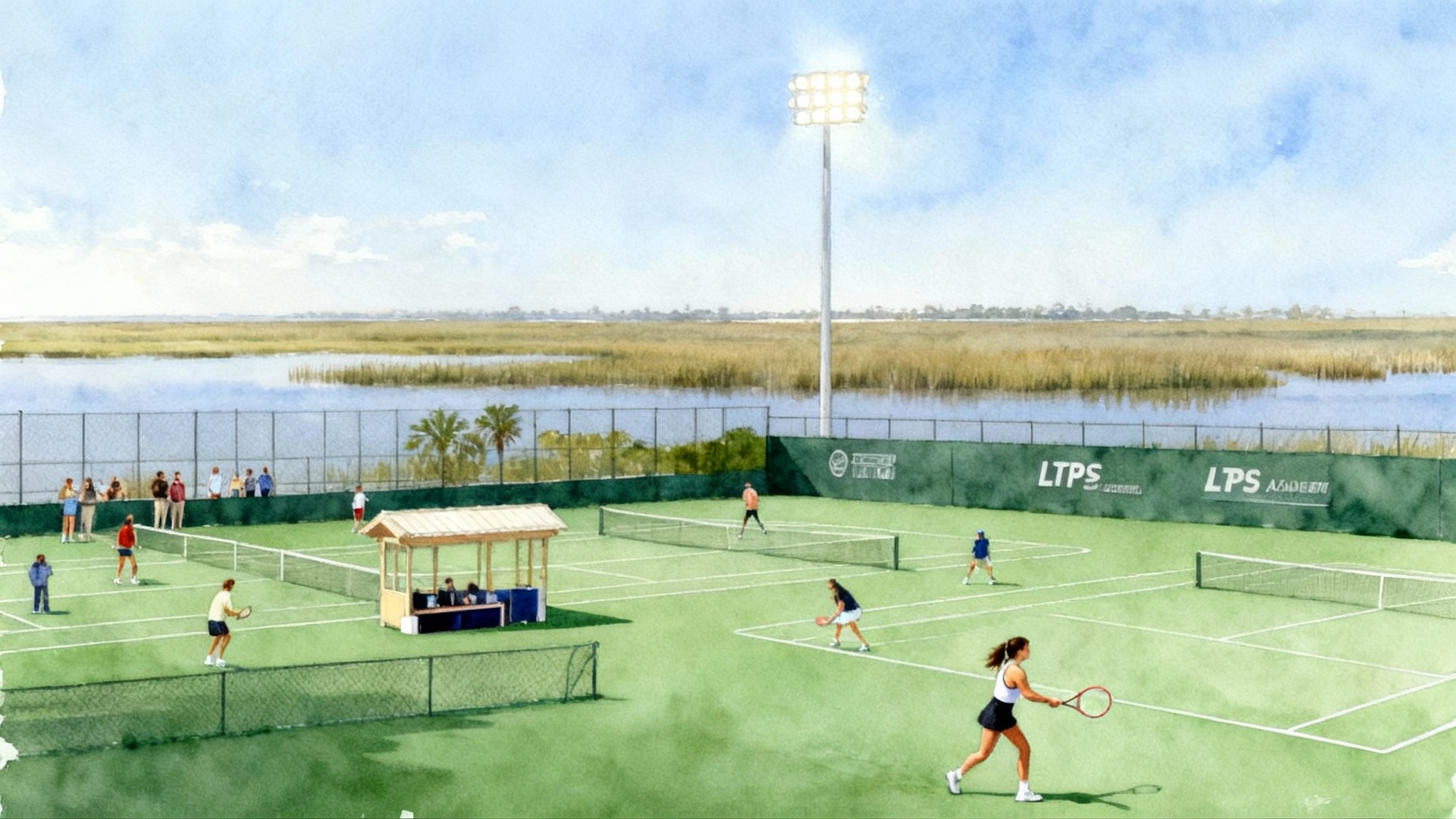
Tennis families often hear the same advice: pick a good academy, train hard, play tournaments. That checklist hides the real work. In Mirra Andreeva’s case the path was concrete and local, not abstract. She and her family moved from Russia to Cannes to train at Jean-René Lisnard’s Elite Tennis Center, a base known for technical precision and ruthless repetition. She later built a new home on the French Riviera at All In Academy, close to Nice, and added Conchita Martinez to lead the project. The moves were deliberate, timed, and backed by a training style that combined small-squad drilling, integrated match play, fitness and mental support, and smart tournament scheduling from southern France. This is how a precocious junior became a genuine WTA contender.
The Cannes foundation: technique, consistency, and the habits of daily work
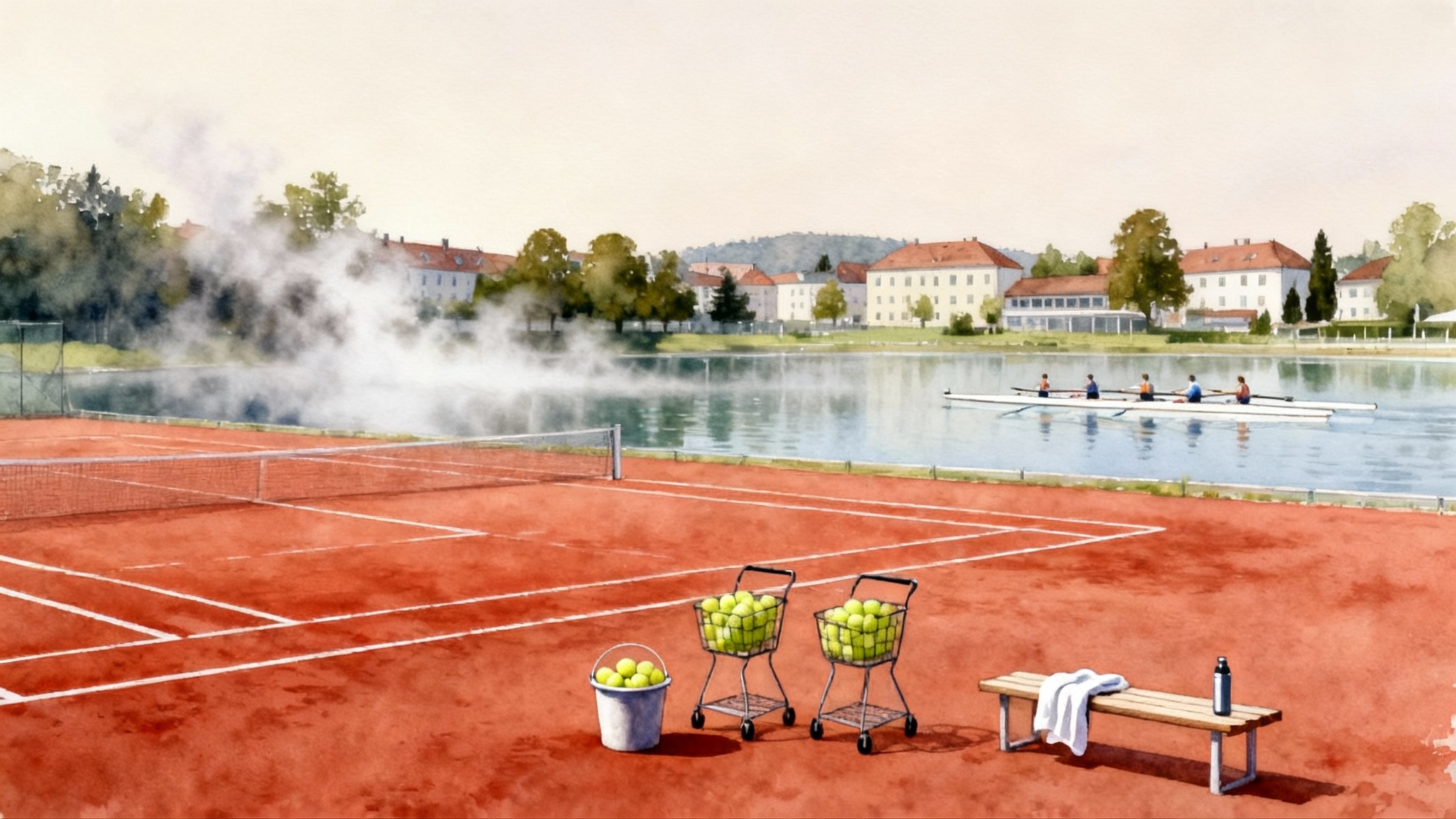
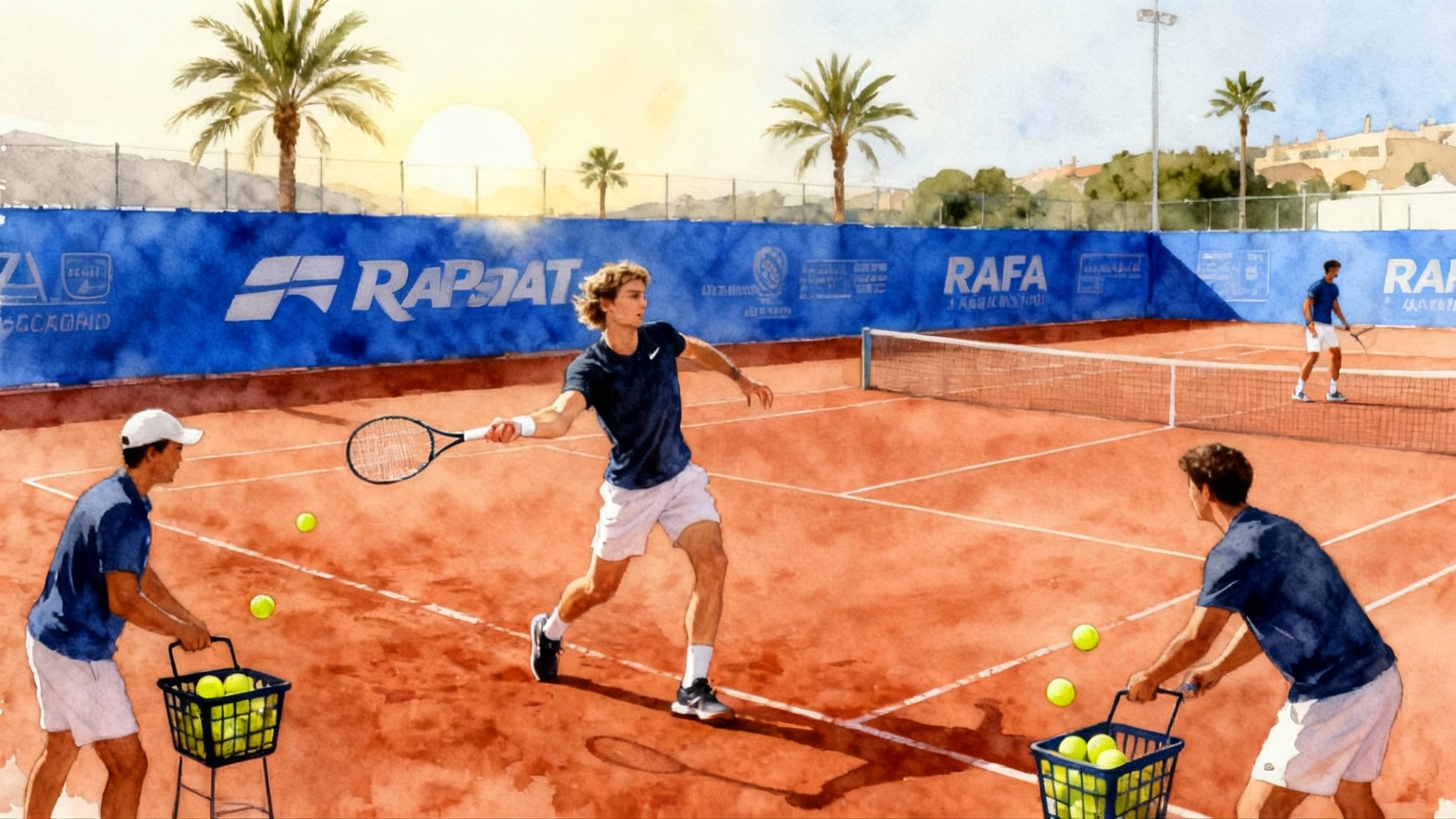
Cannes did not give Mirra magic dust. It gave her reliable work. Elite Tennis Center is a place where players learn to hit their windows, again and again. The core idea is simple: build a forehand, backhand, and serve that stay stable at speed, under pressure, over months. That sounds obvious until you watch a two hour basket session where a coach demands the same first-step angle to every wide ball and logs the error pattern after fatigue sets in at minute 73.
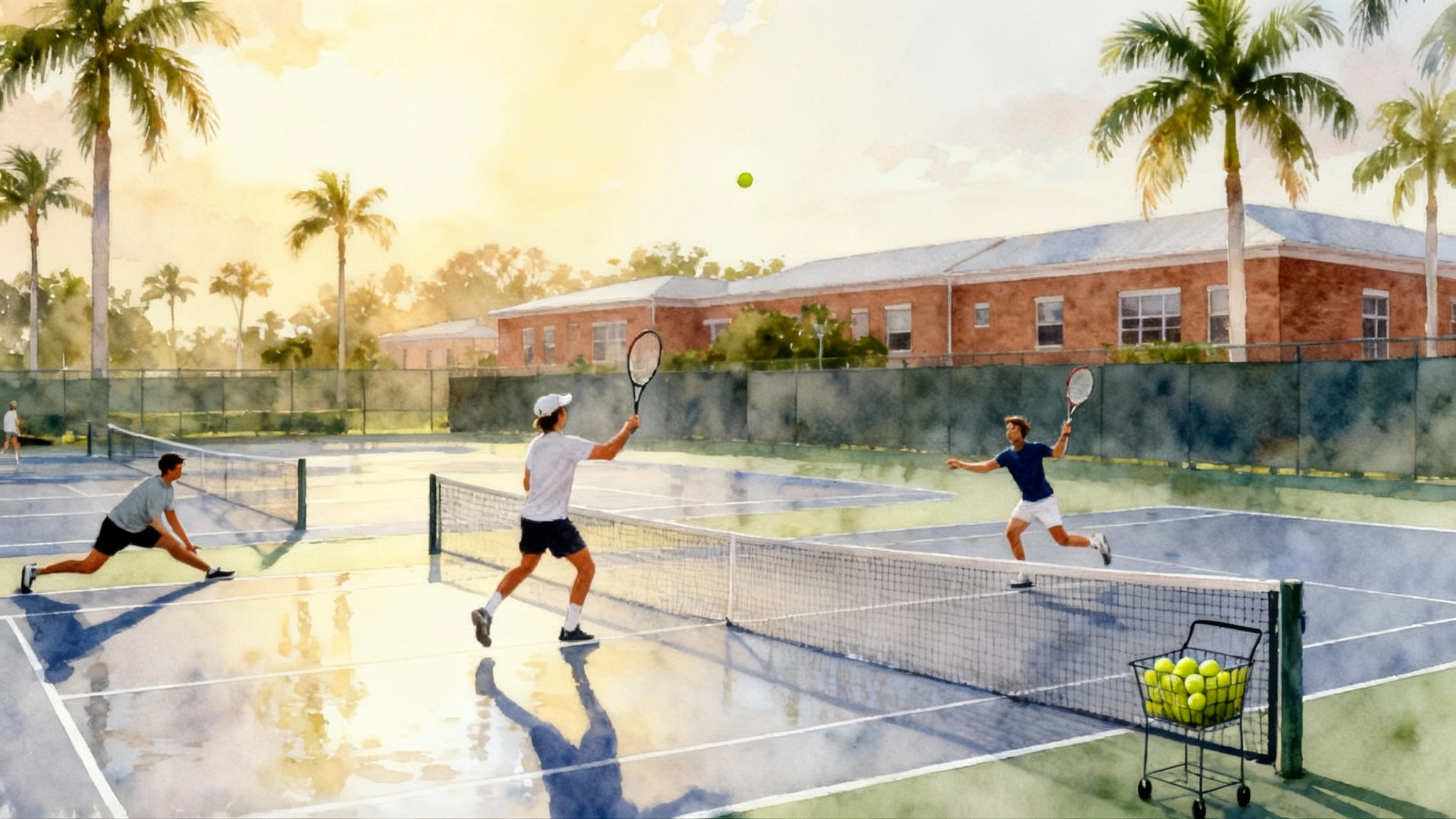
Families sometimes picture elite drilling as a storm of balls. In Cannes the storm had shape. A typical day would open with twenty to thirty minutes of movement prep, then a progressive hitting block that increased tempo every six to eight minutes. Coaches would lock in one constraint at a time. For example: forehand from the outside alley to the deep cross target, with only open-stance footwork allowed, then add a neutral ball, then add a redirect to line. Mirra’s early session goals were measurable and boring by design. Boring is good. Repeatable mechanics become a safety net when nerves spike.
The move to Cannes also exposed Mirra to a multi-language training hall and a thicker opponent pool. That matters. Variety in sparring partners forces patterns to evolve. Mirra faced heavy-ball hitters one day and counterpunchers the next. Over time that built the tactical flexibility that shows up in late-round matches. You see this same regional effect in other Riviera case studies, such as how Mouratoglou Academy shaped Gauff.
If you want a public snapshot of the Cannes choice, you can trace the family’s decision to relocate and train at Elite Tennis Center as reported during her early breakout on tour. Mirra and her sister Erika moved to Cannes to train after earlier stops in Russia. The key is not the headline. It is the reason: a dependable environment with clear, repeatable practice standards.
The All In shift: location, leadership, and a wider performance net
After establishing a base of technique and tour habits, Mirra’s team sought a platform that could scale with her goals. All In Academy campuses on the Côte d’Azur offered three assets that matter at the top of the game:
-
Proximity to world-class competition and transport. Nice airport is about ten kilometers away. From there you can reach most European events in one hop. Shorter travel means more stable training blocks between tournaments.
-
A high-performance campus with enough courts, fitness spaces, and recovery options to run a pro schedule without friction. The fewer bottlenecks a player hits in a day, the more small wins stack up.
-
Leadership that treats player development like a team sport. All In is led by Jo‑Wilfried Tsonga and Thierry Ascione. That leadership attracts staff who understand the full arc of a career, not just week-to-week form.
Mirra’s group set up camp here and layered on a new strategic piece: Conchita Martinez as head coach. Conchita brought major-title experience, a calm match-day presence, and an eye for the small tactical bets that decide sets. The fit looked natural from the start. In spring 2024 Mirra began a trial partnership with Martinez and soon formalized it. The effect was visible in her decision making. Points that used to drift into long exchanges turned into two-stage plays: probe to a safe target, then commit when the short ball showed up.
What small-squad drilling actually looked like
The term small-squad gets thrown around. At All In and in Mirra’s circle it meant three elements:
- A primary court group of two to four hitters, selected for contrast. One hitter brings pace off both wings, another absorbs and counters, a third serves big and finishes at net. Rotation is planned, not random.
- A shared theme per microcycle. For a three day block the theme might be first-ball initiative. Day one: serve plus one patterns. Day two: return plus one patterns. Day three: blended points starting on ball three, which forces patience before pulling the trigger.
- Coach bandwidth. With only a few athletes present, the lead coach and assistant can both watch, film, and intervene. Feedback happens between two balls, not two days later.
For a player like Mirra, who already reads the game well, small-squad work maximizes quality touches without drowning her in information. It is the difference between taking a college seminar and sitting in a 200 person lecture. Questions get answered on the spot. Habits change faster.
Integrated match-play blocks: a lab, not a scrimmage
Match-play blocks are not practice matches pasted onto a training week. They are a laboratory with rules. Here is a simple version used by several Riviera programs and mirrored in Mirra’s routines:
- Day one, set play with scripted patterns. Each game starts with serve wide, plus-one to the same side. The returner has a counter pattern to practice. Score counts. Pattern adherence counts more.
- Day two, constraint points. For example, a player earns double points for finishing with a backhand line or for winning a point that includes one net approach. This nudges players into using tools they often store away under pressure.
- Day three, free scoring sets with tactical targets. The coach sets a goal such as raising the percentage of returns deep middle, or reducing unforced errors in the first four shots of a rally. Video review follows, with two to three clips per theme, not fifty.
This structure keeps match play connected to the week’s work. It also builds a clean bridge to tournament play because the last day of the block feels like match day, not just a tough practice.
Fitness and mental support: strength, recovery, and decision training
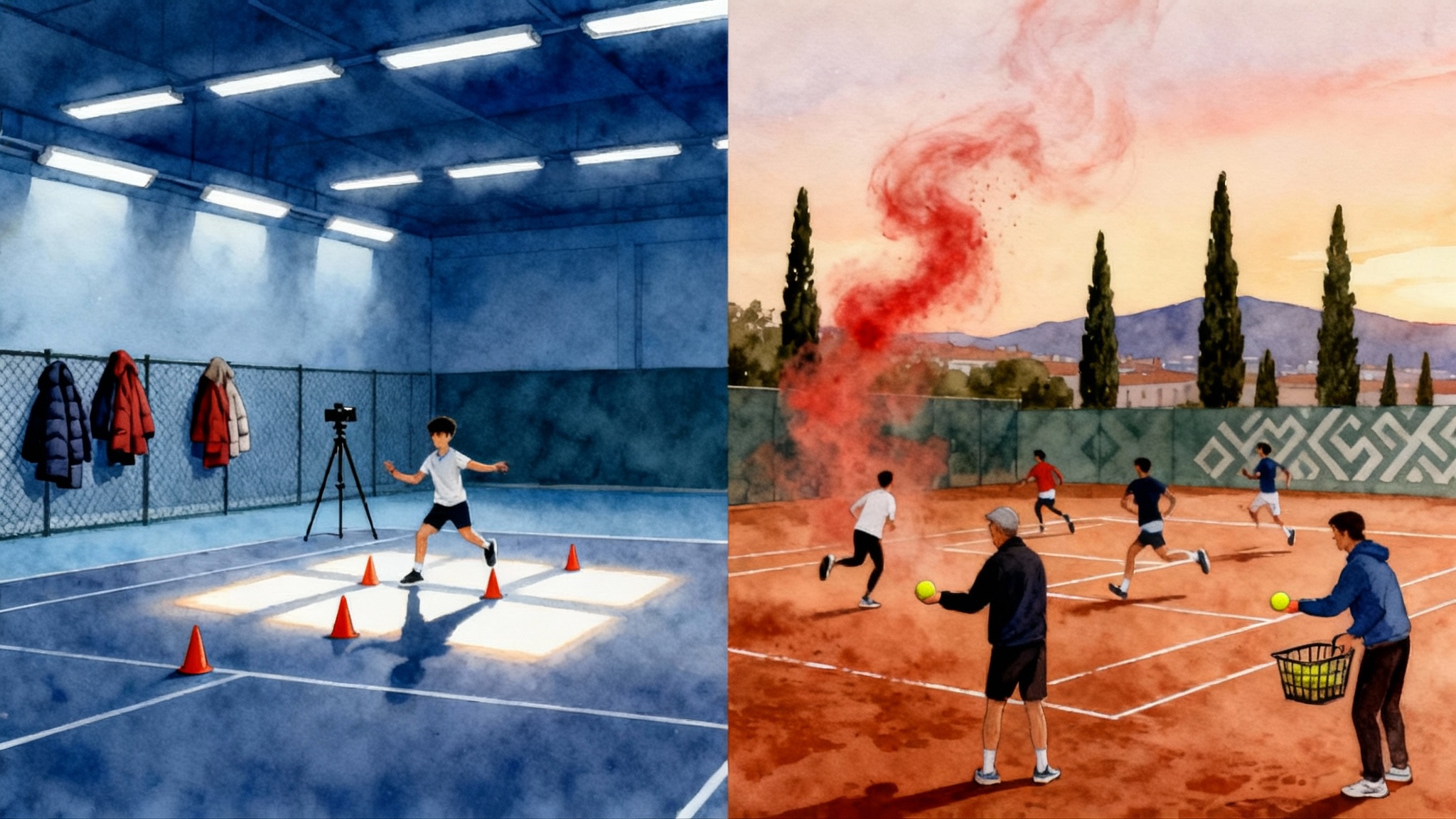
At junior level, fitness often equals more running. At pro level, fitness is force production and braking, plus the ability to repeat those efforts for two hours without the brain drifting. Mirra’s programs in Cannes and on the Côte d’Azur focused on short ground contacts, rotational power from the hips and trunk, and landing mechanics that protect the knees in wide, low positions.
A simple drill that paid off is the three-step burst. Starting at the center mark, the player explodes to a wide ball, loads on the outside leg, redirects to the middle, then bursts again to the opposite side. A coach measures the ground contact time and the distance covered in the first two steps. The goal is not more sprints. It is better first steps.
Mental support is treated the same way: measurable inputs, simple outputs. Two examples used across top academies and common in Mirra’s environment:
- Pre-point reset scripts. A short physical cue, a breath count, one tactical reminder. The athlete practices these in drill blocks so the script is automatic under pressure.
- Decision training with consequences. In some points players must choose a commit option by the third shot. If they do not, the coach calls the point dead. This punishes indecision, not mistakes, and over time speeds up pattern recognition.
Recovery was not an afterthought. High density tournament periods demand reliable routines: hydration targets, protein per kilogram guidelines, and a sleep window respected like a match time. When you reduce travel hours out of Nice and Monaco and keep the training base within a short drive, the whole system becomes easier to repeat.
Scheduling from the Riviera: why location multiplies results
Look at a map. From Villeneuve‑Loubet or Cannes you can reach Marseille, Lyon, Monaco, Saint‑Tropez, and multiple international airports quickly. That means you can:
- Enter a three week run of European events without crossing too many time zones.
- Slot in a two day reset at home base between tournaments to repair patterns that slipped on the road.
- Scrimmage with a deep local pool. The Côte d’Azur is dense with touring pros and advanced juniors, so a player can arrange high-quality sets on short notice.
Families often underweight this. Travel is training. Every hour on a plane is an hour not spent on the court or in recovery. By cutting travel noise, Mirra’s team protected the signal: high-quality touches and clear coaching messages. For a comparable blueprint outside France, see how Piatti Tennis Center forged Sinner.
What changed with Conchita Martinez
Conchita’s influence shows up in three places: point construction, match management, and emotional tone.
- Point construction. Conchita places a premium on playing to large targets first, then carving out space for the finishing ball. This often means probing deep middle to remove angles, then using a heavy cross to pull the opponent off the court before taking the line. The temptation for a gifted shotmaker is to end points early. Conchita made patience profitable.
- Match management. On days when the forehand timing is off, Mirra now leans into patterns that reduce risk, such as more backhand cross exchanges and better serve placement to set up short backhands. The message is simple: win the hand you have today.
- Emotional tone. The training culture is demanding but not brittle. Playfulness in practice can be a performance tool. It lowers static in the head and keeps the focus on process rather than panic.
Practical takeaways for families
Here are specific, non-generic lessons you can apply.
When to change training bases
Change bases when the next level of competition, coaching attention, or scheduling efficiency is not available where you are. Use these checkpoints:
- Competition depth: your top three practice partners are the same every month and you can predict points before they start. If you cannot find fresh styles locally, move.
- Coach bandwidth: your player shares a court with six others most days and receives minimal individual feedback. If the coach cannot film or intervene at least three times per drill block, move.
- Travel burden: your tournament calendar requires multi-leg flights for most events. If you cannot stage out of a hub with direct routes, move.
How to move without chaos:
- Pilot first. Spend two to four weeks at the new academy during a non-peak period. Track data: unforced errors per 20 rally balls, first serve percentage, morning heart rate, sleep hours. If the numbers hold or improve while the player feels supported, the base is a fit.
- Keep one anchor. Retain one trusted specialist during the transition, such as a fitness coach or a technique consultant. Continuity reduces the shock of change.
How to structure a multi-coach support team
- Define lanes. Head coach controls match plans and weekly themes. Assistant coach runs court drills and logs data. Fitness coach owns strength and conditioning and coordinates with the on-court load. Mental coach builds pre-point scripts and review routines.
- Create a single calendar. One shared schedule lists on-court hours, lifts, treatments, and video sessions. Overbooking is a red flag. If the schedule cannot fit on one page, it will not fit in life.
- Meet briefly, often. A ten minute huddle after the last session beats a monthly two hour meeting. Each coach gives one win, one worry, and one plan for tomorrow.
How to use an academy’s local competition ecosystem
- Run ladder sets. Create a weekly internal ladder across age groups and levels. Record scores and basic stats. The point is not a trophy; it is a rhythm of meaningful matches.
- Invite styles, not names. Ask the academy coordinator for hitters who represent specific problems: lefty heavy forehand, low slice backhand, flat returner. Train against problems, not reputations.
- Stage from home. If you are on the Riviera, use the calendar density. Enter a local event as a warm-up the week before a bigger tournament. Play two matches, fix one pattern, then travel.
A simple weekly microcycle for a rising junior
- Monday: small-squad session on first-ball initiative. Afternoon lift focused on lower-body power. Evening video of eight clips from weekend match.
- Tuesday: integrated match play with a constraint on finishing to the line. Mobility work and short breath work session.
- Wednesday: technique tune on serve patterns, plus doubles points for variety. Recovery swim and early night.
- Thursday: free sets aimed at raising return depth to the middle. Post-set review with head coach.
- Friday: light drilling, reaction work, and packing checklist. Short mental rehearsal of first-round opponent patterns.
- Saturday to Sunday: travel or local event. If home, play ladder sets and log stats.
A checklist to evaluate an academy before you commit
- Court density: can your player get a dedicated court with a coach for at least 90 minutes most days
- Video capture: does the program film from behind and side angles and share clips within 24 hours
- Fitness integration: is the weight room within the facility and do coaches coordinate load across the week
- Recovery: are physio and soft tissue support available on site or within a short drive
- Competition: can the coordinator find sparring partners with contrasting styles within a day’s notice
- Travel: how long does it take to reach the nearest major airport and how many direct flights serve your tournament map
If the answers are weak, keep looking.
What families can copy from Mirra’s playbook
- Start narrow, then scale. Build reliable strokes and movement patterns in a focused environment like Cannes. Once that is stable, scale the environment to include a bigger team and a denser competition map.
- Use themes, not moods. Each week should have a declared theme. When a bad day shows up, the drills stay the same. Only the constraints and goals adjust.
- Think in runs. Plan two or three tournament runs per season that start and end at the training base. Use those runs to test one or two tactical ideas in real matches.
- Protect attention. A player has a limited number of high-quality decisions per day. Eliminate friction. Shorter commutes, predictable schedules, and clear roles give those decisions back to the player.
The result and the real lesson
Mirra Andreeva did not leap from junior promise to tour breakthroughs because of one genius drill or a viral match. She and her team stacked simple, rigorous habits in places that support them. Cannes provided a foundation. The Côte d’Azur gave her a platform. Conchita Martinez added championship-tested judgment at the moments that matter. Families can borrow this blueprint. Start with a base that builds reliable skills. Move when your environment cannot supply the next layer of challenge or efficiency. Build a team with clear lanes. Then let the local ecosystem of matches, coaches, and travel logistics do part of the lifting for you.
If you do this well, the leap does not feel like a leap. It feels like the next step on a path you already laid out, one session at a time.