How Piatti Tennis Center Forged Jannik Sinner’s Rise
From a ski‑racing childhood in the Dolomites to long days in Bordighera, Jannik Sinner grew inside a 360‑degree program at Riccardo Piatti’s center. Here is how small squads, video, and integrated training shaped his game and his big leap.
 Tommy
Tommy
From snow to salt air
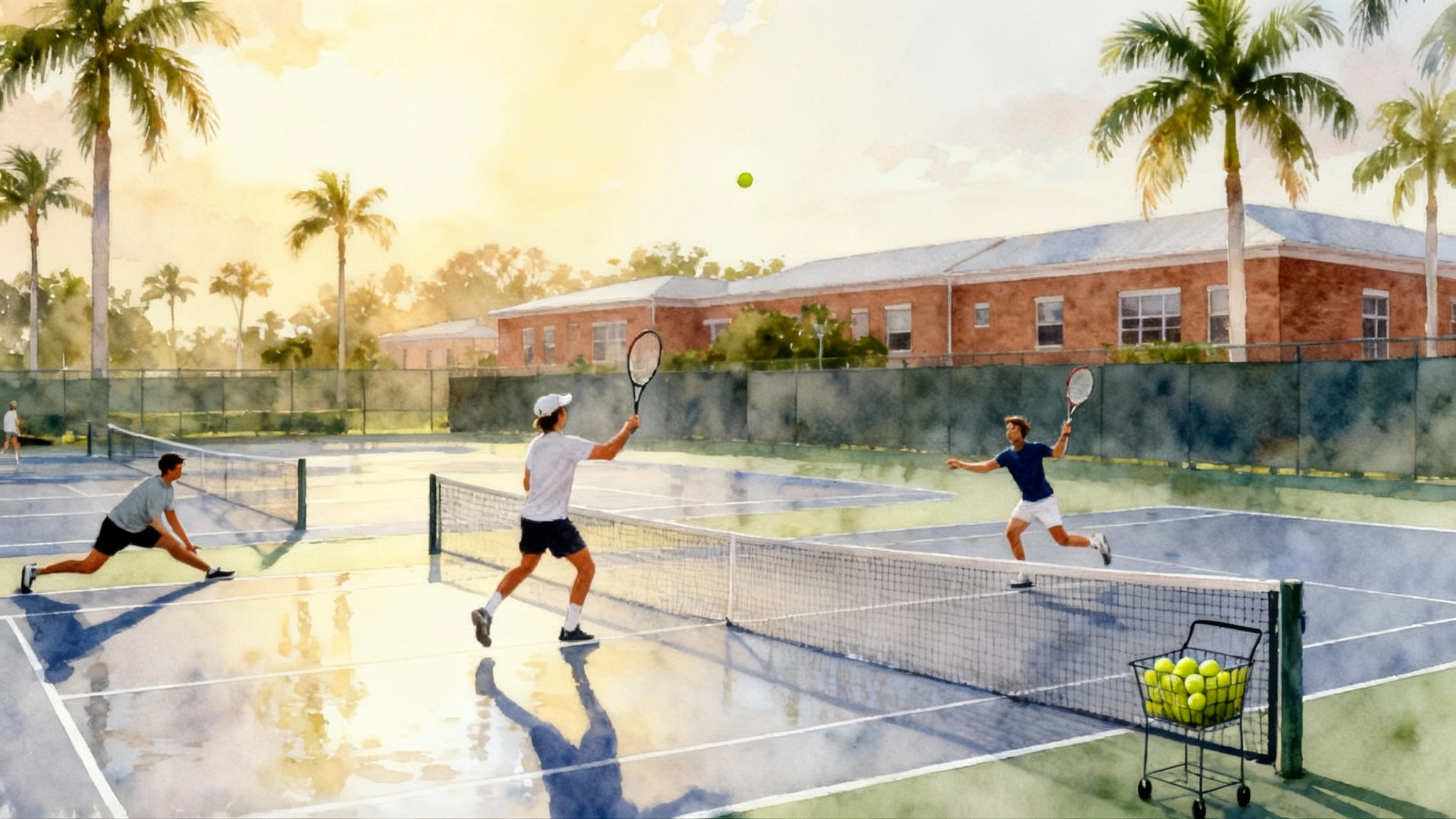
On a winter morning in South Tyrol you can hear edges carve across hard snow. That was Jannik Sinner’s first language: ski gates, early pressure, balance at speed. As a young teen he chose a different slope. He left the Dolomites for Bordighera, a Ligurian town where palm trees lean over courts and the sea breeze carries the sound of ball on strings. Years later, the quiet kid from a mountain lodge had grown into a player who won the 2024 Australian Open. The turning point of the story begins earlier, inside the Piatti Tennis Center.
The move was bold for a 13‑year‑old. He had talent, but more importantly he had raw habits that transfer well: fast feet from skiing, a feel for pressure through the outside edge of the foot, and a tolerance for risk that slalom racing demands. In Bordighera he found structure. Not a factory. A workshop.
What Piatti built: a 360‑degree school
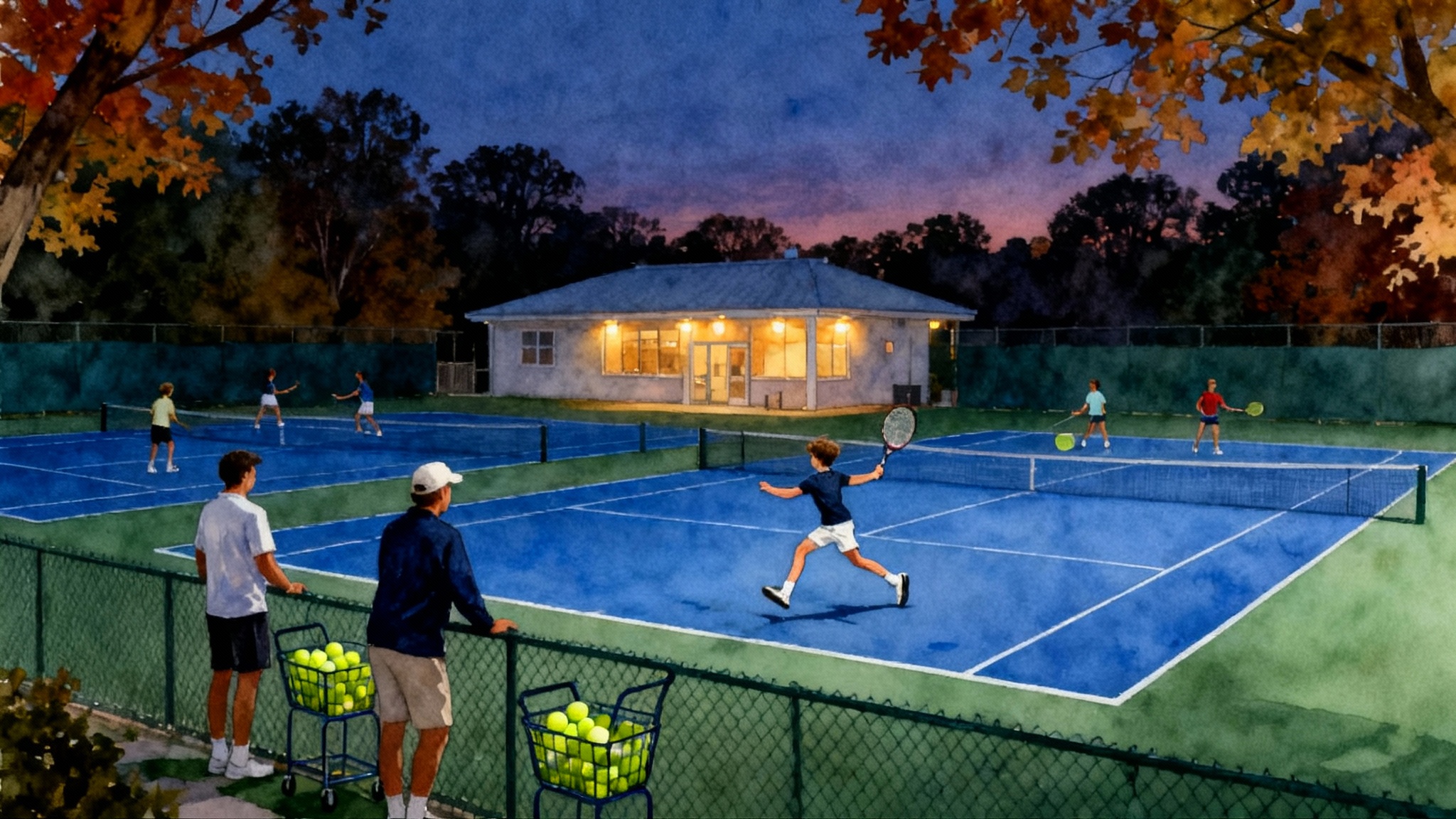
Riccardo Piatti’s center does not overwhelm you with court count. It wins through design. The facility combines hard and clay courts with dedicated spaces for strength, mobility, recovery, and a room purpose‑built for video analysis. Their stated mission is a 360‑degree approach that synchronizes technical, physical, and mental development, supported by technology and specialist staff. You can see the blueprint in their own description of the Piatti Tennis Center facilities and approach.
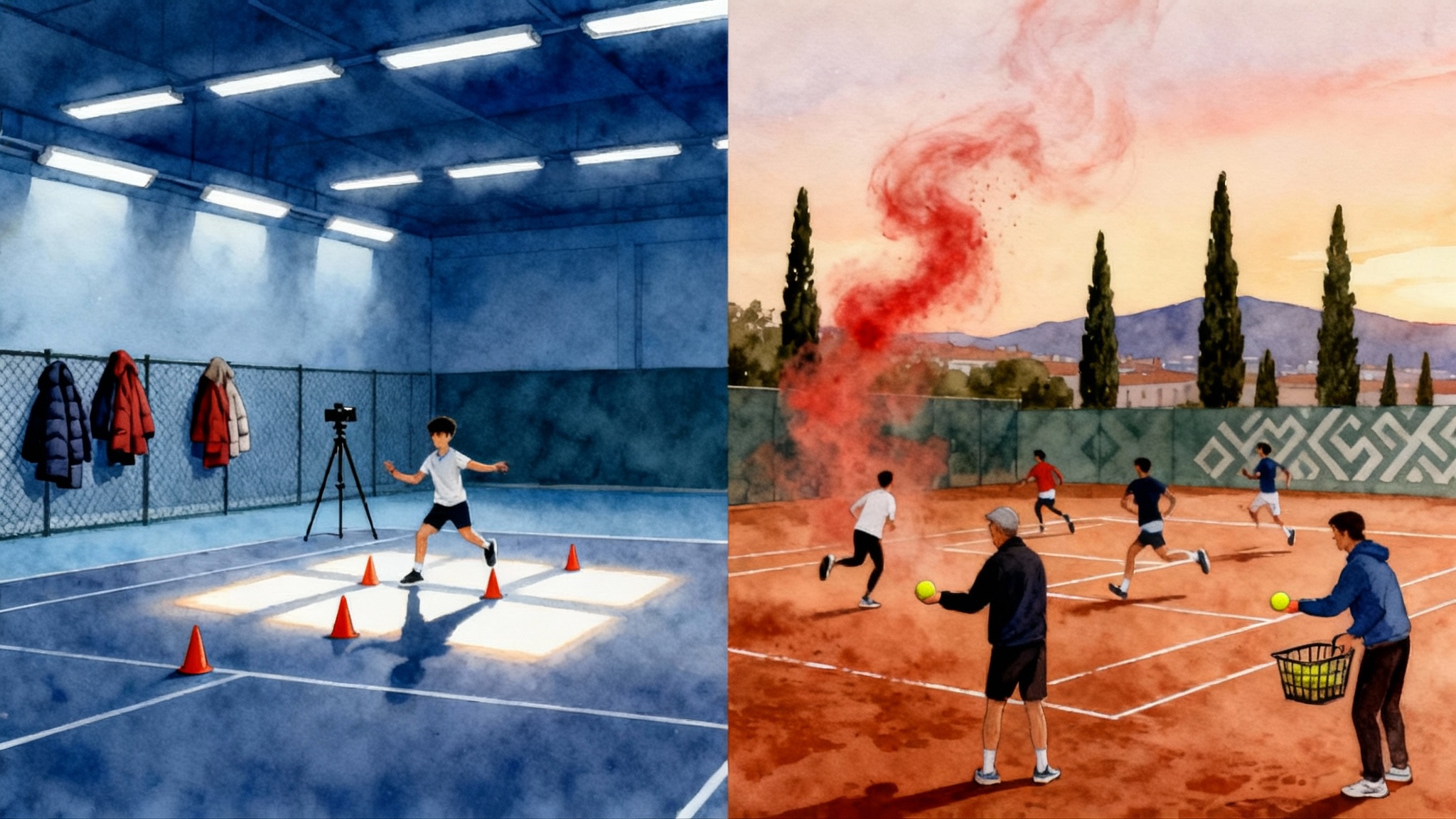
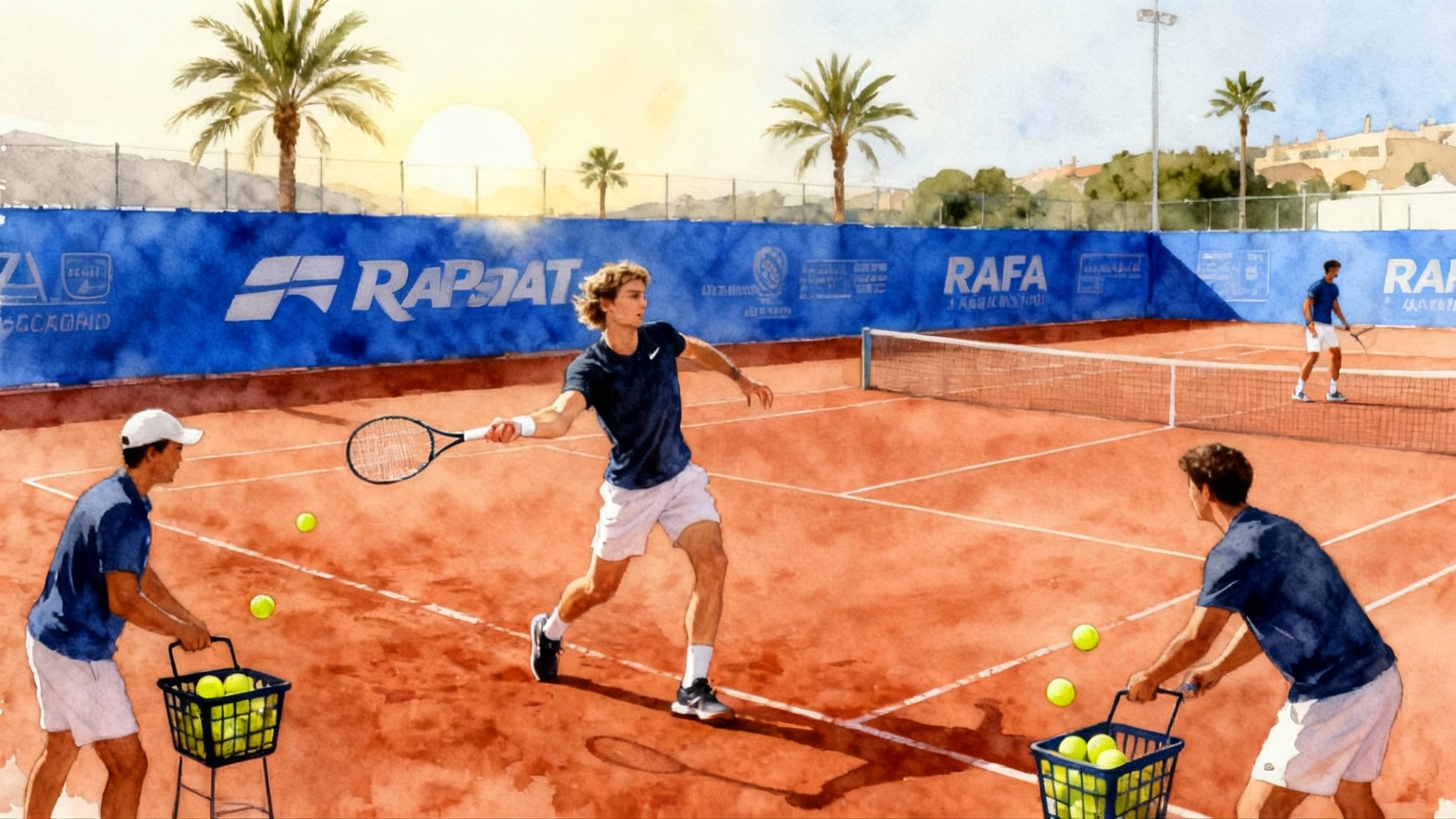
The training day functions like a braided stream. On‑court repetitions feed immediately into slow‑motion review, then into targeted gym blocks and mobility, then right back to the court with a refined cue. Instead of large squads, players work in compact groups so that each session has a clear objective. The aim is not volume for its own sake. It is signal over noise.
Three features mattered most for Sinner’s development:
- Small squads with a declared focus. A tactical theme for the day, two or three measurable cues, and a constraint that forces the pattern to appear naturally.
- Systematic video and data. Multi‑angle capture, contact‑point charts, and side‑by‑side comparisons to his own best rep rather than to an abstract model.
- Integrated technical, physical, and mental work. Strength planned around stroke windows, footwork that serves specific patterns, and mental rehearsal designed to match those patterns under stress.
How Bordighera molded a world‑class backhand
Sinner’s two‑handed backhand is a clean, compact shape. What you notice is not just pace. It is time theft. He makes contact early, often on the rise, with minimal excess motion before and after the hit. That is not an accident.
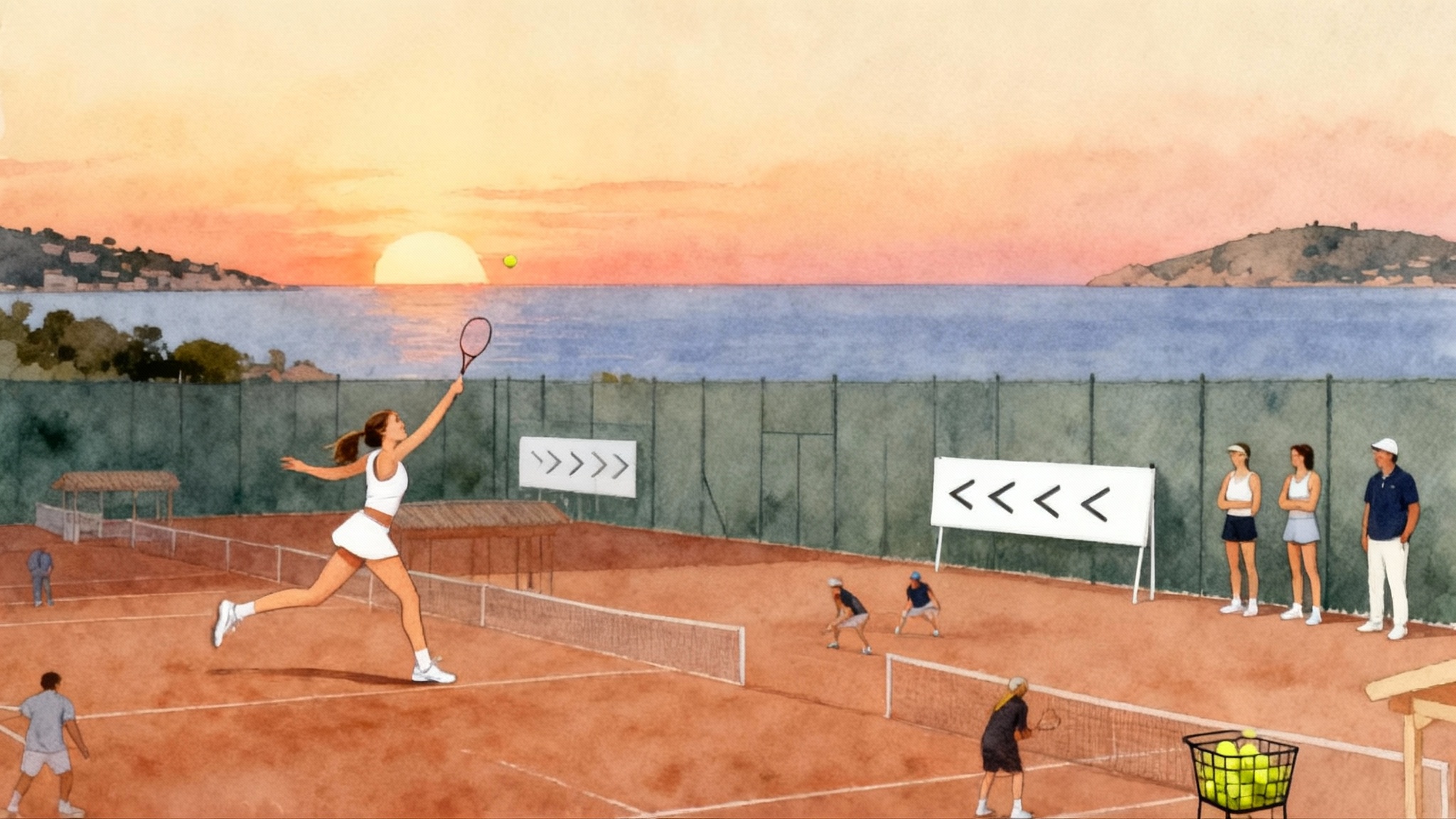
- Contact height windows. Coaches taped two horizontal lines on the back fence to represent a target window through which the ball should travel on cross‑court drives. By aiming through those windows, he learned to keep trajectory consistent while changing pace.
- Shortening the loop. The preparatory move became simple. Shoulder turn first, hands connected to the turn, racquet head not wandering behind the body. The cue was quiet set, loud legs. Quiet meant no extra hand activity. Loud meant the legs supplied the acceleration.
- Down‑the‑line trigger. In many drills the call to change direction was not a voice but a constraint. If the opponent’s ball landed inside a small square near the sideline, Sinner owed himself a down‑the‑line strike. The shape was trained until the change felt automatic instead of brave.
The payoffs are visible. A backhand that can cross court heavy or knife down the line with the same look, and a return of serve that does not need space to work. The stroke’s reliability at early contact unlocked patterns that travel across surfaces.
Early contact as a habit
Skiing gave him a metaphor he could use daily: pressure early, carve through the turn, exit balanced. On a tennis court, that becomes take the ball before it finishes rising, accept less backswing, and rely on legs and timing to produce force. In Bordighera they made early contact a decision he would rehearse, not a talent he would hope for.
Two simple drills made it stick:
- Baseline creep with accountability. Start on the baseline. Each rally ball that lands short of the service line forces the hitter one shoe length inside the court for the next contact. Miss deep and you retreat. The goal is to stay net‑side of the baseline for as long as possible without leaking errors long.
- Rise or reset. On neutral balls, alternate between on‑the‑rise contact and a deliberate reset ball with higher margin. Video confirms if the first step happened before the bounce and whether the hip turn arrived before the swing. The point is to build an internal switch. You rise when the bounce permits. You reset on bad feeds. No hoping.
First‑strike patterns that stand up under pressure
First‑strike tennis is not only about power. It starts with a menu and continues with stubborn discipline about selection. With Sinner, three patterns became signatures:
-
Serve plus backhand. He often opts for a serve into the body on the deuce court to jam the return. The plus‑one is a backhand to the opponent’s weaker corner. Training aligned the serve target with the next contact footwork so there was no hesitation about which ball to hunt.
-
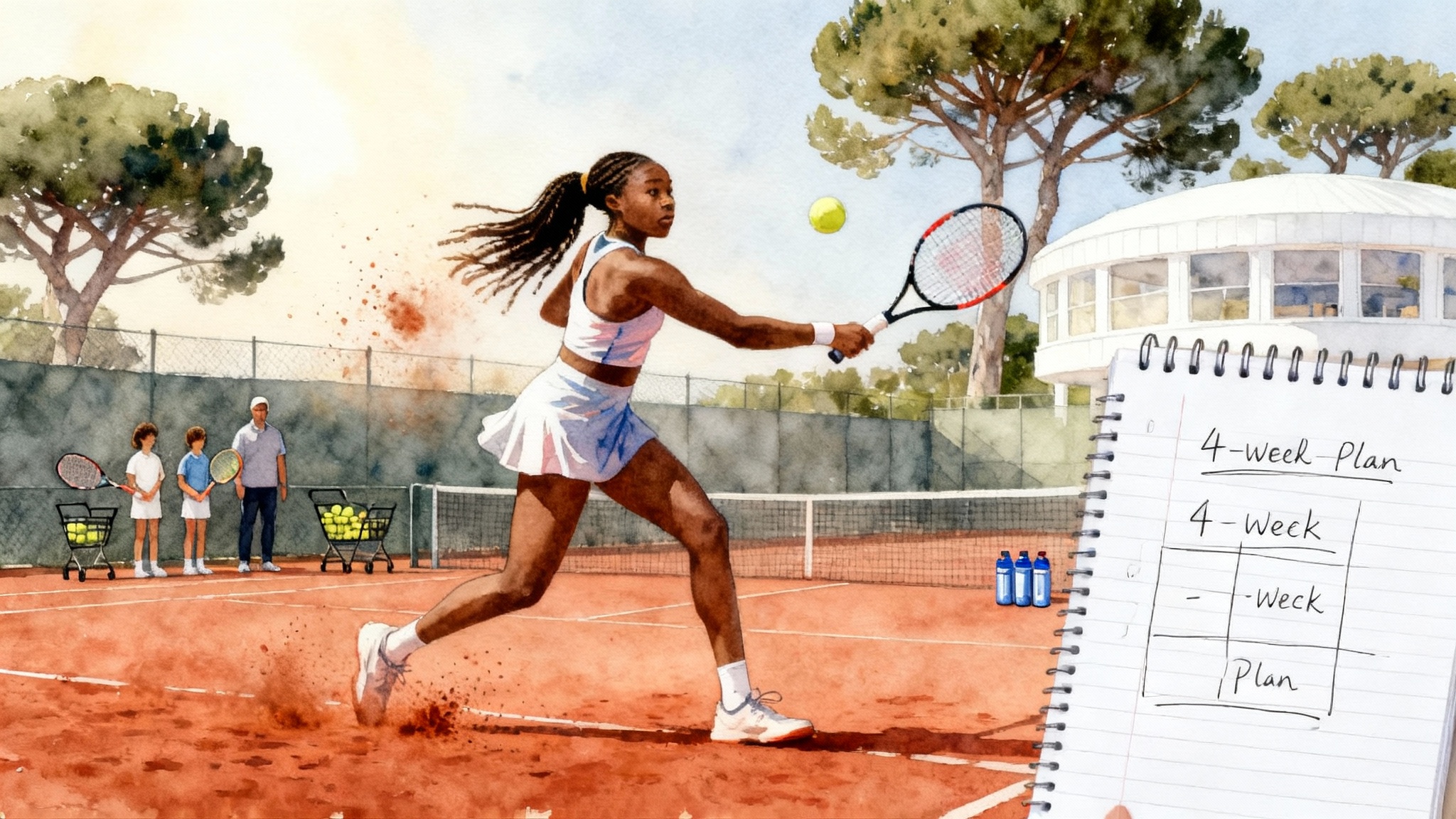
Return plus depth. On second serves he sets up inside the baseline and drives a backhand return deep through the middle third. The choice is conservative in direction, aggressive in timing. The follow‑up is a heavy forehand to either corner, but the real win is taking time away immediately. For forehand work that complements this pattern, see our 30‑day forehand plan.
-
Backhand cross, then the knife. Exchange two neutral cross‑court backhands with height, then cut the third down the line at the first short bounce. The height on the previous two balls earns him the time to step forward on the third.
At the center, these patterns were not memorized like plays. They were rehearsed with constraints, for example a tiebreaker where the only point‑winning options are one of the patterns above, measured for execution rather than outcome. The visible result: pattern discipline late in sets.
The hard choice to leave and what changed
In early 2022 Sinner made a risky professional call. He left the coach and place that had formed him and built a new team around Simone Vagnozzi, later adding Darren Cahill. For any player, this is where development can stall. New voices can mean new ideas that overwrite what already works.
What happened next looks less like a rewrite and more like a clean integration. The new team kept the core identity that Piatti had built: early contact, backhand reliability, and first‑strike clarity. Then they layered three upgrades.
- Serve quality and variation. Rather than chasing raw power, they focused on location and repeatable rhythms. The body serve became a weapon, and the wide‑kick combination on the ad side created forehand plus ones without forcing.
- Defensive instincts that link to offense. The goal was not to defend deeper. It was to build a first step out of defense that pulled him forward into the next ball. Think of a skier absorbing terrain, then attacking the next gate without delay.
- One voice across technical and mental work. Training blocks were designed so that the language in video sessions matched the language used courtside on big points. The player hears one theme, not four requests.
The reason the transition worked is simple. They honored the pillars that made Sinner special while changing the beams that needed reinforcement. Families often fear that a coach change will erase progress. In this case, the change turned into a multiplier because the team chose addition over replacement.
Melbourne as proof of concept
The 2024 Australian Open is a clean case study. In the semi‑final Sinner handled Novak Djokovic’s pace and depth by holding his ground on returns and refusing to drift back, a mindset we also examine in how Pilic Academy forged Djokovic. In the final he fell two sets behind to Daniil Medvedev, then recalibrated. He stabilized the rally with a deeper cross‑court backhand, crept forward step by step, and started finding the down‑the‑line change at just the right moment. He did not reinvent himself mid‑match. He returned to practiced patterns and trusted the early contact that had been drilled for years. The result is on the record in the Australian Open final report.
For academy directors and parents, the match reads like a syllabus test. Under the stress of a major final, the skills that held were the ones built with clarity and repetition.
What boutique really means when choosing an academy
Boutique is not a price tag or a logo. It is a set of operating conditions that gives a teenager the best chance to improve fast without getting lost.
- Small squads by design. Ask for the actual athlete‑to‑coach ratio on court, and for how many minutes per hour the player is the focus. If a center cannot quantify this, they cannot protect it.
- Video as part of practice, not a separate service. Look for permanent cameras, a dedicated review station on court, and an archive organized by stroke and pattern. The key is instant feedback, not a highlight reel at the end of the week.
- Integrated calendar. Strength, mobility, and recovery sessions need to be tied to the technical goal of the week. If the technical theme is backhand on the rise, the gym must include ankle stiffness work, reactive jumps, and medicine‑ball throws that mimic that timing.
- Measurable cues instead of adjectives. Replace “hit it earlier” with “contact one shoe length inside the baseline on three of the next five balls.” Replace “more spin” with “net clearance through the tape line on the back fence.”
- A test drive. Before committing, book a one‑week trial. Ask the staff to state the week’s objective in writing on day one and send you a summary on day five with two clips that show progress. If you value boutique scale, compare with our Ljubicic Tennis Academy profile.
How to manage a coach change without derailing progress
Sinner’s 2022 transition shows that change can be a catalyst. Families can manage the process with the same discipline an academy uses on court.
- Keep a living player manual. One page that states the player’s identity: two to three strengths, two to three non‑negotiable habits, and a small menu of first‑strike patterns. This document travels with the player so a new coach reads the blueprint first.
- Establish a 90‑day plan. The first month is audit and language alignment. Month two is one technical change tied to one physical theme. Month three is match play with constraints that stress the new skill. Do not stack three changes at once.
- Use video to protect what works. Before the handover, record the best current reps of each key stroke and pattern from multiple angles. These become anchors that a new team must respect unless there is a very good reason to change.
- Measure outcomes you can control. Track percentage of points with contact inside the baseline, first‑strike completion rate on serve plus one, and error location on backhand down the line. These numbers tell you whether training is moving the right needles.
- Clarify voice and roles. If more than one coach is involved, assign domains: who owns technical decisions, who owns physical planning, and who speaks on match days. Players need one voice when the heat rises.
Drills you can borrow this week
- Backhand timing ladder. Place a six‑rung agility ladder parallel to the baseline two feet behind it. Feed cross‑court backhands. The hitter must finish each swing with the outside foot in a ladder square, then step forward into the court for the next ball. The constraint teaches early set and forward intent.
- First‑strike menu tiebreak. Play to seven. Server wins a point only if the rally ends by the third ball and matches the day’s chosen pattern. Returner wins a point only if the return lands beyond a target mat placed one racket length inside the baseline. This bakes commitment into choices.
- Rise and freeze review. Film six balls on the rise and freeze each at contact to check three cues: shoulder turn completed, head level, contact in front of the hip. If two of three are missing, regress the feed until the player can own the cues again.
Late specialization, done right
Parents often worry they are behind if their child does not specialize at eight years old. Sinner’s path argues for a different view. He did not ignore tennis as a kid, but he graduated from a broad base. Skiing gave him footwork and courage. Football gave him pattern reading and first steps. What mattered was the timing of his full‑time commitment and the quality of his environment once he committed.
Actionable guidance:
- Maintain two sports through age 12 or 13 if the child enjoys both. Choose activities that complement tennis: sports with lateral movement, early pressure, and spatial decisions.
- When you commit, make the environment small and specific. Do not replace variety with volume. Replace it with precision.
- Treat video as your memory. Keep a cloud folder of milestone reps that show how the player moved and hit at each stage. This helps you see progress and prevents unhelpful changes.
The through‑line from mountain to sea
The Dolomites taught Jannik Sinner to move early and trust balance. Bordighera taught him to apply that timing to a ball that never stops asking questions. The Piatti Tennis Center’s 360‑degree model built the habits. A new team respected those habits and refined the edges. Melbourne supplied the exam and the grade.
Development is not a single coach or a single place. It is a relay. Hand the baton carefully, keep the stride length you earned, and choose the next curve with intention. Families who do that will give their players something rarer than talent. They will give them a game that holds when the stadium gets loud.