Delray to Riviera: Mouratoglou, USTA, and Coco Gauff
Coco Gauff’s rise did not require full-time relocation. It blended family coaching, targeted blocks at Mouratoglou’s Riviera base through Champ’Seed, and United States Tennis Association support in Orlando. Here is the model and how to apply it.
 Tommy
Tommy
The hybrid pathway that rewrote the playbook
Coco Gauff grew up in Delray Beach with two constants that rarely coexist at junior level. The first was a tight family core that managed the day to day. The second was a global support grid that could be dialed up in blocks when the calendar or surface demanded it. Her story is not a tale of packing up and living abroad for years. It is a repeatable plan that mixes targeted academy stints, national federation resources, and smart scheduling to accelerate the junior to pro transition without losing home base gravity.
At the center of her European blocks sat the Mouratoglou Academy on the French Riviera, accessed with scholarship support from the academy’s Mouratoglou Champ'Seed foundation. As another case study from the same ecosystem, see the Tsitsipas Mouratoglou Academy path. Back in the United States, she tapped the United States Tennis Association Player Development program in Orlando, working at the USTA National Campus in Orlando for training weeks, camps, and competitive tune ups. Around those two hubs, her family set the tone, controlled the schedule, and made timely staff adjustments when a new voice or tactical lens could unlock the next level.
This article breaks down how that hybrid actually works. Then it turns the blueprint into a parent friendly action plan that covers funding, season planning, and surface specific training blocks.
What a hybrid pathway really means
A hybrid pathway is not a compromise between home coaching and a big academy. It is a portfolio approach to player development. Think of it like building a semester plan at school. The core subjects live at home with your usual teacher. Electives run in shorter modules taught by specialists. Exams happen in different places across the year. If you choose the modules well, you end the year with more depth than a single school could give.
For tennis families, the portfolio includes three layers:
- Family and local coaching that anchors daily standards and long term habits.
- Academy or specialist blocks that teach specific skills, expose the player to different sparring partners, and shift the ceiling on intensity.
- Federation support that adds structure, testing, and matchplay under professional conditions.
Coco’s version checked all three boxes. The important detail is timing. The family chose when to dial each layer up or down. That is what kept the whole system flexible and affordable. For another Florida-first blueprint, study the Naomi Osaka Florida pathway.
The Riviera engine: targeted European blocks
Why send a Florida based player to the south of France for a few weeks at a time? Because the Riviera offers two things that are hard to replicate at home. First, a depth of junior and pro level sparring partners who live on European circuits. Second, daily repetition on European red clay with coaches who speak that surface fluently.
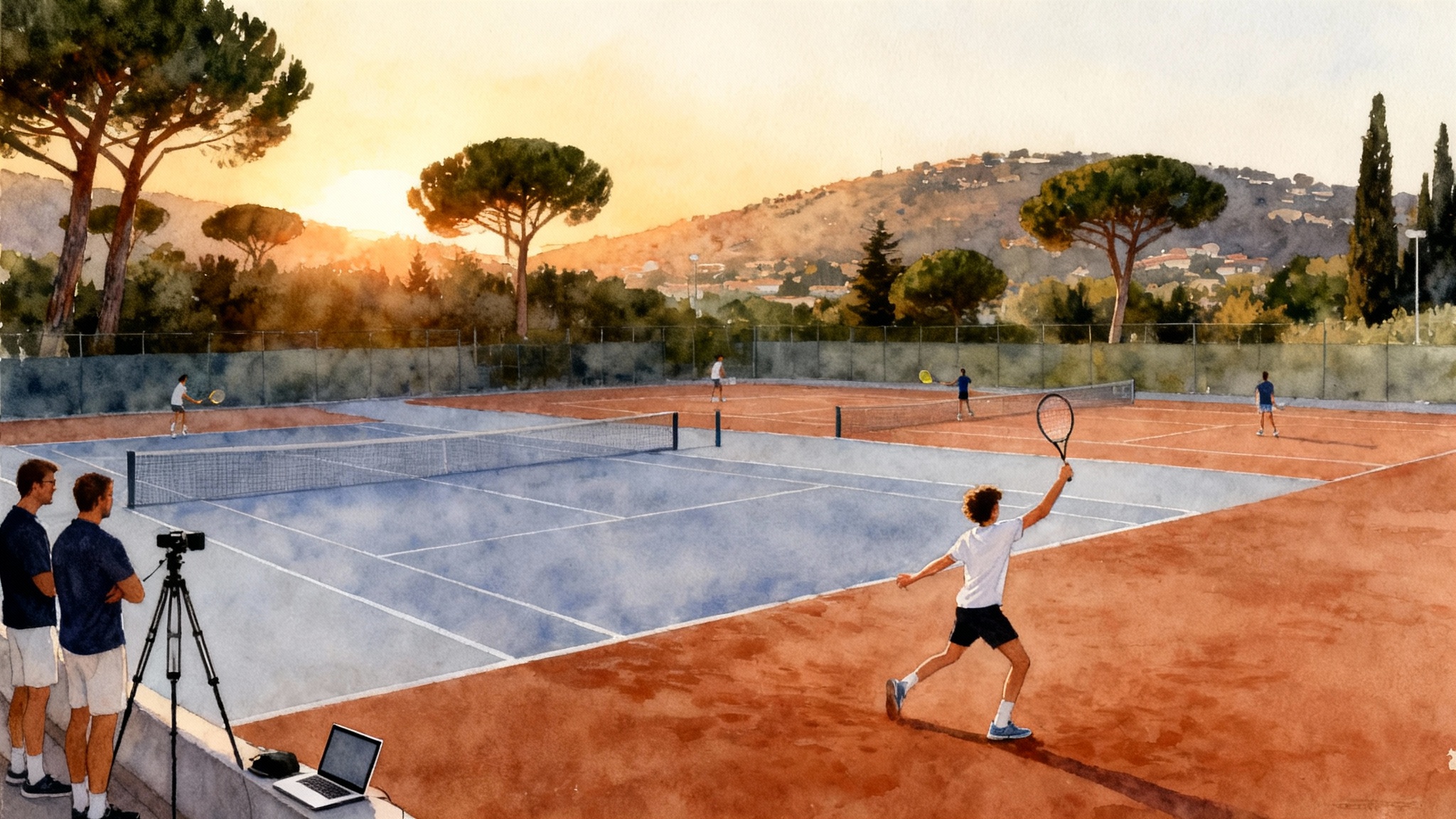
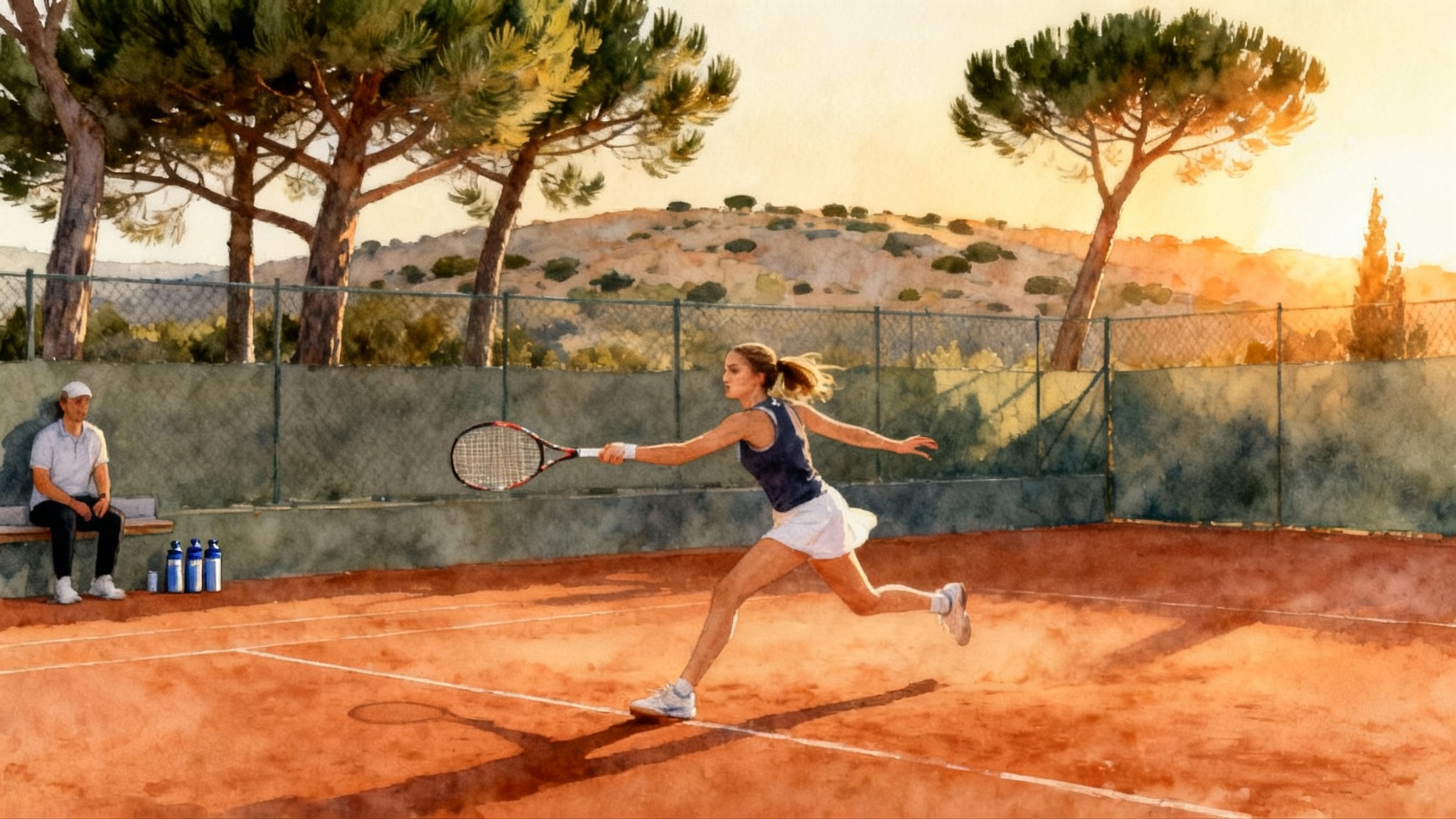
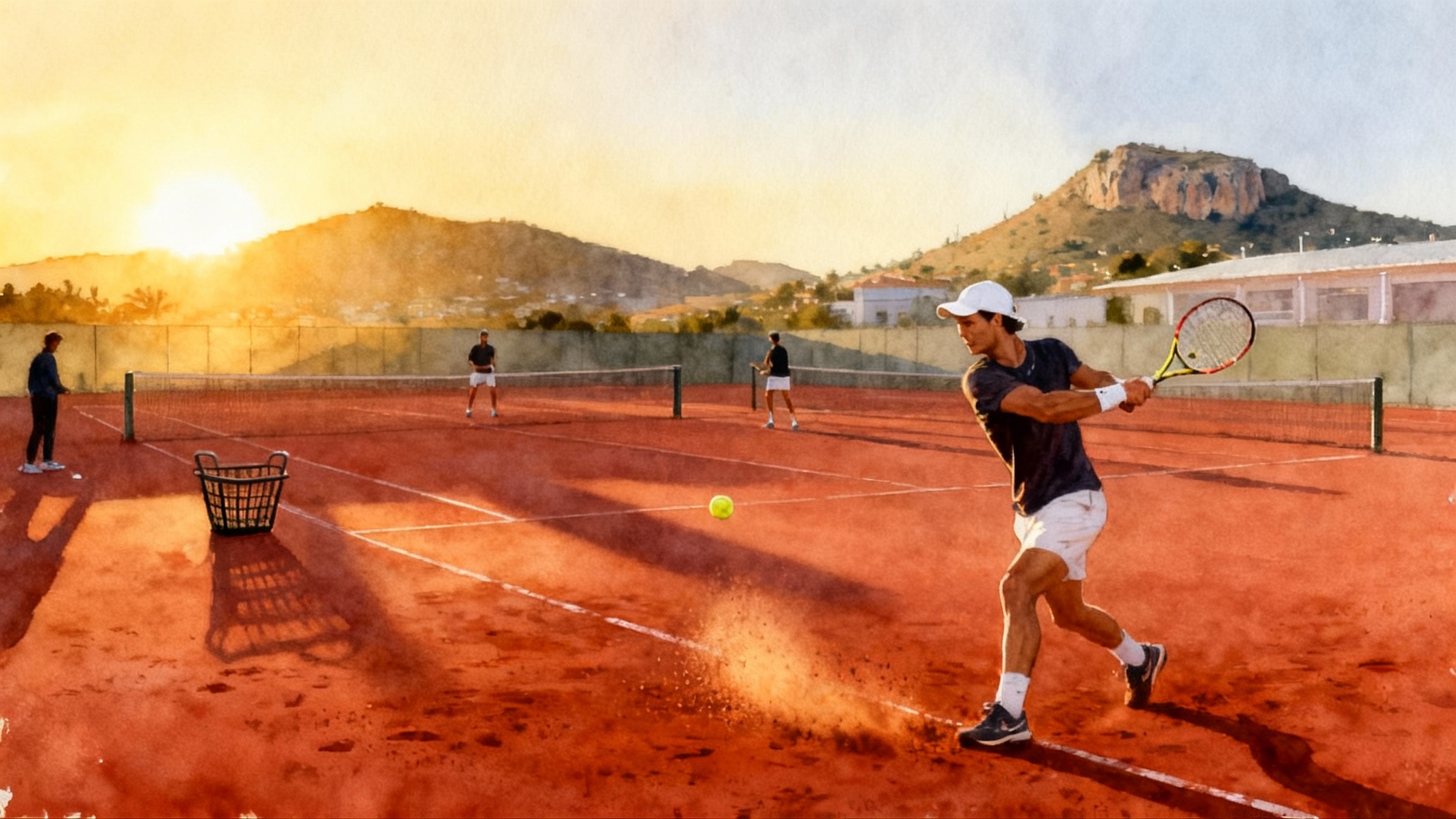
At Mouratoglou’s base near Nice, a red clay week looks different from a Florida hard court week. Rally patterns are longer. The court rewards height and shape. The serve return exchange is softer, so points start more often. Players must learn how to finish without rushing. Training there in spring or pre clay season gives a young athlete a second language. Then she returns home with tools she can also use on hard courts.
The scholarship support from Champ'Seed mattered because it de stressed travel decisions. When a family knows that a block is partly funded, it becomes a calendar choice rather than a bank account gamble. That does not mean open ended travel. It means two to four week sprints with a clear focus and a return date to home base.
Orlando’s role: structure, testing, and match rhythm
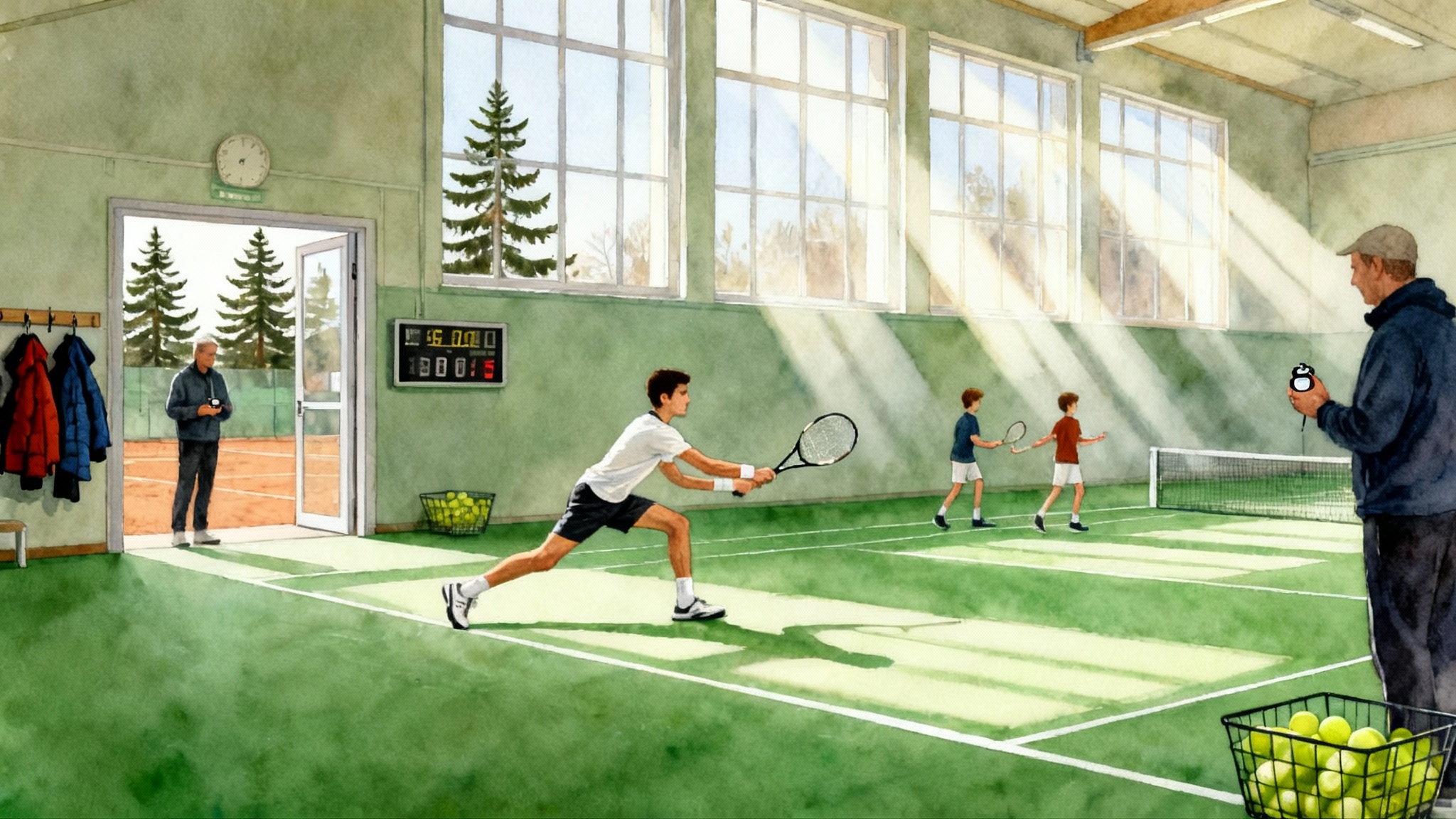
The United States Tennis Association Player Development center in Orlando offers something different. It has a dense menu of matchplay, analytics, and sport science support. A training week there is a dress rehearsal for tour life. Courts are plentiful, sparring is curated, and recovery services are efficient. For a player who already learned to extend points on clay, Orlando is the place to sharpen first strike patterns, serve targets, and return aggression on hard courts. Families looking for additional local options can consider the Revolution Tennis Academy Orlando.
Because it is in the United States, Orlando blocks are also low friction. Families can drive or take short flights, line up competitive sets, and be home by the weekend. That makes it ideal for short tune ups before North American events or after travel heavy periods when you want a controlled reset.
Family control: the spine of the plan
Coco’s parents shaped the training culture, monitored school and travel, and controlled staff changes. That consistency matters more than any single academy logo. When a family sets the standard for daily focus and recovery, the athlete does not feel like a tourist during academy weeks. She arrives with her own identity and leaves with portable habits.
Family control also made staff resets timely rather than reactive. As Coco climbed, the team added fresh inputs, tested new voices, and kept what worked. One well known example came before the summer surge that led to her first Grand Slam title. A new tactical lens and simpler match plans boosted forehand patterns, serve locations, and court positioning. The takeaway for parents is not which name to hire. It is how to time a reset so that it lands before a key swing, not during it.
Why targeted blocks beat permanent relocation
Full time relocation to a big academy can create hidden costs. The athlete loses family routines, has less control of staff, and risks becoming anonymous inside a large training group. Targeted blocks flip that tradeoff. You get exposure to new intensities without giving up your base. You keep your own coach involved instead of outsourcing the whole plan. Most important, you keep the lever of choice. If a block under delivers, you do not have to move your life again. You just design a better block next time.
From a development point of view, two or three well timed blocks per year can create more growth than a full season away from home. Skills consolidate when the player returns to familiar courts and coaching language. Confidence rises because the athlete sees improvement travel back with her, not get stuck at the foreign academy.
The scheduling blueprint that works
Here is a practical calendar that mirrors the hybrid logic. Adjust durations to your athlete’s age and school load.
- January to mid March: hard court base work at home, then a two week Orlando block for matchplay and testing. Emphasize serve return plus plus one combinations, short court footwork, and transition volleys.
- Late March to April: two to three weeks on European red clay. Choose a location that offers daily volume on slow courts and mixed sparring. Build a forehand shape that climbs heavy to the backhand corner and a moonball to reset neutral.
- May to early June: competitive block on clay with a return to home base for school and recovery. Add one Orlando tune up week to stitch clay patience into hard court first strike patterns.
- Late June to early July: grass adaptation if the calendar calls for it. Focus on short blocks that simulate fast starts and shoulder friendly serve volumes.
- Summer hard court swing: staff check in and light tactical reset. Add a consultant or new voice only if patterns need clarity. Keep sets short and frequent to anchor confidence.
- Fall: school and recovery first, then a targeted block where the year’s weakest surface exposed the biggest gap. End with testing and a game plan for the next macrocycle.
This type of plan lets you ride the competitive calendar without letting it ride you. You control the rhythm and the focus of each month.
Surface specific blocks that pay off
Red clay: build depth and high net clearance. Train patterns that start with a kick serve wide, a loop to backhand, and a run around forehand to the open court. Practice sliding into open stance forehands and emergency lobs from deep positions.
Hard courts: sharpen first strike decisions. Serve to the body to jam returns, then take the forehand inside in. Drill short backhand up the line to trigger forehand forecourt opportunities. Use video to check contact height and spacing.
Grass: practice starts and slice. Run daily first ball drills that simulate serve plus one and return plus one. Spend time on skidding slices and blocking returns. Do not chase perfect technique changes in a two week grass window. Chase reliable patterns.
Blending: the magic is not in each block. It is in how the player blends skills back home. After clay, keep one hour per week of heavy topspin and sliding footwork on a hard court. After grass, keep a daily 10 minute block of slice and block return to preserve the touch.
Funding the journey without losing sleep
Parents often ask how to finance a hybrid plan. Here are practical levers that match the pathway.
- Scholarships and foundations: research academy foundations that support travel and training blocks. The Mouratoglou ecosystem includes the Champ'Seed foundation, which has supported select juniors. Applications are competitive. Treat them like college admissions with a clear story of need and impact.
- Federation grants and camps: the United States Tennis Association offers camps, support weeks, and grants. Even partial travel help can turn a maybe into a yes for a two week block.
- Tournament clustering: schedule events in mini circuits to reduce flights. Choose three weeks in one region instead of three separate trips.
- Homestays and partner families: rotate housing with trusted families during academy blocks. Many academies have vetted networks. A homestay can cut costs while keeping a family feel.
- Off season budgeting: ring fence two block budgets per year before you enter the season. If a mid year opportunity pops up, you can repurpose one block rather than scramble for new funds.
Treat funding like fuel planning for a road trip. You do not need a full tank at all times. You need enough to reach the next checkpoint where you can refuel with new results and new sponsors.
Staff resets that unlock the next gear
Changing coaches is not a magic wand. It is a risk that should be timed when the calendar can absorb the transition. The positive version looks like a short consultancy or a new voice added before a major swing. The goal is narrow. Clean up serve targets. Simplify forehand patterns. Clarify court position on returns. If the test run works, extend it. If not, you still have your base coach and routines.
The danger is a mid swing overhaul that collides with travel and ranking pressure. Players then spend valuable weeks learning new language instead of winning matches. The fix is simple. Run a two week trial in the off stretch. Make three measurable goals. Keep everything else the same. Review after a small tournament cluster. Expand only if the signal is strong.
Measurement that keeps everyone honest
A hybrid plan lives or dies by feedback. Parents can use a simple scorecard that travels between home, academy, and federation weeks.
- Serve targets: first serve percentage above 62 percent with two primary targets per side.
- Return quality: two out of three returns deep and middle third or deep crosscourt depending on serve.
- Forehand pattern: ability to create one inside in plus one or inside out plus one per service game on hard courts.
- Defense to offense: two successful counterpunch points per set on clay where the player flips the rally by ball five.
- Transition: win rate at net above 60 percent in sets played during academy weeks.
Share the scorecard before each block. Review on the last day. Carry the notes home. This system prevents the common trap of doing great work in France that evaporates two weeks later in Florida.
How academies can support hybrid athletes
Academies sometimes fear that short blocks reduce their influence. The opposite is true if they design for transfer. Coaches can:
- Start with a one page player brief from the family coach. List two priorities, one red flag, and one non negotiable routine.
- Teach two anchor drills per priority that the athlete can run back home without supervision.
- Record a three minute debrief video on the final day that shows before and after clips.
- Send a four week maintenance plan that fits a home schedule with school.
When academies build for transfer, families return because they see gains stick.
A parent playbook you can use this season
Use this checklist to turn the concept into a plan.
- Define your base: list the home coach, local hitting partners, school constraints, and two weekly slots you can protect for the entire year.
- Choose two blocks: one surface based, one performance based. Surface based could be clay in spring. Performance based could be a pre summer hard court tune up with analytics and serve focus.
- Set a budget: pre fund those two blocks. Everything else must fit around them.
- Build a scorecard: pick five metrics from the measurement section. Agree on targets with your base coach.
- Book your calendar: align blocks to swings. Clay block before clay events. Orlando type block before North American hard events.
- Plan a micro reset: reserve a two week window for a staff trial only if the first half targets lag.
- Protect recovery: enforce two quiet weeks across the year after the heaviest travel. Use them for school, friends, and light skill sessions.
If you do these seven things, you will have a plan that looks simple on paper and feels powerful in real life.
The bigger lesson from Delray Beach to the Riviera
Coco Gauff’s path shows that development is a design problem more than a relocation problem. Families can build a world class environment by stitching together the right places at the right times. A few weeks of European clay teach patience and shape. A week in Orlando makes first strike habits sharper. A stable family core makes everything portable. Timely staff resets add fresh eyes without blowing up the calendar.
You do not need to live at an academy to benefit from it. You need a clear reason to go, a date to come home, and a simple way to measure what you keep. That is the real message of Delray to Riviera. Treat each block as a tool, not an identity. Then let the work speak when it matters most.
Conclusion: make the world small, make the plan specific
The modern junior does not have to choose between home and a distant campus. She can make the world small by bringing the right environments into her year in short, specific doses. Parents who fund two blocks, plan by surface, measure what transfers, and time staff resets will give their athlete a chance to move fast without losing herself. That is the quiet genius of the hybrid pathway. It trusts that development travels. It does, when the plan is clear and the work is done.