Madison Keys: Boca roots that built a Melbourne champion
 Tommy
Tommy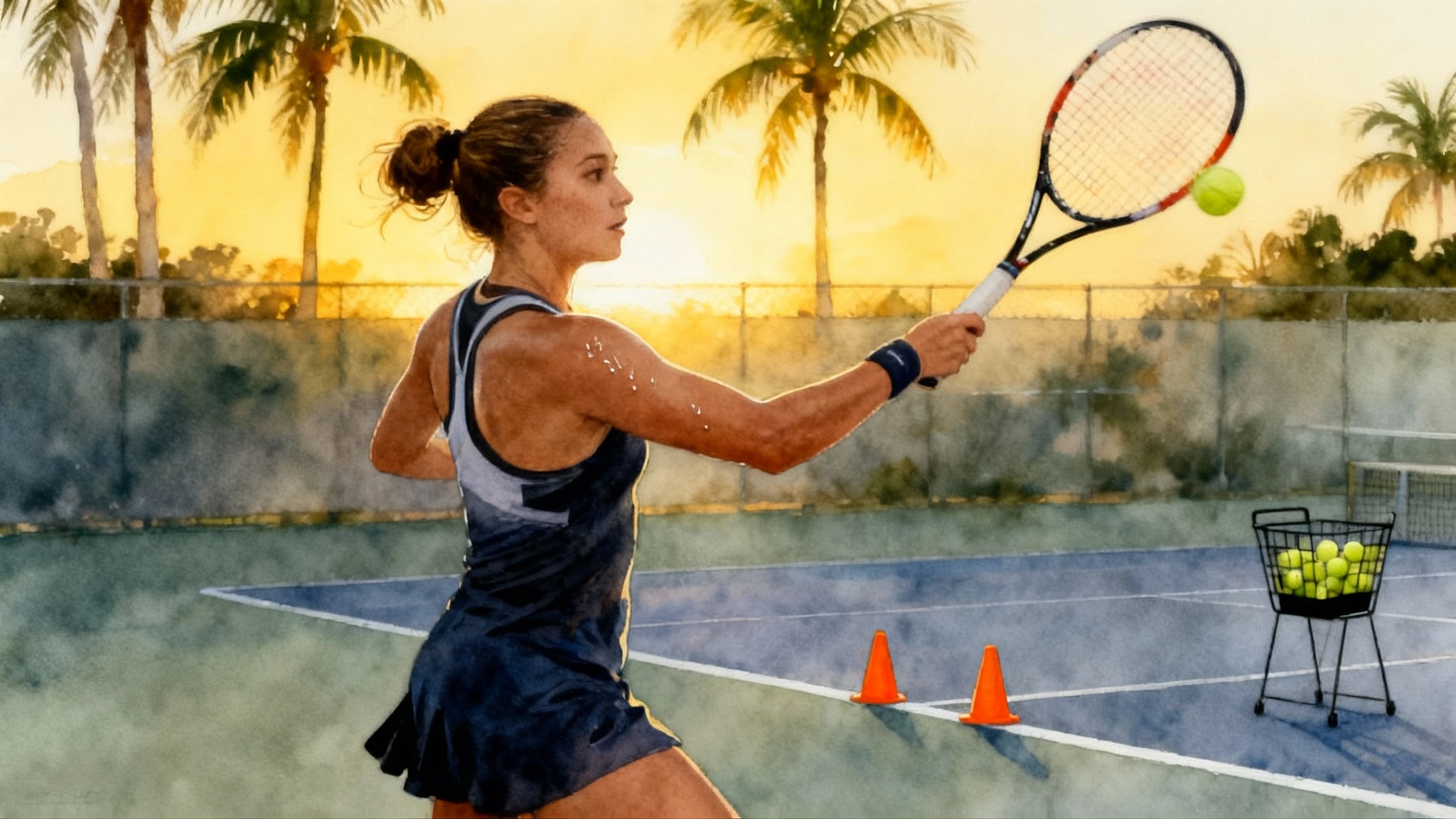
The nine-year decision that changed a career
Before a trophy lifts you on television, it moves you off a map. Madison Keys’ story to Melbourne began with a family choice in Rock Island, Illinois. At 9 years old, Keys told her parents she wanted to be a professional tennis player. Within a year, her mother and sisters relocated to Boca Raton so she could train at Evert Tennis Academy. The decision looked bold then. In hindsight, it looks precise.
Fifteen years later, Keys raised her first major trophy with the 2025 Australian Open title, a result that validated a decade of planning and course corrections. If you want a single, verifiable marker of the journey’s payoff, it is this: she won the 2025 Australian Open crown.
This article distills what mattered most in the years between Boca Raton and Melbourne, and how families, juniors, and coaches can apply those lessons. For a contrasting Florida pathway, see our look at Gauff’s dual-academy pathway. We will focus on three decisions that compound over time: when to move, how to choose the right academy, and how to build a support system that sustains progress through injuries and setbacks.
Why the move worked: clarity beats comfort
Relocation is not a magic trick. It is a bet on repetitions, partners, and coaching density you cannot find at home. The Keys family had a clear model.
- They moved toward a specific coaching philosophy rather than away from a school district. Evert Academy’s emphasis on compact swings, early contact, and disciplined footwork matched Madison’s raw power and appetite for finishing points.
- They accepted tradeoffs. A parent paused a legal career to manage school logistics and travel, while another kept working in Illinois to finance the plan. This divided labor prevented burnout and preserved cash flow.
- They committed to a time horizon. Moves wobble if you expect instant results. The family measured progress in fundamentals Madison could control: cleaner grips, more balanced finishes, more first serves made under pressure.
If you are weighing a move, write two lists. First, list the exact training elements your player cannot get locally in the next 18 months. Second, list what the target location offers that directly closes those gaps. Only move if both lists are concrete and the second list resolves the first.
Inside Evert Academy: building a first strike game, one constraint at a time
Evert Academy’s environment shaped how Madison saw points. Her weapons were present, but the program taught her to aim them.
- Serve plus one. Sessions started with patterns, not isolated serves. The default was a wide serve on the deuce court funneled into an inside out forehand. If the return landed short, the next ball targeted open space, not the line.
- Early contact and posture. Coaches built a stance routine that held up at 3–3, 30–30. Shoulders loaded first, then weight through the ball, then eyes forward to the recovery spot. The goal was a heavy ball without leaning backward or falling off the shot.
- Footwork that preserves options. Instead of chasing speed for its own sake, footwork drills emphasized getting set early enough to keep two directions available on contact. That preserved deception.
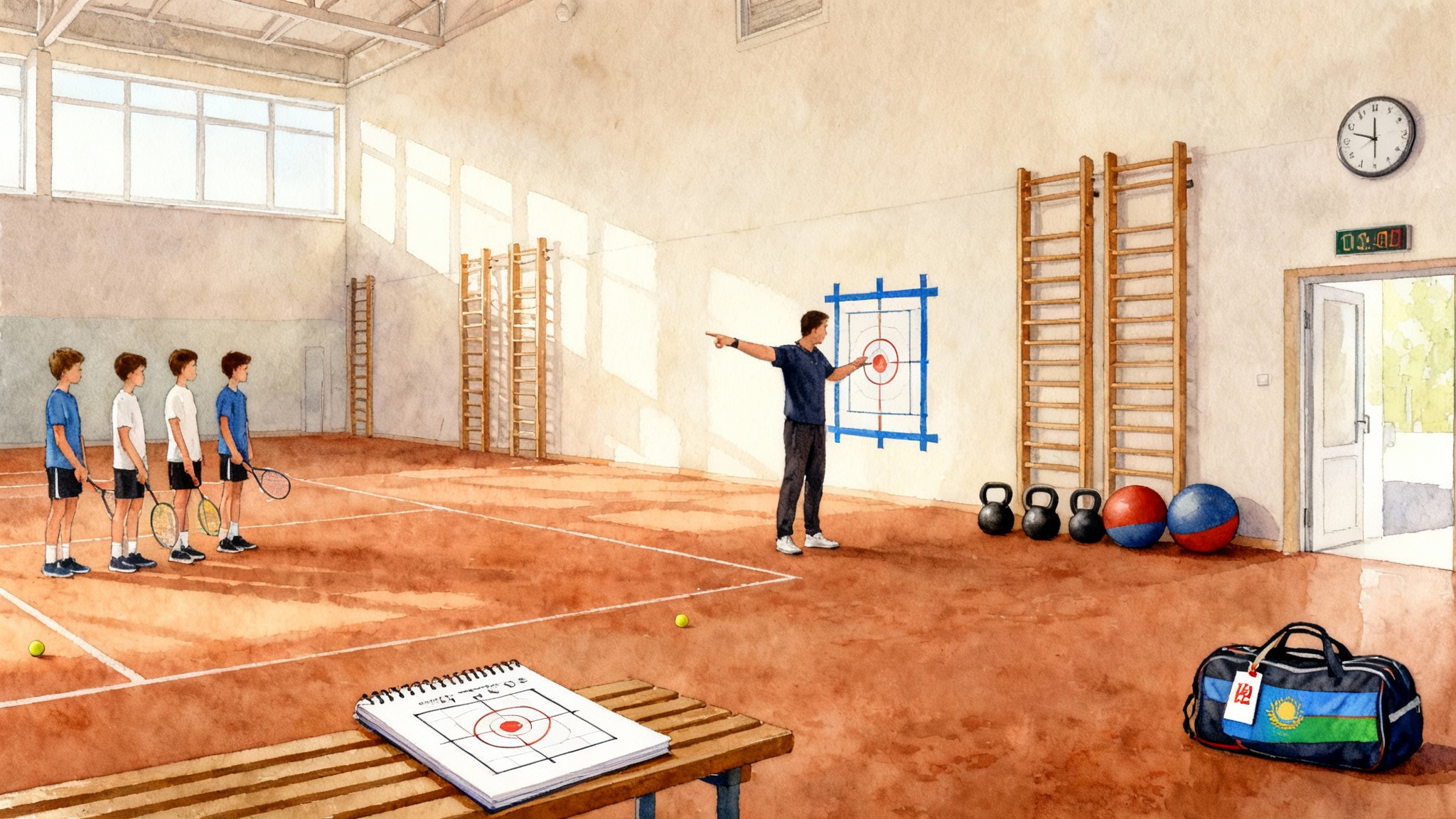
- A simple tolerance rule. Players practiced a shot tolerance that matched pattern intent. Neutral rallies allowed six to eight crosscourt balls, while advantage situations capped tolerance at two balls before taking space. This taught Madison to separate neutral from opportunity.
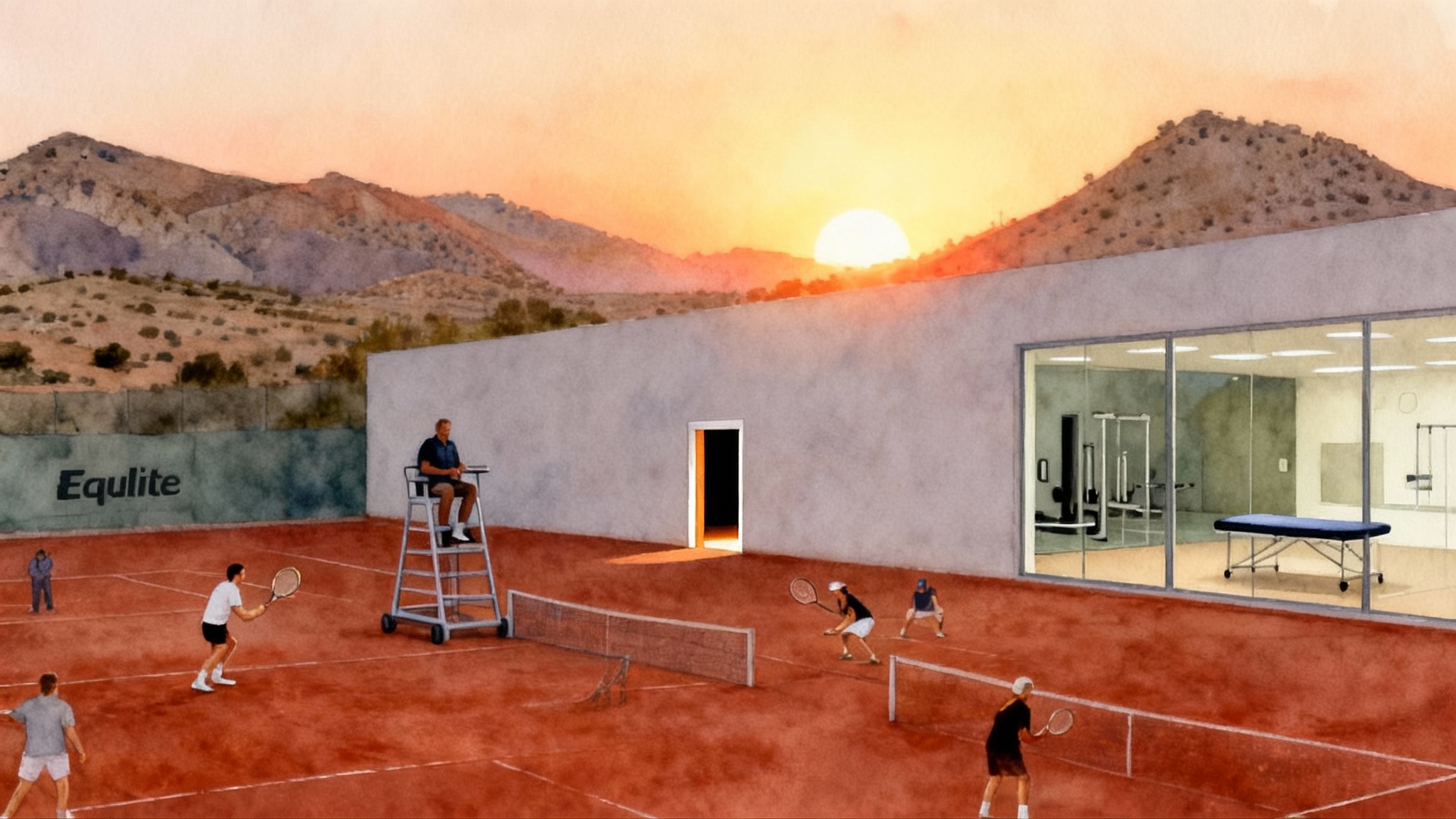
John Evert’s staff also taught discipline that travels. Sets on hot afternoons in Boca had no tricks, just score pressure and target cones. Chris Evert’s courtside presence added a second lesson: high standards delivered quietly. You earned the next basket of balls by meeting a clear standard on the one in your hand.
By age 9 to 10, the family relocation and academy fit were aligned. Keys had relocated to Evert Academy at 9, and coaches were simplifying her mechanics and point structure. The idea was not to make every rally short. It was to make the first good ball count.
The handoff: USTA Player Development and a wider runway
As Madison climbed the junior and pro circuits, she folded in support from USTA Player Development. That meant structured hitting blocks in Florida, exposure to European red clay, and access to national coaches who could tune her patterns without rewriting them. The USTA National Campus in Lake Nona gave her year round access to sparring partners, sports science, and multiple clay types in one location. This mattered for a player whose power can overheat on slow courts. Rehearsing patience on true red clay built a second gear that supported her first.
The key principle in this phase was integration. National coaches reinforced academy habits and later coordinated with her private coaches instead of competing with them. The work stayed consistent: protect the forehand, serve location discipline, commit to patterns that finish points without forcing line winners under stress. For another integrated pathway, study the JTCC and Frances Tiafoe model.
The pro team that turned potential into Melbourne reality
A decade into her career, Madison refined the circle around her. She leaned on coaches who respected her identity as a player who wins by taking time away, not by avoiding risk entirely. Then she made a pragmatic change that paid off. Beginning in 2023, she worked day to day with Bjorn Fratangelo, the former professional who became her coach and later her husband. The partnership did not change her nature. It clarified it.
What changed on the court
- Point starts. The team tracked first serve location and plus one reliability as the lead indicators. A successful game for Madison was not aces. It was a high percentage of first serves followed by a forehand contact inside the baseline.
- Restraint as a weapon. They quantified green light windows. If she earned a short ball off a solid crosscourt, she green lighted the next swing toward big targets, not corners. If the ball stayed neutral, she recycled to depth and waited for a second chance.
- Pattern rehearsal under fatigue. Late in practices, when feet get sloppy, they rehearsed the same three patterns, then closed with return plus two drills to keep the backhand return compact.
Why it mattered in Melbourne
The Australian summer rewards clean starts and controlled aggression. Courts are quick, heat is real, and belief spreads fast when you hold serve without drama. The Adelaide title at the start of 2025 built rhythm. In Melbourne, that rhythm held. Keys kept service games short, trusted her forehand targets, and accepted rallies when the score demanded them. She played to her identity with fewer detours. For a parallel case of simplifying strengths at pro level, compare IMG’s blueprint for Korda.
Injuries and the art of staying in the race
Madison’s timeline includes interruptions. There were seasons with wrist trouble, weeks where the body or confidence did not cooperate, and months where ranking slipped. The crucial habit was to treat injuries as project cycles, not derailments.
A simple template for injury blocks
- Diagnose the limiter. Is it pain tolerance, range of motion, or confidence in an exact movement, like turning the wrist through a forehand? Name it precisely.
- Keep identity alive. If forehand racket speed is your signature, maintain it with safe partial movements. Use medicine ball throws that mimic your kinetic chain without stress.
- Rebuild one pattern at a time. Start with serve location and a single plus one pattern. Add the return pattern next. Do not chase every drill at once.
- Decide the first week back before you return. Choose surfaces, match count, and opponents you match up well against. Play your way into the physical load.
The emotional side matters too. Madison has been public about leaning on family and a small team to keep perspective. That structure reduced the temptation to make wholesale changes after a bad month.
How to decide when to move for tennis
Relocation works when it solves the right problem. Use this checklist before you pack a car.
- Define the problem in one sentence. Example: We need daily live ball with peers who can handle 100 mile per hour pace so shot selection gets real. If you cannot write the problem, do not move.
- Identify the non negotiables. Schooling plan, safe housing, transportation to courts, recovery access. Write the monthly budget with line items for coaching, court time, fitness, and travel.
- Visit with purpose. Watch academy courts at 7 a.m. and 5 p.m., not just during the noon tour. Ask to observe a match play day and a slow fundamentals day.
- Trial first. Book a 4 to 8 week block in summer. Measure changes in three metrics: first serve percentage under pressure, unforced errors on neutral balls, and physical output in the last 20 minutes of practice.
- Decide your runway. Families often underestimate time. A realistic runway is 18 to 36 months of steady work, not three.
How to choose the right academy fit
Every academy sells belief. Your player needs fit.
What to ask and observe
- Pattern philosophy. Ask coaches to describe the three most common point patterns they teach for your player’s style. If the answer is vague, you will be guessing all year.
- Staff depth. Who actually coaches your court Monday to Friday, and who covers when they travel? Meet those people.
- Player density. Can your player find at least three peers within two Universal Tennis Rating points who train at the same hours? If not, your live ball quality will vary too much.
- Feedback cadence. How often will you get video and notes? Weekly video that shows contact height and recovery space is more useful than motivational speeches.
- Transition plan. If your player improves quickly, what changes in group and match play access? You should know the path before you need it.
What to test in a trial week
- Serve plus one. Ask for two serve locations and one plus one pattern to rehearse every day. See if coaches enforce them.
- Neutral tolerance. Request a drill that punishes premature line hunting. Count how many neutral errors your player makes before coaching intervention.
- Recovery culture. Watch what players do between drills. Are there planned cooldowns and mobility, or does everyone check their phones and leave?
How to sustain progress through injuries and dips
Staying on the track requires tools you can use on bad days.
- The three metric dashboard. Track first serve percentage, plus one forehand win rate, and unforced errors on neutral balls per set. If two are green, you can afford a red.
- The red light rule. If pain changes mechanics, stop. If discomfort is just fatigue, finish the planned block at lower intensity.
- The travel calendar filter. Play events that give you at least two practice days on site and a realistic path to two winnable rounds. Protect confidence intentionally.
- The film loop. Build a 90 second highlight of your best pattern from the past month and watch it before matches. Confidence comes from repetition in your own game, not from opponent scouting alone.
What Madison’s path proves
Three choices stand out across Madison Keys’ Boca Raton years and her Melbourne breakthrough.
- Move with a model, not a hope. The family aligned a clear game identity with an academy that could polish it. They evaluated progress by fundamentals that support that identity.
- Integrate, do not restart. Evert Academy habits carried forward into USTA Player Development blocks and then into her pro team. Madison’s camp added layers without discarding what worked.
- Simplify when the stakes rise. In Australia, she did not collect new patterns. She executed old ones with conviction. Serve to a target, forehand to space, defend when the score demanded it.
None of this guarantees a Grand Slam. It does create a blueprint that gives talent the right frame. If you are a family considering a move, an academy fine tuning a shooter’s game, or a player returning from injury, that blueprint is usable tomorrow.
A short action plan you can print
- Define your player’s identity in one sentence. Example: Aggressive baseliner who wins by taking time away.
- Choose three metrics to track weekly. First serve percentage, plus one forehand conversion, neutral error count.
- Build a two pattern practice menu. One for serve games, one for return games. Rehearse them daily.
- Schedule a four week trial at a target academy. Measure fundamentals, not just wins.
- Plan an injury protocol now. Decide who you call, what you measure, and how you maintain your signature weapon safely.
The Boca to Melbourne loop, closed
The satisfying part of Madison Keys’ story is not only the trophy moment. It is that the steps she and her family took years earlier are legible. A nine year old’s move made sense because the daily work that followed was specific. The academy fit worked because the point patterns matched the player. The support system held because roles were clear and data beat moods. That is how a bold choice in Boca Raton becomes a Sunday in Melbourne.