From Athens to Riviera: Tsitsipas’s Mouratoglou Academy Path
At 16, Stefanos Tsitsipas left Athens for the French Riviera and the Mouratoglou Academy. How co-coaching with his father, daily pro sparring, multi-surface reps, and video analysis accelerated his leap from juniors to ATP Finals champion and Slam finalist.
 Tommy
Tommy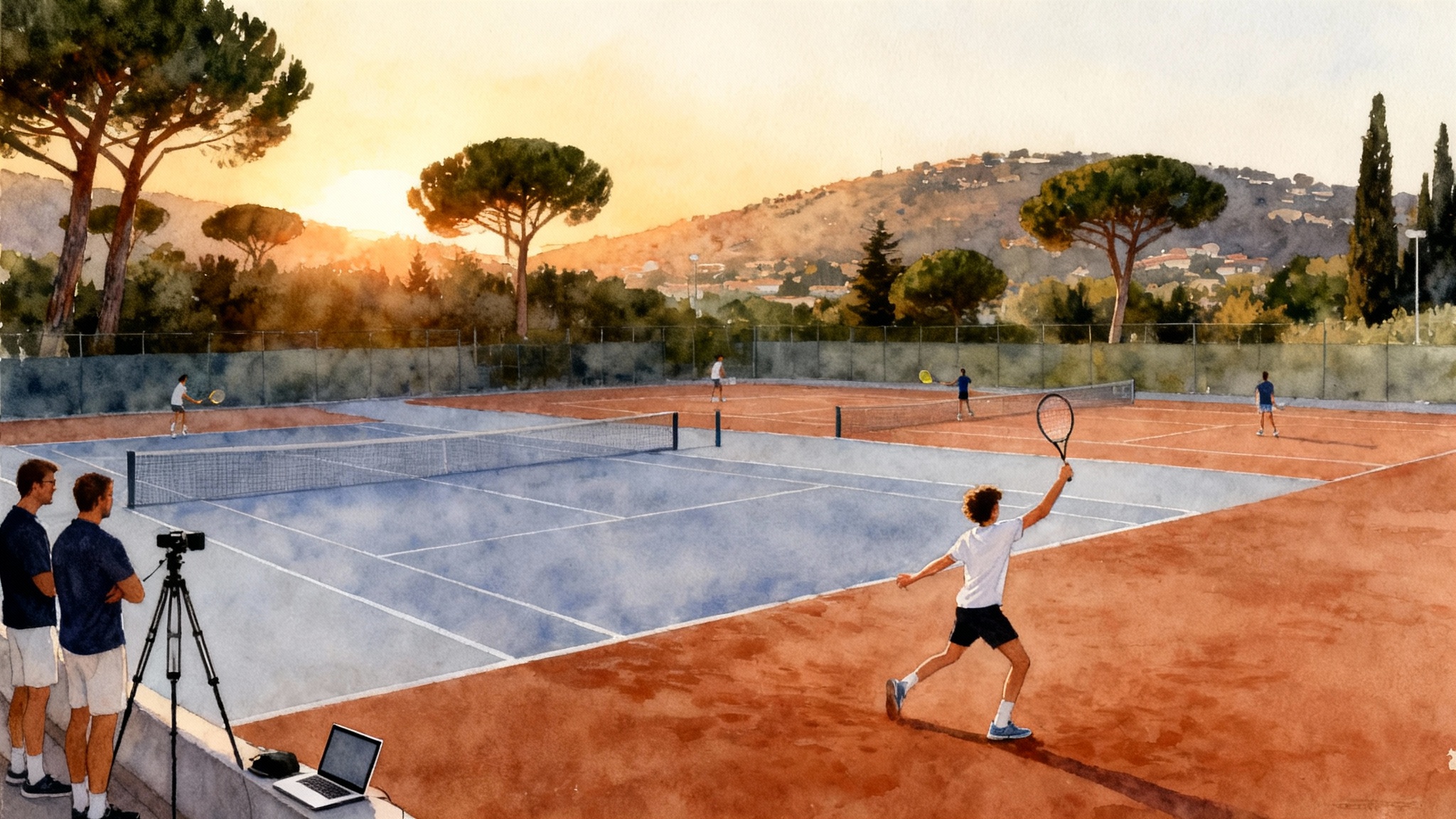
The day a junior from Athens chose the Riviera
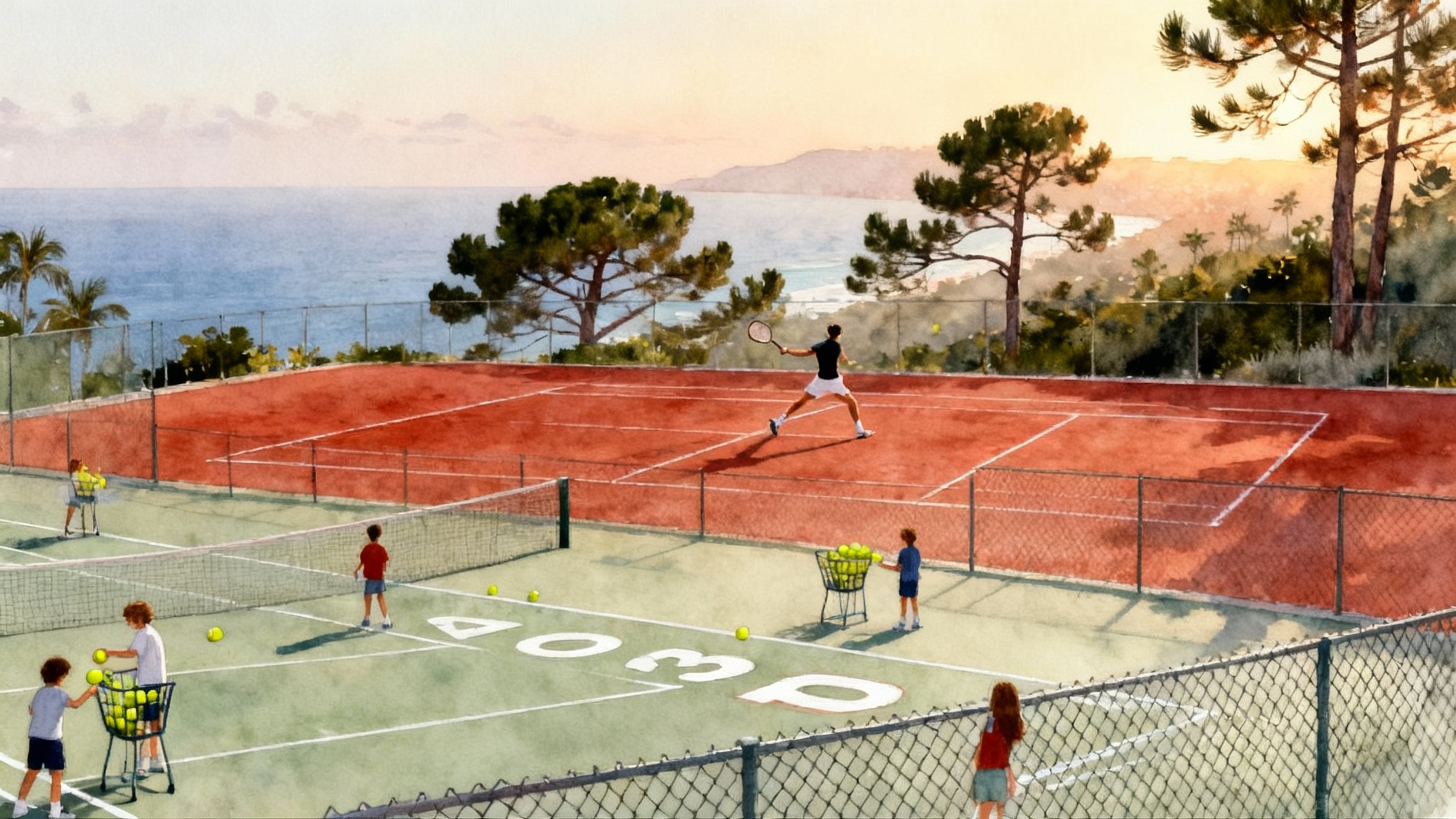
Stefanos Tsitsipas was 16 when his family made a consequential decision. Greece had pride, passion, and a small but growing tennis community. What it did not have was a daily room full of top pros to spar with, a calendar’s worth of match-play opportunities on multiple surfaces in one place, and a support staff who could turn raw data into a map for improvement. The Tsitsipas family chose to move his training base to the French Riviera and the Mouratoglou Academy, which had just stepped up its investment in high performance development. Patrick Mouratoglou had spotted Tsitsipas on YouTube and invited the family to Sophia Antipolis; in 2015 the young Greek began training there in earnest, a relationship the Academy highlights on its Mouratoglou profile of Tsitsipas. The Riviera is also home to programs like All In Academy’s French Riviera campus, underscoring how concentrated the ecosystem is.
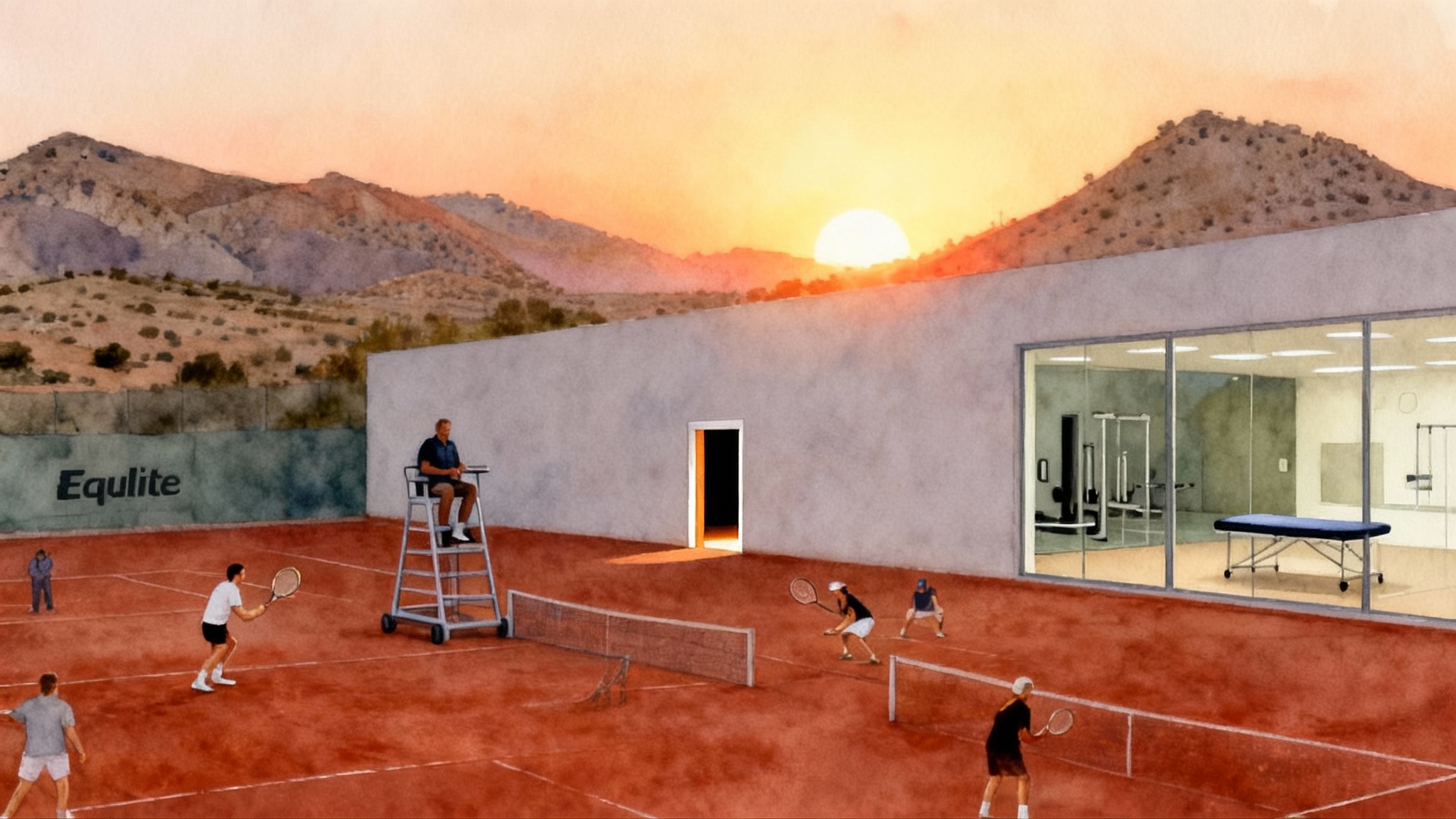
This was not a typical move to a boarding academy where a teenager disappears into a new system. It was a carefully built partnership. Apostolos Tsitsipas, Stefanos’s father, remained a central coaching voice while the Academy supplied professional training partners, facilities that mirrored tour conditions, and specialists in physical preparation and video analysis. The pitch to the family was simple. Keep the identity. Expand the environment. For further context on how elite academies shape games early, see how Mouratoglou built Gauff.
Co-coaching that kept the family’s voice
The most important thing the Tsitsipas camp preserved was continuity. Apostolos did not hand over the keys. Instead he co-coached alongside the Academy’s high-performance staff, coordinating periods of emphasis: a week leaning into serve plus one patterns, the next week on first-strike forehands from a deeper return position, the next on transition instincts after a heavy crosscourt backhand. The Academy staff added structure and feedback loops. Apostolos set intent and guarded the player’s identity.
That shared lane approach mattered because a teenager’s game hardens fast. A total reset often erases strengths. With Stefanos it did the opposite. The family’s emphasis on an aggressive forehand, a one‑handed backhand that could do more than just block, and willingness to close at net stayed intact. The Academy scaled those habits with volume and variety. This co‑coaching concept echoes other success stories, such as the way the Pilic system bridged family influence and academy rigor when Niki Pilic Academy forged Djokovic.
Daily pro sparring and the power of difficulty
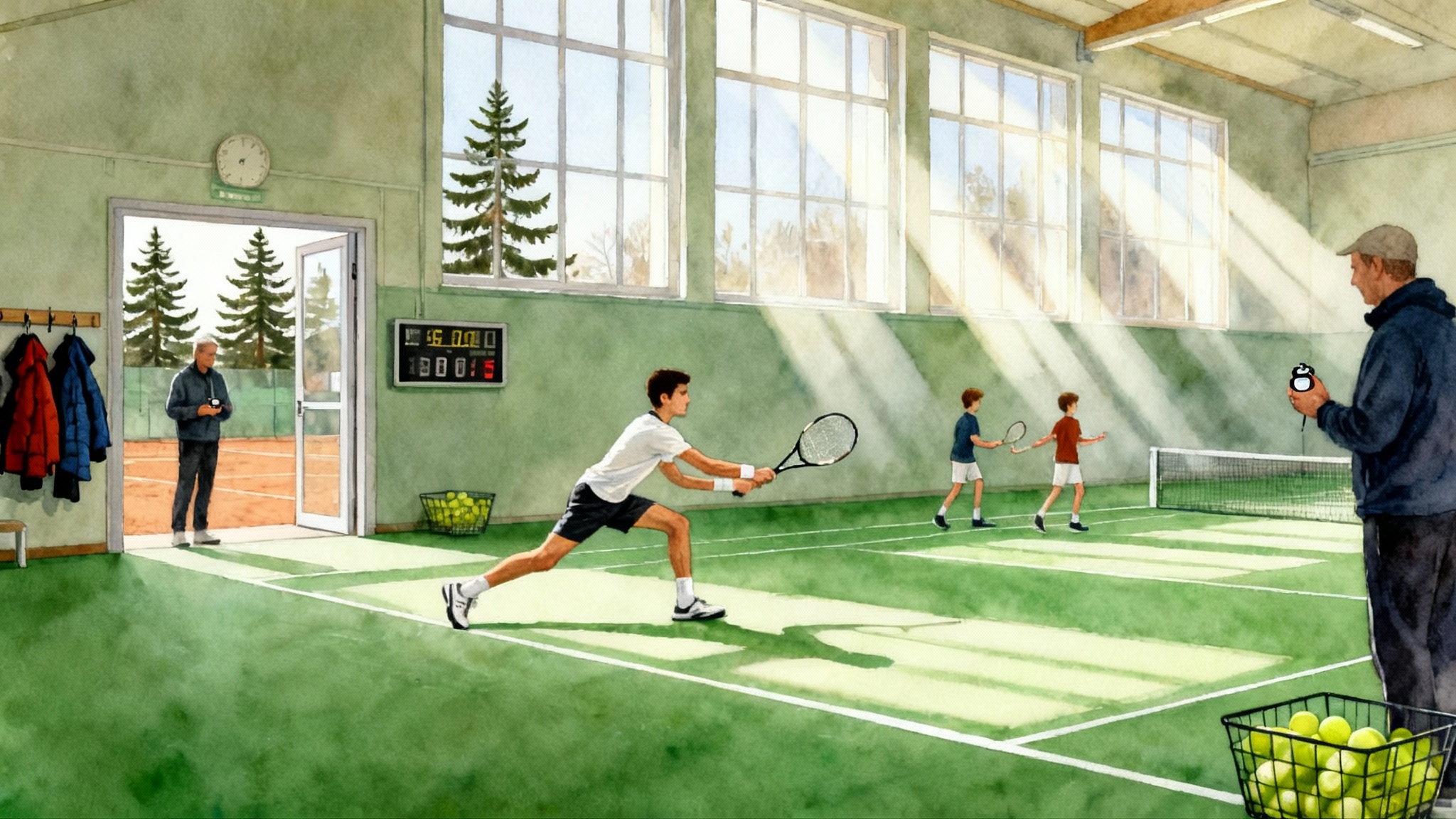
The immediate upgrade came from daily hitting groups that were physically and mentally tougher than junior practice. Think of difficulty as resistance in the gym. If a junior cannot find it at home, relocation can supply it in bulk. At Sophia Antipolis, Stefanos could hit two or three high‑quality sessions per day without burning hours in a car. Mornings might begin with a 90‑minute live ball drill against a top 200 professional who took time off the ball and countered heavy forehands with even heavier crosscourt angles. Afternoons might be a first‑to‑four short‑set series that tilts to the returner, with new servers every set.
Pro sparring accelerated his decision speed. It also tightened his defensive footwork on hard and clay. When opponents take the ball early, recovery steps must be small and frequent, not big and dramatic. That footwork is not learned from a coach’s cue. It is learned from not getting there in time, over and over, until the body figures out a faster pattern.
Multi‑surface reps that build true all‑court habits
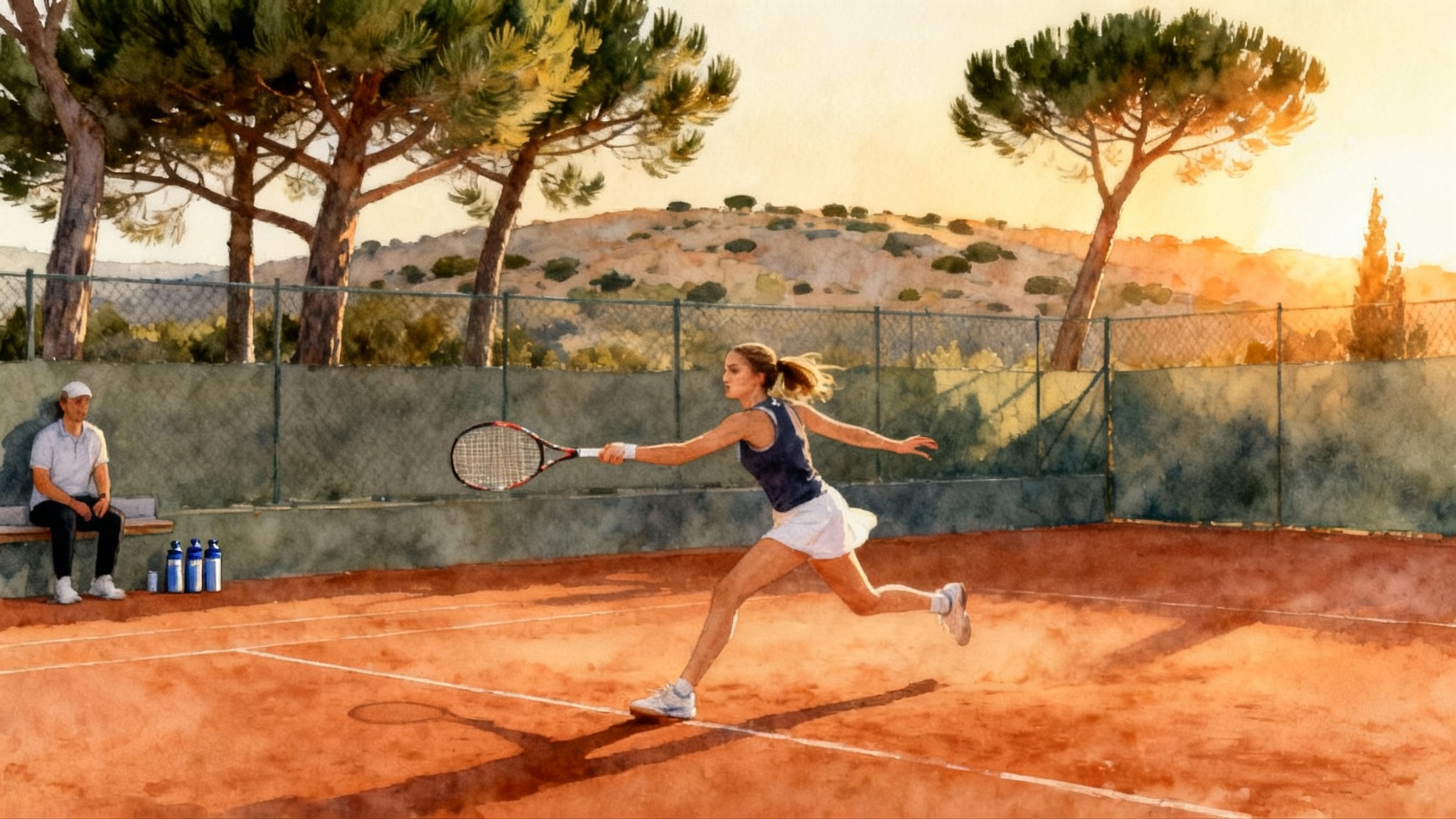
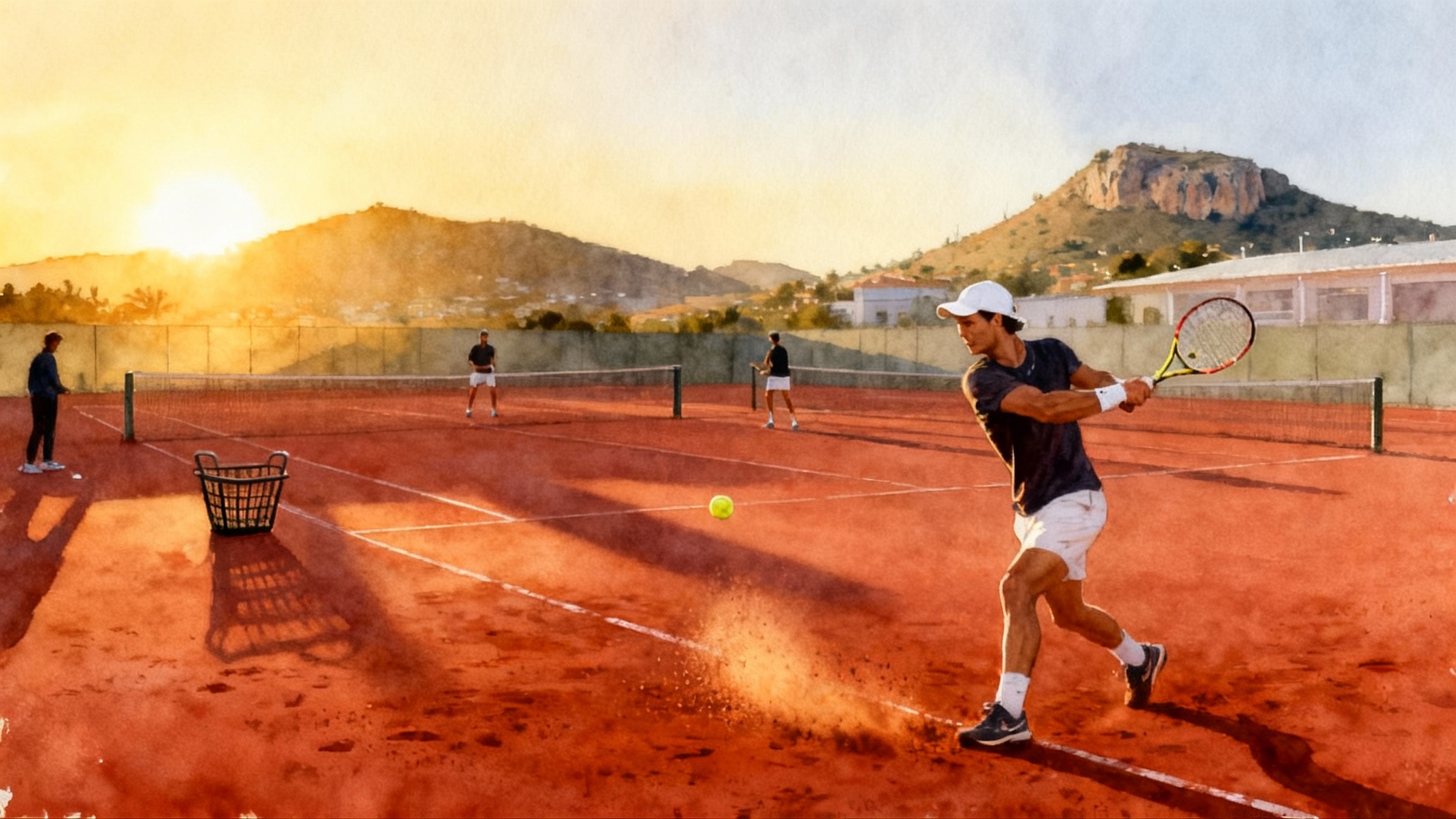
The Academy’s grounds offer both clay and hard courts that are intended to mimic tour conditions. For a teenager who had played many junior events on hard courts, the clay volume was valuable. It forced a wider contact point on the forehand, more patience in backhand exchanges, and a higher share of points that start neutral and end with a pattern rather than an outright strike. On hard courts, the team emphasized first‑strike patterns and shorter point construction. The alternation did not create identity confusion. It built identity range.
A simple example illustrates the point. On clay, Stefanos learned to use a deep crosscourt forehand to open the ad side, then step around and play an inside‑in forehand to the deuce corner. On hard, the same first ball often finished the point with a forward move. The pattern stayed familiar; the finishing window changed with the surface.
Video and data that told the truth quickly
The Academy’s staff used video to track small things that matter in big matches. For a player with a tall frame and one‑handed backhand, the team paid attention to contact height under pressure. Video clips labeled by rally length and ball height showed whether late footwork forced a backhand slice too often on the third or fourth ball. The staff also measured serve location spread and the success of serve plus one forehand when the plus one landed in specific zones.
This is the quiet value of a data‑literate base. Instead of debating, the team looked. When the numbers said second serve to the body at 30‑all is bailing you out on hard courts but not on clay, the plan changed the next day. When clips showed that first‑volley contact drifted too low after deep approach shots, the next morning’s drill added a cone two meters inside the baseline with a height target on the net tape.
The payoff: a quicker bridge from juniors to the tour
Results followed quickly. Tsitsipas rocketed from top junior to a presence on the Association of Tennis Professionals tour. The turning point, symbolically, was London in November 2019 when he won the year‑end championship, as documented in the 2019 Nitto ATP Finals champion recap. He later reached major finals at Roland Garros and in Melbourne. Whatever the exact season or ranking swings, the throughline is clear. A junior with a defined game moved into an environment that multiplied hard problems and answered them with targeted, observable work.
What juniors and parents can copy right now
Every family situation is different. Budgets differ, national federations vary, and not every junior should relocate. Yet there is a repeatable playbook here for when to move, how to structure match‑play blocks, and how to build an all‑court identity that survives pressure.
When to relocate: a decision rubric, not a wish
Relocation is best framed as a testable hypothesis rather than a dream. Write it down and give it eight weeks.
-
Evidence you may need to move
- Training scarcity: Fewer than three same‑level or stronger practice partners within a 45‑minute drive on at least four days per week.
- Competition ceiling: Local events produce mostly lopsided wins or losses, with few matches landing between 52 and 60 percent of total points won. You need more matches in that narrow band to learn how to close.
- Surface monotony: You play almost all matches on one surface. Your calendar should include at least 25 percent of matches on a second surface by age 16.
- Support gaps: You cannot access consistent physio, strength and conditioning guidance, or video analysis for key matches.
-
What to test during an eight‑week trial at a new base
- Volume: Can you get five quality hits per week with better players without adding travel stress.
- Feedback: Can you review at least two matches per week on video with an analyst who gives you two or three measurable goals for the next block.
- Rate of improvement: Do key statistics move meaningfully. First‑serve points won, second‑serve returns to the middle third, backhand unforced errors under ten shots. Pick three and measure weekly.
If two of those three categories improve while academic and well‑being factors remain stable, a permanent or semi‑permanent relocation is justified. If they do not, you can still extract value from periodic camps without uprooting your life.
How to structure match‑play blocks that actually translate
Juniors often do practice sets that feel competitive without changing anything on match day. Make the block specific and scored.
-
Block shape: 3 weeks on, 1 week to consolidate. During the 3‑week block, play six to eight scored sessions per week that mimic real stress. In the consolidation week, drop to three sessions and invest more in video and physical work.
-
Daily template
- Constraint set, first to four games, with a double‑fault costing two points. Purpose: raise second‑serve quality and remove bailout habits.
- Pattern set, first to four, where the server must follow any short ball inside the back third with a net approach. Purpose: force transition instincts and first‑volley mechanics.
- Situational tiebreaks: best of three tiebreaks starting 2–2, then 5–5, then a deciding breaker to 15 points with a change of ends every four.
-
Opponent mix per week: two stronger hitters, two peers, one extreme defender, one hyper‑aggressive shotmaker. Label them that way. You need to solve specific problems, not just collect wins.
-
Review cadence: Pull five clips for each session with timestamps. Three should be about what worked, two about what did not. Write the next day’s drill in one sentence based on those clips.
Building an all‑court identity that travels year‑round
Identity is not a slogan like big forehand or great fighter. It is a repeatable set of choices under pressure. To build that, tie identity to measurable behaviors that look the same on hard and clay.
-
Serve plus one map: Draw three zones for the plus‑one forehand on each surface. Track the percentage of times you win when the plus‑one lands in each. If one zone drops below 52 percent for two consecutive weeks, design three drills that feed to that zone from a neutral ball and from a short ball.
-
Transition rule of two: Any time you hit two attacking balls inside the baseline, require yourself to close forward. Log whether first‑volley contact is above or below net height. Upgrade footwork if more than 35 percent are below.
-
Backhand pressure plan: Separate neutral backhands from pressure backhands. On clay, set a target of lifting more pressure backhands crosscourt with shape. On hard, set a target of flattening a higher share down the line to flip court position. The technique may look similar. The chosen ball flight should change.
-
Surface rotation calendar: For a home base with access to both surfaces, assign weeks rather than days. Two weeks clay, one week hard in spring. Two weeks hard, one week clay in late summer. The week structure allows the nervous system to lock onto a bounce pattern before changing.
-
Net choices that scale: Pick two bread‑and‑butter approaches. For example, inside‑out forehand from the ad corner into the opponent’s backhand on clay, and backhand down the line behind a deuce‑court serve on hard. Practice both weekly so that closing the net feels like a default rather than an act of bravery.
Co‑coaching without chaos
Parents and private coaches are often the guardians of a player’s long‑term story. Academies run the day‑to‑day factory. The trick is separation of roles and a clear schedule for information.
-
Weekly alignment: 20‑minute video call every Sunday among the player, the family coach, and the academy lead. Review three metrics and agree on two goals for the week. No more than two.
-
In‑person authority: At the training base, one voice runs the court that day. The other observes and takes notes. Trade days if needed, but never talk over each other.
-
Clip library: Use short tagged clips instead of long debriefs. Labels such as return feet too square on body serve or late split after wide serve land faster than paragraphs of notes.
-
Tournament division of labor: Family coach handles pre‑match routines and debrief. Academy coach handles warm‑up hitting and logistics. Keep the roles stable across events.
A sample seven‑day microcycle for a 16‑ to 18‑year‑old
-
Monday
- Morning: Serve plus one patterns on hard, 60 minutes, first‑ball targets marked with cones in deuce and ad courts.
- Midday: Strength and conditioning, lower body force development, 45 minutes.
- Afternoon: Two first‑to‑four sets, returners start every game at 15–0.
-
Tuesday
- Morning: Clay ball tolerance ladder, 20‑ball rallies with down‑the‑line change allowed only after 10 balls.
- Midday: Video review, 25 minutes, five clips from Monday’s sets.
- Afternoon: Transition drills, approach and first volley with depth gates.
-
Wednesday
- Morning: Pro sparring set to six, no‑ad scoring, change of return position every two games.
- Midday: Mobility and soft tissue work.
- Afternoon: Match tiebreak series to 10, change ends every four points.
-
Thursday
- Morning: Clay within‑point fitness, point play starting with a deep neutral ball to the backhand, server must win the point inside seven shots.
- Midday: Upper body strength and med ball throws, 35 minutes.
- Afternoon: Off‑court recovery and light coordination work.
-
Friday
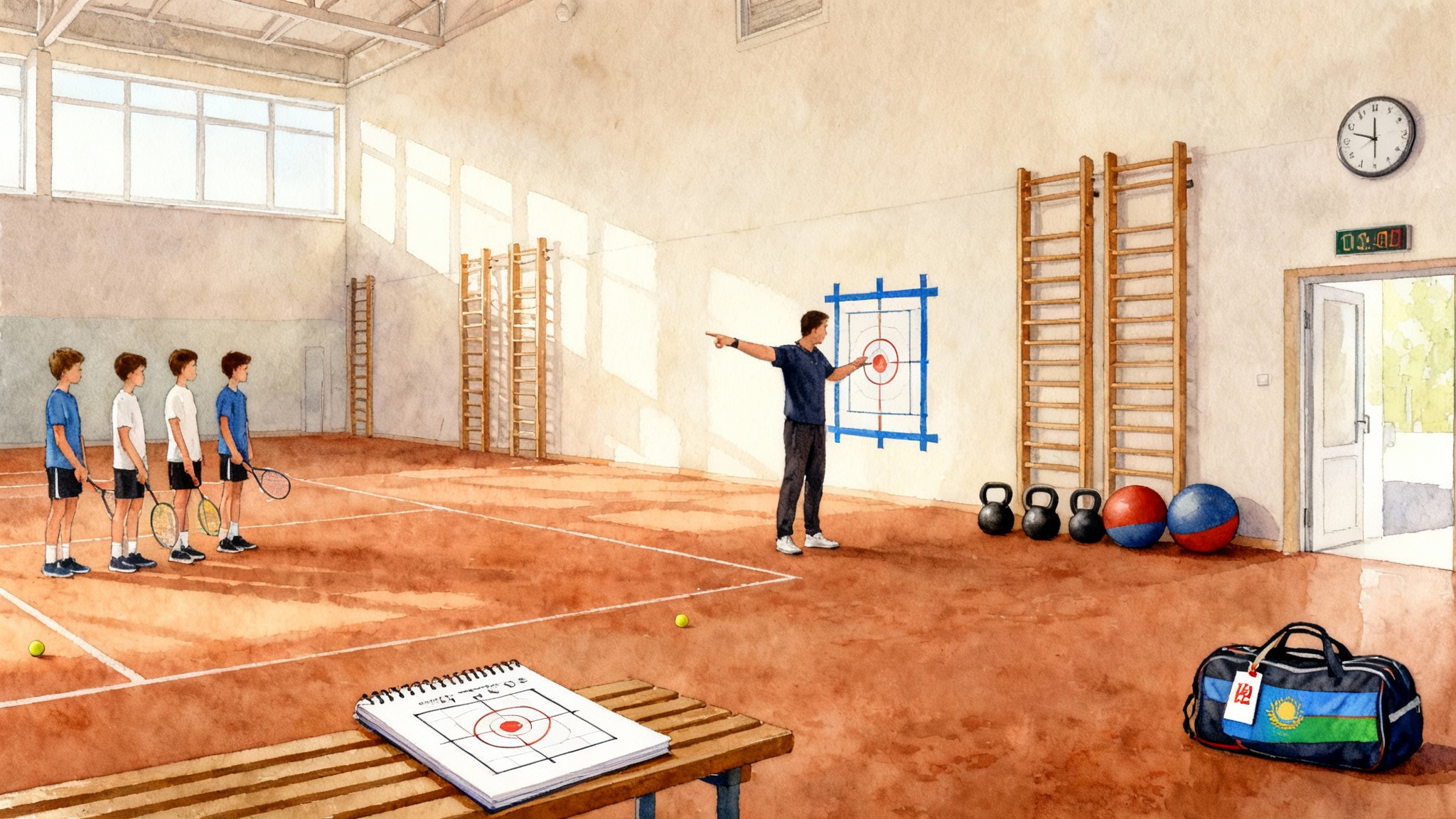
- Morning: Serve location spread drill with chalk targets, 60 balls deuce, 60 balls ad. Log make rate and plus‑one depth.
- Afternoon: Two practice sets against a stronger hitter, with a mandatory approach after any short ball inside the back third.
-
Saturday
- Morning: Tournament simulation, best‑of‑three sets with a new opponent for each set if possible. Coach restricts verbal input to changeovers.
- Afternoon: Short video and note capture, plan two adjustments for next week.
-
Sunday
- Recovery and scheduling. Twenty‑minute alignment call with the full team.
What success looks like by the second block
Inside six to eight weeks you should see specific shifts:
- First‑serve points won rises by three to five percentage points on hard without a drop in second‑serve points won.
- Backhand unforced errors under ten shots fall by 10 to 15 percent on clay.
- Net points played increase by 20 percent with first‑volley contact height improving by at least five centimeters on average. You can measure this on video using a calibrated reference such as the top of the net tape and the player’s known height.
- Match outcomes cluster more often in the 52 to 58 percent total‑points‑won band. That tells you you are playing competitive tennis that strains decision making and builds resilience.
Why this template worked for Tsitsipas
Stefanos did not become a different player in the Riviera. He became a more complete version of the same player. The co‑coaching safeguarded his instincts. The daily sparring sped up his decisions and his feet. The surface variety taught him to win the same pattern in different ways. The video and data cut weeks of guesswork into days of targeted work. The outcome was a faster bridge from junior excellence to winning the sport’s year‑end championship and contending at the sport’s biggest events.
Closing thought for families
Relocation is not a magic door. It is a magnifier. If a junior has a clear game idea, a growth mindset, and a family or coach who protects the person first, a high‑performance base can multiply good habits and strip away illusions. If those pieces are missing, moving only increases noise. Use the rubric, test the hypothesis, and measure what matters. If the numbers and the player’s energy both point forward, lean in. If not, recalibrate. The goal is not to make a teenager look like a pro. The goal is to build a game and a system that will survive under pro pressure.