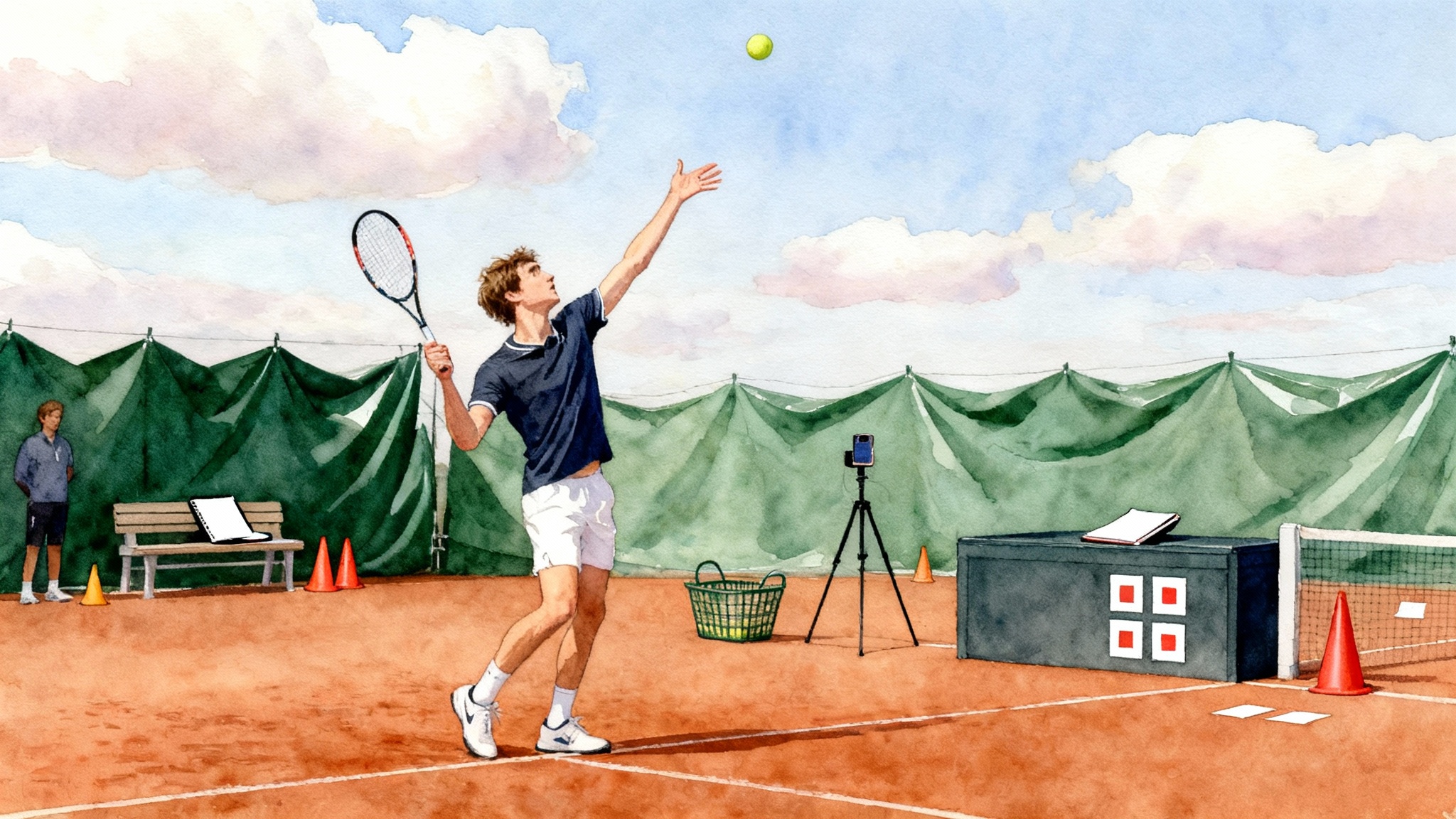
From Oslo to Manacor: How Rafa Nadal Academy Elevated Casper Ruud
Casper Ruud left Norway’s comfort for Mallorca’s red clay and a daily diet of elite practice. Inside how Rafa Nadal Academy’s training blocks, routines, and smart scheduling amplified family coaching and turned promise into consistent top-tier results.
 Tommy
Tommy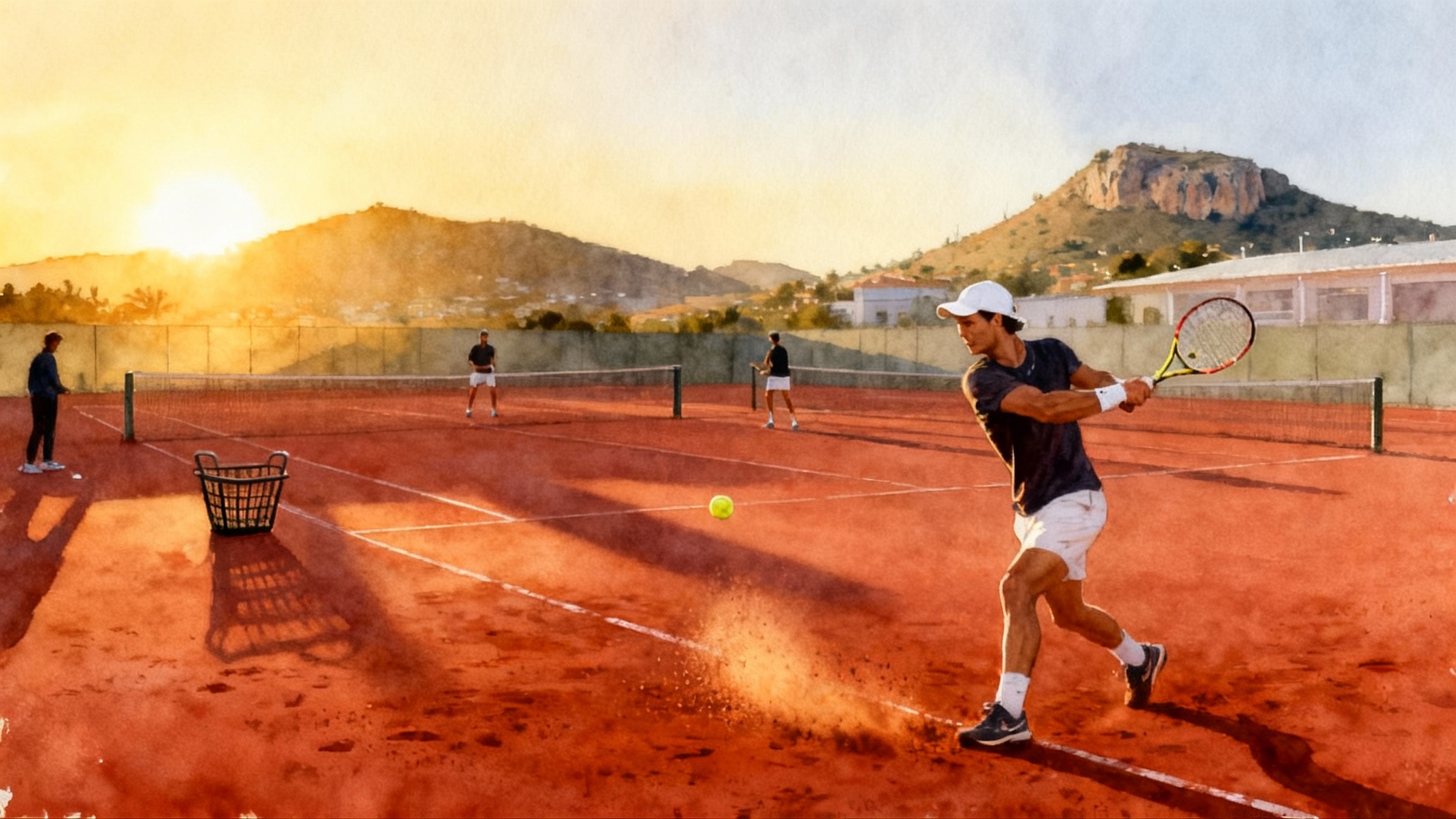
The decision to trade snow for red clay
Casper Ruud did not leave Norway because home was broken. He left because it worked too well. Oslo could give him family, familiarity, and indoor courts, but not the density of top hitters or the long clay weeks that shape world‑class patterns. After early junior success and a spell with Spanish coach Pedro Rico, the Ruud team needed a base that could supply daily high‑level practice while keeping Christian Ruud as the head coach. In 2017, Casper sampled Mallorca with a short training visit. By 2018, Manacor became a second home. For another Manacor case study, see how Rafa Nadal Academy fueled Alex Eala.
That dual model mattered. Christian stayed the decision maker and day to day coach, while Rafa Nadal Academy opened the tap on resources, sparring partners, and structure. The balance is captured in the ATP coach spotlight on Christian Ruud, which frames Christian as coach, father, and friend, and the academy as the performance home that multiplies the work they plan together.
What the academy changed
The academy did not try to turn Ruud into a different player. It made him a more reliable version of himself by changing the environment and calendar around him. Three levers drove that change:
- Training blocks with a simple spine
- Block length: 10 to 14 days. The core of each block was two daily court sessions plus strength and conditioning.
- Daily rhythm: Morning was ball speed and patterns. Afternoon was serve, return, and situational games. The gaps between were not idle time. They were used for video review, hydration plans, and soft tissue work.
- End of block test set: The last two days often featured practice sets against a range of opponents. The goal was not to win a practice match. The goal was to measure how often Pattern A and Pattern B appeared and worked at match speed.
- Sparring partners who raised the floor
In Norway, finding three quality hitters for a week was hard. In Manacor, the default was a queue. Players like Jaume Munar and a rotating cast of touring pros and elite juniors offered different ball shapes, contact heights, and speeds. That variety improved Ruud’s ability to move from defense to offense inside one rally. Think of it like learning to drive in rain, wind, and sun, not just on a clear day. He learned to see the same forehand sooner, not just hit it harder.
- Micro details in habits
A week on Mallorca adds heat, wind, and the slow burn of clay. The academy drilled routines that protect energy output over long rallies: pre point breath work, towel cadence to reset, and a serve clock rhythm that never leaves seconds to panic. The change was not dramatic. It was a lot of small screws tightened with patience.
Clay first, then everywhere
Ruud’s team built a clay first pathway on purpose. Clay cushions the body over long matches, gives more touches per rally, and rewards habits that transfer to any surface: deeper contact, height control, and the discipline to build points. The schedule reflected that belief. Winter and early spring went to the South American clay swing, where Ruud earned his first tour title. The milestone came at the 2020 Argentina Open, a choice that validated the pathway as much as the trophy. See the ATP’s writeup of his first ATP title in Buenos Aires.
Why does a clay first approach travel well to hard courts and even grass? Because it teaches separation. On clay, if your first strike is not good enough, you do not abandon the plan. You reload and add height, or you change direction only when the court position is ready. That patience is portable. When Ruud later made deep runs on faster courts, it looked like a new player. It was the same player with better timing. Spain’s academy playbooks often emphasize similar fundamentals; compare with JC Ferrero’s Alcaraz plan.
The tactical tweaks that stuck
The academy did not announce a new playbook. It refined three patterns until they were automatic under stress.
-
Pattern A: Heavy crosscourt forehand to the backhand, then the inside in forehand to the open deuce corner. Simple words, hard execution. The crosscourt shot had to be high over the net with jump off the bounce, not just pace. The finish depended on contact point inside the baseline. If contact drifted back, the pattern reset rather than force the winner.
-
Pattern B: Kick serve wide on the ad side, first step inside the court, forehand to the open side. This is the tennis equivalent of a basketball pick and roll. The serve creates space. The feet do the rest. The on court cue was not “hit harder.” It was “land and step forward before the ball crosses the service line.” Feet first, racket second.
-
Pattern C: Backhand through the middle with depth. Many players treat the backhand as a liability they must hide. Ruud made it a neutral shot with purpose. Depth through the center reduces angles and steals time, which sets up the forehand on the next ball. Center depth is a boring skill that wins big points.
Each pattern had a simple metric. For Pattern A, they counted how often the first crosscourt forehand pushed the opponent a full step outside the singles line. For Pattern B, they tracked how often Ruud made contact on the plus one forehand inside the baseline. For Pattern C, they set a bounce target that must land past the service line by a full racket length.
The scheduling that built confidence
Results are feedback, not fate. Ruud’s schedule turned that idea into a system. The team used three rules when choosing tournaments and practice blocks.
-
Rule 1: Start each season with a surface you own. Clay gave predictable rallies, so early points came from the Golden Swing. Confidence is a resource; the calendar can either spend it carelessly or invest it.
-
Rule 2: Use clusters. Two or three events in a row on one surface, with two days in Manacor between stops when possible. The academy made those two days count with targeted sets: first day serve and return, second day pattern tests and a match tiebreaker ladder.
-
Rule 3: Protect the body with planned lows. Instead of riding momentum until a crash, Ruud scheduled breathers after peak weeks. Those were not holidays. They were active recovery blocks with lighter hitting, mobility, and sleep focus.
For families exploring Spain, our Tenerife Tennis Academy profile shows a dual surface model that fits this block and cluster logic.
Family coaching plus academy horsepower
Many families fear that moving to a big academy means giving up control. The Ruud model shows another path.
-
One head coach rule: Christian set the plan and made the calls on tactics and goals. Academy coaches added expertise in specific areas like serve mechanics, footwork, or match charting. The head coach synthesized the input.
-
Clear lanes: Physios handled soft tissue. The fitness staff managed load and testing. Hitting partners and court coaches focused on live ball and constraints. Everyone knew who owned what.
-
Feedback loops: Every block ended with a 20 minute debrief that produced three bullet points only. What improved, what lagged, what to test next. The next block began with those bullets on the whiteboard.
That blend of family trust and institutional horsepower created consistency. It reduced the randomness in how a good practice became a good month.
Practical checkpoints for families
Every academy brochure promises progress. Families need checkpoints they can measure. Here are concrete gates, with what to do, why, and how.
- When to relocate or add a second base
- Sparring density: If your player cannot find at least three weekly practice sets against opponents within plus or minus one Universal Tennis Rating point, the local well is too shallow. Relocating, or adding a second base, increases repetition against the right level. Count quality sets, not just hours.
- Pattern repetition: If the player cannot run their A pattern at least eight times in a best of three practice match against the top local hitters, the training pool is not asking enough questions. A deeper pool raises the number of pattern reps under pressure.
- Travel math: If flights and hotels to chase competitive matches exceed the cost of a one to three month stay at a performance base, consider the stay. It compresses logistics and stretches practice quality.
- When to scale competition
- Junior to Pro Futures: Move when the player is consistently reaching quarterfinals or better at the strongest national events and winning 60 percent of practice sets against Futures level hitters. The why is simple. Early losses are normal at new levels, but they should be competitive losses.
- Futures to Challengers: Shift when hold percentage sits at 80 percent or better on the primary surface and the player breaks serve in at least three return games per match across a five event sample. How to measure: chart matches or use simple match logs with hold and break tallies.
- Challenger to Tour events: Add ATP 250 qualifying when two of three conditions are met for six weeks: neutral ball error rate under 10 per set, first serve points won above 70 percent, and at least one top 100 win in the past two months.
- How to measure progress inside a block
- Pattern success: In practice sets, log how often Pattern A or B appears and whether it wins the point within four shots. A 60 percent success rate is healthy on clay; on hard courts, the number can be slightly higher.
- Contact depth: Count balls struck inside the baseline during neutral rallies. A target of one in every five neutral contacts inside the line moves patterns forward.
- Physical tests: Use the 5 0 5 agility test and the Yo Yo intermittent recovery test once per block. If agility stalls for two blocks while match load rises, reduce volume and add micro footwork sessions.
- Stress check: Rate sleep, soreness, and mood each morning on a 1 to 5 scale. Three days in a row of 2s triggers a lighter day, not a hero day. Consistency beats bravado.
How to copy the good parts, even if you never move to Mallorca
Not every player can relocate. You can still import the logic.
- Build your own blocks: Two weeks with set themes. Week one focuses on ball height and depth with crosscourt constraints. Week two adds serve plus one and return depth. End with two practice sets that test patterns on score.
- Create sparring networks: Once a week, drive to a club where you are the underdog. Offer to host the next week. Rotate three clubs within 90 minutes. The goal is variety, not comfort.
- Use constraint drills: Forehand crosscourt with a target cone two racket lengths inside the baseline. Backhand middle lane depth drill where any ball that lands short of the service line ends the rally. Serve wide, recover, and mark your first step with tape to cue forward movement.
- Make the calendar coach you: Cluster events on one surface. Insert two active recovery days after tournaments. Review only three things after each event and turn them into next week’s themes.
Why this model fits Ruud
Ruud’s identity is built on patience, height, and a forehand that gets heavy without getting wild. The academy did not try to replace that identity. It expanded the bandwidth of each trait. Height control became a tool to change tempo. Patience became an ability to pause one beat longer before changing direction. The forehand became a compass that points to deuce court, ad court, or middle, depending on the opponent’s balance rather than Ruud’s impulse.
The family element kept the story cohesive. When the head coach is also the father, travel can be calmer and feedback more honest. But that model can calcify without outside challenge. Manacor provided friction and new eyes without diluting ownership. The result was not instant fireworks. It was a steady climb that looks obvious in hindsight and feels fragile when you are living it.
A simple rubric you can steal tomorrow
- The one head coach rule: Name one person who edits all input. Write it at the top of your training plan.
- Two patterns, one neutral: Define Pattern A, Pattern B, and a neutral depth play. Put the targets on cones. Measure them.
- Block it: Plan the next 14 days with two themes and one end of block test set. No theme creep.
- Track three numbers: Hold percentage, break games per match, and neutral error rate. Update after every match for six weeks. Make the next week’s plan follow the numbers.
- Review in 20 minutes: End each block with three bullets only. Start the next block with those bullets visible.
The bigger lesson from Oslo to Manacor
Casper Ruud did not become consistent by swinging harder. He became consistent by making his environment do more of the work. A second home in Manacor amplified what his family already did well. Training blocks gave his patterns a runway. Daily high level practice made those patterns predictable under stress. Smart scheduling protected confidence and the body.
You do not need to be the next Casper to use the same mechanics. If your local sparring dries up, widen your circle. If your calendar feels random, cluster it. If your game plan is blurry, define two patterns and a neutral play, then count them. The red clay of Mallorca may be far away, but the logic that turned a solid junior into a reliable threat is close at hand. The map is simple: one head coach, two patterns, a block plan, and a schedule that coaches you back.