Austin Hill Country Tennis: Year-Round Base, Spring and Fall
Central Texas is emerging as a smart alternative to Florida and the Southwest for player development. Mild winter mornings, breezy spring and fall evenings, and covered lighted courts turn Austin’s Hill Country into a year round training base.
 Tommy
Tommy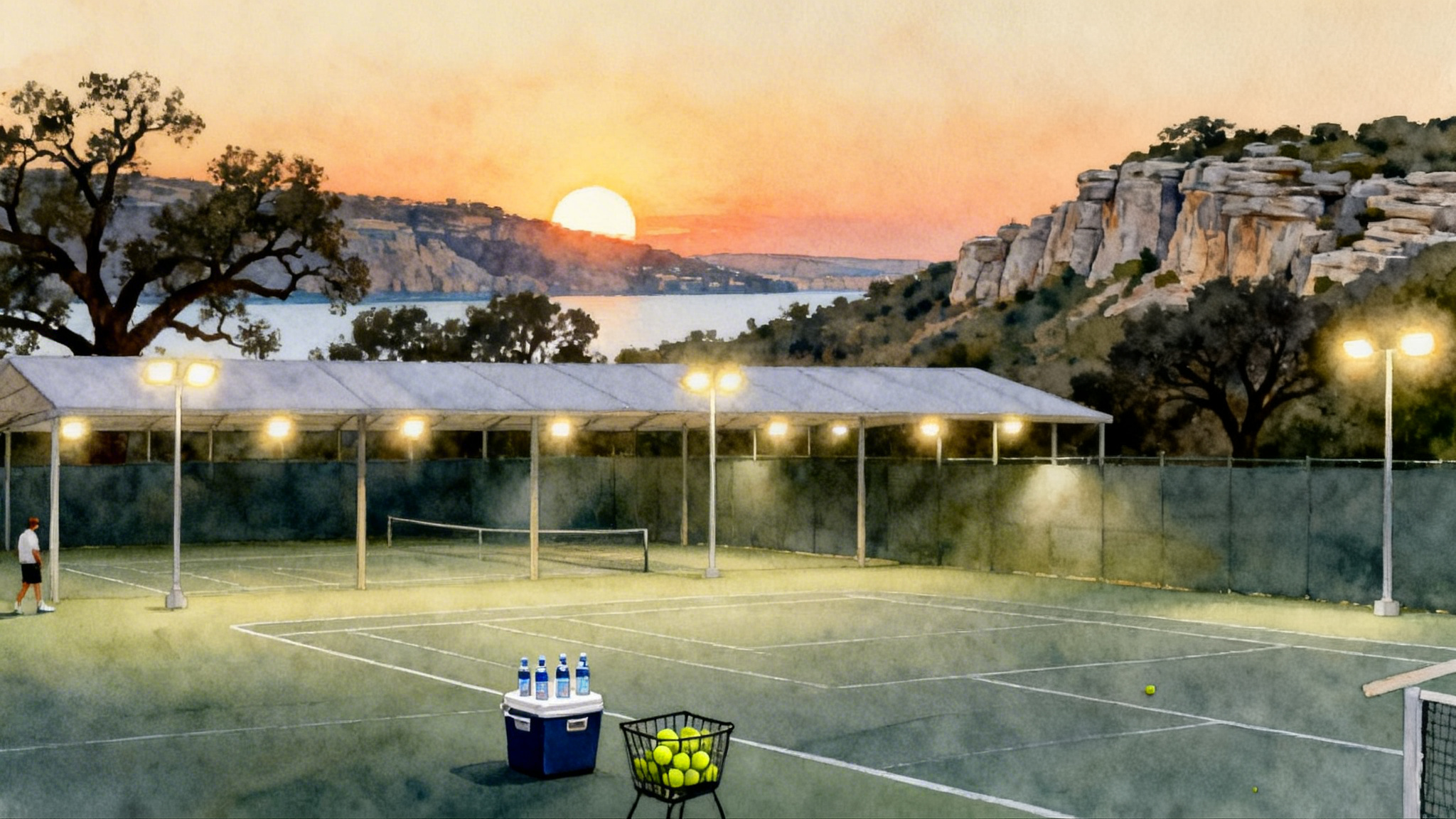
Why the Austin Hill Country is a climate smart base
If you are building a tennis calendar for a family or a junior pathway, climate and court access beat postcard views every time. The Austin Hill Country checks both boxes. Mornings stay playable most of the year, spring and fall deliver long windows of dry, breezy sessions, and modern facilities in the western suburbs of Austin are designed to blunt the toughest summer hours. The standout example is the new Legend Tennis Academy in Spicewood, where covered and lighted hard courts allow real training to continue when the thermometer climbs.
Families who previously defaulted to Florida or the desert Southwest often cite three reasons for switching to Central Texas:
- Practical weather. Winter mornings are cool rather than frigid, so rally pace and footwork work can continue with a light layer. Spring and fall evenings stretch into long, low-wind blocks that are perfect for point play.
- Facility design. Covered surfaces and full lighting make it possible to shift high-intensity work to dawn and dusk in summer while keeping mid-day for classroom, video review, strength, or lake recovery.
- Location logistics. Austin Bergstrom International Airport offers nonstop options from both coasts, and Spicewood, Lakeway, and Bee Cave give families short drives between courts, lodging, and Lake Travis.
In short, Austin turns climate into a scheduling feature rather than a coin toss. That predictability is what player development demands.
Month-by-month guidance for training blocks
Every month is playable in Central Texas, but the shape of the day changes. Use this month-by-month planner to decide when to focus on volume, when to emphasize quality, and when to lean on covered or lighted courts. For climate context and historical norms, see the National Weather Service Austin climate summaries.
- January: Crisp mornings and bright afternoons. Expect mornings in the 40s to mid 50s Fahrenheit and afternoons in the 60s. This is a great block for technical resets, footwork ladders, pattern building, and serve mechanics. Pack a light jacket and a beanie for the first hour.
- February: Similar to January, with more 70 degree afternoons appearing. Use late afternoons for live ball while keeping mornings for drills. Occasional fronts pass through; flexible start times help you dodge gusty spells.
- March: Peak consistency. Many days start in the 50s and top out in the low to mid 70s. This is the first true match play month. Schedule practice sets four days a week and layer in fitness on court with live ball intervals.
- April: Long golden-hour windows. Afternoons often land in the upper 70s to low 80s with low to moderate humidity. Great for tournament tune-ups and doubles patterning. Evening sessions feel fresh and unhurried.
- May: Warm, green, and windy at times. Mornings in the 60s, afternoons in the mid to upper 80s. Shift heavy conditioning to early slots and use shaded or covered courts at mid-day. Hydration habits must be automatic.
- June: Summer strategy begins. Mornings are best for high intensity blocks. Afternoons can push into the 90s. Plan technical video work, mobility, and recovery from late morning to mid-afternoon, then return under lights.
- July: Heat management month. Expect afternoon highs in the upper 90s. Book covered courts for any mid-day work. Keep live ball to dawn and post-sunset and favor interval formats over marathon rallies to preserve quality.
- August: Similar to July, with a slight breeze more common in the Hill Country. Stay strict with heat index thresholds and recovery. Use on-site shade, cooling towels, and cold fluids. Quality trumps volume.
- September: Relief arrives. Mornings in the low 70s, afternoons trending down from the 90s. Resume higher-volume hitting and two-a-days with a siesta structure. A strong month for rebuilding confidence after the summer grind.
- October: Second sweet spot. Many afternoons fall in the upper 70s to around 80 with light winds. Ideal for tournament blocks and team tryouts. This is the best stretch for parents to schedule match film days.
- November: Cool and bright. Mornings in the 50s, afternoons in the 60s and low 70s. Returns, serves, and first-strike patterns respond well in the dense, cool air. Plan three to four event starts this month.
- December: Quiet gains. Similar to January, with more holiday travel. Prioritize skill consolidation and strength. Short, focused sessions beat long, unfocused ones. Use lights for consistent start times after school.
How Central Texas compares to Florida and the Southwest
- Rainouts: Spring and fall in Austin have fewer all-day washouts than coastal Florida, where afternoon thunderstorms can be daily. If Florida fits your calendar, see our Orlando January to April tennis guide.
- Wind and dryness: The Southwest offers dry air but can be windier and colder in winter mornings. For a true desert setup, use this desert Southwest training block as a complement.
- Storm risk: Atlantic hurricane season can throw multiweek schedule curveballs in Florida. Hill Country sits far inland, so long disruptions are rare.
- Summer heat: Florida humidity can make moderate temperatures feel harder. Desert heat can push off-court time indoors. Austin’s answer is facility design plus time-of-day control: covered courts, lights, and a dawn-to-dusk rhythm.
Bottom line: Austin’s shape of the day is more trainable. That makes it a practical base instead of just a seasonal stop.
A sample five-day training and lake-recovery itinerary
This template assumes a family base near Lakeway or Spicewood, with court sessions at Legend Tennis Academy and recovery on Lake Travis. Adjust times seasonally. In late spring and fall, slide everything an hour later.
Day 1
- 7:00 a.m. Activation: Dynamic warmup, elastic band series, jump rope. 20 minutes.
- 7:20 a.m. Technical: Serve progression, targets in all four boxes, second-serve spin, plus returns from mixed feeds. 70 minutes.
- 8:30 a.m. Live ball: Crosscourt plus directional patterns, low-ball handling. 40 minutes.
- 9:15 a.m. Cooldown and hydration: Five minute walk, stretch, cold fluids with electrolytes.
- 10:30 a.m. Lake recovery: Easy paddle on a calm cove near Lakeway Marina, life vests on, sunscreen reapply.
- 2:00 p.m. Classroom: Match video breakdown and notes. 45 minutes.
- 6:30 p.m. Under lights: Short points to 7, serve plus one patterns, return plus one patterns. 60 minutes.
Day 2
- 7:00 a.m. Strength: Bodyweight circuits, single-leg work, medicine ball throws. 40 minutes.
- 7:45 a.m. Technical: Backhand contact height and spacing, approach and split timing. 60 minutes.
- 9:00 a.m. Competitive sets: Two tiebreak sets first to 7. 45 minutes total with short changeovers.
- Midday break in shade: Sandwich, fruit, and fluids. Screen time off to aid recovery.
- 5:30 p.m. Doubles: Poach timing, I-formation signals, return depth control. 75 minutes.
Day 3
- 7:00 a.m. Conditioning on court: Sprint ladders, corner-to-corner intervals, one minute on and one minute off cycles. 25 minutes.
- 7:30 a.m. Serve plus one depth build. 30 minutes.
- 8:15 a.m. Point play: King of the court with constraints. 45 minutes.
- Late morning recovery: Lake float with light mobility work on the dock. Ten minute cold immersion if safe and supervised.
- 7:30 p.m. Match play: One full best-of-three-sets match. If temperature is high, use no-ad scoring and a ten point match tiebreak.
Day 4
- 7:00 a.m. Movement skills: Crossover step, carioca, split and push. 20 minutes.
- 7:20 a.m. Forehand heaviness: Spin, net clearance, corner targets. 50 minutes.
- 8:20 a.m. Transition and volley series: Approach depth, first volley footwork, overheads under lights if needed. 40 minutes.
- Midday skills lab in shade: Two technical focuses reviewed with slow motion video and cue sheets.
- 6:30 p.m. Team practice: Doubles games, situational serving under pressure. 75 minutes.
Day 5
- 7:00 a.m. Test sets: Two fast sets with a focus on first serve percentage and return depth. Log stats.
- 9:00 a.m. Recovery walk on lakeside trail, mobility and breath work. 30 minutes.
- 5:30 p.m. Fun Friday: Mixed-age point games, targets for prizes, music if allowed. Finish with gratitude round to reinforce team culture.
Notes for summer
Keep a hard cap on mid-day on-court time. Use covered courts for any mid-day technical block. Bring a cooler with ice, towels, and extra fluids. Schedule lake sessions when wind is light and skies are clear.
Facility features that matter in summer
Legend's covered court bay and full-court lighting are not cosmetic. They shape the day. Here is how to use them:
- Dawn power hour: Put the most technical work in the first 60 to 90 minutes after sunrise.
- Mid-day shade: If a lesson must happen at noon, keep it technical, use the covered surface, and take planned shade breaks every 10 to 12 minutes.
- Dusk competition: Run sets under lights after dinner when heat stress is lower. Encourage kids to pack homework for the hour before practice so family schedules stay efficient.
You can find group times, private coaching options, and a facility overview on our Legend Tennis Academy profile.
Travel logistics for families and juniors
- Where to fly: Austin Bergstrom International Airport sits on the southeast side of the city with a straightforward drive to the western suburbs. Flights in and out are frequent, and rental cars are a short walk from baggage claim.
- Where to stay: Look for short term rentals or hotels in Lakeway, Bee Cave, or the southern edge of Spicewood. These zones keep drives to Legend short while putting Lake Travis and groceries close by. Many rentals include kitchenettes, which helps you control nutrition during tournament weeks.
- Getting around: A car is the most efficient option. Expect roughly 40 to 60 minutes from the airport to Spicewood depending on time of day. Weekday rush hours add time on the main arteries, so plan arrivals and departures with morning or mid-day buffers when possible.
- Food and supplies: The regional grocery anchor is H E B, which stocks fresh fruit, on-the-go protein, and plenty of hydration options. Pack a cooler with ice blocks each morning. Refill water at every changeover and aim for a bottle and a half per hour of play in summer.
- Medical and recovery: Keep a basic first aid kit, blister patches, and sunscreen in the bag. Identify a nearby urgent care and a physical therapy clinic in Lakeway or Bee Cave before the week starts. Many families book a short sports massage late in the week to keep shoulders and hips loose.
- Schoolwork and Wi-Fi planning: Most rentals and hotels in the corridor have reliable internet access. If your player has remote assignments, block a 60 to 90 minute study slot after lunch in an air conditioned room so recovery and academics coexist.
- Tournament add-ons: Austin’s tournament calendar is busy. Use spring and fall to pair training blocks with local United States Tennis Association events. The mild evenings make back-to-back match days more manageable for juniors.
Heat and recovery: a simple protocol
- Hydration timeline: Start the day with a large glass of water and electrolytes. During play, drink every changeover. After play, add a recovery drink with sodium and a small amount of carbohydrate.
- Shade strategy: Create shade with a pop up canopy and a light towel over the neck during breaks. Coaches should carry a thermometer and check surface temperature on hot days.
- Cooling tools: Cooling towels, ice in a zip bag, and a small spray bottle reduce perceived exertion without disrupting the session.
- Red flags: If a player stops sweating, looks pale, or feels dizzy, end the session immediately, move to shade, and cool the body with water and ice. Heat safety beats any drill.
Who benefits most from the Hill Country model
- Developing juniors who need many quality repetitions and consistent match play without a winter shutdown.
- High school teams that want serious preseason blocks in January and February, then a second peak in October.
- Families who like a one stop setup: courts, lodging, lake recovery, and groceries within a short drive.
Putting it together
Treat Central Texas like a true base rather than a backup. Use January and February for a technical rebuild, press the gas in March and April, respect the mid-day sun with covered courts and lights in June through August, then attack in September and October when evenings are at their best. With a court setup built for the climate and a daily rhythm that follows the sun, Austin’s Hill Country becomes a reliable engine for improvement.
The new training hub in Spicewood proves the point. Covered, lighted, and purpose built, Legend gives you the tools to train when training matters and recover when recovery works best. Combine that with a family friendly travel plan and you have a season that nudges you toward better habits. Not flash. Not hype. Just a smarter calendar, and a place that rewards players who show up at the right hours, day after day.