Spring Har-Tru Play: Atlanta to Charleston Training Guide
 Tommy
Tommy
Why the Southeast is perfect for a spring clay block
From early March through late May, Atlanta and coastal South Carolina serve up a sweet spot for clay training. Daytime highs usually sit in the 60s, 70s, and then low 80s Fahrenheit as spring progresses, rain comes in short bursts rather than all-day soakers, and the clay dries quickly once the sun returns. For players who want match-volume on a forgiving surface, the region’s green clay, known as Har-Tru, gives you reps without beating up your joints. For a Florida option later in the season, skim our Naples Har-Tru season guide.
On Har-Tru, points run a little longer, you slide into shots rather than planting, and the ball sits up just a fraction longer. Think of it like driving a sport sedan instead of a track car. You still go fast, but you have more grip in the corners and more time to adjust. Har-Tru is angled toward playability and maintenance, it wicks water and is ready fast after showers. If you have never trained on it, start with a primer on how Har-Tru drains and plays before you plan your week.
This guide lays out two spring basecamps: one built around Life Time Tennis Academy in Peachtree Corners outside Atlanta, and one around the Charleston area courts that sit near the Charleston Open. You will get typical weather windows, court access guidance, rainy-day backups, junior and adult sample weeks, travel notes, and a plan for when to shift north as humidity takes over in June.
What Har-Tru feels like and why it suits spring
- The surface absorbs impact and rewards footwork. Heavier topspin bites, flatter balls skid if you take them early, and slices stay low but still slow enough to track.
- Rain resilience is a big win in spring. Short showers often become footwork practice rather than a canceled day, because surface moisture can be managed with drying time and court maintenance.
- Strategy shifts. You defend with height and depth, then look to finish with width or a body serve. If you train on hard courts most of the year, a March to May block on Har-Tru sharpens patience, point construction, and balance.
Two smart basecamps: Atlanta and Charleston
Both bases can anchor a full week without long commutes. The Atlanta cluster puts you close to high-level coaching and a deep ladder of practice partners. The Charleston cluster mixes training with a top women’s event and beach-side recovery.
Basecamp A: Peachtree Corners and the Life Time Tennis Academy
Why here: You are inside a serious tennis ecosystem, with a national-caliber junior pipeline and adult programs that run from early morning to late evening. You also have access to public clay within a 30-minute radius.
- Primary club access: Life Time Tennis Academy in Peachtree Corners. Expect reservation-based courts, clinics for juniors and adults, hitting sessions, and a pathway for lessons. Visitor access varies by membership and program, so contact the club well in advance and ask about short-term options or program drop-ins.
- Nearby public clay, useful for extra sets:
- Bitsy Grant Tennis Center, inside Atlanta, known for a large bank of clay courts and steady public play. Book ahead on weekends.
- Blackburn Tennis Center, northeast of the city, with multiple clay courts and robust programming.
- Other nearby options: Many private clubs in North Atlanta and the northern suburbs offer green clay. Policies vary, so ask about guest passes through local contacts or coaches.
- Neighborhoods to stay: Peachtree Corners and Norcross keep you close to the academy. Dunwoody and Sandy Springs give you more dining options with a short drive. Buckhead works if you want an urban base, but expect longer commutes at rush hour.
Pros: Deep hitting pool, strong coaching calendar, consistent court maintenance.
Cons: Peak traffic windows, a car is almost always required.
Basecamp B: Charleston, Daniel Island, and nearby coastal courts
Why here: Spring in Charleston means match play in morning light, a salty breeze that cools clay just enough, and a world-class women’s tournament to study and enjoy.
- Public and municipal clay:
- Charleston Tennis Center in West Ashley, a reliable hub with green clay and programs for all levels.
- Maybank Tennis Center on James Island, a convenient option if you are staying near Folly Beach or downtown.
- Daniel Island public courts, often available by reservation through the area facilities. When the tournament builds, expect busier schedules.
- Resort clay, bookable with guest access:
- Kiawah Island’s Roy Barth Tennis Center, green clay in a resort setting, great if your group includes golfers or beach seekers.
- Wild Dunes on Isle of Palms, a laid-back alternative with clinics and court rentals.
- Where to stay: Daniel Island for walkability to the event, Mount Pleasant for quick bridge hops to courts and beaches, or downtown Charleston for dining and history, with a 15 to 25 minute drive to most facilities.
Pros: Tournament energy, sea-level oxygen makes longer rallies feel manageable, beach recovery.
Cons: Coastal showers, popular weeks around the event fill fast, a car is helpful even if you stay near the stadium.
Typical spring weather windows, by month
These are planning ranges, not guarantees, but they are reliable enough for scheduling.
-
Atlanta
- March: Mornings can be cool, mid 40s to 50s, afternoons often in the low to mid 60s. Best training windows 10 a.m. to 3 p.m. for warmth, with layers early and late.
- April: Afternoons in the low to mid 70s, mornings in the 50s. Prime windows expand to 9 a.m. to 6 p.m. Rain tends to be brief.
- May: Many days in the upper 70s to low 80s, mornings in the 60s. Hydration becomes a focus, start earlier when possible.
-
Charleston
- March: Afternoons often in the mid to upper 60s. Morning breezes are cool but playable. Late mornings are ideal for rhythm sessions.
- April: Afternoons in the low to mid 70s, sea breeze helps. Midday is fine, save the hardest sessions for morning.
- May: Many afternoons in the upper 70s to low 80s, humidity picks up. Make high-intensity work sets early, match play later.
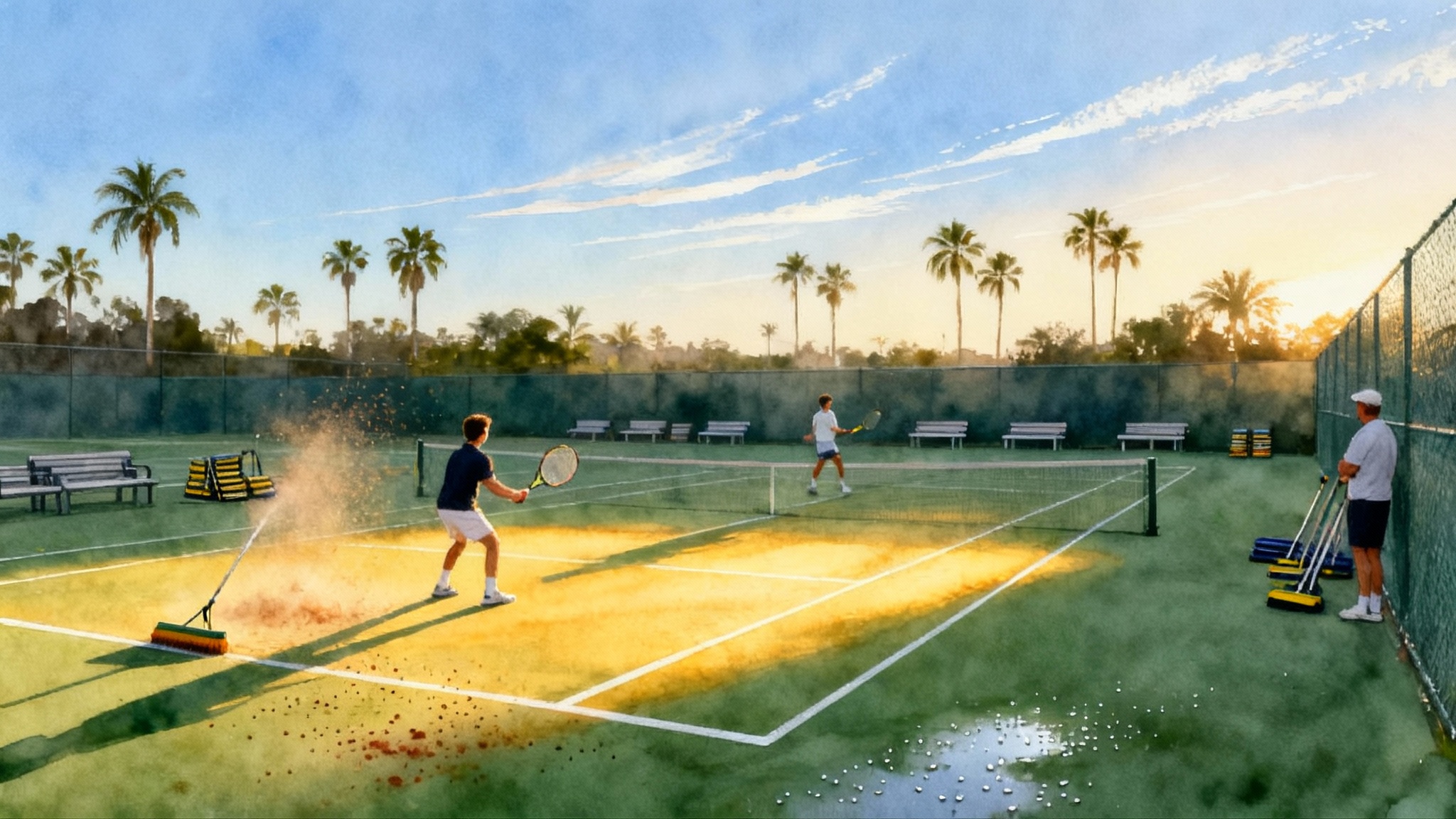
Rain patterns: Expect short showers more than all-day washouts. On Har-Tru, a moderate shower can be playable again within an hour or two once maintenance crews broom and roll the surface, so be flexible with session order.
Court access and booking, public versus club
- Public centers: Reserve in advance online or by phone, especially on weekend mornings. Bring small bills for ball machine rentals and court fees at older facilities. Many centers open before 8 a.m. in spring, ask about first-light options.
- Clubs: Call ahead for guest access, clinic drop-ins, or short-term memberships. If you are traveling with a coach, ask the club about a guest pro arrangement for your group.
- Practice partners: In Atlanta, ask the pro desk at public centers to connect you with league captains or the adult ladder. In Charleston, the municipal centers and resort desks often keep informal lists for visitors.
- Equipment and stringing: Coastal humidity and clay dust change string response. If you normally string at 52 pounds on hard courts, plan for 50 to 51 on clay to add pocketing and spin. Budget time for a midweek restring.
Rainy-day backups that still move your tennis forward
Indoor courts are limited in the Southeast. Have a Plan B that keeps your week on track.
- Strength and mobility: Use a nearby gym for lower-body stability, single-leg work, and thoracic rotation. Thirty minutes of footwork ladders in a hallway plus mini-bands can replace a missed hitting block.
- Video and scouting: Record your serve motion from two angles, then compare against a model you trust. For tactical study, pick a full match on clay and log patterns by serve location and rally ball height.
- Serve-only sessions: As soon as courts are playable, do a 20 to 30 minute serve block. Clay lets you mark targets, then sweep and go.
- Mental skills: Practice between-point routines, breathing counts, and visual resets. Write a one-page match plan for your next opponent.
Build a week around the Charleston Open
The Charleston Open, held annually on Daniel Island in early spring, is one of the best teaching labs you can find. Book practice slots in the morning, then head to the grounds for matches and practice-court viewing. Confirm the exact dates and session times on the Credit One Charleston Open schedule.
Keys to a blended training and match-watching day:
- Aim for a two-hour morning hit before the day session. Prioritize crosscourt height, a simple plus-one pattern, and serve targets.
- Pack a change of shirt and a small towel. Salt and humidity build fast while you watch. A quick reset before an evening session helps you absorb more of what you see.
- Spend at least 30 minutes at the practice courts. Watch movement patterns, recovery steps, and how players use height in the first four balls.
- Take one notebook page per match. Capture one return pattern, one neutral ball height, and one short-ball play you can try next morning.
Sample 7-day itineraries
Junior clay builder, Atlanta basecamp
Goal: Sharpen movement and point construction, notch two practice matches, finish with a competitive set day.
- Day 1, Sunday arrival: Easy 60-minute hit, side to side crosstrains, 40 serves. Light stretch, lights out early.
- Day 2, Monday: Morning clinic at Life Time or a public center, focus on height and depth. Afternoon gym, single-leg strength and ankle mobility. Evening film, 20 minutes.
- Day 3, Tuesday: Pattern day. Two-hour session on crosscourt forehands, then inside-out plus inside-in. Afternoon serves with targets, body, T, wide. Evening, 8 games to 4 with a local hitter.
- Day 4, Wednesday: Match play set one, best of three sets with a 10-point tiebreak in lieu of a third set if needed. Afternoon recovery, walk and stretch.
- Day 5, Thursday: Movement and defense. Figure-eight footwork, open-stance backhands, emergency lobs. Finish with 15 minutes of drop-shot and lob combos.
- Day 6, Friday: Match play set two, mix in pressure games, 30 all start points, second serve only games, and no-ad deuce points. Record the last set if allowed.
- Day 7, Saturday: Serve and return rehearsal, 90 minutes, then a fun doubles mixer at a public center. Afternoon off, pack and debrief with coach.
Nutrition and recovery: Salt your food a bit more than usual, sip fluids with electrolytes, and schedule a nightly ten-minute legs-up recovery to drain ankles and calves.
Adult clay reset, Charleston basecamp
Goal: Reintroduce sliding, build a reliable first ball after serve or return, and enjoy the event atmosphere.
- Day 1, Saturday arrival: 75-minute feel session, blocked repetitions, short crosscourt patterns, simple volleys. Walk the event grounds if the tournament is on.
- Day 2, Sunday: Two-hour morning hit, then watch a day session. Scout at least one returner you admire. Evening stretch and light core.
- Day 3, Monday: Serve plus one. Alternate body serve patterns with forehand first balls. Afternoon beach walk, 30 minutes in the sand for foot strength.
- Day 4, Tuesday: Return day. Two return targets crosscourt, then through the middle. Finish with doubles return games. Evening match viewing.
- Day 5, Wednesday: Half-court live ball, then full-court situational points that start with a deep neutral ball to the backhand corner. Hydrate steadily.
- Day 6, Thursday: Practice match. Two sets, play no-ad points for time. If it rains, do a 45-minute serve-only and footwork session as soon as the courts reopen.
- Day 7, Friday: Light 60-minute hit, film ten minutes of groundstrokes. Close the week by writing three adjustments to carry home: one technical, one tactical, one recovery habit.
Travel logistics that make the week smoother
- Getting there:
- Atlanta: Fly into Hartsfield-Jackson Atlanta International Airport. Plan 45 to 70 minutes by car to Peachtree Corners depending on traffic and time of day.
- Charleston: Fly into Charleston International Airport. Daniel Island, Mount Pleasant, and downtown are 15 to 30 minutes by car.
- Getting around: A rental car is the most reliable option in both cities. Rideshare works for single players who plan two daily trips, but groups save time and cost with a car.
- Atlanta to Charleston drive: About 4.5 to 5 hours by interstate, often via Augusta and then into the Lowcountry. If you plan both bases in one trip, put the longer training block first, then finish with the tournament week.
- Where to stay and why:
- Peachtree Corners or Norcross for short commutes to the academy, plenty of midrange hotels and rentals.
- Daniel Island for walkability to the stadium, Mount Pleasant for quick hops across the bridge, downtown Charleston for dining and history.
- What to pack for clay:
- Two pairs of clay shoes so one can dry while the other works.
- A dark towel that hides clay dust.
- Overgrips in bulk, the mix of moisture and dust chews through tack.
- A small brush for shoe treads and strings, plus a laundry bag for clay gear.
When to pivot north as June arrives
By early June, Charleston often moves into higher dew points and warmer nights. Atlanta follows, with more humid midafternoons and evening thunderstorms. If your goal is high-volume clay training, shift north or up in elevation around the first or second week of June.
- Easy northbound pivots that keep clay underfoot:
- Asheville, North Carolina, where elevation makes midday sets more comfortable. Community clubs often run spring and summer clay leagues.
- Western North Carolina mountain towns, cooler mornings, less humidity, great for hill sprints and aerobic base.
- Mid-Atlantic hubs such as Charlottesville, Virginia, with a deep culture of green clay and tournament options.
Practical marker: When morning dew points regularly top the upper 60s Fahrenheit, schedule heavy sessions only at first light, or head for cooler air for another three to four weeks of quality clay work.
Coaching checklists for a strong clay block
- Footwork
- Two-beat recoveries after every forehand and backhand, split step on contact, never on the swing. For added structure, use this club player footwork plan.
- Slide with the outside foot when moving wide, load, then push back to center with a side shuffle.
- Tactics
- Play with height, aim a full net strap above net clearance on neutral balls.
- Use the body serve to prevent aggressive returns that take time away on clay.
- Commit to three-ball patterns, serve plus first ball, return plus neutral depth, then a directional change.
- Physical
- Add two steady-state aerobic blocks per week, 30 to 40 minutes, to support longer rallies.
- Strength plan anchored on single-leg work, glute medius activation, and calf capacity for slides.
- Equipment
- Slightly lower string tension for pocketing and spin.
- Dampener and a spare set of socks in your bag for every session.
Public versus club, how to pick day by day
- Choose a club day when you need structured coaching, calibrated feeding drills, and consistent sparring partners. Clubs also handle post-rain court care faster.
- Choose a public day when you want more hours at a lower cost, self-guided routines, and live ball sets without a clinic format. Public centers can be perfect for serve-only sessions and video capture.
- Mix the week. Two or three club days for instruction plus three public days for volume works well for both juniors and adults.
A few local rhythms worth knowing
- Atlanta traffic is real. Book early morning or late afternoon blocks to avoid the slowest commutes. Build a 20-minute buffer around rush-hour sessions.
- Charleston bridges can stack up at beach and event times. If you have a night session to watch, park early, then take an easy walk and hydrate.
- Clay etiquette matters. Sweep your half after play, fill divots, and brush lines if brooms are provided. It keeps the surface true for the next group and earns you goodwill when schedules are tight.
The bottom line
A spring clay block in Atlanta and Charleston sets you up for smarter points, more forgiving volume, and motivated practice. Anchor in Peachtree Corners if you want deep coaching and a broad hitting pool, or choose Charleston if you want training blended with elite women’s tennis and ocean air. Book a mix of club and public courts, start early when humidity climbs, and keep a rain plan that still improves your game. Then, as June heat builds, chase cooler air to the mountains and carry your new clay patterns onto summer draws.