Tennis Footwork That Wins: A 4-Week Plan for Club Players
Most points are lost because of late feet, not bad swings. Learn a clear four week plan to build split step timing, first step speed, spacing, and recovery so your strokes show up on time when pressure rises.
 Tommy
Tommy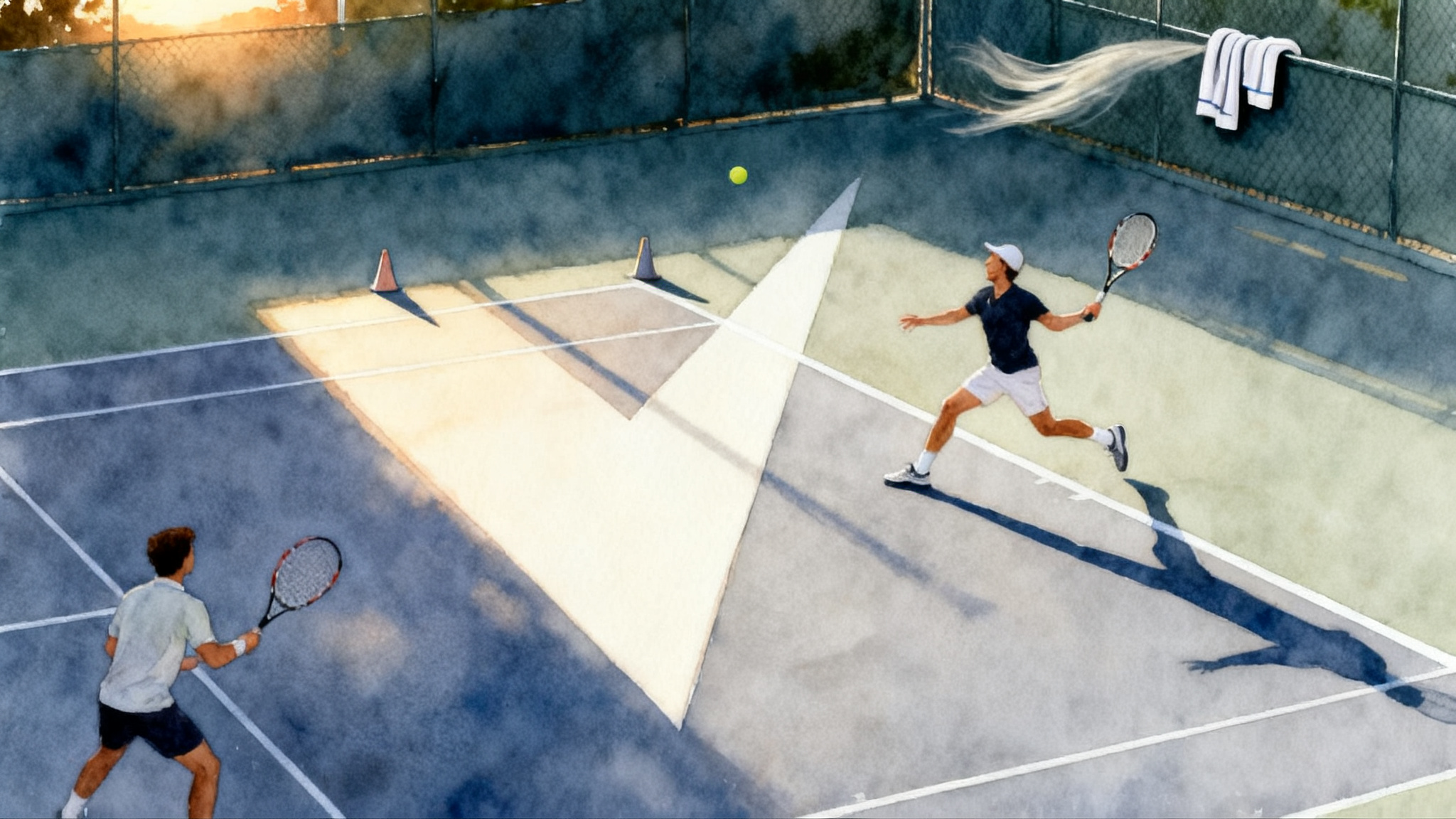
Why footwork decides tight points
Tennis looks like a game of hands. We admire a heavy forehand or a biting slice, and we blame the racket when a ball sails long. In matches, though, the result is mostly decided by the feet. If your body arrives balanced and on time, even a simple swing produces a strong ball. If your body arrives late or crowded, the best technique breaks down. Think of footwork as a train schedule. When the train arrives on schedule, passengers unload smoothly. When it is late, everything gets rushed and messy.
Footwork is not only about speed. It is timing, spacing, and efficient choices. The fastest sprinter who splits late still looks slow. The big hitter who crowds the ball still sprays. The steady grinder who never recovers to a neutral position eventually opens a freeway down the line. The good news is that each of these errors responds to simple training and a clear plan.
This article gives you a four week program for club players and committed juniors. It is realistic for busy schedules, precise enough to measure, and practical for any court. You will get clear drills, simple cues you can feel, and a session template that fits a one hour slot.
The three building blocks: split, first step, and spacing
-
Split step timing: The split step is a small hop that lands as your opponent makes contact. The landing stores elastic energy and helps you push in the correct direction. Early or late splits waste that energy and make you chase. Your cue is “land as the ball leaves the strings.” If you are not sure, video your rally and listen for contact. Land on that sound.
-
First step acceleration: After the split, the first step sets your line. Players often hesitate, adding tiny correction steps that burn time. Your cue is “push with the outside leg.” If you are moving right, push hard with the left leg. Think of launching a canoe by pushing off the dock.
-
Spacing to the ball: Arrive with your ideal contact distance. Too close and the elbow jams. Too far and the ball floats. Use the cue “see strings around the ball.” If you can see a margin between your strings and the incoming ball during your last adjustment step, you are likely spaced well.
These three pieces are simple to train and simple to test. When they improve, every stroke looks cleaner without extra effort.
Your movement map: lanes and diagonals
Most points follow two patterns: lateral lanes along the baseline and diagonals into the corners. Draw three lanes in your mind: left lane (backhand corner), center lane, and right lane (forehand corner for right handers). Your default recovery is to the center lane, not the exact center mark. Recovery depends on where you just hit and your opponent’s options. If you hit a crosscourt ball from deep in the forehand corner, recover a step toward that same corner to cover the likely reply. If you slice down the line, recover more toward the opposite side because you just pulled your opponent wide.
On diagonals, think V shapes. The ball takes you to one tip of the V, and your recovery traces back along the arm of the V toward neutral, not straight across. That keeps your body organized and avoids crossing your feet in panic.
Cues you can feel, not just think
-
Quiet landing, loud push: Land softly on the split to store energy. Then let the push make the noise, not the landing. If the split is clunky, your ankles are not ready to spring.
-
Head still at contact: Imagine a jar of water on your cap. If the jar sloshes at contact, your balance is leaking.
-
Last step big, then small: Use one assertive step to close space, then adjust with small steps so you do not crowd the ball. Picture parking a car: swing into the spot, tap the brakes to center.
-
Recover with the crossover when you need ground. A crossover step covers distance; a lateral shuffle maintains range. Use the right tool at the right time.
Equipment and surface notes
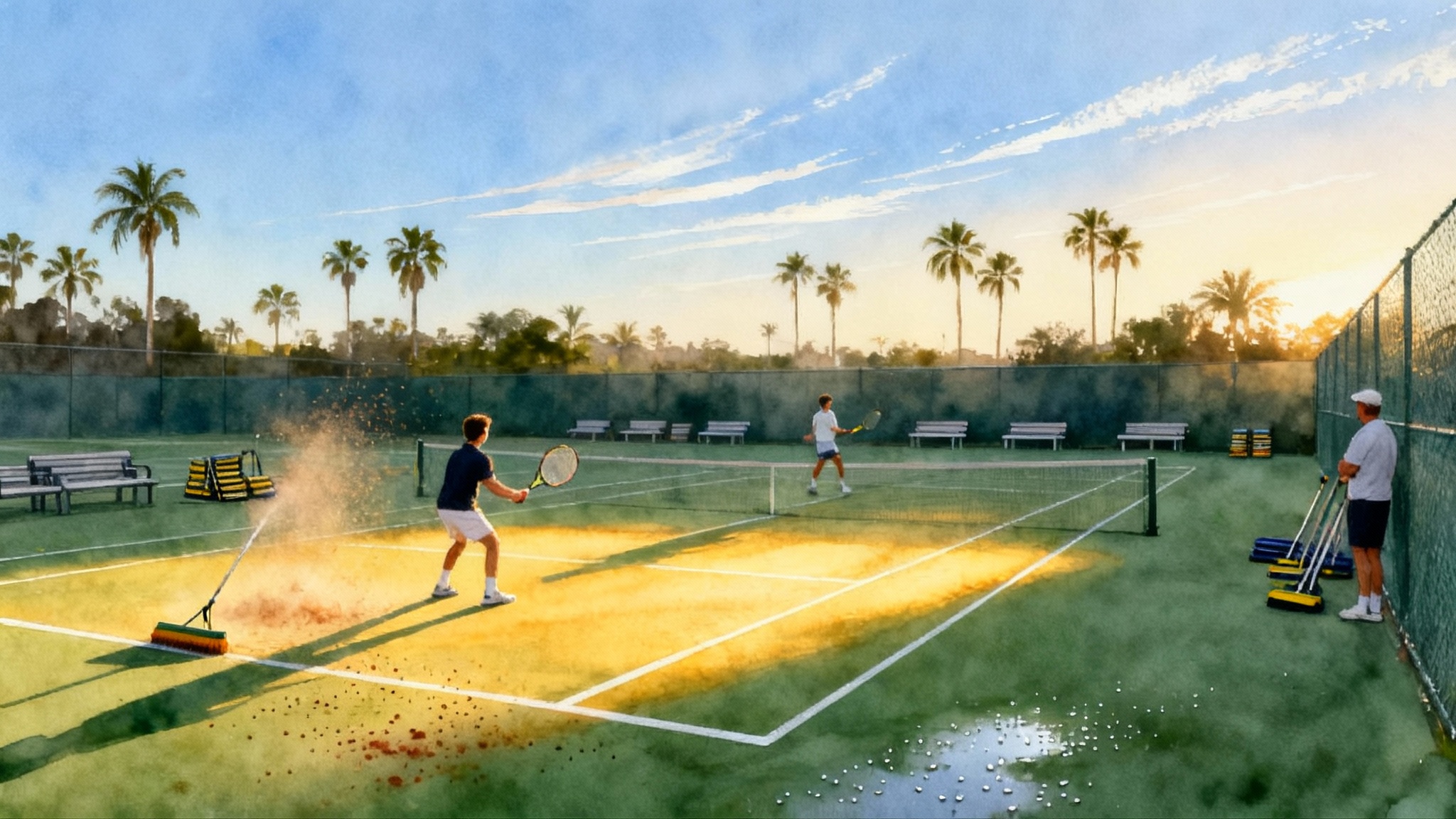
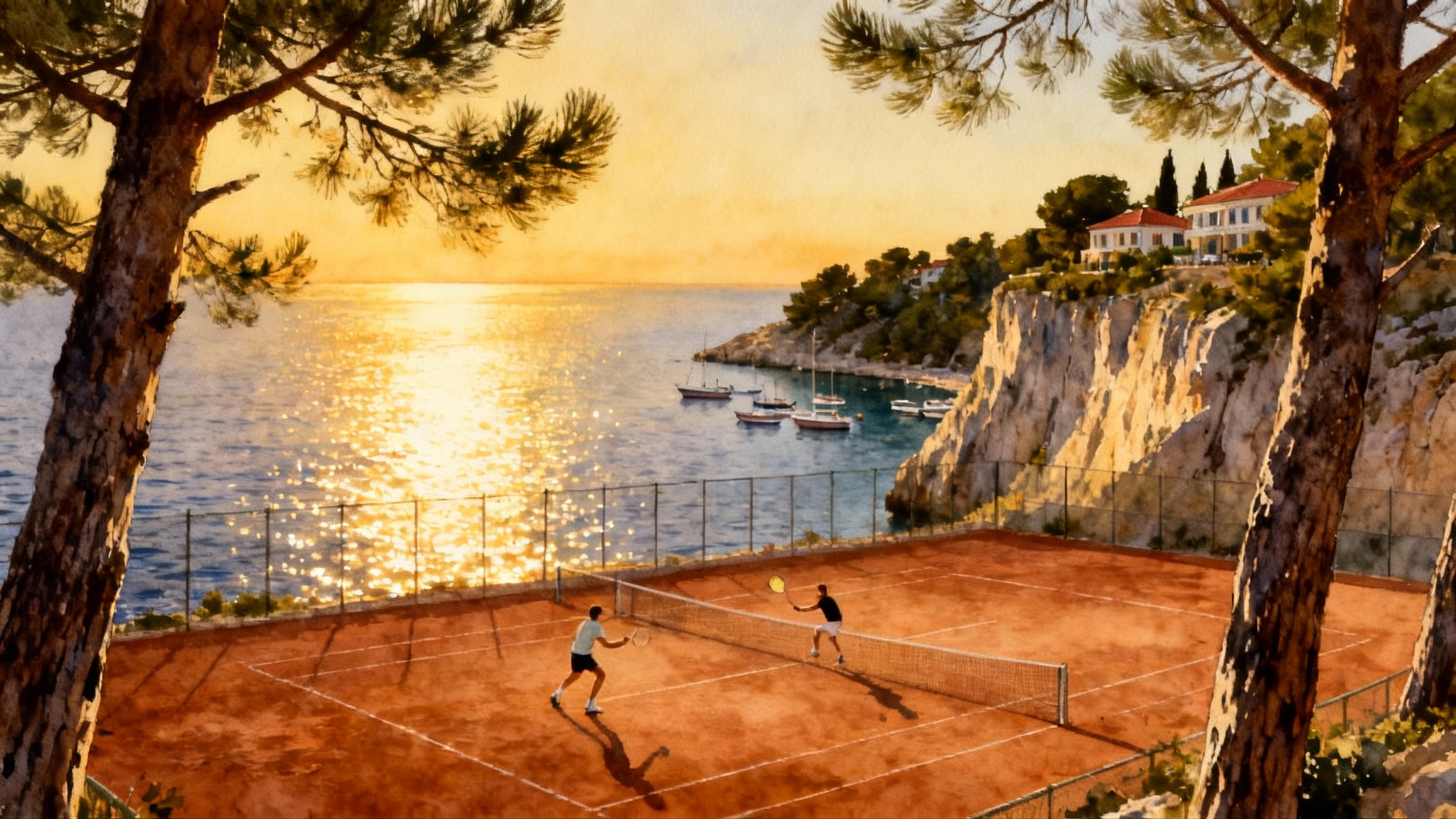
Shoes with solid lateral support matter more than a new string job. Brands build models with reinforced sides for side-to-side pushes. Clay grips differently than hard court. On clay, expect a controlled slide that ends in a stable base. On hard court, you stop with friction, so your landing needs more bend at the ankles, knees, and hips to protect the body. If you train on Florida clay, the insights in our guide to the Har-Tru season in Naples can help you adapt movement cues for sliding. Ball machines help with repetition, but set the feed to vary height and direction so you also learn spacing and recovery.
For all-weather options that keep your movement plan on track, see where to train year-round in Austin.
The 4-week plan
The plan assumes three sessions per week, about 60 minutes each. If you only have two, drop the optional blocks. If you have four, add a light movement day with shadow swings and mobility.
Week 1: Rhythm and the split
Goal: Land the split as the opponent hits, then explode in the correct direction.
-
Warm-up, 10 minutes: Skips, side shuffles, carioca, and light shadow splits at the service line. No ball yet. Focus on soft landings and posture.
-
Drill 1, Split and Go, 12 minutes: Partner or coach calls “hit” while tossing balls with simple direction. You split on the call and push in the called direction for two steps, then recover. Eight sets of forty seconds on, twenty seconds off. Measurable: count how many times you land before the call. Your target is zero; fix timing as needed.
-
Drill 2, Shadow Rally with Metronome, 12 minutes: Set a metronome or simple beat around sixty to seventy five beats per minute. Every beat is a split. Imagine contact on the beat, move to a forehand or backhand without hitting, and recover. The beat builds a rhythm engine so your body keeps time regardless of nerves.
-
Live ball, 15 minutes: Cooperative crosscourt rally aiming for twenty ball rallies. Your job is not pace. Your job is to film three rallies and check if your split lands as the opponent hits. If not, slow down until it does.
-
Cooldown and notes, 5 minutes: Write a single cue that worked. Example: “hear strings, land, push.”
Progress marker: After three sessions, you should feel the split landing earlier and your first step choosing a line more decisively. If not, reduce rally speed and keep the timing cue simple.
Week 2: Spacing and contact height
Goal: Arrive with ideal distance and contact height on most balls.
-
Warm-up, 8 minutes: Add mini hurdles or low cones. Step between them with light feet. The obstacles remind your legs to take small organizing steps.
-
Drill 1, The Foam Line, 12 minutes: Place a rope or flat line on the court parallel to the baseline at your ideal distance for forehands. Feed balls medium pace. You must hit with your lead foot landing just outside the line, not on it and not far from it. Move the line for backhands. Measurable: out of twenty feeds, aim for fifteen or more correct landings on each wing.
-
Drill 2, Three Step Rule, 12 minutes: Feed unpredictable balls within a lane. You must take one assertive step to the ball, then no more than two small steps before contact. This prevents clogging your feet with micro steps. Record on video and count.
-
Live ball, 15 minutes: Directional rally. Forehand crosscourt to forehand crosscourt for four balls, then change down the line on ball five and play it out. The change forces different spacing and a new recovery target.
-
Cooldown and notes, 5 minutes: Write a spacing cue: “big then small” or “see strings around the ball.”
Progress marker: Your contact should feel less rushed. If you still crowd, slow your last two steps and set the line closer to your body to recalibrate.
Week 3: Recovery and stamina
Goal: Cover more court without feeling frantic, and return to neutral faster.
-
Warm-up, 8 minutes: Add jump rope for two rounds of ninety seconds. This builds elastic rhythm.
-
Drill 1, Box Pattern, 12 minutes: Mark a rectangle from doubles alley to mid singles and from baseline to service line. Coach or partner points to a corner. Split, move to that corner, shadow a stroke, recover diagonally two big steps, split again. Repeat at random. Six rounds of sixty seconds, thirty seconds rest. Measurable: count completed corners per round. Try to add one by round six.
-
Drill 2, Return and Recover, 12 minutes: Partner serves from the service line at medium pace. You focus only on the return and the first two recovery steps toward a smart target. If you slice the return, recover a little more to cover the crosscourt. If you drive the return down the line, recover more to the opposite lane. Measurable: on video, check whether your split after the return happens before your opponent strikes ball two.
-
Live games, 18 minutes: Play first to twenty points starting with a second serve feed. You score two points for winning a rally in which you recovered at least six feet toward neutral before the final shot. This scoring makes recovery visible and valuable.
-
Cooldown and notes, 5 minutes: Write one recovery error you noticed and the fix. Example: “shuffled when I needed a crossover; commit to crossover on balls that pass the center hash.”
Progress marker: Your diagonals should feel calmer, with fewer crossed feet. If you still feel rushed, make your initial push stronger and your second step longer, then throttle back steps three and four.
Week 4: Match transfer and pressure
Goal: Keep timing, spacing, and recovery under stress.
-
Warm-up, 8 minutes: Dynamic work and four sets of split and go.
-
Drill 1, Serve plus Two, 15 minutes: Serve a first serve, land your own split as the returner hits, then hit ball one and recover, then ball two and recover. Video three series. Measurable: check if you land a split on your own serve follow through before moving to the first ball. Players often skip the split after serving, which is why they feel late on the first shot.
-
Drill 2, Cage Points, 12 minutes: Coach feeds alternating deep balls to your corners for five shots, then a short ball. You must approach on the short ball, split before the opponent’s contact, and finish the point at net. This ties in approach footwork and the volley split step.
-
Live sets, 20 minutes: Play first to six games with no ad scoring. Before each return game, say your cue aloud. Before each service game, say your recovery plan aloud. The verbal cue keeps focus when score pressure rises.
-
Cooldown and plan, 5 minutes: Note which cue you will keep in your next league match. Keep it to five words or fewer.
Progress marker: Your matches should feel more predictable. You will still miss shots, but you will know why. Either the split was late, the first step was ambiguous, or you crowded the ball. One root cause at a time is progress.
Common errors and how to fix them
-
Late split: If you always land after your opponent’s contact, build a count. Say “one” on their bounce, “two” on your split, “three” on their hit. Land on two. The count fixes timing without overthinking.
-
Happy feet: If you dance in place, give yourself a distance rule. On any ball that travels past the center hash mark, your first step must be a crossover.
-
Crowd and poke: If you shrink from high heavy balls, give distance with your feet and lower your hands before the shoulder turn. Hands down early buys space.
-
Plant and watch: If you admire your shot and forget to recover, set a penalty in live points. Lose two points if you fail to take a recovery step before your ball lands.
-
Flat shoe landings: If your ankles crash inward on the split, strengthen with calf raises and single leg balance holds for thirty seconds per side. Bend your knees on landings so joints share the load.
Five simple tests to track progress
-
T pattern time: Start at the center mark. On a “go” call, touch the right singles sideline with your hand, back to center, then left sideline, back to center. Good times for club players are around seven to nine seconds. Retest monthly.
-
Baseline to short ball: Start at the baseline center. Partner drops a ball near the service line. You must split, go, hit a controlled forehand on the rise, and recover behind the baseline before the coach catches a second ball. Count how many reps you make in thirty seconds.
-
Two ball drop test: Stand shoulder width with a partner holding a ball in each hand at shoulder height. On a silent release, you must catch one on the first bounce. Count ten reps and record how many you save. This tests reactive split timing.
-
Five cone figure eight: Place five cones in a cross pattern around the center mark. Run a figure eight around the side cones, then a short loop to the front cone, then back. Record time and watch video for crossed feet.
-
Serve plus first step: Film from behind. After serve contact, freeze frame. If your next frame is not a split landing or a decisive first step, work week four’s serve plus two again.
A one hour practice template you can repeat
-
Ten minutes: Elastic warm-up with skips, shuffles, split landings, and one short ladder of quick feet. Keep the ladder brief so you do not memorize patterns you will not use.
-
Fifteen minutes: One Week focus block. If you are in week two, do the foam line and three step rule. If you are in week three, do the box pattern.
-
Fifteen minutes: Live balls with a single rule that rewards the week’s goal. Double points for a rally with a correct recovery, or only count winners that started with a well-timed split.
-
Fifteen minutes: Situational points. Return games starting at thirty all; serve games starting at love thirty. Pressure exposes timing habits.
-
Five minutes: Film review and a single sentence cue for your next session.
If you want structured coaching support while you implement this plan, a focused block at the Gomez Tennis Academy program can accelerate footwork habits with measurable sessions.
Coaching juniors versus adults
Juniors learn well with constraints that shape behavior without long lectures. Give them a line to step over, a zone to recover to, or a rule that scores extra for a split on time. Make success visible. Adults often need one clear feeling to chase. For them, use the “quiet landing, loud push” cue and video confirmation. Both groups respond to games. For example, award two points for a rally in which the player lands a split on three straight opponent contacts.
When and how to use technology
A phone on a tripod gives you the most value. Record in slow motion at the baseline and behind the returner. Watch for the moment of your opponent’s contact and pause. Did your feet land on that frame or the next one. Tools can tag split steps and movement speed, but do not chase features before habits stick. If you use a ball machine, randomize the feed every third ball and add a recovery zone target so you do not train static feet.
Bringing it all together
Elite matches are full of highlight swings, but if you watch with a coach’s eye, the silent star is always the schedule kept by the feet. A timely split buys time. A decisive first step turns a scramble into a plan. Smart spacing lets ordinary swings sound like thunder. In four focused weeks you can build those habits, measure them, and carry them into pressure. Start small. Land on the sound. Push with purpose. Recover to a smart place. Do it again on the next ball. Your strokes will not just look better; they will arrive on time.