Tokyo Cherry Blossom Tennis Guide: Courts, Weather, Clinics
Planning spring tennis in Tokyo during sakura season? Here is how to time your March–April sessions, what weather to expect, how to reserve public park courts fast, and where to book high-impact lessons with Seijo and Shi Shi.
 Tommy
Tommy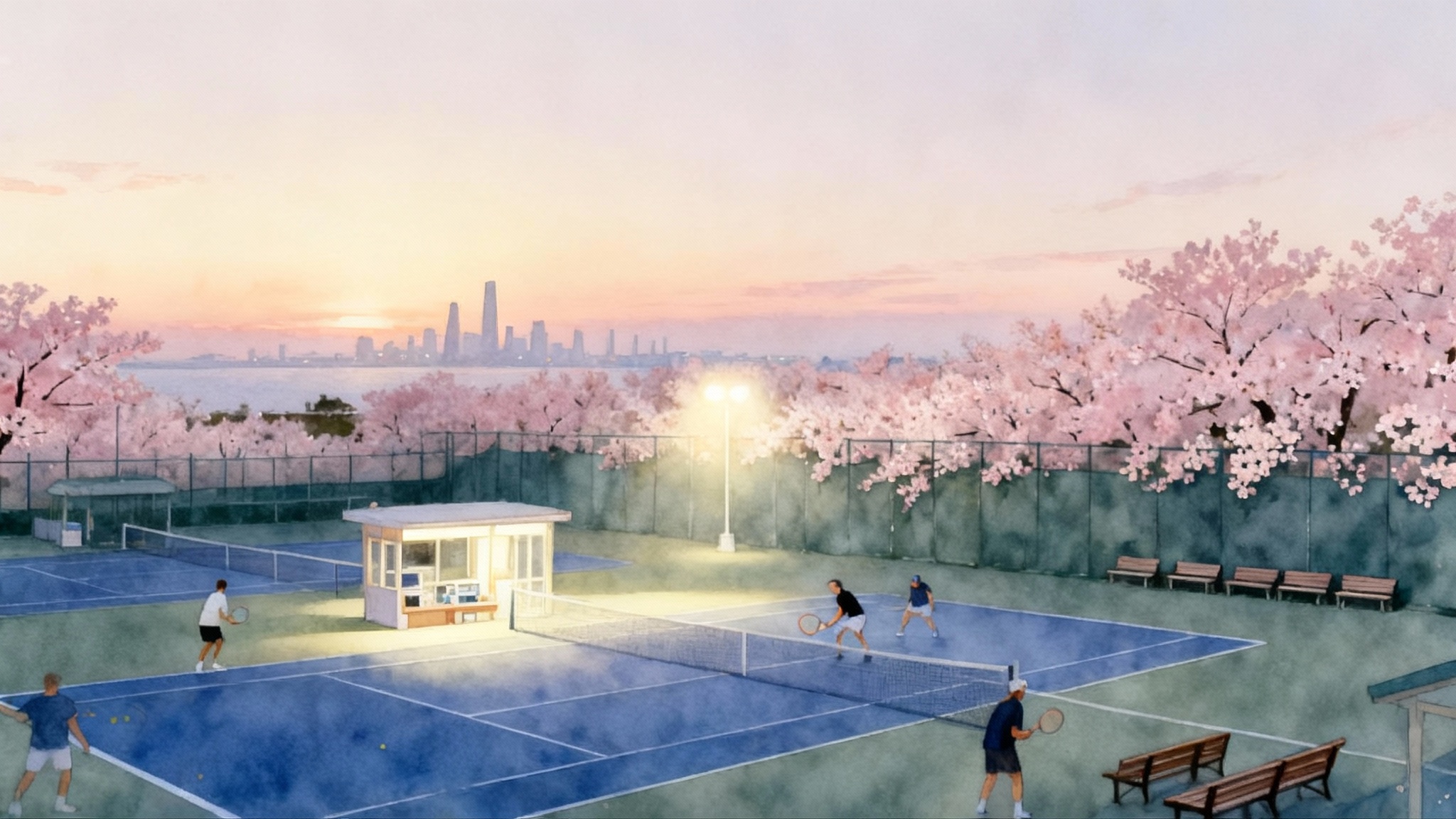
Why spring in Tokyo fits your tennis calendar
Late March through early April is when tennis and cherry blossoms share the same frame. Daytime highs typically sit in the low to mid 60s Fahrenheit, mornings are cool enough for a light layer, and courts in parks buzz from sunrise. On paper, this is the ideal window. In practice, you will want a plan for rain, a strategy for park court reservations, and a shortlist of coaches who can deliver progress in one or two sessions.
For a quick weather compass, March averages in Tokyo hover around the mid 50s Fahrenheit by day with roughly four inches of rain, while April steps up to near 70 Fahrenheit with a similar number of rainy days. If you prefer numbers before packing, scan the official Tokyo climate normals for March and April. Use those baselines to choose time‑of‑day slots and layers.
If you are weighing other spring options, our French Riviera spring clay prep pairs well with a Tokyo itinerary shift.
This guide covers four things: when to train, how to get a public court, where to book short, high‑impact coaching with Seijo Tennis Academy and Shi Shi Tennis Academy, and what to do if the weather flips.
The spring weather that matters to your session
Tokyo’s spring serves you three variables that affect ball flight and scheduling: temperature, wind, and showers.
- Temperature: Mornings in late March can start in the low 40s Fahrenheit and climb through the session. Cooler air shrinks the bounce and firms up felt. If you string tighter at home, consider dropping tension two pounds for early morning sets to keep depth without over‑swinging.
- Wind: Breezes around riverside parks can gust by late afternoon. Place your serve targets a foot inside the lines and work second serves to a higher net clearance. That simple adjustment preserves confidence on break points.
- Showers: Spring rain in Tokyo often arrives as short, light bursts rather than day‑long washouts. Treat passing drizzle as a tactical break. Keep a small towel in a zip bag, dry the grip quickly, and use the pause to set the next two‑point plan with your partner or coach.
Packing checklist that earns its space:
- Two pairs of shoes if you plan omni (artificial grass) and hard courts. Omni’s sand plays slick with worn treads.
- A light shell with a chest pocket for balls during serve practice between showers.
- Overgrips that handle humidity. Swap every session.
- A thin beanie for 7 a.m. starts in late March. You will take it off after the first changeover, but the first ten minutes feel better.
When to play during sakura season
- Early mornings: 7 a.m. to 9 a.m. has the most open space and the least wind. Cherry blossom crowds build late morning, not at dawn.
- Lunch windows: Noon can be calm between commuter peaks. Book 11 a.m. to 1 p.m. if you plan a post‑hit picnic under the trees.
- Evenings under lights: April nights are comfortable. Aim for 7 p.m. to 9 p.m. and add an extra warmup game to loosen up after a day of walking the city.
How to reserve public park courts without wasting a day
Tokyo’s public courts fall into two buckets:
-
Metropolitan parks run by the Tokyo Metropolitan Government. Examples include Ariake Tennis Park and Komazawa Olympic Park.
-
Ward parks run by individual city wards. Each ward uses its own registration system and rules.
If you are visiting for a week or two, focus on metropolitan parks. They share a single online reservation platform and predictable timelines.
The metropolitan parks system at a glance
- Registration: Create a user account online with your name and address. Smartphone self‑registration is supported. You can also register in person at park service centers with identification. Details sit on the official Tokyo sports reservation system guide.
- Lottery window: On the 1st through the 10th of the month prior to use, submit your requests. Example: for April 10 sessions, apply March 1 to March 10.
- Results: Lottery results post mid month. Unclaimed or leftover slots open first come, first served after results publish.
- Day‑of procedure: On the day you play, present your user card or registration at the park service counter by ten minutes before start time and complete payment and check‑in.
- Cancellations: For tennis, the deadline is typically four days before play. Late cancellations may trigger penalties that limit your next bookings.
That is the system logic. Here is how to make it work on a compressed travel itinerary.
Step‑by‑step if you are flying in late March
- Register now. It takes minutes online with a smartphone. Keep a screenshot of your confirmation.
- Enter the lottery for April slots between March 1 and March 10. Submit multiple time preferences at different parks. Mornings improve your odds.
- Mark the day results post. If you lose the lottery, jump on the first‑come release for leftover time blocks that same day.
- Build a fallback: add two day‑of walk‑up options near your hotel. Staff will help you book any newly freed slots if you show up early and ask about cancellations.
Pro tip on surfaces: Many public courts are omni, a sand‑dressed artificial grass that rewards a slightly more compact swing and early preparation. If you are used to North American acrylic hard courts, add one short footwork session on day one to calibrate. Use split step every stroke and a lower center of gravity on approach shots.
What about ward courts?
Ward‑run courts can be excellent, but the rules vary. Some wards restrict early reservations to residents or require an in‑person registration step. If you speak Japanese or have a local friend, they can often help you register for a day or book by phone. Otherwise, stick with metropolitan parks for a smooth first trip.
Where to aim your search
- Ariake Tennis Park in Koto City for a modern complex, easy transit, and a chance to stroll the bay area afterward.
- Komazawa Olympic Park for a lively weekend vibe and cherry trees lining walkways.
- Hikarigaoka Park in Nerima for eight omni courts tucked inside a large green space.
- Oi Futo Central Seaside Park for breezy sessions and sunset light.
These are examples, not an exhaustive list. Prioritize parks near your train line to keep transit time under 30 minutes door to door.
High‑impact coaching you can book for one or two days
You can make real progress in a single well‑constructed session if you do two things: define the outcome in concrete terms and choose a coach who can compress work into targeted drills.
Two academies stand out for travelers who want short, effective blocks.
Seijo Tennis Academy
Seijo Tennis Academy operates within the Seijo neighborhood in Setagaya. It is known for structured group and private sessions, junior development, and the convenience of on‑site courts. For visitors, the draw is simple logistics and a coaching style that builds repeatable patterns fast. If you are staying in western Tokyo or traveling with family, Seijo’s campus setup keeps everything in one place.
How to book:
- Send an inquiry a week or two ahead with your travel dates, preferred days, and whether you want private or semi‑private.
- Ask whether they can host you on site or would prefer to meet at a metropolitan park near your hotel.
- Share your current racket, string, tension, and a one‑line goal, such as “add five miles per hour to first serve without losing percentage” or “stop sailing cross‑court backhand under pressure.” That one line shapes the session.
What a 90‑minute block looks like:
- Ten‑minute assessment: two ball baskets, forehand and backhand cross, plus serve video from back and side.
- Forty‑minute constraints drill: one technical constraint that forces the change you want. Examples: service box targets one racket length inside the line to teach spin; two cross then line pattern with foot inside the alley on the line ball to force shoulder turn.
- Twenty‑minute pressure set: four by four‑point games with the exact pattern, counting only pattern‑compliant points. Rest sixty seconds between sets for notes.
- Ten‑minute serve stack: second serve height and trajectory first, then first serve speed with a three‑ball cadence.
- Ten‑minute debrief: write a two‑line cue and a home drill. Leave with a phone clip that shows the change.
Shi Shi Tennis Academy
Shi Shi Tennis Academy specializes in customized, bilingual private coaching around the city. The model is perfect for travelers: they often meet you at a convenient public court and can help with arrangements if you cannot secure a slot yourself. Session design emphasizes precision, measurable outcomes, and player ownership.
How to book:
- Reach out with dates and your general location in Tokyo. Offer two or three time windows that match typical park availability, such as early morning or late evening.
- If you have no court booked, ask for help reserving a slot at a suitable metropolitan park.
- Send short video clips in advance if possible. A coach can then arrive with a drill list and targets instead of spending the first twenty minutes diagnosing.
What a 60‑minute block looks like when time is tight:
- Five‑minute warmup that hides work: two shadow swing ladders and one short‑court rally to groove contact.
- Thirty‑five‑minute drill tree: for example, forehand shape and depth. Start with feed to a cone at deep cross, add rally to a five‑ball tolerance, then open the lane to inside‑out with a footwork cue. Keep score to anchor progress.
- Ten‑minute serve lens: two small changes only, such as toss height window and contact location. Measure with targets, not radar.
- Ten‑minute transfer: three‑point live games starting serve, then return, so the new pattern shows up under a score.
Rainy‑day contingencies that still move your game forward
Tokyo’s spring showers are not a reason to lose momentum. Build one primary and one backup plan for every playing day.
- Plan A: Covered or quick‑dry options. Some park complexes and private centers drain fast after a passing shower. Call the service desk two hours before your slot and ask about surface condition. If courts reopen, bring a towel to dry benches and fence grips.
- Plan B: Convert to a focused indoor session. Ask your coach to switch to a video and footwork block under a roof near the courts or at a nearby studio. The best use of sixty minutes indoors is not theory. It is specific movement drills with markers, plus live analysis of your serve and two strokes. You will step back on court sharper than if you had slogged through puddles.
- Micro‑gains list for rain days: restring at a local shop; replace worn overgrips; film your toss from three angles in a hotel gym; do twelve minutes of split‑step and recovery shuffles with a metronome at 60 beats per minute.
A two‑day cherry blossom microcycle
If you have only a weekend, use this simple structure to make it feel like a mini camp.
- Day 1 morning: 90‑minute lesson with Seijo or Shi Shi focused on one change. Write two cues and one home drill.
- Day 1 evening: 60‑minute light rally and serve targets under lights to consolidate. No new ideas.
- Day 2 morning: 90‑minute play‑test. Set a simple scoring constraint that forces the change to appear in points. Example: you cannot win a point unless you hit at least one deep cross‑court first.
- Day 2 afternoon: recovery walk under blossoms, then a twenty‑minute notebook session. Note where the change stuck and where it fell apart.
Shoulder season tips for late September to November
If you miss spring, fall is an excellent backup for tennis in Tokyo.
- Timing: Late September can still be warm and humid, with occasional typhoon risk. October is milder but has a historically rainy stretch. November delivers crisp, dry days.
- Court strategy: Enter the lottery one month prior just as in spring. With fewer tourists than cherry blossom season, leftover slots after the lottery are easier to snag.
- Packing and play: Bring a light midlayer for mornings. Spin‑based patterns jump in cool, dry air. If you struggled to control depth in summer heat, you may find your window widens in November.
Getting from plan to court in three emails
Here is a template that saves time and earns fast confirmations, whether you are writing to a park office or a coach.
Subject: Visiting player seeking session March 31 or April 1 near Shinjuku
Message body:
- Dates and windows: March 31 morning 7 to 9 or April 1 evening 7 to 9
- Location radius: within 30 minutes of Shinjuku Station by train
- Surface preference: hard or omni
- Session goal: stabilize second serve with more spin and height
- Gear: 98 square inch racket, poly at 49 pounds
- Booking status: registered on the metropolitan parks system and ready to reserve
This gives the recipient everything they need to say yes or offer a close alternate.
Common snags and how to avoid them
- Waiting for a perfect blossom day: Peak bloom moves by year. Book your tennis first within your travel window. Then enjoy blossoms before or after your session. A good hit beats a perfect photo.
- Assuming every court is hard: Many public courts are omni. Bring shoe tread and a mindset ready to adjust.
- Skipping registration until arrival: The smartphone flow is fast, but not instant if you make typos or need identity checks. Register at least one week before travel.
- Ignoring cancellation rules: Tennis has a four‑day cancellation deadline in many parks. Miss it and you may be blocked from booking more sessions.
Quick reference timeline
- About six weeks out: set travel dates, register on the metropolitan system, shortlist parks near your train line.
- Month prior, 1st to 10th: enter the lottery for your target dates.
- Mid month: check results, claim leftover slots, book a lesson.
- Week of play: confirm weather, pack for morning cool and light showers, and message your coach with any new constraints or injuries.
The bottom line
Spring in Tokyo offers a rare combination: playable temperatures, long daylight, and scenery that makes your cooldown walk feel like a postcard. If you lock in registrations on the metropolitan system, choose morning or evening windows, and reserve a short, focused session with Seijo Tennis Academy or Shi Shi Tennis Academy, you can fit real improvement between shrine visits and ramen. Build a rain plan that is more than waiting it out, and you will leave with a better serve, a sharper pattern, and a memory of pink petals on your warmup jacket. That is a worthwhile trade for any tennis traveler.