Baltic-to-Poland Winter Tennis: Vilnius, Warsaw, Berlin
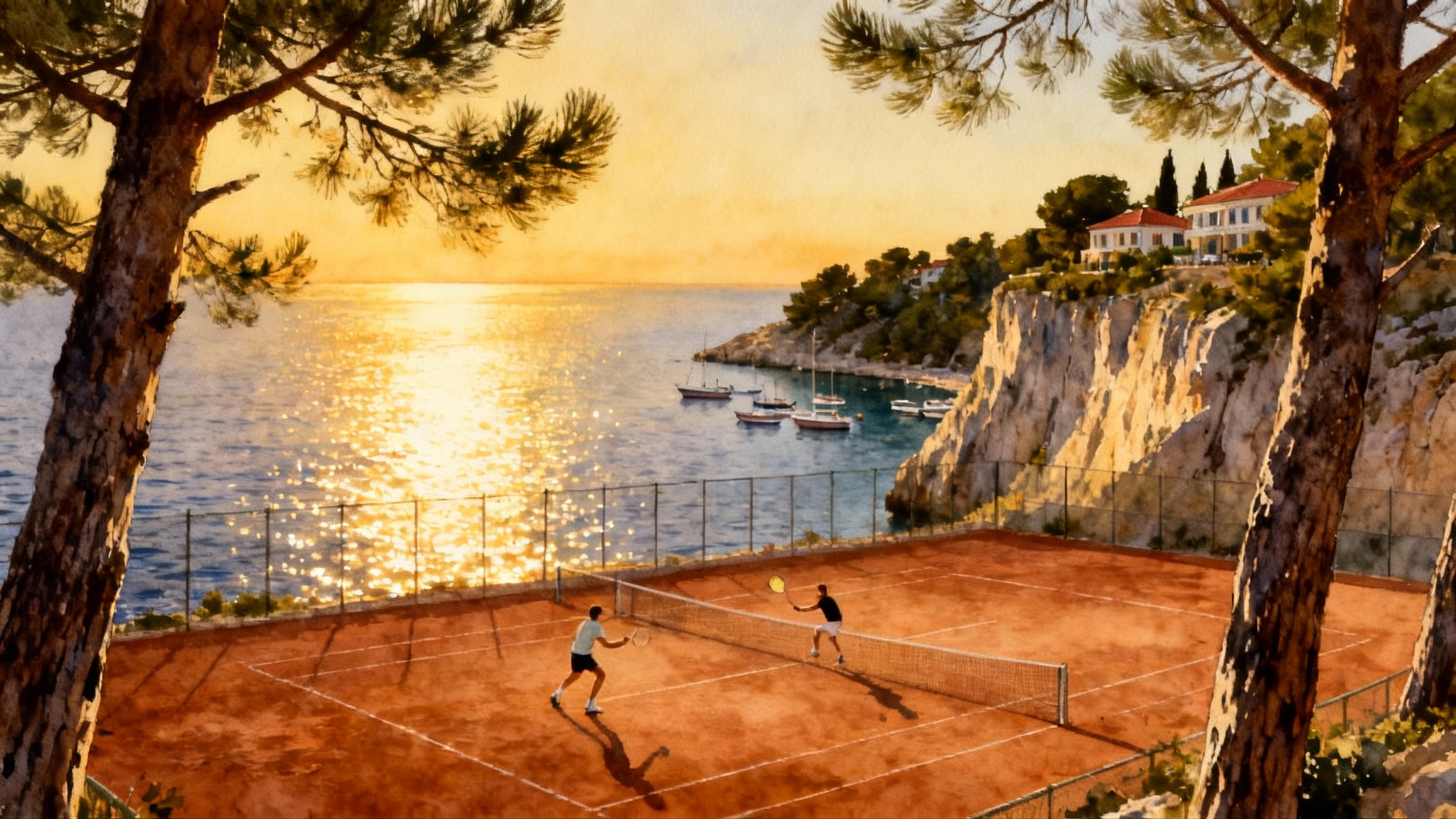
Skip crowded Spain or costly Florida this winter. Build a climate-proof, value-first training block from November to March across Vilnius, Warsaw, and Berlin with domes, reliable surfaces, and smart travel links.
 Tommy
Tommy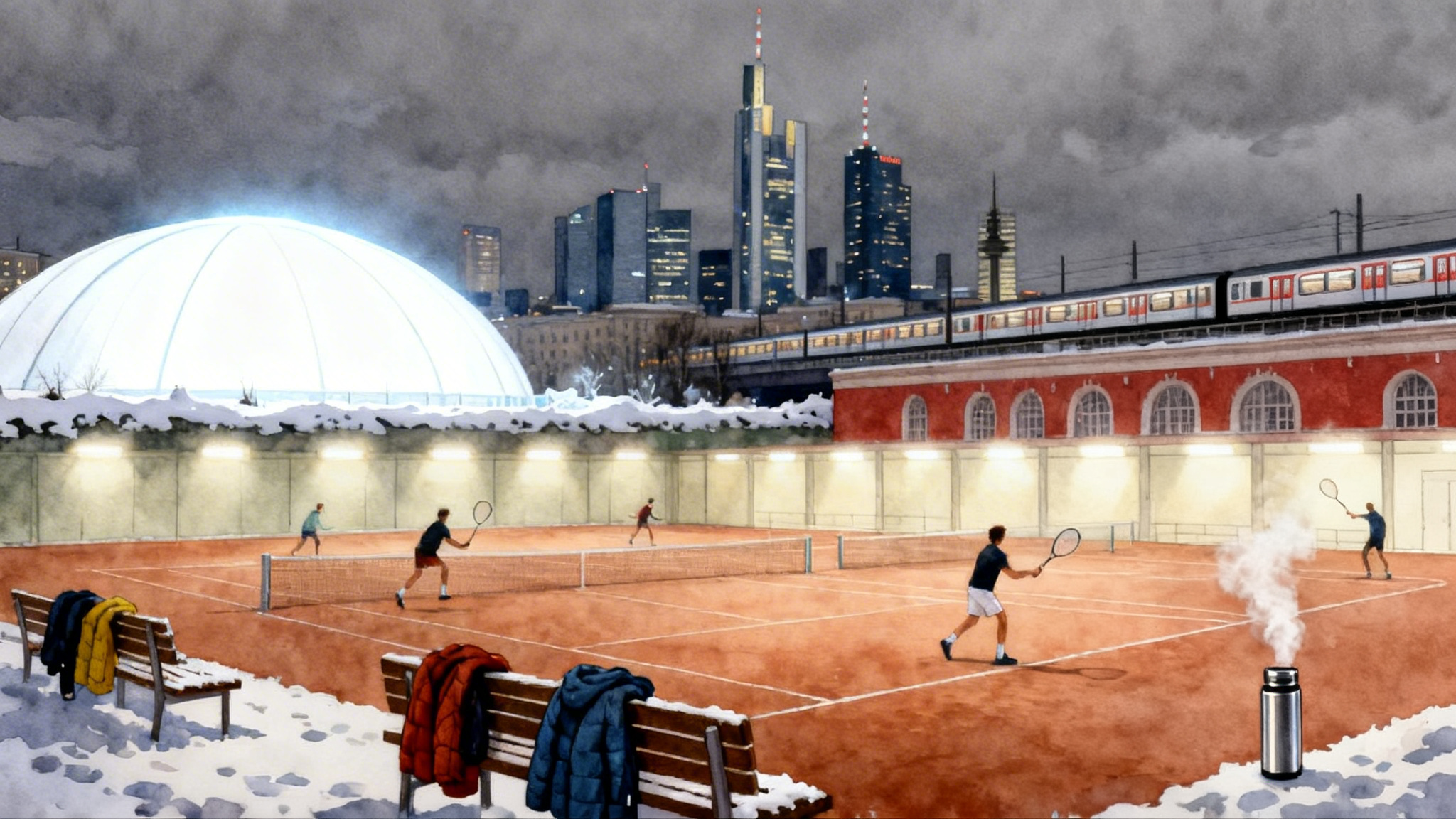
Why this corridor beats winter guesswork
If your November to March training has ever hinged on a last-minute rain forecast, this route solves it with a single idea: put a roof over your volume. Northern Europe built an indoor tennis culture around winter reality. Vilnius, Warsaw, and Berlin pack domes, insulated halls, predictable booking systems, and enough coaching depth to keep the quality high and the price-to-hours ratio even higher. Compared to Spain or Florida, you trade palm trees for certainty and cost control, then step back outdoors on clay from May to September without losing a beat.
This article maps a practical three-city winter corridor anchored to three reliable hubs: Vilnius Tennis Academy at SEB Arena, Tenis Kozerki near Warsaw, and TennisTree in Berlin. You will find court types, sample weeks, realistic pricing ranges, travel links from the United States, daylight and temperature realities, and a plan to transition into an outdoor clay block when the days stretch long again.
The value proposition in real numbers
Think of winter tennis like a project budget. You are buying three things: daily court hours, coaching quality, and recovery time in consistent conditions. With domes and halls, you remove the weather line item. What remains is the rate per court hour, the coaching rate, and the living cost around the club.
-
Court fees, typical winter ranges
- Vilnius: about 20 to 35 euros per hour for indoor hard or acrylic, with peak and off-peak spreads.
- Warsaw area: about 25 to 40 euros per hour for hard, acrylic, or carpet in domes or halls.
- Berlin: about 30 to 45 euros per hour depending on district and time slot.
-
Private coaching, typical winter ranges
- Vilnius: about 50 to 70 euros per hour for experienced academy coaches.
- Warsaw area: about 55 to 75 euros per hour across clubs near the city.
- Berlin: about 70 to 110 euros per hour for English-speaking pros with match-play integration.
These are working ranges to plan volume. Off-peak mornings are often the sweet spot for price and court availability, and late evenings can also unlock value if you recover well with midday breaks.
Surfaces and ball response
A winning winter block is built on ball repetition you can predict.
- Hard or acrylic indoors: clean bounce, clear contact feedback, and minimal bad hops. Great for rebuilding timing, drive through contact, and serve mechanics when you can track launch angles repeatably.
- Carpet or needle-punch: slightly faster through the court with lower bounce. Good for first-strike patterns, return practice, and volley transitions. Footwork adjustments are straightforward if you commit to smaller recovery steps.
- Indoor clay: available but rarer and pricier. Treat it as occasional specificity, not a daily baseline in winter.
If you are planning a clay-heavy competitive season, use winter to sharpen offense on hard or carpet, then shift to outdoor red clay in May with an emphasis on height, shape, and physicality.
Stop 1: Vilnius Tennis Academy at SEB Arena
SEB Arena is a winter tennis engine room. Expect multiple indoor courts under one roof, consistent lighting, reliable booking, fitness options on site, and a coaching culture used to structured blocks during the dark months. This is where you start your corridor in November or December when daylight is shortest and you want everything under one ceiling.
Sample 6-day training week in Vilnius
-
Monday to Saturday
- 09:00–11:00 On-court technical block: serve chain, neutral crosscourt patterns, approach and finish.
- 13:00–14:00 Strength and mobility: push-pull pairing, trunk rotation, ankle stiffness work, and 15 minutes of skipping rope for rhythm.
- 16:00–17:00 Live ball or points with constraints: first serve to the body only, deep middle as a bailout, two-volley finish target.
- Video touchpoints: one session early week for serve axis and one late week for return set-up.
-
Sunday
- Travel or full rest. Short city walk for light exposure and circadian alignment.
Example Vilnius budget for one week
- 12 court hours at 22 euros average: 264 euros
- 5 private lessons at 60 euros: 300 euros
- Gym or recovery access: 25 euros
- Accommodation mid-range, 7 nights at 60 euros: 420 euros
- Local transport and meals beyond self-catering: 150 euros
- Total, excluding flights: about 1,159 euros
How to use this week
- Technical focus: protect contact quality in low-light months by keeping court slots in the mid-morning window. Your eyes adapt better and you will hit cleaner.
- Physical focus: more micro-doses than single long lifts. Add two 20-minute eccentric sessions for calves and adductors to cushion the later clay pivot.
- Mental focus: two short scouting sessions on your own matches from last season. Pull three rally patterns you intend to upgrade and rehearse them daily.
Stop 2: Tenis Kozerki near Warsaw
Kozerki sits just outside Warsaw, with a growing ecosystem of courts, domes in winter, strength facilities, and tournament energy. The setup offers the middle third of your corridor, typically January to February, when you want slightly more match play and the option to dip into the Warsaw metro for sparring variety.
Sample 6-day training week at Kozerki
-
Monday to Saturday
- 08:30–10:30 On-court patterns: second-ball offense, backhand line under pressure, and return plus one.
- 12:00–13:00 Speed and footwork: wicket runs, crossover starts, and four-by-fifteen-second reactive shuttles.
- 18:00–19:00 Match play set or team drilling: serve targets to 1 and T only, or crosscourt to inside-out feeders.
-
Sunday
- Warsaw day trip or full rest.
Example Kozerki budget for one week
- 12 court hours at 28 euros average: 336 euros
- 4 private lessons at 65 euros: 260 euros
- Gym access: 30 euros
- Accommodation, 7 nights at 70 euros: 490 euros
- Local transport and meals: 170 euros
- Total, excluding flights: about 1,286 euros
How to use this week
- Technical focus: transition from pure technique to scoring patterns. Use score-based constraints, such as serving only from the ad court for an entire set.
- Physical focus: front-load power in the first half of the week with med-ball rotational throws, then shift to aerobic maintenance on Friday to travel fresher.
- Competitive focus: book two evening match-play slots with different styles. You are training the problem, not a single solution.
Stop 3: TennisTree Berlin
Berlin’s tennis in winter is distributed across private halls and domes around the city. TennisTree integrates coaching and court bookings across multiple locations, which is practical for visiting players who value flexibility. This final stop, late February to March, is ideal for polishing serve patterns, adding slice variety, and preparing to touch red clay next.
Sample 6-day training week with TennisTree
-
Monday to Saturday
- 10:00–12:00 On-court specificity: kick serve out wide, forehand inside-in hold, and backhand short angle.
- 13:30–14:15 Mobility and breath: hip capsule work, thoracic extension, nasal-breath intervals on the bike.
- 17:00–18:00 Doubles patterns or return games to first-to-five. Serve body first ball, poach every third point regardless of read.
-
Sunday
- Recovery walk along a park loop and pack for outbound travel.
Example Berlin budget for one week
- 12 court hours at 35 euros average: 420 euros
- 4 private lessons at 85 euros: 340 euros
- Gym or day pass: 40 euros
- Accommodation, 7 nights at 100 euros: 700 euros
- Local transport and meals: 200 euros
- Total, excluding flights: about 1,700 euros
How to use this week
- Tactical focus: build first-strike confidence against faster carpet or lively acrylic. Serve plus one pattern selection is your weekly key performance indicator.
- Physical focus: cap eccentric work and raise movement speed. Add two 12-minute sessions of micro-hurdle frequency to sharpen feet without heavy fatigue.
- Technical capstone: two short video clips to confirm toss height, contact window, and forehand spacing under speed.
Travel and logistics from the United States
Most itineraries from the United States route through a European hub. Think of travel as a triangle you can draw in any order, but starting in Vilnius lets you bundle the darkest weeks inside the most self-contained facility, then expand options as daylight returns.
-
Typical routings
- To Vilnius: connect through major hubs such as Frankfurt, Amsterdam, or Copenhagen. Plan arrival in the afternoon, settle, and hit a light 60-minute session to move the flight out of your legs.
- Vilnius to Warsaw area: overnight bus is common and cost efficient. Trains exist with changes and evolving timetables. Flight options pop up seasonally; if you fly, protect your rackets with a hard case and carry strings.
- Warsaw to Berlin: direct daytime trains run in roughly six hours. Flying is faster gate to gate only if you are close to the airport and travel light.
- Berlin to the United States: nonstops to several U.S. cities or through European hubs.
-
Packing and shipping
- Two frames minimum, four if you plan heavy volume. Winter air is dry; strings play tighter. Consider dropping string tension by one to two kilograms compared to summer clay setups.
- Bring indoor-specific shoes with non-marking soles. Some halls will check.
- A compact jump rope, massage ball, and a medium-strength resistance band replace half a suitcase of gear.
-
Sleep and jet lag protocol
- Land, walk outside for light exposure, and take a 20-minute nap only if you arrived before noon. Protect the first two nights of sleep. Book court slots mid-morning to avoid fighting both jet lag and early darkness.
Daylight and temperature realities
From November through early March, daylight is short and the air is cold to freezing. The point is not to tough it out outdoors. It is to use indoor infrastructure fully and plan your day around available light for mood and recovery.
-
Vilnius
- December: very short days. Use midday walks between sessions.
- Typical winter highs often just below or near freezing. Sidewalks are managed but can be slippery, so keep your off-court runs on treadmills or indoor tracks.
-
Warsaw
- Slightly longer days than Vilnius by late February. Temperatures hover around freezing to a few degrees above. Good time to add short outdoor strides if clear and dry.
-
Berlin
- The mildest of the three. By early March you will notice longer afternoons. This is where you begin to sprinkle in outdoor mobility and light aerobic recovery.
Practical add-ons
- Vitamin D and light: coordinate with a clinician if you supplement. A 10-minute outdoor stand in the brightest part of the day can pay back with better sleep quality.
- Hydration: heated indoor air dries you out. Use a simple rule of thumb: one full bottle per on-court hour, plus one bottle for every gym hour.
Building your 12 to 16 week block
A successful winter corridor respects stress and sequencing. Use a simple three-phase model.
-
Phase 1, Foundation in Vilnius, 4 to 6 weeks
- Emphasis: technique base, serve mechanics, stable contact, footwork templates.
- Volume: 12 to 14 court hours weekly, 3 to 4 private lessons, 3 gym sessions.
- Monitoring: one video check each week for serve and forehand spacing.
-
Phase 2, Patterns in the Warsaw area, 4 to 6 weeks
- Emphasis: conversion patterns, return quality, finishing at net.
- Volume: 12 to 14 court hours, 2 to 3 private lessons, 2 gym sessions, two match-play evenings.
- Monitoring: track first serve percentage and short ball conversion on a simple sheet.
-
Phase 3, Speed in Berlin, 4 weeks
- Emphasis: decision speed, return aggression, doubles movement if relevant.
- Volume: 10 to 12 court hours, 2 private lessons, 2 light gym sessions, one competitive hit every other day.
- Monitoring: film tie-breaks to read posture and spacing under tension.
What it costs compared to Spain or Florida
The winter corridor is not a budget trip at all costs. It is an hour-for-hour value play.
- Spain in winter can be outdoors, but rain and wind can cut usable hours. When you pay for travel and accommodation, cancelled or compromised sessions are expensive.
- Florida has excellent winter weather, but peak pricing, resort fees, and car rentals add up. Indoor back-up is rare and costly.
- The Baltic-to-Poland corridor trades sunshine for certainty. Your euro-to-hour conversion remains predictable because you are planning for indoor volume from the start. If you book off-peak slots and use public transport, you keep spend tight without sacrificing coaching quality.
Transition to outdoor clay from May to September
Your winter arc should hand the baton to an outdoor red clay block as days lengthen.
-
Where to play
- Berlin: club culture is dense, with red clay at many neighborhood clubs. Plan a trial week and consider a seasonal membership if you extend your stay.
- Warsaw area: outdoor red clay is common. You can carry over your serve plus one pattern and add height and depth without relearning footwork.
- Vilnius: outdoor clay and acrylic courts become available as temperatures rise. Use it for early phase clay drilling before summer travel.
-
How to shift training
- String and shoe tweaks: add one to two kilograms of string tension if you search for control on hot days. Wear clay-specific soles for traction and braking.
- Volume change: reduce private lessons by one per week and add extended live-ball rallies. Clay rewards time on court more than isolated reps.
- Physical shift: increase aerobic base runs slightly. Add deceleration and slide control drills twice per week to protect knees and hips.
-
A two-week clay template
- Week 1: 10 to 12 hours on clay, 2 private sessions on height and shape, 2 gym sessions focused on eccentric strength.
- Week 2: 12 to 14 hours on clay, 1 private session for patterns, 3 competitive hits or local match plays.
Who this corridor fits
- Juniors who need volume without weather roulette and who benefit from steady coaching eyes.
- Adult competitors who want a defined block before summer leagues or masters events.
- Coaches planning team trips where accountability, gym access, and simple transport matter more than sunshine.
Booking and calendar tips
- Book courts first, then flights. Your week lives or dies by secured indoor hours.
- Protect morning windows. If your only option is late evening, split volume across two short sessions to keep quality high.
- Confirm cancellation rules. Dome operators often have stricter windows in peak winter weeks.
- Build a rolling waitlist for extra hours. If a slot opens, you can add volume without straining the plan.
A sample three-city itinerary
- Weeks 1 to 4: Vilnius technical foundation. Two video sessions and one serve audit per week.
- Weeks 5 to 8: Kozerki patterns and match play. One evening tie-break session every other day.
- Weeks 9 to 12: Berlin speed and polish. Short, fast sessions and structured doubles if relevant.
- May to September: outdoor clay in your chosen city, with a small mid-summer deload.
Final checklist before you book
- Two to four frames, indoor shoes, second set of workout layers, and a small recovery kit.
- A written weekly goal sheet: one technical, one tactical, one physical outcome. If it is not on a page, it is not a plan.
- A fixed nutrition routine you can replicate in any city: simple breakfasts, hydration targets, and recovery snacks post-session.
Conclusion: trade postcards for progress
Winter rewards planning. The Baltic-to-Poland corridor gives you guaranteed indoor hours, credible coaching, and a cost profile you can control. Start under a reliable roof in Vilnius, add match-play structure near Warsaw, and finish with decision speed in Berlin. When the sun returns, step onto red clay already sharp. That is the real luxury of this route: progress that survives the calendar.